
Download VEVOR App 

Get 5,00€ Off 99,00€+ Orders on Your First 3 App Orders
Scan the QR code to download
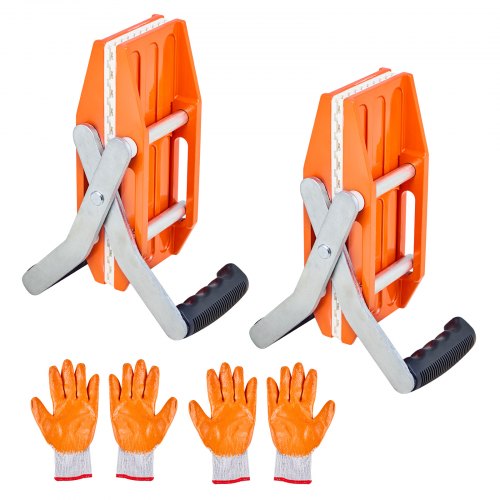
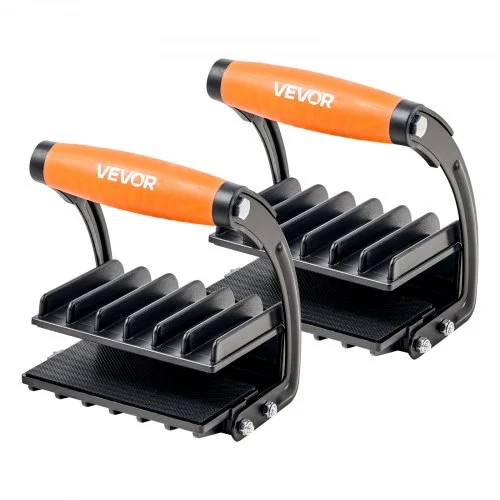
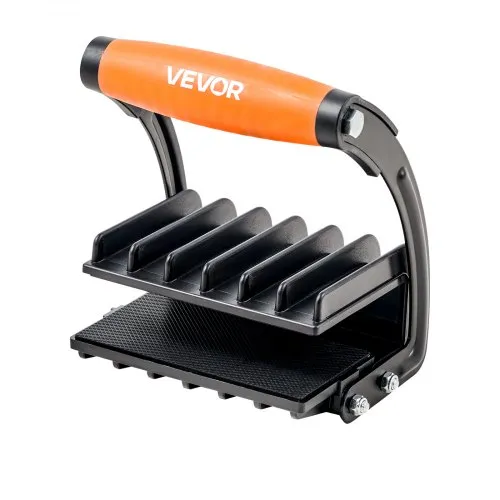
VEVOR has a full line of carry clamps for contractors, fabricators, and installers who transport heavy sheet materials every day. We offer a wide range of lifting tools for handling a variety of weights, including granite carry clamps, panel carriers, drywall handles, and more. These clamps make it easy to move stone slabs, plywood sheets, or drywall panels without worrying about them slipping or breaking. Each design offers strong lifting power and useful features for on-the-job use. VEVOR has everything you need for moving, from single-person carriers to team-lifting solutions, and the rates are reasonable.
Are you finding it challenging to manage sheet materials that are difficult to grip? Carry clamps turn dangerous manual lifting into safe, regulated handling that protects workers and commodities. VEVOR makes these tools for people who work with large panels and slabs a lot and can't afford to have their grip fail or their load drop. Our assortment includes everything from putting in a delicate countertop to stacking rough plywood.
Choosing the correct carry clamps means ensuring the lifting capacity matches your heaviest materials and that the jaw opening fits your typical thickness range. These two criteria will tell you whether a clamp will work for your needs or fail when you need it most.
The weight capacity shows you how much weight a clamp can safely lift. At one inch thick, stone materials like granite and marble weigh about 18 pounds per square foot. A standard countertop part measuring 3 feet by 5 feet weighs about 270 pounds. Granite carry clamps that can hold this much weight must be able to hold at least 300 pounds with a safety margin. Larger slabs need proportionally higher ratings.
Plywood sheets are much lighter than stone, yet they still require care. A common sheet of three-quarter-inch plywood, four by eight feet, weighs about 60 pounds. A plywood carrying handle that can hold 100 pounds makes it easy to carry single sheets. Putting several sheets on top of each other to move them makes them much heavier very soon.
The density of drywall is between that of stone and plywood. In conventional four-by-eight dimensions, half-inch drywall sheets weigh around 54 pounds. Five-eighths-inch sheets weigh 70 pounds. A drywall carrying clamp rated at 150 pounds can safely hold one sheet of drywall.
Always choose carry clamps that can hold more than the maximum weight you plan to carry. Safety factors of 1.5 to 2 times the actual weight safeguard against unexpected, uneven, or changing loads and changes in material properties. A 200-pound clamp used daily will break sooner than a 400-pound clamp used the same way.
The thickness of the material a clamp can hold depends on the width of its jaw. If it's too thin, the clamp can't hold thick slabs. Too wide and thin, things can slip through the jaws. Most carry clamps have adjustable ranges that work with multiple types of material.
For ordinary countertop slabs, granite carry clamps usually require jaw holes that are 2 to 3 inches wide. Thicker pieces, such as island parts or commercial applications, may exceed 3 inches in thickness. Check the thickness of your normal slab before you buy, and choose clamps that can hold it.
Plywood comes in several thicknesses, from a quarter-inch thick underlayment to a three-quarter-inch thick building grade. A plywood panel carrier with a jaw aperture of no more than one inch can carry typical sheet items. Some specialty applications that use multiple laminated layers may require larger apertures.
In most homes, drywall panels are between half an inch and five-eighths of an inch thick. Some commercial installations use more than one inch of layers. A drywall carrying clamp with adjustable jaws that can span this range works for any typical installation.
Many carry clamps include adjustable jaws that can accommodate a wide range of thicknesses. Spring-loaded designs automatically fit a range of materials. Screw-adjusted types need to be set by hand, but they often get broader spreads. When choosing adjustment styles, consider how often you switch between different cloth thicknesses.
Different materials require clamps with specific features beyond their raw capacity values. The ideal carry clamps for a given job depend on the surface roughness, edge condition, and fragility of the item.
Stone slabs need cushioned jaw faces that grip without damaging smooth surfaces. Granite carry clamps made particularly for stone work have rubber or polymer cushions on the edges to protect them. When metal touches stone during raising, it causes permanent scarring.
When you put a lot of pressure on the edges of plywood, they break quickly. A plywood carrying handle with wide gripping surfaces spreads the strain across a broader area. This stops edge damage that can be dangerous and wasteful.
Too much point loading can cause drywall to crack. A drywall carrying clamp distributes the grip force so it doesn't damage the paper faces or gypsum cores. Cutting crushed edges creates waste on job sites, which can drive up material costs.
For glass and fragile composites, you need special carry clamps with extra padding and adjustable pressure. Standard heavy-duty clamps, made for rough building materials, can damage these surfaces. Check that the clamp is right for the job before using it on fragile materials.
You can get carry clamps made for one person to use or for a team to lift together. The type that works best for you depends on how you usually work and the weight of the materials.
Single-person carry clamps attach one or two handles to the material, allowing a single person to carry it. These tools can be used on lighter materials that one person can safely handle. Weight limitations meet ergonomic requirements, so people won't get hurt when lifting things repeatedly.
Team lifting clamps put grips in the right place for two or more people to lift. A plywood panel carrier made for teams has grip points in the best places for balanced hauling. For heavy stone slabs, you need several granite carry clamps set up so that each person can do their job well.
Ergonomics goes beyond just how much weight something can hold. Strange shapes, long carries, and lifting the same thing over and over all affect safe load limitations. Even if one person could lift a 100-pound panel for a short time, it might take two people to move it safely over a long distance. Choose carrying clamps that function well in real-life situations.
In addition to capacity specifications, the build quality and useful features of carry clamps affect how well they work over time on the job site. The handle design, jaw materials, and other factors affect daily usability.
The metals and composites used to make carry clamps vary in strength, weight, and durability. The choice of material impacts how well it works, how long it lasts, and how much it costs.
Steel frames are the strongest option for heavy-duty jobs. Granite carry clamps that can hold several hundred pounds need to be made of steel so they don't flex or break under load. The extra weight is acceptable given the loads involved.
Aluminum frames are much lighter than other materials but still strong enough for lighter uses. A metal drywall carrying clamp feels much lighter to use all day. When you have to handle dozens of panels every day, it matters to reduce fatigue.
The materials used for jaws might be bare metal or rubber-coated. Padded jaws protect material surfaces, but they wear out over time and need to be replaced. Bare-metal jaws hold hard yet leave marks on soft materials. Many clamps have replaceable jaw pads, which help the tool last longer.
Parts made of stainless steel don't rust when exposed to the elements or in wet environments. Standard steel carry clamps will corrode if they become wet while working outside or when set in concrete. Coatings and platings make tools last longer, but they will eventually wear out on heavily used tools.
The handle's setup affects how easy it is to carry and control the material. Bad handle design can make your hands tired, reduce your grip security, and even cause accidents.
The rubber overmolded handles protect your grip and prevent slipping when your hands are sweaty, or, for people who have to raise many panels over and over again, like this, it provides comfort. A plywood carrying handle with an ergonomic grip makes it easier on your hands.
The handle's tilt changes your wrist's position while you carry it. If your wrists are in a neutral position, you won't get hurt from lifting the same thing over and over again. Odd angles stress joints, leading to potential damage over time.
Two-hand designs evenly distribute the load across both arms for balanced carrying. Single-hand carry clamps are useful for lighter materials, but they put all the weight on one arm and shoulder. When choosing handle configurations, consider how much work they will entail.
Folding handles make it easy to store and move the item, ideal for workers on the job site who have to move tools around, as well as for designs that save space. Non-folding handles last longer, but they take up permanent space in tool storage.
Secure locking keeps things in place when they are being lifted and moved. If a lock fails while carrying a load, it could drop the load, causing serious harm and damage to the material.
When you press them on the edges of a material, spring-loaded carry clamps instantly grab it. When you let go of the pressure, the jaws open, allowing you to move them. This speed helps manage many things quickly, where setup time is important. For a strong grip, the spring tension must be equal to the weight of the material.
Screw-lock mechanisms hold things in place with a strong mechanical connection. Once these granite carry clamps are tightened, they can't come loose by accident. It takes longer to make manual adjustments, but they are completely safe for big loads.
Cam-action locks are easy to use and lock securely. A lever action simultaneously closes the jaws and locks them in place. These are a good balance between speed and safety for moderate loads.
Safety straps keep the load from falling off completely if the main grasp fails. Wrapping items gives them extra support as they are moved. This backup protects against terrible incidents during important lifts.
VEVOR offers material handling solutions with high capacity and useful features for the job site. Every instrument is the right weight and can handle tough professional use. The set has everything you need to handle panels, from granite carry clamps for making stone to drywall carrying clamps for finishing the inside. VEVOR earns customer confidence by being honest about how well their tools work, providing prompt customer service, and offering fair prices. Look through our full range today and feel safe handling large things.
Standard-size granite countertops weigh between 15 and 20 pounds per square foot. A piece that is three feet by five feet weighs about 250 pounds. Choose granite carry clamps that can hold at least 300 pounds and include a safety margin.
Using team lifting clamps on your own makes the load uneven and unsafe. Always be sure that the right number of people are using clamps that are meant for more than one person. Lifting things by yourself can hurt you and damage the things you're lifting.
Use carry clamps with rubber or polymer jaw cushioning made for finished surfaces. Don't use bare metal jaws on polished stone or painted panels. Before the pads wear down and expose metal, replace them.
There are special glass carry clamps that have extra padding and controlled pressure. Standard construction clamps can break glass panels. Before handling sensitive goods, ensure the glass is suitable for the task.