VEVOR Retractable Dock Ladder, 5 Steps, Aluminum Alloy Pontoon Boat Swim Ladder with Auto-Lift Float, Non-Slip Wide Steps, 227 kg Weight Capacity, Adjustable Height, for Lake Pool Marine Boarding

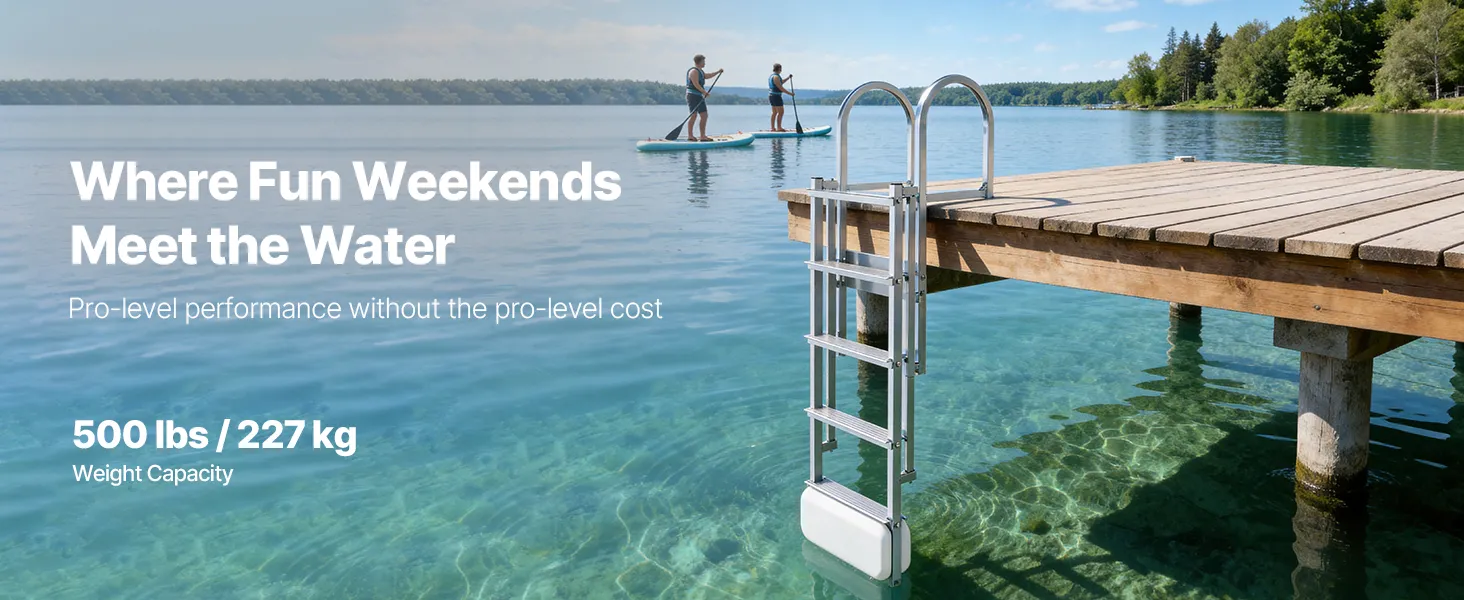
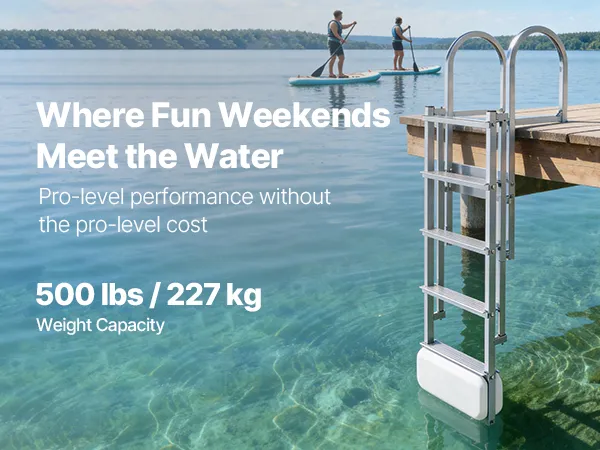
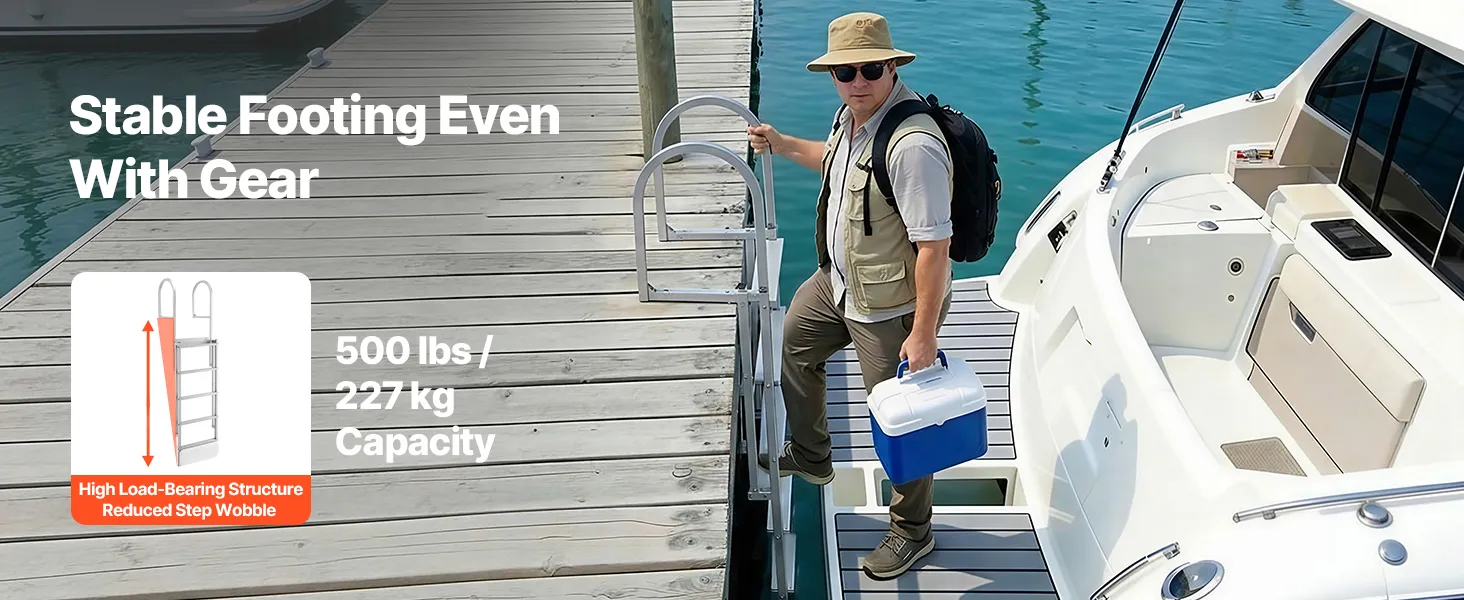
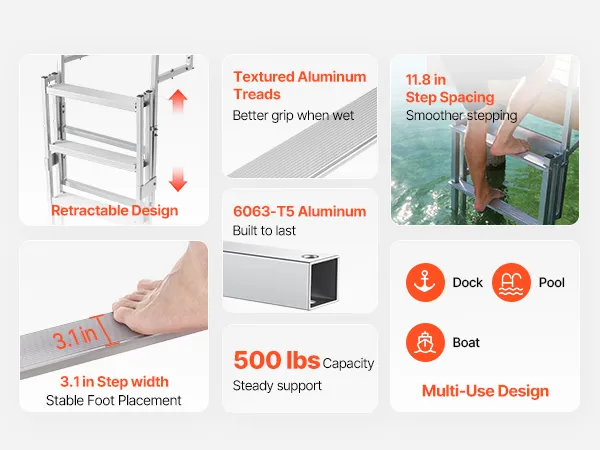
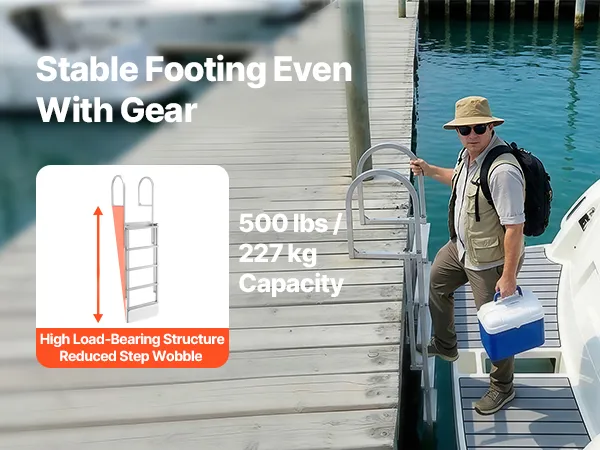
- Stable Weight Capacity: Supports up to 500 lbs / 227 kg, our dock ladder provides a reliable support for adults frequently climbing in and out of the water or carrying gear, ensuring stable footing with every step. Ideal for docks, boats, and pools
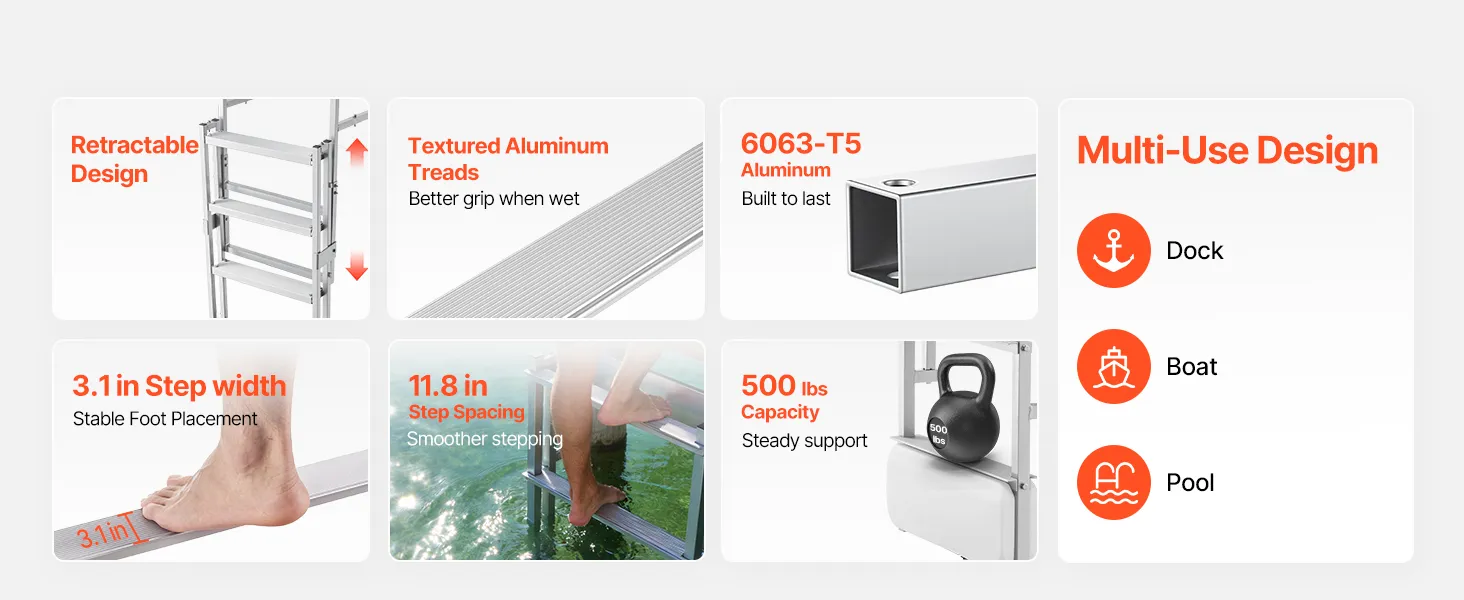
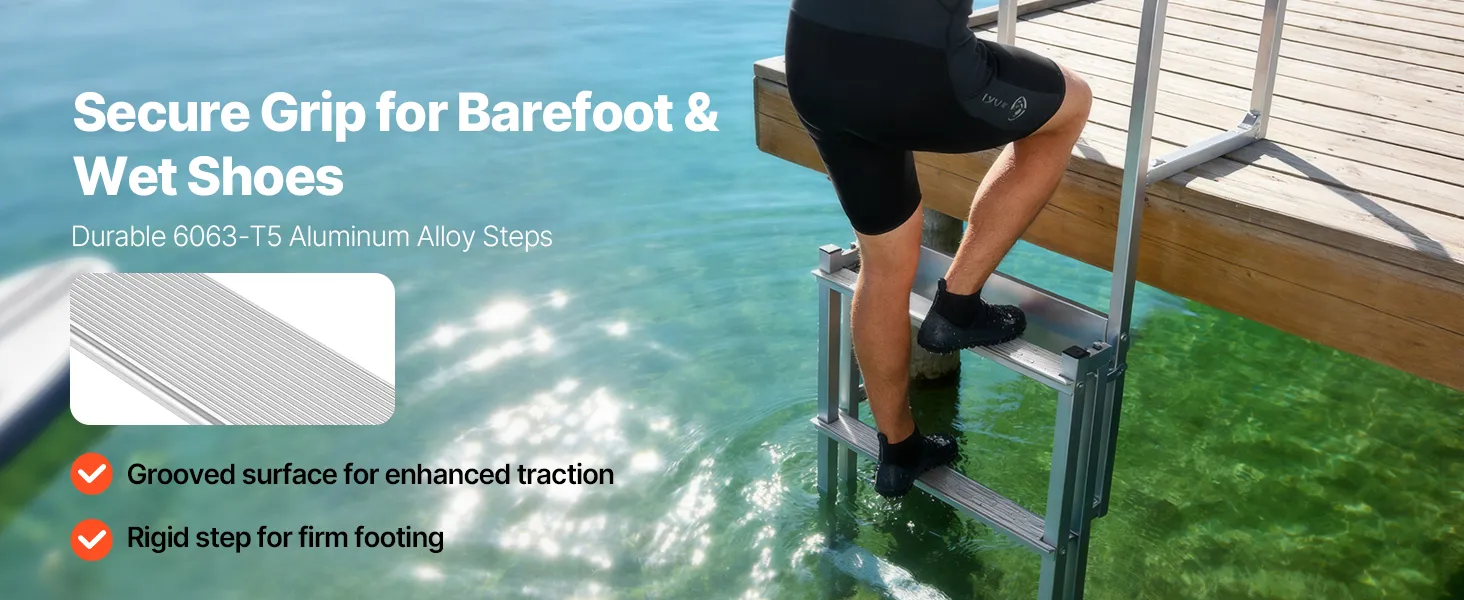
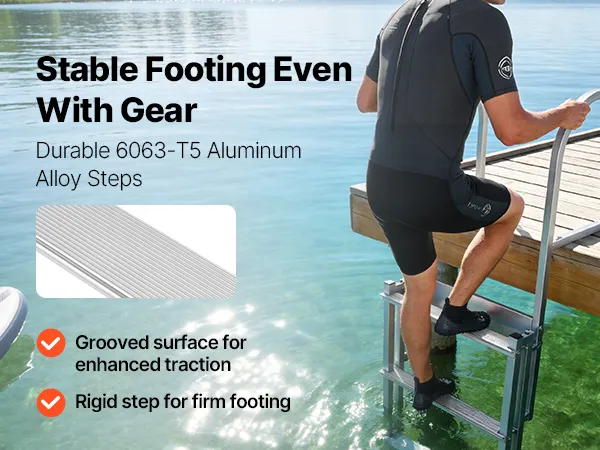
- Anti-Slip Step Design: Aluminum alloy steps feature a textured anti-slip surface. Barefoot or wet shoes stay secure with enhanced friction. This pontoon boat ladder provides confident footing in any condition, keeping every step secure and stable
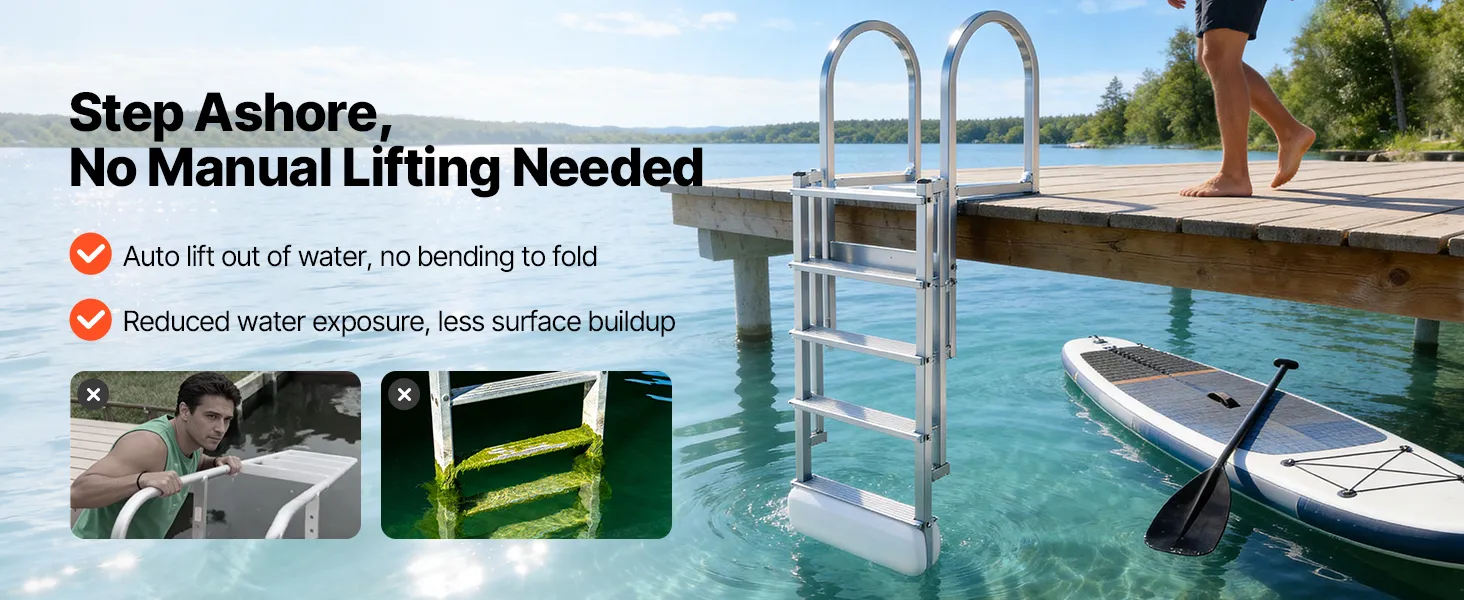
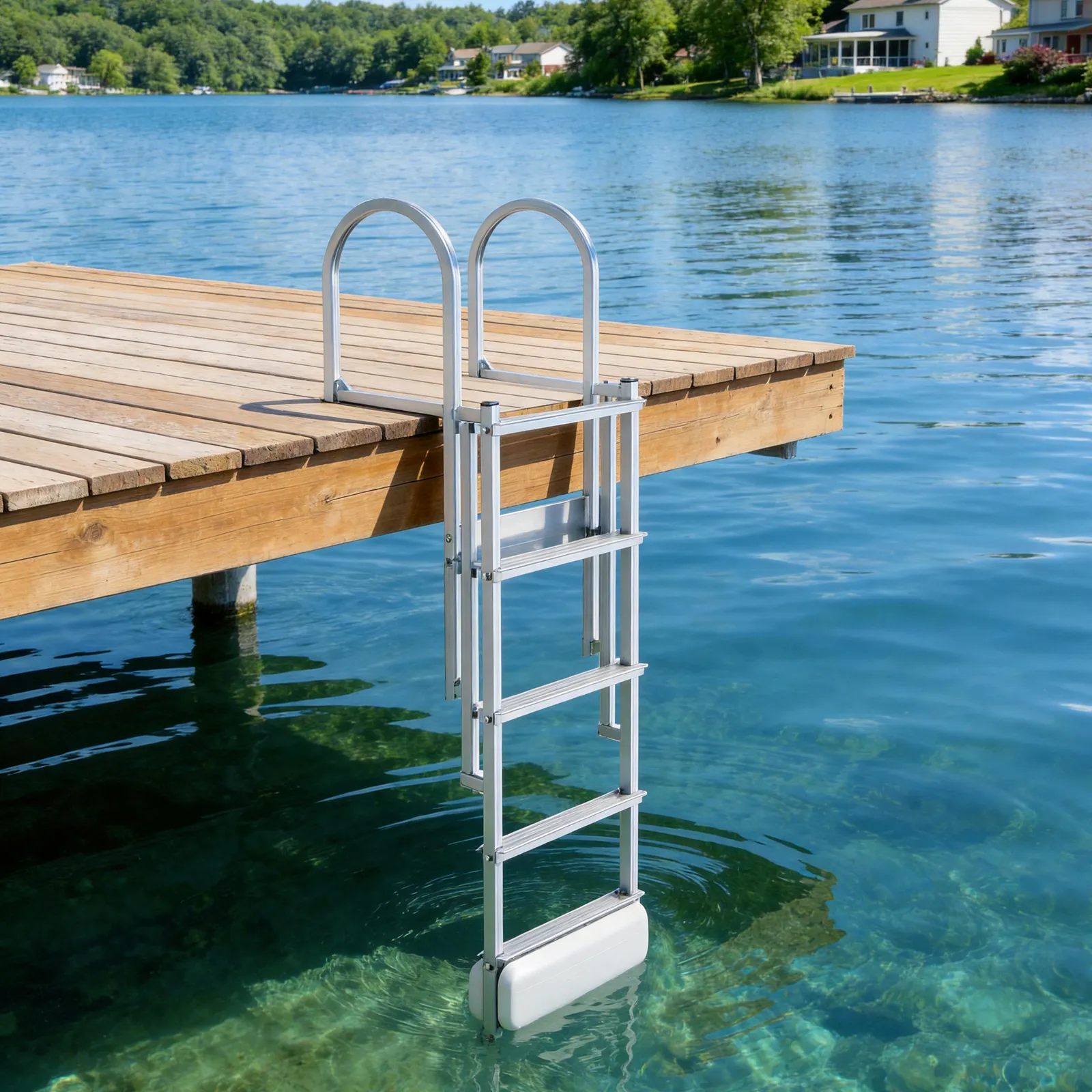
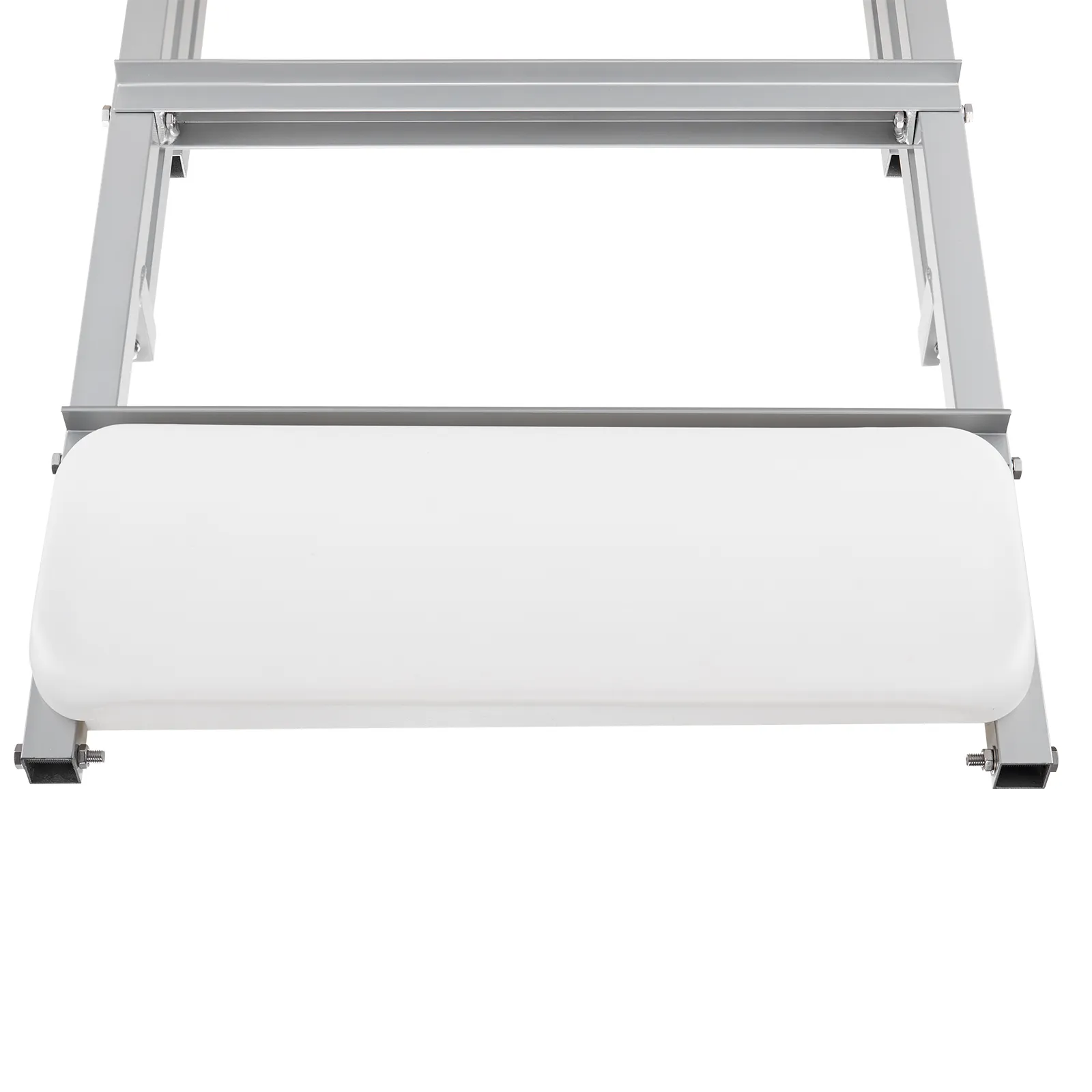
- Automatic Lift-Up: Equipped with a float at the bottom, the pontoon boat boarding ladder automatically lifts out of the water and stays close to the dock
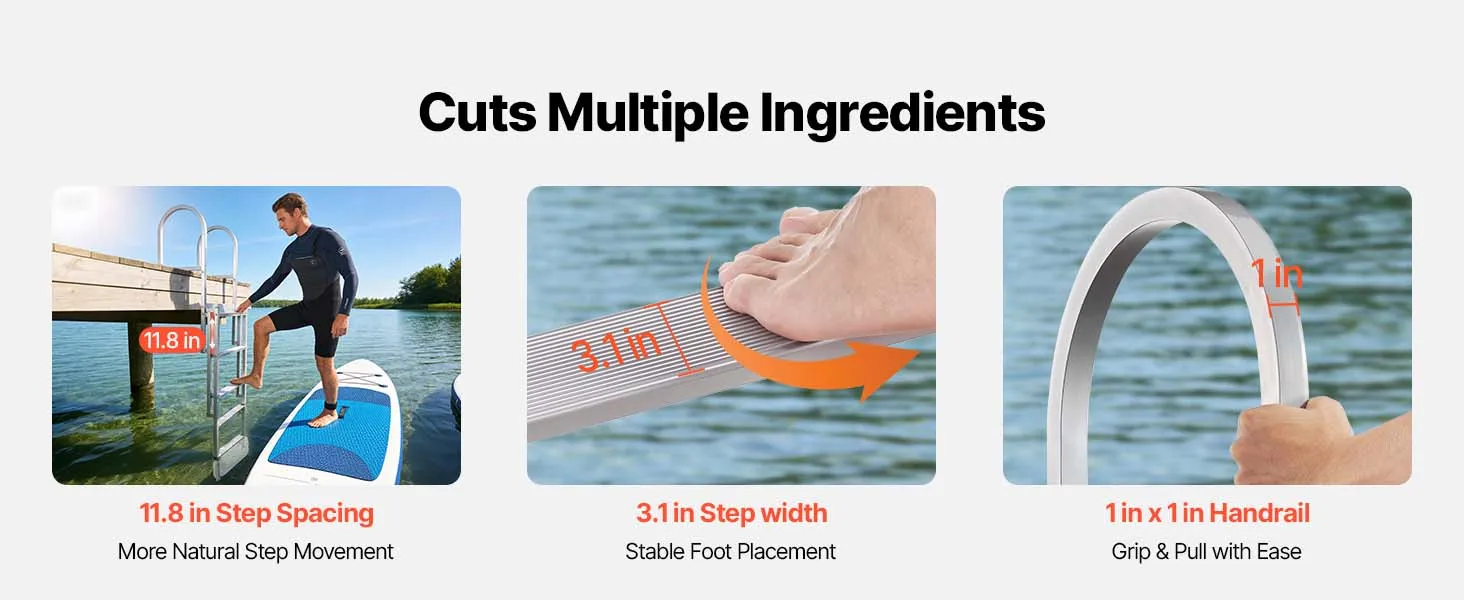
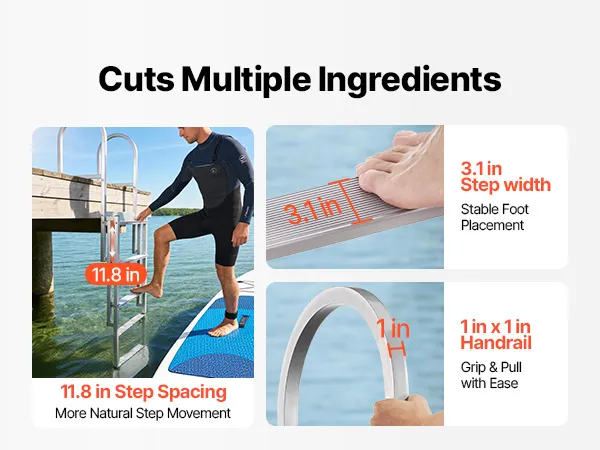
- Easy & Smooth Climbing: Designed with 11.8 in step spacing and 3.1 in step width, this marine dock ladder provides ample footing for smooth climbing. Paired with handrails, it supports steady, effortless movement on and off the water with extra stability
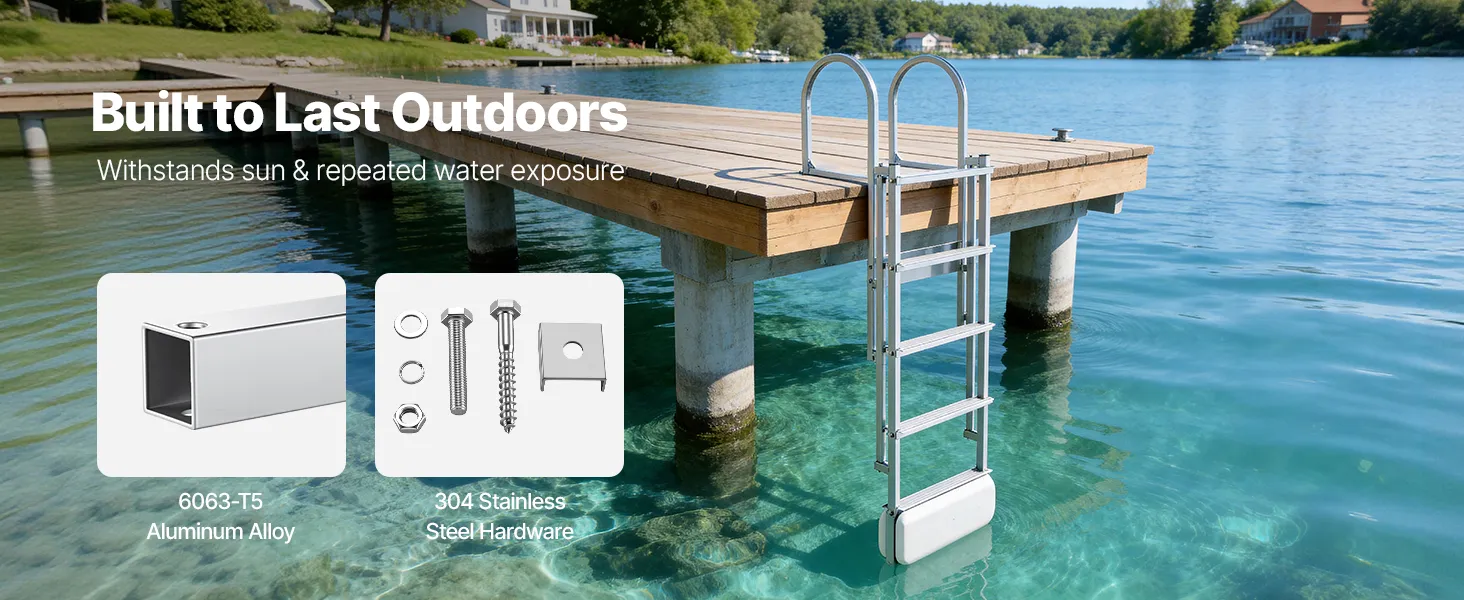
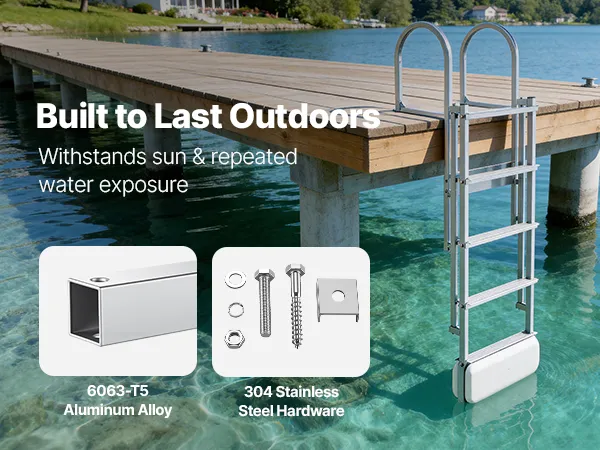
- Built for Long-Term Outdoor Use: Made with a durable aluminum alloy frame and stainless steel hardware, this boat dock ladder is designed for long-term exposure on docks, boats, or pools. It performs steadily in sun and damp conditions
Frequently Bought Together
Reviews
 edwardc325@aol.com j.c.m.elec28 Carsten S. Eric Despres
 About this item



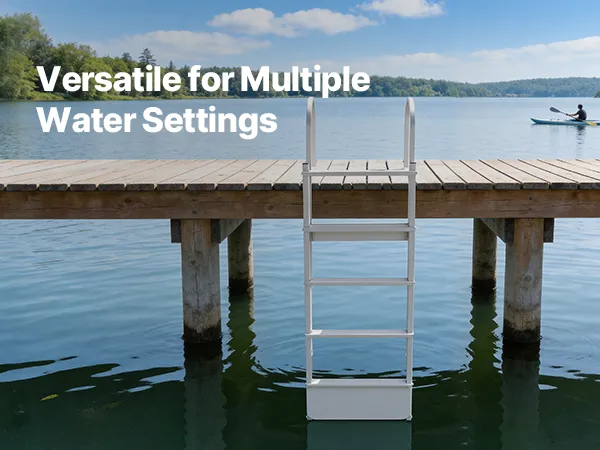
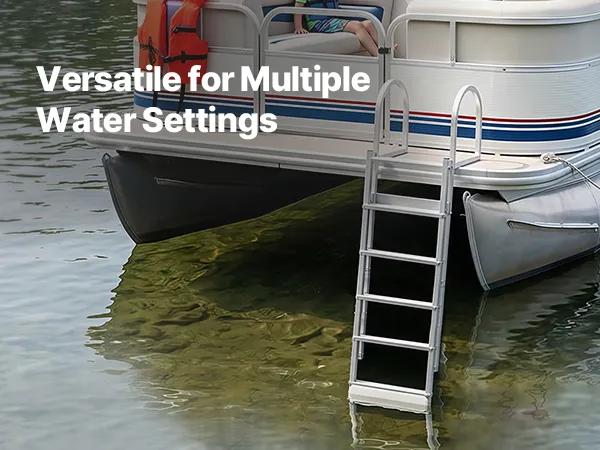

Five-Step Reach for Deeper Water Entry Points and Better Dock Clearance
Getting back onto a floating dock, pontoon deck, or elevated pool coping from deep water requires the bottom step to be at a depth where the swimmer can place a foot without kicking upward out of a deep tread position. The VEVOR floating dock lift ladder's five-step design provides greater vertical reach. This means it can reach deeper water, higher dock heights, or both.
The fifth step is especially helpful for people who find it difficult to climb a lower ladder. This group includes older adults, children, and swimmers who have been in open water for a long time and whose legs are tired. Adding an extra bottom step makes the first step deeper in the water. This feature lowers the amount of leg lift needed, making the first step of the climb as easy on the body as possible.
Floating Dock Lift Ladder with Bottom Float for Automatic Passive Retraction
There is a buoyancy float at the bottom of this floating dock lift ladder that keeps the lower part of the ladder raised and close to the dock edge when it is not in use. When weight is applied, the float submerges, lowering the ladder into the boarding position. Once the user steps off, the float rises, returning the ladder to its raised position. The ladder then returns to its retracted position without further action from the user.
This passive retraction means that the ladder can return to position between uses without a manual reset cycle. This is a big practical benefit in places where a lot of people use the ladder all day. If each person had to physically pull the ladder back up after using it, it would stay underwater for most of the day. The float keeps the steps out of the water between uses, so it does not rely on the user to stay in place.
Adjustable Height Setting for Precise Step Positioning at Any Water Depth
The ladder has a height adjustment device that lets you set the total vertical drop from the deck mount to the lowest step to fit the installation point's needs. Different docks and water levels require different ladder depths. Even at the same site, seasonal changes in water level can alter the deck-to-water distance over the course of a season.
The height adjustment addresses this issue by allowing the installer to set the bottom step to the correct target depth for the site, regardless of how high the deck is above the water. Setting the correct lowest step depth determines how easy it is to board the ladder — a step set too high above the water surface requires excessive leg lift on the first step, while the correct positioning allows a natural upward stride to engage the ladder from a neutral swimming position.
22.4 in Wide Aluminum Alloy Steps with Anti-Slip Texture for Wet-Foot Security
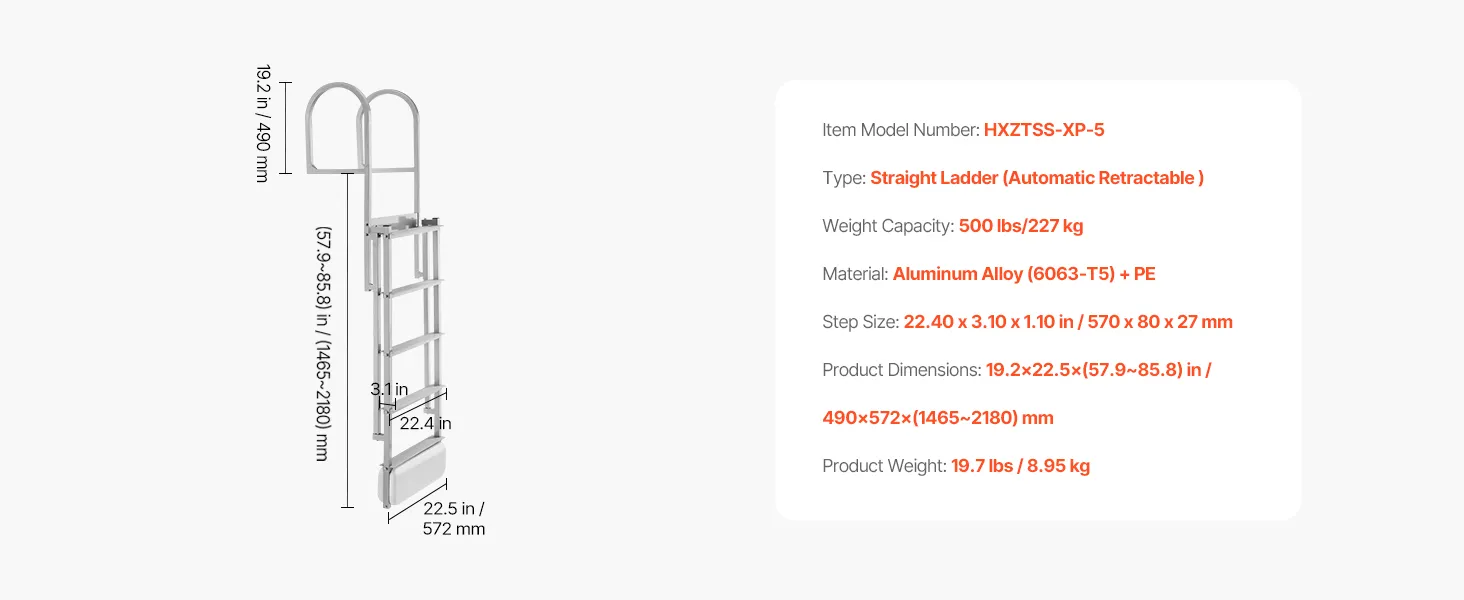
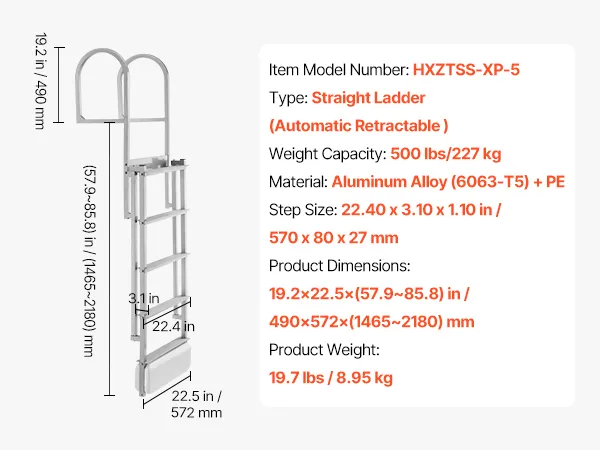
Each of the five steps is made of aluminum alloy and measures 22.4 by 3.1 by 1.1 inches (570 by 80 by 27 mm). Each step has a textured, non-slip surface that covers the full width of the step. The 22.4-inch length makes the standing platform big enough to fit most adult foot sizes, but users do not have to place their foot exactly in the middle of the step, which can be hard when they are tired, the deck is moving, or water on the step makes it harder to grip.
The aluminum alloy steps are rigid enough to support up to 500 lbs (227 kg) during normal use. The textured surface keeps its non-slip properties even after many wet-foot contact cycles. In contrast, smooth step surfaces lose their grip as the pattern fills with mineral deposits and living things over the course of a season of constant use in lake and marine environments.
Floating Dock Lift Ladder with 500 lbs Rated Capacity and Stainless Steel Hardware
This floating dock lift ladder can hold up to 500 pounds (227 kg) across its five-step aluminum alloy frame. This includes both static and dynamic forces during boarding. Dock ladder steps are at their heaviest during the push-off phase, when the climber moves their weight from the water to the step and pushes themselves up. This creates a force spike that is greater than their body weight.
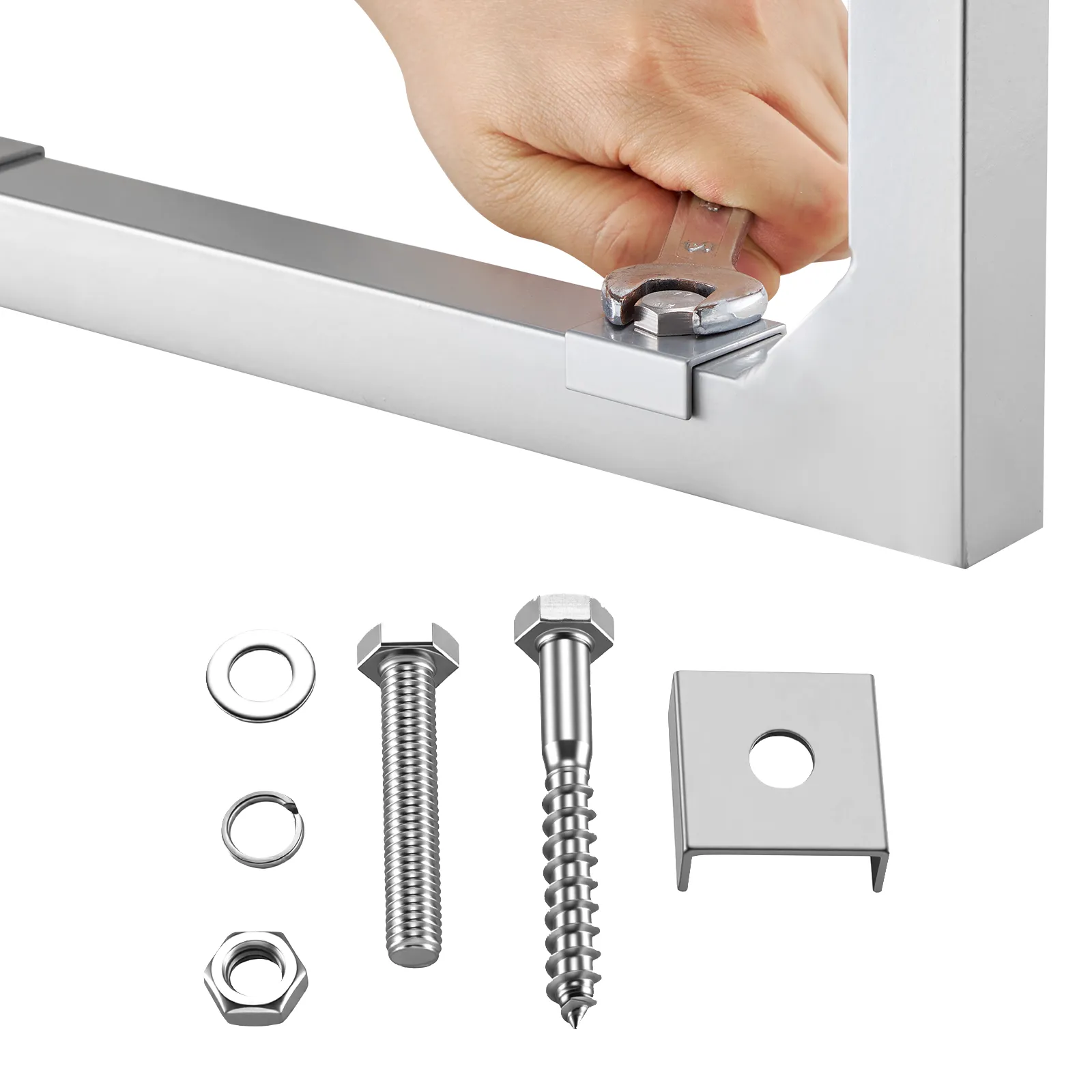
The bracket assembly and frame connections are made with stainless steel hardware. This prevents corrosion on the metal parts most likely to contact water, such as bracket bolts, mounting screws, and connection fasteners at the deck attachment point. Stainless steel maintains its clamping force at these joints even after being wet and dried repeatedly.
One-Person Installation with Included Hardware for Fast Dock-Ready Setup
The floating dock lift ladder comes with the required mounting hardware and a user manual. The setup is designed so that one person can work from the dock's surface; no help is needed from the water or below the dock. Standard fasteners are used to mount brackets to flat dock decking. This makes it possible to install and adjust the height in one working session.
Installing it for a season, taking it down at the end of the season, and putting it back up every spring is easy with the included tools and bracket design. You can set up the ladder, adjust its height, and be ready to use it the same day. Installation can be completed using common household tools.