VEVOR Access Panel for Drywall, 39x39 cm Galvanized Steel Access Door, Easy Install Hinged Service Panel with Screwdriver Latch, for Ceiling Plumbing Electrical, 37x37 cm Cutout Size White


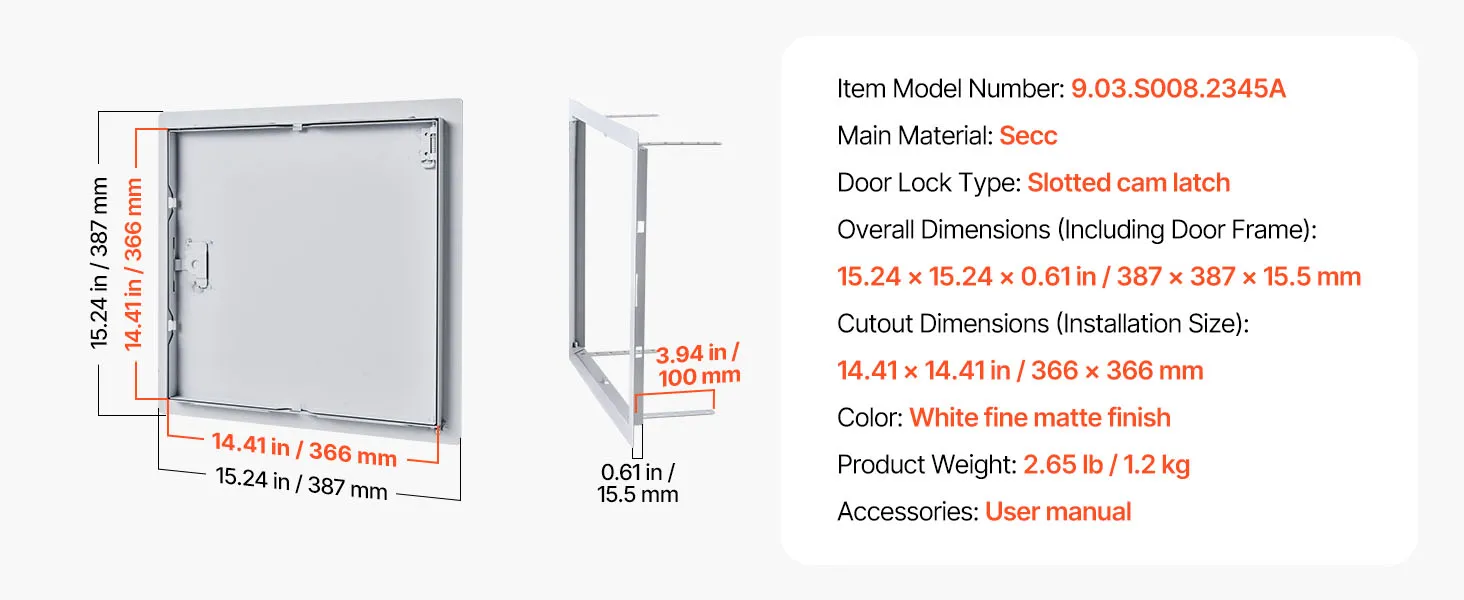
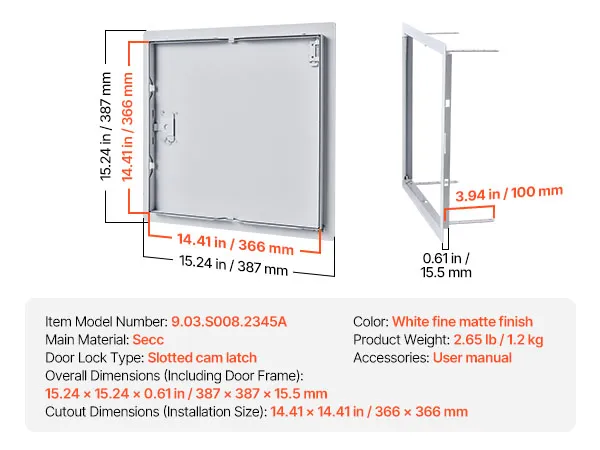
- Product Dimensions: This access door has an installation size of 14.4x14.4 in/ 37x37cm and an overall size of 15.2x15.2x0.6 in/ 39x39x2cm, ideal for basements, ceilings, drywall, cement walls, and more
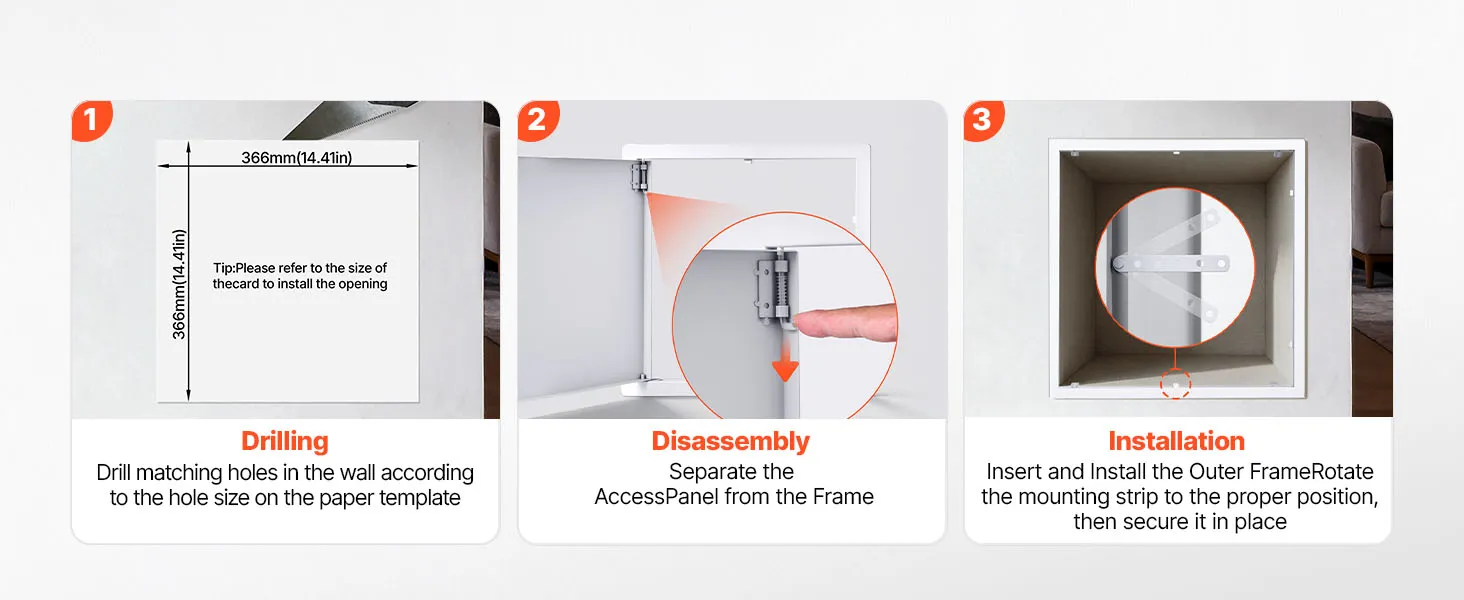
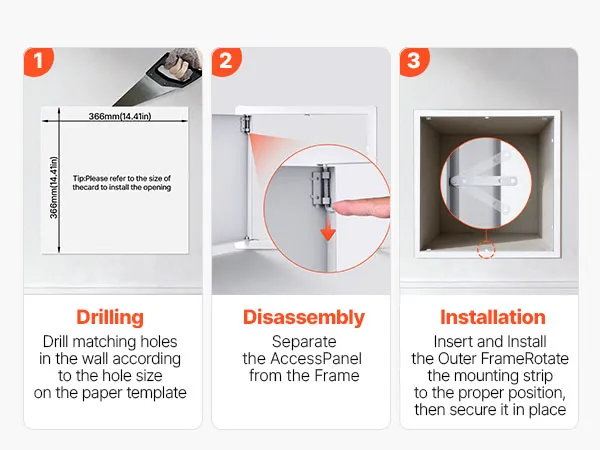
- Worry-Free Installation: Each white access panel includes a 1:1 paper installation template. Simply mark and cut the opening according to the template for a precise fit—no more concerns about choosing the wrong size or struggling with installation
- High-Quality Materials: Our access panel for drywall is made of thickened galvanized steel with a matte baked-paint finish for rust resistance and long-lasting durability. It is more durable than standard materials and sturdier than aluminum alloy
- Sturdy Construction: The access panel door frame features seamless welding with tight, smooth joints and no sharp edges or burrs. The outer frame is reinforced with stiffening ribs to enhance overall stability and resist warping over long-term use
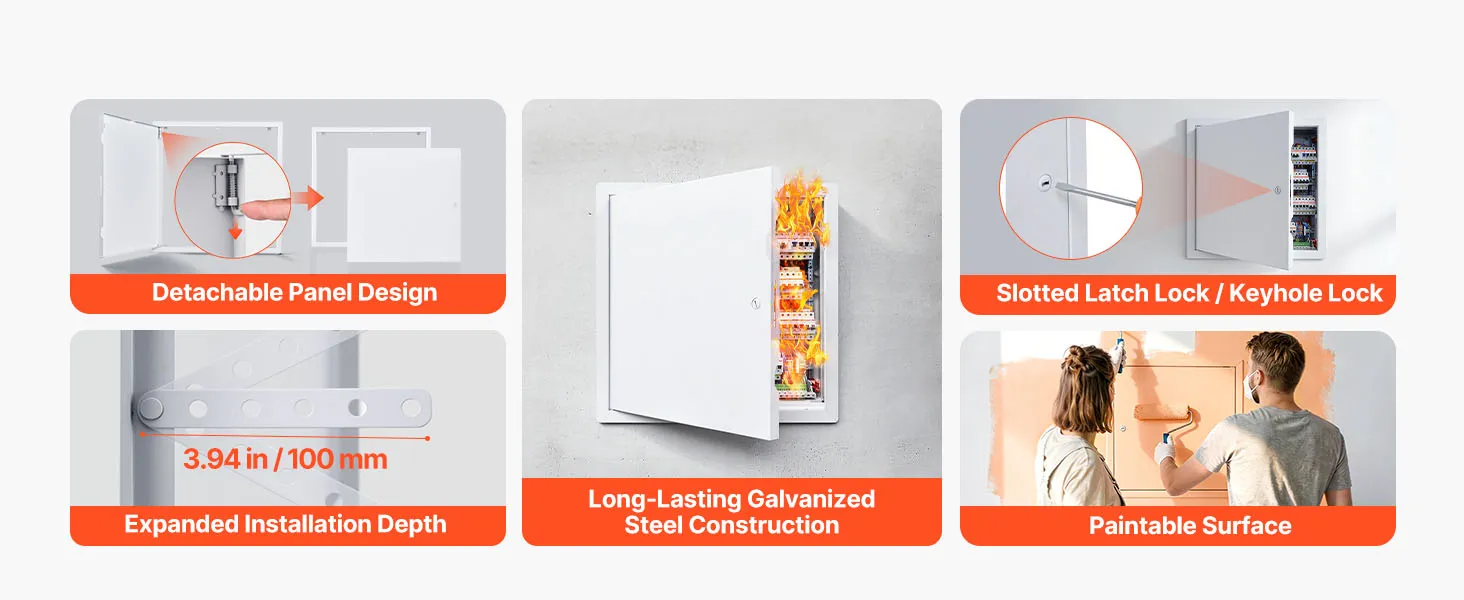
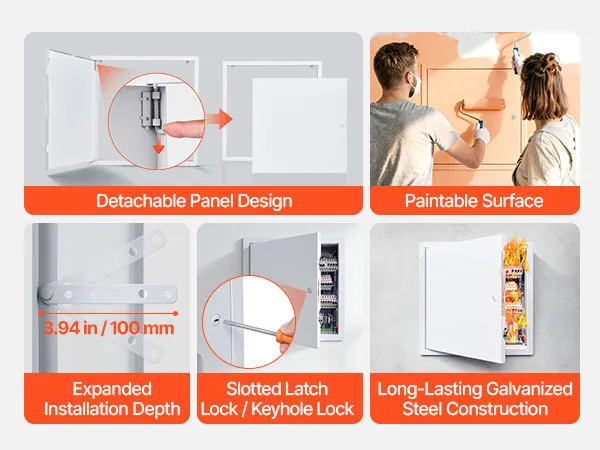
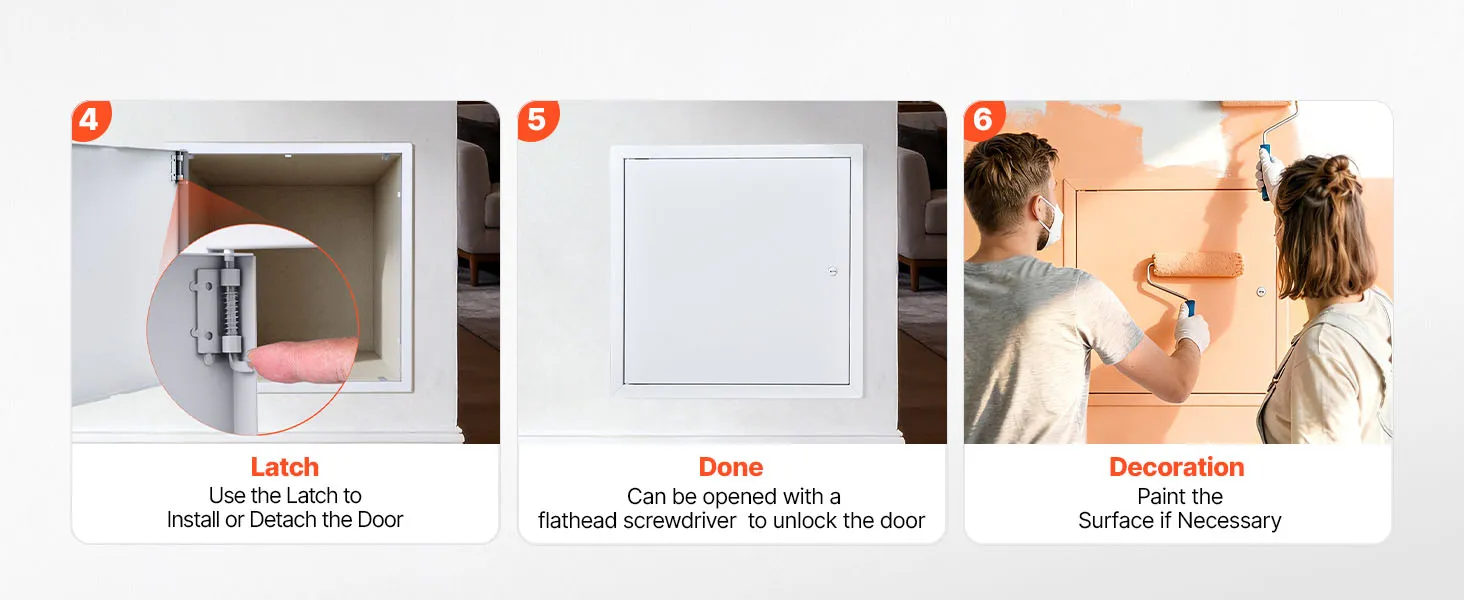
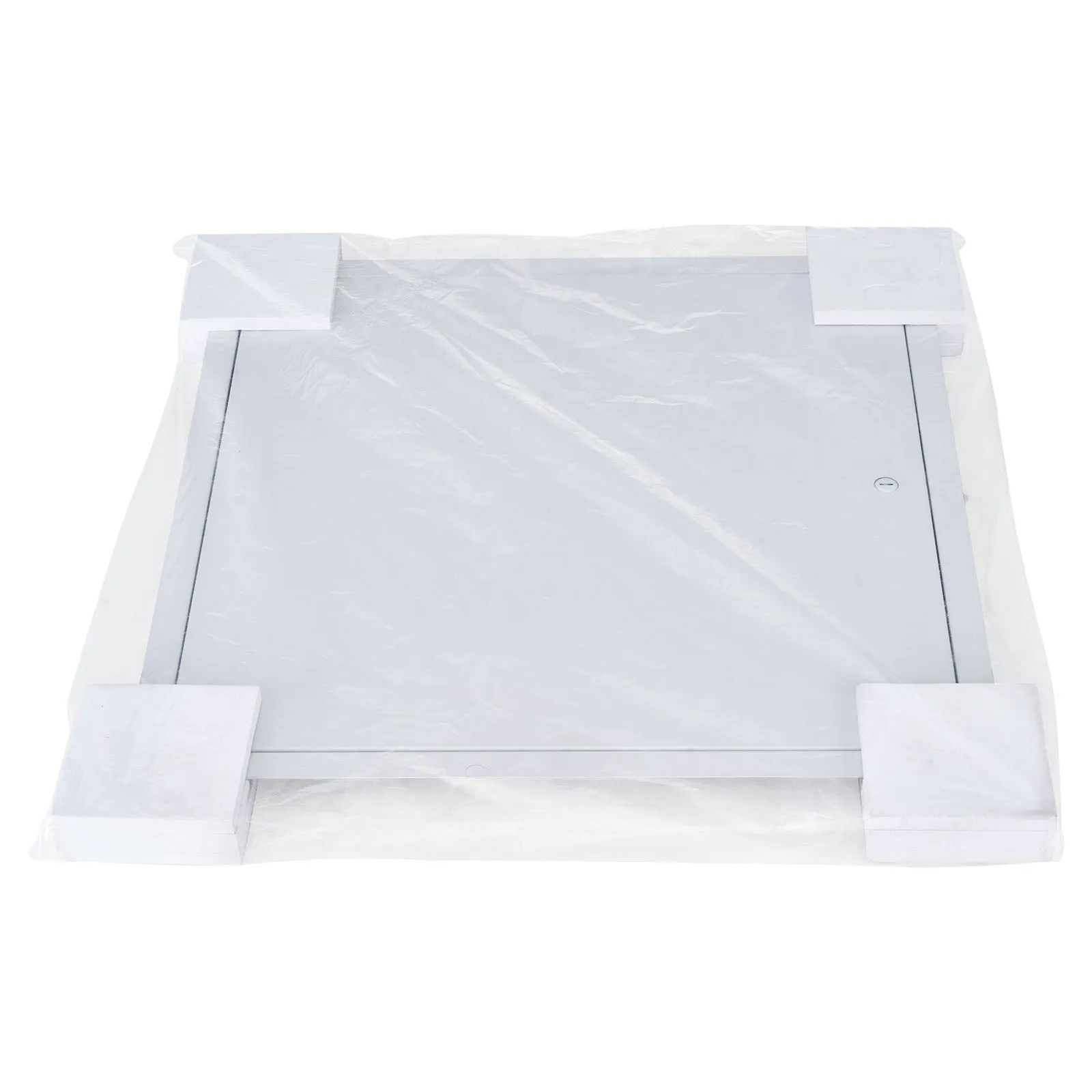
- User-Friendly Design: Detachable door panel for easy maintenance, flathead screwdriver access port helps reduce the risk of losing keys, four-corner l-shaped EVA corner guards for packaging to help keep the product intact during transport
Frequently Bought Together
Reviews
About this item




Access Door for Electrical Panel with 37×37 cm Cutout for Drywall and Cement Walls
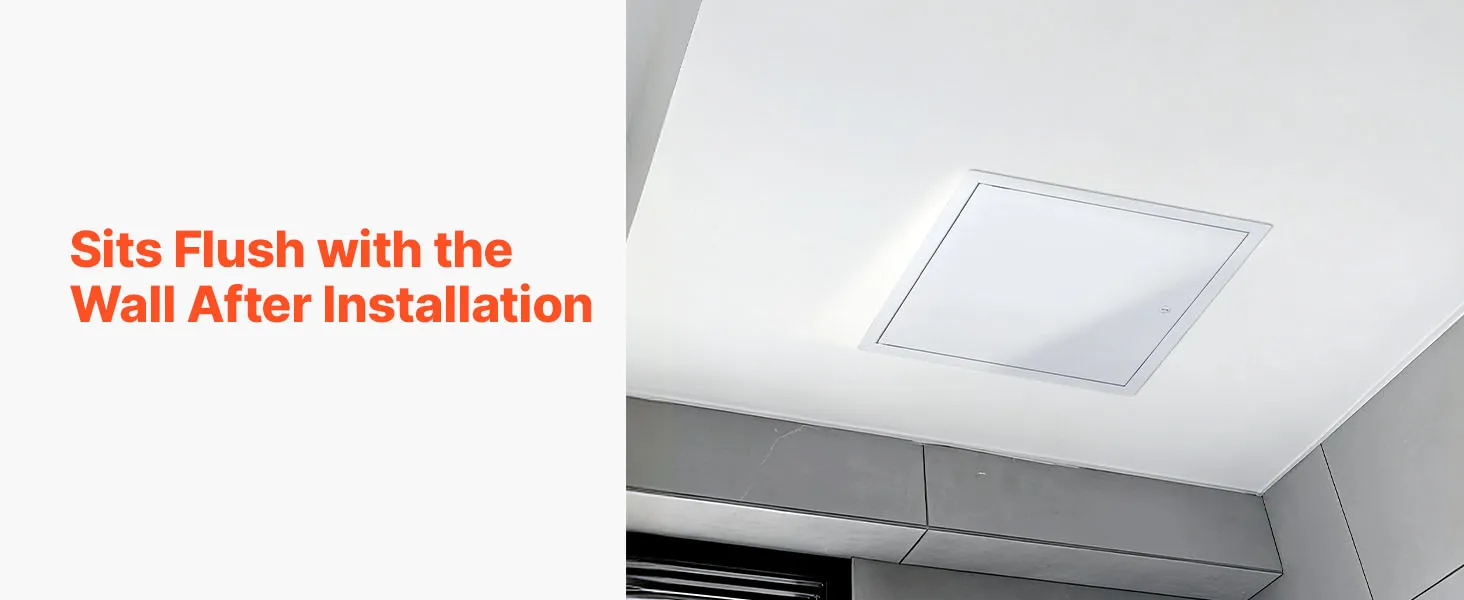
This access door for electrical panel has a 37x37 cm cutout opening inside a 39x39 cm panel, giving the installer a clear 2 cm overlap on each side for secure wall anchoring. The 15.5 mm panel depth keeps the fitted profile flush with the surface, preventing it from protruding too far from the wall surface.
The unit is designed to work with drywall as its primary base. Still, it can also be used on cement walls, ceilings, and basements that require service access to electrical components, plumbing runs, or junction boxes. It weighs only 1.2 kg, which is light enough for one installer to hold in place while marking and fixing.
0.8 mm SECC Galvanized Steel Body with Matte Baked-Paint Finish for Rust Resistance
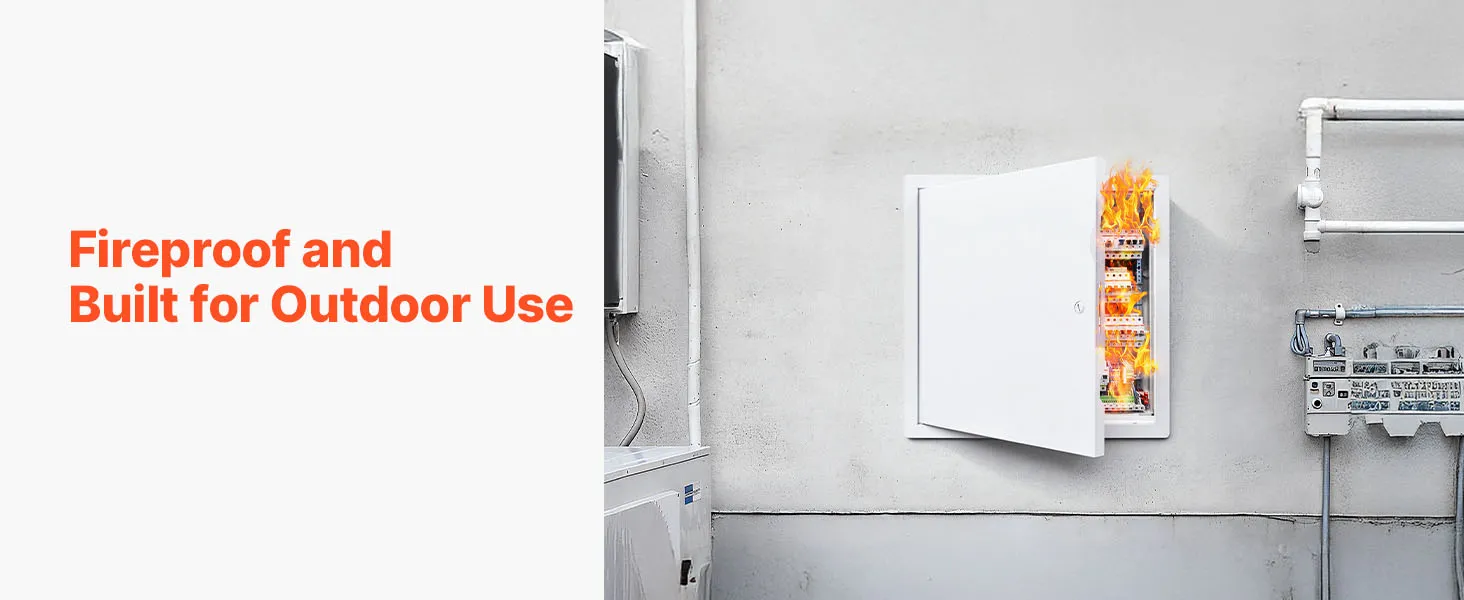
Its body is made of 0.8 mm SECC, an electrolytic galvanized steel. This coil has been galvanized by an electrolytic process that firmly bonds the zinc layer to the steel surface. The zinc coating helps improve corrosion resistance and protect the steel surface in indoor environments. The result is a panel with strong corrosion resistance for bathrooms, basements, and other moisture-prone indoor areas.
The white fine matte baked-paint finish applied over the galvanized base does two things: it adds a second layer of protection against oxidation, and it gives the product a low-sheen look that matches standard internal wall finishes without the need for post-installation painting. The matte white finish reduces glare compared with glossy surfaces and blends better with common interior wall finishes.
Screwdriver Latch That Eliminates the Risk of Losing Access Keys
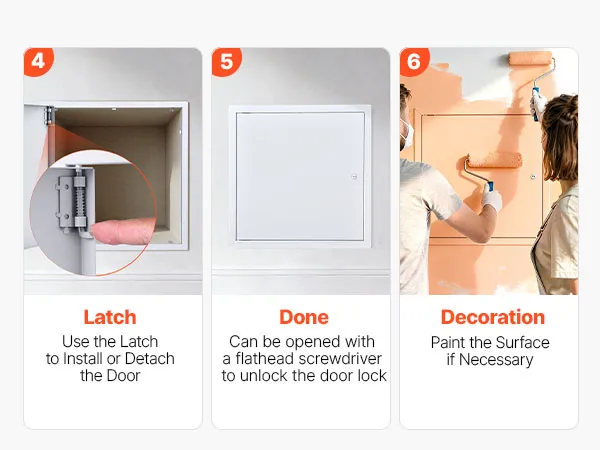
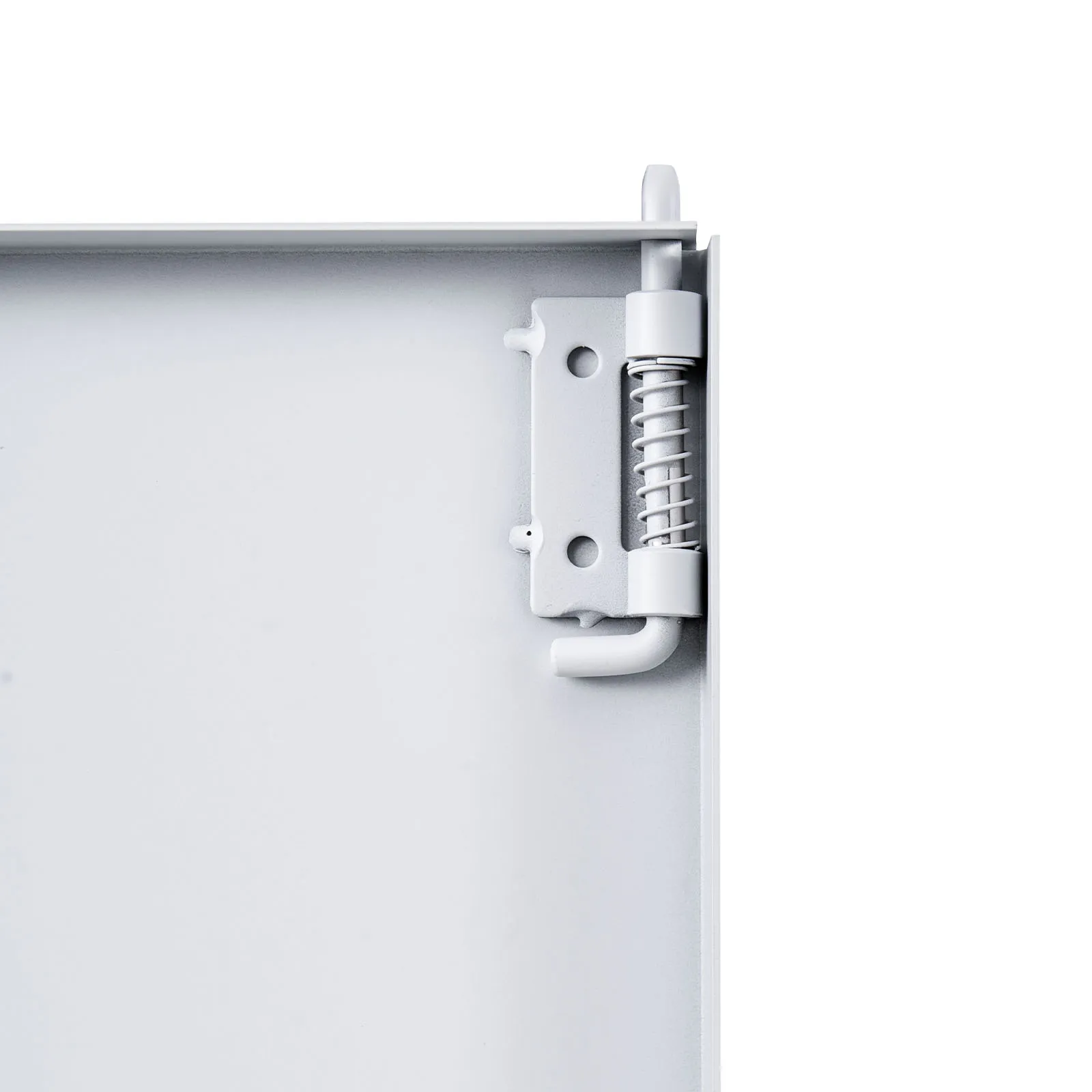
Standard panel designs usually require a key to open, but this access door for electrical panels' screwdriver-operated latch makes it unnecessary. A flathead screwdriver, which is commonly used in electrical and plumbing maintenance, can directly engage the latch. This eliminates a common problem faced by building managers, maintenance contractors, and homeowners who do not use the panel very often.
The spring latch mechanism makes it easy to remove the panel when you need to access the interior completely. The latch can be released with a screwdriver, but the door panel can be removed from the frame without any additional tools. This means that the door does not have to be held open or propped up during long repair work.
Stainless Steel Hinges That Resist Deformation Under Repeated Opening
The hinges on this panel are made of stainless steel rather than zinc alloy or regular steel. After many cycles of opening and closing, stainless steel maintains good strength and corrosion resistance. Over time, that wear causes the door to sit unevenly against the frame, leaving gaps along the sides and preventing the panel from closing flush.
In high-moisture areas, like bathroom ceilings or basement walls, stainless steel also does not rust, unlike regular hinges, which can get stuck or leave rust marks on the surrounding paintwork. The hinge connection provides a secure pivot point, keeping the door open without the operator having to hold it up while performing repair work.
Seamless Welded Frame with Stiffening Ribs for Long-Term Warp Resistance
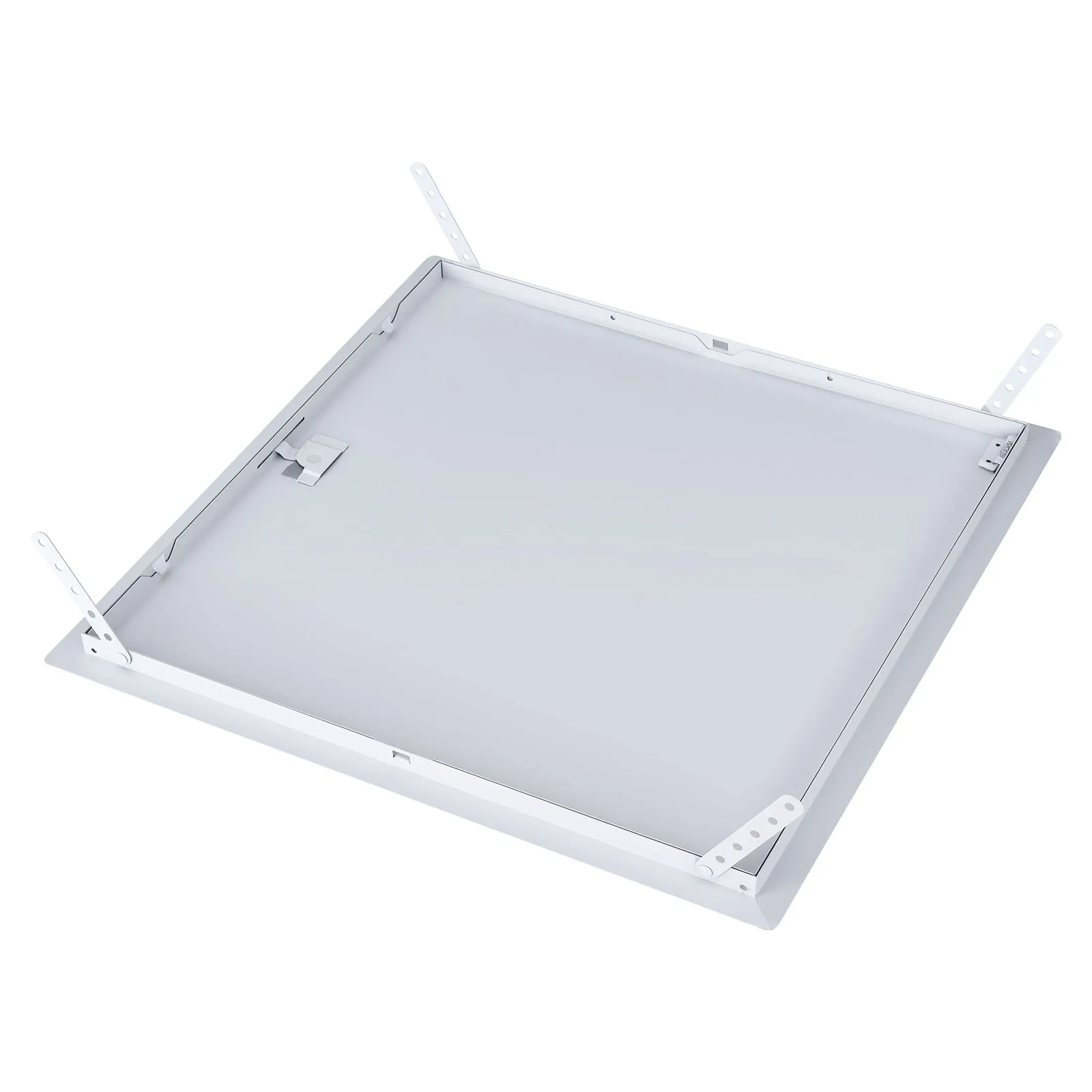
The outer frame of this access door for electrical panel is made with smooth welded corner joints at all corners, so there are no visible seams, no sharp edges, and no burrs that could catch on tools or cut hands during installation. Instead of a mechanical link that can come loose over time due to temperature changes or vibrations from nearby HVAC systems, seamless welding provides a continuous structural connection at each corner.
Pressing stiffening ribs into the outer frame adds a second level of support to the shape. A flat steel panel with ribs has improved stiffness and better resistance against bending. If you put a panel in a ceiling or wall that faces the outside and there is a big temperature difference between the cavity and the room, the rib reinforcement is important for the structure, not just for looks.
1:1 Paper Installation Template for a Precise, Stress-Free Cutout
The units in this range all come with a paper fitting template that matches the panel's cutout size. You put the template right on the wall and use it to mark the hole before cutting. This way, you do not have to perform the measuring and layout calculations that can lead to off-center cutouts or the wrong size. The template helps reduce marking errors and makes the installation process more consistent.
The template has a marking zone that accommodates a ±5 mm cutout. Cutting within that range ensures that the outer frame overlaps the opening just enough to anchor securely, without leaving a gap too large for the frame flange to fill. This accuracy is especially useful when installing an access door in electrical panel areas, as the opening must align with the service cavity.
Access Door for Electrical Panel Suitable for Ceilings, Basements, and Bathrooms
This access door for electrical panel applications is made of galvanized steel, has stainless steel hinges, and has a seamless-welded frame. It can be used in a variety of places where service access panels are usually placed. The corrosion-resistant material stack works well in bathrooms, where there is high water exposure and humidity. The galvanized steel frame and matte finish help maintain a clean appearance in moisture-prone areas.
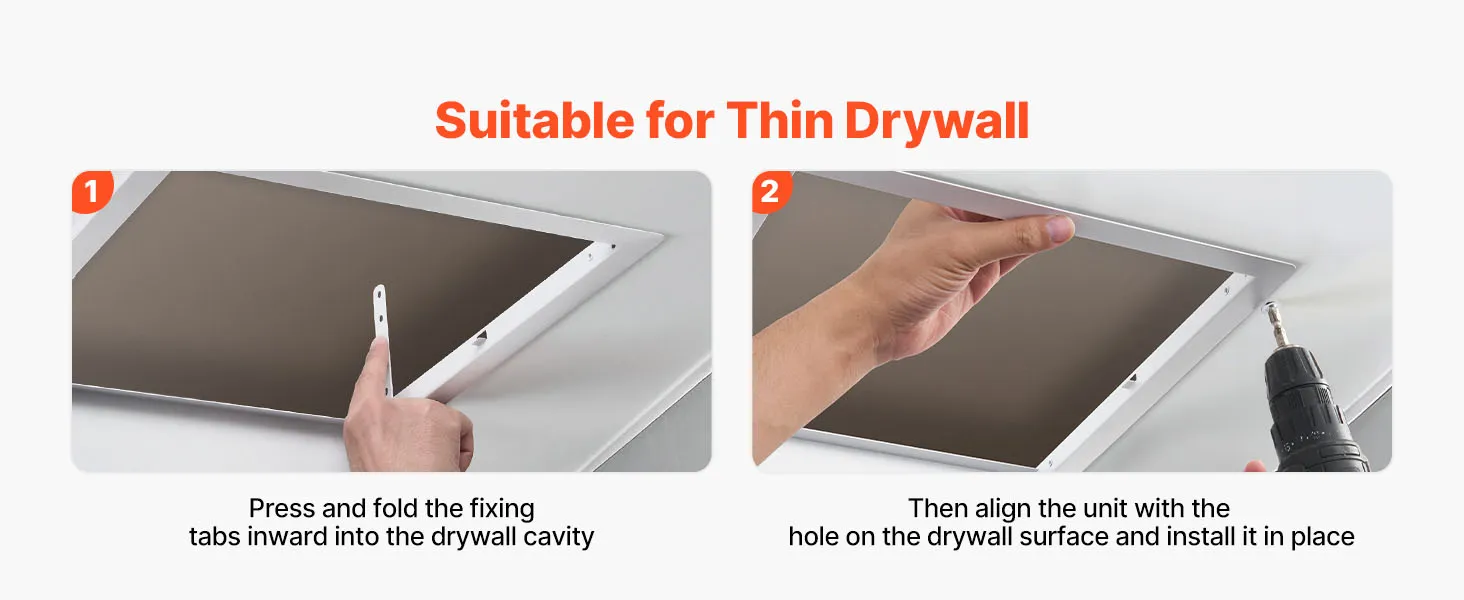
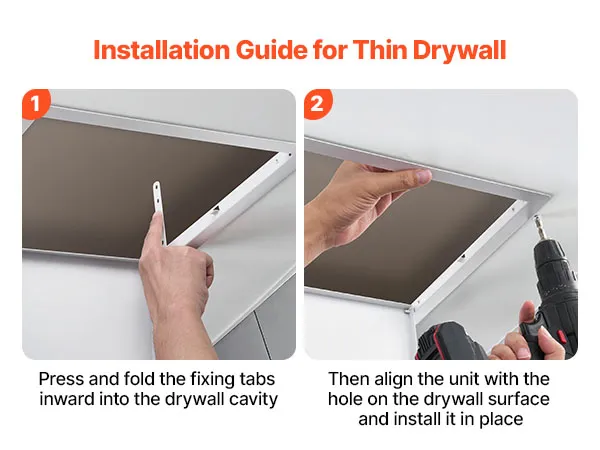
Many places do not need to be painted after installing the white fine matte finish, as it complements most indoor decor. The panel arrives undamaged because of EVA corner guards that protect it during shipping and installation. When mounting, the thickened galvanized steel toggle plate accommodates walls of different thicknesses.