

Deals
Deals by Categories




More Ways to Save

Best Sellers
Best Sellers by Categories
New
New by Categories
Download VEVOR App 

Get 5,00€ Off 99,00€+ Orders on Your First 3 App Orders
Scan the QR code to download
SKU: WLCZBXX45LSQ094CDV2
Copy


+11
More


VEVOR Car Refrigerator, 32 L Dual Zone Portable Freezer, 12 Volt Car Refrigerator Fridge, -4℉-68℉ Adjustable Range, 12/24V DC and 100-240V AC Compressor Cooler for Outdoor, Camping, RV
4.5 1608 Reviews
234 90 €
Earn at least 2% points on purchases or save up to 15%.
Each when you buy 0+.
Shop
Get -% off for new user
Get 5,00€ Off 99,00€+ Orders on Your First 3 App Orders.
Download Now


Features & Details
- Large Capacity: The portable refrigerator freezer has a dual compartment capacity of 32 L. This robust RV fridge can hold 44 cans of 330ml cola or 37 bottles of 550ml water or 12 bottles of 750ml red wine, accommodating seafood, snacks, meats, and beverages, meeting the needs of short trips such as travel, boating, and camping.
- 1.5H Rapid Cooling: This 12V car fridge uses compressor cooling technology, reaching -20°C / -4°F shutdown point in approximately 1.5H at 77°F ambient temperature. It cools quickly and operates normally even when tilted up to 45 degrees, making it your companion for outdoor camping or work, keeping your food fresh. No need for ice cubes, preventing food spoilage and saving money and space.
- LED Screen & Bluetooth Control: The LED control panel allows you to directly view the operation status of the car fridge and adjust the temperature range at any time. You can set any temperature between -20°C to 20°C / -4°F to 68°F on the panel. The electric cooler also features Bluetooth mode, connecting to a mobile app for remote control.
- Quiet & Energy Efficient: The fridge operates with noise ≤ 45dB, ensuring you sleep well after long drives. You can also choose between ECO and Max modes via the LCD touchscreen. In ECO energy-saving mode, the operating power of this portable fridge is less than 45W. Even when running in MAX mode (51W), its intelligent circulation consumes less than 1 kWh/day.
- Dual Use for Home/Car: The double door car fridge comes with 110/240V AC and 12/24V DC adapters, allowing it to be used at home, on yachts, RVs, cars, trucks, and vans. Note: Dual-zone single control. The left large compartment allows freezing temperature settings, while the right refrigerator zone temperature cannot be adjusted independently.
Product specification
- Item Model Number NLD45
- Voltage AC100-240V (50/60Hz) DC 12/24V
- Power 60W
- Temperature Adjustable Range - 20 ~ 20 ℃ / -4 ~ 68 ℉
- Capacity 32 L / 33.8 qt
- Noise ≤ 45dB
Frequently Bought Together
Reviews
About this item
Questions and Answers
Explore
Reviews
No customer reviews
Be the first to rate this product. your feedback will helps others make informed decisions.
Write a Review
Top Reviews
About this item
Product specification
- Item Model Number
- NLD45
- Voltage
- AC100-240V (50/60Hz) DC 12/24V
- Power
- 60W
- Temperature Adjustable Range
- - 20 ~ 20 ℃ / -4 ~ 68 ℉
- Capacity
- 32 L / 33.8 qt
- Noise
- ≤ 45dB
- Inner Liner Material
- Vacuum-formed HIPS
- Outer Shell Material
- PP + HDPE
- Net Weight
- 13 kg / 28.7 lbs
- Product Size
- 618 x 376 x 442 mm / 24.3 x 14.8 x 17.4 in
Description


Portable Car Refrigerator
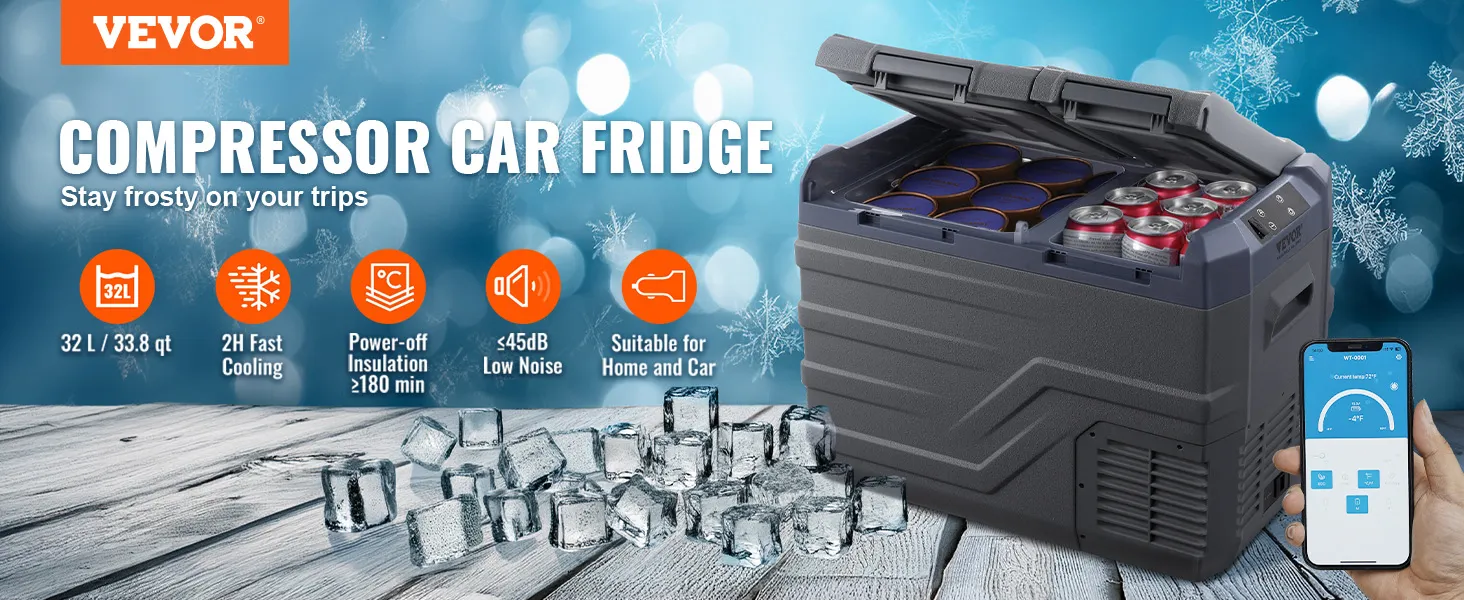
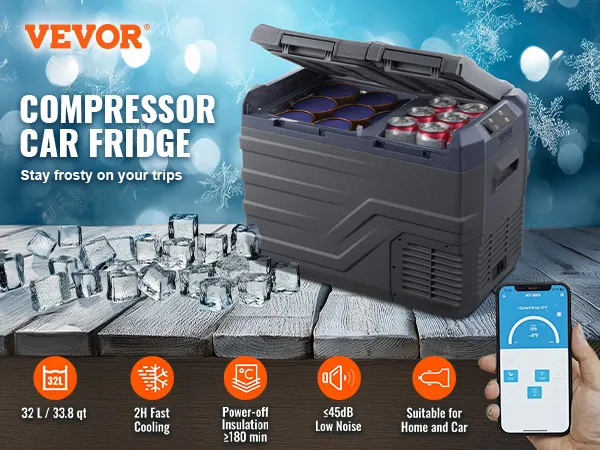
32 L car refrigerator with upgraded compressor for rapid cooling in 1.5H, capable of storing at both high and low temperatures, maintaining excellent operation between 16 ~ 38 ℃ / 60.8 ~ 100.4 ℉.
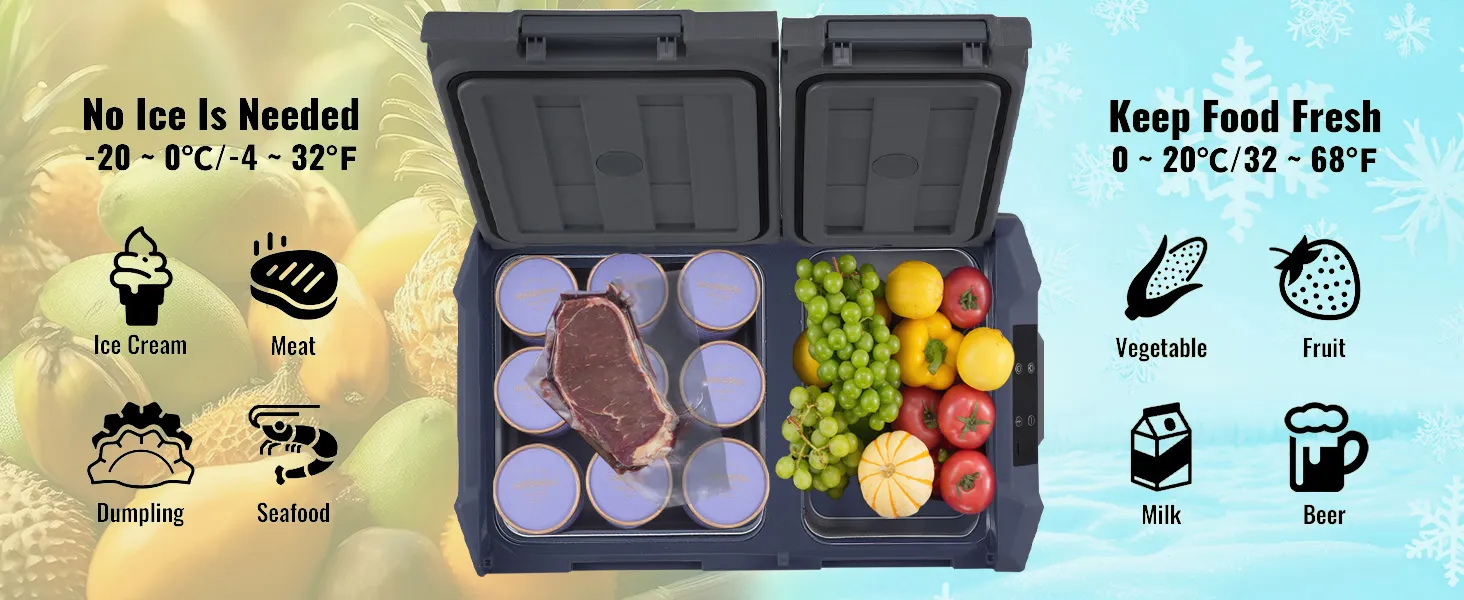
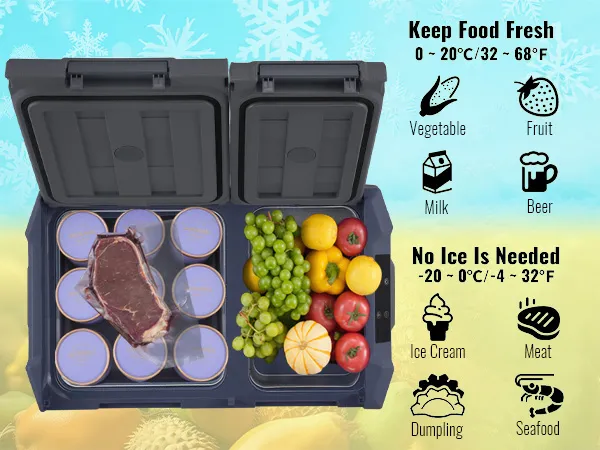
Wide temperature from -20 ~ 20 ℃ / -4 ~ 68 ℉, suitable for storing beer, beverages, fruits, ice cream, various meats, and more. (PLEASE NOTE: the refrigerator zone temperature cannot be adjusted independently.)
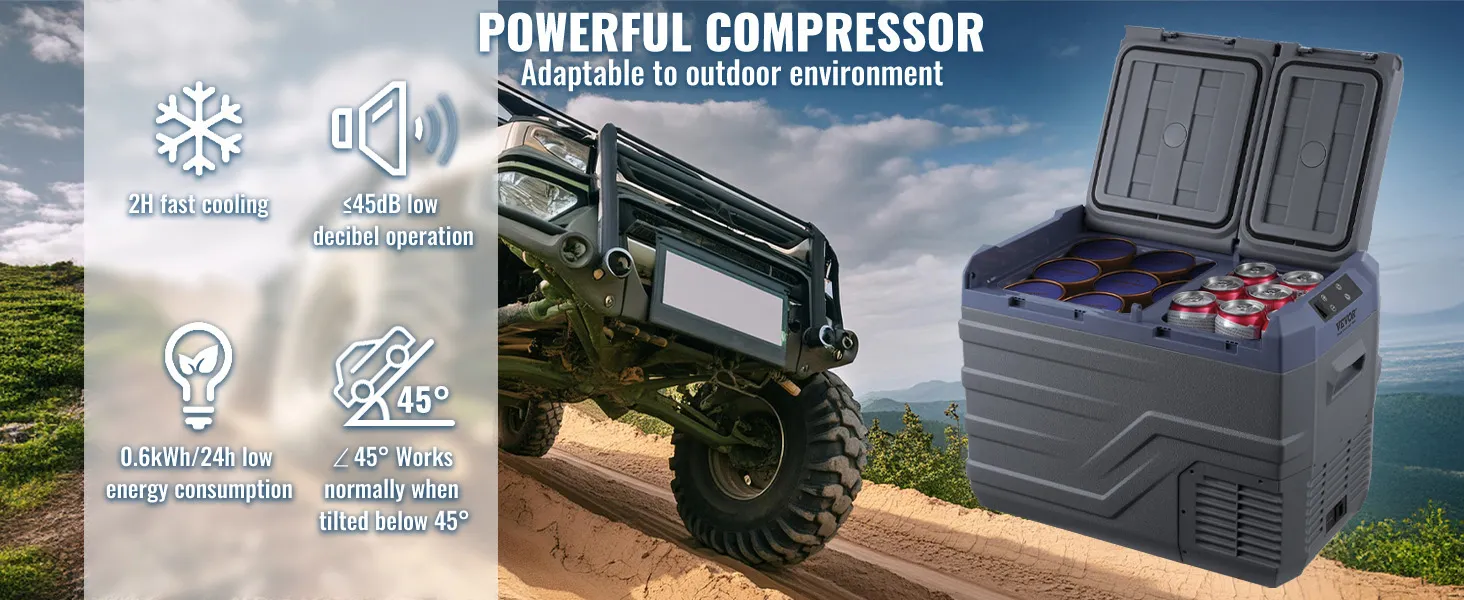
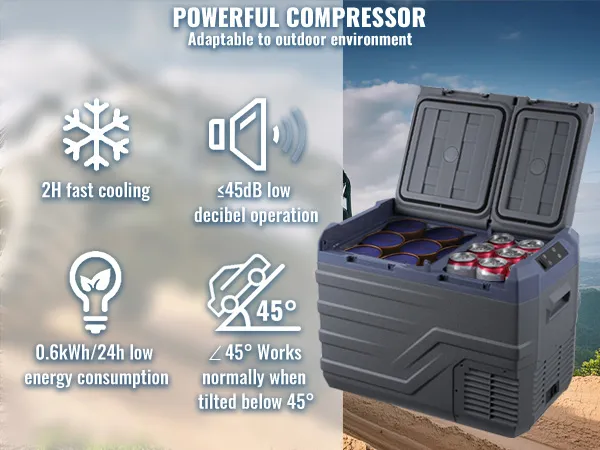
Operates at ≤45 decibels, consumes 0.6 kWh per 24 hours. The compressor ensures optimal performance even when tilted up to 45 degrees.
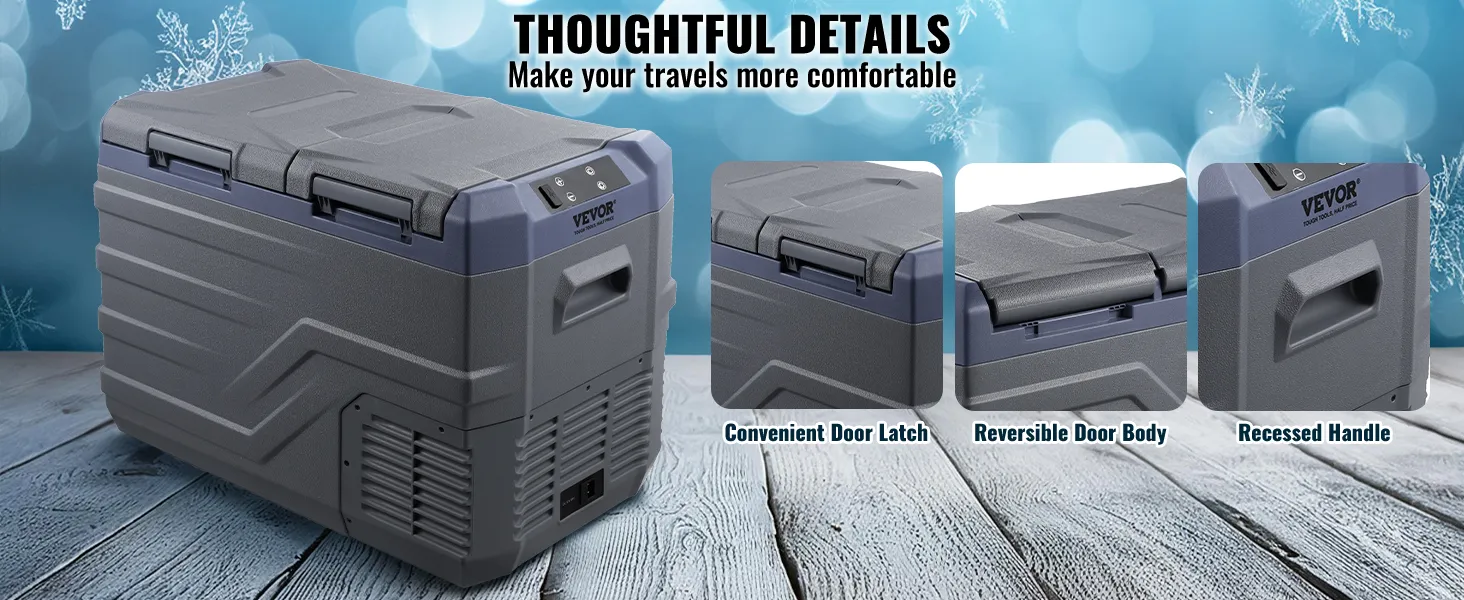
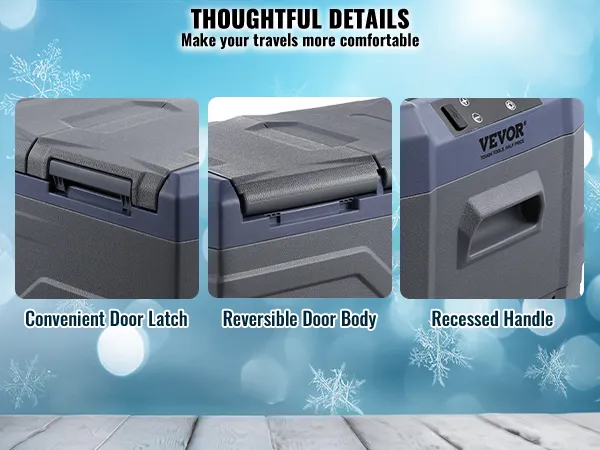
Embedded handle for easy transport, double door and convenient door latch to fit various storage spaces.

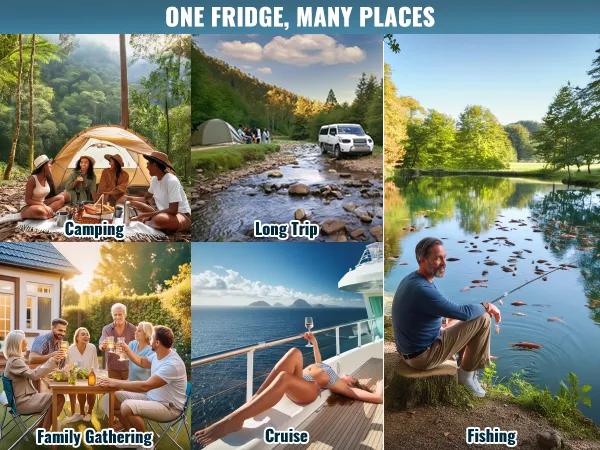
Equipped with adapter, cigarette lighter cord, and AC power cord, it can be used at home, on yachts, RVs, cars, trucks, and vans.
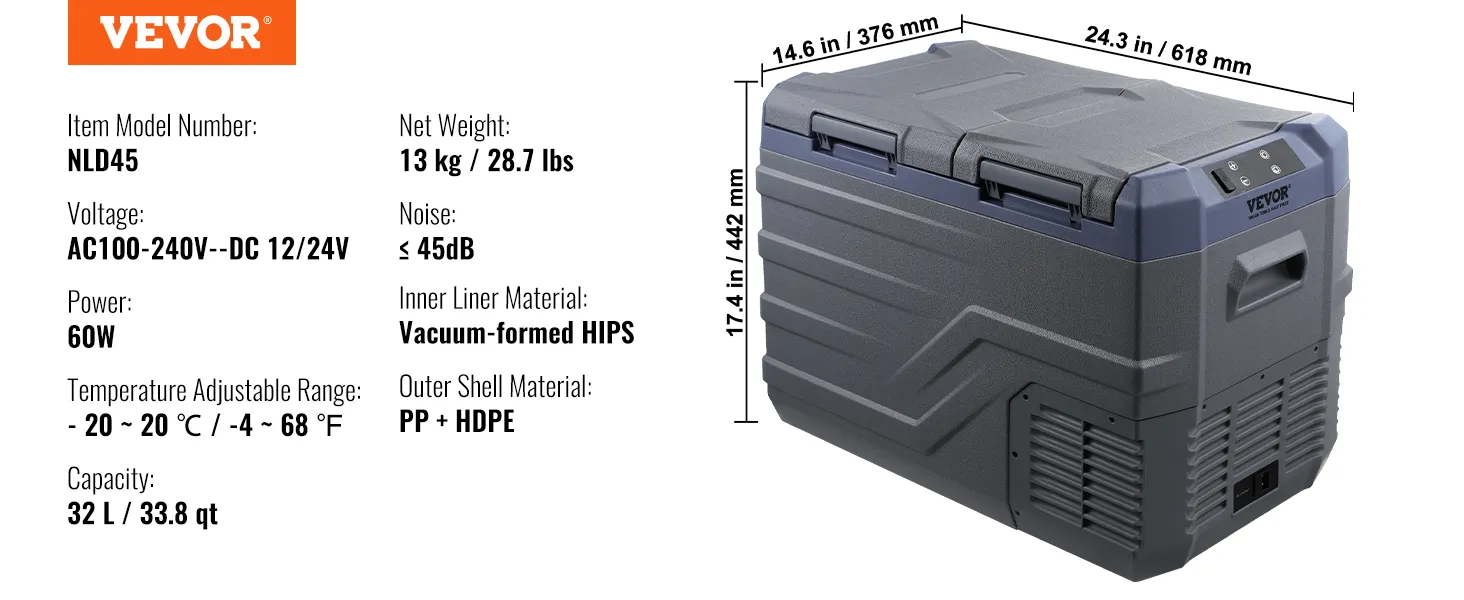
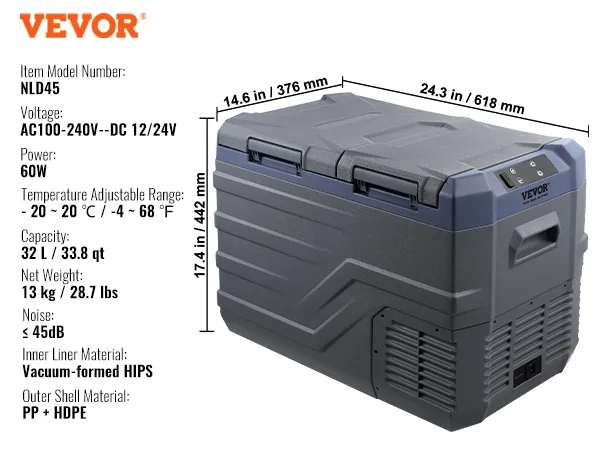
Refrigerated Cooler for Car with 32L Dual-Zone Double Door Layout
With this VEVOR refrigerated cooler for car storage, you can use all 32 liters of dual-zone storage, which has two separate compartments, each accessible through its own independent door. The layout offers space for 44 cans of 330ml cola, 37 bottles of 550ml water, or 12 bottles of 750ml wine, split between both zones, enough to keep a small group supplied for a full day or a solo driver for two days without having to repack or restock mid-journey.
The double-door design offers a practical advantage in the car environment: opening one compartment does not expose the other to cabin air. Every time you unnecessarily exchange air on a hot driving day when the freezer zone is holding protein at -15 °C, and the fridge zone is holding drinks at 4 °C, you are working the compressor harder to recover. You have independent door access to each zone, so you can get what you want from the right side without messing with the temperature the left side has maintained since you left.
Left Freezer Zone and Right Fridge Zone Controlled by a Single Compressor
The zone architecture of this unit assigns fixed roles to each compartment: the large left zone is used for freezing temperatures, with set temperatures from the control panel ranging from -20°C to 20°C. The right zone maintains refrigeration temperatures independent of the left zone setting; it does not accept an independent temperature input. Both compartments are powered by a single compressor with a single control point, making day-to-day use in a car easier, where you want cold storage to work reliably without having to deal with multiple settings.
This fixed-role layout meets that requirement with no operational complexity for most car uses, frozen goods on one side and chilled drinks and snacks on the other. The single-control architecture also reduces the number of variables that can be misadjusted, which is important when multiple people operate the unit in a vehicle during a long drive. When you leave, set the freezer area correctly, and both areas will stay at their settings for the rest of the trip, without you having to change anything.
Compressor Cooling System That Reaches -4°F in Approximately 1.5 Hours
At 77°F ambient, the compressor pulls the refrigerated cooler for car down to -20°C / -4°F in about 1.5 hours, while the refrigeration zone holds its condition in parallel throughout the pull-down. Running both compartments through one compressor circuit efficiently manages the cooling load. The system doesn’t split power between two independent compressors, keeping total draw lower while still delivering dual-zone temperature separation.
At no time is ice required in either compartment. When you switch on the unit, both zones start cooling mechanically, so the full 32L between the two doors is available for food and drink from the first load. The compressor still works fine up to a 45-degree tilt, which is important for a car-based unit that might be parked on inclines, loaded into vehicles with sloping boot floors, or carried onto ferry decks where you can’t always guarantee a level placement.
Vacuum-Formed HIPS Interior and PP + HDPE Shell at a Manageable 13kg
The inside of both compartments is lined with vacuum-formed HIPS, which provides a rigid, thermally stable surface throughout the freezer and fridge zones without adding extra weight. In a double-door unit that splits into two sections within the internal cavity, the quality of the liner material determines how well each zone can maintain its temperature independently. HIPS maintains its structural integrity across the temperature differential between the -15°C freezer side and the 4°C fridge side, without warping or developing gaps in the dividing structure.
At just 13kg, this is one of the lightest double-door single-control units in the NLD range, so it's the most practical for drivers who move the cooler regularly between the vehicle and home rather than leaving it permanently in the boot. The PP + HDPE shell withstands repeated handling without surface cracking or structural weakening. At 72mm shorter in height than the 39L NLD55, and with a footprint of 618 x 376 x 442mm, it’ll fit in shallower boot spaces where taller dual-zone units wouldn’t fit beneath the lid.
Refrigerated Cooler for Car with ≤45dB Operation and ECO/MAX Power Modes
The refrigerated cooler for car runs at or below 45dB in ECO and MAX modes, keeping compressor noise below the threshold where it becomes perceptible during normal driving. The PP + HDPE shell and internal compressor mounting provide a low noise floor. The outer structure absorbs vibration rather than amplifying it into the cabin, and the double door construction adds mass, further damping operational sound from the interior.
ECO mode maintains draw below 45W with daily consumption of under 1 kWh, balancing long-term cold storage against vehicle battery load for drivers operating the unit off the main 12V port during extended stops. MAX mode ramps up to 60W when both zones need faster temperature recovery after extended door use, in high ambient heat, or when the unit is first switched on with a full warm load across both compartments. The LCD touchscreen switches modes in seconds without stopping the active cooling cycle in either zone.
LED Display, Bluetooth Control, and Dual AC/DC Adapters for Car and Home Use
The exterior LED panel provides a quick-glance readout of the current freezer zone temperature and setpoint adjustments across the entire operating range without opening either door. For a double-door unit in a car boot or rear cargo area, the exterior readout takes the hassle out of opening the vehicle at a stop to check whether temperatures are holding correctly. Drivers who want a temperature check without leaving the driver’s seat can extend monitoring on a mobile device through Bluetooth app connectivity.
With both 110/240V AC and 12/24V DC adapters included, you can cover the full range of use cases without needing extra cables. You can run both zones from the vehicle’s 12V outlet while you’re on the road, and then switch to a home wall socket for overnight use or plug into a powered campsite or marina berth when you arrive. Same unit, same adapters for all environments, no reconfiguration, no extra accessories, no loss of cold storage performance from one location to the next.
Product guides and documents
User manual-en (PDF) Review
Questions and Answers (5)
Tem duas divisões diferentes, mas podem ter temperaturas diferentes?
Uma geladeira com temperatura dupla e controle único só pode ajustar a temperatura da caixa grande, não da caixa pequena. Recomenda-se ajustar a temperatura da caixa grande para -15 a -20.
By vevor
Helpful
(
12
)
Please , what's the difference between KLD45 and KLS45
NLD is a dual-temperature single-control model, which can only set the temperature of the large box, but not the small box. NLS is a dual-temperature dual-control model, which can set the temperature of both boxes.
By vevor
Helpful
(
3
)
What are the measurements of inner compartment. esp. height?
(I'm not looking for product size)
Please click the link to view the internal dimensions diagram. https://send.now/nh2g5o4hcsi6
By vevor
Helpful
(
0
)
Is it possible to have one zone at -18°C like a freezer and the other as a fridge at 6°C?
Best regards
Anders
No, this product is dual zone, but one temperature controlled.
By vevor
Helpful
(
0
)
Má tato autochladnička také vnitřní osvětlení ?děkuji za info
Tato autochladnička nemá vnitřní osvětlení.
By vevor
Helpful
(
0
)
In Stock
Security & Privacy
FREE Returns
Professional Service
Compare with similar items
Similar Items You Might Like
People Who Bought This Item Also Bought
Best sellers in this category
People Who Viewed This Item Also Viewed
Your Browsing History

