Fall Upgrade
Deals
VEVOR Pure Sine Wave Inverter, 3000 Watt, DC 12V to AC 230V Power Inverter with 2 AC Outlets 2 USB Port 1 Type-C Port, LCD Display and Remote Controller for Large Home Appliances, CE FCC Certified


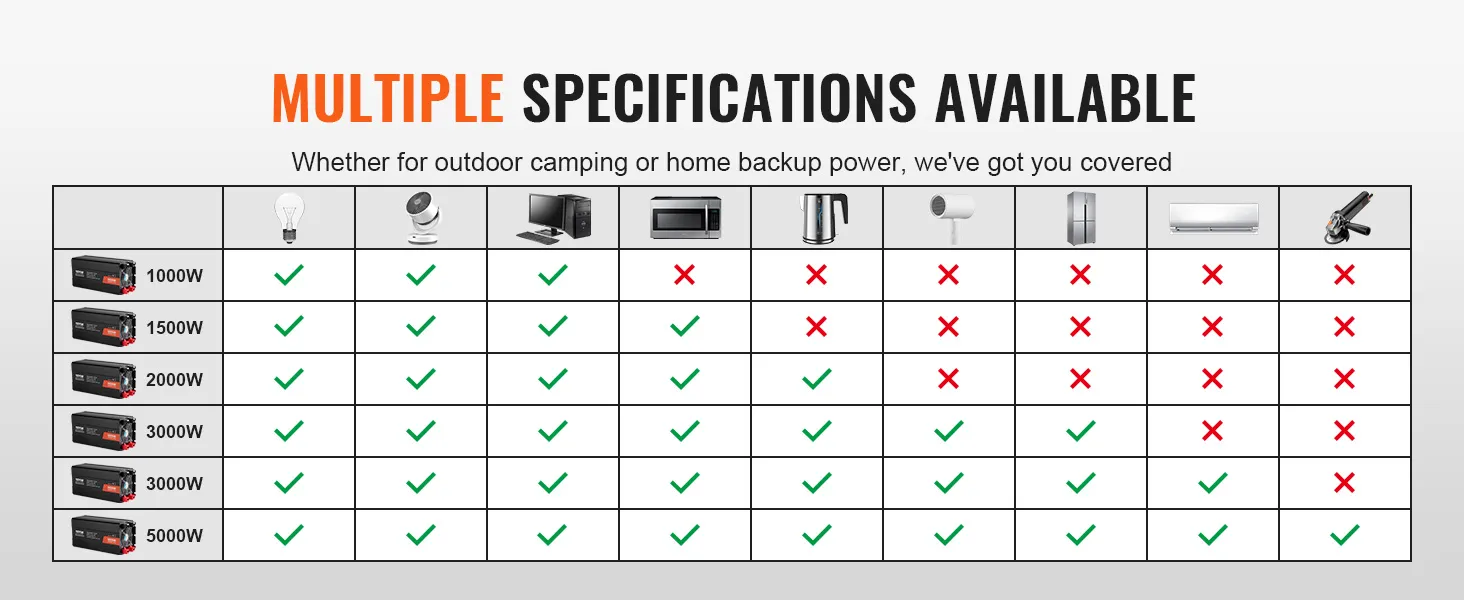
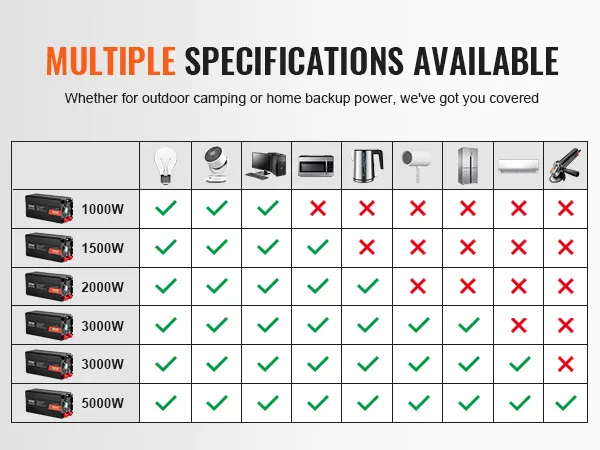
- Pure Sine Wave Power Inverter: Transform DC 12V into stable AC 230V power effortlessly. With 3000W continuous power, 6000W peak power and full load efficiency up to 88%, our power inverter is your go-to for large household equipment such as refrigerators, ovens, coffee makers, fans, hairdryers, kettles, etc. (The total power of the connected devices should not exceed the inverter’s rated power. For higher power needs, consider our high-load models.)
- Multiple Outlets, Enhanced Flexibility: Elevate your power game with our multi-outlet power inverter, designed to charge up to 5 devices at the same time. Featuring 2 AC outlets, 2 USB charging ports (with a combined maximum output of 18W), and 1 Type-C port (with a maximum output of 30W), it's the epitome of convenience and flexibility for all your power needs.
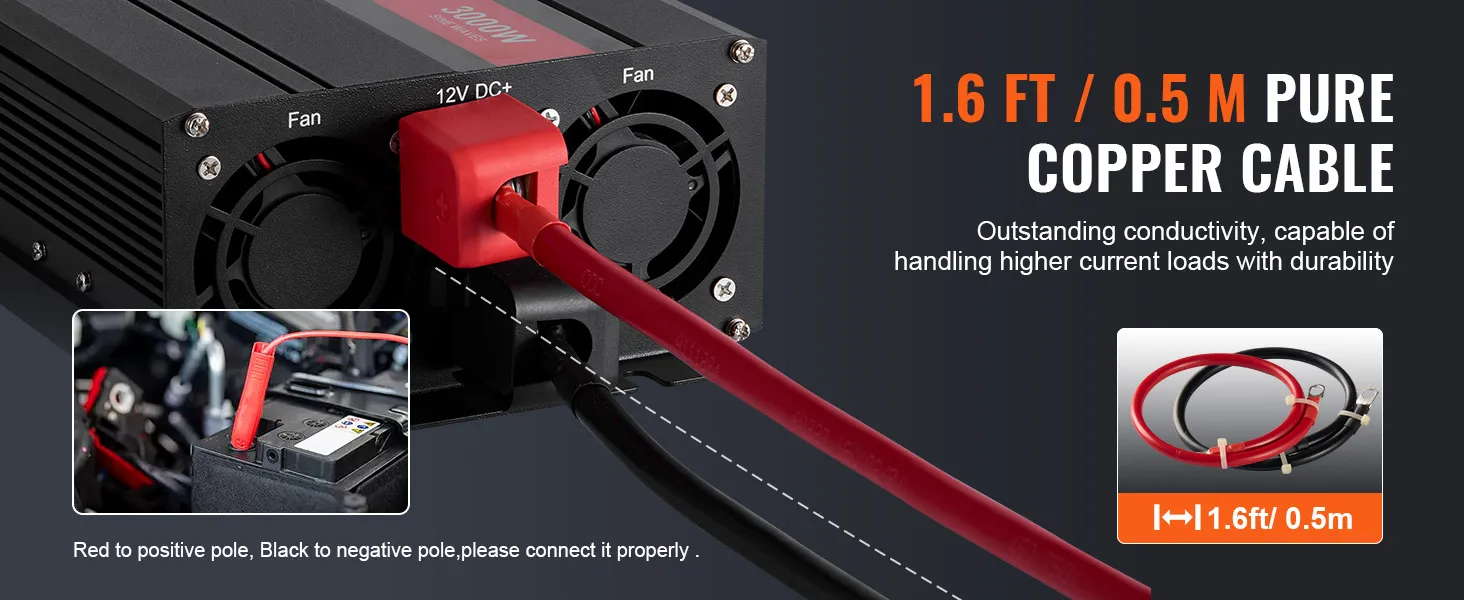
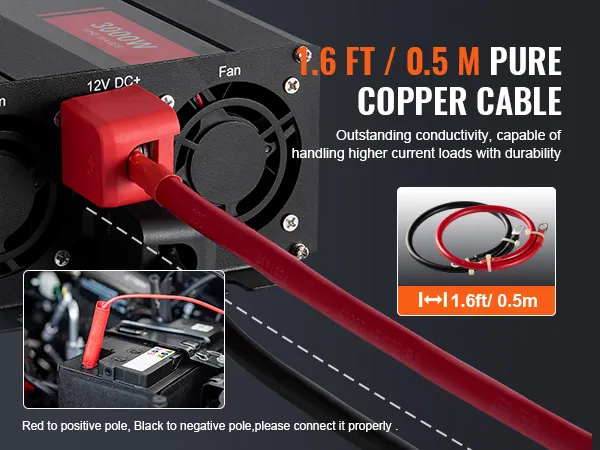
- Certified Security, Six Protections: CE/FCC certified for your peace of mind, our sine wave power inverter boasts 6-layer protections, including over voltage protection, under voltage protection, over load protection, over temperature protection, short circuit protection, and reverse polarity protection. Plus, equipped with 100% pure copper cables, our inverter minimizes power conversion loss, ensuring your devices stay powered up efficiently and safely.
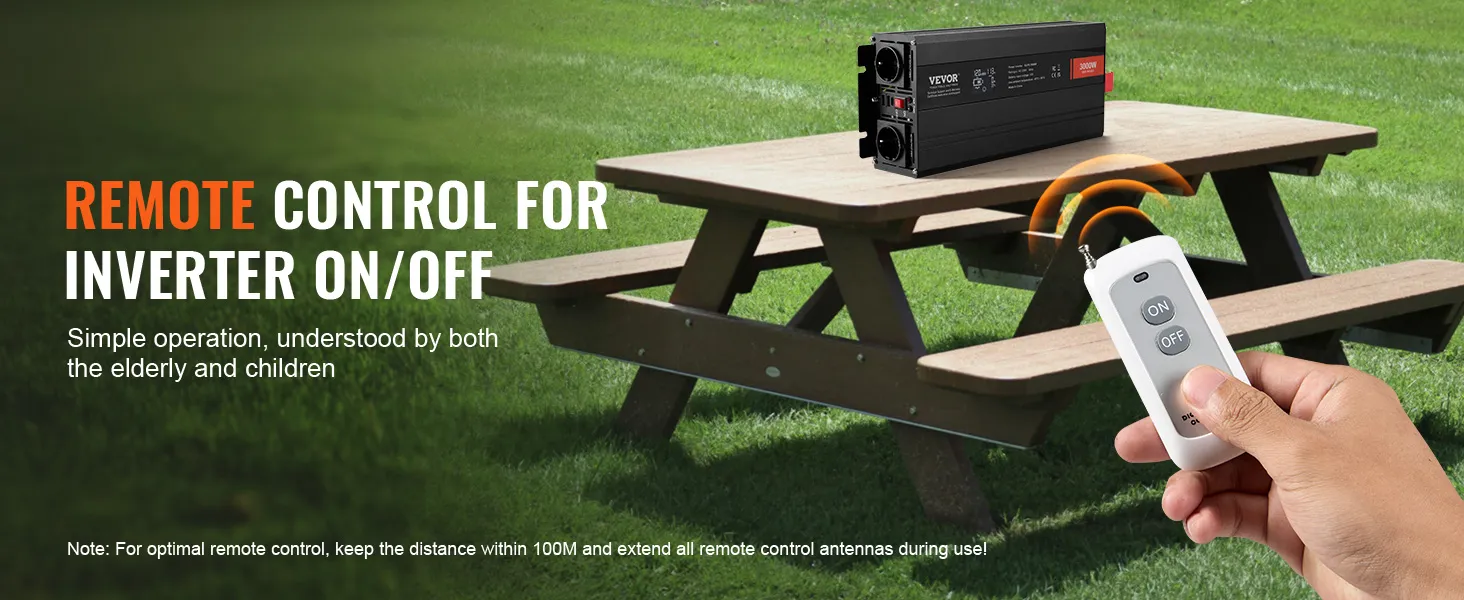
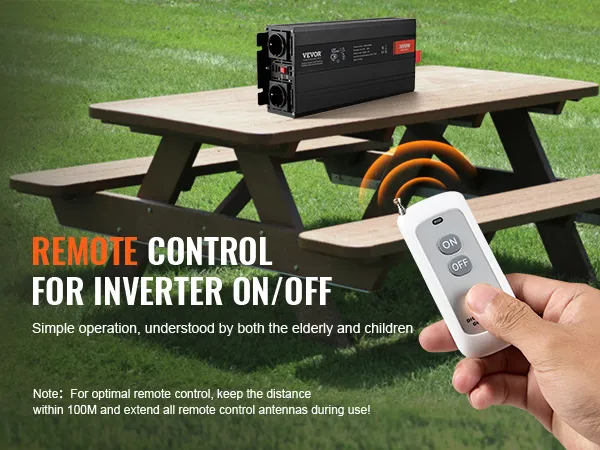
- Remote Control at Your Fingertips: Experience effortless control with our power inverter's wireless remote control, allowing you to power on/off within a 100-meter range. Plus, stay informed with real-time status updates displayed on the LCD screen located on the inverter's body. You're always in the know about your inverter's performance.
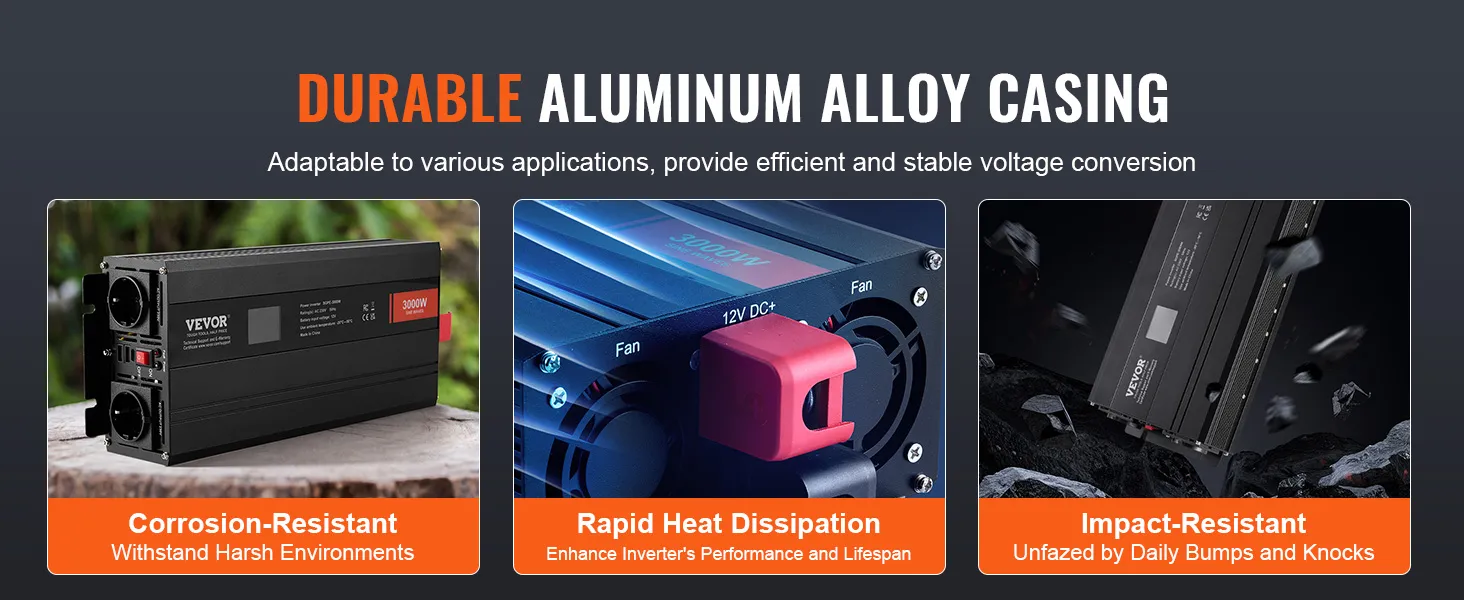
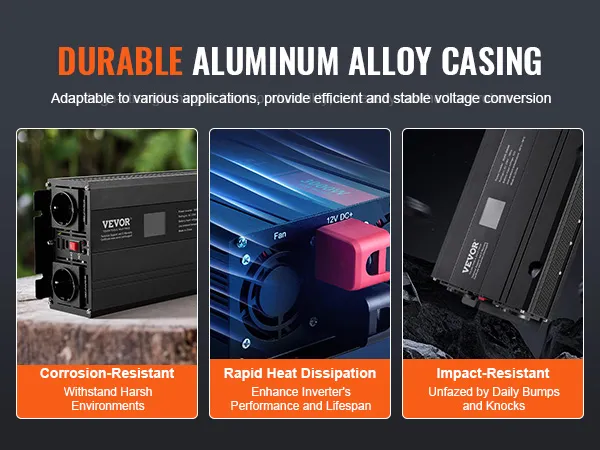
- Intelligent Temperature-Controlled Fan: Ensure your equipment operates at its peak with our power inverter's intelligent temperature-controlled silent fan. When temperature exceeds 40℃/104℉, the fan automatically start running and stop working when it falls below. Aluminum alloy body aids in heat dissipation, ensuring optimal performance and reliability. Experience the peace of mind and silent operation!
Frequently Bought Together
Reviews
About this item


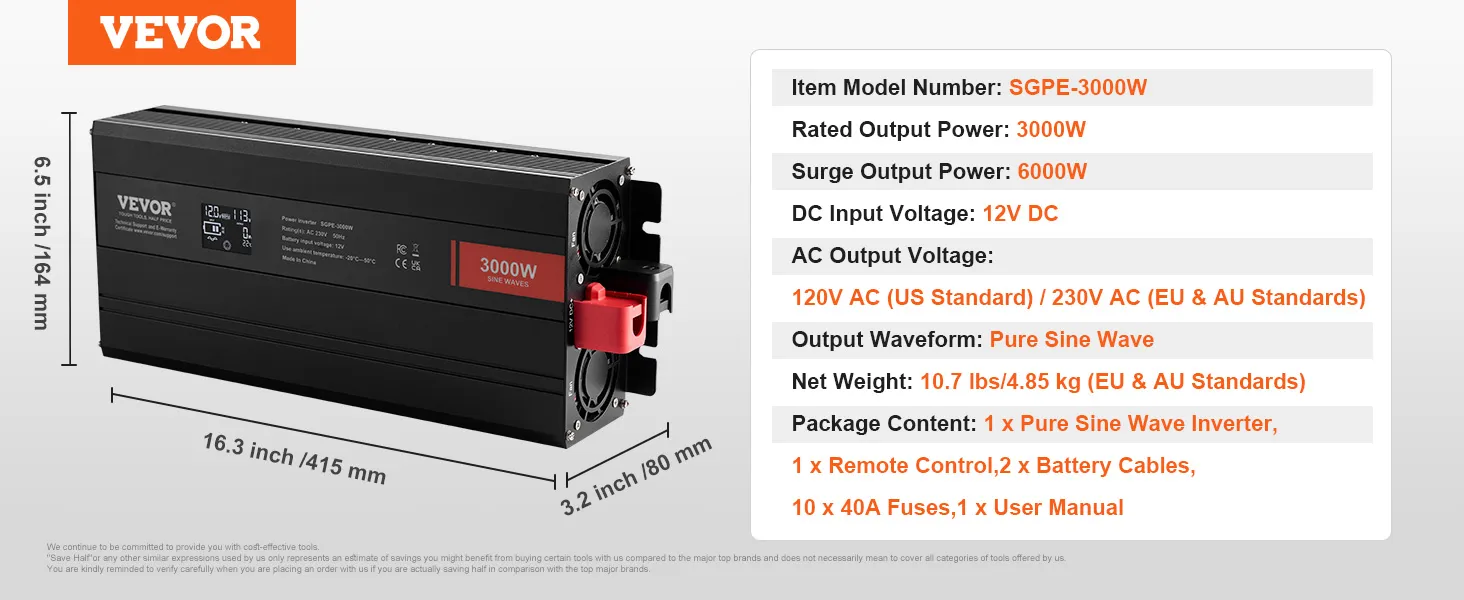
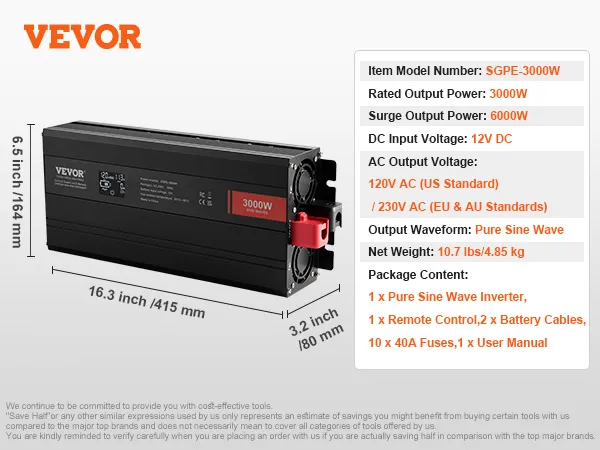
Large Appliance 3000 Watt Pure Sine Wave Inverter with 6000W Surge
The VEVOR 3000 watt pure sine wave inverter can handle the starting needs of motor-driven equipment with its 3000W of constant output power and 6000W surge capacity. Within its rated range, it can power refrigerators, kettles, coffee makers, fans, and ovens. This feature makes it a useful power source for long-term off-grid use, car setups, or emergency backup power at home.
This inverter, unlike modified sine wave units, replicates the smooth, clean waveform of power from the electric grid. Sensitive hair dryers and kitchen tools get stable, compatible power with no signal distortion. The 3000W continuous rating provides stable headroom to run multiple devices simultaneously, and the 6000W surge rating smooths out the short spike that occurs when motors and fans start up.
DC 12V to AC 230V Conversion at 88% Full Load Efficiency
This 3000 watt pure sine wave inverter takes a 12V DC input from a battery bank or a car battery and cleanly converts it to a 230V AC output, with up to 88% efficiency at full load. This number directly reduces conversion loss during extended device use. This feature increases battery life and lowers the number of times the battery needs to be charged. The output frequency and voltage are in line with European standards for home power.
The unit's 415 x 164 x 80 mm housing makes it small enough for car conversions, marine installations, or battery enclosures. It weighs 4.85 kg, which is not too heavy to move without tools. The output waveform is a clean sine wave, which means that the 230V AC sent to connected devices works the same way as 230V AC from a regular wall outlet.
Five-Port Output for Simultaneous Charging of Multiple Devices
Along with two standard AC outlets, the VEVOR inverter has a dedicated USB charging bank with two USB-A ports and one USB-C port. The two USB-A ports work together to give off 18W, which is enough power for phones and tablets. The USB-C port can give up to 30W on its own, which means it can charge laptops, cameras, and new phones quickly.
With five ports, this inverter can power a fridge via the AC outlets while also charging two phones via the USB-A ports and a laptop via the USB-C ports. For simple setups with multiple devices, you do not need a power strip or hub. The unit's face clearly shows the port arrangement, making it easy to match devices to the correct output type without consulting the instructions.
Six-Layer Protection System for Safe and Reliable Power Delivery
CE and FCC-certified, the inverter includes six separate hardware safety circuits. These protect against overvoltage, undervoltage, overload, overtemperature, short circuit, and reverse polarity. Each layer operates independently, so a single fault triggers the appropriate protections without causing other circuits to fail in a chain reaction.
All of the internal wiring uses conductors made of 100% pure copper. This feature minimizes resistive losses during power transfer and prevents connection points from overheating. When installing, reverse-polarity protection is very helpful. If the DC input leads are connected in the wrong order by chance, the protection circuit cuts off before any damage to the components occurs. You can leave this 3000 watt pure sine wave inverter running on its own without worry, thanks to these safety features.
3000 Watt Pure Sine Wave Inverter with Wireless Remote and LCD Monitor
The wireless remote control has a range of 100 meters, so the inverter can be placed in a storage area, engine bay, or utility box, and the user can turn it on and off from the living room or the driver's seat. Within that range, there is no need for a line of sight, which works well for van builds where the inverter is hidden behind panels.
On the inverter's body, an LCD screen displays real-time operational information. Users can check whether the unit is receiving voltage, view the output status, and find fault codes without disconnecting any wires. Finding load problems or checking the battery state takes less time with this live feedback. Users can control the unit remotely and view full status information on its display simultaneously.
Intelligent Thermal Fan and Aluminum Alloy Body for Heat Management
The built-in fan has a temperature sensor that turns it on when the internal temperature exceeds 40°C and turns it off when it drops below that level. This threshold-based operation lowers fan noise when the load is light or when the room temperature is lower. It also extends the fan motor's lifespan compared to units that run at full speed continuously.
The aluminum alloy case passively dissipates heat between fan cycles. It does so by acting as a heatsink and lowering the number of times the fan needs to run when the load is modest. This mix of active and passive cooling keeps the operating temperature stable, even during long sessions with heavy draw. The over-temperature protection circuit shuts down the hardware if the temperature rises too high, preventing parts from breaking when airflow is restricted.