Deals
Deals by Categories




More Ways to Save

Best Sellers
Best Sellers by Categories
New
New by Categories
Download VEVOR App 

Get 5,00€ Off 99,00€+ Orders on Your First 3 App Orders
Scan the QR code to download
SKU: ZXKQXNKJ2MSJQJ3QY001V9
Copy


+12
More


New
VEVOR Dual-Lens Articulating Borescope with Light, Two-Way Articulated Endoscope, 6.2mm Slim Lens, 5" HD IPS Spilt-Screen, 8X Zoom, IP67 Inspection Camera for Auto, Mechanical Equipment (1.5m Cable)
New
4.5 543 Reviews
91 99 €
Earn at least 2% points on purchases or save up to 15%.
Each when you buy 0+.
Shop
Get -% off for new user
Get 5,00€ Off 99,00€+ Orders on Your First 3 App Orders.
Download Now

Features & Details
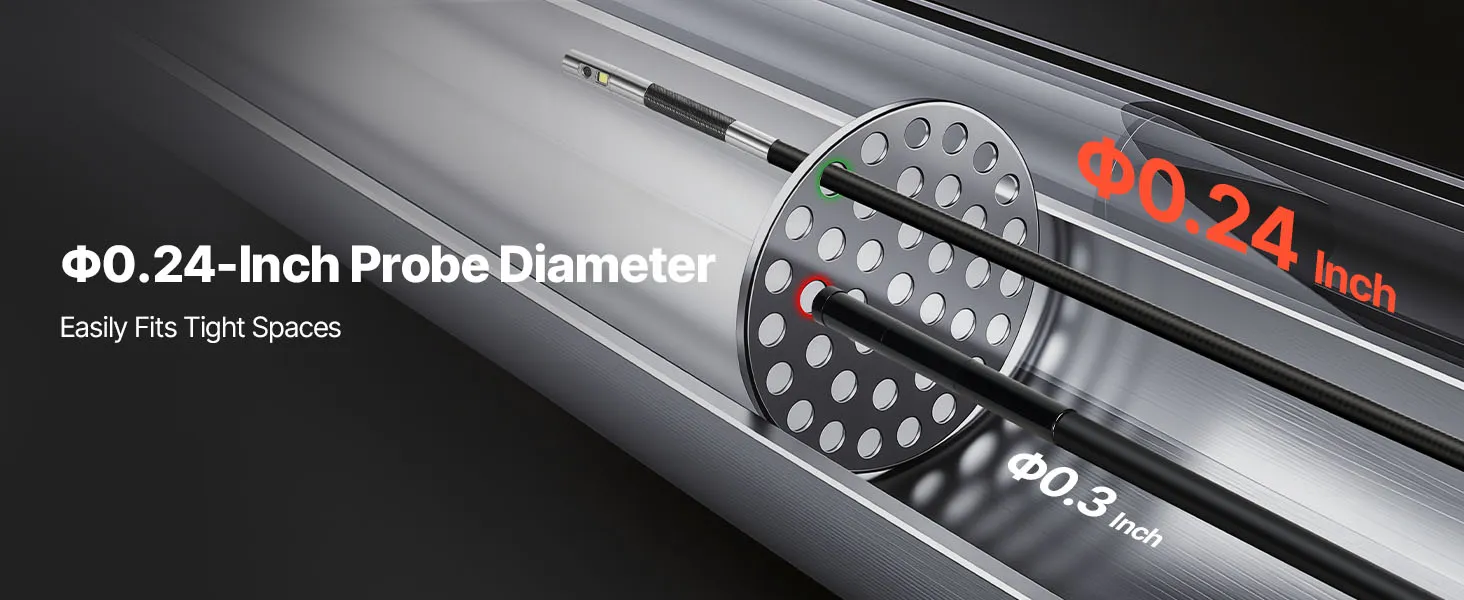
- Dual-Lens + 180° Articulating: This VEVOR endoscope features both a front and side camera, working with the 2-way 180° articulating probe to provide a wider and clearer observation from multiple angles. 0.24-inch (6.2 mm) slim probe easily reaches tight spaces, suitable for most engine and mechanical inspections
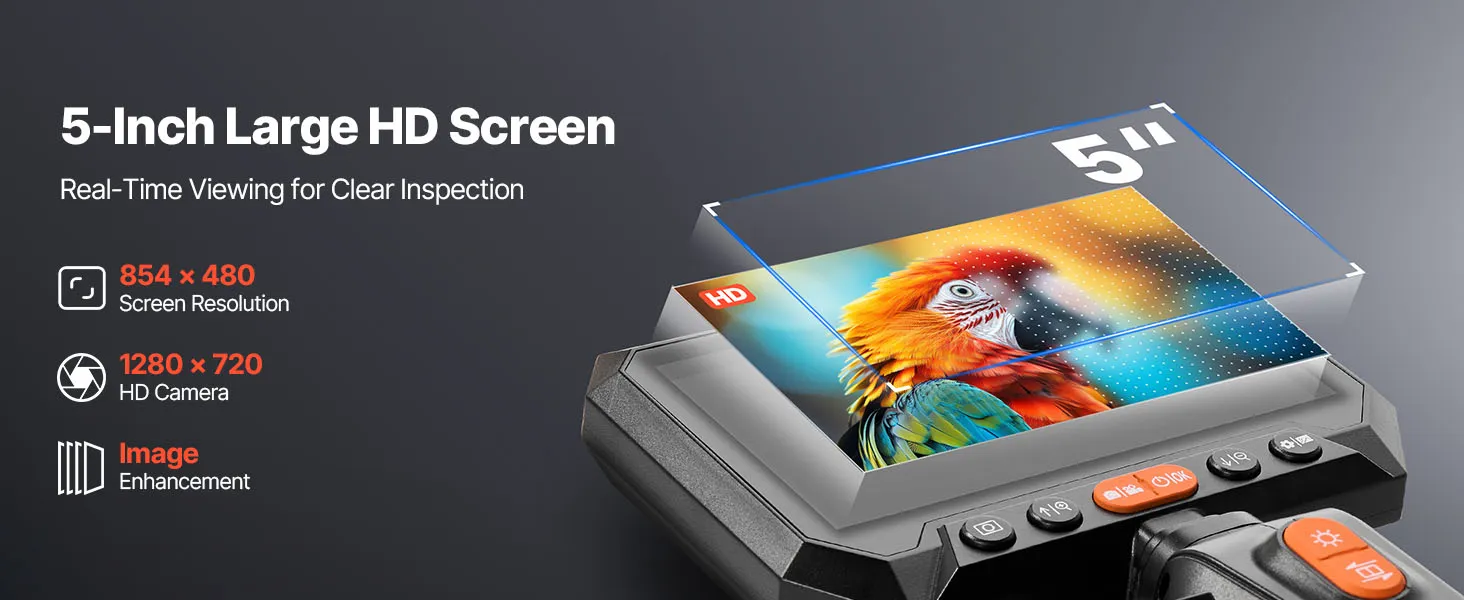
- HD Split Screen: 5-inch IPS HD display supports split-screen viewing, allowing the front and side camera views to be displayed simultaneously for more detailed inspection. 854*480 screen resolution, combined with the 1280*720 HD waterproof lens, delivers clear images with vibrant, true colors
- Rigid Snake Cable: Our 4.9 ft (1.5 m) rigid snake cable provides a balanced blend of flexibility and stiffness, delivering stable push force for smooth navigation through tight spaces. A waterproof, oil-resistant lens and 6 +1 LED lights provide clear visibility and reliable inspection in dark, wet environments
- More Practical Designs: When the lens temperature exceeds 85 °C, the borescope will trigger a buzzer alarm to alert you of high temperature. Also supports 8x zoom, photo capture, video recording, 180° image rotation, 3-level adjustable brightness, multiple language options and includes a 32 GB memory card
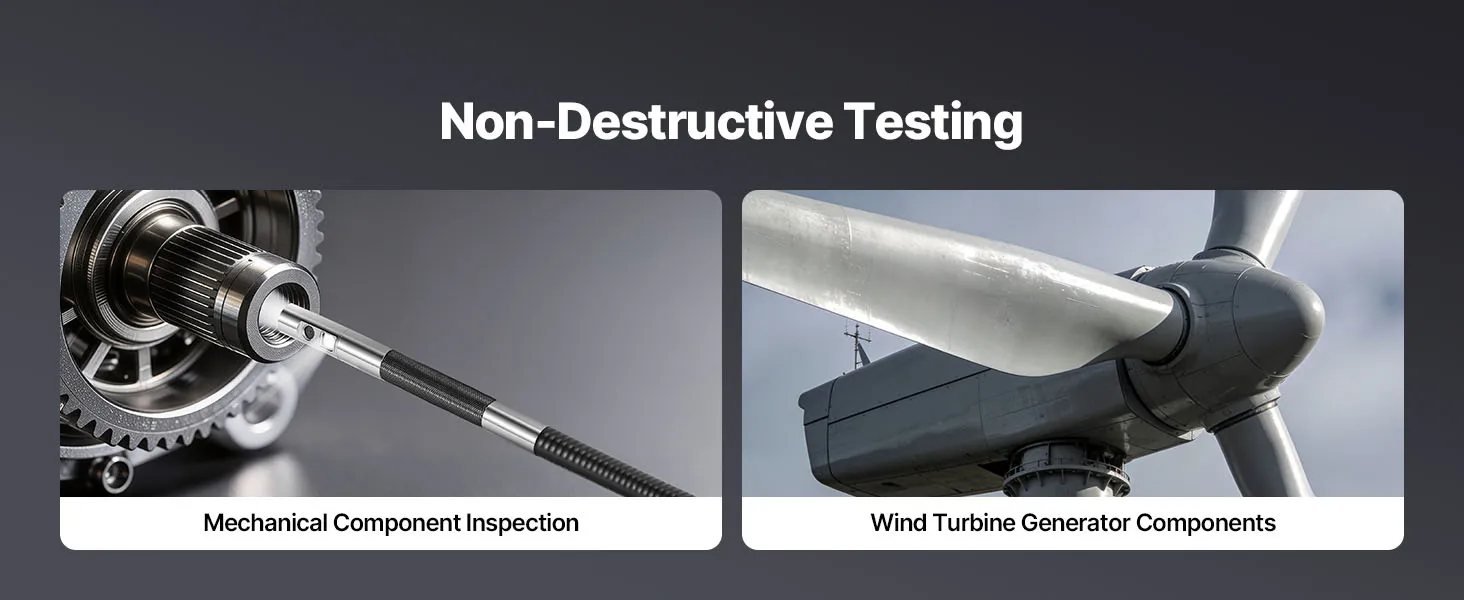
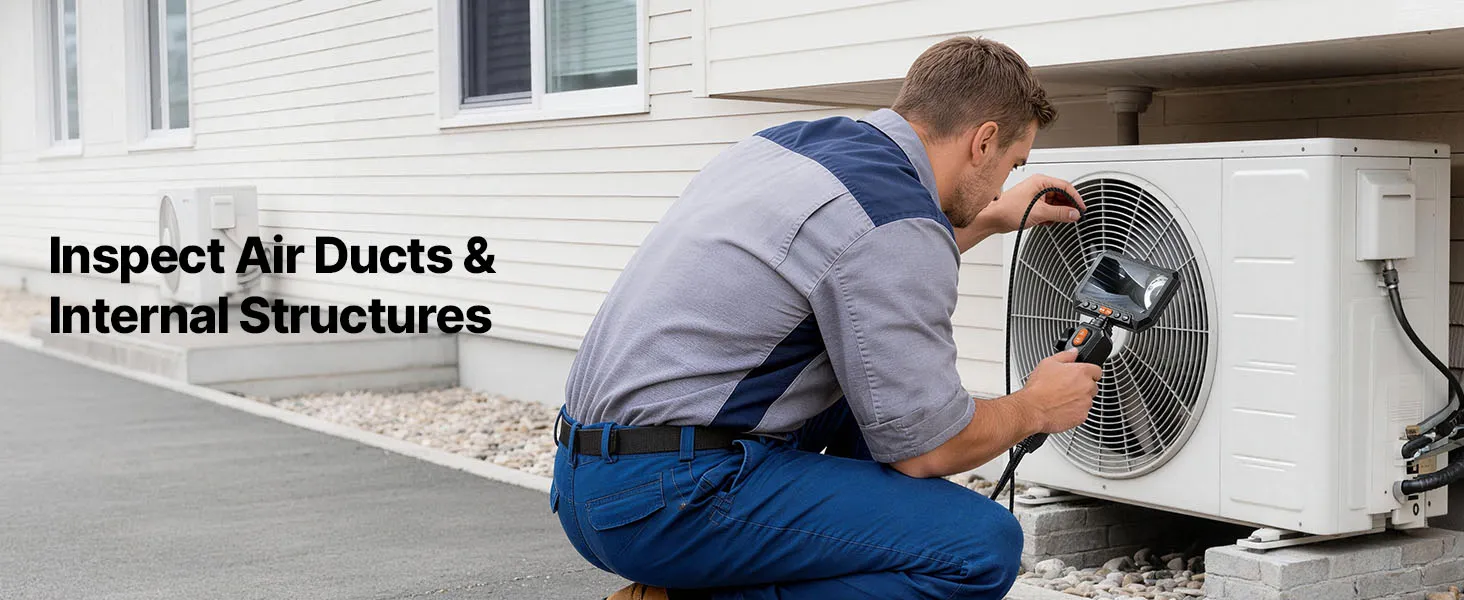
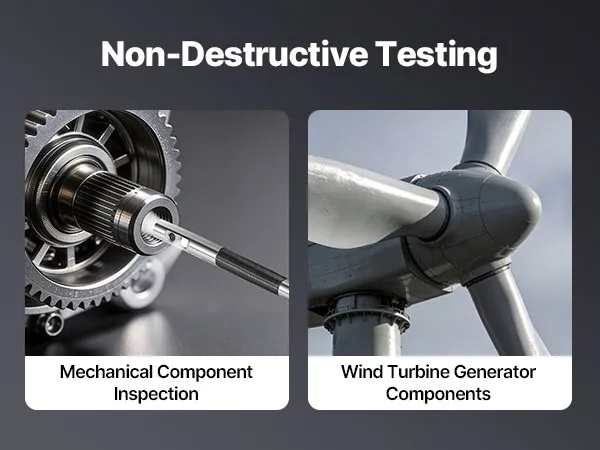
- Longer Operating Time: Equipped with a 5000mAh high-capacity battery, our 180° articulated borescope camera supports up to 5–6 hours of continuous operation. Ideal for non-destructive testing, inspecting auto engines, mechanical components, HVAC ducts, industrial pipelines, and other tight spaces with greater precision
Product specification
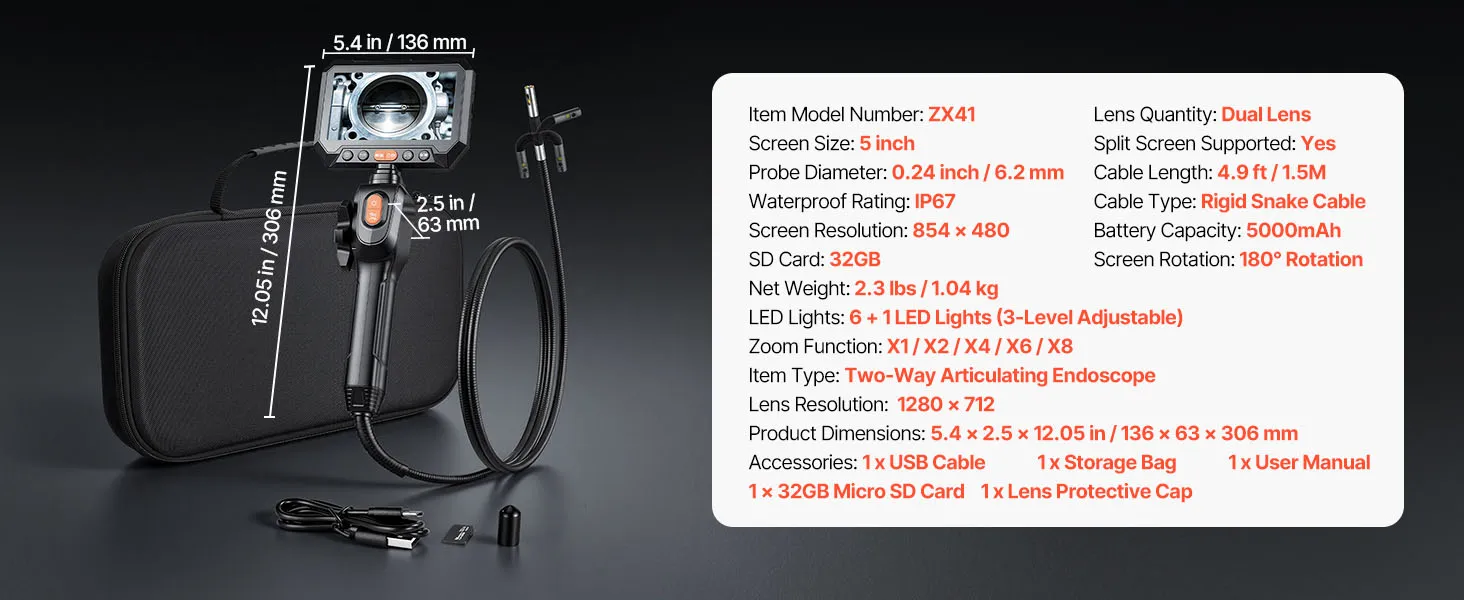
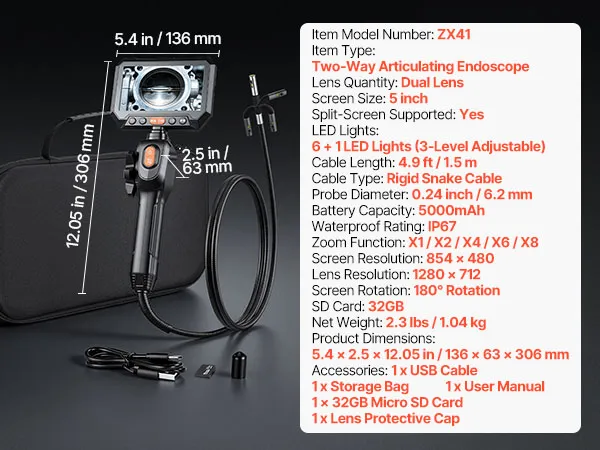
- Item Model Number ZX41
- Item Type Two-Way Articulating Endoscope
- Lens Quantity Dual Lens
- Screen Size 5 inch
- Split-Screen Supported Yes
- LED Lights 6 + 1 LED Lights (3-Level Adjustable)
Frequently Bought Together
Reviews
About this item
Questions and Answers
Explore
Reviews 4.5
All reviews are from verified purchases
Average rating based on 543 reviews
Reviews 4.5
All reviews are from verified purchases
See all 543 reviews
About this item
Product specification
- Item Model Number
- ZX41
- Item Type
- Two-Way Articulating Endoscope
- Lens Quantity
- Dual Lens
- Screen Size
- 5 inch
- Split-Screen Supported
- Yes
- LED Lights
- 6 + 1 LED Lights (3-Level Adjustable)
- Cable Length
- 4.9 ft / 1.5 m
- Cable Type
- Rigid Snake Cable
- Probe Diameter
- 0.24 inch / 6.2 mm
- Battery Capacity
- 5000mAh
- Waterproof Rating
- IP67
- Zoom Function
- X1 / X2 / X4 / X6 / X8
- Screen Resolution
- 854 x 480
- Screen Rotation
- 180° Rotation
- SD Card
- 32GB
- Net Weight
- 2.3 lbs / 1.04 kg
Description


Pro-level performance without the pro-level cost
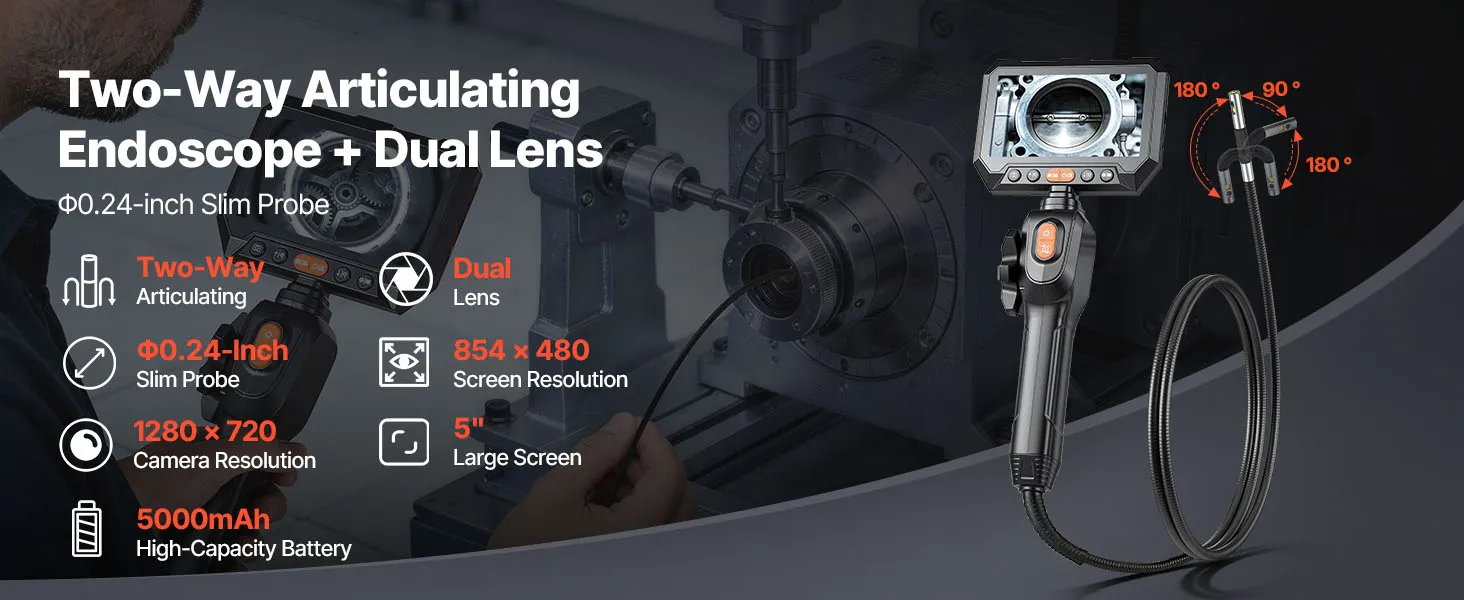
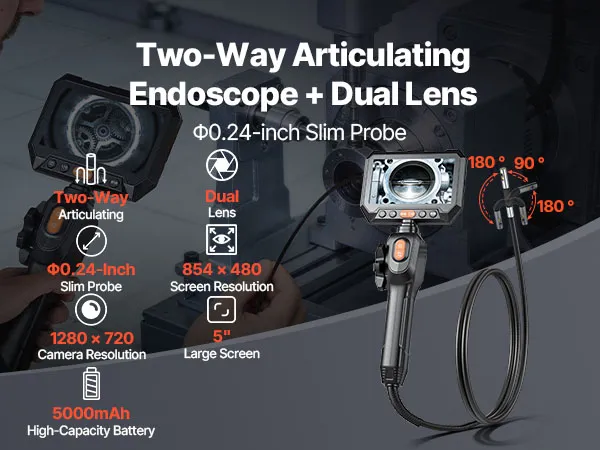
This dual-lens endoscope features a unique 180° articulating design, 5-inch HD IPS split-screen, 0.24-inch slim probe, 4.9ft rigid snake cable and 5000mAh long battery life, allowing you to observe narrow spaces from multiple angles and making inspection more efficient.
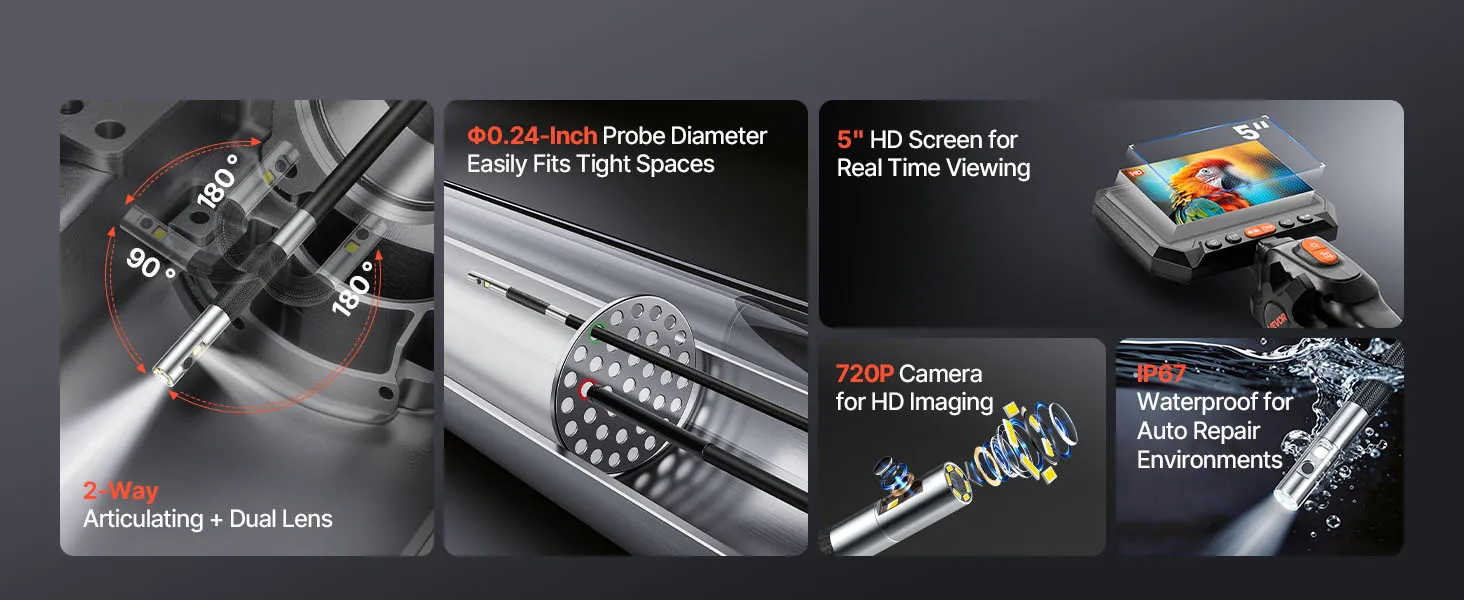
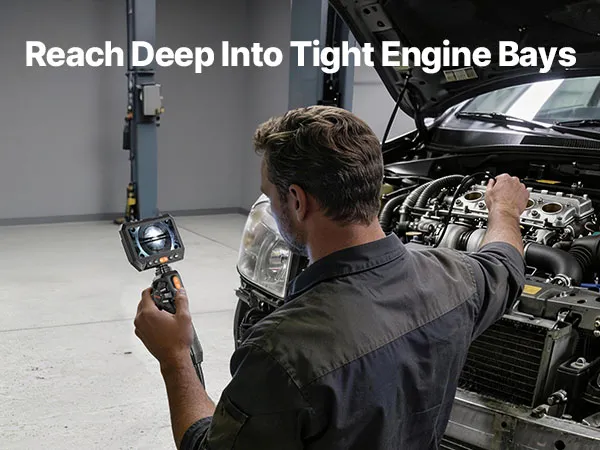

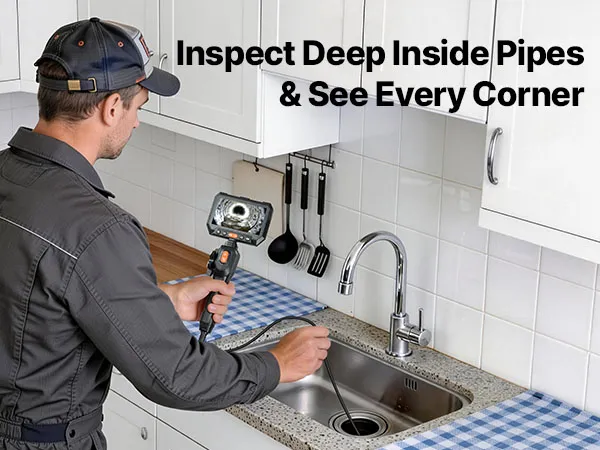
Key Features
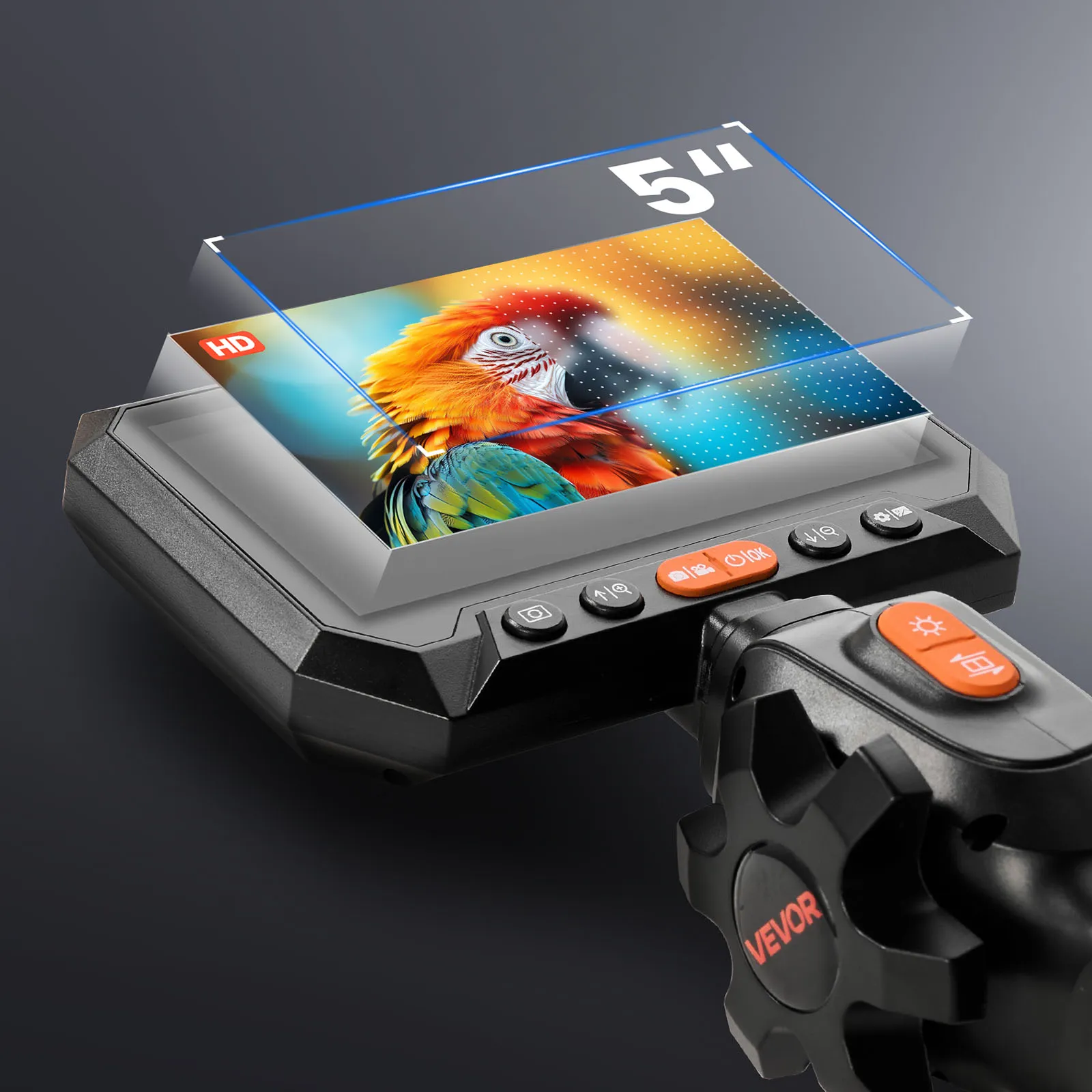
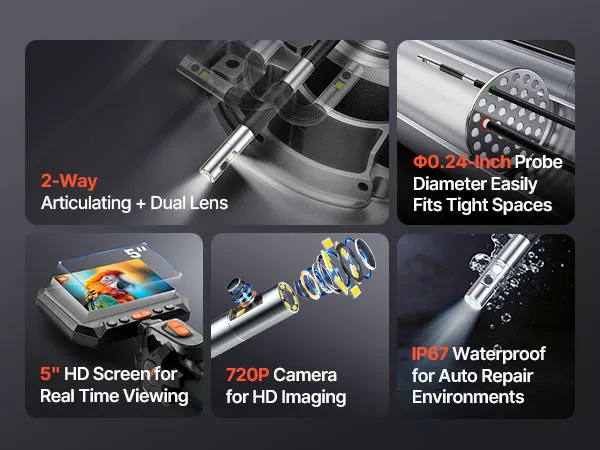
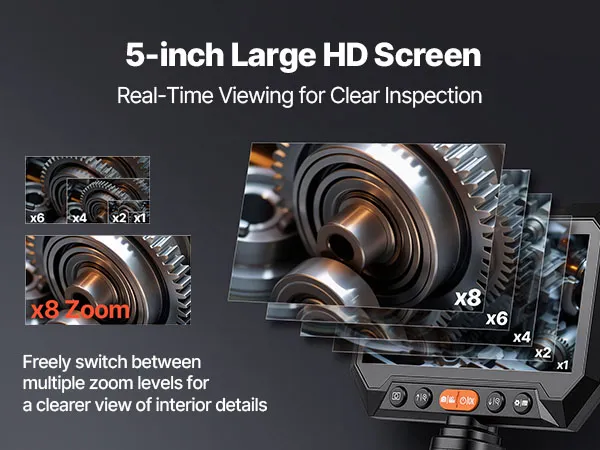
5" Split-Screen Viewing
Delivers clear real-time images and detailed visuals, helping make inspection tasks faster and more efficient.
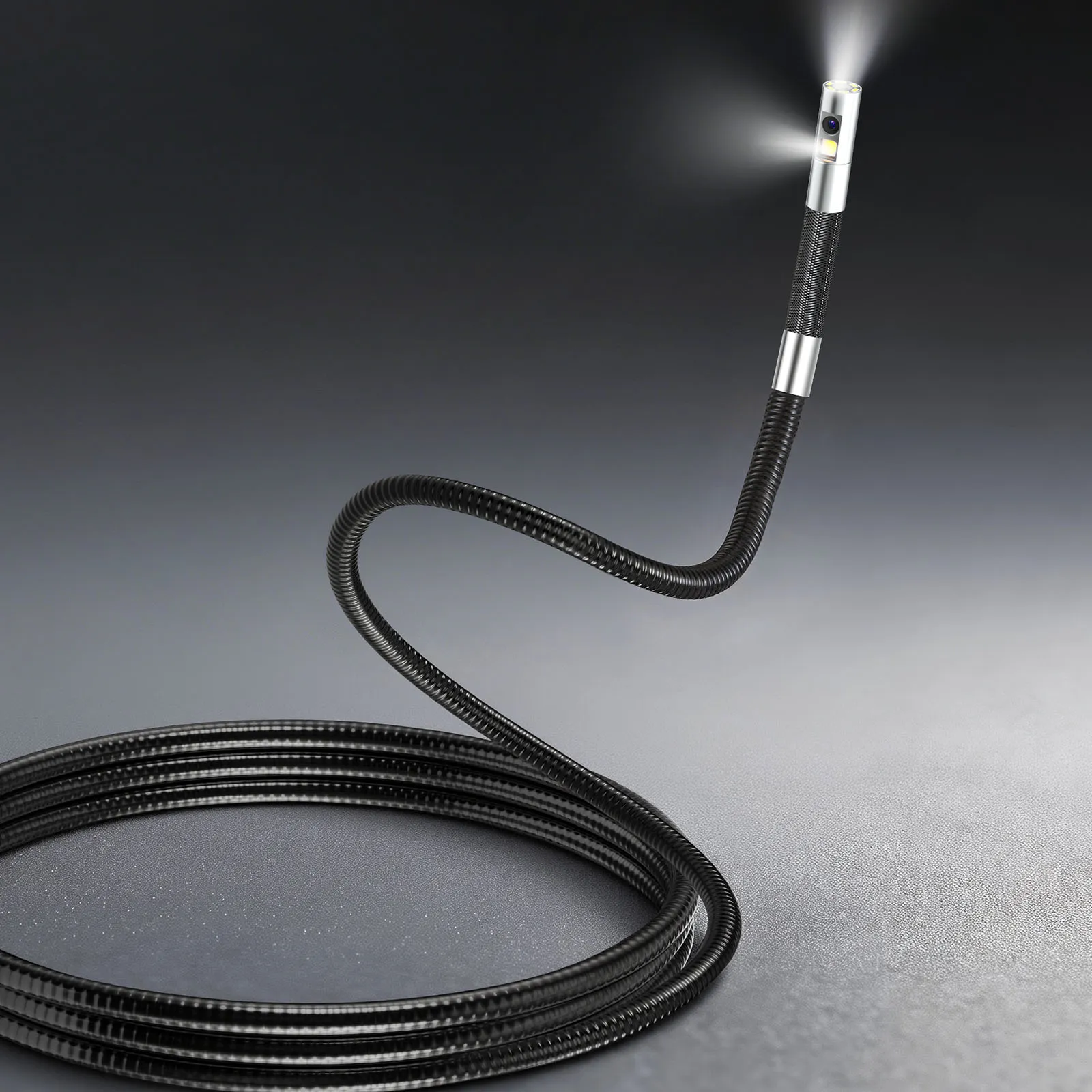
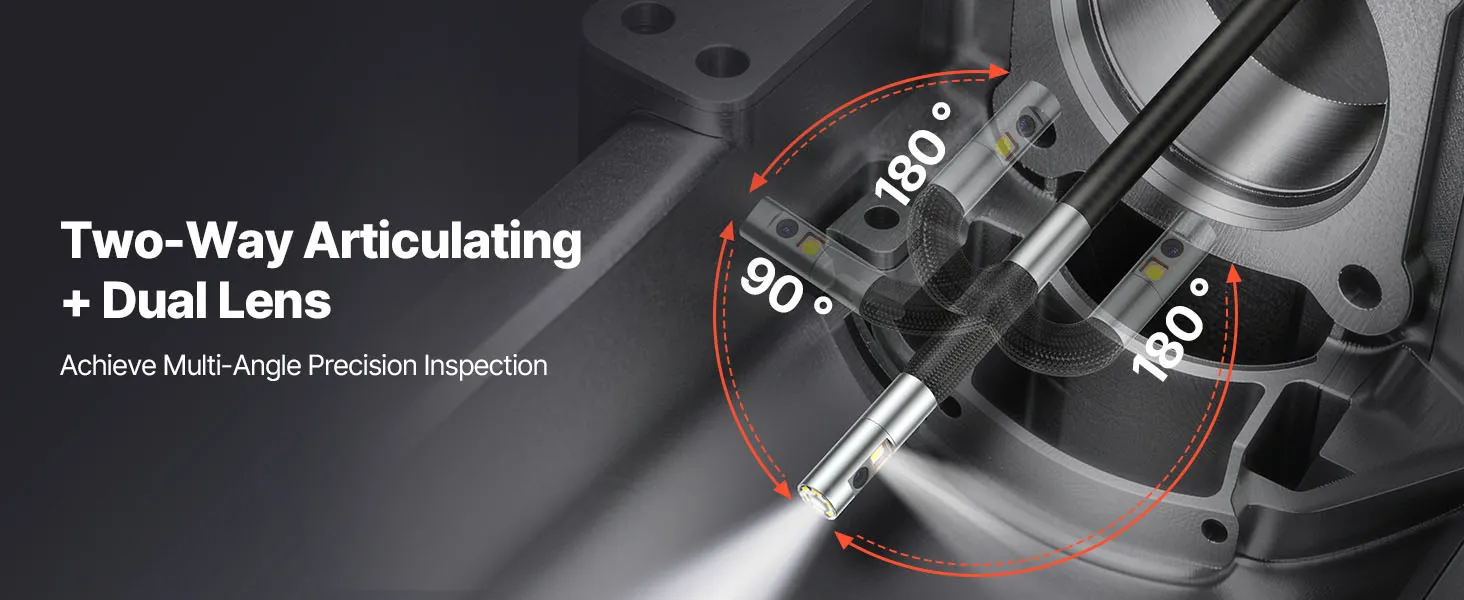
180° Articulating Dual Lens
Provides flexible, multiple viewing angles and clearer observation for accurate inspections in narrow spaces.
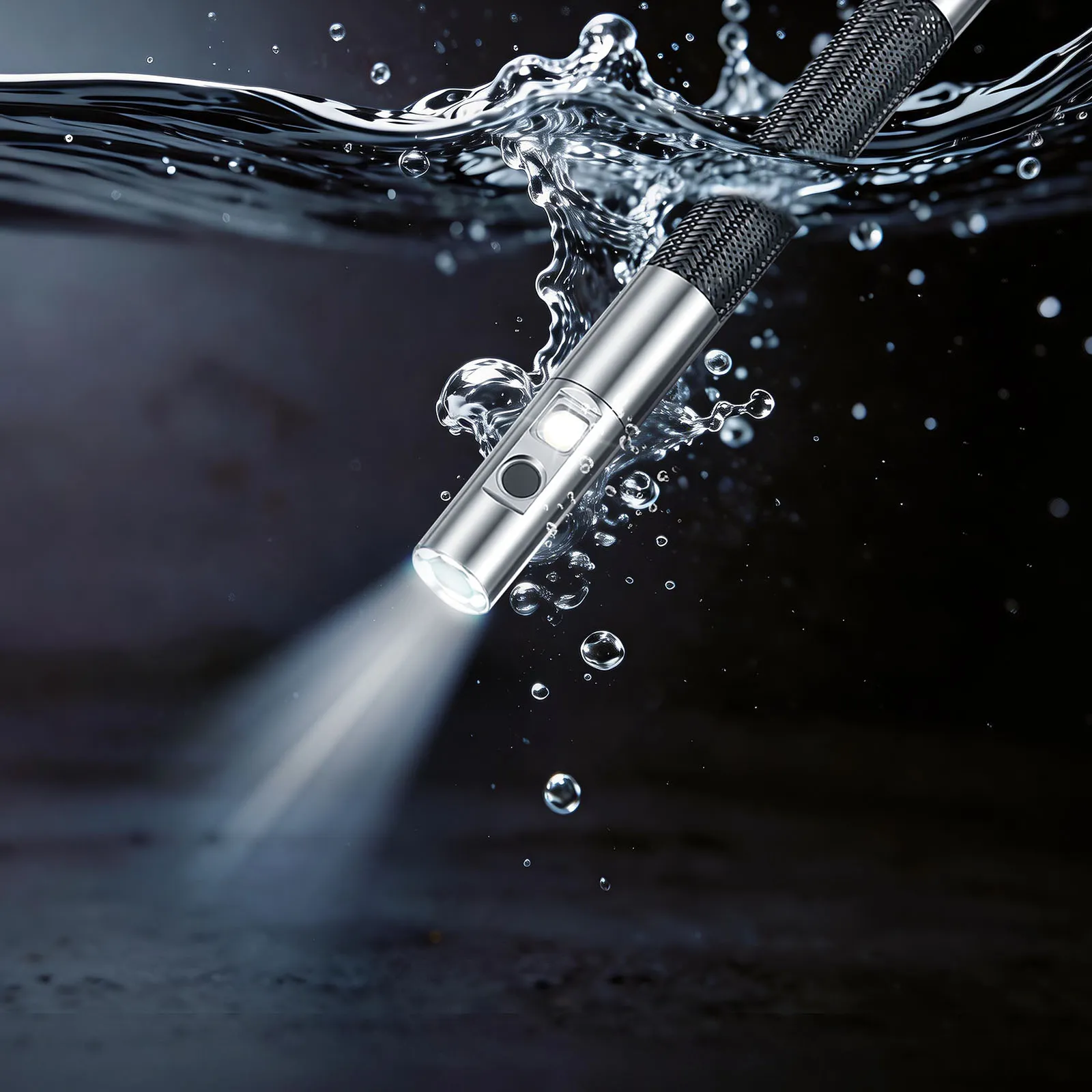
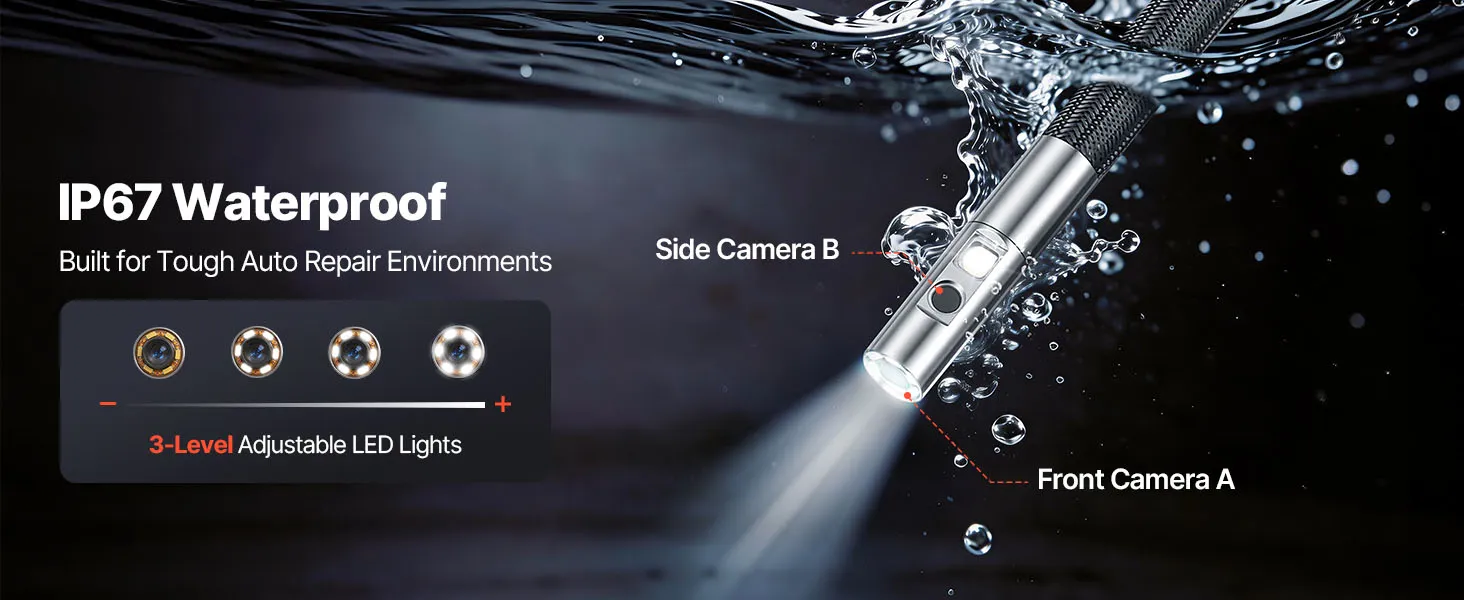
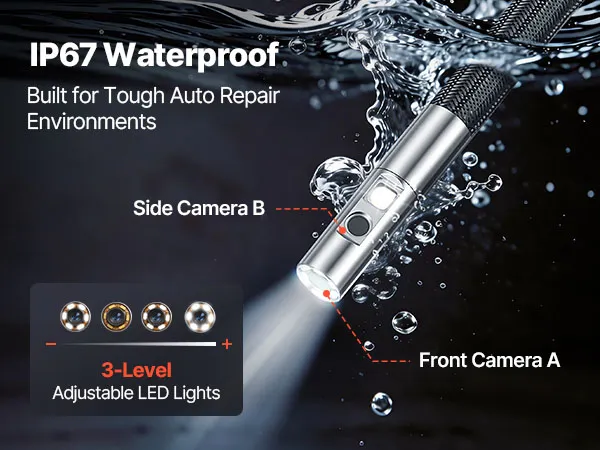
IP67 Waterproof
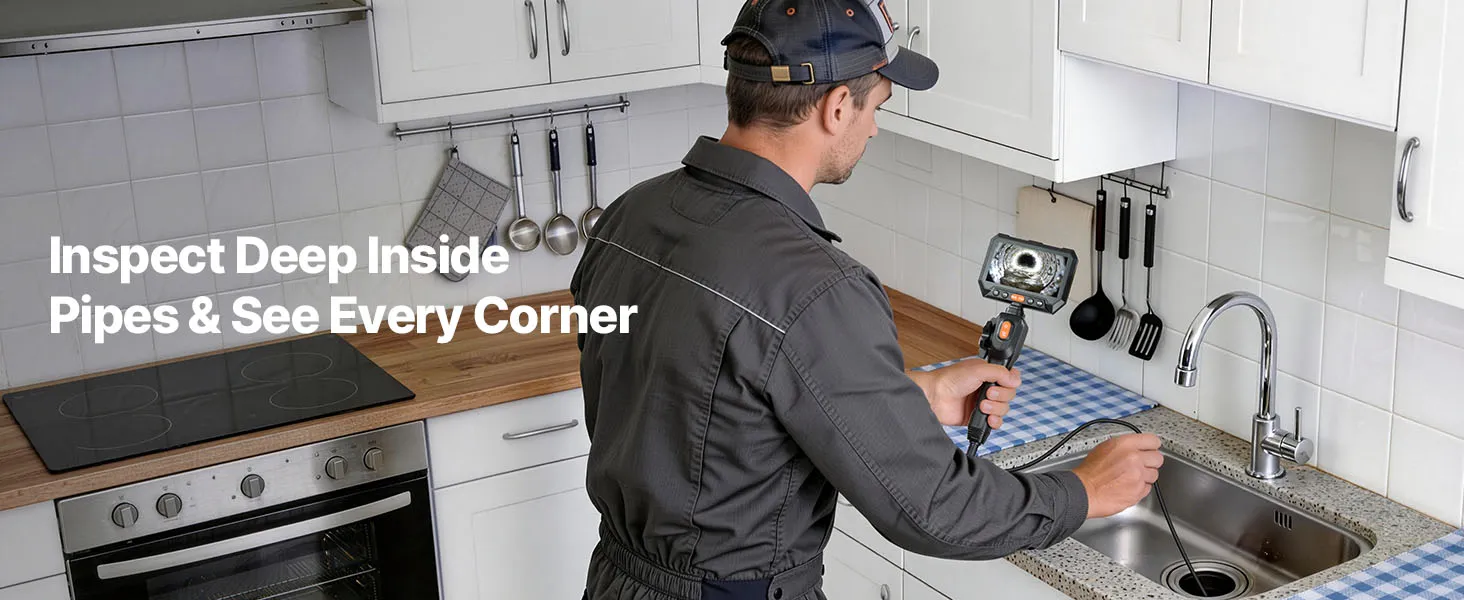
Designed to work reliably in wet environments such as pipelines, automotive repairs, and other demanding inspection areas.
Automotive Dual Camera Borescope with Front and Side Lens for Multi-Angle Views
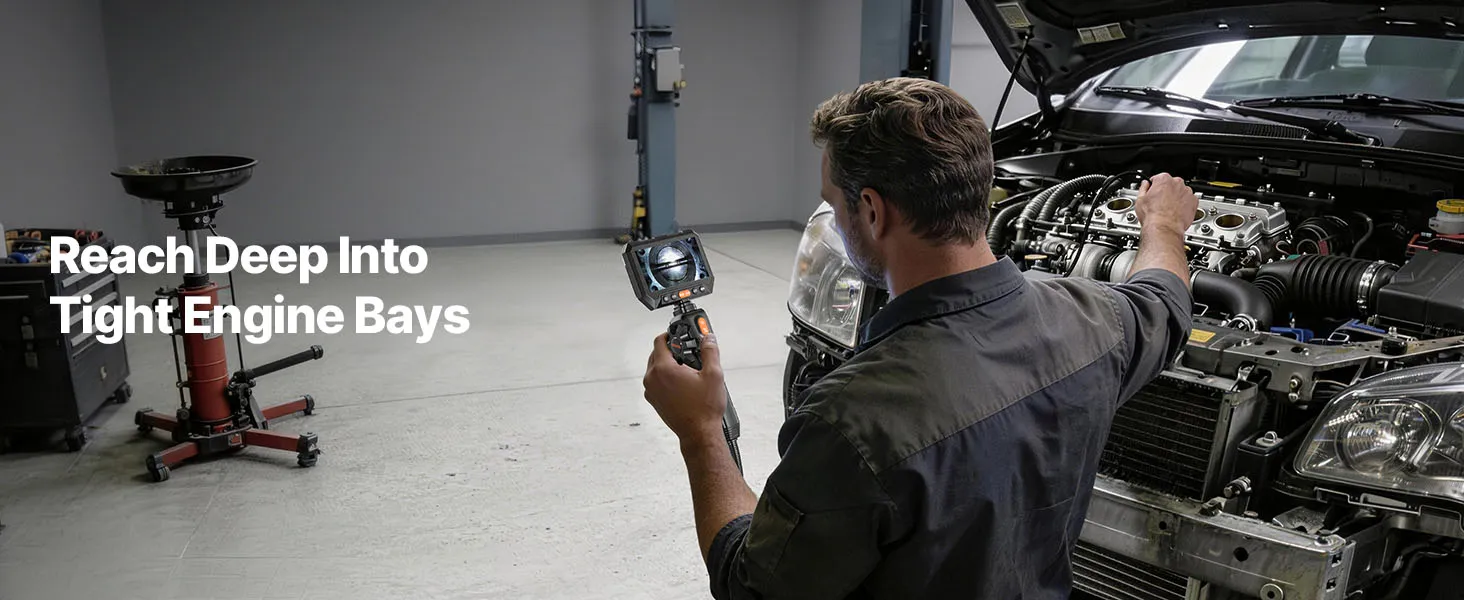
This automotive dual camera borescope features two lenses integrated into a single 6.2 mm probe, allowing front and side viewing during inspections. One lens faces the front for direct line-of-sight inspection, and the other faces the side for watching from the side without moving the cable. This way, they can see surface flaws, fluid buildup, worn components, and other defects that may be difficult to view with a single forward-facing lens.
In automotive uses like checking the engine cylinder, valve seat, and turbocharger cavity, being able to view laterally without having to move the cable saves a lot of time on each pass. The probe only has to go into the cavity once to get both a forward and a side view. This reduces the number of insertions needed for a full assessment and the wear on the access point from repeated probe entry.
6.2mm Slim Probe That Reaches Engines, HVAC Ducts, and Tight Mechanical Spaces
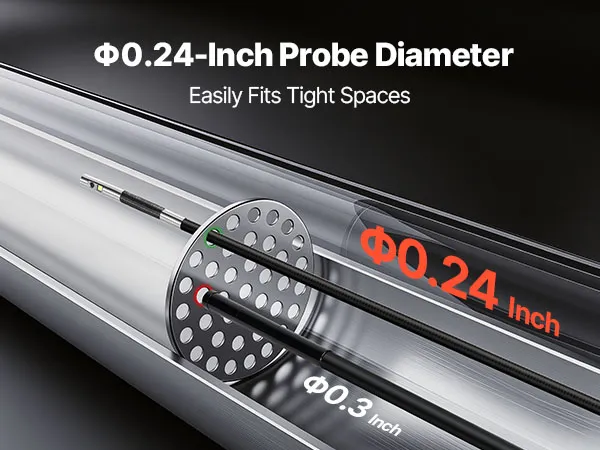
With a width of 6.2 mm, the probe can reach most inspection paths in cars and machines without having to take parts apart. Most gasoline engines have spark plug ports that can directly accept a 6.2mm probe. This lets you check the cylinder wall, piston crown, and valve head through a point of access that is already there. Assembling and disassembling would take longer for any cavity that does not have a specific inspection port, but this non-destructive access saves that time.
The 1.5-meter semi-rigid snake cable bends around curves while maintaining enough stiffness for controlled insertion. The push-force transmission lets the operator move the probe through flat or angled holes. With a purely flexible cable, the cable would coil instead of moving in those directions. The automotive dual camera borescope uses this cable design to inspect HVAC ducts, plumbing systems, and industrial pipelines while maintaining controlled probe movement in tight spaces.
5" HD IPS Split Screen Displaying Both Camera Feeds Simultaneously
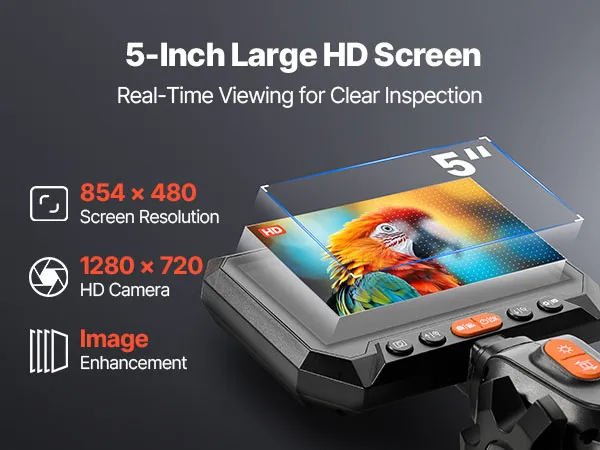
In split-screen mode, the 5-inch IPS screen displays both camera feeds clearly at the same time. There is no need for operators to switch between front and side views because both are visible at the same time.
The IPS panel technology keeps the colors and brightness even when viewed from a wide angle. This is useful when inspecting the screen while holding it in different positions. The 1280×720 HD camera captures images with enough detail.
180° Two-Way Articulating Probe for Directional Control in Confined Cavities
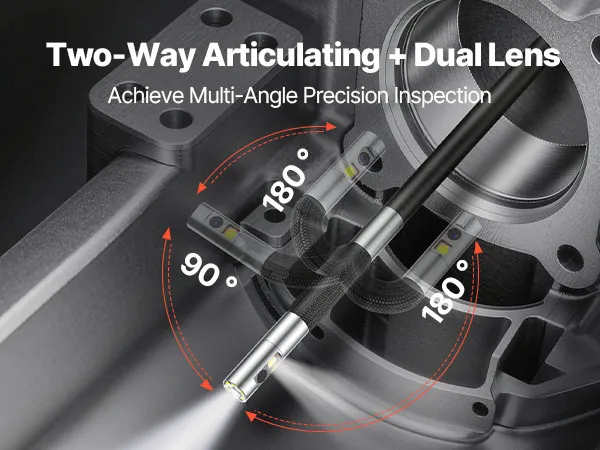
The two-way articulating tip, which can turn 180°, moves the probe head in two directions inside the inspection cavity. This lets it get around any internal obstacles and point both cameras at the selected surface for inspection. A rigid probe can only see what is within its fixed forward angle; to change direction, the operator has to pull the probe out, reposition it, and then put it back in. This reduces the need for repeated probe repositioning during inspections.
When checking an automobile engine, articulation is very helpful when the inspection path curves between the access point and the target surface. For example, it helps reach valve seats from a spark plug port or look behind a rib inside an intake manifold. The articulating tip follows the shape of the internal cavity instead of needing a straight line of sight to the target. This makes the borescope useful in modern engine designs with their complex internal shapes.
5000mAh Battery and 85°C Thermal Alarm for Extended, Safe Inspection Sessions
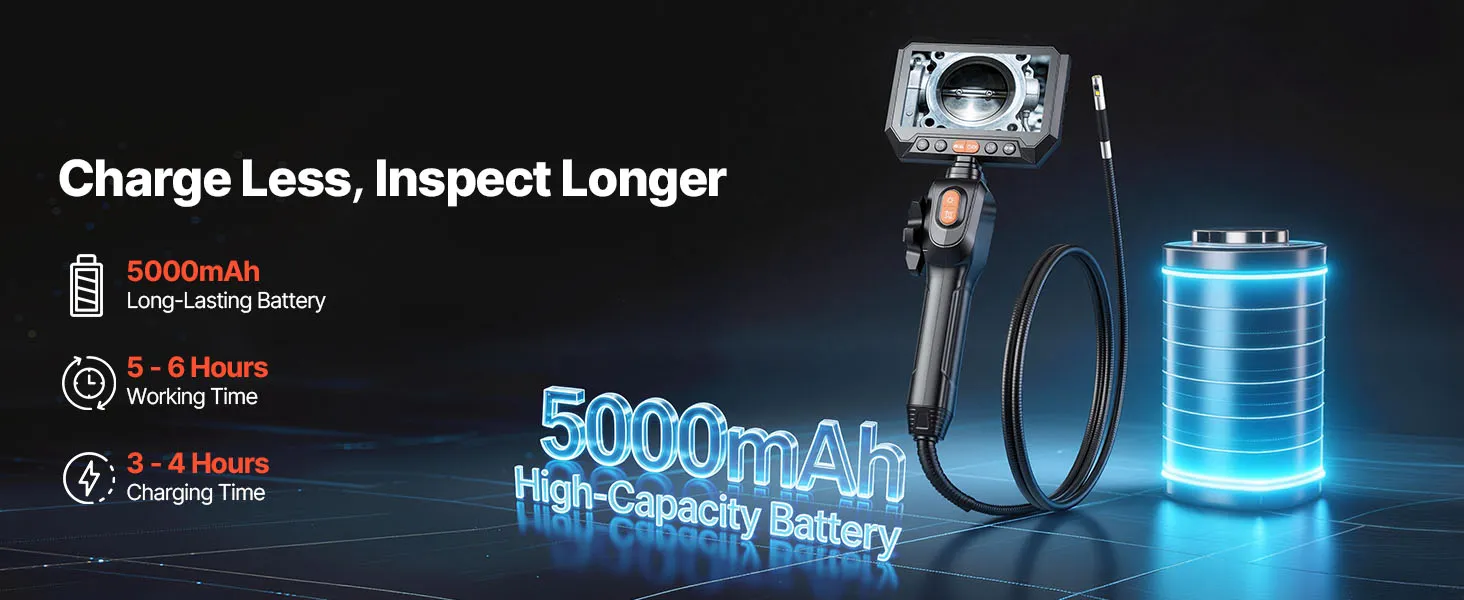
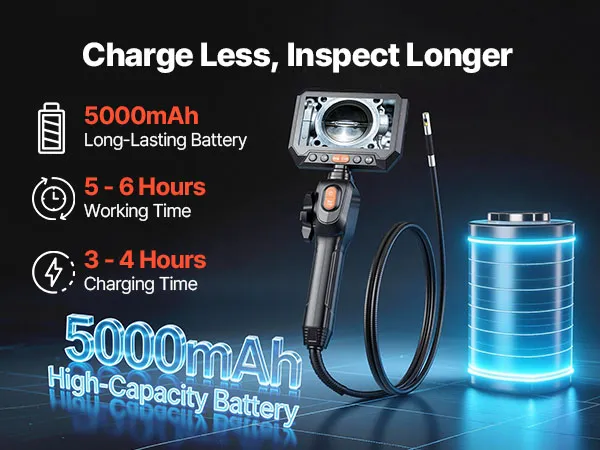
The 5000mAh battery can run continuously for 5 to 6 hours, which is long enough to do a full vehicle inspection, an HVAC system assessment, or an industrial pipeline survey without stopping. Recharging during inspections can interrupt workflow, especially when the probe is already inserted.
During inspection, the 85°C thermal alarm checks the temperature of the probe tip. When the probe is put near hot engine parts or equipment that has not cooled down completely, the lens and cable can be exposed to temperatures above their recommended range without the operator knowing. The buzzer alarm alerts the operator when the probe temperature reaches 85°C, allowing them to remove the probe and prevent potential damage.
IP67 Waterproof Lens and 6+1 LED Lights for Clear Visibility in Wet Environments
The IP67-rated probe protects against dust and temporary water immersion under specified conditions. The oil-resistant lens helps maintain clear imaging during inspections involving oil, coolant, or moisture.
The automotive dual camera borescope uses a 6+1 LED configuration, with six LEDs around the edges and one in the middle, to provide even illumination without the central hotspot created by single-LED designs. Perimeter lighting reduces the shadow cast by the probe body and illuminates the full circumference of a cylindrical cavity. Three-level brightness adjustment allows output reduction in reflective cavities where maximum brightness causes glare, and an increase in larger spaces where the standard output level is insufficient for clear imaging.
Automotive Dual Camera Borescope with 8x Zoom, Photo Capture, and 32GB Storage
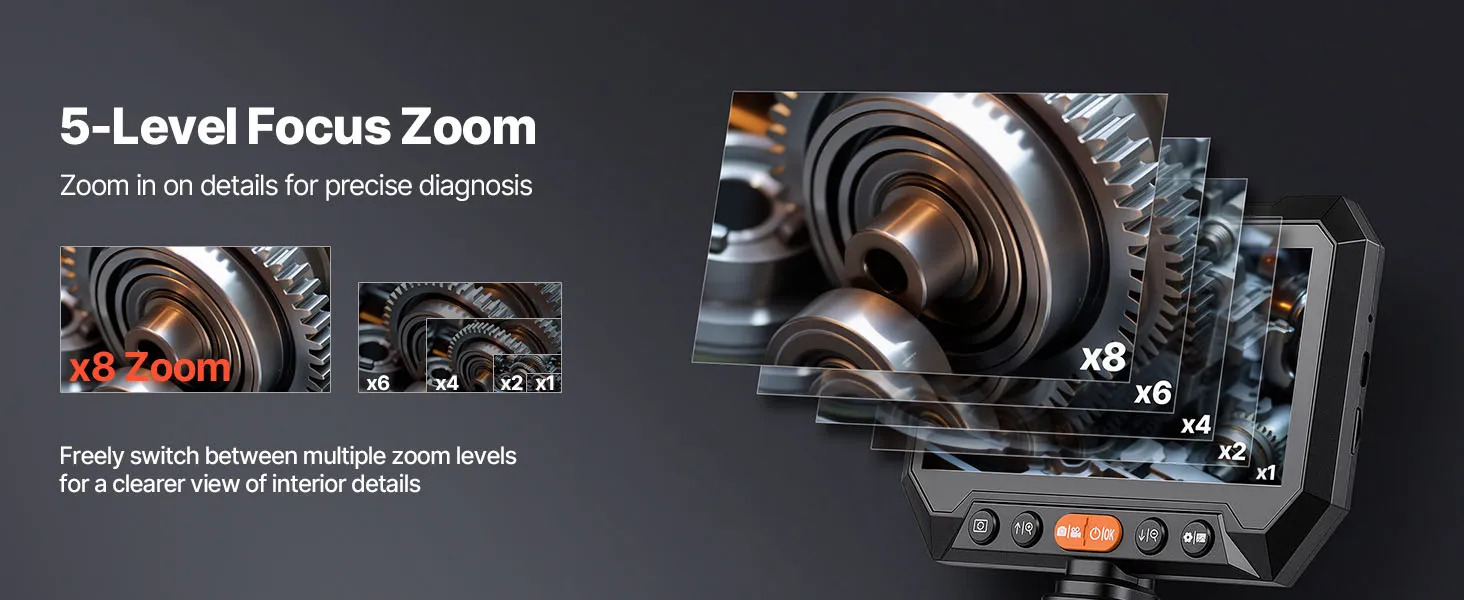
The 1×, 2×, 4×, 6×, and 8× zoom levels enlarge a specific image area for closer examination without withdrawing and reinserting the probe. In cylinder wall inspection, zoom helps users examine suspected micro-crack locations or scoring marks more closely.
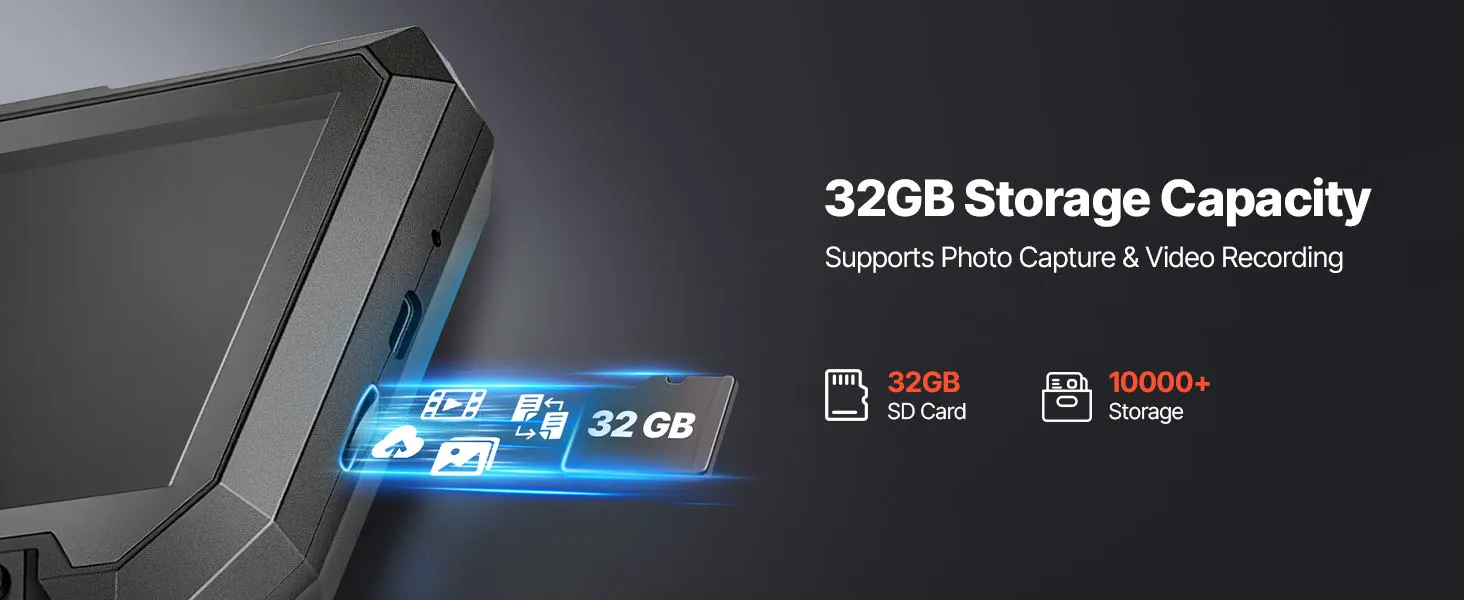
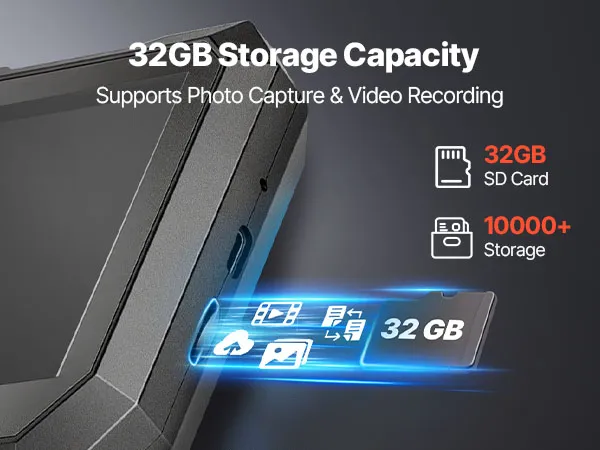
The 180° image rotation corrects for orientations where the cable entry angle inverts the on-screen image. Photo capture and video recording store findings to the included 32GB SD card. For mechanics and inspectors who need to show clients the internal condition of a component, retrievable images and video clips replace the need for a second person to view the screen during inspection. At 1.04 kg, the unit remains portable for extended inspection sessions.
Product guides and documents
User manual-en (PDF) Review
Questions and Answers (0)
Typical questions asked about products: Is the product durable? ...
In Stock
Security & Privacy
FREE Returns
Professional Service
Compare with similar items
Similar Items You Might Like
People Who Bought This Item Also Bought
Best sellers in this category
People Who Viewed This Item Also Viewed
Your Browsing History