



VEVOR 2PCS 100W Monocrystalline Solar Panels, 23% High-Efficiency Mono PV Module with Stable MC4 Output & Aluminum Frame, IP65 Waterproof Solar Panel for Car Boat RV Flat Rooftop Off-Grid Applications


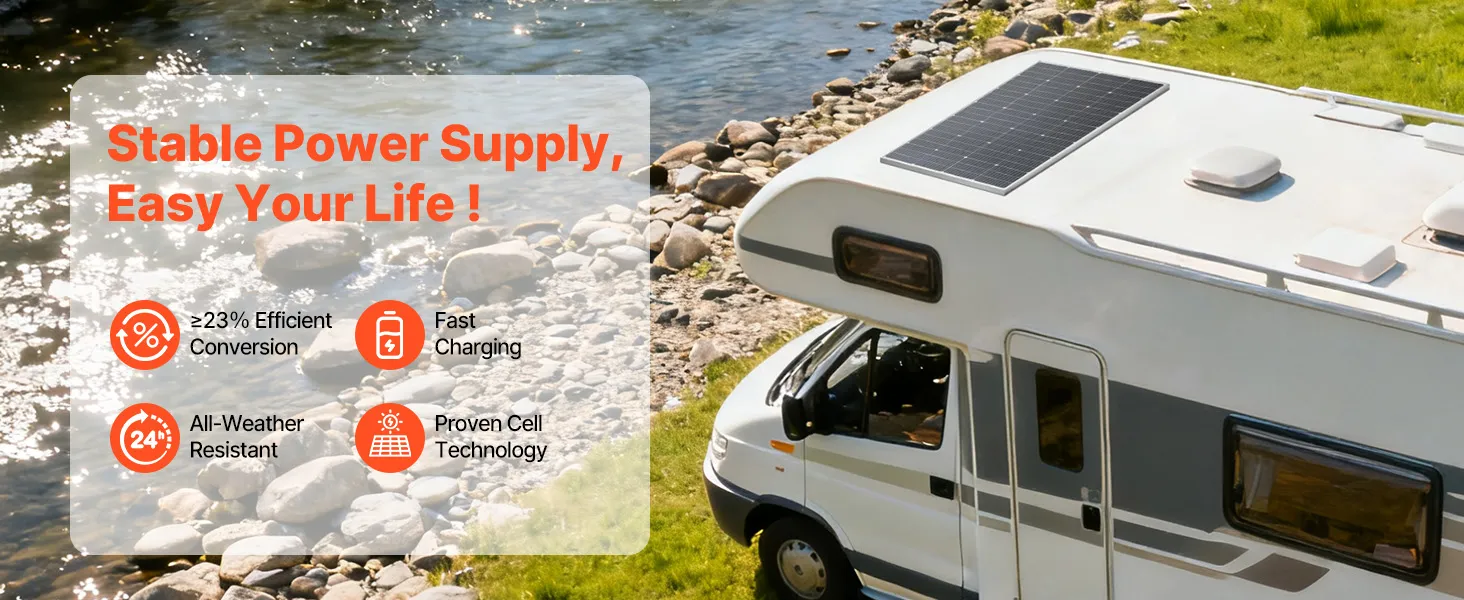
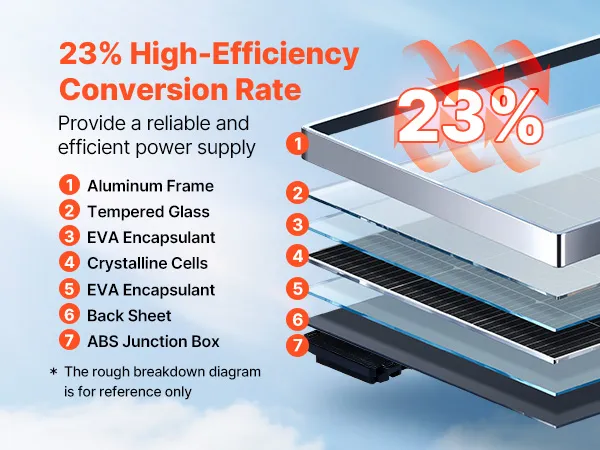
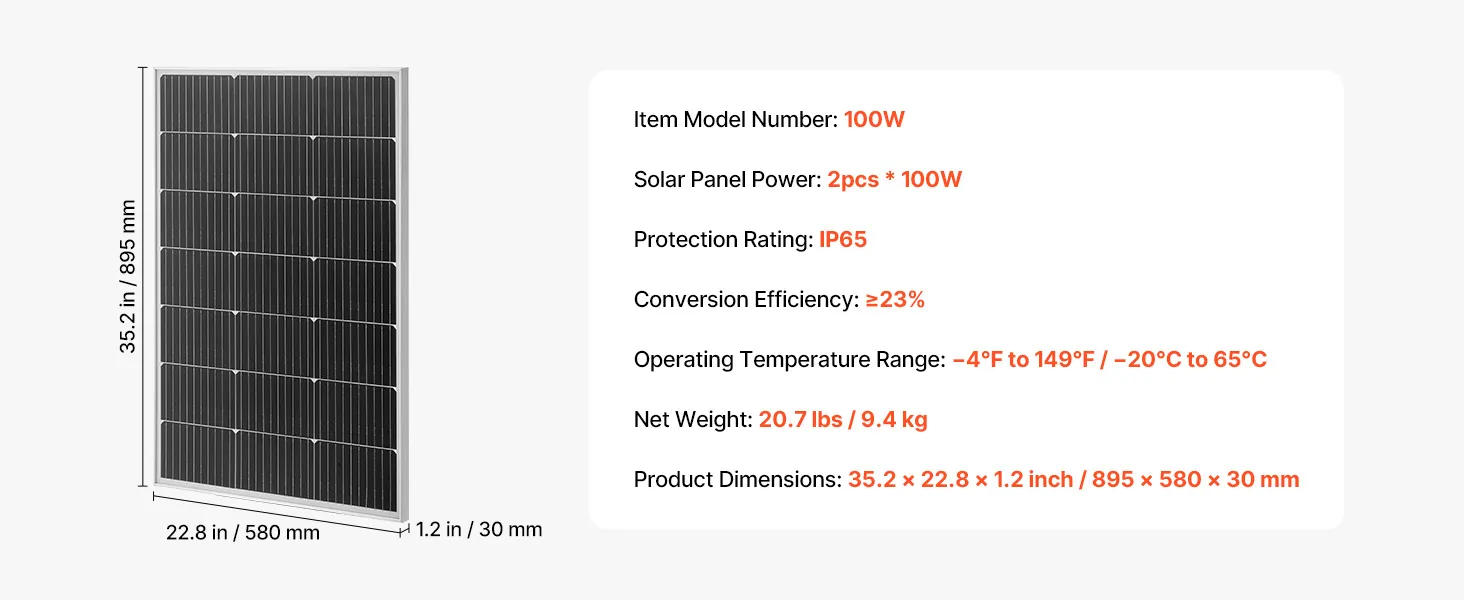
- Superior Efficiency: Featuring premium monocrystalline cells with ≥23% conversion efficiency, this 2pcs * 100W mono solar panel converts more sunlight into usable energy, ensuring efficient power generation for steady power output and fast devices charging
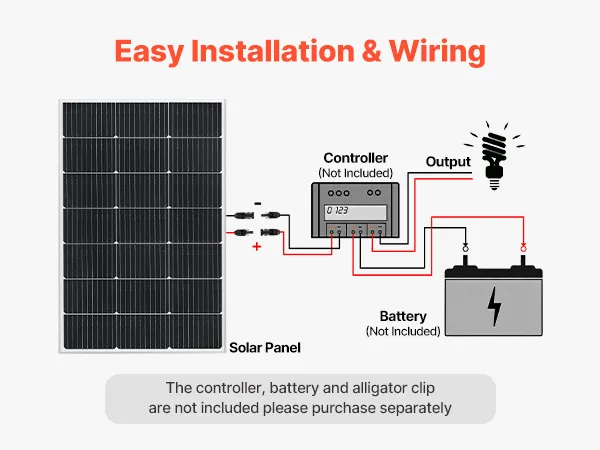
- Easy Connection: Designed with a built-in MC4 cable for quick, safe connection, this monocrystalline PV module easily connects to controller and battery, ensuring stable and consistent power output (Only the solar panel is included; controller, battery and alligator clip purchase separately)
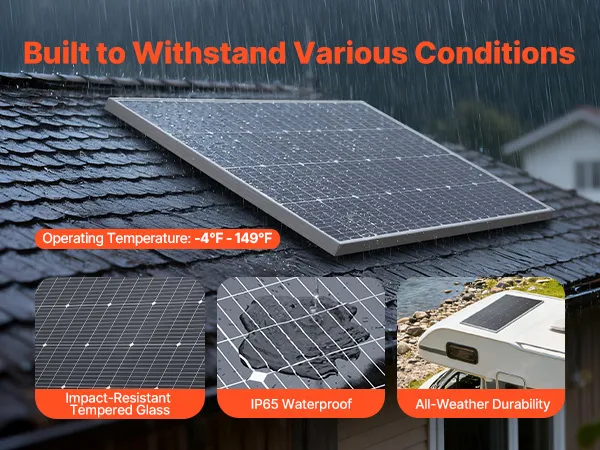
- Enhanced Durability: Built to last with tempered glass and anti-corrosion aluminum frame, our high-efficiency solar panel features IP65 protection rating and operates reliably from −4°F to 149°F, delivering long-lasting performance in outdoor environments
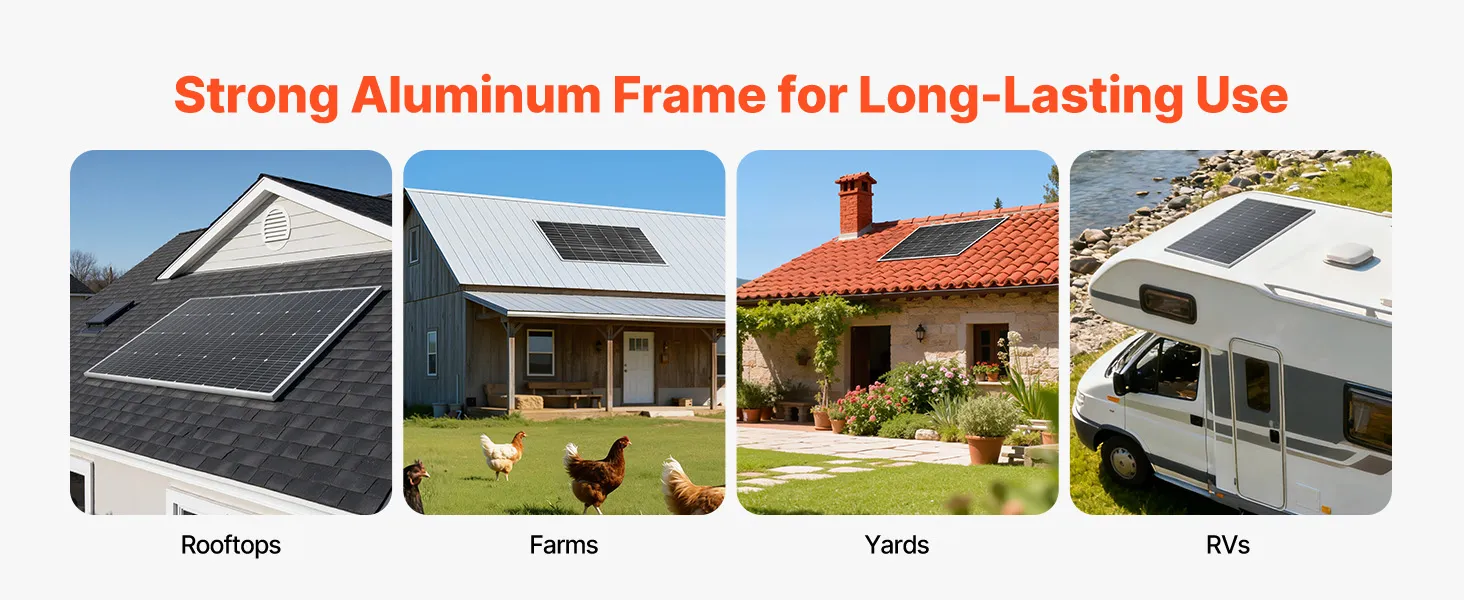
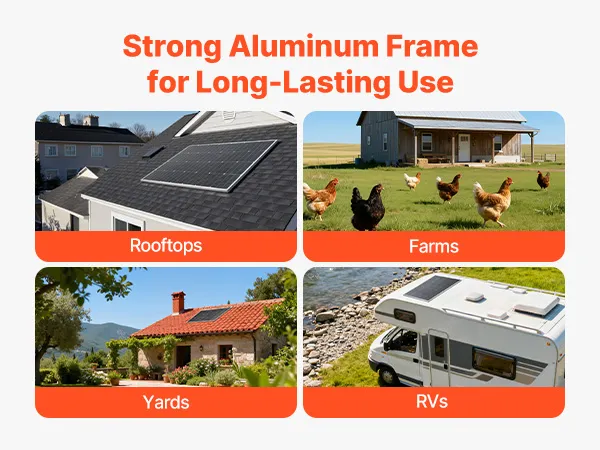
- Wide Applications: Ideal for flat installation on rooftops, farms, yards, RVs, boats, or flat-roof vehicles and off-grid cabins, this framed solar panel provides consistent, reliable power for home appliances, yard lighting, gate openers, RV equipment, etc
- Friendly Reminder: Mounting brackets are not included. If you want to secure it for stable, long-term power supply, please purchase proper mounting brackets separately and reinforce it firmly yourself to prevent it from being blown away in strong winds
Frequently Bought Together
Reviews
About this item





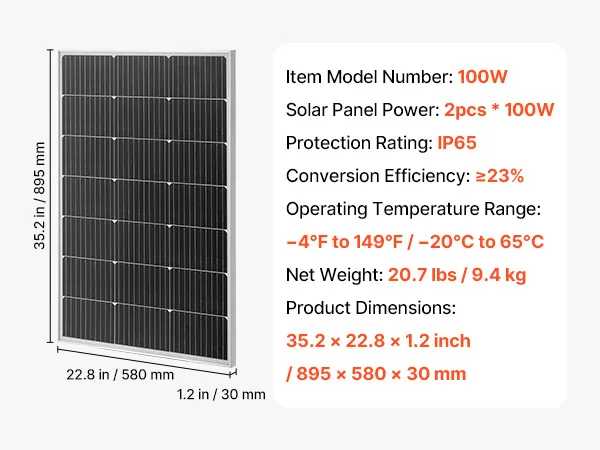
VEVOR 2×100W Mono PV Module Delivers ≥23% Conversion Efficiency for Maximum Solar Yield
The VEVOR mono PV module features high-quality monocrystalline cells with a conversion efficiency of at least 23%. This is a high rate for the 100W panel class. This better cell technology captures a wider range of sunlight, turning more photons into usable DC electricity than standard polycrystalline cells.
Each 200W dual-panel system produces more power per unit area of rooftop or surface area, making it ideal for installations with limited space. The ≥23% efficiency rating makes sure you get the most out of every hour of sunlight, whether you're powering RV appliances, boat electronics, or off-grid cabin loads.
Mono PV Module Dual 100W Output Configuration Maximizes Power Delivery Across Off-Grid Systems
The VEVOR mono PV module comes in a 2-piece 100W set that delivers 200W at peak. It means batteries can be charged and low-draw DC appliances can be used simultaneously. This dual-panel design lets you wire things up in different ways, like in series (for 24V systems) or in parallel (for 12V systems that need more power).
When the two panels are set up in a series-parallel configuration, they lose less power over long cable runs and work better with charge controllers. This 200W combined capacity is a good starting point for daily energy budgets for RV users, boat owners, and off-grid homesteaders. It can cover lighting, gate openers, and small appliances.
MC4-Compatible Cable Output Ensures Fast, Secure Electrical Connection in Field Conditions
Each panel in this set of PV modules comes with an MC4 connector cable that is already attached. It means that you don't need any special tools or wiring skills to install them. The MC4 interface fits securely into compatible charge controllers and solar charge controllers. It creates a weatherproof, vibration-resistant electrical joint suitable for year-round outdoor use.
This plug-and-play connection makes it much faster to set up mobile apps, such as mounting panels on an RV roof or a boat deck. The MC4 system's low contact resistance also reduces resistive losses at the junction point, so each panel can still produce the full 100W output under normal test conditions.
IP65 Waterproof Rating Sustains Performance Across Harsh Outdoor Operating Environments
The VEVOR mono PV module has an IP65 waterproof rating, meaning it is fully protected against dust and withstands low-pressure water jets from any direction. This rating supports outdoor use in appropriate installations, even in areas that get a lot of rain or are near the coast.
Each panel has a high-transmission tempered glass laminate that protects it from mechanical impact, hail, and surface abrasion, in addition to the IP65 rating. The sealed junction box that holds the bypass diodes also meets the IP65 standard, meaning moisture can't get in and damage the electrical components inside while the box is in use for extended periods.
Anti-Corrosion Aluminum Alloy Frame Maintains Structural Integrity from −4°F to 149°F
The anodized aluminum frame around each PV module provides strong structural support and helps prevent rusting in environments with salt air, high humidity, and intense UV light. The frame profile is carefully extruded to maintain its dimensions over the entire operating temperature range of −4°F (−20°C) to 149°F (65°C).
Because the VEVOR panel system can handle a wide range of temperatures, it can be used in both cold winter climates and desert summer climates. To keep the panels flat and the cells strong over multi-year service cycles, the frame's corner brackets are reinforced to withstand wind uplift loads common in installations on exposed rooftops and vehicles.
Flat-Roof and Multi-Surface Mounting Compatibility Supports Six Distinct Installation Scenarios
This mono PV module features a frameless bottom flat profile, making it easy to install on flat rooftops, farm buildings, RV tops, boat decks, and yard arrays without the need for angled racking hardware. This zero-tilt compatibility lowers the cost of installation hardware and makes it easier for wind to pass through in open areas.
It is a truly cross-platform energy solution, having been tested in six settings: residential rooftops, farms, yards, RVs, boats, and off-grid cabins. The standardized 100W panel dimensions work with most third-party universal mounting systems, making it easier to buy parts for multi-panel array builds. Mounting brackets are sold separately.
Tempered Glass Surface and Bypass Diode Technology Reduce Energy Loss Under Partial Shading
The high-transmission tempered glass layer laminated over each PV module cell matrix reduces optical reflection losses and protects the monocrystalline wafers from stress-induced breakage. This glass specification maintains its optical clarity even after prolonged UV exposure. It stops the yellowing that occurs with lower-quality encapsulant materials, thereby improving output.
The sealed junction box features built-in bypass diodes that help route current around shaded or underperforming cell strings. It prevents cells from overheating, which permanently damages them and shortens the panel's lifespan. In partially shaded areas, such as yards next to trees or boat decks with rigging shadows, this diode design keeps usable output from the unshaded cell areas, protecting both performance and the panel's long-term reliability.
