VEVOR Hydraulic Tubing Bender Kit, 6 mm to 22 mm, Copper Tube Pipe Bender, HVAC Bending Tool Set, 90° Bend, with 7 Color Aluminium Alloy Dies, for HVAC Air Conditioning Refrigeration Automotive Repair

- Effortless Hydraulic Bending: Built-in hydraulic system provides powerful, smooth, and labor-saving performance. This hydraulic tubing bender kit delivers fast, stable bends that significantly improve your work efficiency
- 7 Bending Dies Included: Comes with 7 bending dies from 1/4 inch to 7/8 inch (6 to 22 mm). Our tube pipe bender tool allows you to handle multiple tubing sizes
- Precision Angle Control: Achieve accurate bends up to 90°. This HVAC pipe bender tool set is ideal for complex pipe routing and tube layouts
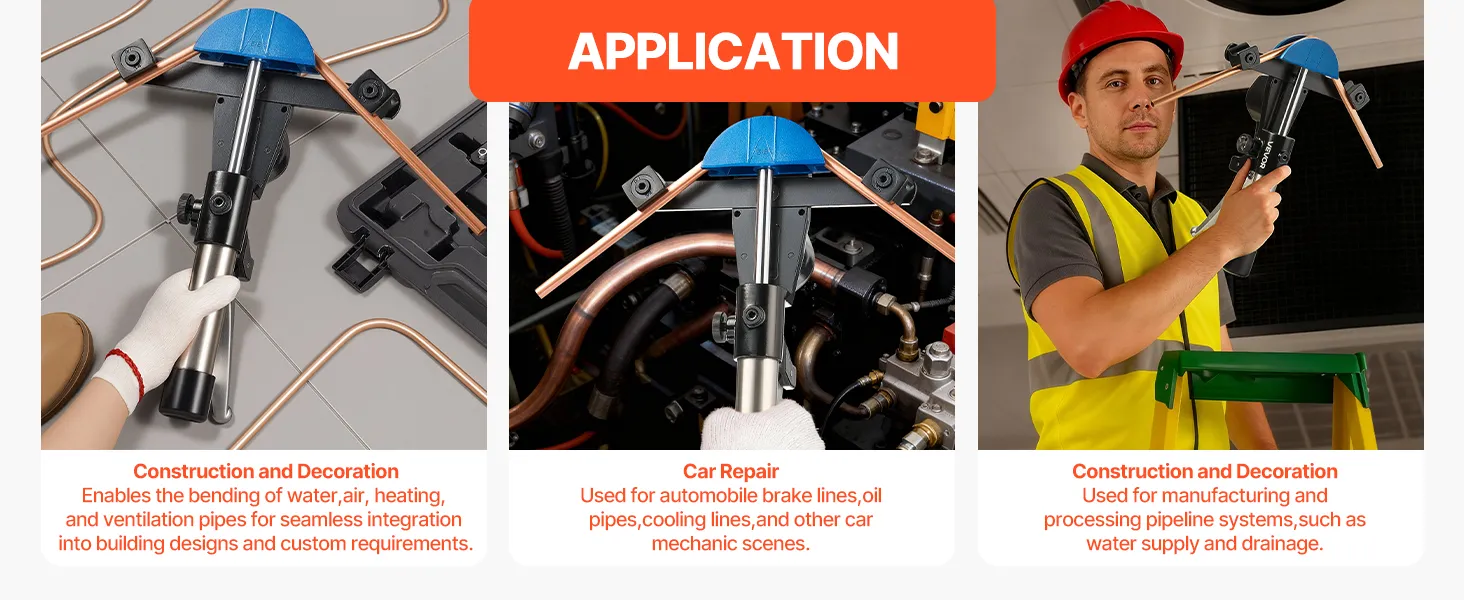
- Ready for Every Bend: This hydraulic copper pipe bender is ideal for HVAC and refrigeration systems, automotive repair, water pipe installation, and hydraulic/pneumatic system maintenance
- Reinforced Construction: The bending dies are made of high-strength aluminum alloy with a treated surface, ensuring durability, corrosion resistance, and long-lasting performance
Frequently Bought Together
Reviews
About this item


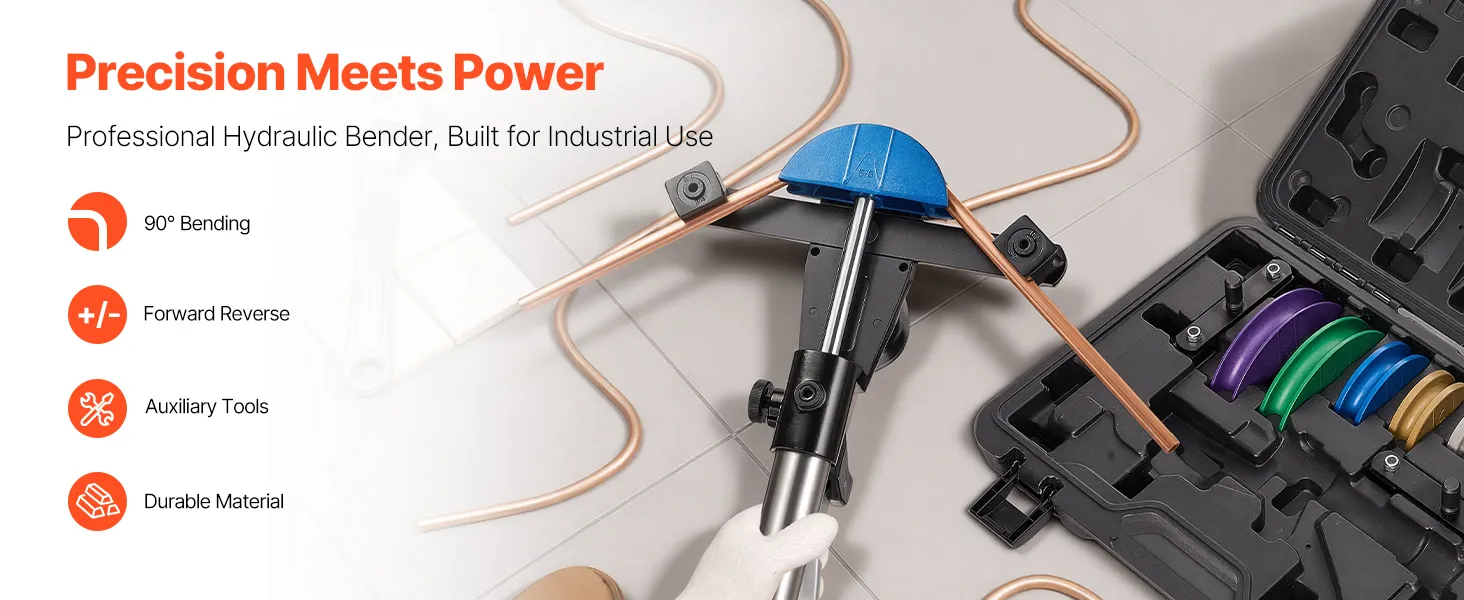
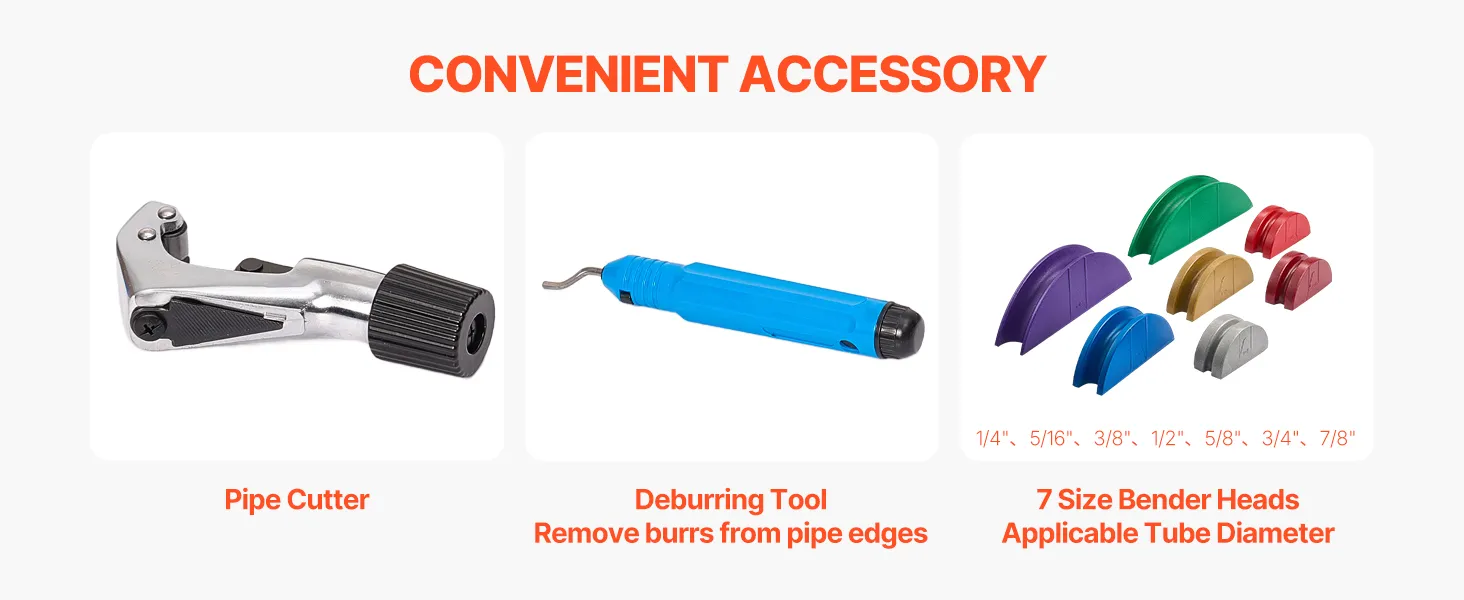
Hydraulic Tubing Bender Kit with Built In Hydraulic System for Powerful Labor Saving Bending
The VEVOR hydraulic tubing bender kit uses a built-in hydraulic system that delivers smooth, controlled bending force throughout each bend stroke. The hydraulic system eliminates the need for variable effort associated with manual bending. It provides consistent force throughout repeated bending tasks.
The consistent hydraulic force helps produce smooth bends in larger tube sizes such as 16, 19, and 22 mm. The hydraulic amplification allows the operator to maintain full control over the bend progression without physically fighting high wall resistance at larger diameters. This helps produce smooth bends while reducing tube deformation.
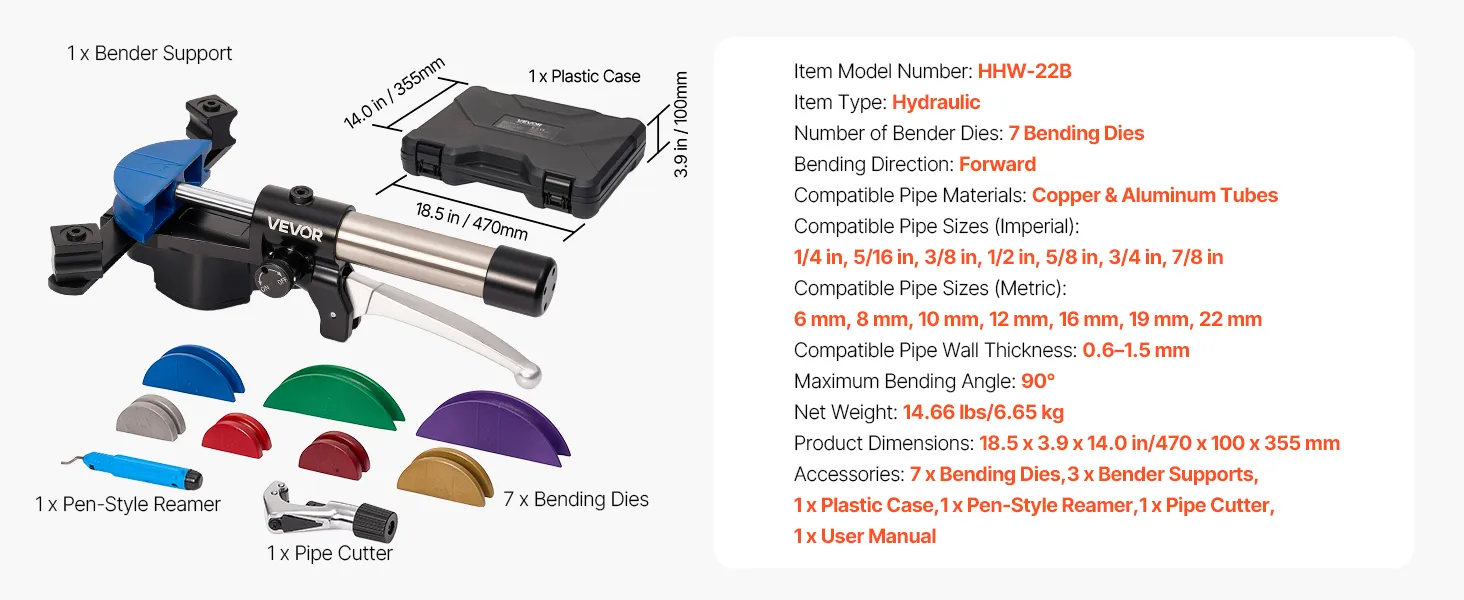
7 Labeled Aluminum Alloy Dies from 6 mm to 22 mm for Multi Size Tube Coverage
The kit comes with seven bending dies, each labeled with a different tube diameter (6, 8, 10, 12, 16, 19, and 22 mm). These dies cover common copper and aluminum tube sizes used in HVAC systems, refrigeration, automotive repair, and hydraulic applications. Each die has a clear label indicating the tube diameter it fits. This makes it easy to quickly choose the right die without checking the size or testing it before bending the tube.
Clear size markings help users quickly select the correct die. This happens a lot in HVAC work, where indoor unit connections, line-set runs, and outdoor unit ports all require different tube sizes. Quick die identification helps reduce setup time during multi-size bending jobs.
0.6–1.5 mm Compatible Wall Thickness for Precise Bending Across Thin-Walled Tubing
According to the specifications, the hydraulic tubing bender kit can handle tube walls that are between 0.6 mm and 1.5 mm thick. This is the thickness range for thin-walled copper and aluminum tubing used in HVAC refrigerant lines, automotive brake circuits, and refrigeration piping. For this range of wall thicknesses, you need a bending tool that applies controlled, spread-out force across the tube cross-section rather than concentrated point pressure, which would cause thinner walls to break, wrinkle, or become oval at the bend zone.
The hydraulic system spreads the bending force evenly across the tube wall as the bend moves through the die profile. This maintains the tube's round cross-section throughout the full 90° arc without deforming the wall, as happens when a bending force is applied unevenly. As a result, the final bend keeps the tube's original bore diameter at the bend zone. This ensures that cross-section reduction does not affect the flow of refrigerant, fluid, or air at points where the system's direction changes.
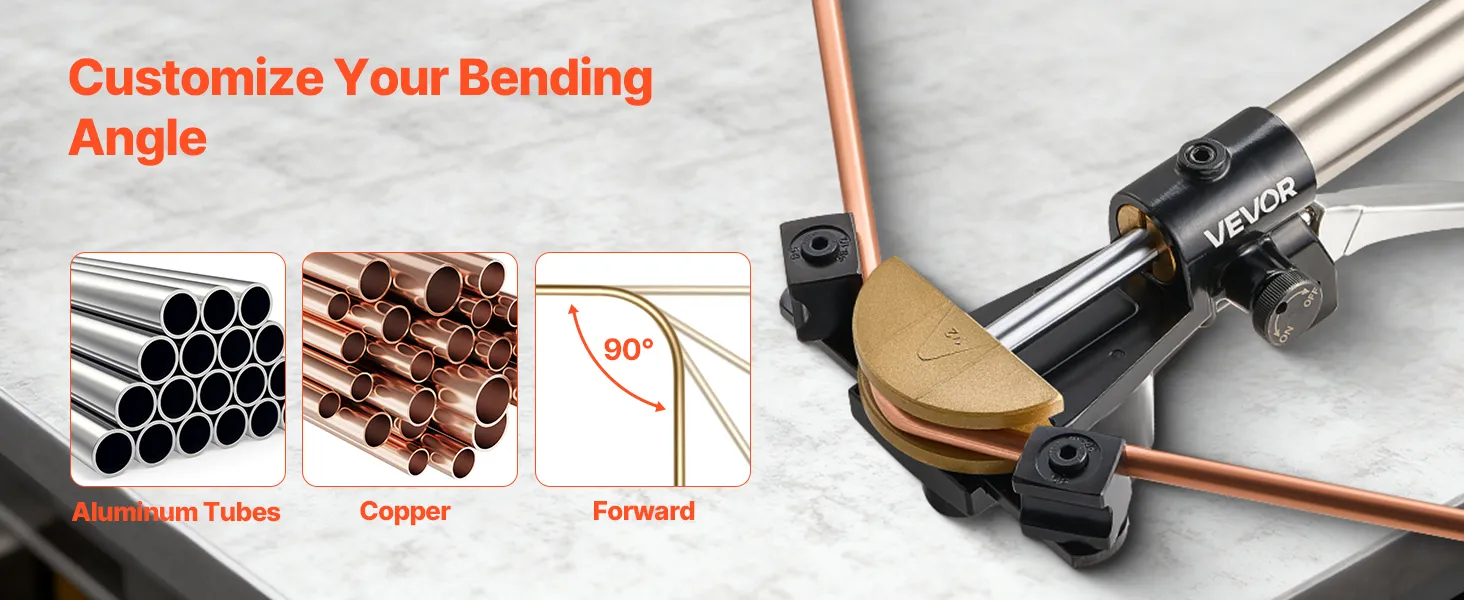
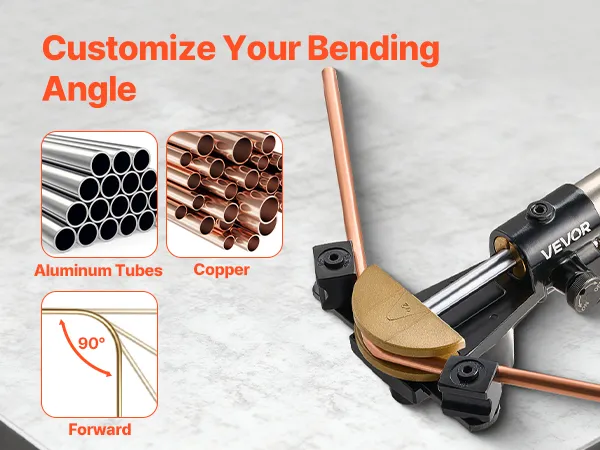
0° to 90° Bending Angle Range for Straight Corrections to Full Right-Angle Routing
The bending angle can be continuously adjusted from 0° to 90°. This covers the most angles needed for practical tubing installation, from small changes in direction at low angles to full right-angle changes when tubing needs to turn 90° to follow a building structure, vehicle chassis member, or equipment frame. The angle scale on the die allows the operator to read and hold a precise target angle during the bend stroke, rather than guessing the angle by eye and releasing pressure at a rough spot.
Maintaining accurate angles at multiple bends is essential, especially in HVAC and refrigeration installations, where symmetrical tube runs, matched line-set pairs, and multi-unit piping layouts require consistent angles to ensure a clean, professional installation. The built-in angle markings help produce consistent bends across multiple tubes.
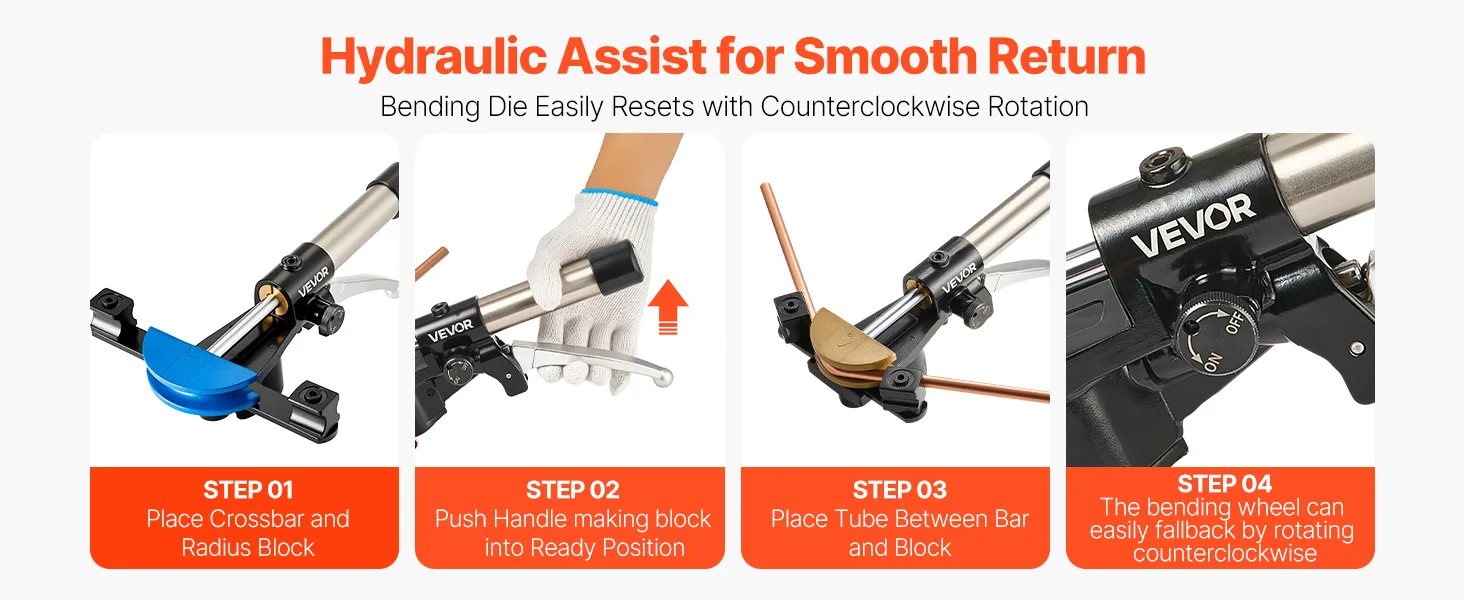
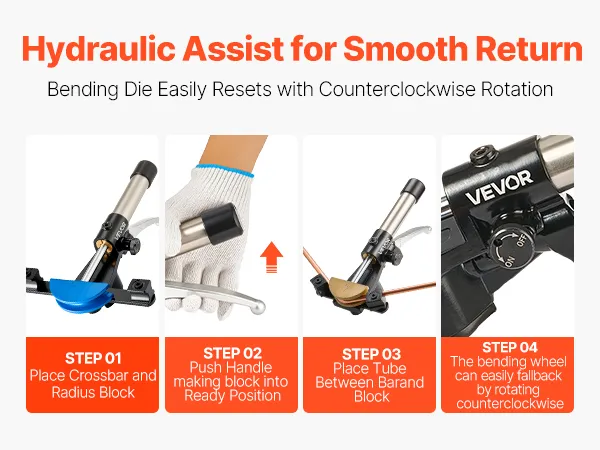
Hydraulic Tubing Bender Kit with Counterclockwise Reset for Uninterrupted Workflow
The hydraulic tubing bender kit goes back to its starting position by rotating counterclockwise after each bend. This hydraulically assisted reset motion requires little effort to start and finish. The hydraulic return mechanism ensures that the bending arm returns to its starting position smoothly and completely on every reset cycle. This puts the tool in the correct position for the next tube without the operator having to pull or hold the arm against the return path during the reset stroke.
Fast, low-effort reset cycling keeps the time between bends short throughout a full working session. This means that productivity stays the same from the first bend of the day to the last, without the operator having to stop or make up for a slow or incomplete reset. An effective hydraulic reset saves a lot of time across many bends of different tube sizes. This process saves time on projects that need to be completed quickly, such as multi-split HVAC installations with separate line sets for each indoor unit.
Ready for HVAC, Refrigeration, Automotive, Water Pipe, and Hydraulic System Applications
The 6–22 mm tube diameter range and the ability to work with both copper and aluminum make this hydraulic tubing bender kit a useful tool for a wide range of professional and DIY tubing applications requiring precise tube bending. It is suitable for bending refrigerant line sets used in HVAC and air-conditioning installations. In refrigeration maintenance, it bends the copper circuits that route refrigerant through commercial display cases and cold storage system coils.
When working on cars, mechanics use the same range of tube diameters to replace brake lines, reroute fuel lines, and work on transmission cooler circuits. This is because they come across both copper and aluminum tubes. Other applications include installing water pipes and maintaining hydraulic systems. This means the operator needs only one hydraulic tubing bender to handle all their tube-bending work, rather than separate tools for each job.