



VEVOR Car Refrigerator, 25 L Dual Zone Portable Freezer, 12 Volt Car Refrigerator Fridge, -4℉-68℉ Adjustable Range, 12/24V DC and 100-240V AC Compressor Cooler for Outdoor, Camping, RV


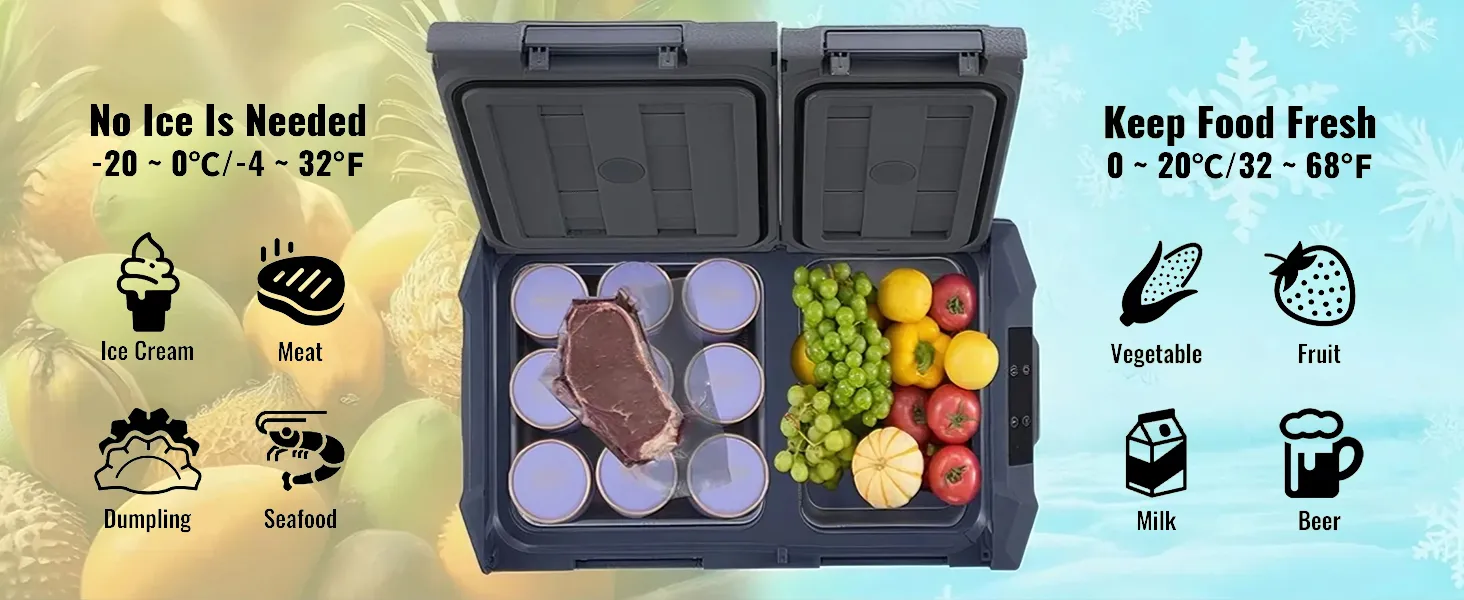
- Large Capacity: The portable refrigerator freezer has a dual compartment capacity of 25 L. This robust RV fridge can hold 30 cans of 330ml cola or 23 bottles of 550ml water or 3 bottles of 750ml red wine, accommodating seafood, snacks, meats, and beverages, meeting the needs of short trips such as travel, boating, and camping.
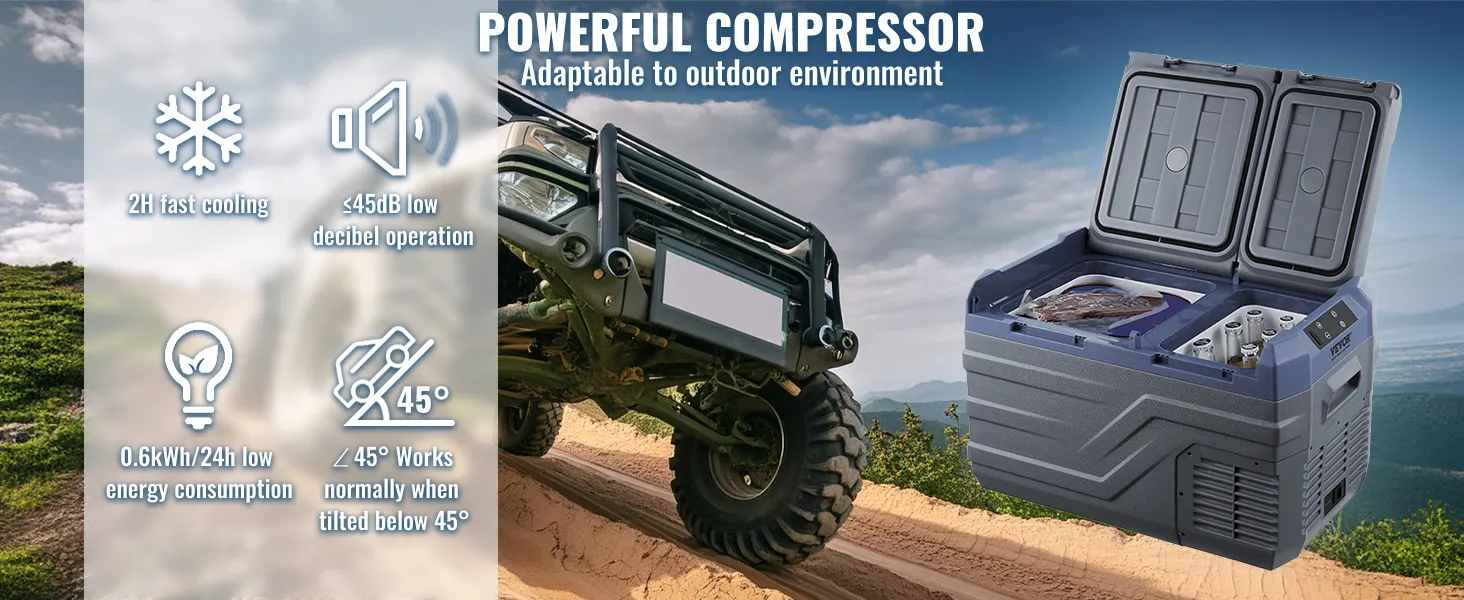
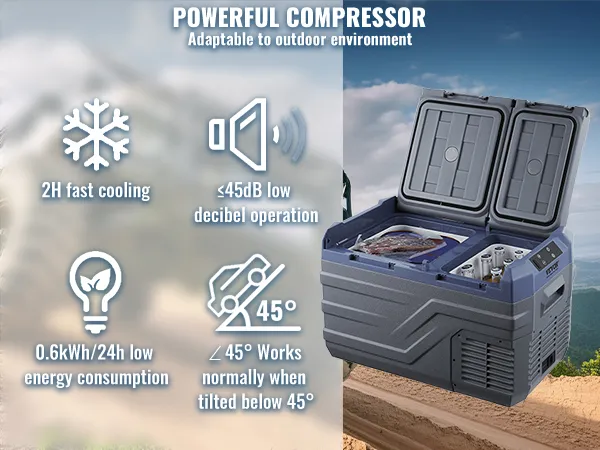
- 1.5H Rapid Cooling: This 12V car fridge uses compressor cooling technology, reaching -20°C / -4°F shutdown point in approximately 1.5H at 77°F ambient temperature. It cools quickly and operates normally even when tilted up to 45 degrees, making it your companion for outdoor camping or work, keeping your food fresh. No need for ice cubes, preventing food spoilage and saving money and space.
- LED Screen & Bluetooth Control: The LED control panel allows you to directly view the operation status of the car fridge and adjust the temperature range at any time. You can set any temperature between -20°C to 20°C / -4°F to 68°F on the panel. The electric cooler also features Bluetooth mode, connecting to a mobile app for remote control.
- Quiet & Energy Efficient: The fridge operates with noise ≤ 45dB, ensuring you sleep well after long drives. You can also choose between ECO and Max modes via the LCD touchscreen. In ECO energy-saving mode, the operating power of this portable fridge is less than 45W. Even when running in MAX mode (51W), its intelligent circulation consumes less than 1 kWh/day.
- Dual Use for Home/Car: The double door car fridge comes with 110/240V AC and 12/24V DC adapters, allowing it to be used at home, on yachts, RVs, cars, trucks, and vans. Note: Dual-zone single control. The left large compartment allows freezing temperature settings, while the right refrigerator zone temperature cannot be adjusted independently.
Frequently Bought Together
Reviews
About this item


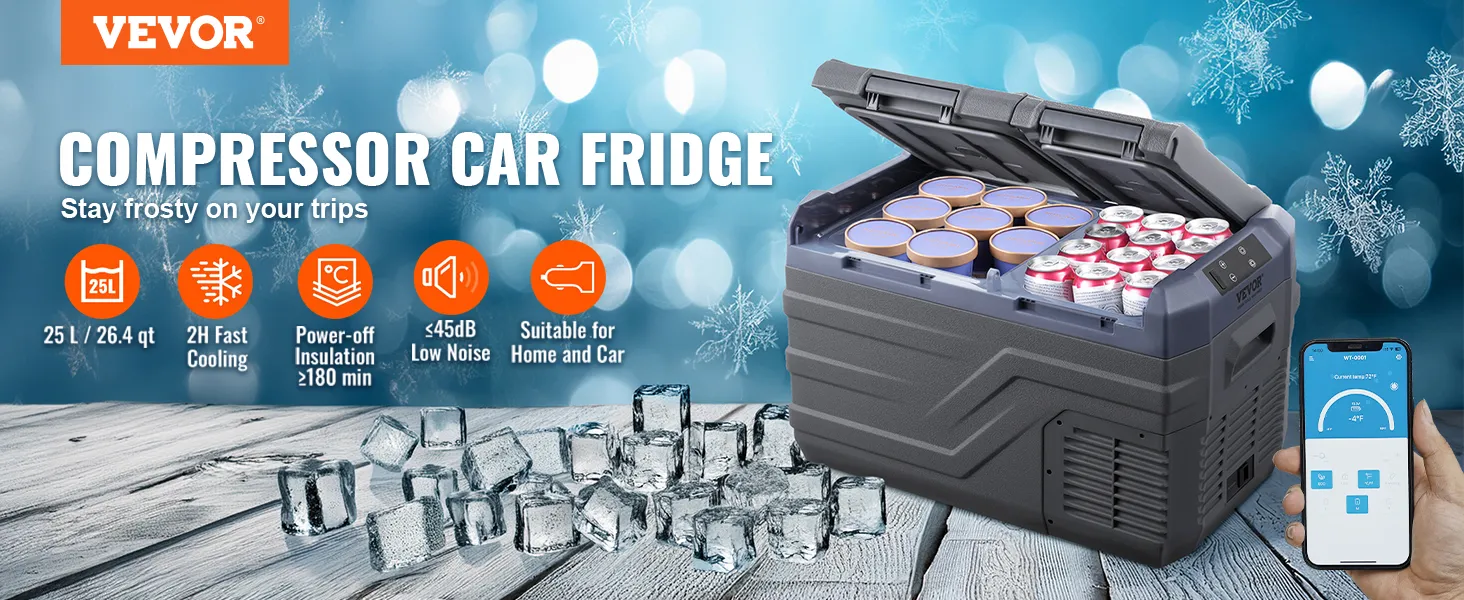
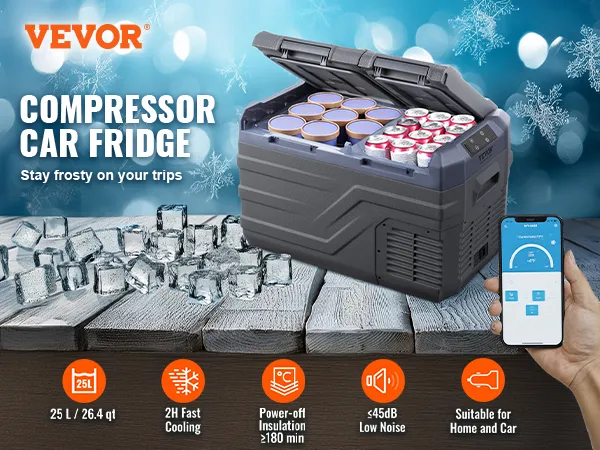


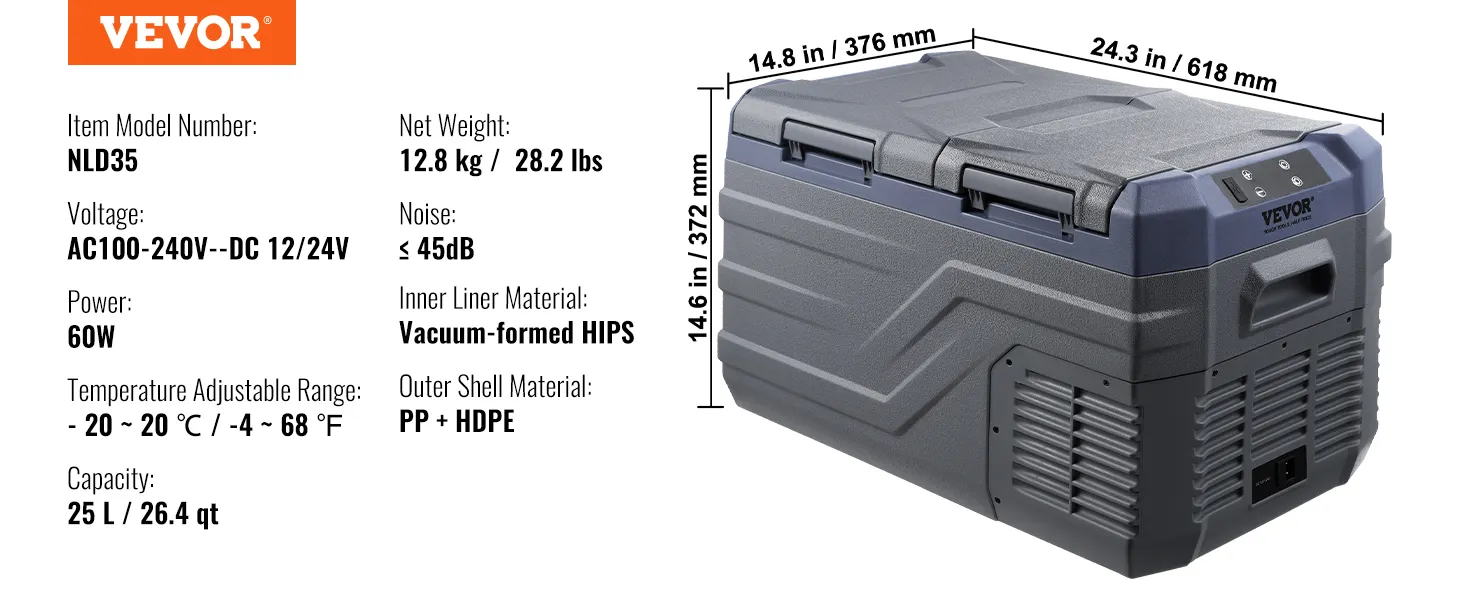
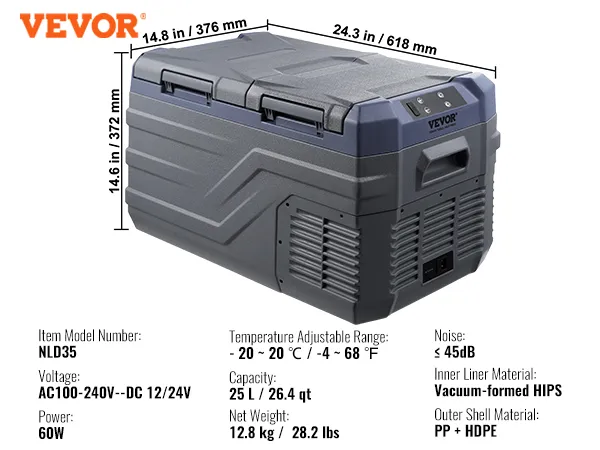
Car 12V Refrigerator with 25L Dual-Zone Double Door Design for Vehicle Use
The VEVOR car 12V refrigerator provides you with 25 liters of dual-zone compressor-cooled storage from your vehicle’s power supply- no separate power source needed, no ice to source, and no passive cooling that fades as the drive goes on. The interior can hold 30 cans of 330ml cola and 23 bottles of 550ml water or 3 bottles of 750ml wine in two compartments. It caters to the storage needs of one or two people for a full day of driving without needing to restock.
Each zone has its own separate door so you can access the fridge side without opening the freezer compartment, and vice versa. That door separation in a vehicle, where the unit is repeatedly accessed during a long drive, reduces the cumulative temperature loss in both zones over the journey. At 618 x 376 x 372mm, the shortest height in the NLD double-door range, it fits neatly in boot floors, rear seat footwells, and van cargo areas where taller units would not clear overhead obstacles.
12V and 24V DC Compatibility for Cars, Trucks, Vans, and RVs Without Adapters
The 12V compatibility on this unit goes beyond normal passenger cars. The DC input is dual-voltage, supporting both 12V and 24V so that the same refrigerator can run off a car’s standard power port, a truck’s 24V electrical system, a van’s auxiliary battery, or an RV’s house battery bank, without voltage conversion or extra wiring. The included AC and DC adapters handle vehicle and shore power from the start, so the unit is ready for whatever electrical system it first connects to.
If you drive more than one type of vehicle, like a personal car during the week and a work van or truck on weekends, that dual-voltage compatibility means you don’t have to own separate coolers for different vehicle power systems. With the same cable, you can switch the unit from a 12V car port on Monday to a 24V truck socket on Saturday without changing any settings. The compressor works on either input voltage with no change in cooling performance, regardless of which vehicle it is plugged into.
Left Freezer Zone and Right Fridge Zone on a Single Compressor Control Point
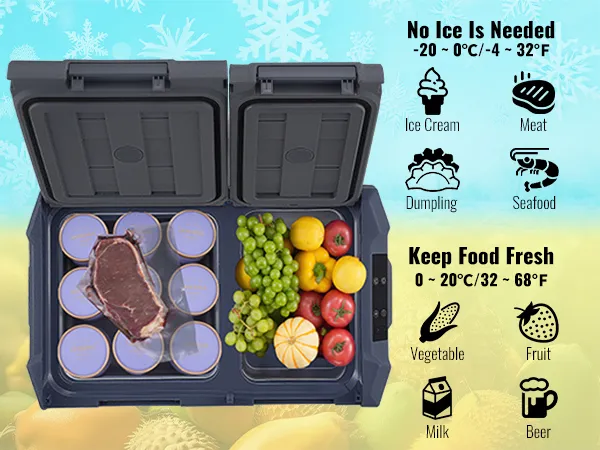
The NLD35 has a fixed zone layout; the left compartment is for freezing temperatures and is controlled by the exterior control panel over the entire range from -20°C to 20°C. The right compartment maintains its refrigeration temperature relative to the left zone setting and does not accept independent input. One compressor controls both sides from a single control point. For a vehicle, this means easier daily operation: one temperature to set, one system to monitor, and both compartments operating from that one input.
This fixed-role layout directly fits the typical uses for car fridges: frozen goods on one side and chilled drinks and fresh food on the other, managed from a single dial rather than two separate zone controls to keep track of during a drive. Running both zones off a single circuit also keeps the compressor efficiency and total power draw lower than a dual-compressor system, which is important when the unit is powered by a vehicle battery that must keep the engine and other systems running at the same time.
Vacuum Formed HIPS Interior and PP + HDPE Shell in the Shortest NLD Profile
Vacuum-formed HIPS also lines the interior surfaces of both compartments, providing structural rigidity and thermal consistency to the freezer and fridge zones without adding much weight to the unit. For a double-door unit with two thermal zones, the quality of the interior materials directly affects the dividing wall's ability to maintain the required temperature separation. HIPS maintains its shape across the temperature differential between the freezer side at -15°C and an adjacent fridge zone at 4°C, without warping or cold bridges.
It is the most discreet unit in the NLD double-door series. At just 372mm high, it is 70mm lower than the NLD45 and 142mm lower than the NLD55. In passenger cars, the reduction in height is significant, and tight limits on what can be fitted are imposed by boot-lid clearance, rear-seat position, and footwell depth. The dual-zone interior is housed within the PP + HDPE shell, which keeps the unit at 12.8kg, making it the lightest NLD model and the easiest to move between the vehicle and home without assistance.
Car 12V Refrigerator with ≤45dB Operation and ECO/MAX Mode for Battery Control
The main operational consideration when running a car 12V refrigerator from a vehicle's electrical system is managing battery draw, particularly when the vehicle is stopped for an extended period and the engine is not running. ECO mode keeps the draw to less than 45W and daily consumption under 1 kWh, a load that a healthy vehicle battery can easily support for several hours without falling below the safe starting voltage, giving meaningful parked operation time without jump-start risk.
MAX mode pushes the output to the maximum 60W when you need to prioritize temperature recovery over battery conservation, such as after a string of door openings during a rest stop or when ambient heat surges inside a parked vehicle on a summer afternoon. The compressor is quiet when the cabin is stationary in either mode, with noise levels staying at or below 45dB. The LCD touchscreen can toggle between ECO and MAX without interrupting active cooling in either zone, so battery management decisions can take effect without interrupting operation.
Compressor Pull Down to -4°F in 1.5 Hours With LED and Bluetooth Monitoring
The compressor pulls the freezer zone down to -20°C / -4°F in about 1.5 hours at 77°F ambient, while the fridge zone maintains refrigeration temperatures during that pull-down. For a car refrigerator that’s generally turned on at the beginning of a trip rather than pre-cooled at home, that 1.5-hour pull-down means both zones reach their target temperatures comfortably on the first leg of most road trips, without the driver having to plan around a lengthy pre-cooling window.
The current freezer zone temperature, read in real time, is displayed on the LED panel without opening either door. Bluetooth app pairing allows monitoring to be extended to a mobile device, which is useful when the unit is in the boot or rear cargo area, out of direct view from the cabin. The car 12V refrigerator package includes 110/240V AC and 12/24V DC adapters, so the unit can go from a home socket to pre-cool overnight to a vehicle 12V port at departure, without any cable changes between environments.
