VEVOR Portable Car Refrigerator Freezer Compressor 56Qt Dual Zone for Car Home
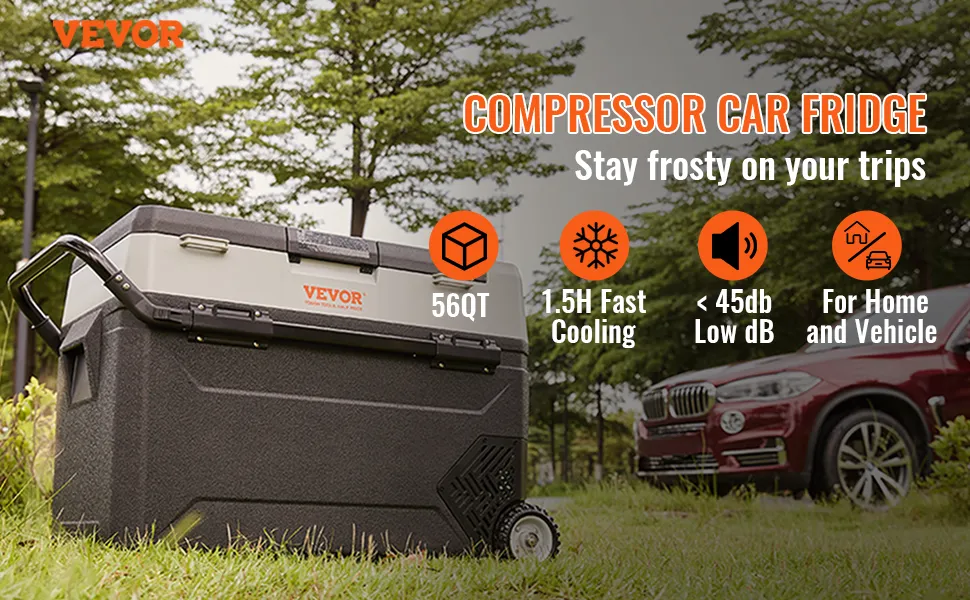
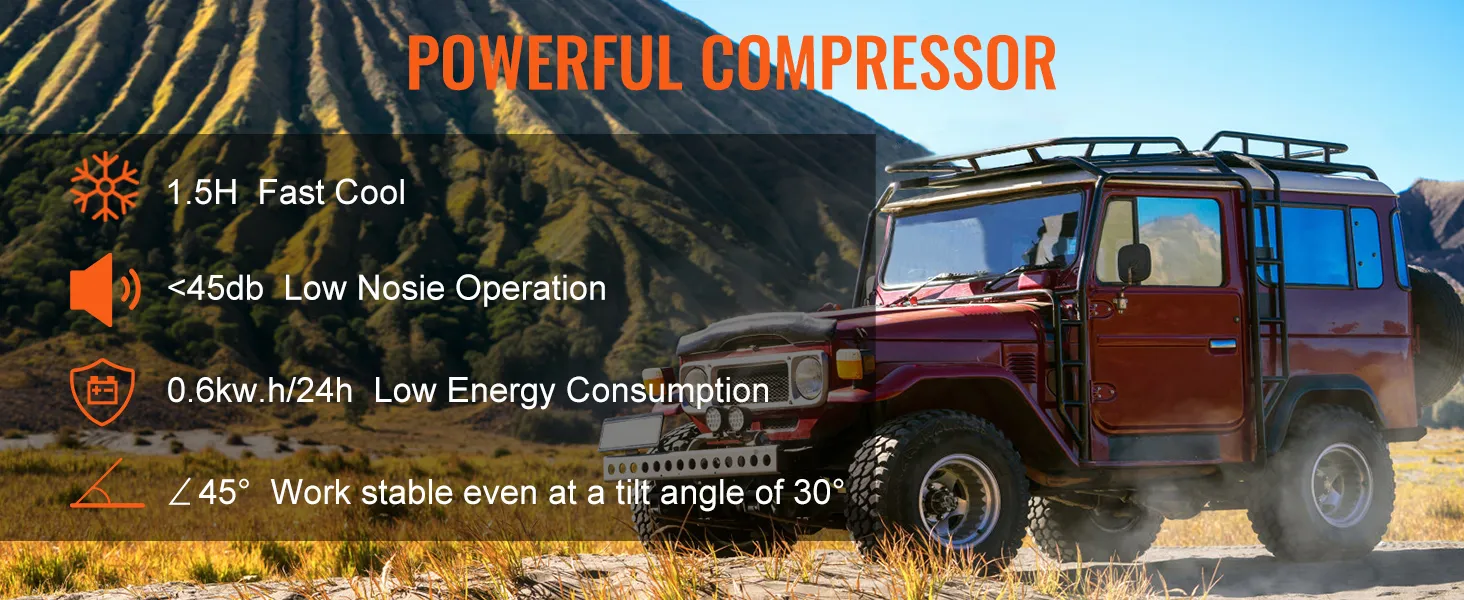
- Rapid Cooling: Experience quick and efficient cooling with our mini car fridge. Equipped with an upgraded compressor, it can cool from 77°F to -4°F in just 1.5 hours, ensuring your beverages and food stay refreshingly chilled. It even performs flawlessly at a 45° inclination, making it the perfect companion for outdoor adventures or work on the go.
- Quiet and Energy Efficient: Our mini car refrigerator consumes only 0.6kw.h of energy per 24 hours, providing impressive energy efficiency that saves power. And its boasts whisper-quiet operation, emitting less than 45db of noise when running. You can focus on your work or enjoy a peaceful night's sleep without disturbance.
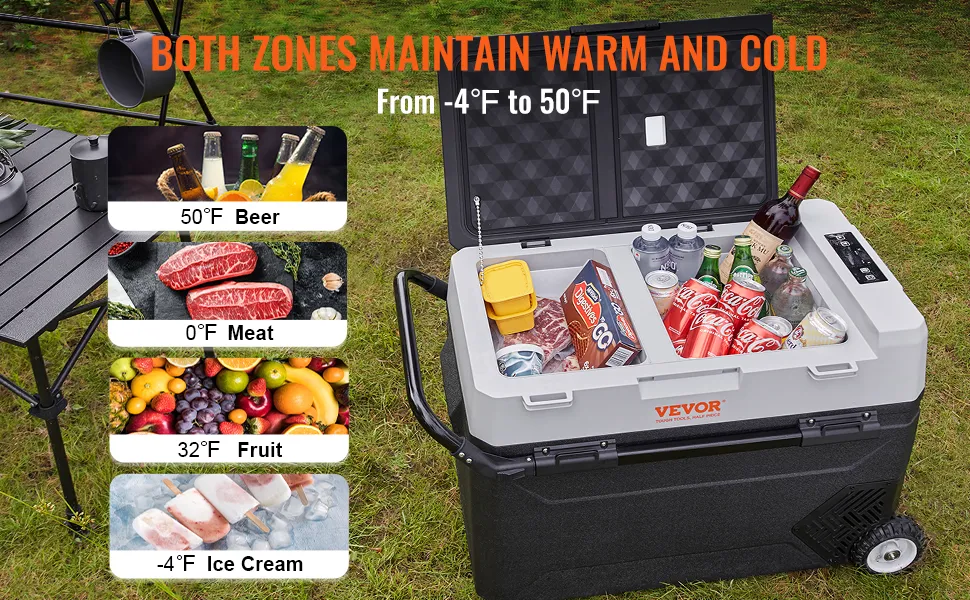
- Dual-Zone Temperature Control: The two zones can be customized for insulation or refrigeration purposes, and the temperature can be adjusted between -4°F to 50°F to suit your specific needs. With a generous total capacity of 56QT, you can easily refrigerate and store an assortment of beverages, fruits, meats, seafood, and more, ensuring you have everything you need for your daily adventures.
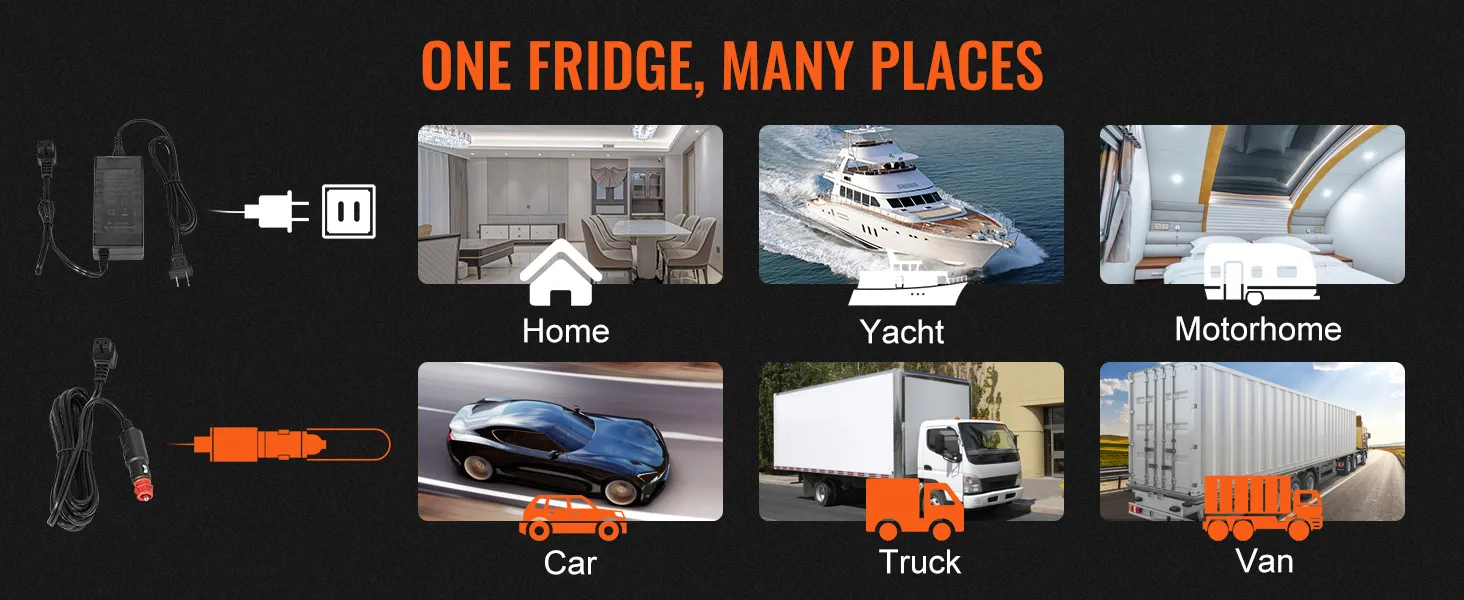
- Versatile for Family and Car Use: The mini fridge comes with a 138-inch/3.5m car cigarette lighter line and a household conversion plug, enabling you to use it in various settings, including your home, yacht, RV, car, truck, or van. The fridge also features three levels of battery protection (low, medium, and high) to safeguard against overload or short circuits in your vehicle's power supply.
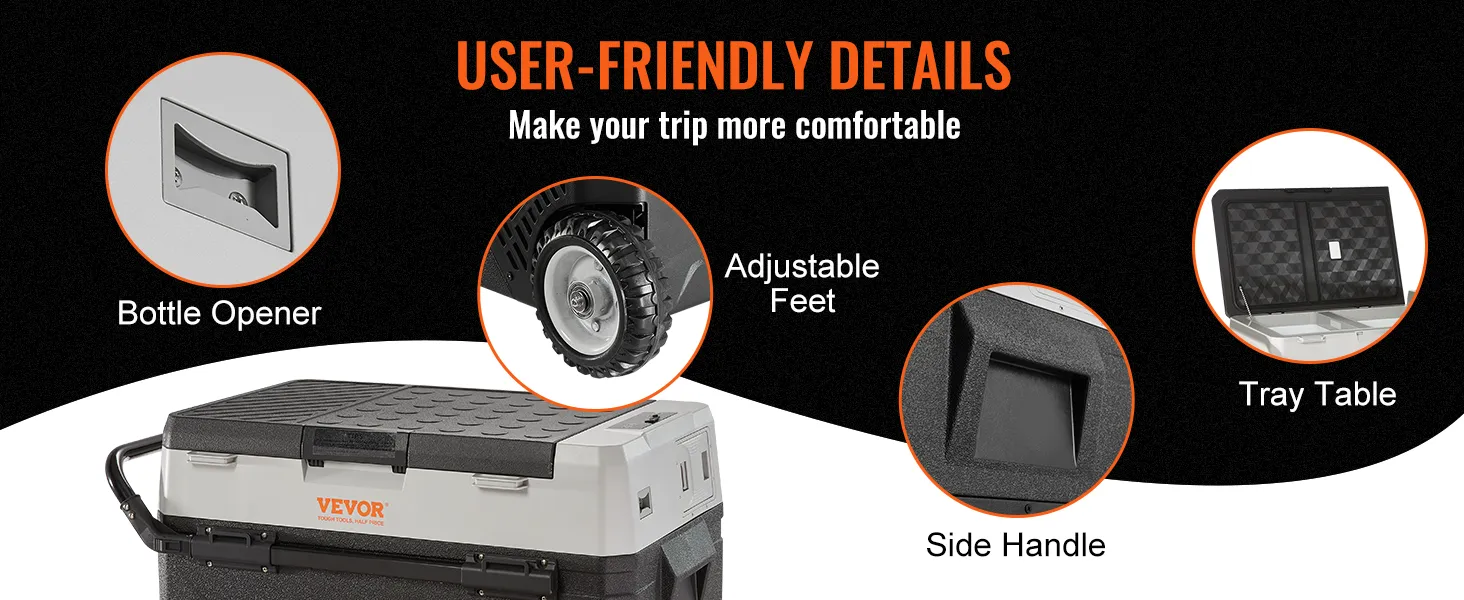
- User-Friendly Designs: This car refrigerator is designed with convenience in mind. It features smooth rollers and convenient handles for easy mobility. The internal LED lights provide clear visibility of the interior. Additionally, it includes a charging port for your phone and a digital display to adjust the temperature. The cup holder ensures the secure placement of your drinks.
Frequently Bought Together
Reviews
About this item


Rollers and Built-In Handles Make This Dual Zone Car Fridge Freezer Easy to Move
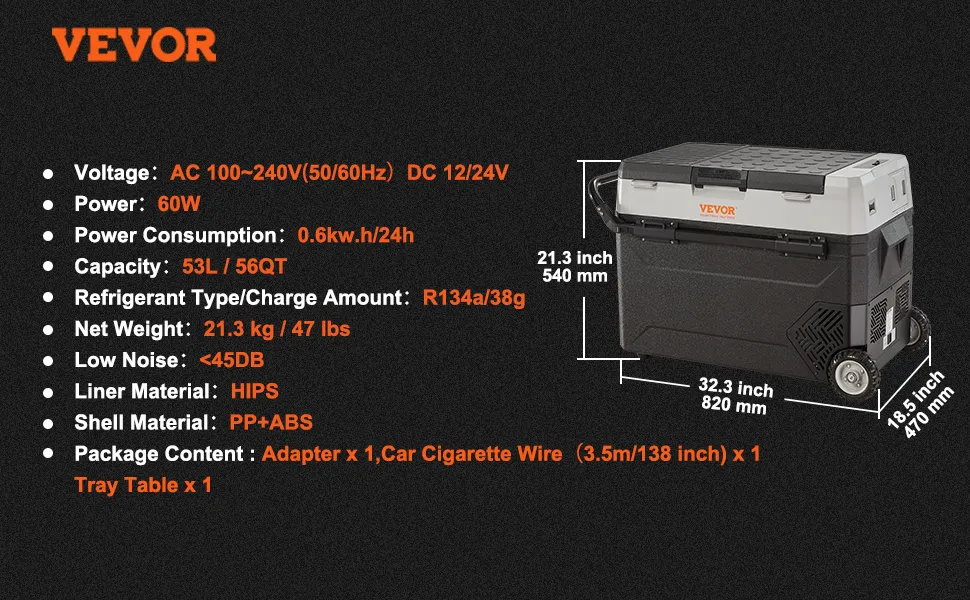
It isn't a unit you want to carry around, and the design admits as much, with an empty weight of 21.3kg. Smooth rollers on the base and sturdy handles let you wheel it or hoist it, rather than haul dead weight across a campsite or driveway. It gets considerably heavier with food and drink, so the wheels make the difference between a move that one person can do and one that requires two people each time.
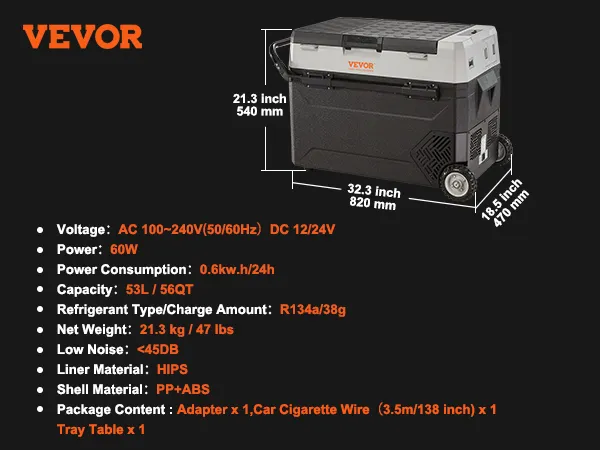
The cabinet is really large, 820 x 470 x 540mm, so make sure you have a place to put it before you buy. Think of it as a free-standing unit or cargo-area unit that you roll into position, not something you toss into a back seat. It's an honest framing for its size, and the rollers are exactly what make a box this big practical to live with day to day.
Independent Dual Zone Control Freezes and Chills in One Cabinet
The highlight is the two separate compartments that you can set independently. Set one side to -4°F as a freezer for meat and ice, and the other to 50°F as a chiller for drinks and produce. That ends the usual compromise of one temperature for everything, and your vegetables freezing next to your steak.
You can also change either zone from active refrigeration to simple insulation. It means you can turn off the side you aren't using and save power. That flexibility is useful on a multi-day trip: Freeze hard early, then convert a zone to a passive cooler once your ice packs are carrying the load. Independent control is the key feature that allows this dual zone car fridge freezer to operate as two separate coolers in one cabinet.
Three Level Battery Protection Guards Your Vehicle's Power Supply
What road-trippers really need is the three-level battery protection: low, medium, and high cutoff settings. A common way to wake up to a dead starter battery is to run a compressor fridge off a parked vehicle. It lets you decide how aggressively you want the unit to shut itself off before it drains the power you need to drive home.
That same system also protects the electrical supply to your vehicle from overload and short circuits. So it is unlikely that a wiring fault will take out the fridge or the car next to it. It's that sort of thing. You never think about it until it saves your battery somewhere without a mechanic for fifty miles. That protection quietly earns its place above most of the specs on the label when running a dual zone car fridge freezer overnight in a parked vehicle.
53L Across Two Zones Stores Days of Drinks, Meat, and Seafood
53 liters over two zones sounds like a lot, because it is. You can freeze meat and seafood on one side, keep drinks, fruit, and dairy cold on the other, and you're covered for a family weekend or a week-long solo trip without hunting for a place to restock. That's what it was made for.
The trade-off is simple. It is a fixture, not a grab-and-go, at 21.3 kg before loading. It gets into a vehicle or RV and stays there. The HIPS liner handles the unavoidable leaky fish packet and holds up well over days of continuous running. If you need this much split capacity, get a clear idea of where it sits in your setup before ordering.
LED Light, USB Charging Port, and Digital Display for Easy Daily Use
Convenience details are the ones you notice after a week, not day one. The integrated LED lighting means you can actually see what you're reaching for at night, without a torch. The digital display lets you set a precise temperature for each zone, not just turn a dial and hope. A built-in cup holder keeps a drink secure on top instead of rolling across the floor.
Bonus points for the quiet USB charging port; you can top up a phone directly off the unit without having to hunt around for another outlet in a packed vehicle. None of these features by themselves would sell the box. This makes the dual zone car fridge freezer a lot easier to live with than a bare cabinet with a single knob and no interior light during a long trip.
Upgraded Compressor Cools This Dual Zone Car Fridge Freezer to -4 Degrees F
The compressor here is the real deal, not some thermoelectric plate that gives up when the sun comes out. It takes an hour and a half to bring the interior down from room temperature to -4°F, freezer territory for meat and seafood, not just “cold enough for a can of soda.” The R134a system and 60W draw it steadily, without drama. Even when tilted up to 45 degrees and hitting a rough track, it goes on.
Yet the running costs and noise levels are fairly reasonable for a box of this size: 0.6kWh over 24 hours and a sub-45dB hum, roughly library-quiet, so that you can sleep near it in a camper. The PP+ABS shell is shock resistant and can operate between -20°C and 70°C, so even if it’s baking in a sealed car or sitting in a cold garage, the cabinet will still work.