Deals
VEVOR Circular Saw Blade Sharpener, 370W 2890RPM Rotary Angle Mill Grinder Sharpening Machine with 125mm Grinding Wheel & 6 Saw Centerings - Fits Φ80mm to Φ700mm Circular Saw Blades

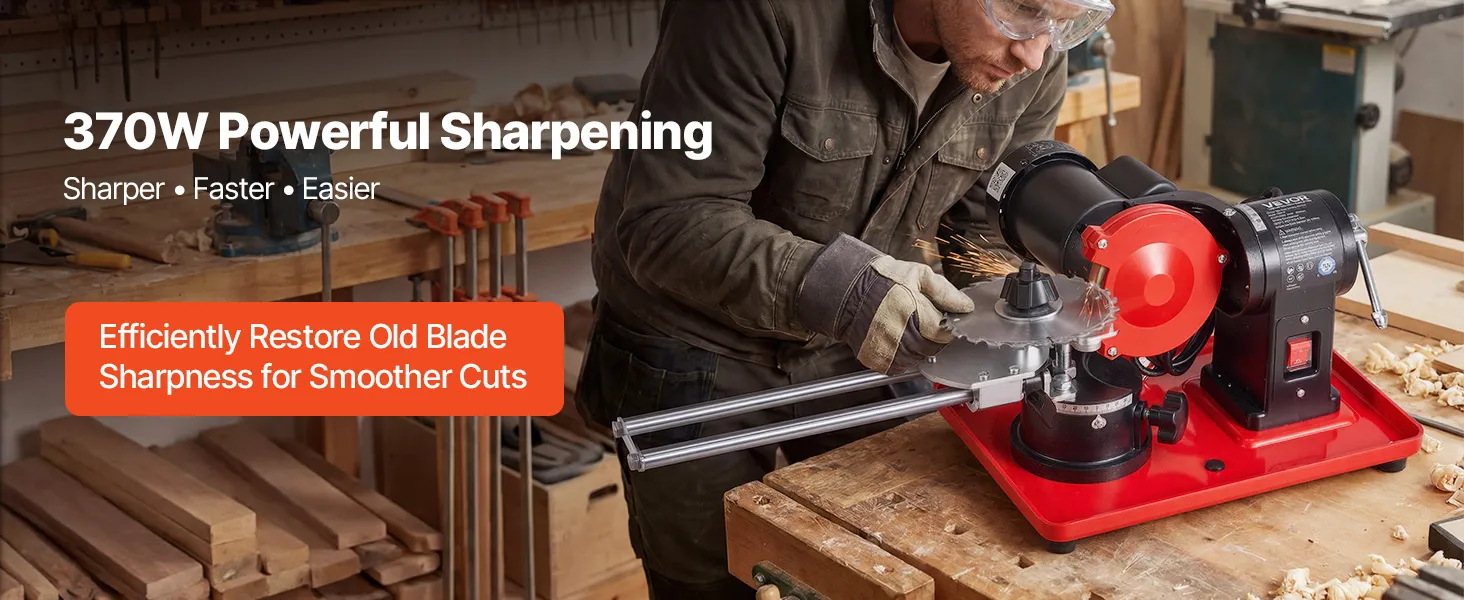
- Efficient, Powerful Sharpening: Powered by a 370W strong motor running at 2890RPM high speed, this VEVOR circular saw blade sharpener grinder features a 5-inch grinding wheel to efficiently restore dull and worn blades for sharper and more precise cuts
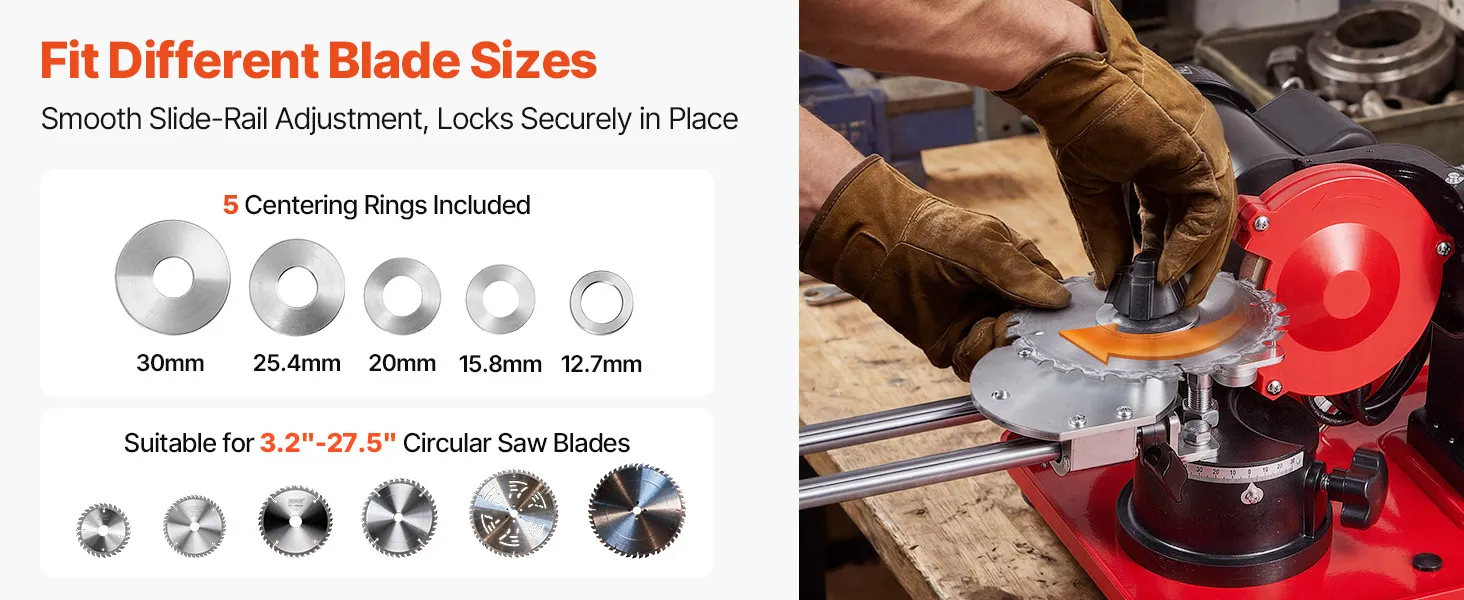
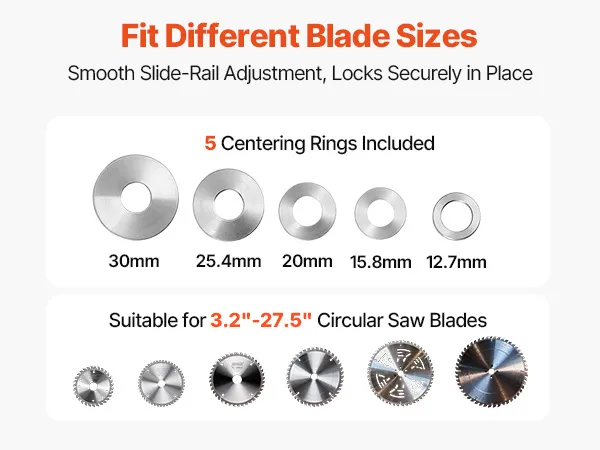
- Fit Different Blade Sizes: Equipped with different sized saw centerings to accommodate circular saw blades from Φ3.2" to Φ27.5". Combined with a smooth slide-rail adjustment system, it locks securely in place for stable and precise sharpening
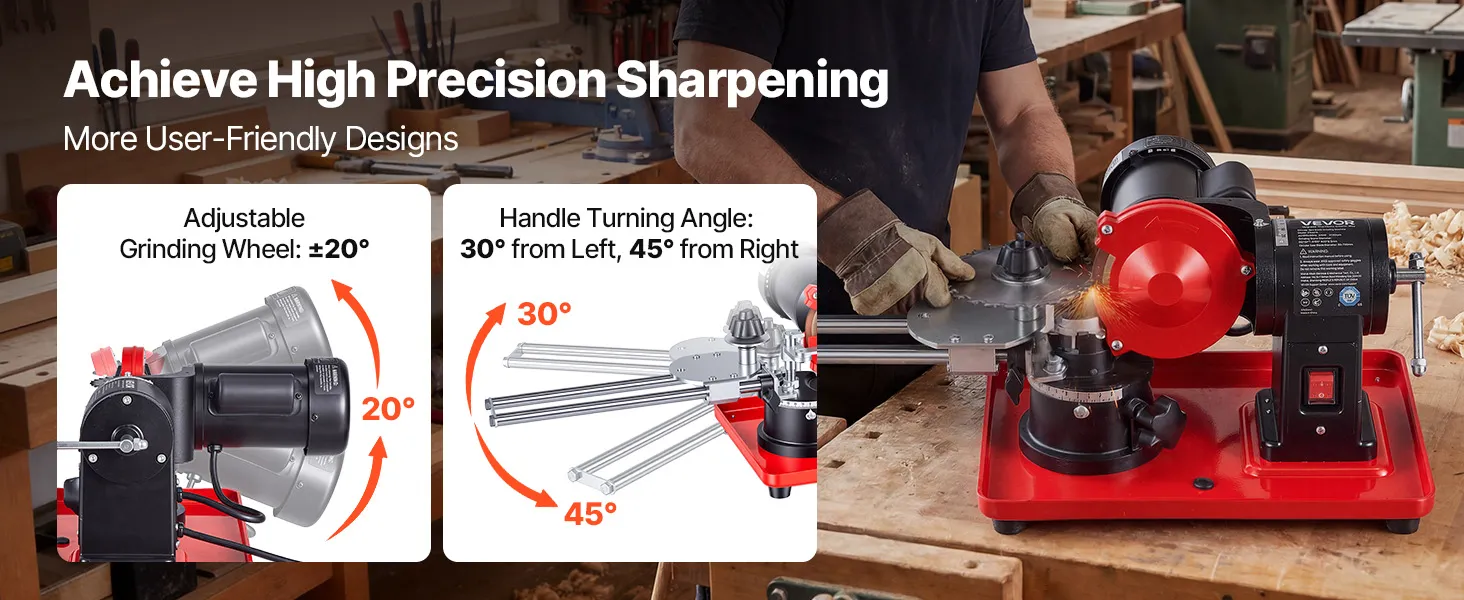
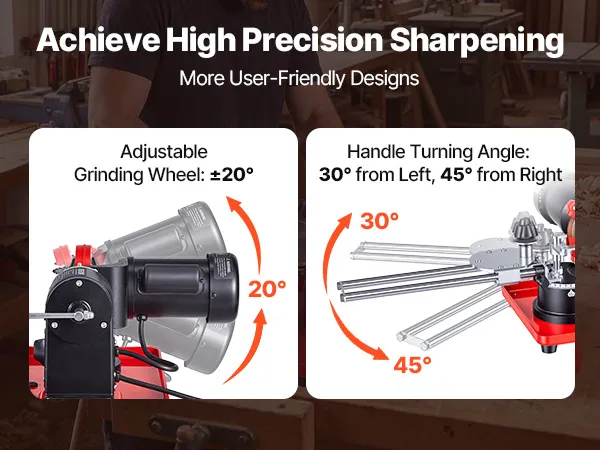
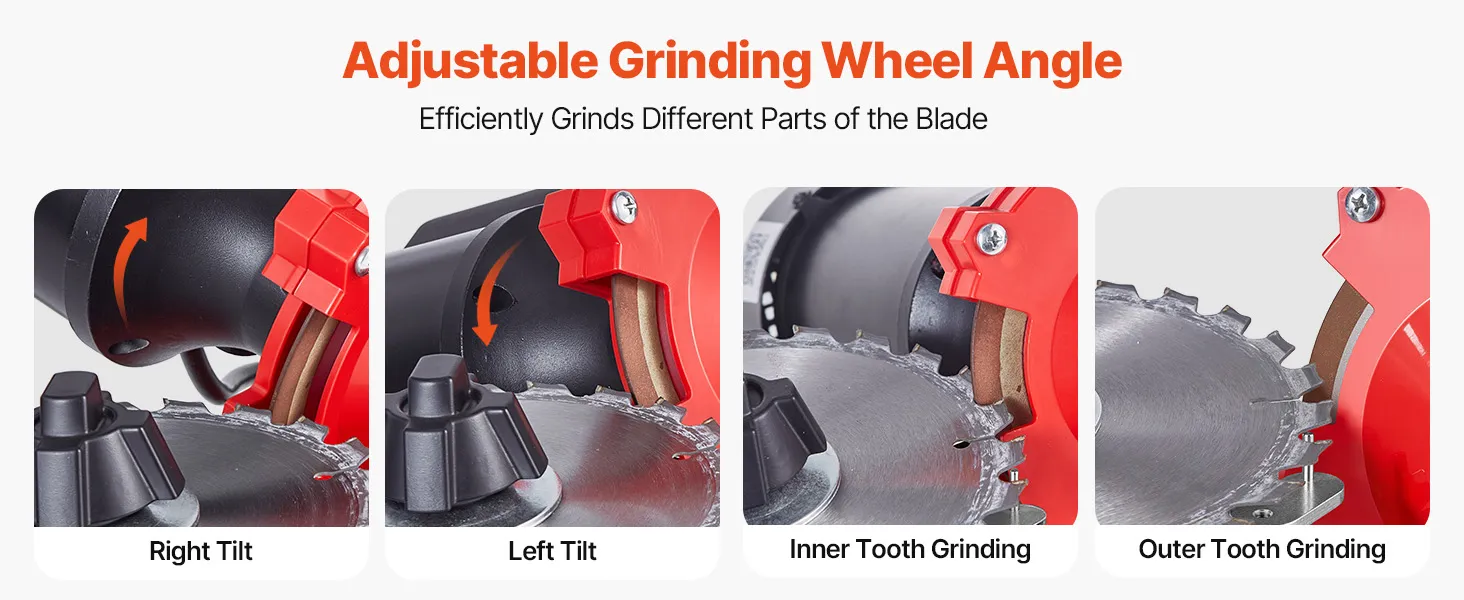
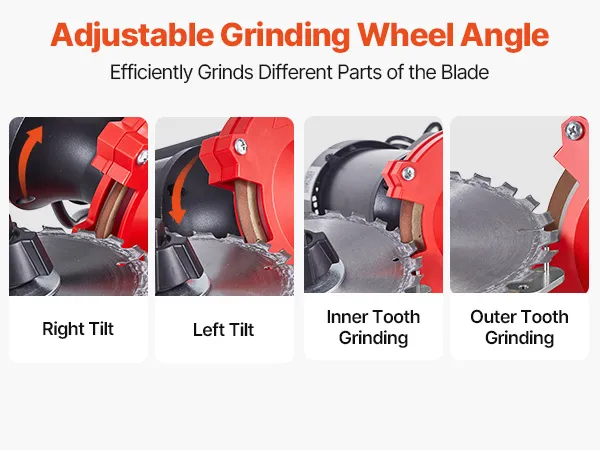
- Easy Adjustment: Our rotary angle mill grinder's grinding wheel can be adjusted up and down by 20°. You can also turn the handle 30° to the left and 45° to the right, allowing flexible angle control and ensuring consistent sharpening results
- Humanized Designs: Thoughtfully optimized with multiple features: clear aluminum scale markings, a waterproof switch for enhanced safety and durability, and a stable steel plate base with rubber pads to improve stability and reduce vibration
- Restore Blade Sharpness: Efficient grinding helps restore dull blades to a sharp cutting edge, improving cutting smoothness and accuracy while boosting working efficiency. Regularly sharpen your blade to extend its lifespan and reduce replacement costs
Frequently Bought Together
Reviews
About this item




Circular Saw Blade Sharpening Tool with 370W Motor at 2890 RPM for Fast Restoration
The VEVOR circular saw blade sharpening tool has a 370W motor that runs at 2890 RPM. The 370W motor running at 2890 RPM provides reliable power for sharpening carbide-tipped and steel circular saw blades. The motor delivers consistent performance for routine sharpening tasks. This ensures that every tooth receives the same amount of grinding power, no matter how long the session lasts.
Using this circular saw blade sharpening tool to fix dull saw blades makes each blade last longer and costs less to replace, which is good for woodworkers, tradespeople, and workshop owners who use circular saws a lot. A sharp blade also makes cleaner, more accurate cuts with less feed force. This improves the finished product and reduces stress on the saw motor during cutting.
6 Saw Centerings for Φ80–700mm Blade Diameter Compatibility Across One Machine
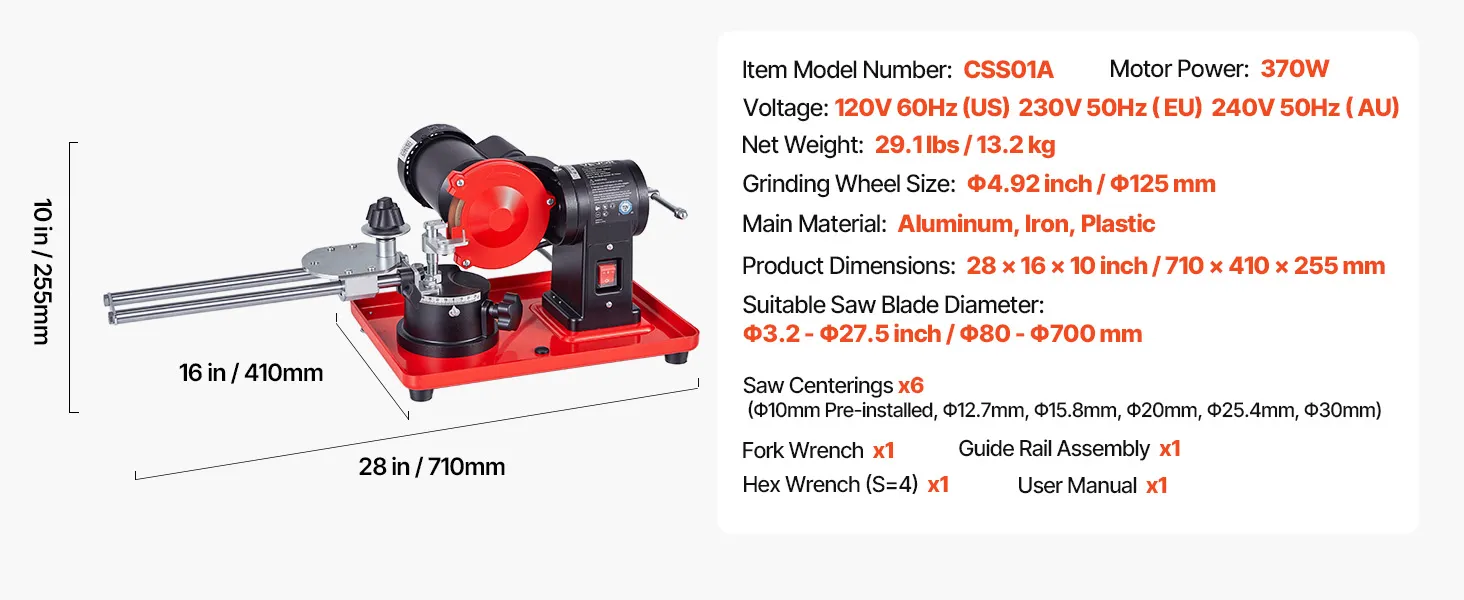
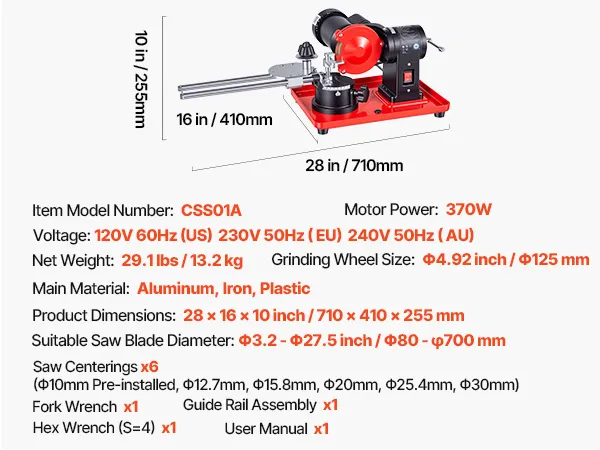
The machine has 6 saw centerings of different sizes that hold the blade in place on the sharpener's arch. This means that circular saw blades with diameters from 80mm (3.2 in) to 700mm (27.5 in) can all fit in one machine. This wide diameter range accommodates many commonly used circular saw blades. It accommodates everything from small trim saw blades to large panel and rip saw blades. This broad compatibility reduces the need for multiple sharpening setups.
By placing each blade concentrically on the sharpening arbor, the saw centering system ensures that the blade moves around its true center during the sharpening setup and that each tooth is always facing the grinding wheel in the same radial position. Accurate centering helps ensure consistent sharpening across every tooth. If the blade is off-center while grinding, the teeth will be of different sizes, causing vibration and inaccurate cutting during subsequent cutting operations.
Grinding Wheel Adjustable ±20° Up/Down and 30°/45° Left/Right for Precise Tooth Angles
The 125mm grinding wheel can be moved ±20° up or down and 30° left or right. This allows you to align the grinding wheel face with the tooth geometry of each blade you are sharpening. Different types of blades, such as crosscut, rip, combination, and specialty blades, have varying tooth hook angles, top bevel angles, and side clearance angles that affect how they cut. Proper angle adjustment helps maintain the blade's original tooth geometry.
It is possible to set the grinding wheel at the correct angle for each tooth shape rather than grinding all blades at the same angle. This makes the sharpening tool well suited to preserving the unique tooth profiles of different blade types rather than just cutting away material evenly. Keeping the right tooth geometry while sharpening is what makes the difference between a resharpened blade that cuts like new and one that just cuts better than a dull one.
Slide-Rail Adjustment System with Secure Lock for Stable, Repeatable Sharpening Passes
The slide-rail adjustment system moves the blade along a guided track, allowing the user to slightly advance the blade with each pass to sharpen the teeth, then lock it in place before the grinding wheel starts working. The guided rail stops the blade from moving side to side during grinding contact, which happens when hand pressure is the only thing holding it in place. This ensures that all the teeth get the same grinding-pass geometry.
To make a blade with teeth that are the same height, profile, and amount of material removed per tooth, the sharpening angle must be able to be repeated across all teeth. If you do not sharpen your blade evenly, the teeth may be sharpened unevenly and produce uneven cuts, which defeats the purpose of sharpening. The slide-rail lock maintains a tight position even under high grinding pressure, preventing the blade from moving backward when it hits the wheel.
Circular Saw Blade Sharpening Tool with Waterproof Switch and Aluminum Scale Markings
The waterproof power switch helps protect against moisture, dust, and everyday workshop conditions. This circular saw blade sharpening tool's waterproof power switch protects the electrical switching mechanism from moisture and other elements. Using a waterproof switch to turn the sharpener on and off for years without needing to protect or dry it out between uses is reliable.
The aluminum scale markings on the angle adjustment parts make it easy to set the grinding wheel to specific tooth angles and return to settings you have already used when sharpening the same type of blade. With clear scale markings, the operator does not have to guess when setting the angle, and they can record and use accurate angle settings for frequently used blade profiles without having to guess each time.
Steel Plate Base with Rubber Pads for Vibration Reduction During Active Grinding
The circular saw blade sharpening tool features a steel base with rubber anti-vibration pads for stable operation. At 2890 RPM, when the grinding wheel contacts the blade teeth, the machine base vibrates continuously. This vibration travels through the bench surface and into the blade-holding system, causing tiny movements that reduce sharpening accuracy and accelerate wheel wear.
As a result, the rubber pads block this vibration transmission path. This keeps the machine base stable on the bench surface, so it does not move or walk around during use, unlike unaffected machine bases. The machine weighs 29.1 pounds (13.2 kg) and has a footprint of 28 × 16 × 10 in. This means it can remain stationary while sharpening without the need for clamps or other bench fixtures. The rubber pads also help keep the machine's position stable, which is important for getting consistent sharpening results.