VEVOR Vacuum Pump, 5 CFM 142 L/min, HVAC Two Stage Rotary Vane AC Vacuum Pump, for R134a R22 R410a Systems, 4 Pole Motor, for Automotive Air Conditioner Maintenance Resin Degassing, Oil Included

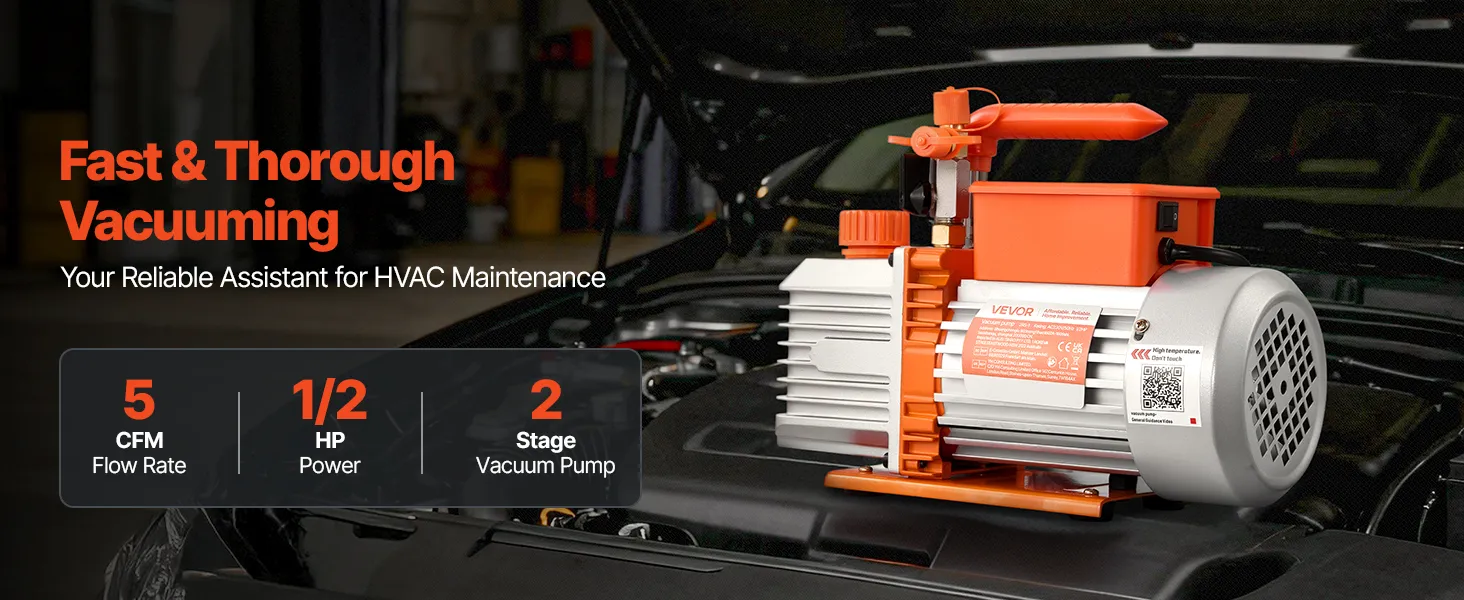
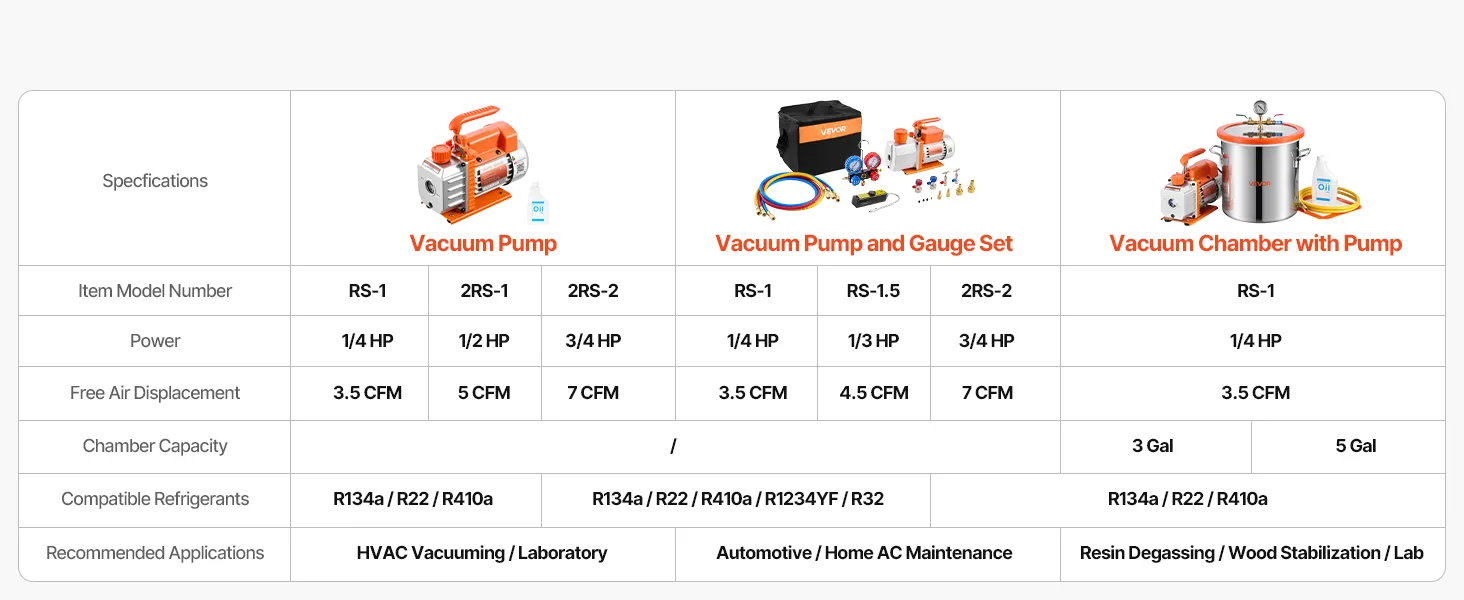
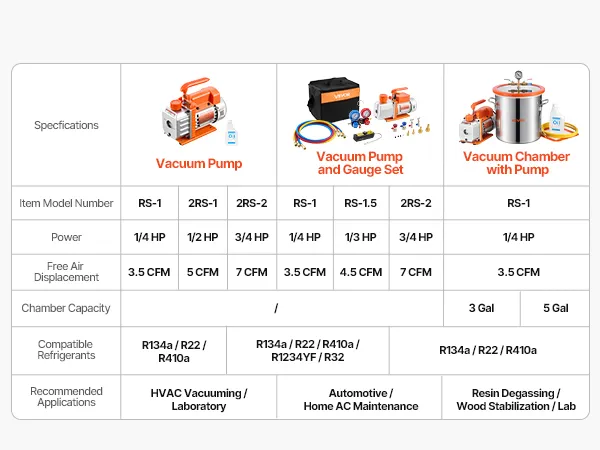
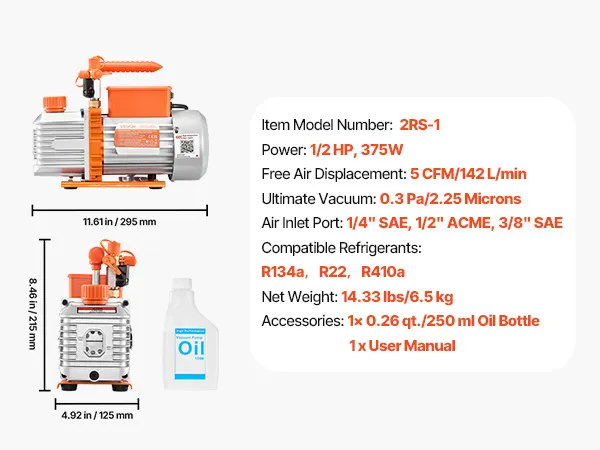
- High-Efficiency Vacuuming: This two-stage rotary vane vacuum pump features a robust 1/2 HP motor, delivering a 5 CFM flow rate and an ultimate vacuum of 0.3 Pa. Ideal for HVAC maintenance, it ensures deep cleaning and reliable results every time
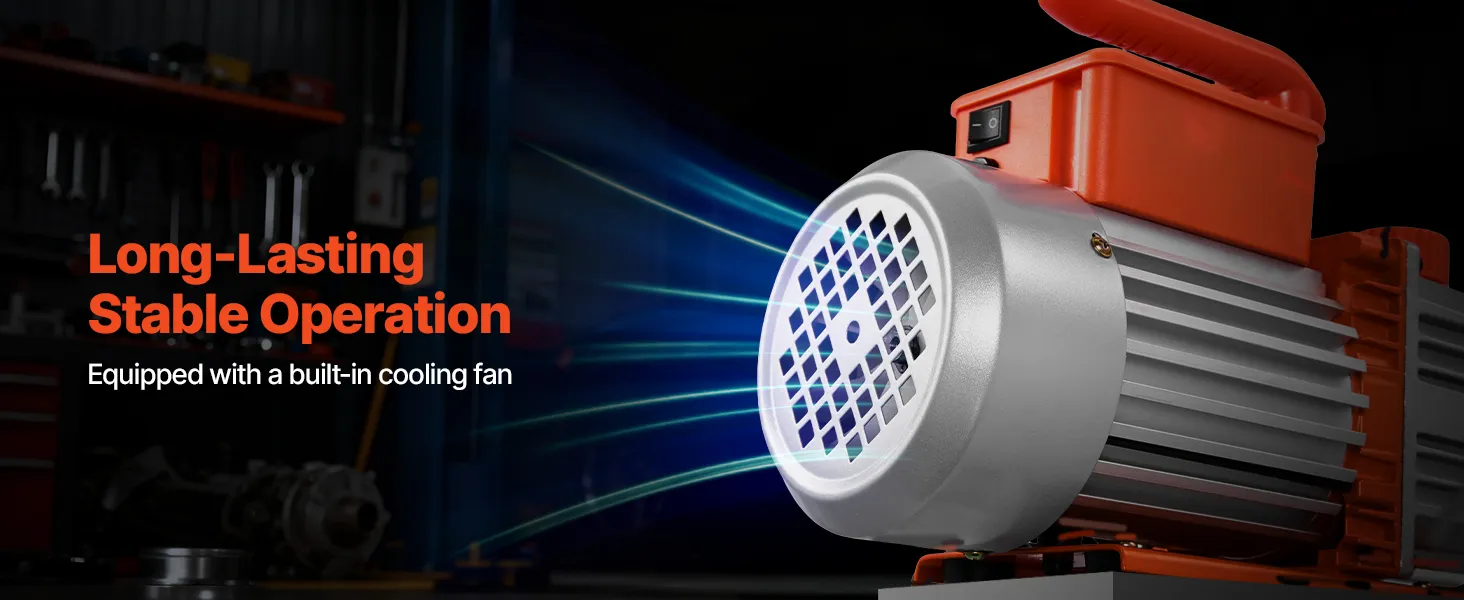
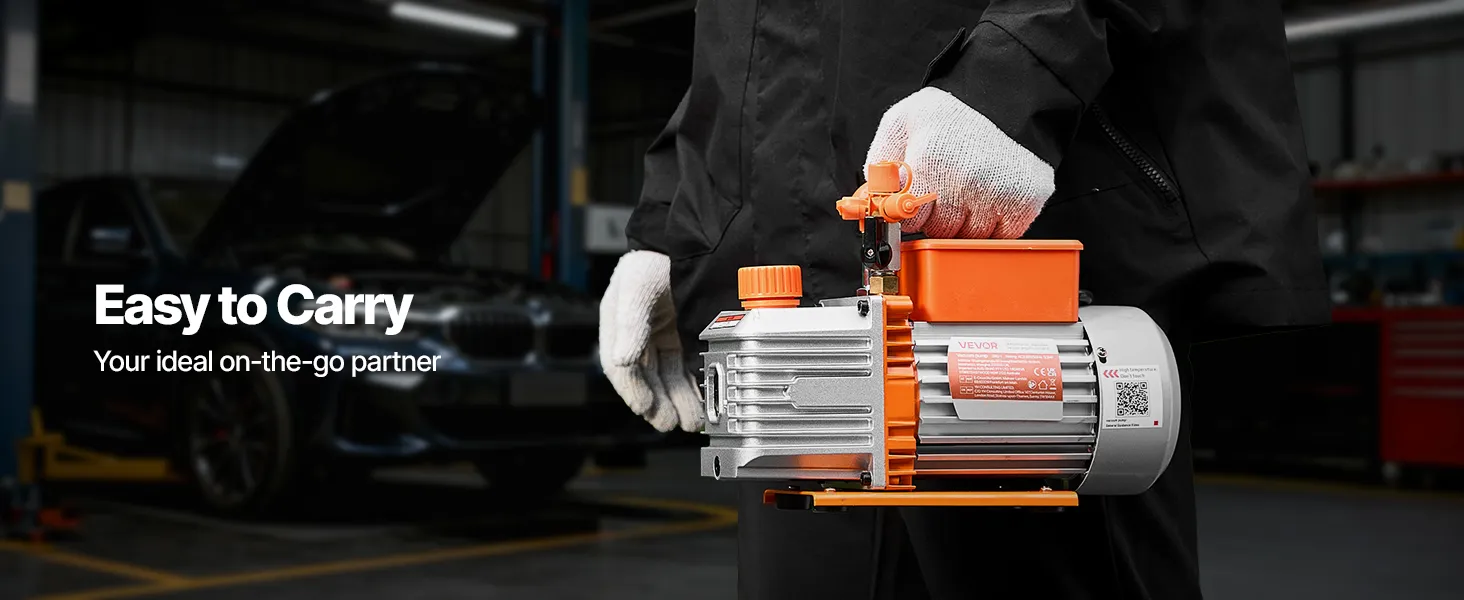
- Stable & Reliable Operation: Equipped with a 4-pole high-torque motor, this HVAC vacuum pump runs efficiently for extended periods. Its cast-iron and die-cast aluminum housing with a built-in cooling fan avoids overheating, maintaining stable performance
- Excellent Compatibility: Equipped with 1/4-inch SAE, 1/2-inch ACME, and 3/8-inch SAE air inlet ports, this vacuum pump easily connects to automotive A/C systems and small R22, R134a, and R410a refrigerant systems
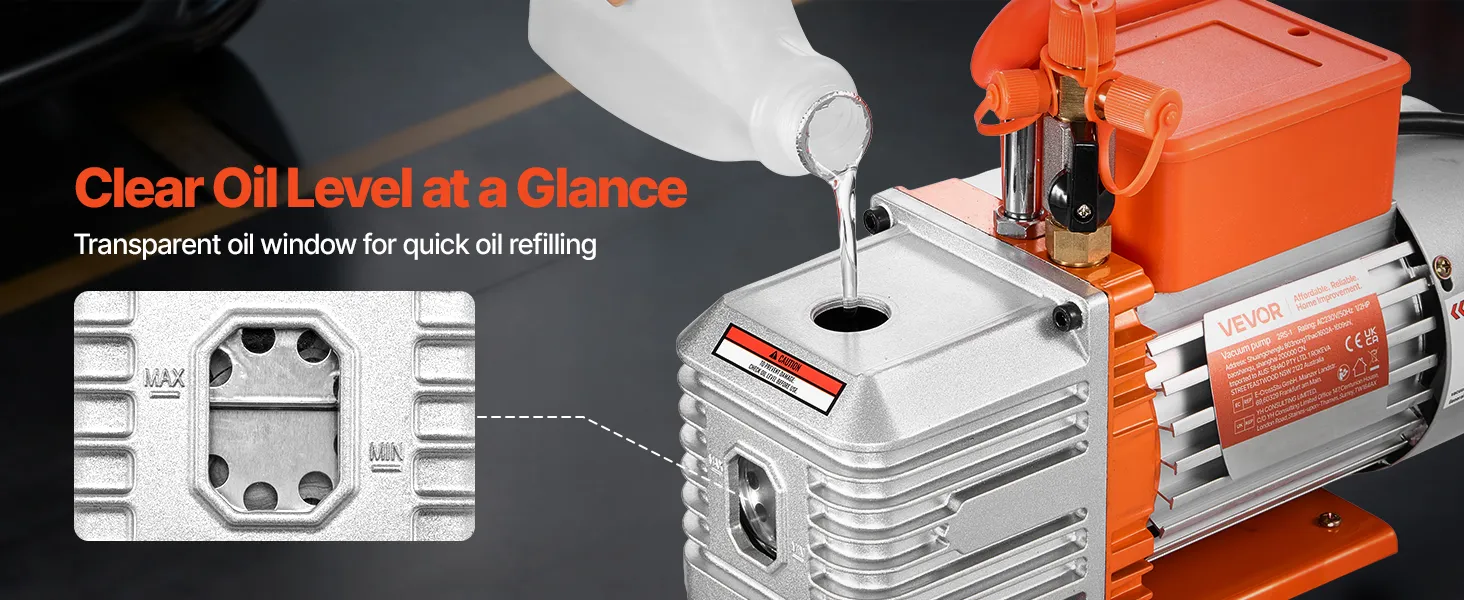
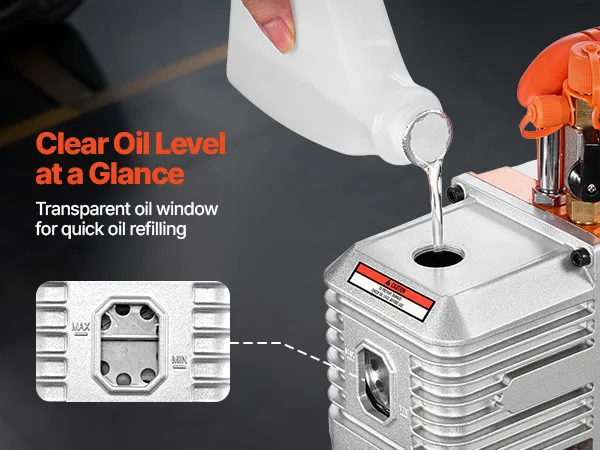
- User-Friendly Design: With a 0.26-quart (250 ml) oil capacity and a transparent oil window, checking oil levels is simple. This air conditioning vacuum pump even includes a bottle of 0.26 qt. (250 ml) vacuum oil, so you can use it right out of the box
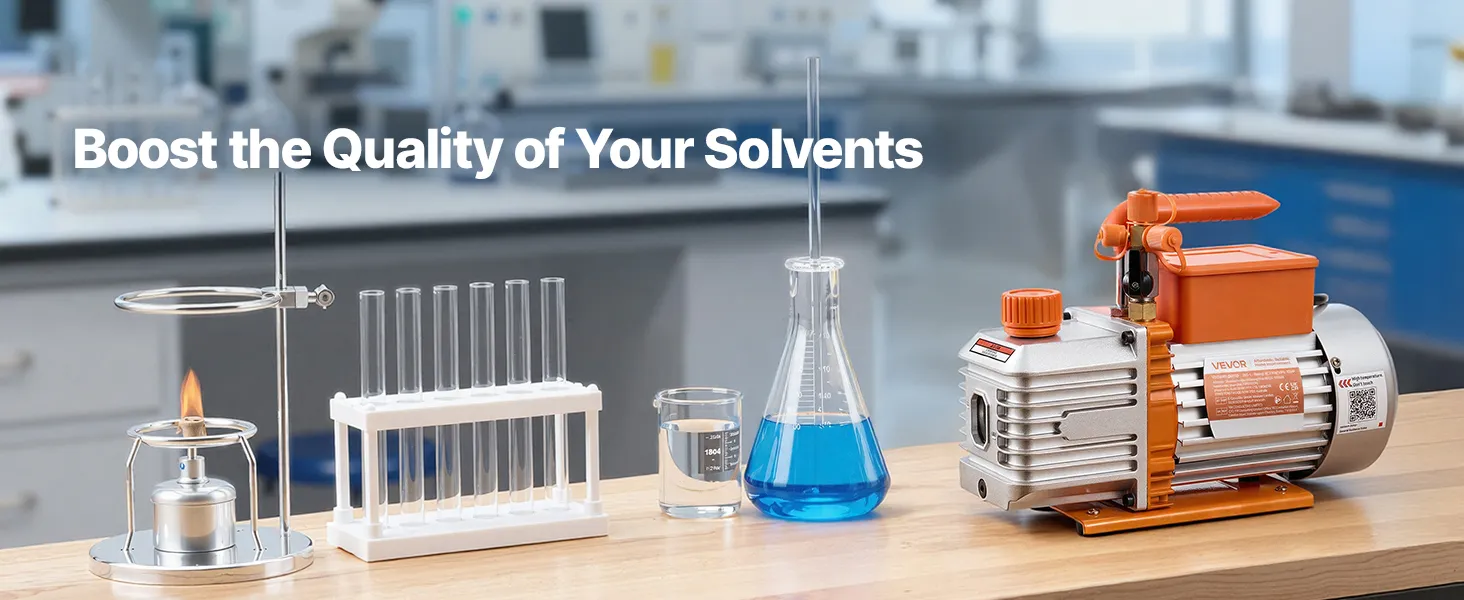
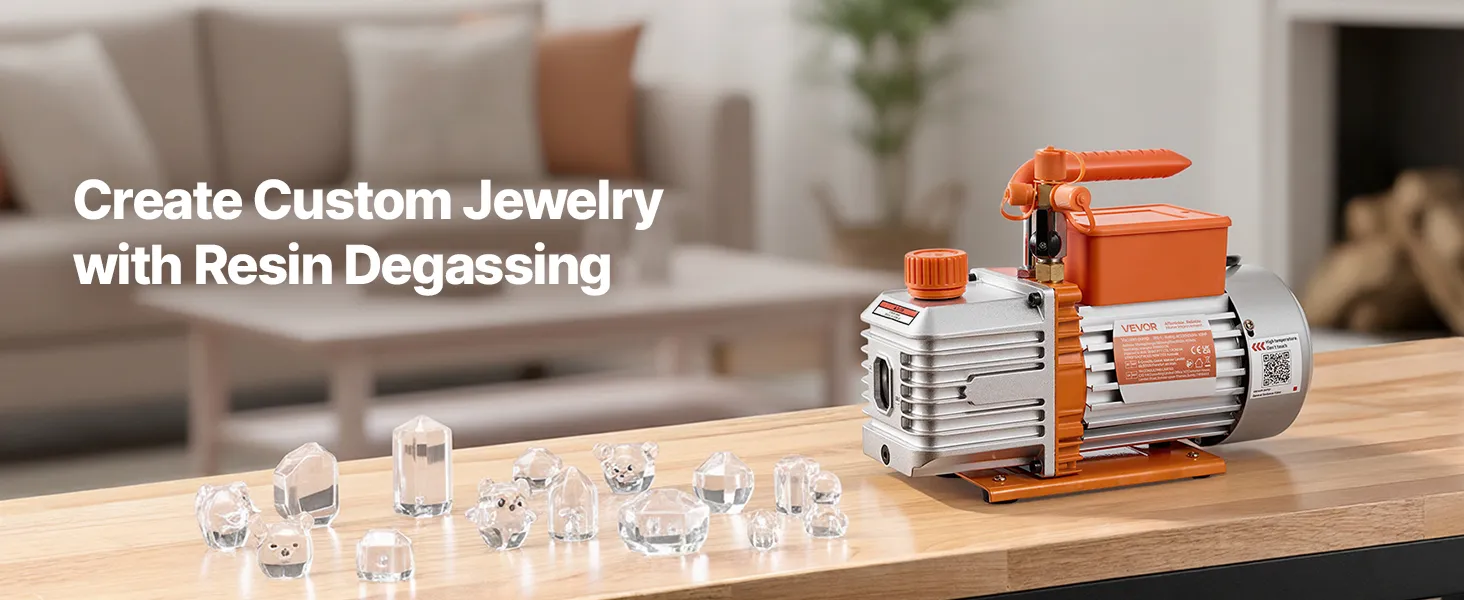
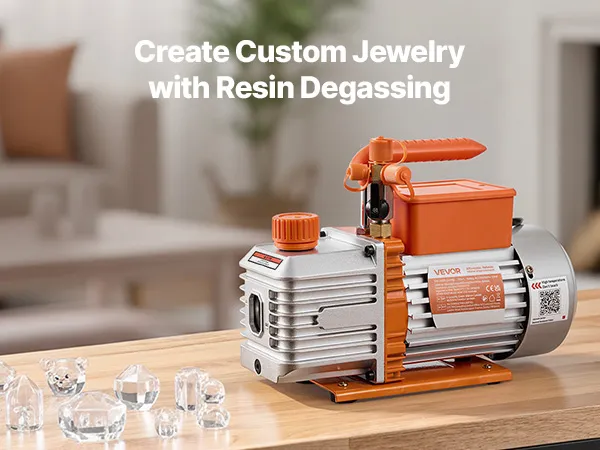
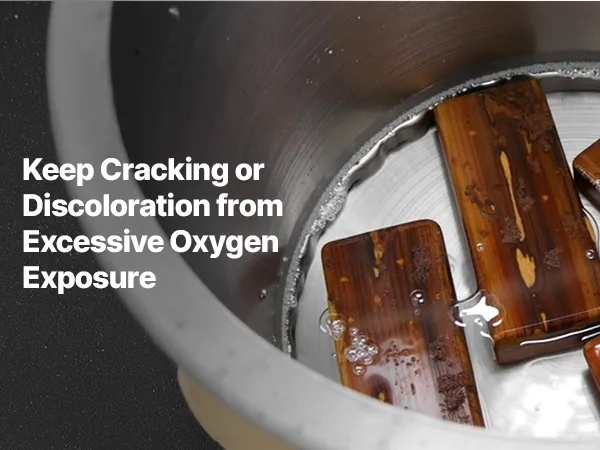
- Versatile Applications: This AC vacuum pump automotive is designed for refrigeration servicing, HVAC repair, resin degassing, and wood stabilization. It is suitable for both professional and home use and handles multiple industries and creative projects
Frequently Bought Together
Reviews
 Du***
Du***  craigcor Jeff Freeman
  Mike Köhler
 About this item





Q: What is the free air displacement (CFM) of this vacuum pump? Is it suitable for home AC maintenance?
A: This pump has a flow rate of 5 CFM and an ultimate vacuum pressure of < 30 Pa, making it ideal for quickly evacuating home and vehicle AC systems. It far exceeds the needs of DIY users.
Q: What pipe diameters does the inlet port accommodate? Do I need to buy an additional adapter?
A: The standard inlet ports are 1/4" SAE, 1/2" ACME & 3/8" SAE, covering most of AC hose specifications.
Q: How loud is the pump? Will it disturb the work environment?
A: The noise level is ≤ 70 dB (comparable to normal conversation). Featuring cast aluminum housing for noise reduction, it operates quieter than similar pumps with iron casings. Fit for use in garages, workshops, or other enclosed spaces.

VEVOR Automotive HVAC Vacuum Pump Pulls 0.3 Pa Ultimate Vacuum for R134a, R22, R410a Systems
The VEVOR automotive HVAC vacuum pump features a two-stage rotary vane mechanism that delivers an ultimate vacuum of 0.3 Pa. It makes it one of the best vacuum pumps for this price range. That level of vacuum is not just for looks; it physically removes moisture and gases that don't condense, which makes refrigerant work better, compressors last longer, and systems work more efficiently in R134a, R22, and R410a circuits.
Technicians can't fully evacuate modern AC systems. A 0.3 Pa pull makes sure the system is really clean before it is recharged. It prevents acid from forming, oil from entering the system, and parts from breaking down too soon. It is the most important requirement for the pump, and VEVOR consistently meets it.
Two-Stage Rotary Vane Design Achieves 5 CFM / 142 L/min Flow Rate for Fast System Evacuation
This automotive HVAC vacuum pump has a two-stage rotary vane design that breaks the compression process into two steps. It compresses gas twice before releasing it. This mechanical design allows the pump to flow 5 CFM (142 L/min) without losing vacuum depth, unlike single-stage pumps.
This pump evacuates a typical automotive AC system quickly. Faster evacuation means less time spent on each job, more work done by professional shops, and a lower risk of atmospheric moisture returning to the system during long pulls.
1/2 HP 4-Pole High-Torque Motor Sustains Extended HVAC Vacuum Pump Operation Without Overheating
The HVAC vacuum pump has a 1/2 HP, 4-pole motor designed to run continuously, not just for short bursts. Compared to 2-pole designs, 4-pole motors make more torque at lower RPMs. It means that vacuum performance stays stable even when the load changes during deep system evacuation.
The cast-iron and die-cast aluminum housing channels heat away from the motor core. The built-in cooling fan keeps the motor at a suitable operating temperature during long sessions. This thermal management is very important for professional technicians who do back-to-back jobs. If the pump overheats, it will shut down, reducing productivity and risking damage.
Triple-Port Inlet Compatibility: 1/4-Inch SAE, 3/8-Inch SAE, and 1/2-Inch ACME Connections Included
Port compatibility is a real problem that keeps many pumps from being a permanent part of a technician's kit. The VEVOR automotive HVAC vacuum pump features 1/4-inch SAE, 3/8-inch SAE, and 1/2-inch ACME inlet ports, enabling it to connect to any automotive or light commercial HVAC system and offering broad compatibility.
This multi-port setup lets the pump connect directly to manifold gauge sets, vacuum hose assemblies, and legacy system fittings without any changes. The pump works perfectly with both a 2024 vehicle R1234yf-adjacent retrofit and an older R22 residential split unit.
250 ml Oil Capacity with Transparent Sight Window Enables Real-Time Contamination Monitoring
The condition of the oil directly affects the depth of the vacuum and the pump's life. The VEVOR automotive HVAC vacuum pump holds 250 ml (0.26 qt) of vacuum oil and features a clear side window that lets you see the oil without disassembling the pump. Technicians can quickly spot moisture contamination by the milky discoloration, which indicates it is present before it affects the pump's performance.
The pump comes with a 250 ml bottle of vacuum oil so that you can use it right away. It solves a common problem with budget pumps that come dry and require compatible vacuum oil, which must be purchased separately before they can be used.
Automotive HVAC Vacuum Pump Handles Resin Degassing and Wood Stabilization Beyond AC Service
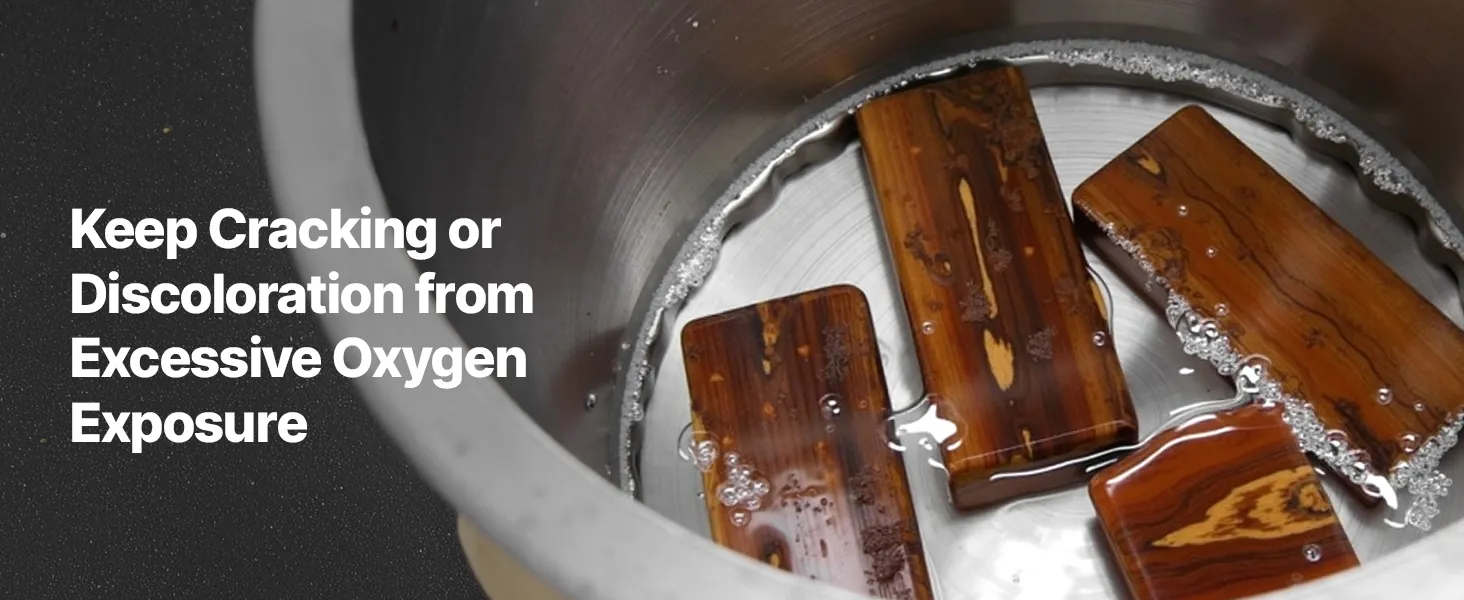
This HVAC vacuum pump can do more than work with refrigerants. The 0.3 Pa vacuum depth is deep enough to remove air bubbles from epoxy and polyurethane before casting, as well as to stabilize wood by forcing polymer resins into porous wood blanks under vacuum pressure.
This cross-application utility turns the pump from a tool that can do only one thing into a shop asset that pays for itself through multiple revenue streams. A pump that performs well across a wide range of vacuum applications is good for both hobbyists and small fabrication shops.
Dual-Stage Architecture Outperforms Single-Stage Pumps Across All HVAC Refrigerant Systems
Single-stage pumps compress gas only once per rotation cycle, limiting the achievable vacuum depth because internal leakage limits deeper vacuum levels. This HVAC vacuum pump has a dual-stage design that compresses twice per cycle. This feature makes it much more efficient at low pressure, which is exactly where the AC system evacuation needs the best performance.
This architectural advantage is even more pronounced in R410a systems that operate at higher pressures. Technicians who have had trouble with single-stage pumps not pulling down enough on newer high-pressure refrigerant systems will notice right away that this unit evacuates faster and reaches a deeper final vacuum.