Deals
Deals by Categories




More Ways to Save

Best Sellers
Best Sellers by Categories
New
New by Categories
Download VEVOR App 

Get 5,00€ Off 99,00€+ Orders on Your First 3 App Orders
Scan the QR code to download
SKU: FXBXJDDDDCG3275PQ001V2
Copy


+12
More


Clearance
VEVOR Electric Wire Stripper Machine, 1.5-40 mm, 11 Channel Automatic Copper Cable Stripper, 370W Wire Stripper Tool with Manual Hand Crank Mode, Emergency Stop Button, for Scrap Copper Recycling
Clearance
3.9 60 Reviews
269 90 €
Earn at least 2% points on purchases or save up to 15%.
Each when you buy 0+.
Shop
Get -% off for new user
Get 5,00€ Off 99,00€+ Orders on Your First 3 App Orders.
Download Now

Features & Details
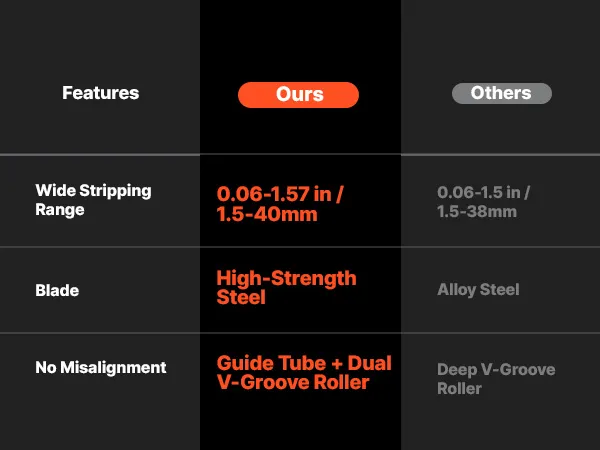
- 11 Feed Channels: Our electric wire stripper machine fits wire diameters from 0.06 to 1.57 in (1.5 to 40 mm), handling everything from thin wires to thick cables. Ideal for home use, DIY projects, garages, and small workshops
- High Efficiency Performance: Featuring a 370W copper motor, this automatic wire stripping machine delivers outstanding power and speed, outperforming manual machines. The multi-hole wire inlet allows quick wire size switching without changing parts
- Fine Stripping for Thin Wires: Designed with a guide tube and deep V-groove rollers, this electric motorized cable stripper keeps thin wires aligned and stable—avoiding slippage or damage to copper cores while ensuring a clean, smooth strip every time
- Manual or Electric Dual Modes: Enjoy two stripping modes with our wire cable stripper. Use the electricity for efficient stripping of large batches, or switch to manual mode when unplugged — the clutch disengages for smooth hand-crank operation
- Durable Blades, Built to Last: Equipped with a high-strength blade, hardened to HRC50, this electric wire stripping machine delivers sharp, durable cutting performance. The blade is wear-resistant and maintains precision even after long-term use
Product specification
- Item Model Number ZD-40FL
- Applicable Stripping Wire Diameter 0.06-1.57 in/1.5-40 mm
- Rated Power 1/2 HP/370W
- Number of Wire Feed Channels 11
- Base Material Q235
- Bearing Seat Material ADC12
Frequently Bought Together
Reviews
About this item
Questions and Answers
Explore
Reviews 3.9
All reviews are from verified purchases
Average rating based on 60 reviews
Reviews 3.9
All reviews are from verified purchases
See all 60 reviews
About this item
Product specification
- Item Model Number
- ZD-40FL
- Applicable Stripping Wire Diameter
- 0.06-1.57 in/1.5-40 mm
- Rated Power
- 1/2 HP/370W
- Number of Wire Feed Channels
- 11
- Base Material
- Q235
- Bearing Seat Material
- ADC12
- Blade Material
- 65Mn
- Main Shaft & Rollers Material
- 45# Steel
Description


Electric Wire Stripper Machine
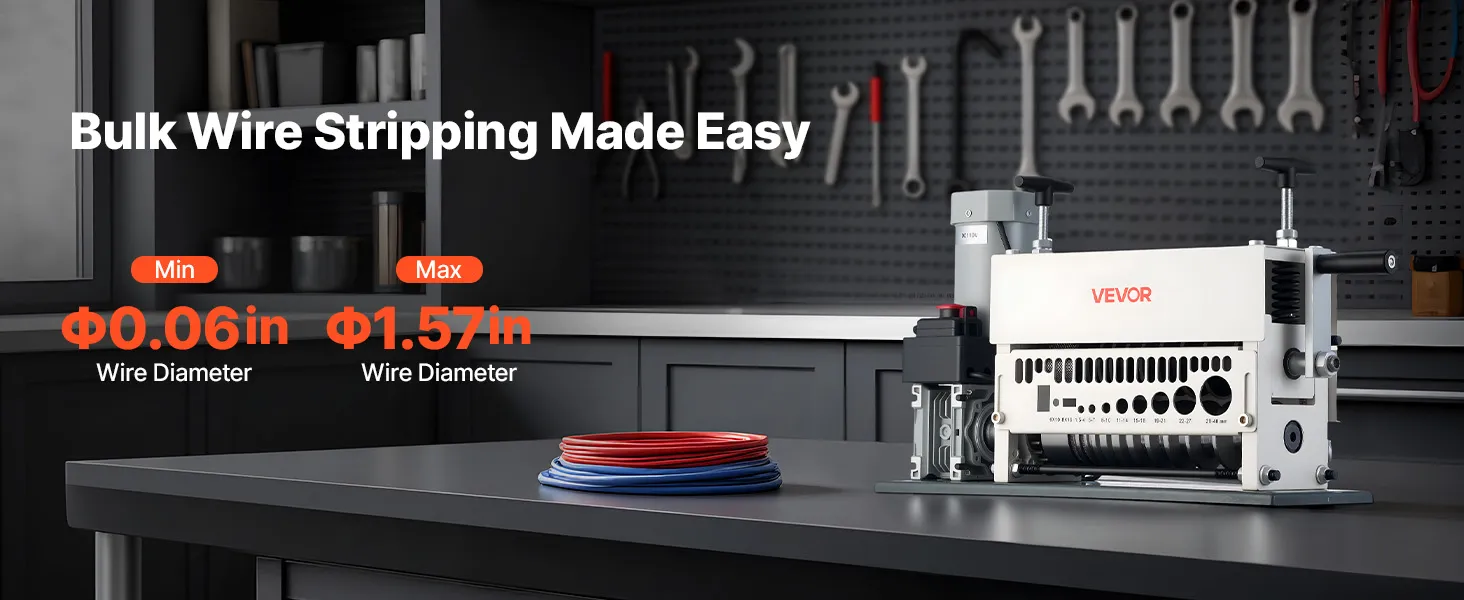
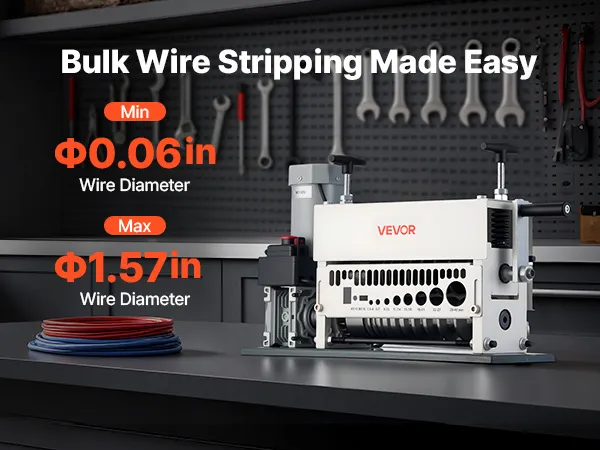
This wire stripping machine fits cables from Φ0.06–1.57 in (1.5–40 mm) and features 11 feed channels for quick wire matching and precise stripping. It supports both electric and manual operation, is easy to use, and beginner-friendly. The durable blade ensures long-lasting performance.
Key Features
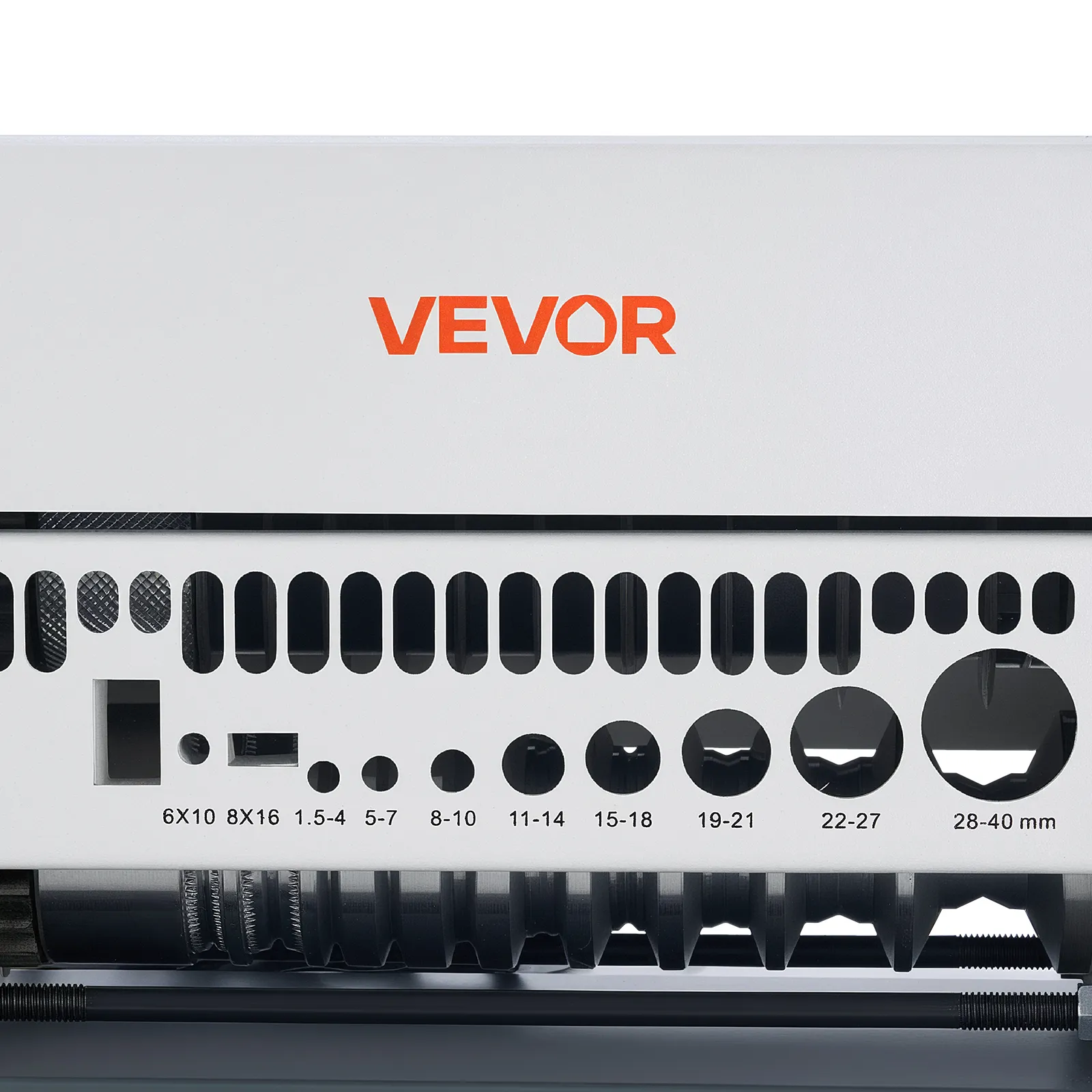
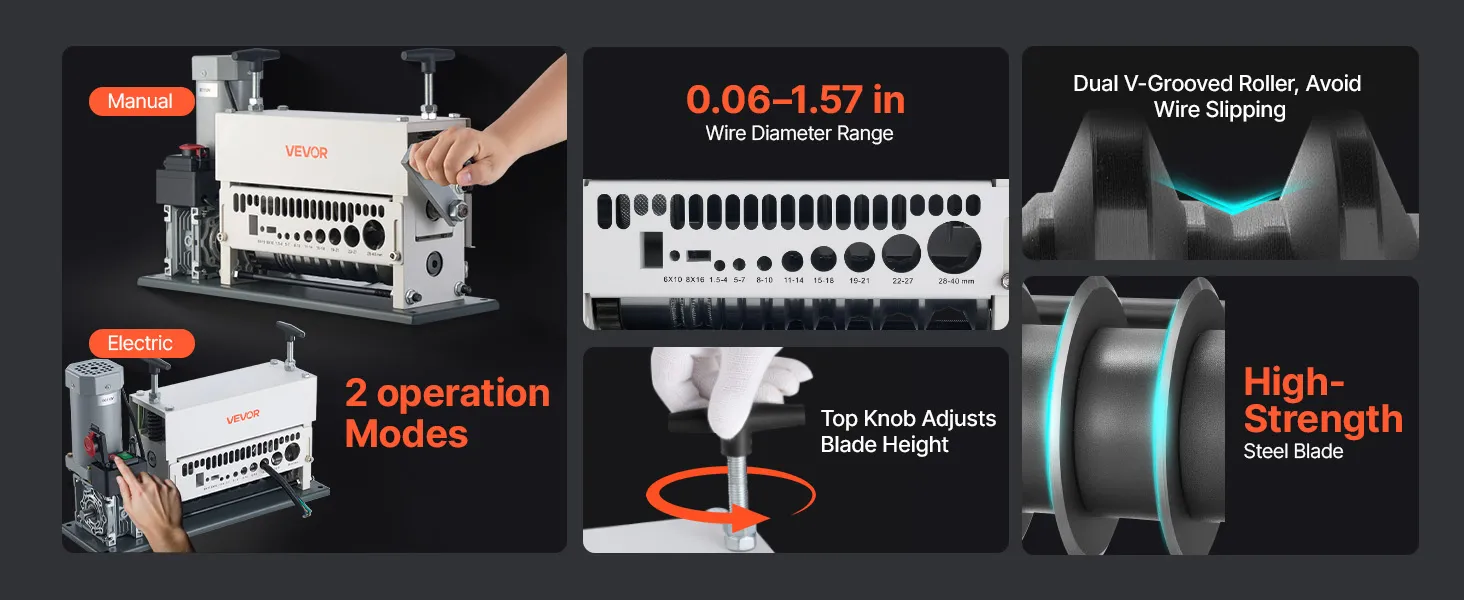
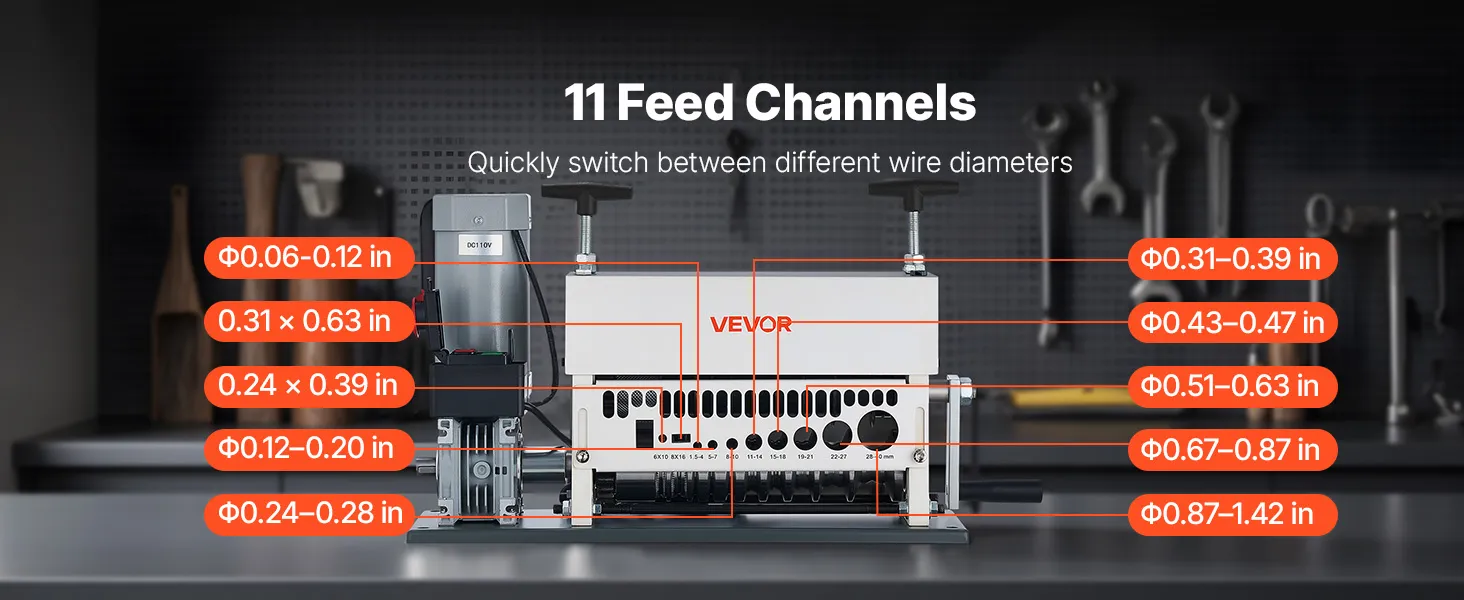
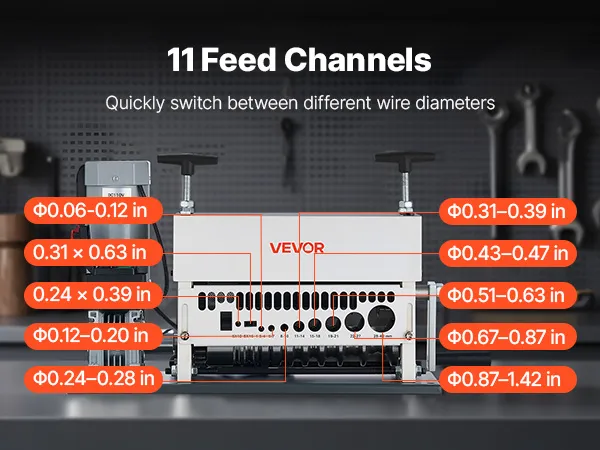
11 Feeding Channels
Our electric wire stripper machine features 11 feeding channels, allowing you to quickly match the wire diameter you need for efficient stripping.
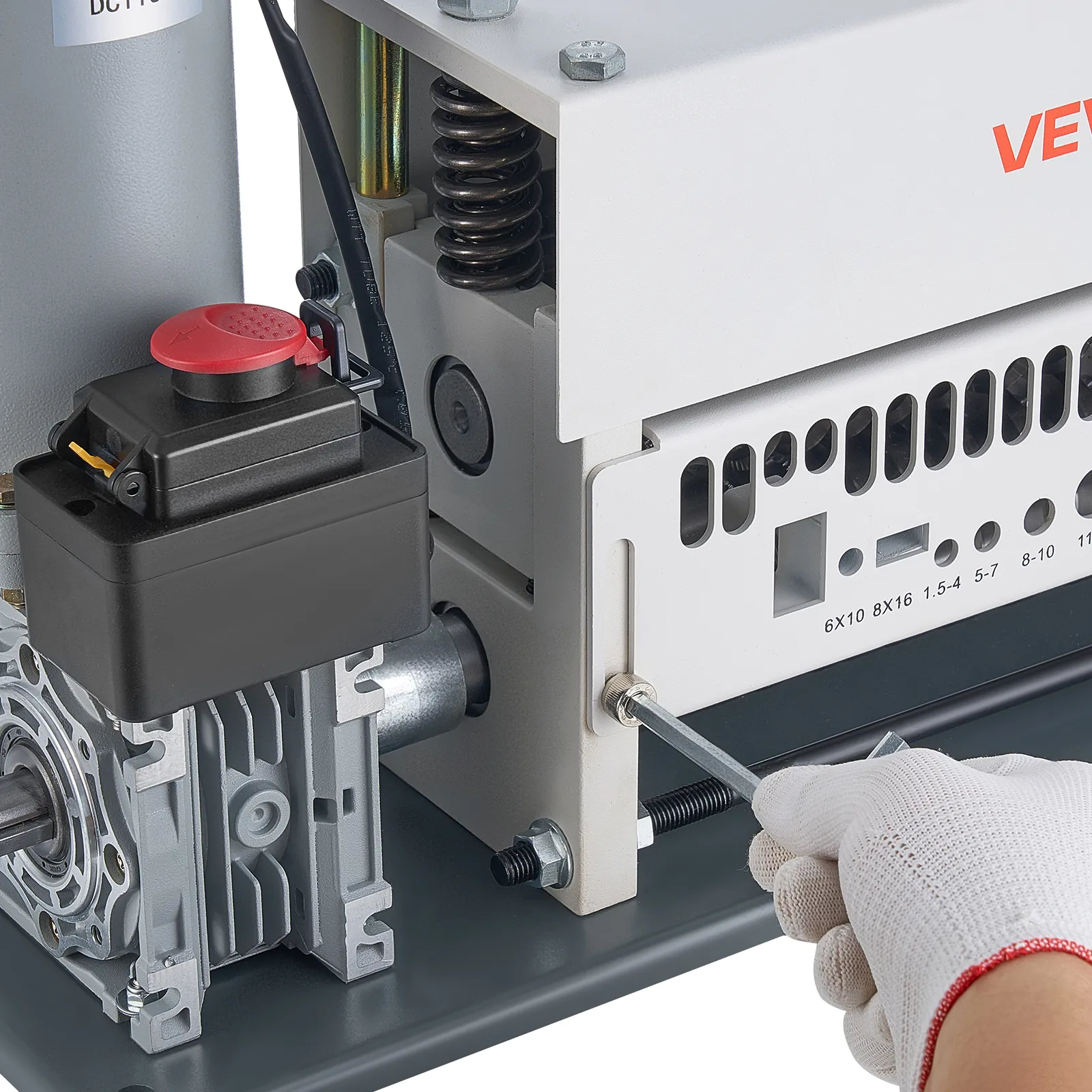
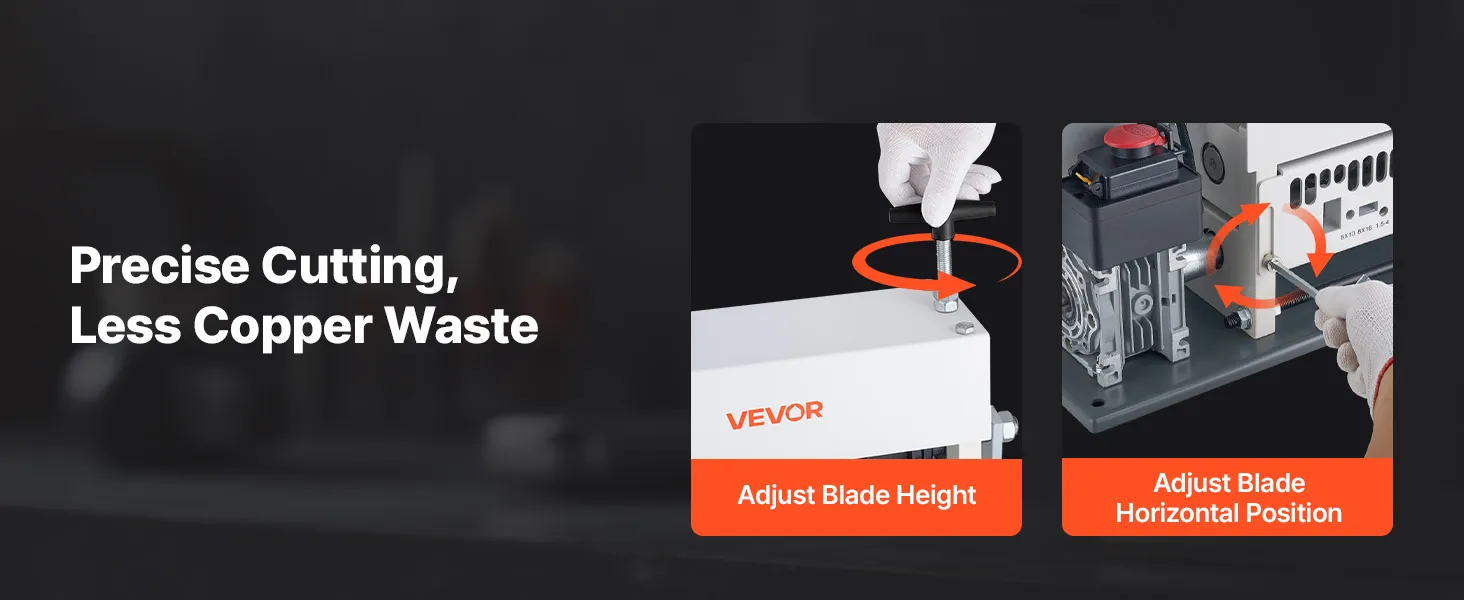
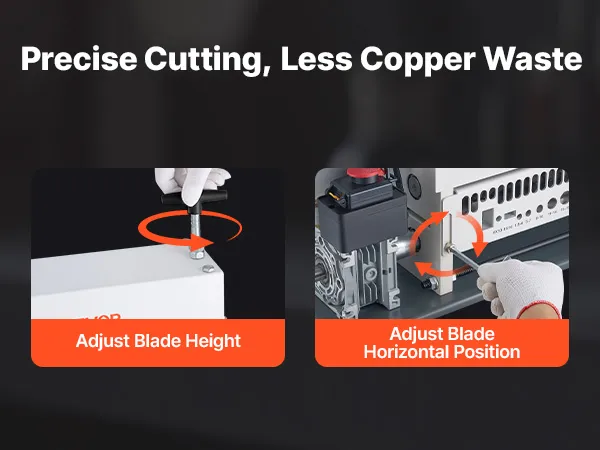
Blade Adjustment Knob
Our automatic wire stripping machine is equipped with an adjustable blade knob to accurately control cutting depth, minimizing copper loss and ensuring cleaner results.
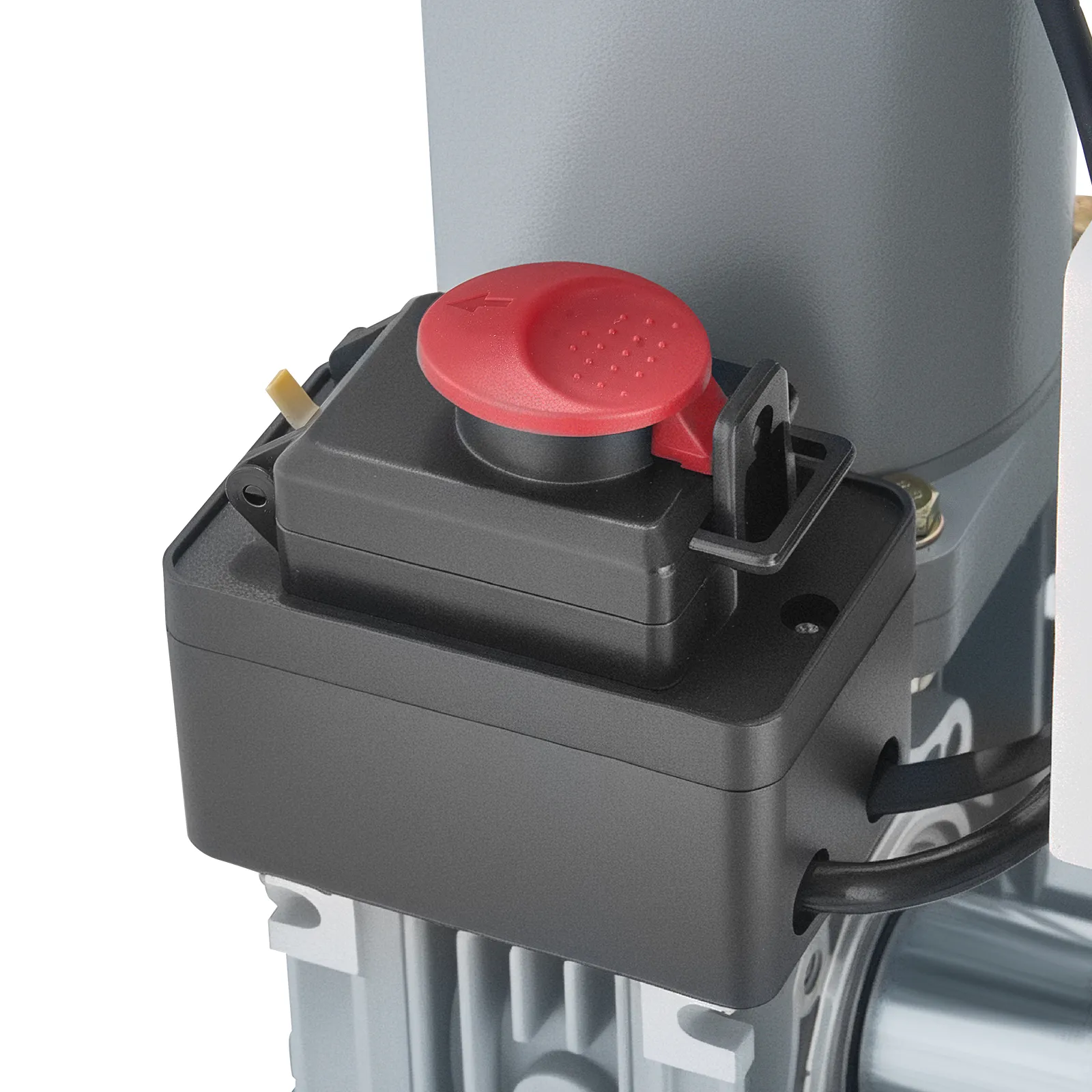
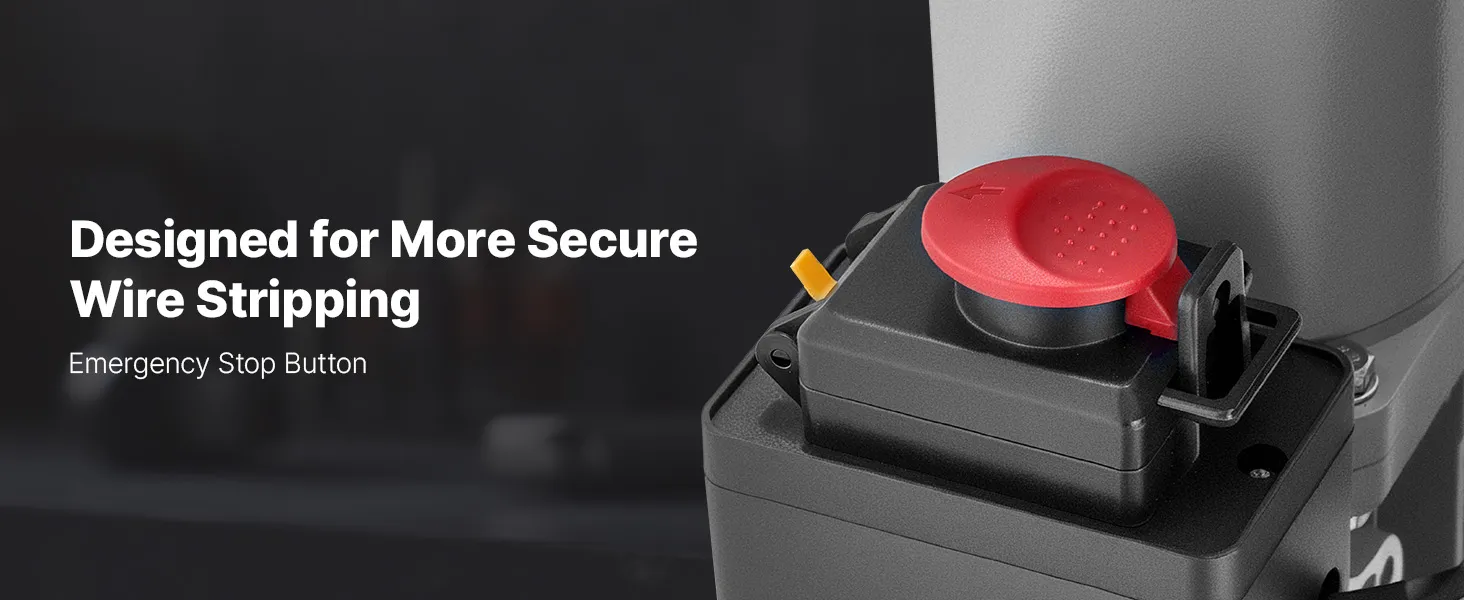
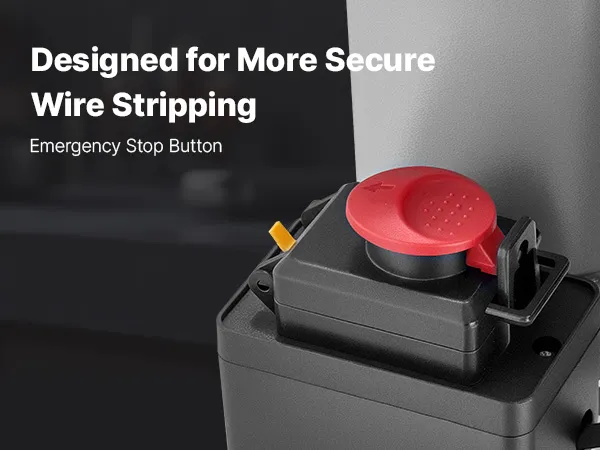
Emergency Stop Button
Built with an emergency stop button, this electric motorized cable stripper can be instantly shut down, providing better protection for you during use.
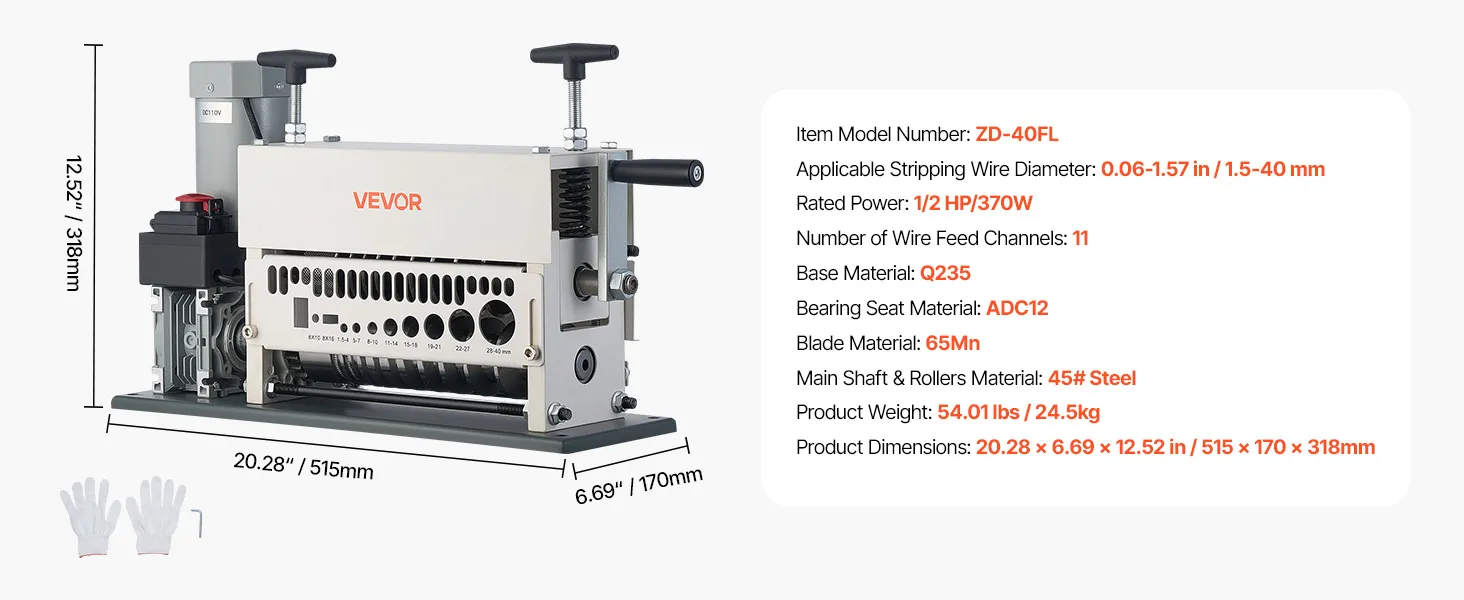
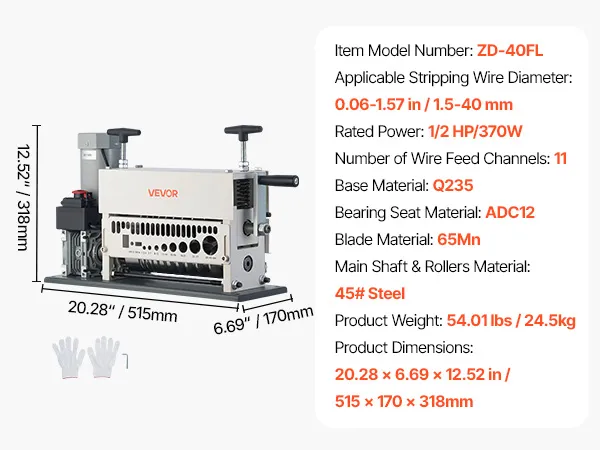
370W Copper Motor in the Scrap Copper Wire Stripper for Efficient Insulation Removal
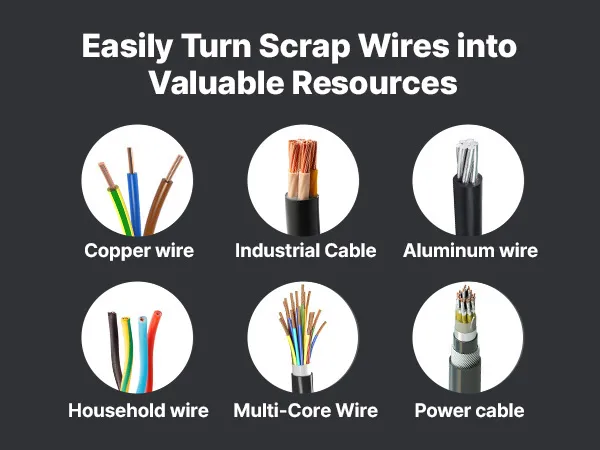
This scrap copper wire stripper features a 370W / 0.5 HP copper motor designed for continuous automatic stripping of mixed-diameter wire loads. The copper motor windings provide a constant torque output to variable-resistance loads that occur when the machine transitions from thin single-conductor wire to thick multi-core cable within the same production session. This torque consistency means the feed rollers maintain a steady speed as they move through insulation materials ranging from soft PVC to harder rubber and polyethylene jacketing, without stalling or losing strip quality mid-pass.
The motor drives the 11-channel feed system through a mechanical drivetrain that maintains blade engagement depth in proportion to feed speed across the full 1.5–40 mm stripping range. Daily copper recovery output in high-volume scrap-copper recycling operations, garages, small workshops, and DIY recycling setups is determined by sustained motor performance. If a motor derates under continuous load, throughput is lower, and strip quality is inconsistent on the back half of a production run.
11 Feed Channels for 1.5 to 40 mm Wire Diameter Range Without Parts Change
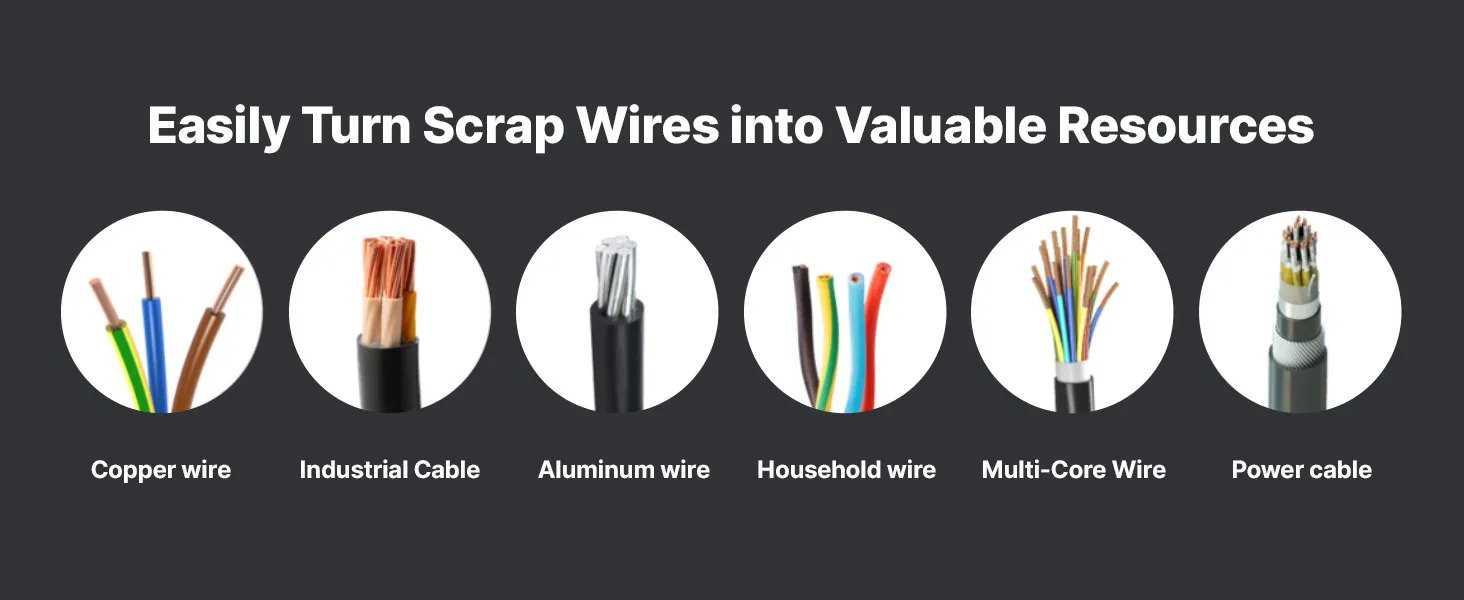
The 11-channel feed plate allows for wire sizes from 1.5 mm to 40 mm in one inlet assembly, allowing the operator to change wire sizes by selecting the correct channel – no blade swaps, no roller adjustments, no tool changes for different wire gauges. This rapid changeover is important in scrap recycling environments where the incoming cable stock is mixed and sorting by size before stripping adds handling time, reducing overall throughput.
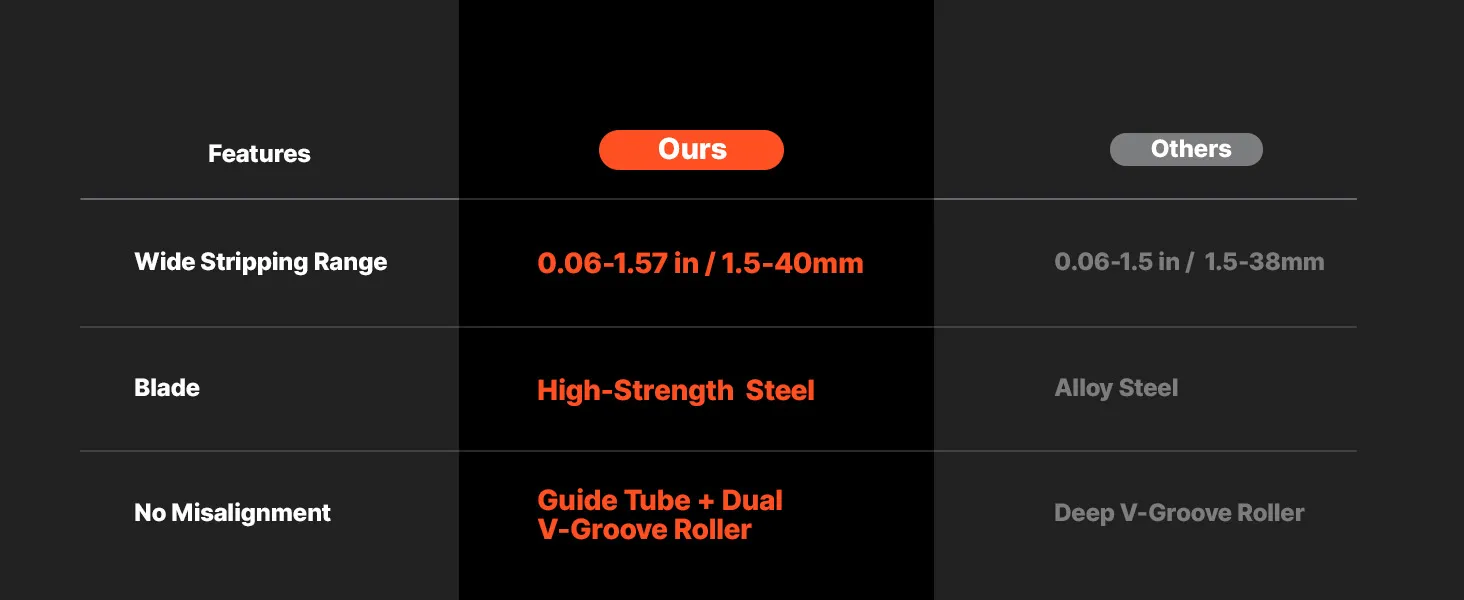
Each channel size is optimized to grip and feed its wire diameter. It provides the required contact pressure and alignment to cleanly score the insulation for the full pass length. Channels at the low end of the range are designed to handle fine wire down to 1.5 mm, where thin-conductor protection is critical. Larger channels are for handling heavy cable, up to 40 mm, 2 mm wider than the previous 38 mm model, extending coverage to larger power cable cross-sections found in industrial scrap streams.
Guide Tube and Deep V-Groove Rollers for Clean Stripping of Thin Wire Conductors
Most automatic strippers are not effective at stripping thin wire. Small-diameter conductors will deflect, slip, or feed at an angle through the standard flat rollers, resulting in angled cuts that nick the copper core and diminish its scrap value. This machine goes right at that with a special guide tube that centers the thin wire on the feed axis before it reaches the blade, and deep V-groove rollers that grip the wire along two contact lines rather than a single flat surface. The roller closes on the wire, providing centering force and maintaining wire alignment throughout the entire strip pass.
The result is a clean, smooth cut through the insulation that leaves no contact damage to the copper conductor underneath. For thin wire, where the insulation wall is relatively thin compared to the conductor diameter, small blade misalignment removes copper along with the insulation, reducing the quality of the recovered material. The guide tube and V-groove roller combination eliminates the risk of misalignment and makes this scrap copper wire stripper ideal for fine-wire recycling applications where other automatic machines produce unacceptable rates of conductor damage.
Scrap Copper Wire Stripper with Dual Electric and Manual Hand Crank Operating Modes
The operator can disengage the motor and switch to manual hand-crank operation without powering off the whole machine. A clutch mechanism between the motor and the drive shaft enables this feature. There are two practical reasons for manual mode: first, it allows stripping to continue when there is no power source; second, it provides the operator with direct tactile control over the feed rate for short segments of wire or insulation types that are difficult to strip and benefit from slower, more deliberate stripping.
In high-volume batch stripping, the electric mode is used to maximize throughput by controlling motor speed and maintaining consistent feed pressure. Manual mode is used for edge cases, such as short lengths below the minimum efficient motor feed rate, wire with damaged or hardened insulation that requires a controlled, slow feed, or job sites without an electrical supply. For operations that sometimes face conditions in which electric operation is impractical, the dual-mode unit eliminates the need for a second manual backup stripper, reducing equipment costs and storage space.
HRC50 Hardened 65Mn Steel Blade for Long-Term Cutting Precision and Wear Resistance
The blade is made from 65Mn steel and hardened to HRC50, a Rockwell hardness that places it in the same range as quality hand tools and industrial cutting implements. 65Mn is a spring steel alloy with high tensile strength and good wear resistance. The blade will consistently maintain a cutting edge well beyond that of standard carbon steel blades used in lower-specification wire-stripping machines.
Wire stripper blade wear results in more tearing of the insulation than clean scoring; the blade drags through the jacket rather than slicing it, increasing the force required to pull the stripped insulation away from the conductor and potentially nicking the copper. The HRC50 hardness rating means this degradation occurs over a much longer service interval, providing clean strip quality at high production volumes until it is time to change the blade.
Q235 Steel Base Construction and Emergency Stop Button for Stable Safe Operation
The machine base is made from Q235 structural steel, a standard Chinese grade, similar to mild structural steel used in fabricated machinery frames. Q235 has sufficient yield strength and weldability for a benchtop machine frame that must absorb the vibration of the motor and feed roller assembly during continuous operation without flexing or developing fatigue cracks at the welded joints.
The emergency stop button allows an instant cut-off of the motor if a wire jams mid-feed, preventing overload damage from a stalled motor and preventing the jam from compressing further into the channel. The stop button also makes jam recovery a routine interruption rather than a production-stopping event, allowing the scrap copper wire stripper to run efficiently throughout full production shifts.
Product guides and documents
User manual-en (PDF) Review
Questions and Answers (1)
buna ziua , la ce voltaj functioneaza?
220 V
Dacă acest răspuns nu a rezolvat problema, vă rugăm să ne contactați din nou pentru asistență.
By vevor
Helpful
(
0
)
In Stock
Security & Privacy
FREE Returns
Professional Service
Compare with similar items
Similar Items You Might Like
People Who Bought This Item Also Bought
Best sellers in this category
People Who Viewed This Item Also Viewed
Your Browsing History
Recommended Searches
heavy duty wire shelving black wire shelving adjustable wire shelving white wire shelving wire stripping pliers electrical wire stripping automatic wire stripping wire crimping machine industrial wire shelving log peeler lightbar wiring harness tail light wiring harness electrical best tool box tool box tools tool in a box tool box near me metal tool box coated wire mesh aluminum tool box