VEVOR Industrial Water Chiller, 5000W, Industrial Water Cooler Cooling System with Compressor, 15L Tank Capacity, 70 L/min Max Flow Rate, Laser Chiller, for CO2 Laser Tuber Engraving & Cutting Machine


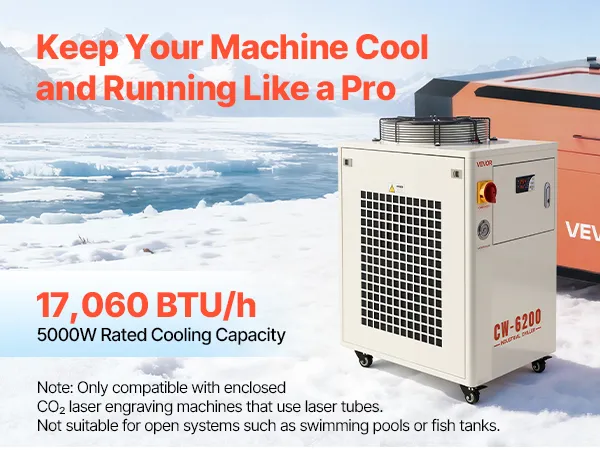
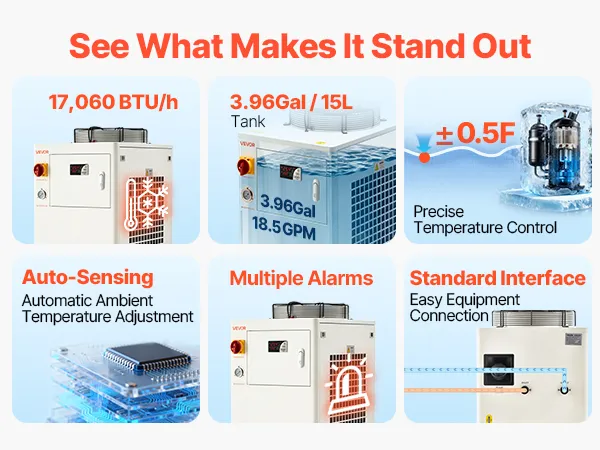
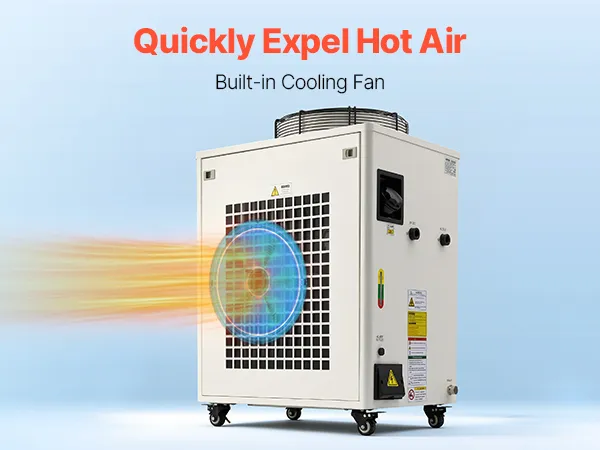
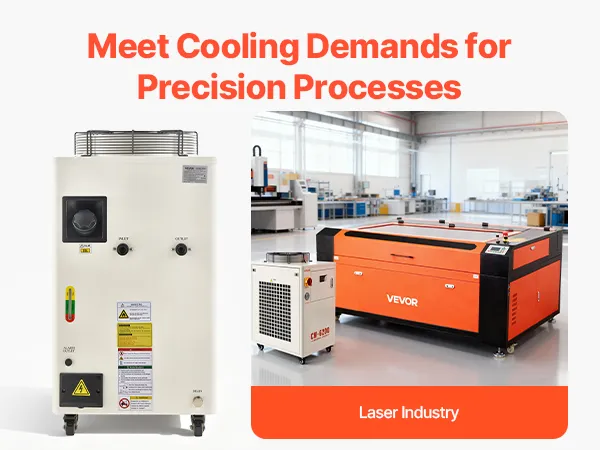
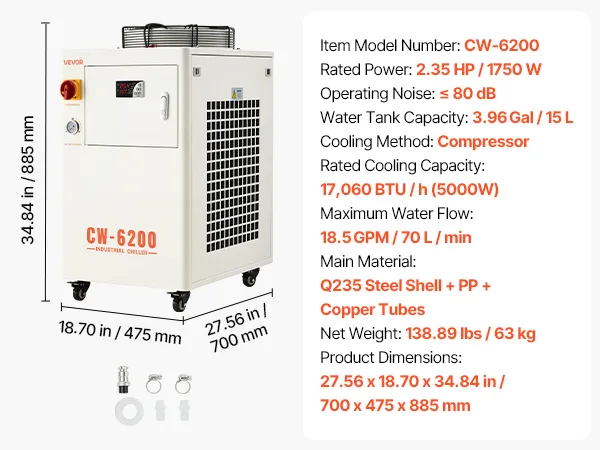
- 17,060 BTU/h Cooling Capacity: This industrial water chiller features a powerful compressor to rapidly dissipate heat. Designed for one 450W or two 200W laser tubes, it keeps your laser engravers running more stably compared to air-cooled chillers
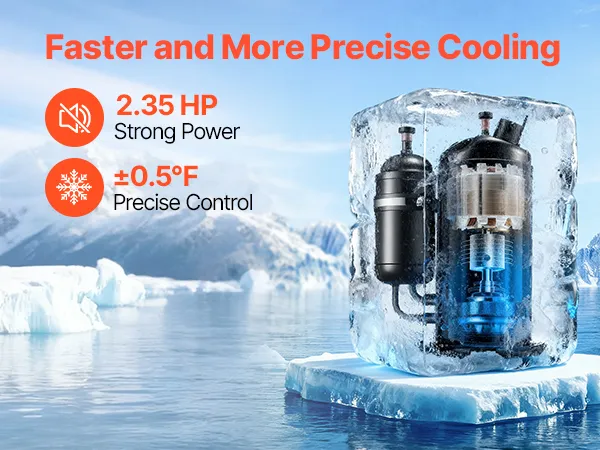
- Dual Temperature Control Modes: In constant temperature mode, you can set your desired temperature, and the water chiller maintains it precisely within ±0.5°F (±0.28°C). In intelligent control mode, it automatically adjusts to the ambient temperature
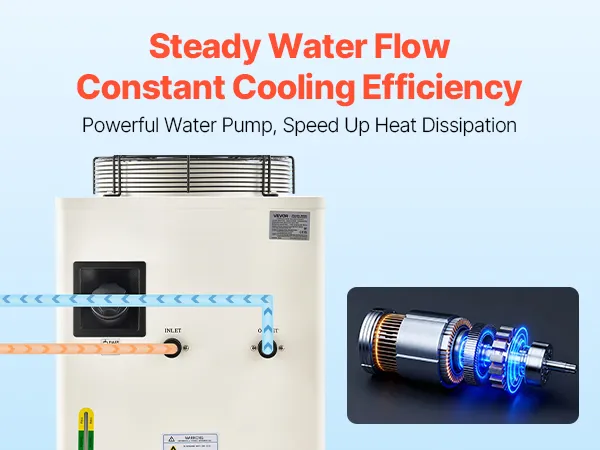
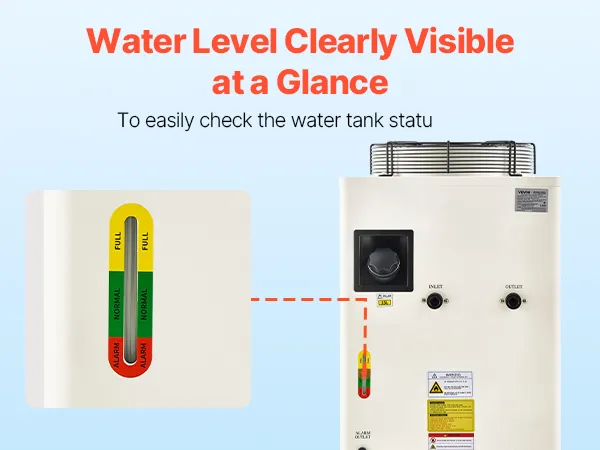
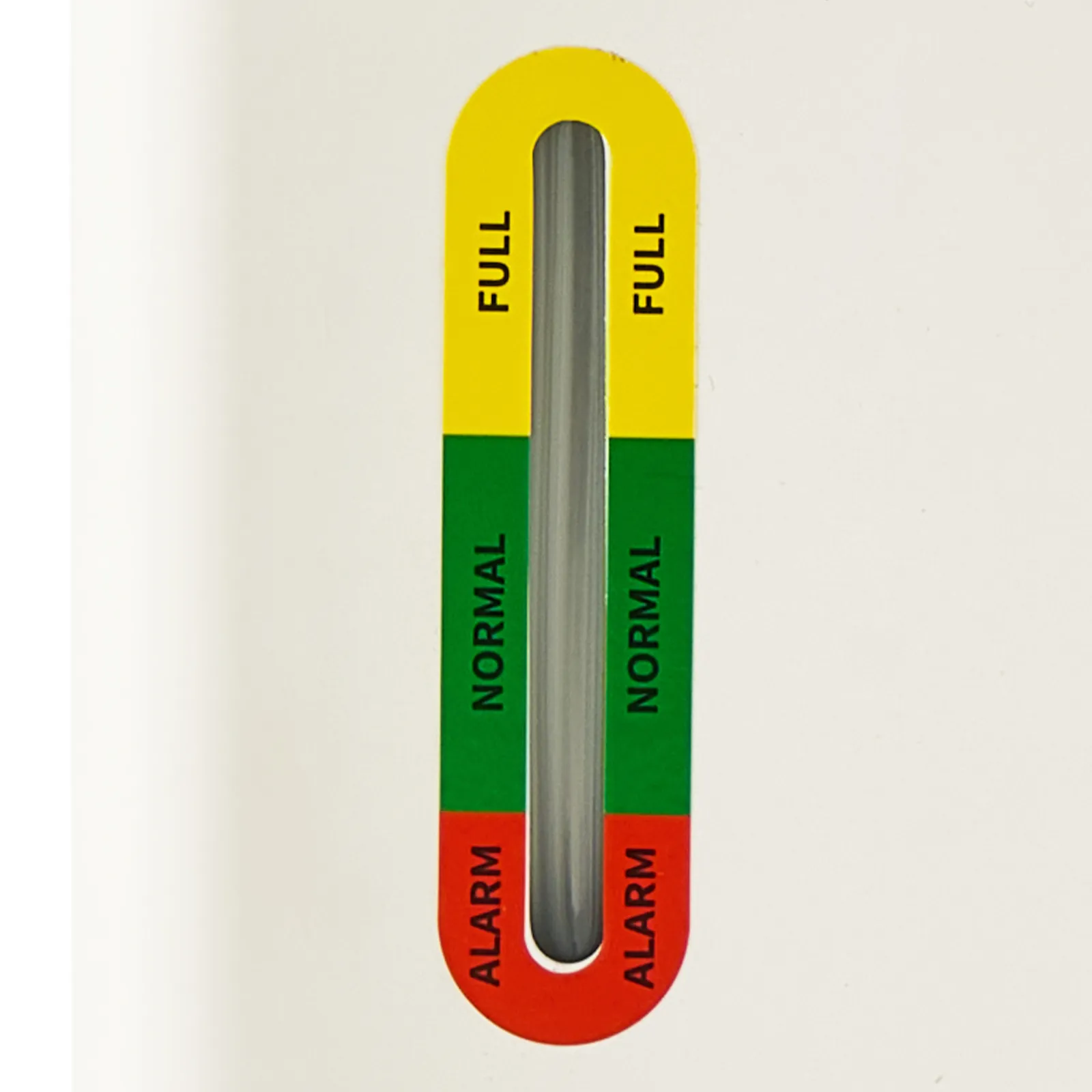
- Fast Circulation, Consistent Cooling: With a 3.96 gal (15 L) tank and a maximum flow rate of 18.5 GPM (70 L/min), this industrial chiller circulates quickly to dissipate heat efficiently. The clear viewing window lets you know exactly when to refill
- Multiple Alarm Functions: This industrial laser chiller continuously monitors performance via sensors, indicator lights, and built-in alarms. Multiple alerts help detect abnormal conditions early, ensuring stable cooling with confidence during operation
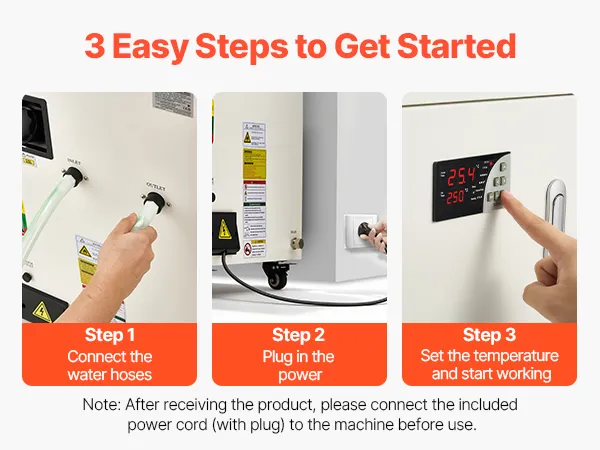
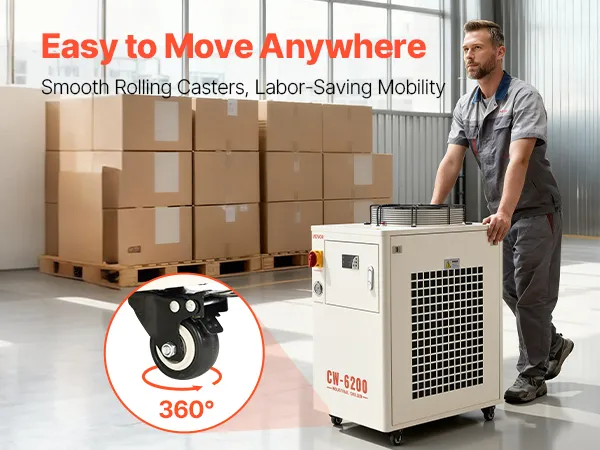
- Installation Made Easy: Equipped with standard inlet and outlet sizes, this industrial water chiller is compatible with most engraving machines, laser systems, and CNC equipment. Includes an aviation connector for leak-free connection
Frequently Bought Together
Reviews
About this item











Commercial Water Chiller System with Q235 Steel Shell and Copper Tube Circuit for Industrial Use
The VEVOR commercial water chiller system features a Q235 carbon steel outer shell that provides rigidity and impact resistance for industrial environments. It also has polypropylene parts inside and copper-tube heat-exchange circuits. Copper tubing provides excellent thermal conductivity, helping transfer heat efficiently between the coolant and refrigerant circuits. This directly affects the unit's ability to maintain its 17,060 BTU/h rated cooling capacity during extended operation.
The outer shell, made of Q235 steel, can withstand frequent bumps, vibrations, and surface contact in busy laser engraving and CNC machining areas without deforming or becoming structurally weak at the seam joints. The Q235 steel shell provides excellent durability for demanding industrial environments.
17,060 BTU/h Cooling Capacity via Compressor for One 450W or Two 200W Laser Tubes
An active compressor refrigeration circuit draws 1750W of input power to deliver a rated cooling capacity of 5000W (17,060 BTU/h). This information is important because the cooling output is much greater than the electrical input due to the thermodynamic efficiency of the refrigeration cycle. Specifically rated to meet the thermal-rejection needs of one 450W CO2 glass laser tube or two 200W tubes operating together, this covers the highest-wattage setups commonly used for large-format engraving and industrial cutting.
As outside temperatures rise, fan-cooled chillers work less effectively, whereas compressor-based cooling actually lowers the coolant temperature. On the other hand, compressor-based cooling actively brings the water temperature below what it should be. During summer production, when the workshop gets warmer, this active refrigeration method keeps the coolant in the laser tube's required temperature range, even when the temperature outside is high. During the operating season, this system keeps the tube in good shape and the beam quality stable.
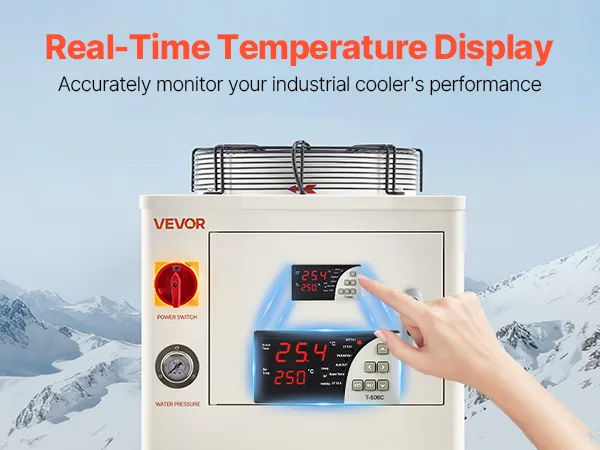
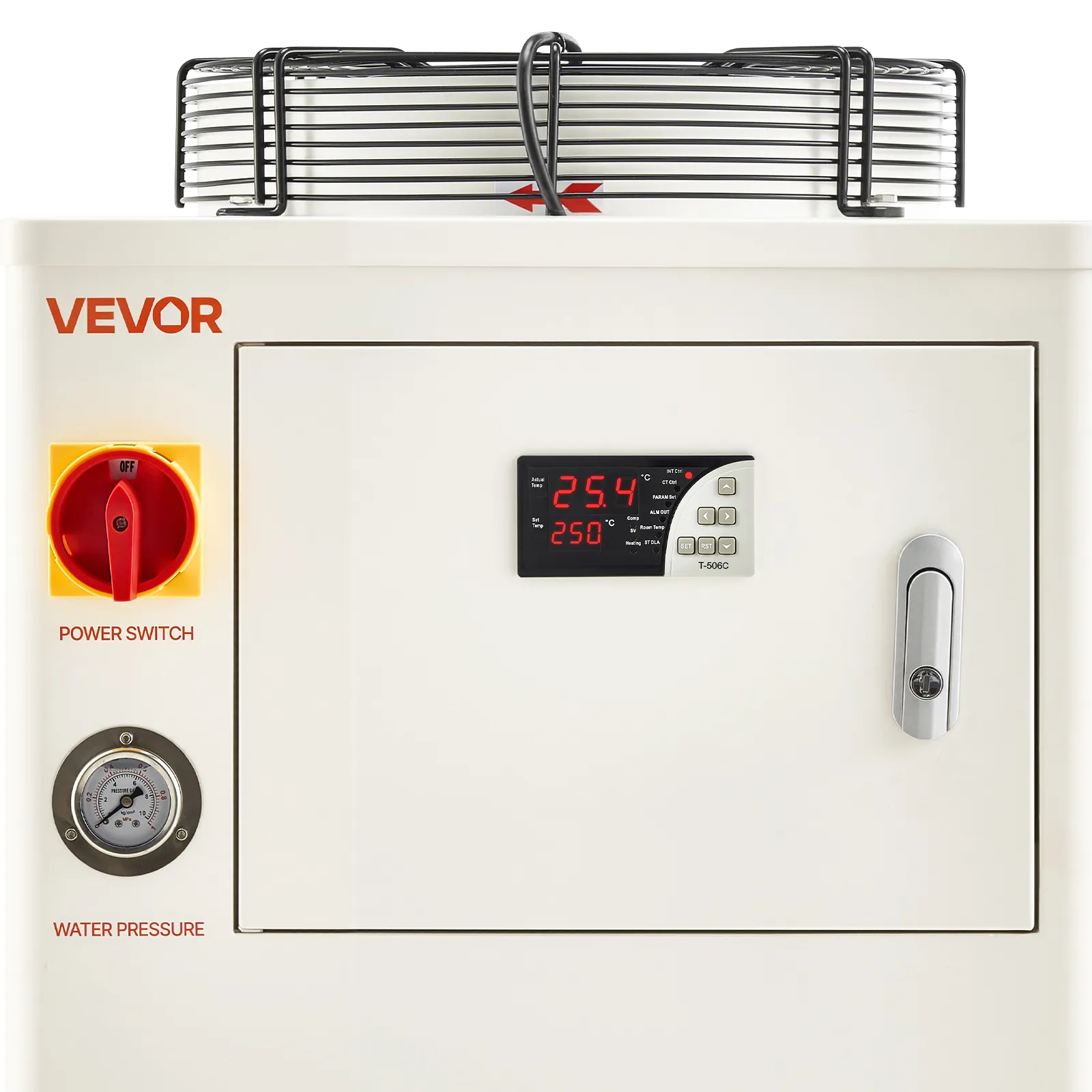
Real Time Water Temperature Display for Continuous Operational Status Monitoring
The chiller has a temperature monitor that shows the current coolant water temperature on a clear screen. This lets the operator see right away what is going on with the chiller without having to open it, consult another instrument, or wait for an alarm to sound indicating the temperature has gone too high or too low. By monitoring the coolant temperature in real time, the operator can spot a gradual rise before it reaches the alarm threshold. This could be due to warmer air, a partially blocked circuit, or a higher laser duty cycle.
This early warning enables action before the alarm threshold is reached. For example, the laser could be briefly paused, the room's ventilation adjusted, or the duty cycle reduced to give the chiller time to recover. The temperature display remains visible during normal operation, so the user can include it in their regular system check without any additional steps.
Ø 0.79 in Inlet and Outlet with Aviation Connector for Leak-Free, Adapter Free Installation
The coolant inlet and outlet ports are Ø 0.79 in (20 mm) wide, a common size for water fittings used on most CO2 laser engravers, CNC spindle cooling circuits, and other water-cooled industrial equipment. The 20 mm ports are compatible with many CO₂ laser engravers and water-cooled industrial systems. This feature reduces installation time and the likelihood of leaks and pressure-drop points associated with non-standard adapter connections between the chiller and the connected equipment.
The electrical connection features an aviation connector for a strong, vibration-resistant connection. This connector resists loosening caused by vibration. The aviation connector's locking geometry ensures full electrical contact, helping maintain a secure connection. This keeps the chiller control and alarm circuits safely linked during long periods of continuous operation.
Commercial Water Chiller System with Dual Control Modes for Stable Precision Cooling
You can choose between two operating modes for this commercial water chiller system, allowing it to cool the water according to the needs of the connected equipment and the environment. In constant temperature mode, the coolant stays within ±0.5°F (±0.28°C) of the set temperature. This provides the precise thermal control you need for high-resolution laser engraving tasks, where a stable coolant temperature helps maintain consistent laser performance.
In intelligent control mode, the coolant target temperature automatically adjusts based on ambient conditions. This reduces the frequency of compressor cycling during periods of moderate ambient temperature and can help reduce energy consumption. By switching between these modes, operators can balance precise temperature control and energy efficiency based on the application, material type, and production environment conditions for each session.
70 L/min Flow Rate, Water Level Window, and ≤80 dB Operation for Reliable Daily Use
The commercial water chiller system circulates coolant from its 15 L tank at a maximum flow rate of 70 L/min (18.5 GPM) for reliable heat dissipation. This ensures that any heat absorbed at the laser tube is quickly returned to the chiller's cooling circuit and does not build up in the coolant between passes. The high flow rate helps maintain stable coolant circulation. A high flow rate keeps the inlet temperature close to the chiller's setpoint, even during periods of high heat load.
The water level window lets the operator see exactly how much coolant is in the system without stopping the chiller. This way, they can see if they need to add more before the level drops too low and affects pump operation. Since the chiller's rated operating noise is ≤80 decibels, it stays within acceptable noise levels for enclosed workshop settings. This means the compressor and pump can run continuously with the laser and CNC equipment without raising noise to an uncomfortable level for a full production shift.