Deals
Deals by Categories




More Ways to Save

Best Sellers
Best Sellers by Categories
New
New by Categories
Download VEVOR App 

Get 5,00€ Off 99,00€+ Orders on Your First 3 App Orders
Scan the QR code to download
SKU: PHTRZYEVAPMJZT0F7001V0
Copy


+12
More


VEVOR Kayak Seat, 1 Pack 31 mm Thick, Universal Paddle Board Seat with Back Support, Sit-on-Top Soft Padded Cushion with Storage Bag & Adjustable Straps for SUP, Fishing/Inflatable Kayak, Rowboat
4.8 41 Reviews
46 90 €
Earn at least 2% points on purchases or save up to 15%.
Each when you buy 0+.
Shop
Get -% off for new user
Get 5,00€ Off 99,00€+ Orders on Your First 3 App Orders.
Download Now


Features & Details
- Thickened Side Wrap Support: The thickened side wings of our kayak seat provide lateral support and wrap around the thighs and hips. It enhances sitting stability and a sense of security, making paddling posture more controllable during active paddling
- Soft & Comfortable Feel: Crafted with thickened EVA foam and a wear-resistant nylon outer layer, this paddle board seat provides enhanced support and excellent elasticity while remaining lightweight
- Larger Seat & Backrest: Our kayak seat replacement features a wider base and taller backrest to improve sitting stability and enhance comfort during long paddling sessions, fishing, and cruising
- Universal & Secure Installation: Equipped with longer straps and larger brass hooks, our kayak seat with back support fits wider kayaks and inflatable kayaks. It secures firmly without slipping, allowing adjustment to adapt to different hull structures
- Portable Storage Bag: Our seat for kayak includes an independent storage bag that can hold small personal items like keys, phones, or sunscreen. It helps organize the cabin space and keeps your belongings away from splashes
Product specification
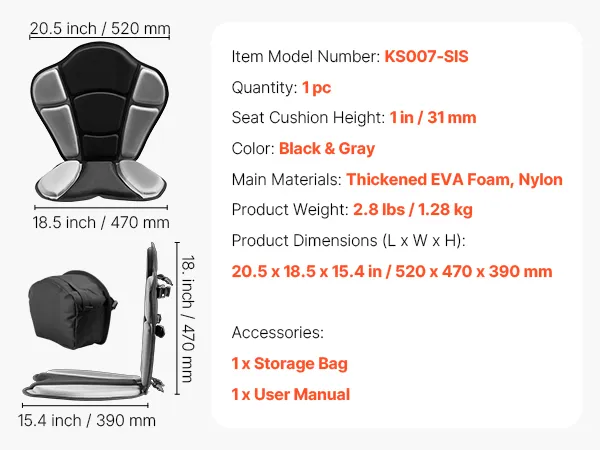
- Item Model Number KS007-SIS
- Quantity 1 pc
- Seat Cushion Height 1 in / 31 mm
- Color Black & Gray
- Main Materials Thickened EVA Foam, Nylon
- Product Weight 2.8 lbs / 1.28 kg
Frequently Bought Together
Reviews
About this item
Questions and Answers
Explore
Reviews
No customer reviews
Be the first to rate this product. your feedback will helps others make informed decisions.
Write a Review
Top Reviews
About this item
Product specification
- Item Model Number
- KS007-SIS
- Quantity
- 1 pc
- Seat Cushion Height
- 1 in / 31 mm
- Color
- Black & Gray
- Main Materials
- Thickened EVA Foam, Nylon
- Product Weight
- 2.8 lbs / 1.28 kg
- Product Dimensions (L x W x H)
- 20.5 x 18.5 x 15.4 in / 520 x 470 x 390 mm
Description


Comfortable Experience
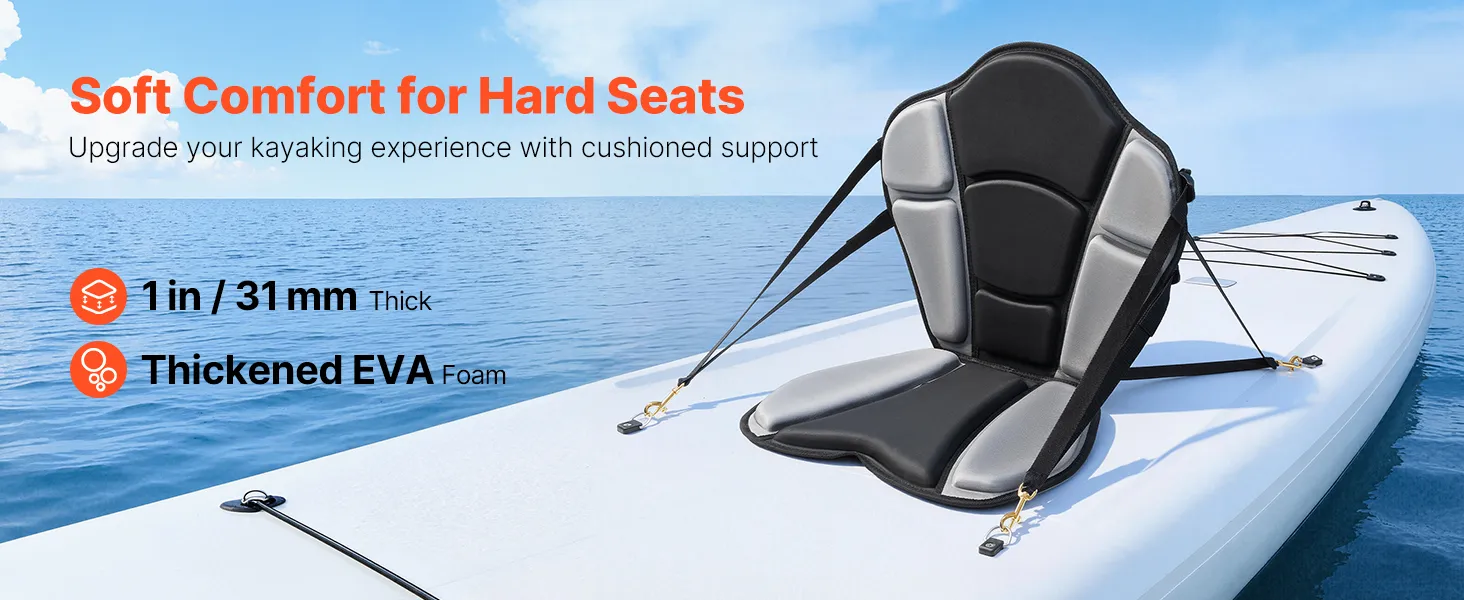
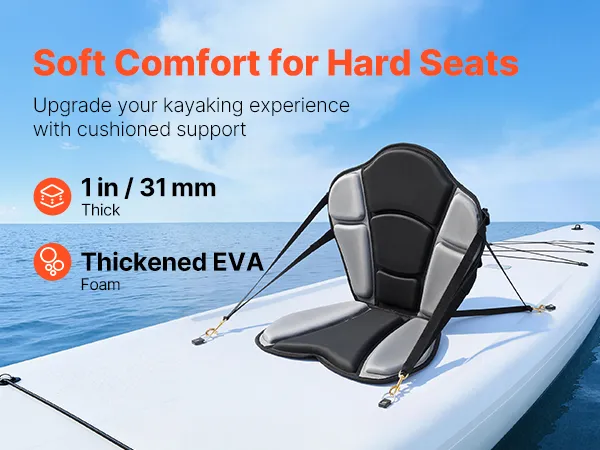
This kayak seat features thickened side panels that hug your body for a secure fit, helping keep your waist stable on choppy water and during frequent paddling. The denser EVA foam helps ease fatigue, making long water trips feel more comfortable.
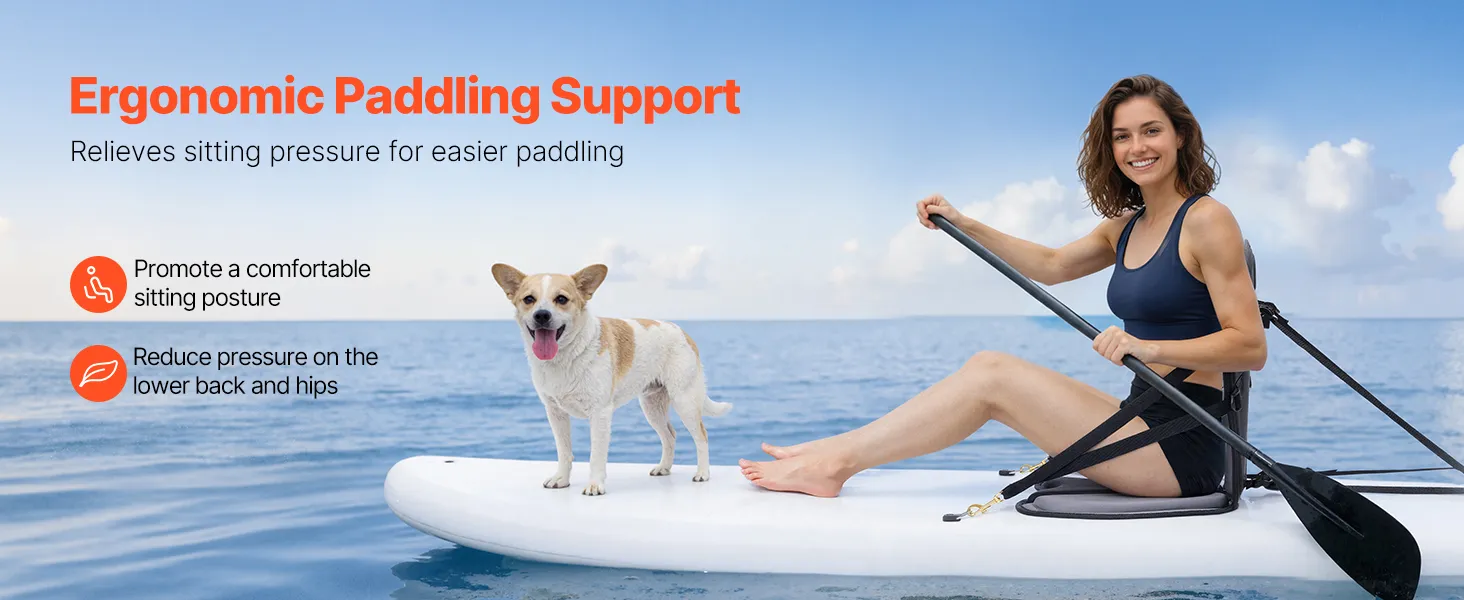
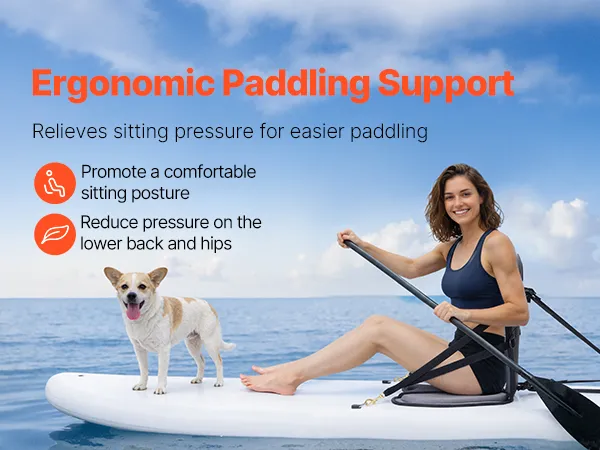
Designed with a high backrest and reinforced side wings, our paddle board seat provides full support and helps significantly reduce pressure on the tailbone and lower back. Whether you’re fishing for hours, cruising, or exploring the lake, it helps you maintain a comfortable sitting position.
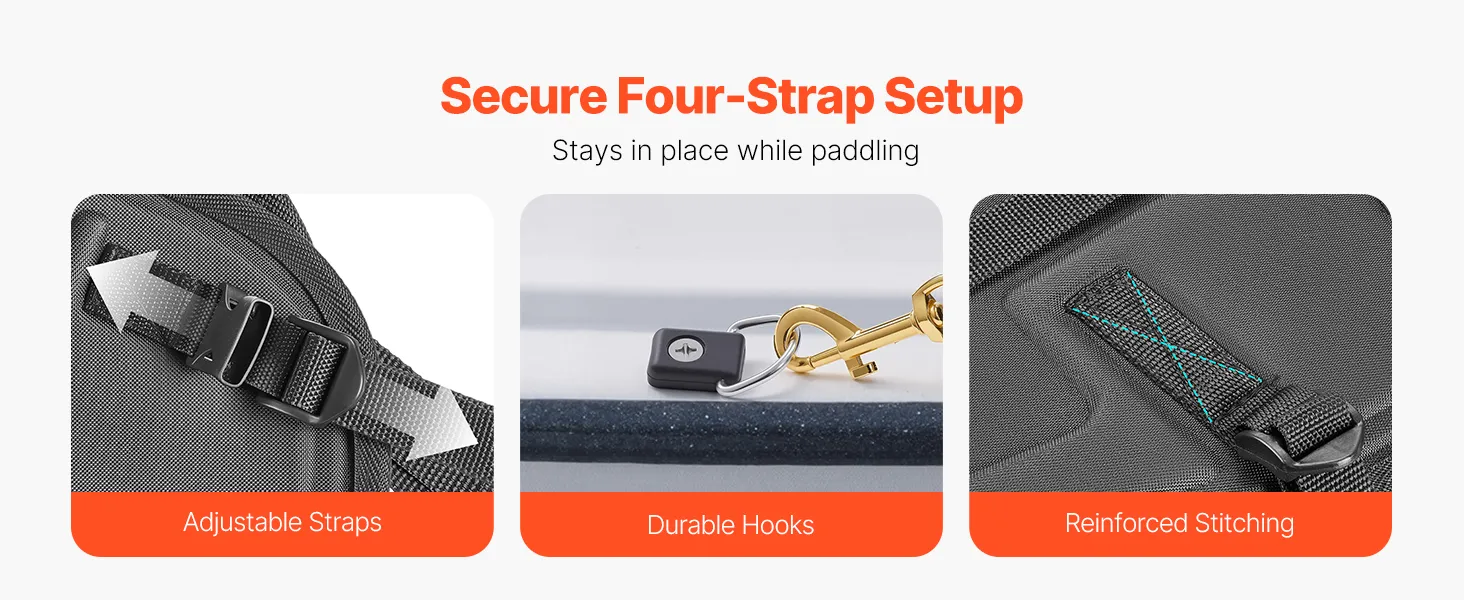
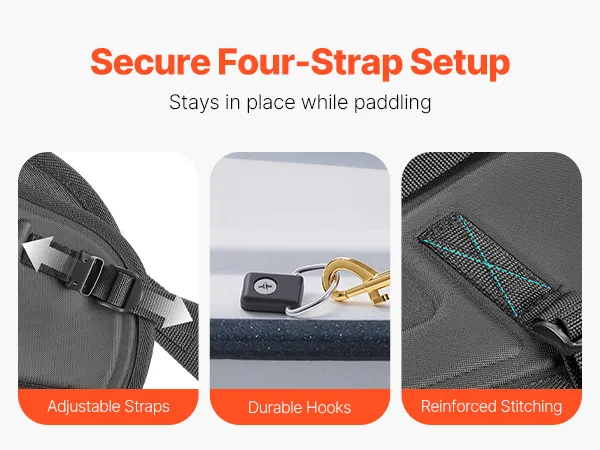
Equipped with longer PP adjustment straps and large brass hooks, this kayak seat replacement connects more securely to different kayaks and inflatables. The wraparound design helps limit side-to-side movement for improved long-term stability.
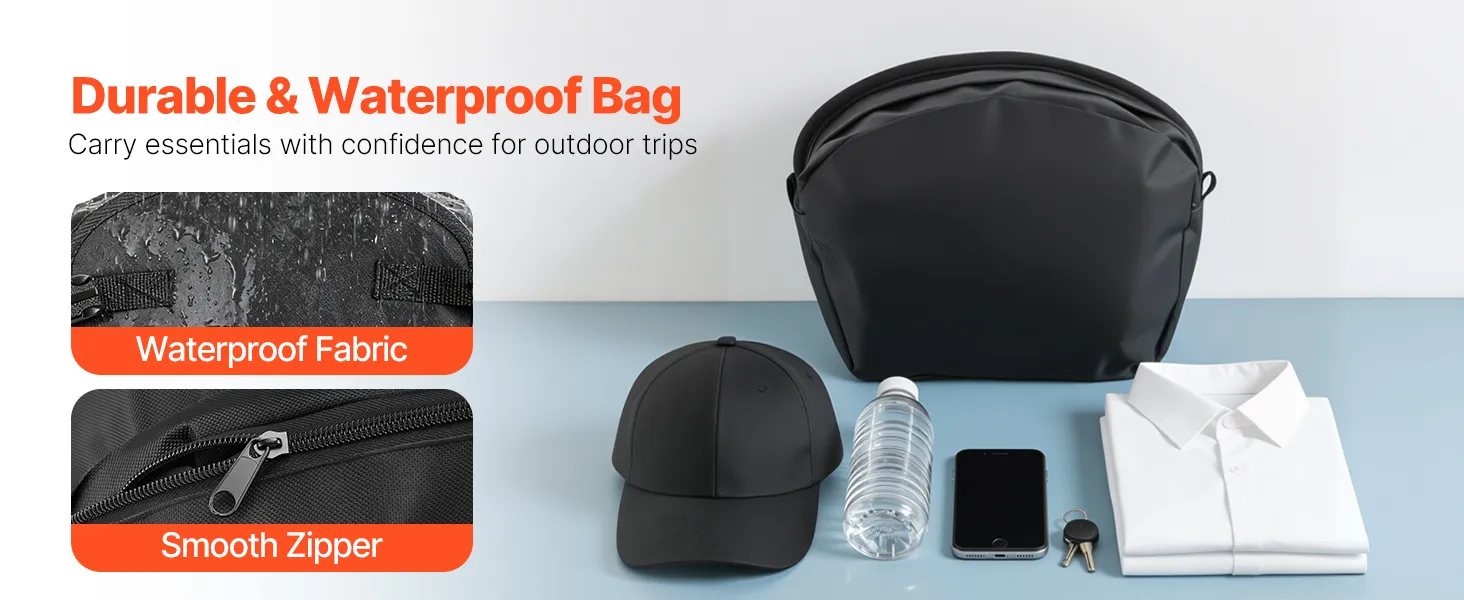
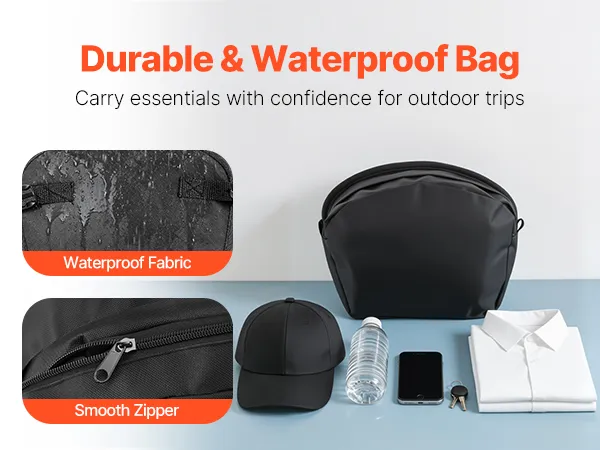
This kayak seat with back support provides a water-resistant, wear-resistant storage bag. Its bag delivers a practical capacity for fishing gear, phones, and other essentials—ideal for all-day watersports storage needs.
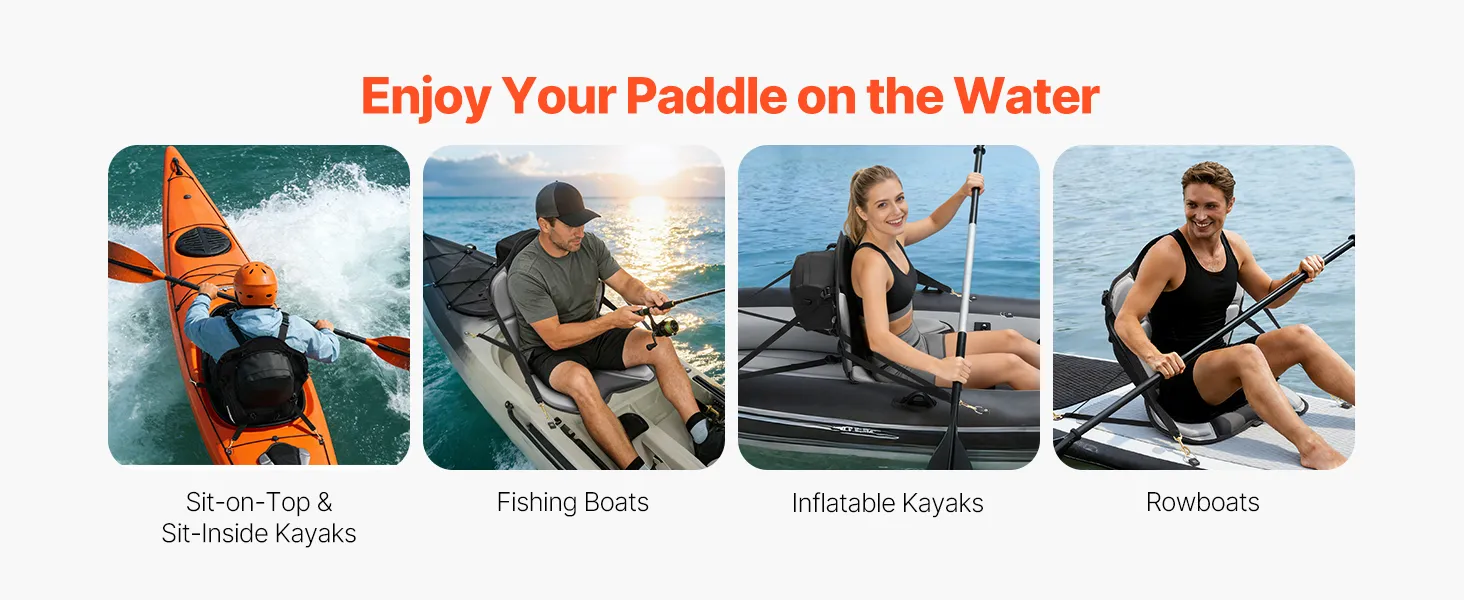
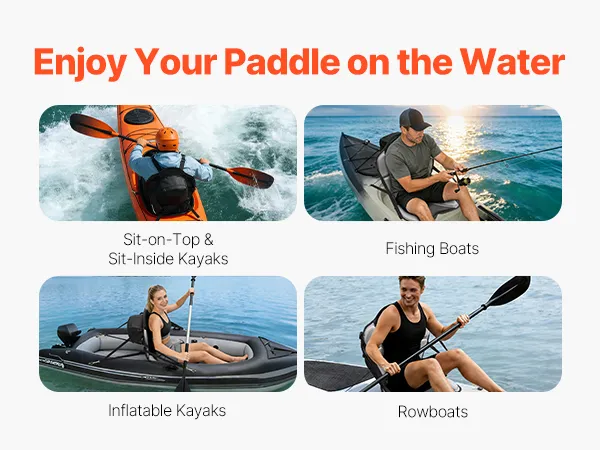
The larger backrest and wider base make this seat for kayak suitable for sit-on-top kayaks, wide boats, SUPs, and fishing boats. It’s especially ideal for advanced paddlers and anglers who want stronger support.
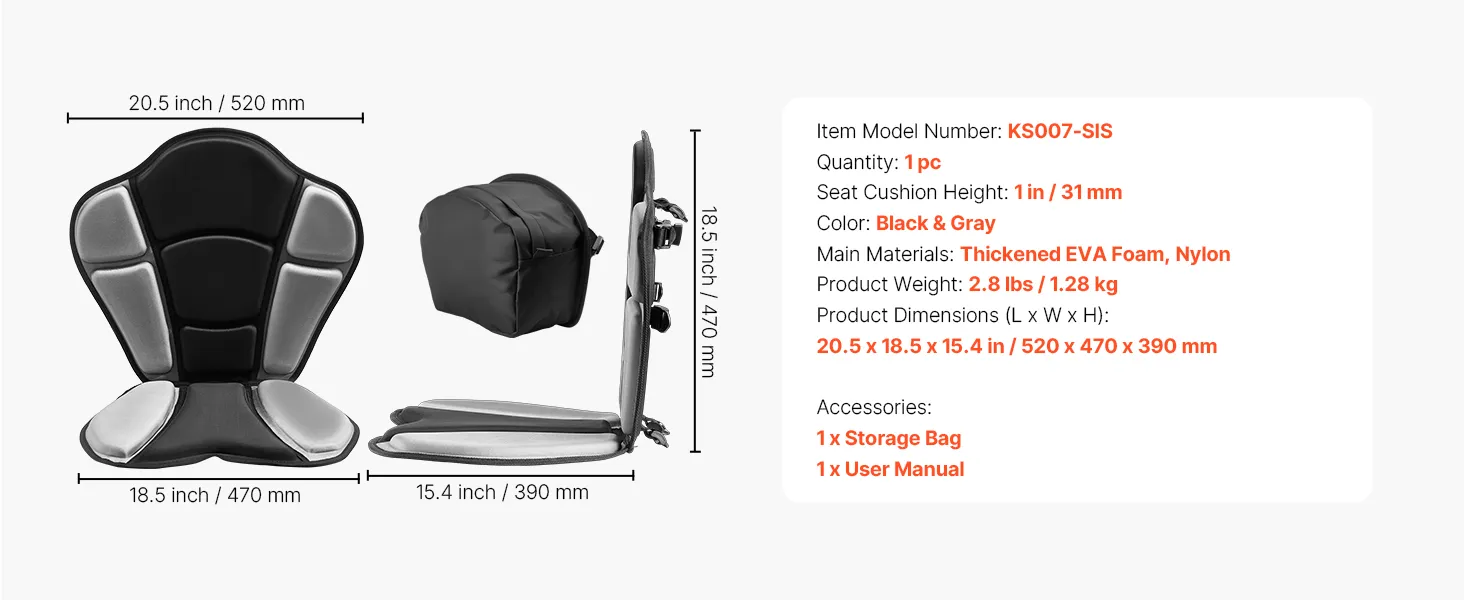
Kayak Seat with Back Support and Thickened Side Wings for Hip and Thigh Support
The VEVOR kayak seat with back support has thickened side wings that stick out from the seat base and wrap around the paddler's hips and thighs. This helps keep the paddler stable during continuous paddling strokes and in rough water. At the hip and outer thigh contact points, the side-wing geometry exerts gentle inward pressure. This helps prevent the paddler from shifting sideways with each stroke cycle, which makes paddling posture less stable over time and requires more energy to maintain stability.
Unlike a flat seat cushion, the side-wing design provides added lateral support during paddling. The thickened side wings keep the hips in a steady position in relation to the centerline of the hull. This lets the paddler transfer paddling power more efficiently through the torso-rotation phase of the stroke without having to compensate for seat-position drift.
31mm Double-Sided Thickened EVA Foam Cushion for Fatigue Reduction on Long Water Sessions
The seat cushion is constructed from double-sided thickened EVA foam at 31mm (1 in) total depth, a foam specification that provides meaningful cushioning between the hard hull surface and the paddler's sitting bones across sessions that extend beyond the short-duration use where any cushion provides adequate comfort. EVA foam is widely used in kayak seats because it resists water absorption and maintains its cushioning over repeated use.
The dual-layer construction helps distribute body weight more evenly across the seat, reducing pressure on key contact points. This is especially helpful for paddlers who spend long hours touring, fishing, or exploring.
High Backrest Design for Lower Back and Tailbone Pressure Relief During Extended Paddling
The higher backrest supports the lower back across its full length, reducing forward-lean fatigue that happens when paddling without back support and is one reason many recreational and touring paddlers cannot go for longer sessions. Without a backrest, the erector spinae muscles have to work hard to keep the body straight or leaning forward during the paddling stroke. This is a steady isometric load that quickly causes lower back pain during sessions lasting more than 30 to 60 minutes.
The high backrest transfers this postural holding load from the lower back muscles to the seat's structural support, allowing the paddler to rest the lumbar spine against the backrest between stroke cycles and during glide phases without interrupting the session. The reinforced side wings go up into the lower backrest area and provide lateral spinal support. This keeps the torso from twisting away from the center position during powerful stroke phases, keeping the spine in the right position for comfortable and biomechanically efficient sustained paddling.
Longer PP Straps and Large Brass Hooks for Secure Fit Across Wide and Inflatable Kayaks
This kayak seat with back support has longer polypropylene adjustment straps and big brass hooks. These make it compatible with a wider range of hull shapes and attachment point setups. Shorter straps on standard kayak seats cannot reach the attachment points on wider recreational kayaks or inflatable kayaks, where the D-ring positions are farther apart than on rigid, narrow touring hulls. The longer straps get around this problem by providing enough length to reach and create tension across wider attachment-point spacing.
Brass hooks are specified at the connection points rather than plastic alternatives because of their resistance to corrosion and UV degradation from outdoor saltwater and freshwater exposure that plastic hardware experiences over repeated seasons of use. Brass retains its shape and structural strength after being exposed to the elements for a long time, unlike UV-degraded plastic, which becomes brittle. This means the strap-to-D-ring connection remains strong and reliable throughout the seat's service life, rather than becoming a reliability risk after the first season.
Kayak Seat with Back Support Including Water-Resistant Storage Bag for On-Water Essentials
This kayak seat with back support includes a separate, waterproof storage bag. This gives paddlers a place to keep their keys, phone, sunscreen, snacks, fishing license, and other small, flat items that they would normally have to put away in the hull hatch or a separate deck bag. The water-resistant storage bag keeps these items safe from the splashes and sprays that come from paddling and always hit the cockpit area when it is rough.
Having important things in the seat-mounted bag instead of a hull hatch means that you do not have to stop, open the hatch, and reach inside to get them during the session. This is because reaching inside requires the paddler to sit still, which is awkward on an inflatable or a narrow sit-on-top hull.
Universal Fit for Sit-on-Top Kayaks, SUP Boards, Fishing Boats, and Rowboats
This seat is compatible with a wide range of recreational, fishing, and touring boats thanks to its longer PP adjustment straps, large brass hooks, and wider seat base. The full seat assembly, which includes side wings, backrest, and storage bag, works well with both narrow and wide hull formats. SUP boards with D-ring attachments use the same strap-and-hook system to attach the seat for paddlers who prefer a seated position on longer flat-water routes.
For fishing boats and rowboats without built-in seats, a seat is a practical comfort upgrade that can increase the time an angler or rower spends on the water before discomfort sets in and they have to go back to shore. When fully assembled, the seat measures 20.5 by 18.5 by 15.4 inches and weighs 2.8 pounds (1.28 kg). It is small enough to fit in a dry bag or the trunk of a car between trips without adding much weight.
Product guides and documents
User manual-en (PDF) Review
Questions and Answers (0)
Typical questions asked about products: Is the product durable? ...
In Stock
Security & Privacy
FREE Returns
Professional Service
Compare with similar items
Similar Items You Might Like
People Who Bought This Item Also Bought
Best sellers in this category
People Who Viewed This Item Also Viewed
Your Browsing History