


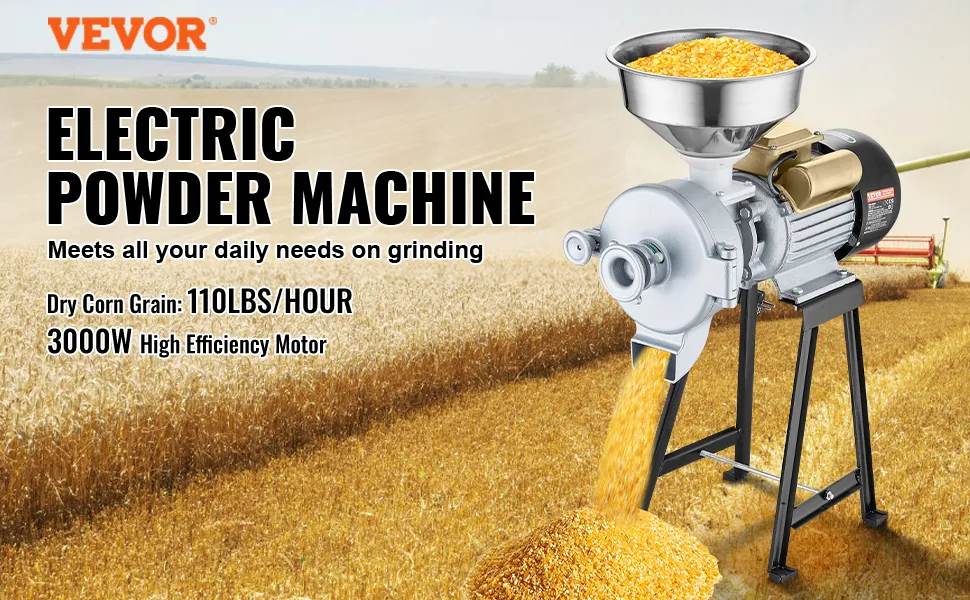
VEVOR Electric Grain Mill Grinder, 3000W Spice Grinders, Commercial Corn Mill with Funnel, Thickness Adjustable Powder Machine, Heavy Duty Feed Flour Cereal Mill Wheat Grinders, Dry & Wet Grinder


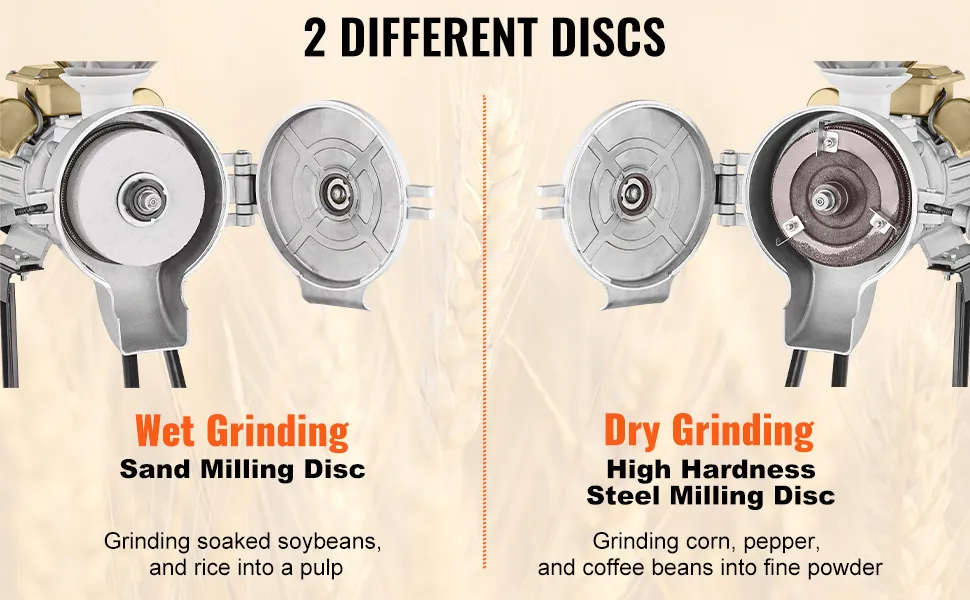
- 2 In 1 Wet & Dry Grinding: Cast iron milling disc for dry grinding; sand milling disc for wet grinding. You can grind soaked soybeans and rice into a pulp, which can be used as soy milk and rice cakes. In addition, the convenient funnel feeding design can achieve a uniform feeding speed, providing a steady operation.
- Super Smash Function: Featuring a powerful 3000W motor, the commercial grinder can reach a high speed and continuously grind, creating a vast grinding capability. A sharp blade can crush all kinds of food into fine powder. In addition, the premium motor can effectively reduce the body's vibration, increase the working time, and increase the machine's service life.
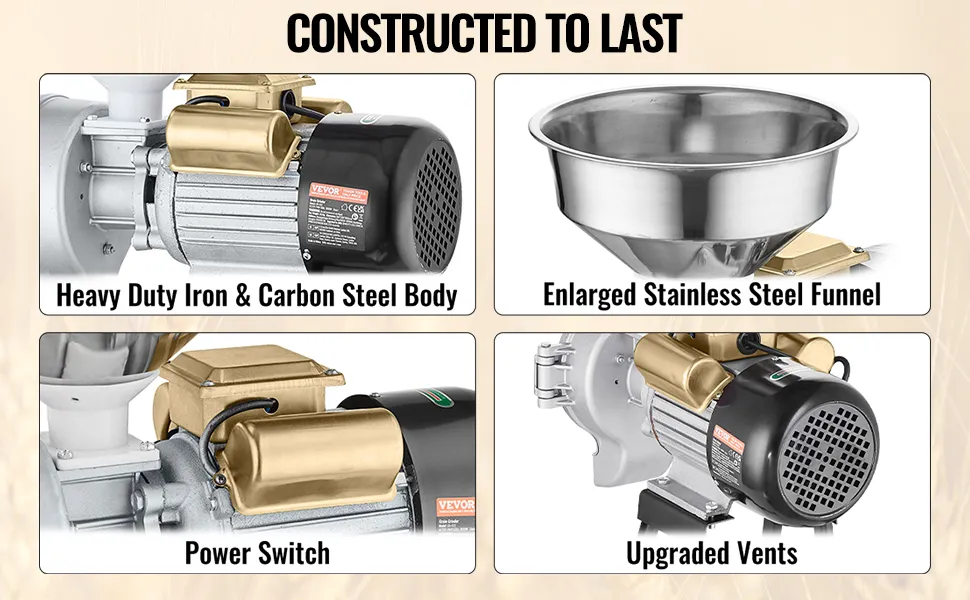
- Durable Material: The funnel is made of stainless steel, featuring durability. This heavy-duty mill grinder has a solid iron body that can stand for prolonged use. Sanding treatment of the surface creates a beautiful exterior appearance.
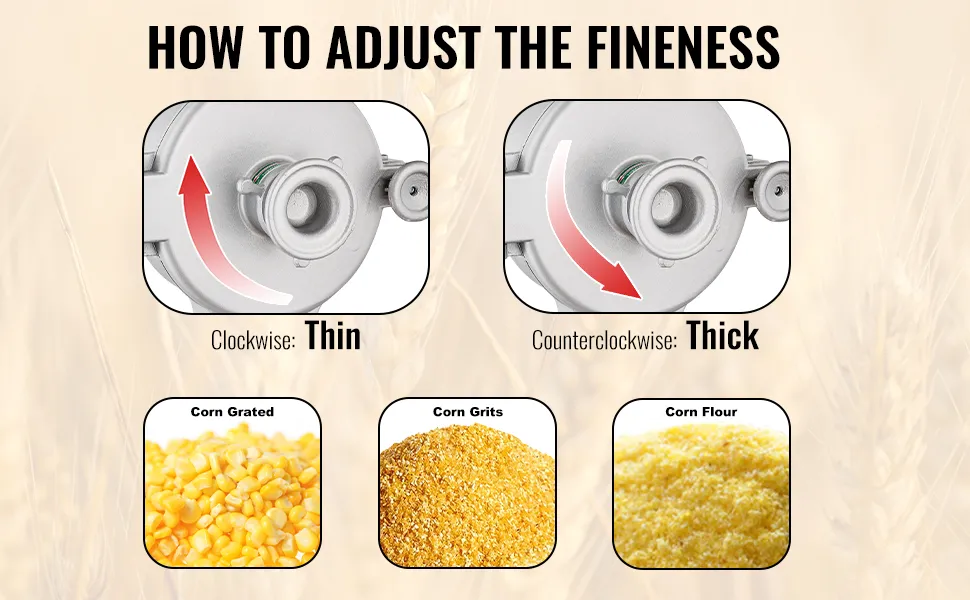
- Adjustable Thickness: This machine fits all needs. The adjust button lets you control the thickness of spice, corn, coffee bean, cereal, wheat, and nut.
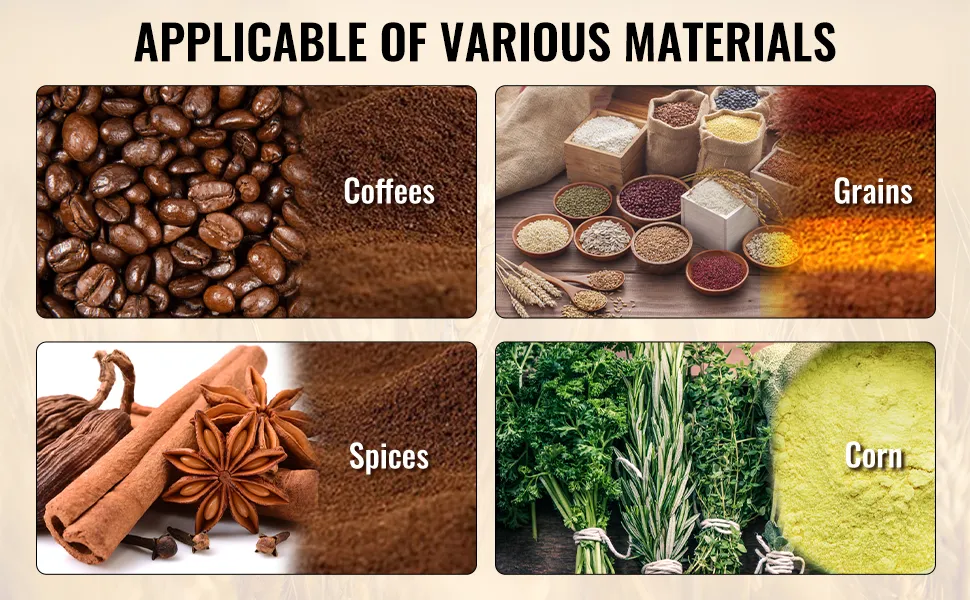
- Widely Applicable: VEVOR Commercial electric corn grinder is suitable for grinding tofu, starch, rice flour, corn, and other food industries. It can grind wheat, rice, corn, sorghum, soybeans, and other crops into dry powder. It is also suitable for grinding soaked soybeans and rice into pulp, which can be used to make soy milk, rice cakes, and other foods. At the same time, it can be used for crushing feed.
Frequently Bought Together
Reviews
 medstucco
  JFK 1967
  Dimitri Davoust dannytomblinson63
About this item


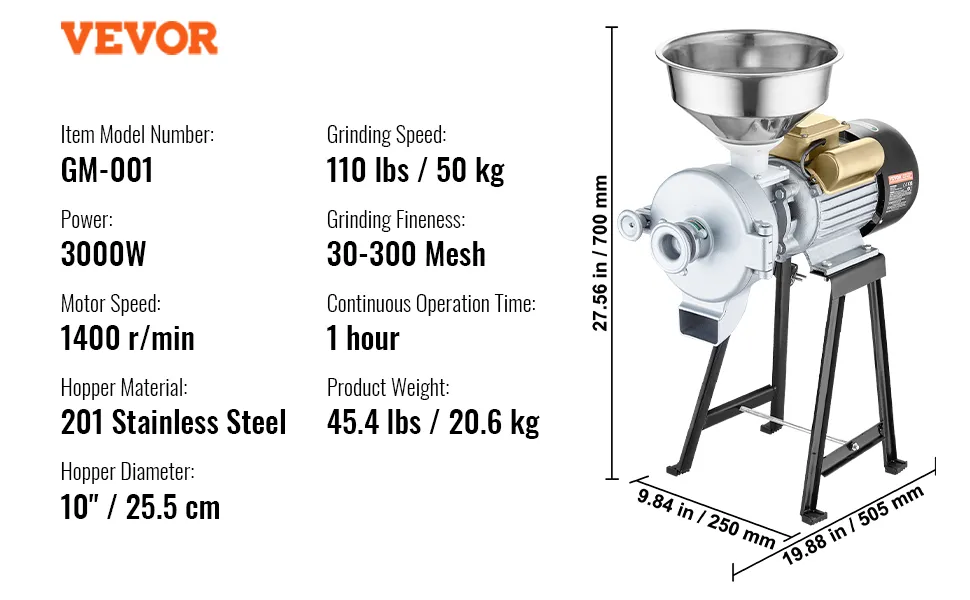
1400 RPM Torque-Optimized Motor for Sustained Heavy-Load Continuous Operation
While most tiny grinders are optimized for raw rotational speed, this grain powder machine features a 3000W motor that produces max torque at 1,400 RPM - a speed that still offers grinding force under high material loads. High-torque operation is especially critical when processing dense crops like maize, dried soybeans, and sorghum, where blade or disc speed alone is not enough to break down resistant cellular structures without stalling or sacrificing output quality mid-batch.
This motor is rated for a full hour of continuous operation, which clearly distinguishes it from lighter-duty machines meant primarily for short-burst cycles. Vibration suppression is also an important focus, alongside the motor's internal engineering. It minimizes mechanical wear on all moving parts and is directly reflected in the machine's longer service life. The combination of torque delivery, continuous runtime, and low-vibration design means less downtime and more consistent output throughout long daily use.
Cast Iron and Sand Milling Disc System for True Wet and Dry Grain Powder Machine Use
This grain powder machine comes with two interchangeable milling discs, each designed for a different processing mode. The cast iron disc is for dry grinding applications, applying a sustained compressive force to hard, brittle materials such as dried corn, wheat, and sorghum to produce uniform dry powder. The dense construction will be resistant to warping and to loss of surface integrity from friction and heat generated during long periods of dry milling.
The sand milling disc is then used for wet applications. Soaked grains and legumes require a distinct surface texture to be processed successfully without slipping across the disc face. Soaked soybeans are ground to a smooth pulp to produce soy milk, and soaked rice is made into a fine slurry to produce rice cakes. The funnel feeding system feeds both disc types equally with material at a controlled, steady rate.
Thickness Adjustment Control for On-Demand Coarseness Across Every Material Type
Operators can directly modify the output texture using a built-in thickness adjustment knob, without changing discs, using tools, or taking apart the machine. The adjustment dial varies the spacing between the milling surfaces, instantly changing the output from rough, cracked grain to a fine-flour-grade powder. This means that different product types can be processed on the same machine in a single session by simply adjusting it for each product type.
This flexibility is especially useful in operations that support many product lines or customer needs. A food company might want coarse corn grits in the morning and fine rice flour in the afternoon - the adjustment control takes care of both without changing equipment. Cereal grains, wheat, a variety of nuts, spices, maize, and coffee beans are compatible, each on a particular thickness setting. The output range of 30 to 300 mesh ensures that the adjustment mechanism produces substantial differences across the entire range, rather than just cosmetic ones.
201 Stainless Steel Hopper with 10-Inch Diameter for High-Volume Bulk Feeding
The hopper is constructed of 201 stainless steel, which provides good corrosion resistance and the sanitary surface qualities required for food-contact equipment used in grain, spice, and feed processing applications. The entrance of the hopper is 10 inches (25.5 cm) in diameter. This is broad enough to allow whole-grain crops to be fed into the machine without pre-breaking, thereby greatly reducing the manual preparation required at the start of each production run.
The funnel shape of the hopper holds the material and directs the grain downward at a steady, measured pace equal to the grinding disc's optimal intake capacity. The auto-regulating feed rate prevents the disc from being flooded with abrupt surges of material, which can cause uneven grinding, variable powder texture, and early motor strain. The hopper will maintain the speed of material delivery throughout the batch, from the first pour to the final grain passing through.
Cast Iron Machine Body with Sanded Exterior for Industrial-Grade Structural Strength
The main housing of this grain powder machine is made entirely of solid cast iron, providing the density and strength needed to support a 3000W motor and dual milling discs during sustained high-torque operation. The inherent mass of the cast iron dampens the vibration caused by the discs' continuous spinning. This protects the internal components, reduces noise transmission to adjacent surfaces, and keeps the machine firmly planted on the workbench, preventing creep or shifting during operation.
The machine's 45.4 lbs (20.6 kg) weight is an advantage rather than a disadvantage in industrial situations where stability directly influences output uniformity. The outside surface is sanded to remove any rough casting marks, smooth edges of contact, and provide a uniform, corrosion-resistant surface finish for humid food processing settings. This treatment also gives the machine a professional look suited to commercial kitchens open to the public, specialty food stores, and agricultural processing facilities.
Grain Powder Machine Rated at 50 kg Per Hour Across Food, Feed, and Crop Applications
This grain powder machine has a throughput of 110 lbs (50 kg) per hour, squarely in the commercial processing category where sustained output volume is the yardstick of operational efficiency. This output rate enables operators of a tofu manufacturing line, a flour milling station, or a livestock feed preparation facility to produce substantial batches in a single continuous one-hour operating window without pausing for rest cycles or equipment cooling.
The machine’s suitable material list includes the full gamut of major agricultural and food-processing inputs: wheat, rice, corn, sorghum, soybeans, starch crops, and other feed grains on the dry side, plus soaked soybeans and rice for wet-pulp applications. Finished goods include rice flour, maize meal, soy powder, tofu base, soy milk pulp, rice cake batter, and crushed animal feed, all produced by one machine with disc and thickness adjustments. This versatility makes it a high-value, space-saving investment for any enterprise that processes varied grain needs under one roof.
