VEVOR Drill Bits Sharpener MR-13D, 3–13mm Professional Drill Bit Grinder with Adjustable Lip Relief Angle, Front Cutting Lip & 95°-135° Point Angle, 4600RPM Re-Sharpener with 11 Collets & CBN Wheel

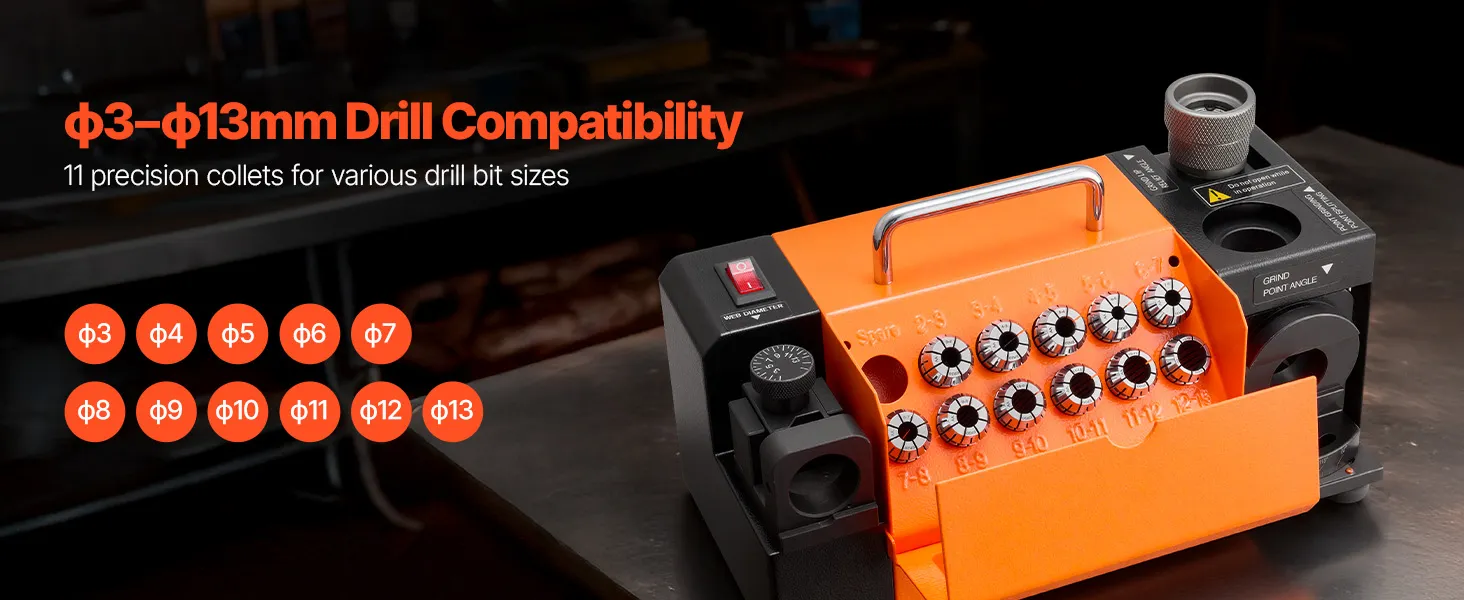
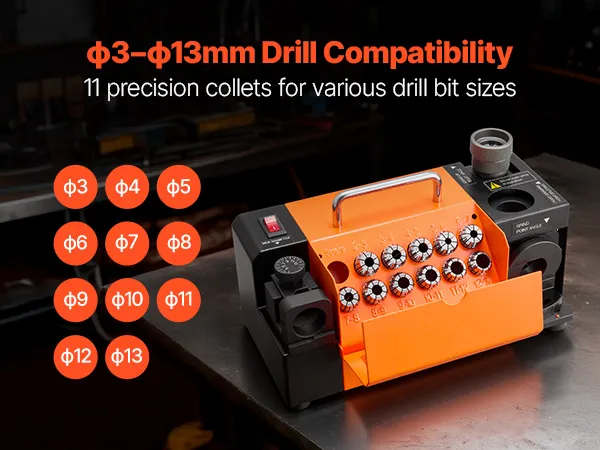
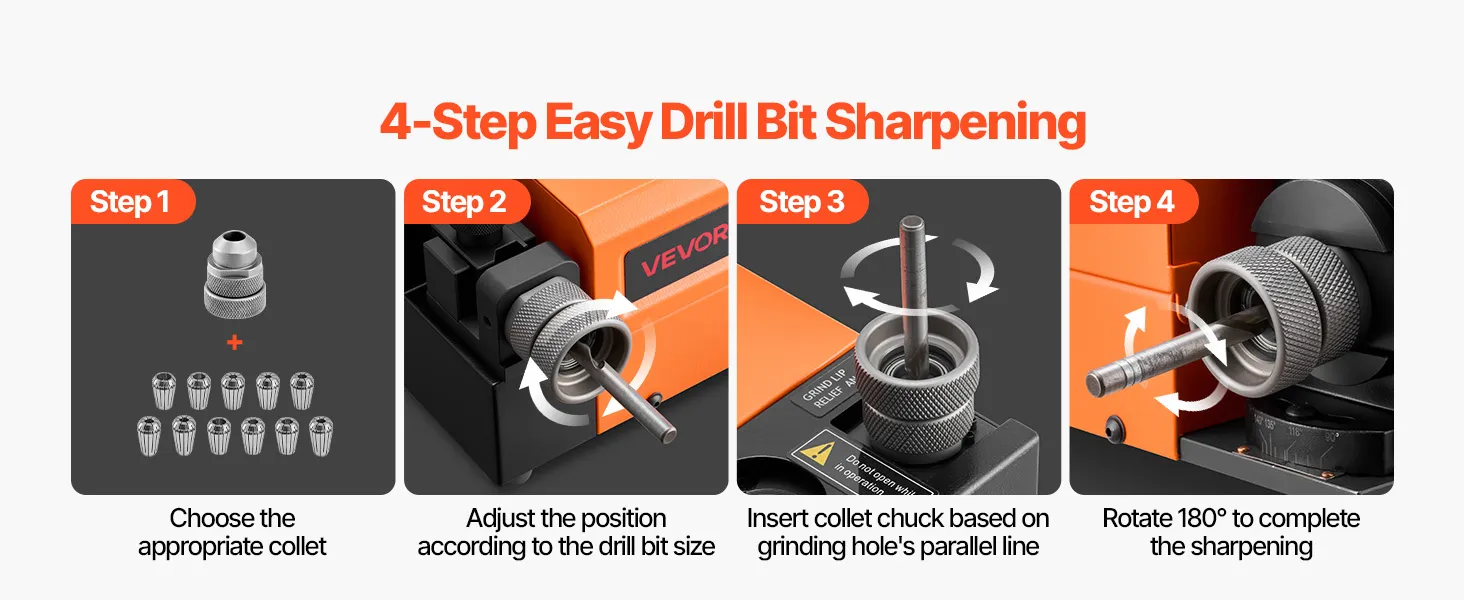
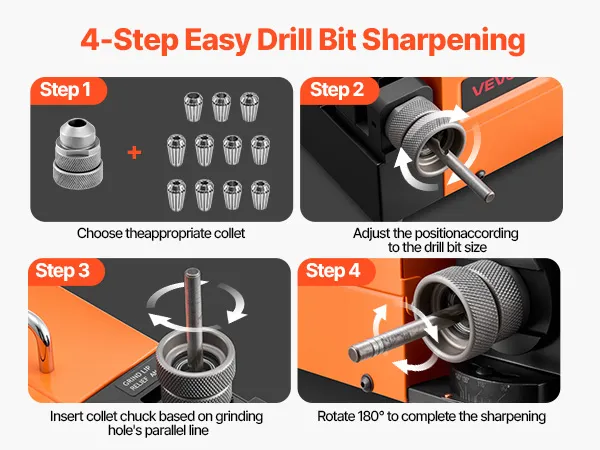
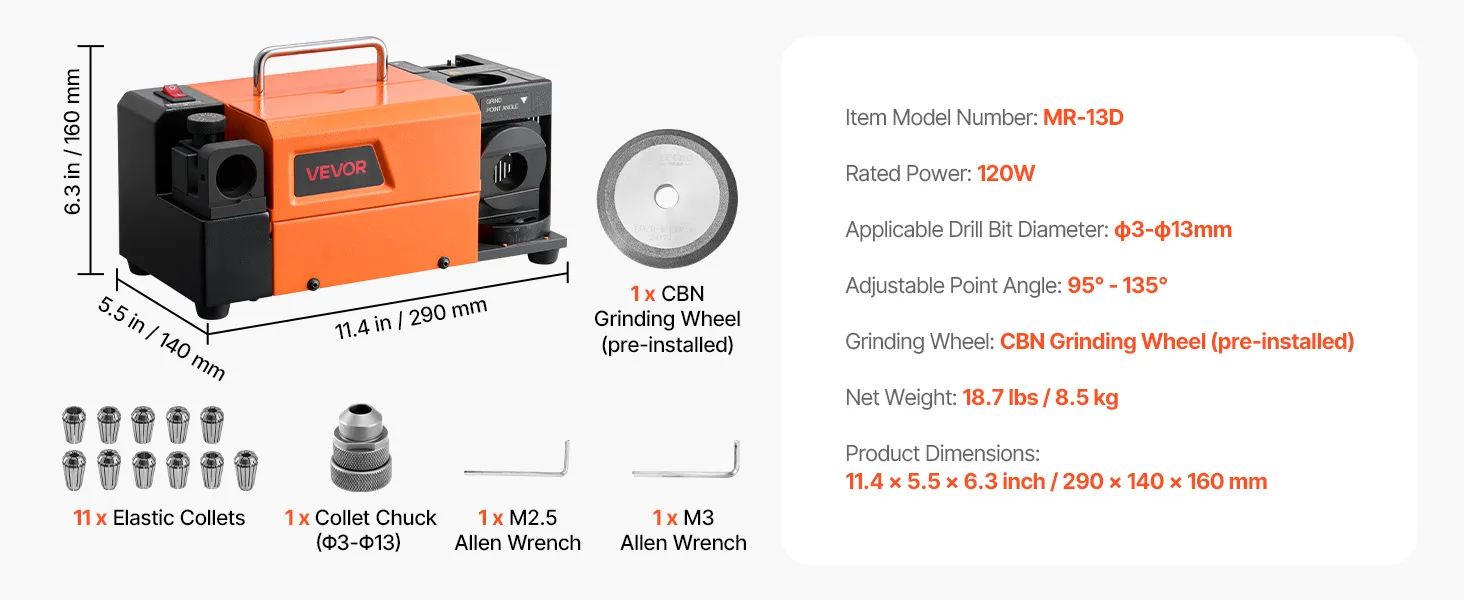
- Professional Sharpening: Designed for φ3–13 mm drill bits, VEVOR MR-13D drill bit sharpener with 11 elastic collets excels at sharpening the point angle, lip relief angle, and front cutting edge, quickly restoring your bits to optimal sharpness and precision
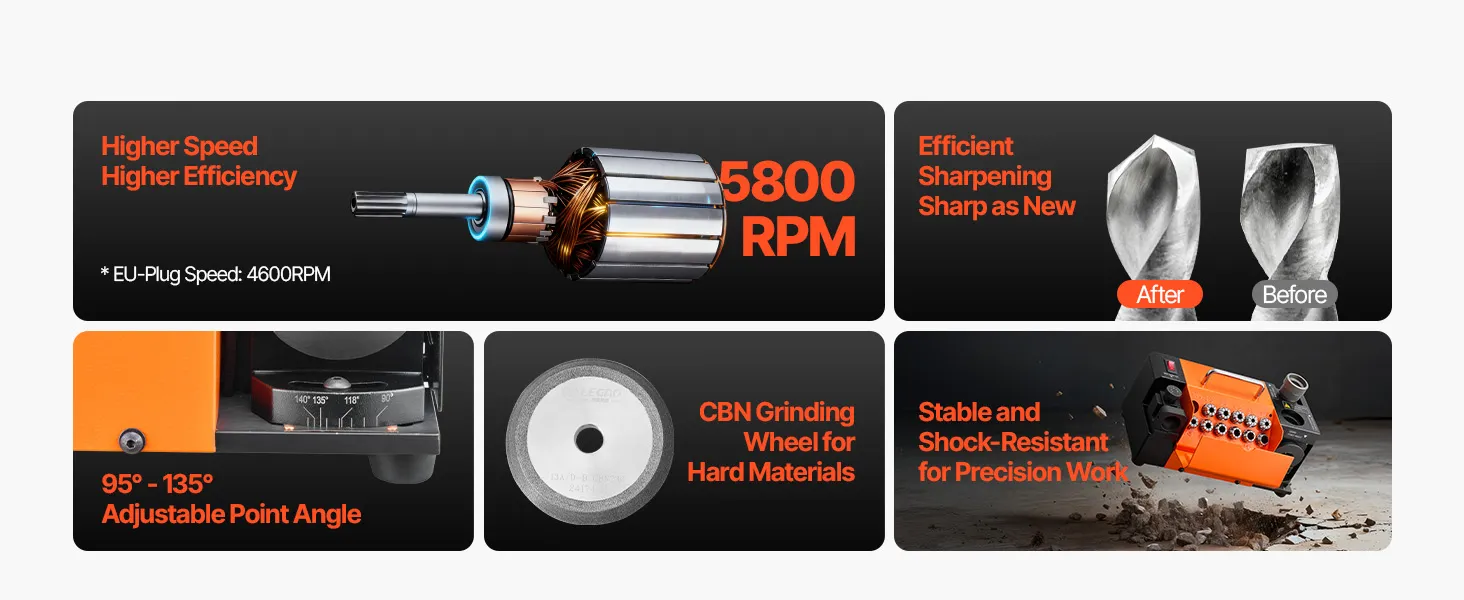
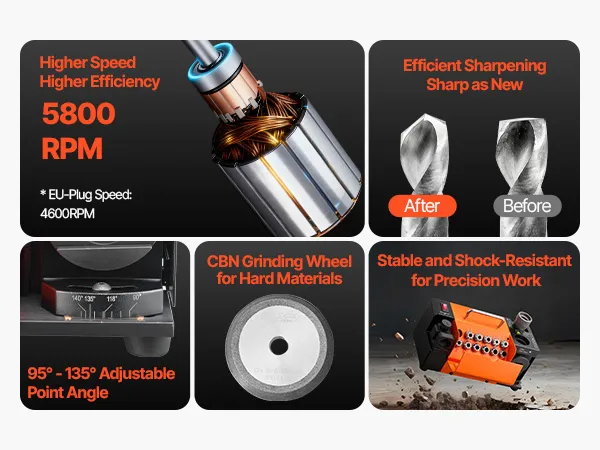
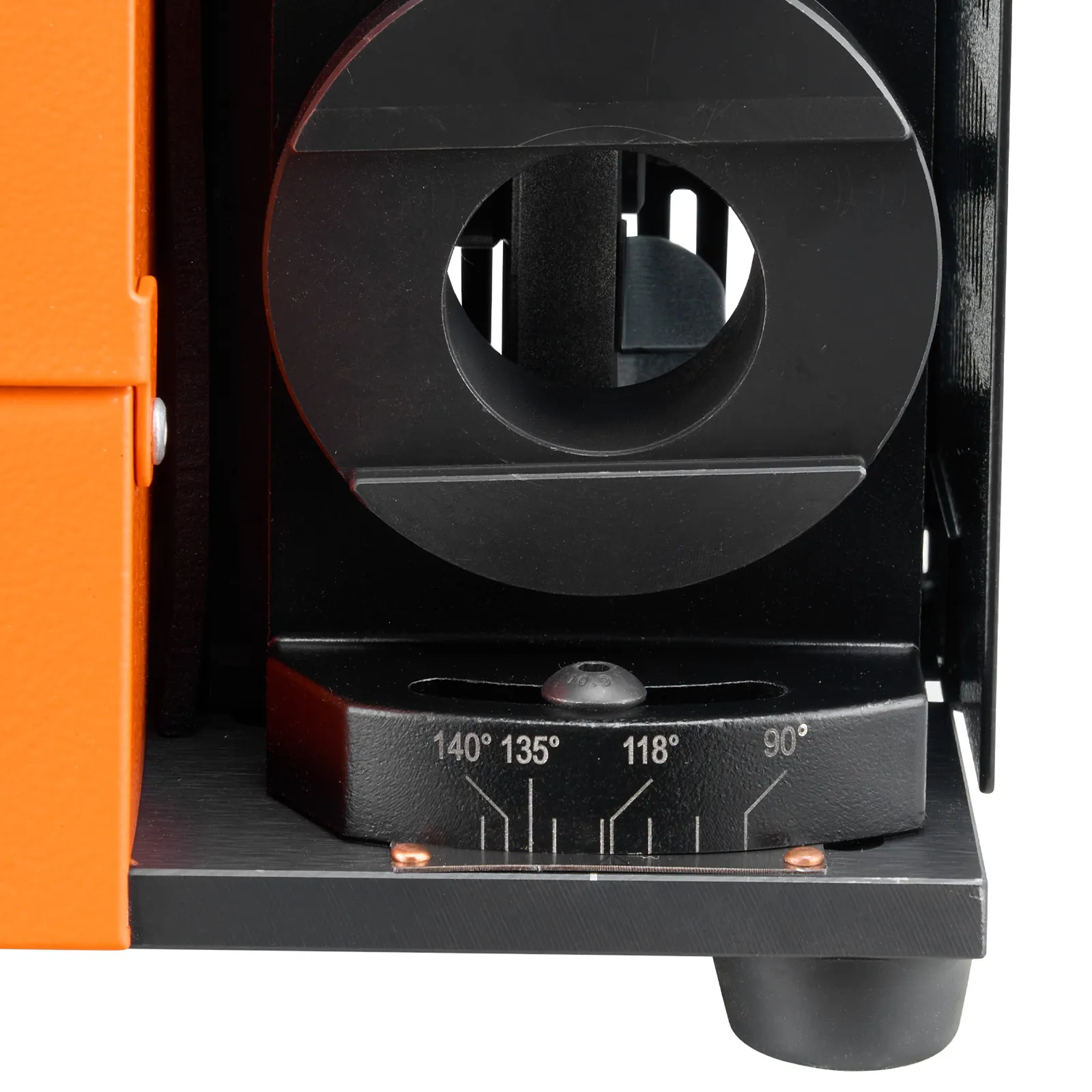
- Multiple Adjustments: The drill bits grinder sharpener offers flexible adjustment for the lip relief angle, front cutting lip, and 95°–135° adjustable drill point angle, precisely matching various bit styles and drilling needs, ensuring smoother and more accurate sharpening results
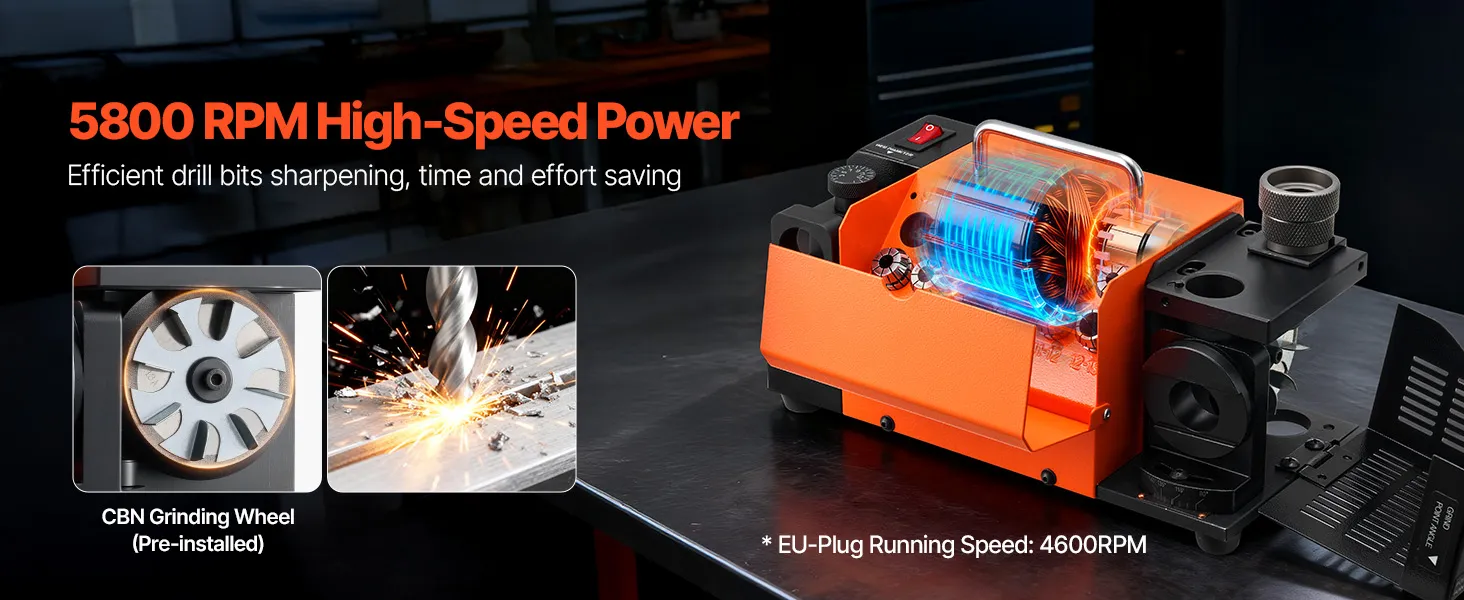
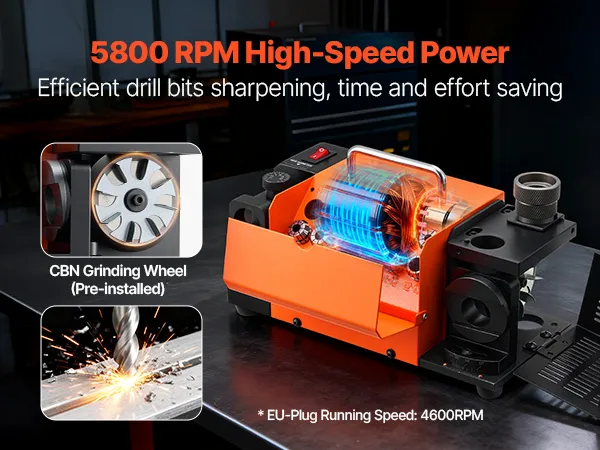
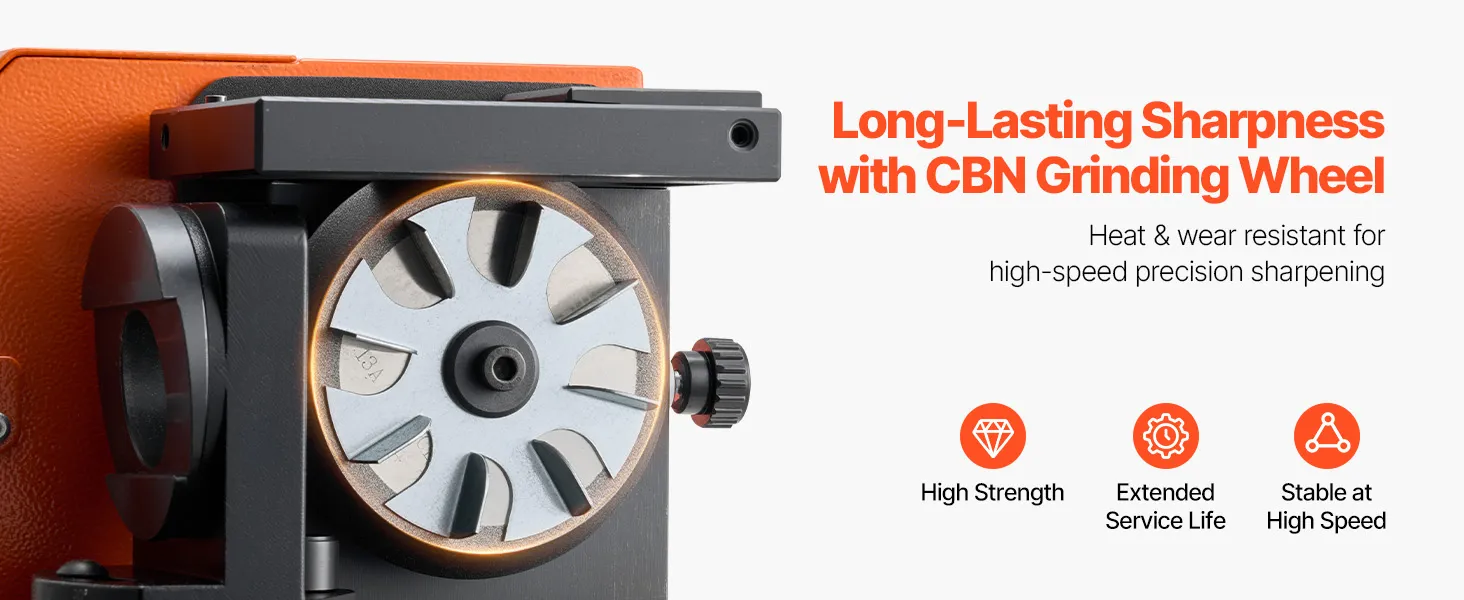
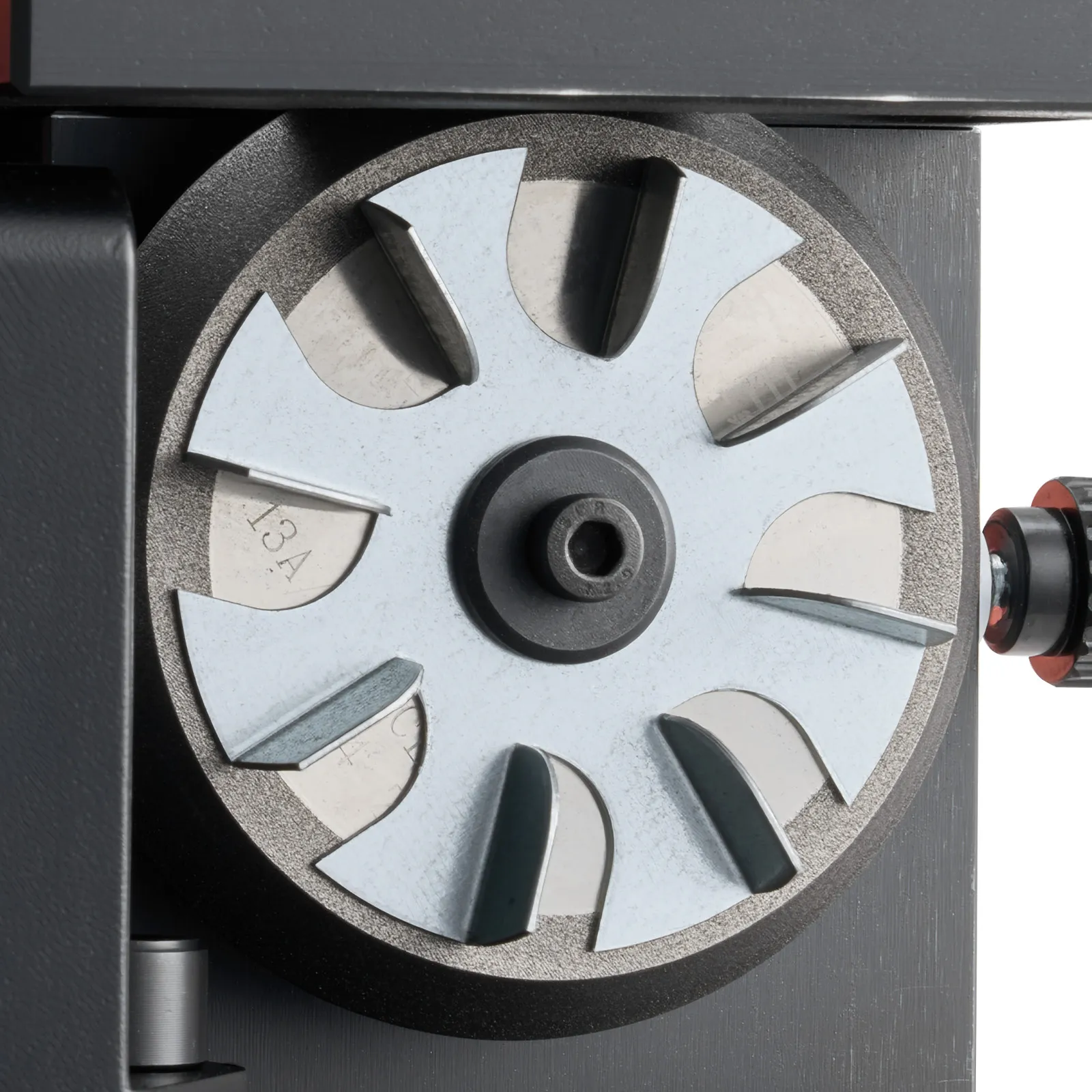
- Efficient Grinding Wheel: The CBN grinding wheel (pre-installed) is designed for high-speed steel materials, greatly improving grinding precision and efficiency. Paired with the 4600 RPM high-speed motor, it delivers fast and efficient drill bits sharpening
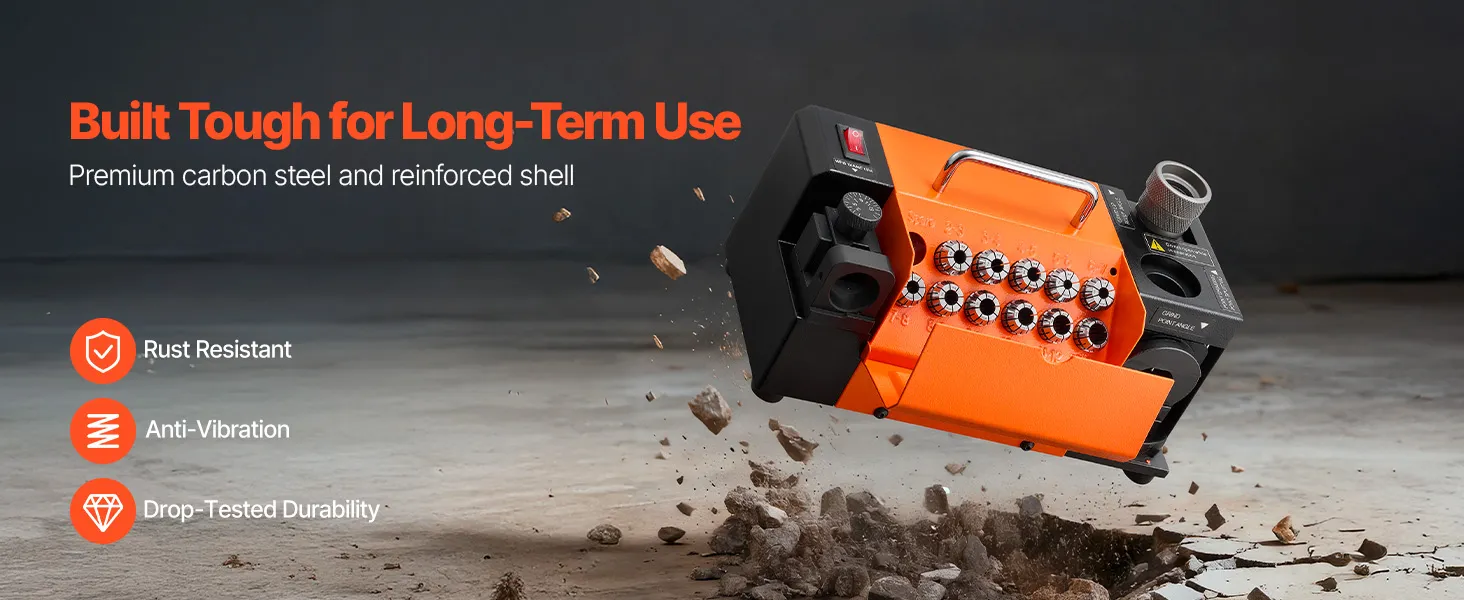
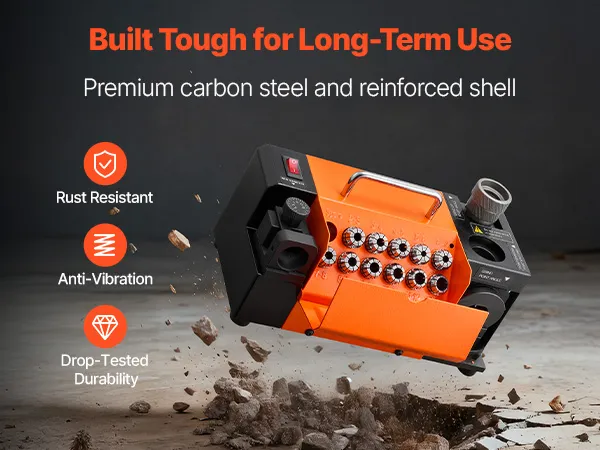
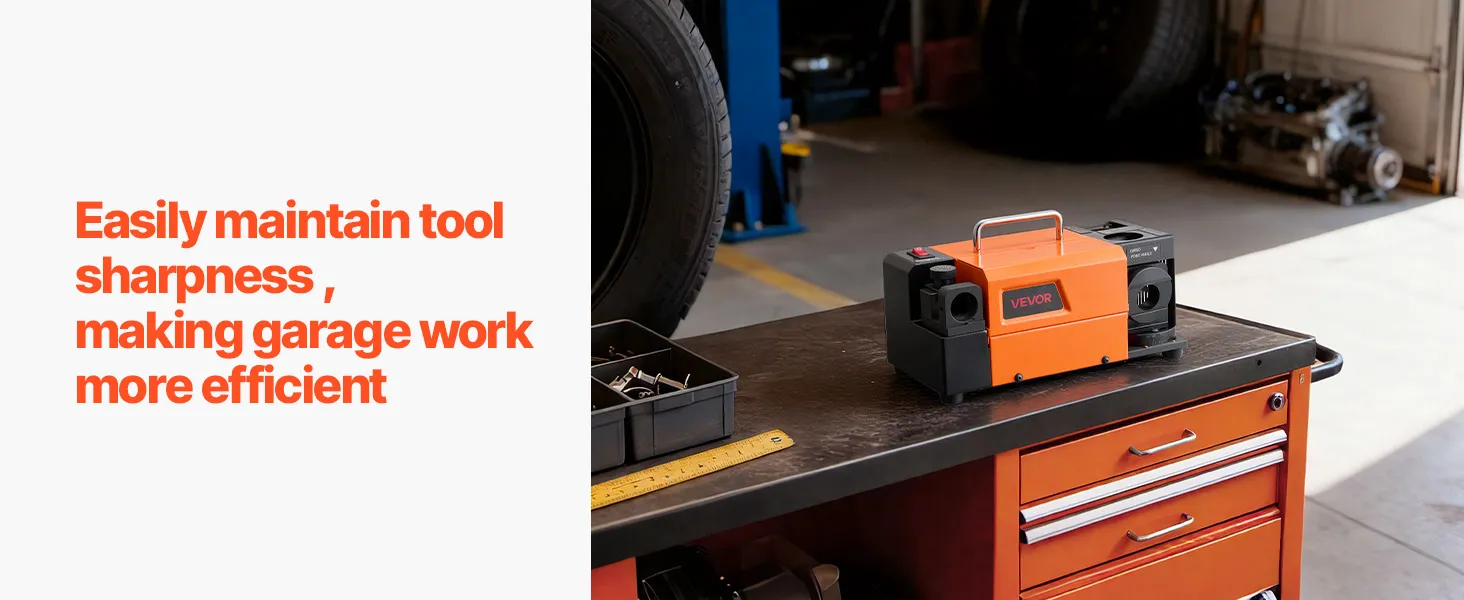
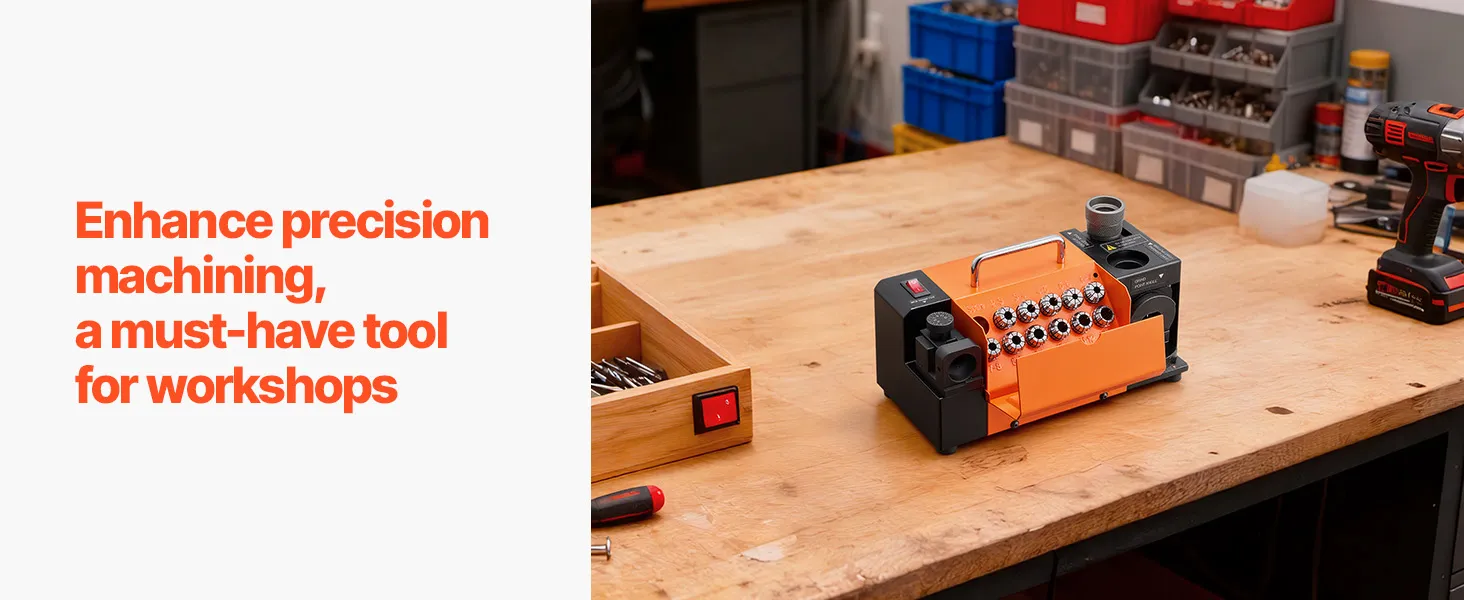
- Multi-Functional Use: Specialized in drill bits re-sharpening, this professional grinding sharpening machine keeps your bits sharp and ready for action — whether you're working in a factory, workshop, garage, or on home DIY projects. Premium carbon steel body for durability
- How to Adjust: For Lip Relief Angle - Move the small block outward for a smaller angle or inward for a larger one. For Front Cutting Lip - Loosen the side screw, hold the positioning pin, and rotate it to adjust (Both adjustments are highly recommended by professionals)
Frequently Bought Together
Reviews
About this item


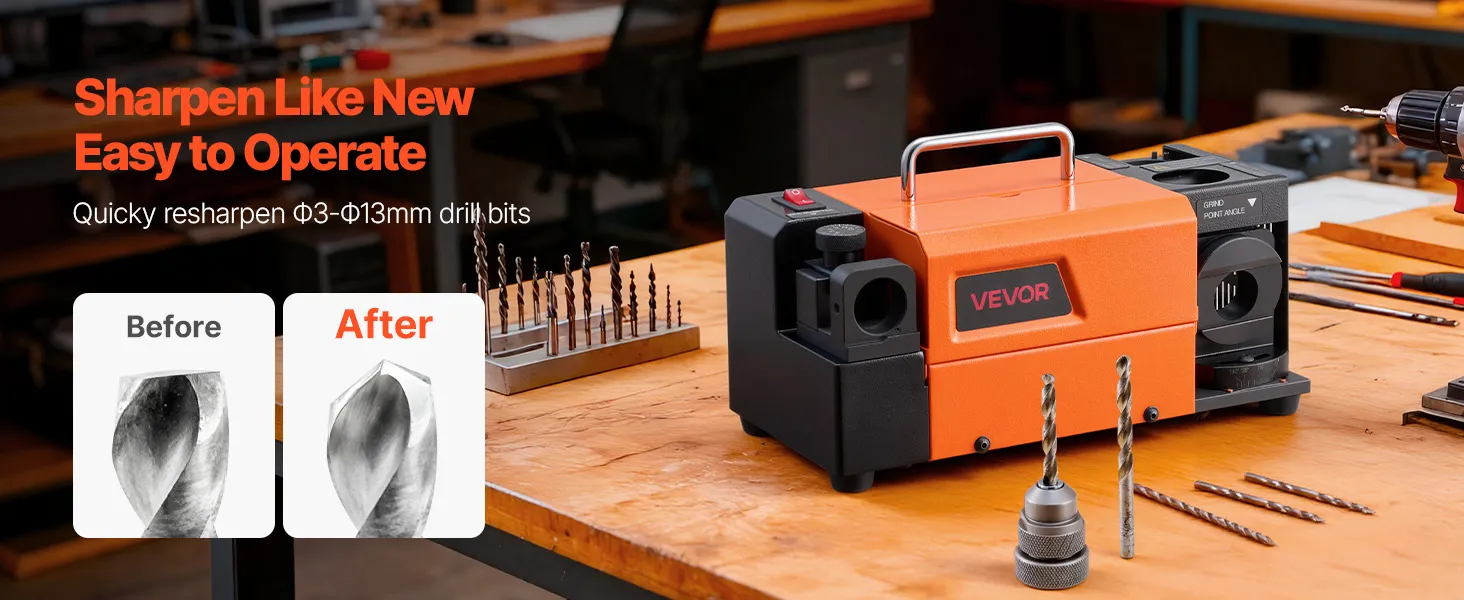
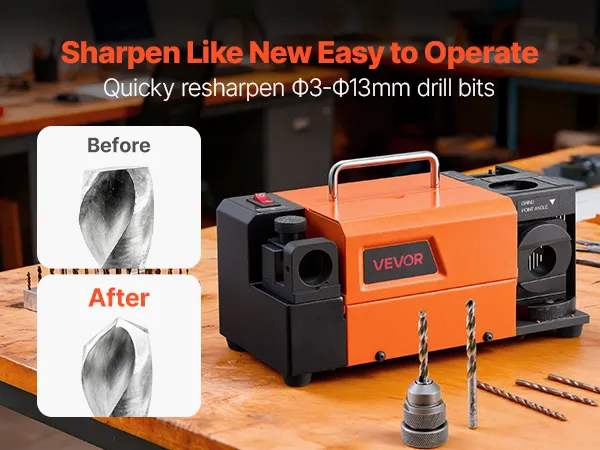
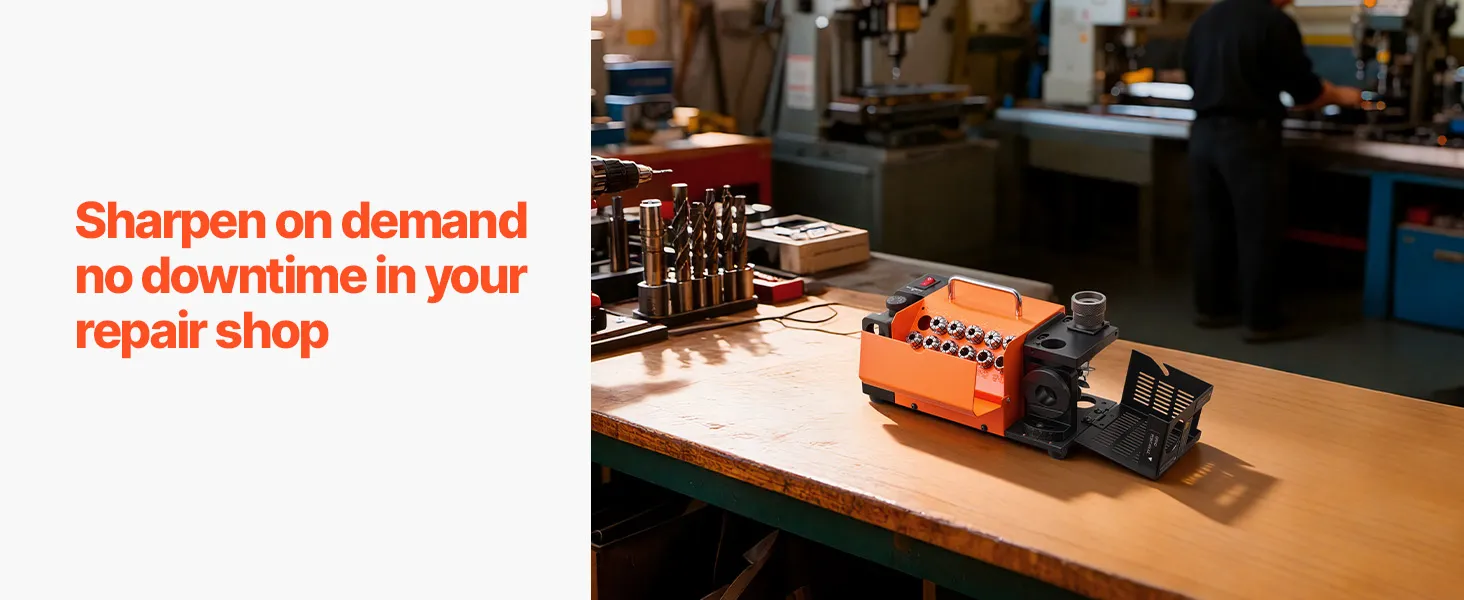
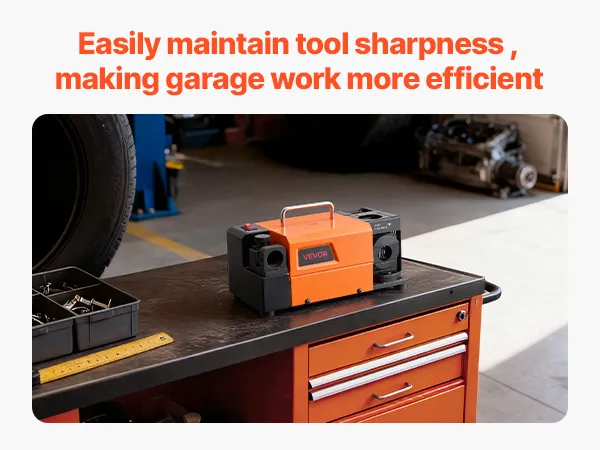
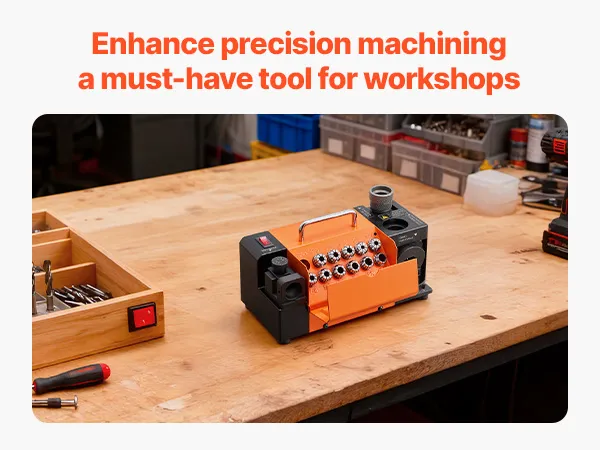
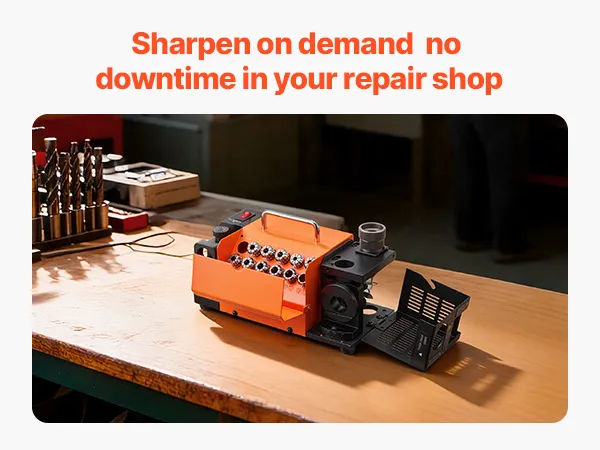
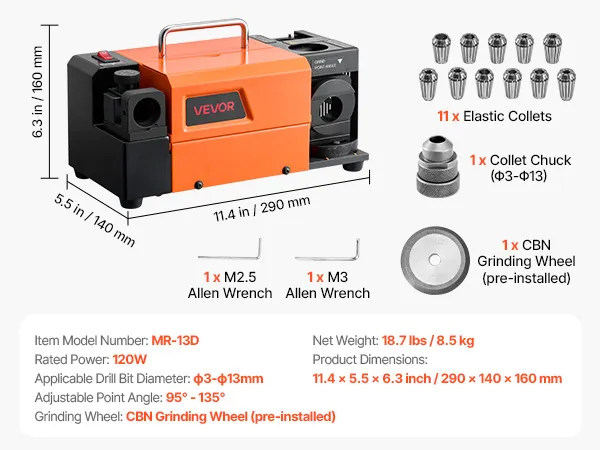
VEVOR Drill Bit Grinder Sharpener Restores 3–13mm Bits at 4600RPM with CBN Grinding Wheel
The VEVOR MR-13D drill bit grinder sharpener runs at 4600 RPM and includes a factory-preinstalled CBN (Cubic Boron Nitride) grinding wheel. It means you can sharpen your bits right away without buying separate consumables. CBN is the most important specification here. It works better than regular aluminum oxide wheels on high-speed steel because it keeps the wheel's shape even when it gets hot, so the cutting edge shape stays the same over hundreds of sharpening cycles instead of getting worse with each pass.
At 4600 RPM, material removal is quick enough for a commercial workshop to keep up without generating excessive heat, which would ruin the temper of the HSS drill bit. This motor specification is not just a marketing number; technicians and machinists who have seen blued tips from underpowered grinders running too slowly under load will know that it is useful.
95°–135° Adjustable Point Angle Covers Full Range of Drill Bit Grinder Sharpener Applications
Point angle is the key factor in a drill bit's performance, and locking a sharpener to a fixed angle makes it useless. The grinder sharpener can be set to any angle between 95° and 135°. It includes the standard 118° general-purpose angle, the aggressive 135° split-point angle, and everything in between for drilling in wood, plastic, and composite materials.
This range is necessary for professionals who maintain mixed-use bit inventories, where different point angles are assigned to different substrate types to avoid mixing of geometries during sharpening. Sharpening a 135° stainless-steel bit on a fixed 118° machine destroys the cutting edge, but this adjustable system is designed to prevent that.
11 Elastic Collets Accommodate Full 3–13mm Diameter Range for Precise Bit Grinder Sharpening
The design of the collet determines whether a sharpener delivers consistent, repeatable results or causes runout that affects sharpening accuracy. The MR-13D drill bit grinder sharpener comes with 11 elastic collets that fit bits with diameters from 3 to 13 mm. Each collet is sized to fit its corresponding bit diameter concentrically, preventing lateral float that disrupts lip height symmetry during grinding.
Elastic collet construction is important because it compensates for small differences in diameter between nominal bit sizes without requiring the operator to apply manual centering force. The bit self-centers when elastic compression is applied. This helps improve consistency between operators, which is a big plus in workshop settings where many technicians use the same tools.
Adjustable Lip Relief Angle Gives Control Over Cutting Aggressiveness
The lip relief angle controls how aggressively a drill bit cuts the workpiece and how much support is left behind the cutting edge under load. The VEVOR drill bit grinder sharpener changes this angle by moving a small block on the sharpening fixture. Moving it outward reduces the relief angle, making the edge stronger and lasting longer. By moving it inward, the angle increases, allowing for a more aggressive cut with less feed force required.
This feature sets this machine apart from entry-level sharpeners that only grind the point angle and don't adjust the relief geometry. If you adjust the point angle without fixing the lip relief, the bit will look sharp but not cut well because the edge geometry isn't complete. Full lip relief control means that the bit has been properly restored, not just made to look better.
Front Cutting Lip Adjustment Completes Full Geometric Restoration on Professional Drill Sharpener
The position of the front cutting lip decides where material removal starts at the drill point. It directly affects chip formation, hole roundness, and the surface finish quality of the drilled material. The MR-13D addresses this with an adjustment mechanism. To set the front cutting lip angle before grinding, loosen the side screw, hold the positioning pin, and rotate.
Most consumer sharpeners don't include this adjustment at all, which makes bits that look like they are the right shape but don't remove chips well, make holes that are too big, and push too hard while drilling. The professional specification for front-cutting lip control makes this grinder sharpener well-suited for precision work rather than roughing operations where geometric tolerances are less critical.
Premium Carbon Steel Housing Provides Workshop-Grade Durability for Daily Drill Bit Grinding
The MR-13D features a high-quality carbon-steel body that protects its grinding mechanism. It is better than the common ABS plastic housings in this price range. The carbon-steel construction prevents vibration-induced cracking, which can gradually loosen the adjustment fixtures on plastic-bodied sharpeners. It keeps the tight tolerances needed for repeatable geometric accuracy over thousands of sharpening cycles.
Steel construction is not a luxury for workshop settings where the drill bit grinder sharpener runs every day with cutting fluid mist, metal swarf, and the physical impact of handling tools. It is a requirement for reliability. Plastic-bodied alternatives may work fine for light use, but they break down mechanically in the areas where a sharpener gets the most use.
Single-Machine Sharpening System Handles Factory, Workshop, Garage, and DIY Bit Restoration
The MR-13D grinder sharpener is meant to be a full sharpening station on its own, not just an extra tool that needs other tools to work. The 3–13mm range and full geometric adjustment capability of this tool make it useful for factory maintenance departments, professional machine shops, garage mechanics, and home DIY users. It can handle almost all drill bits found in these settings.
This unit is more economical than replacing dull bits because it costs less to sharpen. HSS drill bits that are 6 to 13 mm long cost a lot more per unit than the total cost of this machine spread out over hundreds of resharpenings. People who own shops or are serious about DIY will get their money back within the first month of using the bits regularly, even if they throw them away when they get dull.