VEVOR Car Refrigerator, 12 Volt Car Refrigerator Fridge, 12 L Single Zone Portable Freezer, -4℉-68℉ Adjustable Range, 12/24V DC and 100-240V AC Compressor Cooler for Outdoor, Camping, RV


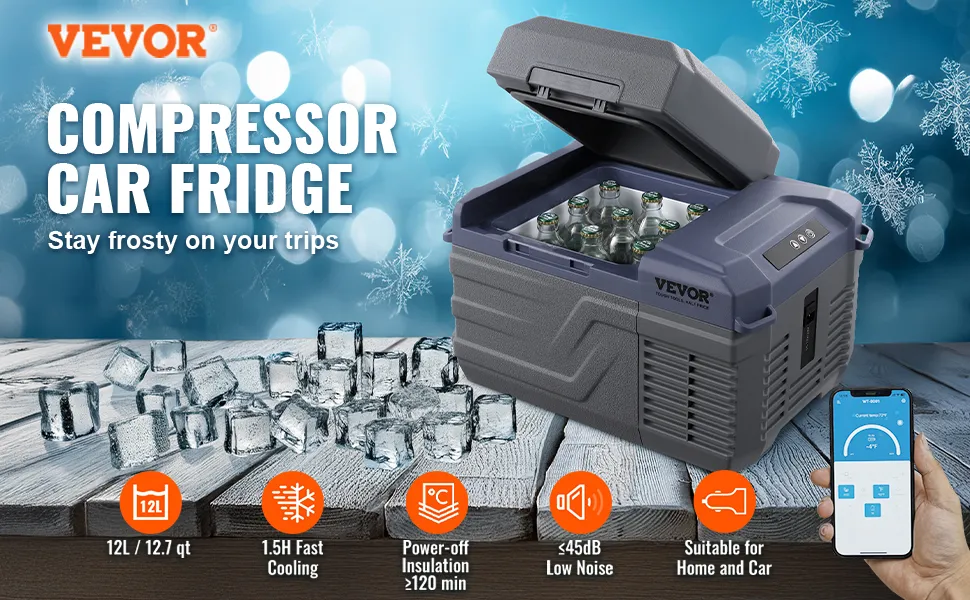
- Large Capacity: The portable refrigerator freezer has a single compartment capacity of 12 L. This robust RV fridge can hold 16 cans of 330ml cola or 15 bottles of 550ml water, accommodating seafood, snacks, meats, and beverages, meeting the needs of short trips such as travel, boating, and camping.
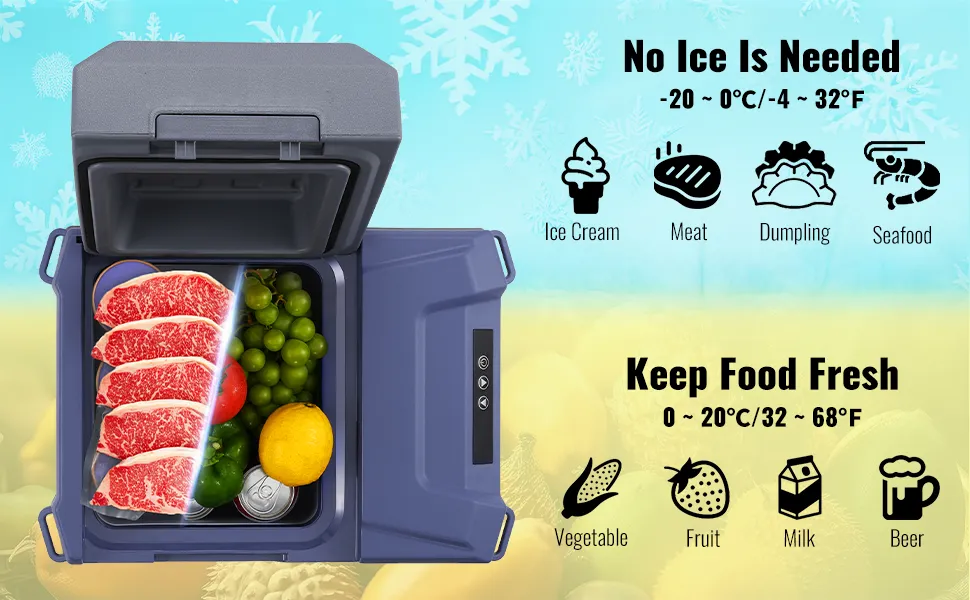
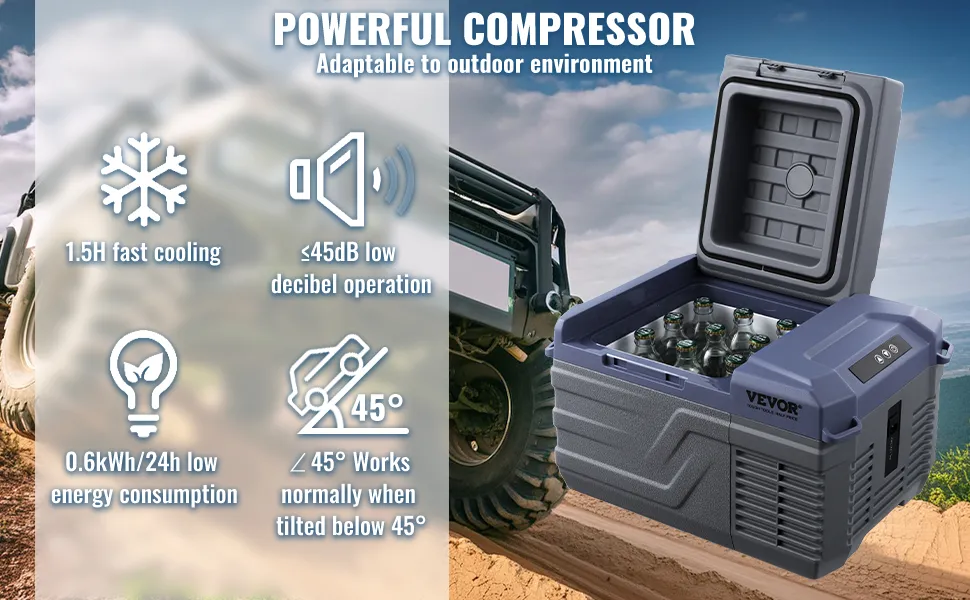
- 1H Rapid Cooling: This 12V car fridge uses compressor cooling technology, reaching -20°C / -4°F shutdown point in approximately 1 hour at 77°F ambient temperature. It cools quickly and operates normally even when tilted up to 45 degrees, making it your companion for outdoor camping or work, keeping your food fresh. No need for ice cubes, preventing food spoilage and saving money and space.
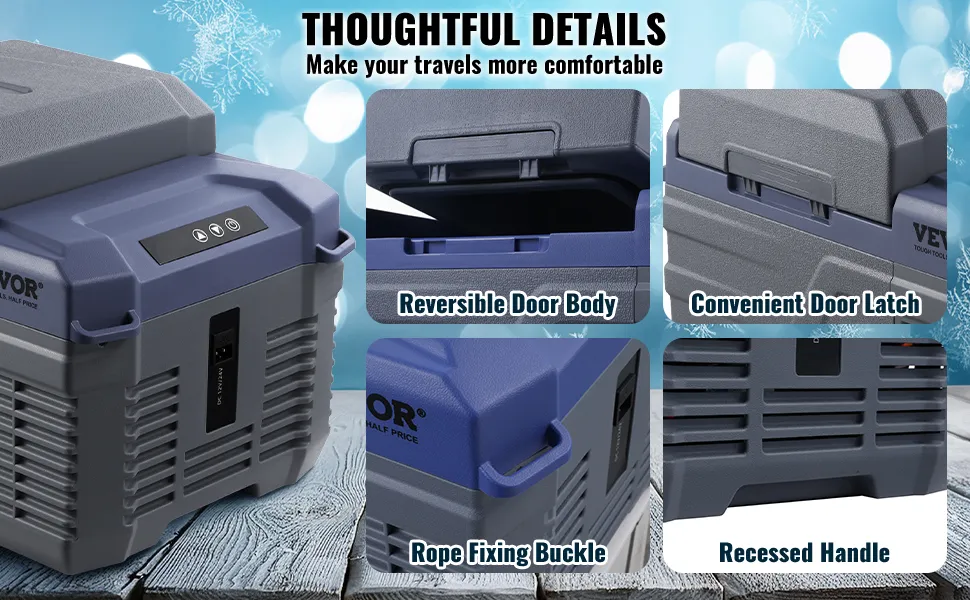
- LED Screen & Bluetooth Control: The LED control panel allows you to directly view the operation status of the car fridge and adjust the temperature range at any time. You can set any temperature between -20°C to 20°C / -4°F to 68°F on the panel. The electric cooler also features Bluetooth mode, connecting to a mobile app for remote control.
- Quiet & Energy Efficient: The fridge operates with noise ≤ 45dB, ensuring you sleep well after long drives. You can also choose between ECO and Max modes via the LCD touchscreen. In ECO energy-saving mode, the operating power of this portable fridge is less than 31W. Even when running in MAX mode (35W), its intelligent circulation consumes less than 1 kWh/day.
- Dual Use for Home/Car: The car fridge comes with 110/240V AC and 12/24V DC adapters, allowing it to be used at home, on yachts, RVs, cars, trucks, and vans.
Frequently Bought Together
Reviews
About this item



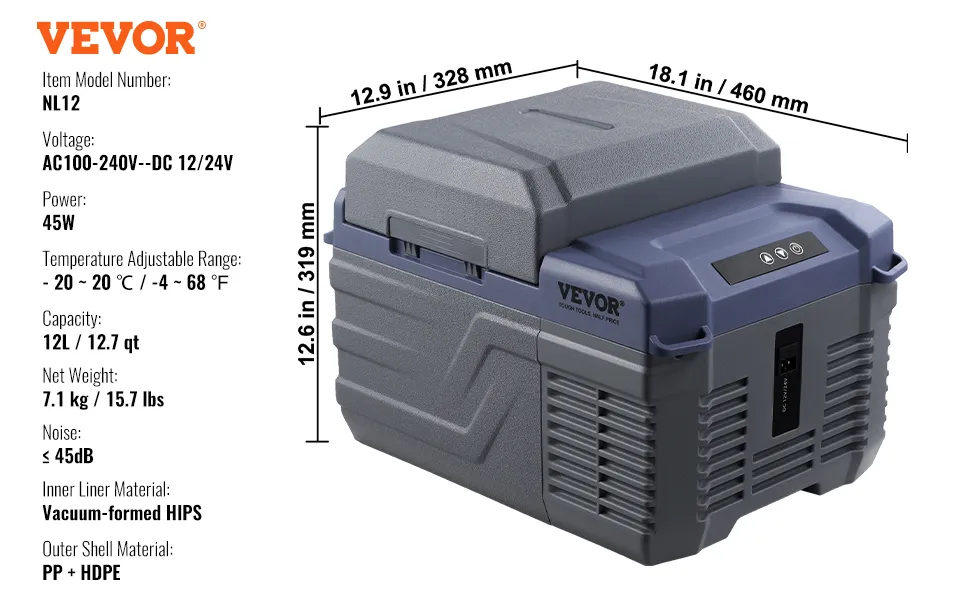
Car Refrigerator with Compressor Cooling in a 12L Single-Zone Portable Body
This VEVOR car refrigerator with compressor provides mechanical refrigeration in a 12L single-zone body. 16 cans of 330ml cola or 15 bottles of 550ml water can be stored in one compact cavity weighing 7.1kg. This unit actively lowers the temperature to true freezing levels. It maintains that temperature regardless of the surrounding environment, instead of just dropping the temperature relative to ambient or letting the ice do the cooling work. The compressor is what sets this unit apart from passive coolers and thermoelectric alternatives of the same size.
The unit measures 460 x 328 x 319mm and will fit passenger footwells, boot corners, and van cargo shelves where larger compressor units would not fit in the available space. The 319mm taller profile over the NL9 gives extra vertical storage depth within the same floor footprint – good for upright bottles and taller food containers that a flatter unit cannot accommodate. The PP + HDPE outer shell and vacuum-formed HIPS interior make for a solid build at that compact size without weight climbing beyond what one person can comfortably handle.
How Compressor Refrigeration Outperforms Thermoelectric and Passive Coolers
Thermoelectric coolers use a Peltier element to move heat. They can only cool down a fixed number of degrees below ambient, typically 20-40 °C at best, so on a 35 °C summer day, it might be 0 °C at the low end of their performance range. They draw power at a constant rate, whether they are holding temperature or still cooling, and their efficiency drops further as ambient temperature increases. A compressor, using the same refrigerant cycle as a household refrigerator, reaches the target temperature irrespective of ambient conditions, then intelligently cycles to hold it.
Passive coolers that use ice avoid the electrical draw entirely but sacrifice capacity for ice volume, introduce meltwater contamination, and become less effective over time as ice is consumed. This 12L compressor unit keeps the entire 12L cavity open for food and drink from the first load, maintains the same temperature on day one and day three of a trip without intervention, and never needs to source ice at a stop.
Compressor Pull-Down to -4°F in 1 Hour Regardless of Ambient Temperature
The compressor brings the 12L interior down to -20°C / -4°F in about one hour at 77°F ambient, and that pull-down is not degraded by higher ambient temperatures, unlike thermoelectric performance. A thermoelectric unit that reaches a certain temperature in a controlled lab environment performs much worse on a hot day. The compressor refrigerant cycle operates independently of ambient air temperature, so the pull-down performance is consistent whether the car interior is 20°C or 40°C when the unit is turned on.
The compressor can operate normally up to 45 degrees of tilt, meaning it can be mounted on angled surfaces such as ferry decks, sloped car parks, and uneven terrain without the unit's physical orientation affecting the refrigerant cycle. The compressor efficiently handles the 12L load throughout the pull-down and steady-state phases at a rated power of 45W without consuming so much energy that the unit becomes unusable on a vehicle battery.
Vacuum-Formed HIPS Interior and PP + HDPE Shell at 7.1kg for Easy Transport
The 12L interior of this car refrigerator with a compressor features a vacuum-formed HIPS lining, a rigid, thermally stable surface that helps the compressor maintain a consistent temperature throughout the cavity. In the case of a compressor and a storage space squeezed into a small physical envelope, the nature of the interior material is important. HIPS gives the thermal consistency required for the compressor to efficiently maintain its setpoint without needing to compensate for uneven cold distribution across different wall surfaces.
The PP + HDPE outer shell is moderately lightweight, at 7.1kg: not so heavy as to be hard to lug around, but not so light that you do feel the heft when you’re carrying it, making it feel solid rather than flimsy. HDPE offers cold-weather crack resistance, which protects the housing from the temperature swings a portable compressor unit commonly experiences: cold after a long cooling run and warm after sitting in a vehicle on a hot day without power. The shell runs the gamut of extremes without degrading the surface.
Car Refrigerator with Compressor ECO Mode Drawing Under 31W for Battery Safety
The ECO mode on this car refrigerator with a compressor keeps the draw under 31W, indicating intelligent cycling of the compressor rather than a steady, fixed draw. Unlike a thermoelectric unit, the compressor doesn’t consume its rated power continuously; it draws full power when actively cooling and less when the interior reaches the setpoint, resulting in a lower actual average consumption at a parked stop than the ECO rating, which is based on steady-state temperature maintenance.
The unit's sub-31W ECO draw makes it a viable option on a vehicle battery while parked without secondary battery support, a particularly pertinent feature for a 12L unit, which is likely to be deployed in smaller cars where auxiliary battery installations are uncommon. MAX mode steps to the full 45W when faster recovery is needed after lid openings or ambient conditions are pushing against the interior setpoint.
Full -4°F to 68°F Range with LED Panel, Bluetooth Control, and Dual Adapters
The full -20°C to 20°C (-4°F to 68°F) range is possible thanks to the compressor’s refrigerant cycle, a range only compressor technology can reliably deliver in a portable car unit. You can set the lower setting for true freezing, the middle setting for normal refrigeration, or the upper section for wine, chocolate, or other temperature-sensitive items that need cooling rather than freezing. The LED panel accepts direct setpoint input through the full range from the outside face without opening the lid.
Bluetooth app connectivity for remote temperature monitoring and adjustment when the unit is placed out of direct access in the cabin. Includes both 110/240V AC and 12/24V DC adapters, ensuring continuous power to the compressor system in all home, car, truck, van, RV, and marina environments from the same package. The compressor is identical, whether it's plugged into a 12V car port or a 240V wall socket.