Fall Upgrade
Deals
VEVOR Automatic Wire Stripping Machine, 1.5 mm-40 mm Electric Motorized Cable Stripper, 370W, 26.8 m/min Wire Peeler with An Extra Manual Crank, 11 Channels for Scrap Copper Recycling


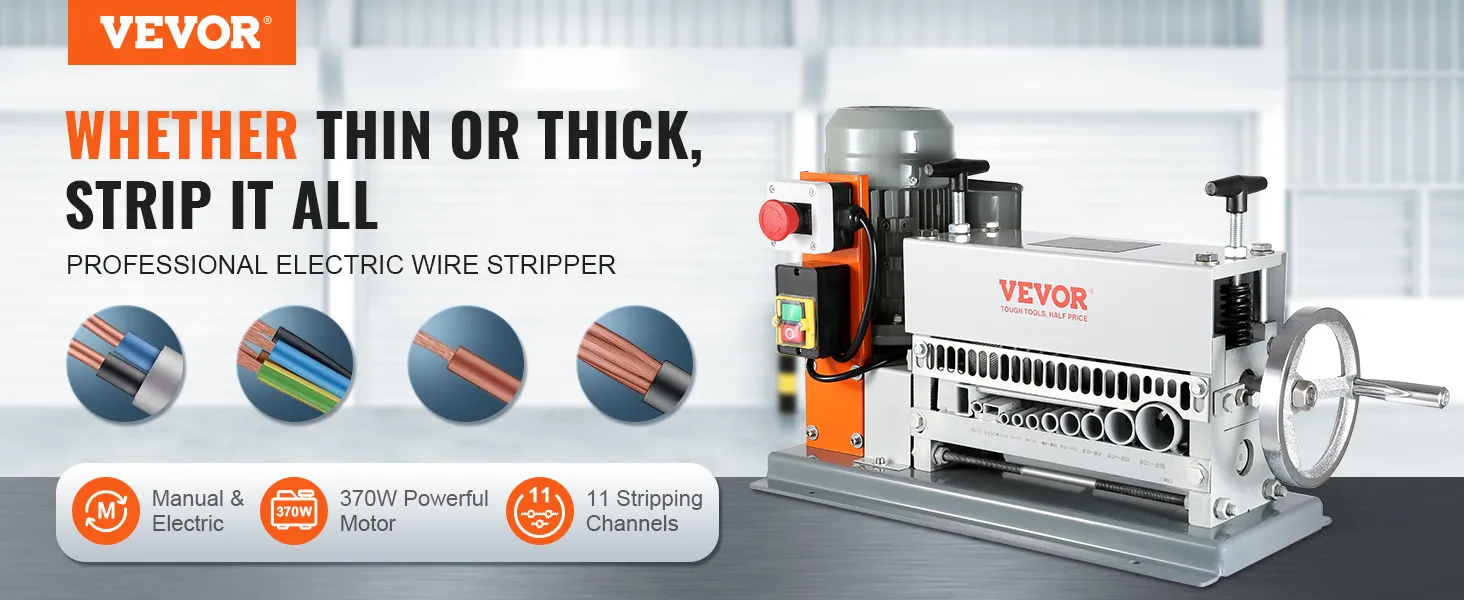
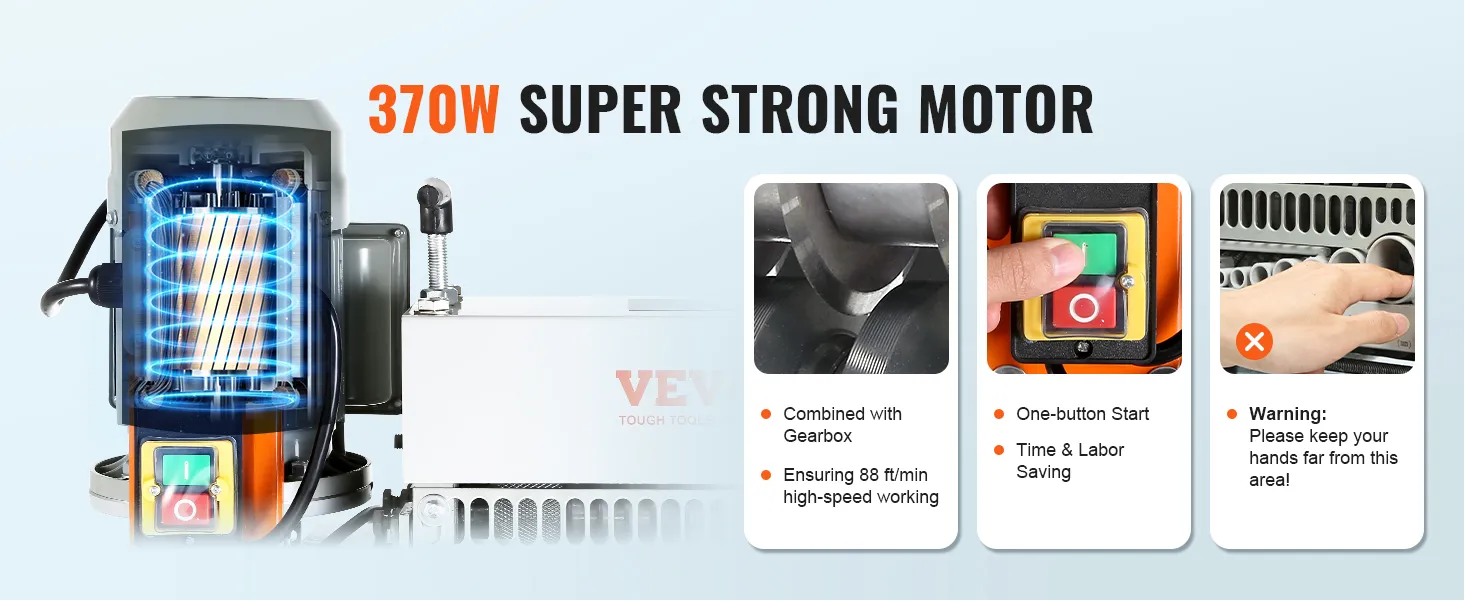
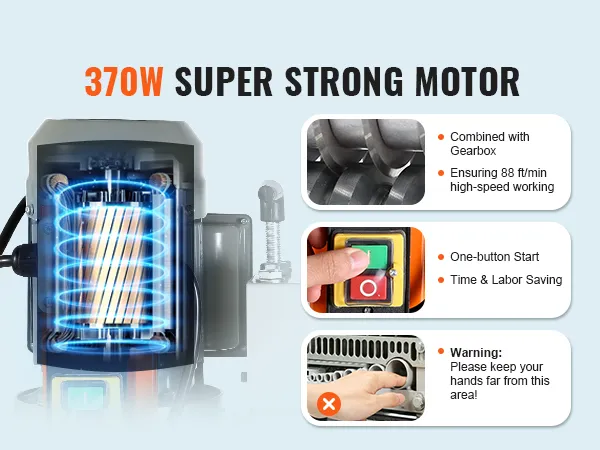
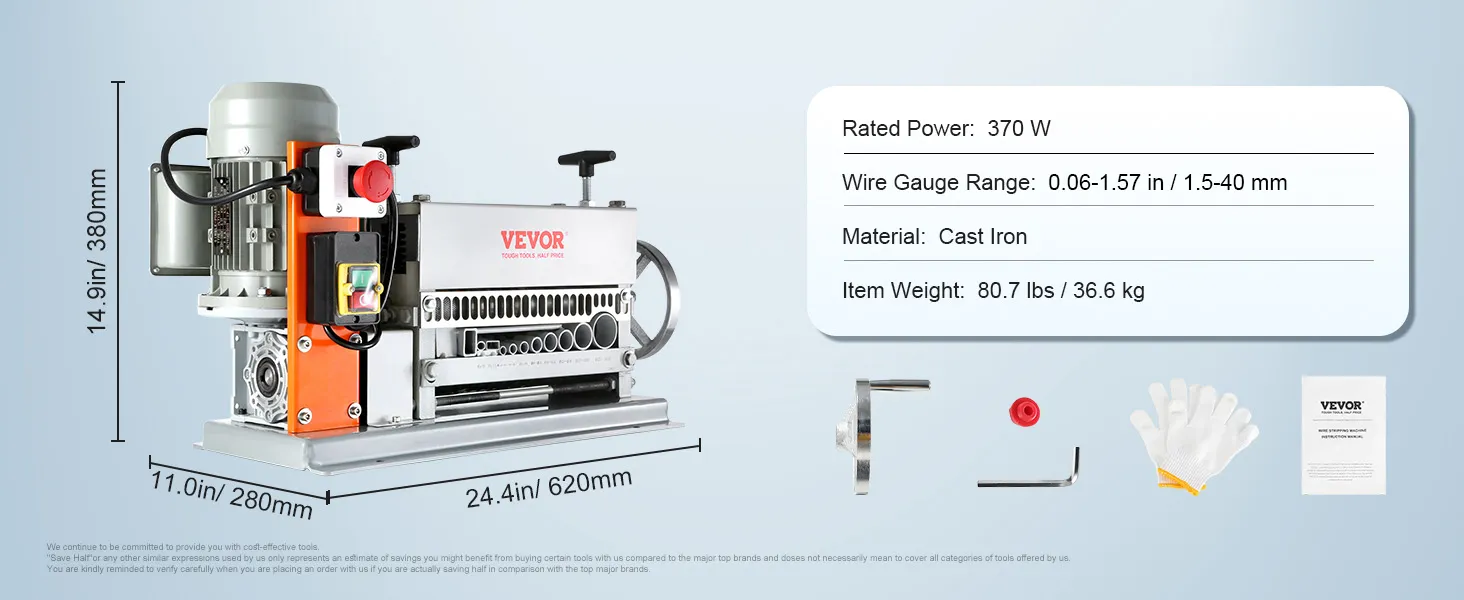
- Time to Get Work: Are you ready to roar and get to work! Feel the power of the VEVOR wire stripping machine! It comes locked and loaded, featuring a powerful 370 W motor that saves you time and money. The gearbox leads to a fast stripping speed. It works at a shockingly fast stripping speed of 88 feet per minute, plus the hands-free design increases security and convenience. Widely used in cable/wire manufacturers, recycling plants, and copper products factories.
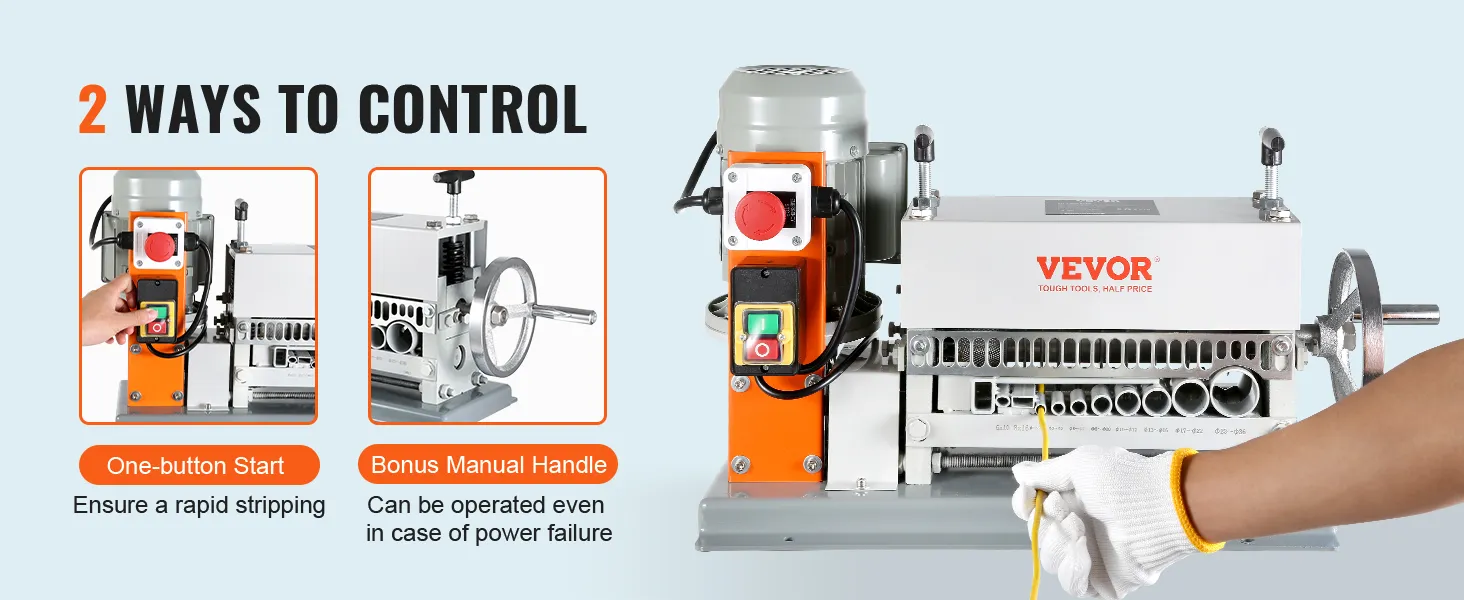
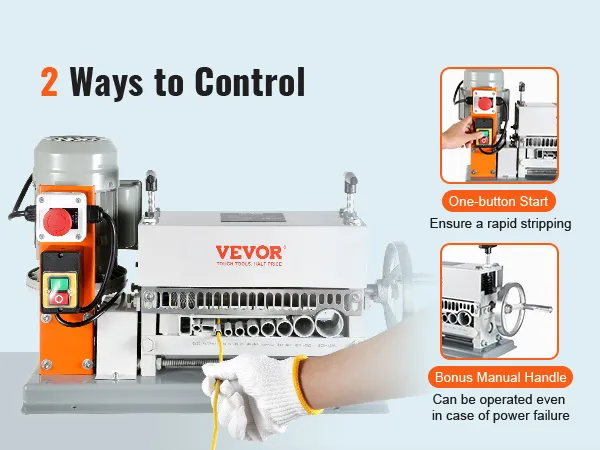
- 2 Operation Ways: Our wire peeler can be initiated manually and electrically. Electric-power is highly-efficient and time-saving. However, the manual crank handle makes operating easy even during a power failure.
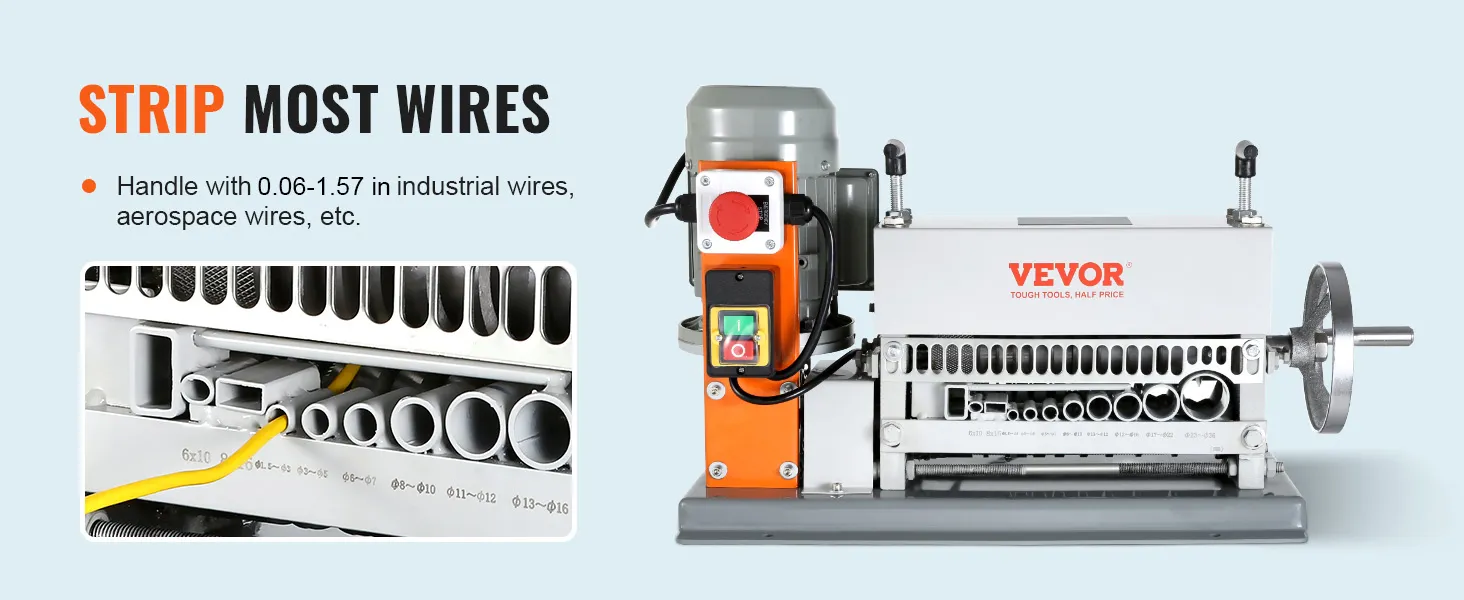
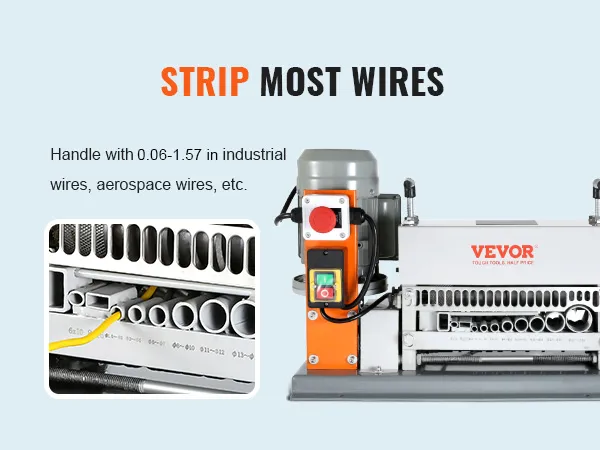
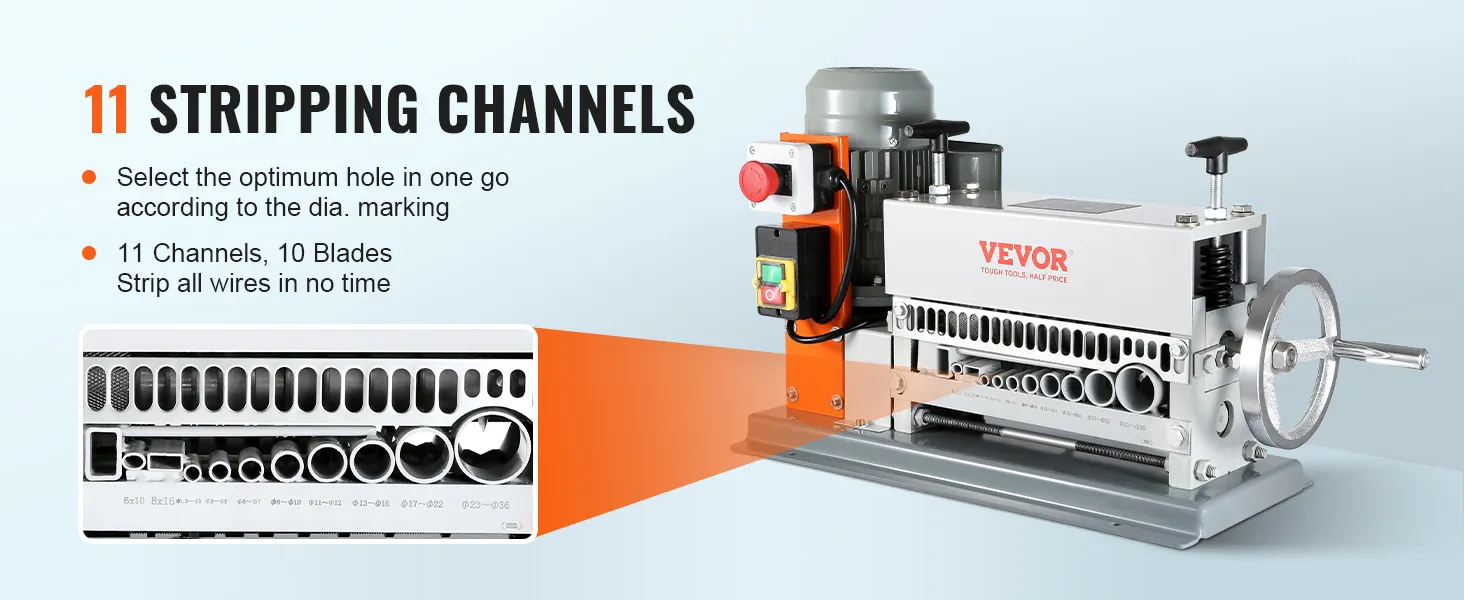
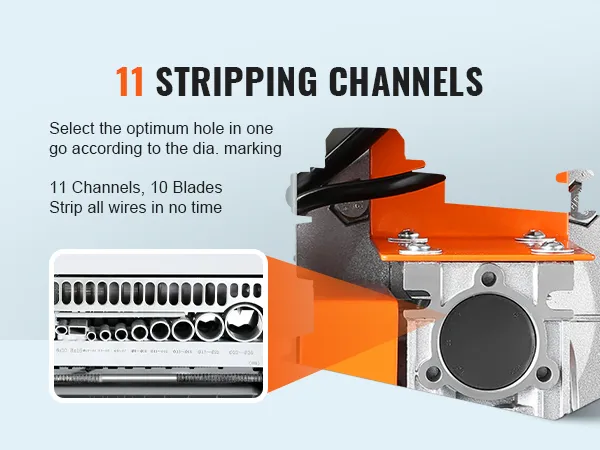
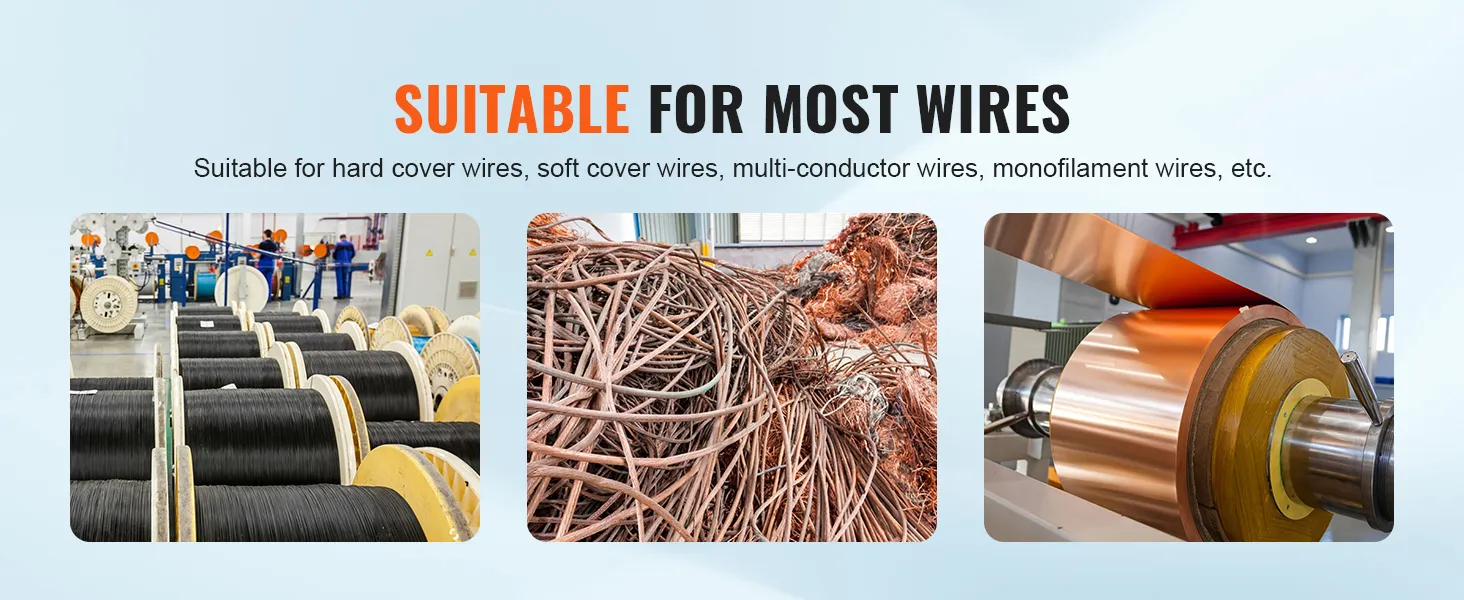
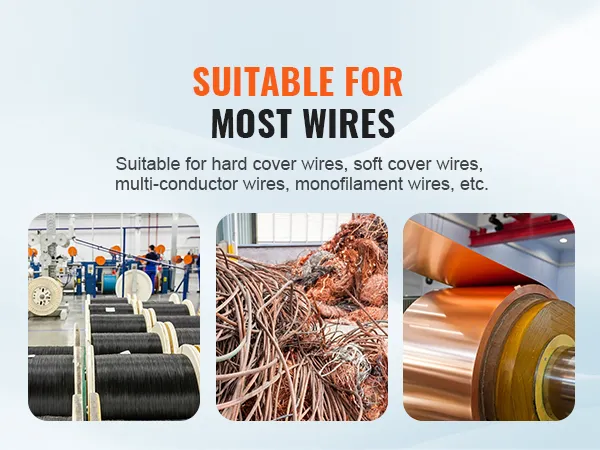
- Wide Compatibility: The VEVOR wire stripper machine has 11 stripping holes, including 11 channels and 10 blades. Adjust the blade to fit all wires with a diameter from 0.06'' (1.5 mm) to 1.57'' (40 mm). Suitable for handling hard cover wires, soft cover wires, multi-conductor wires, mono-filament wires, etc.
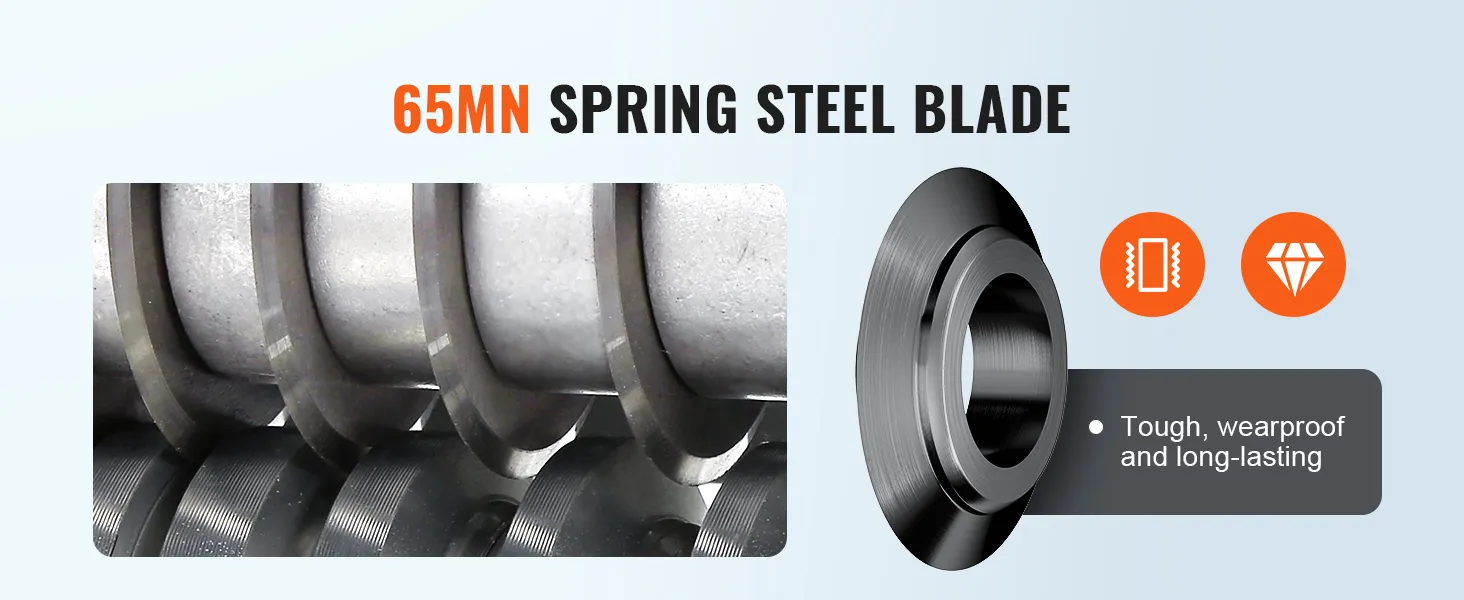
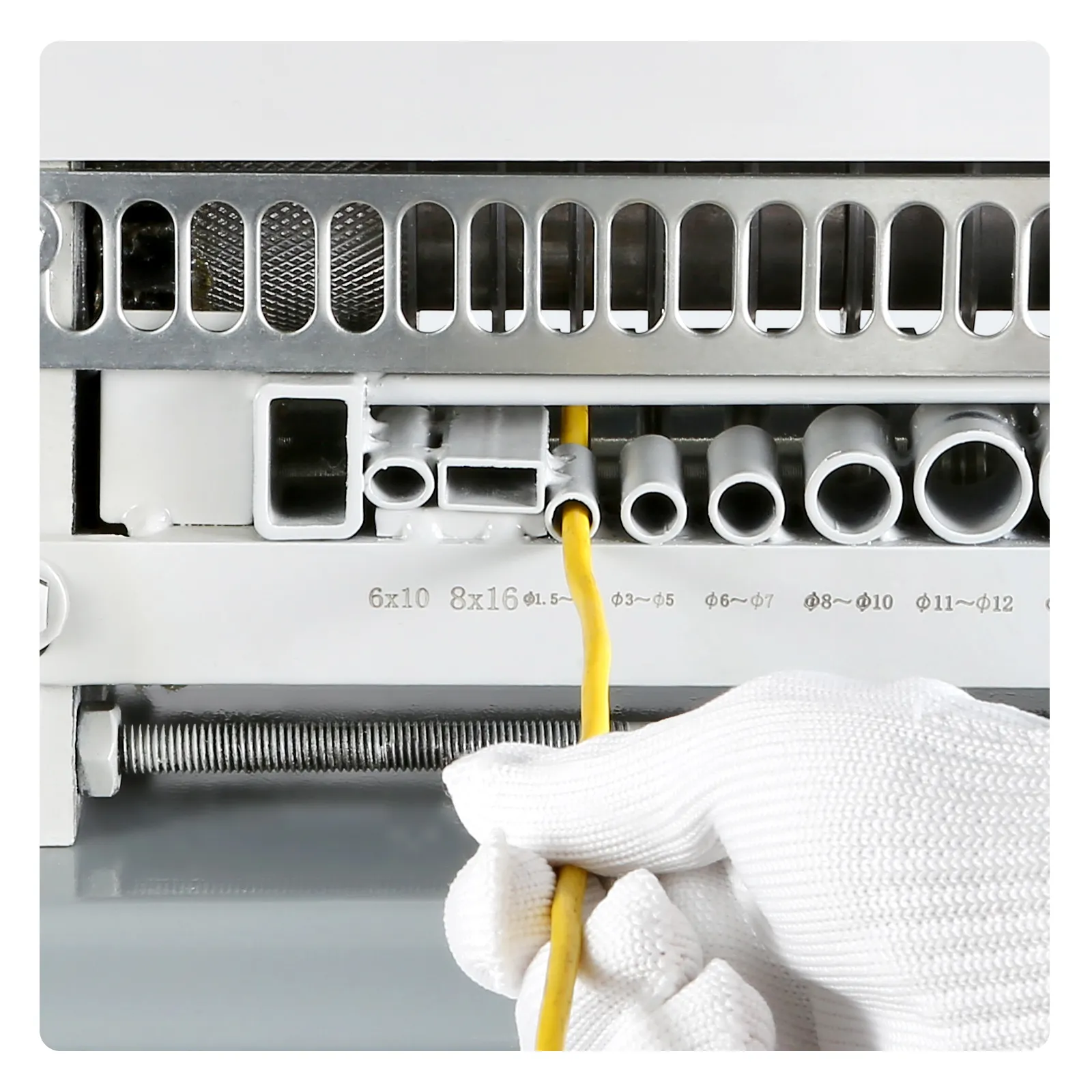
- Upgraded Stripping Structure: The electric wire stripper machine is added with hole-size markings. Different size wires can be stripped precisely without repeated adjustments, making it easier and quicker to strip the wires. Also, the blade is made of 65 mn spring steel for ultra strength and hardness, extending the life of the blades.
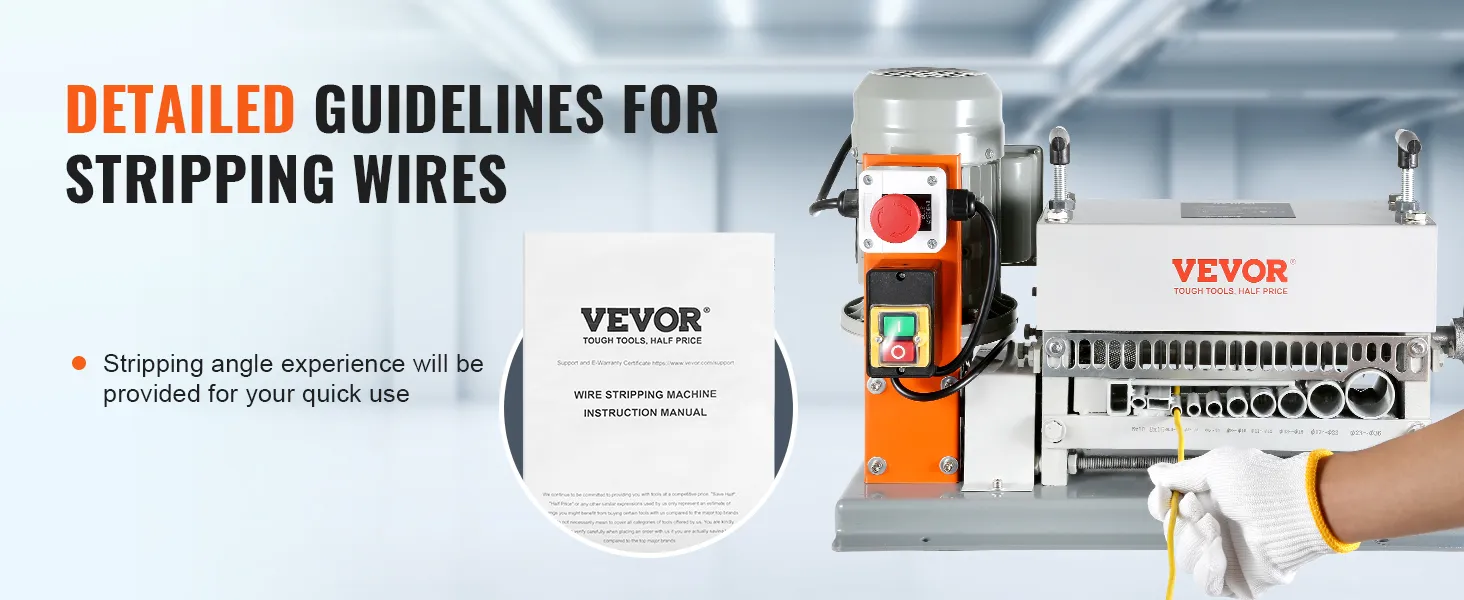
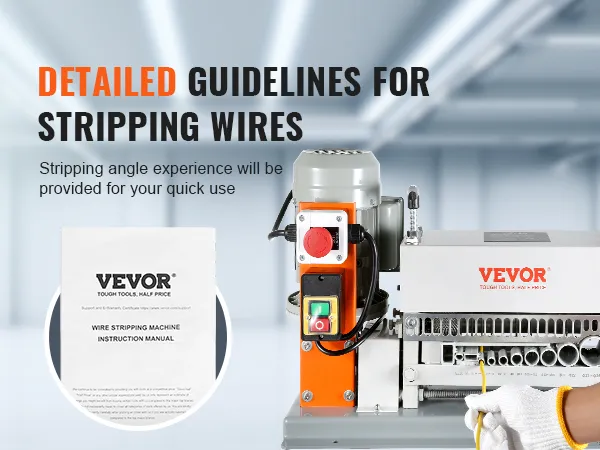
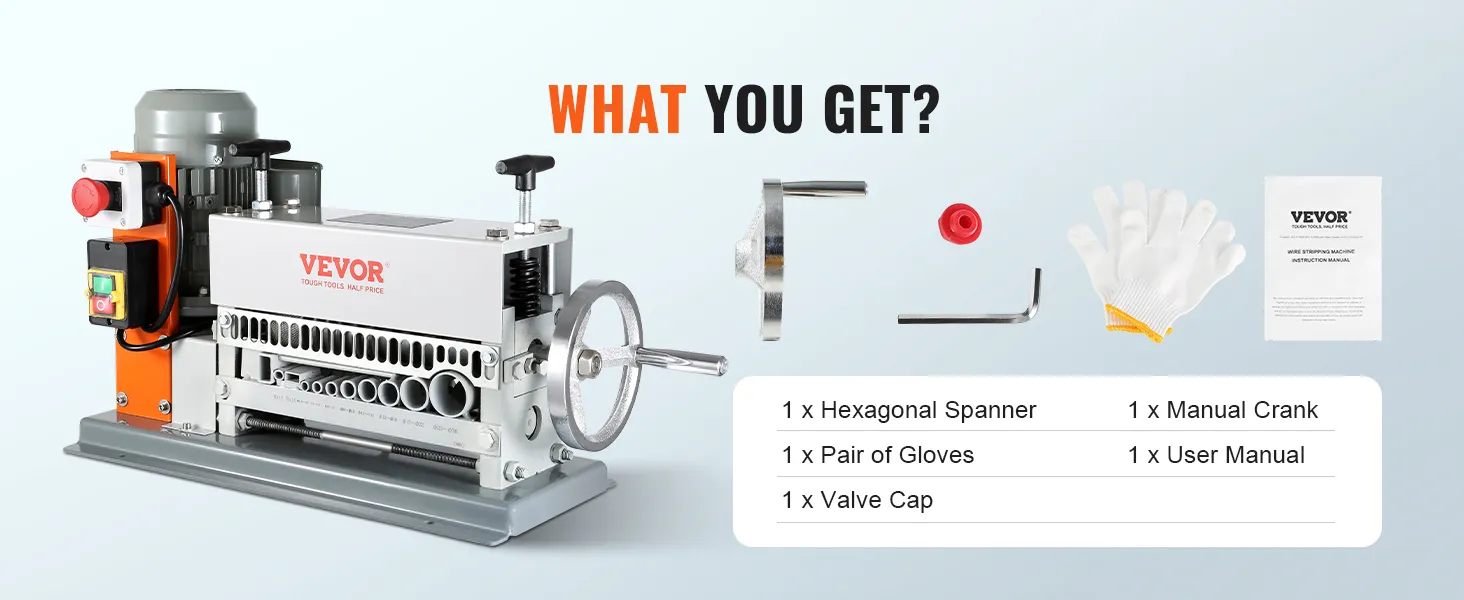
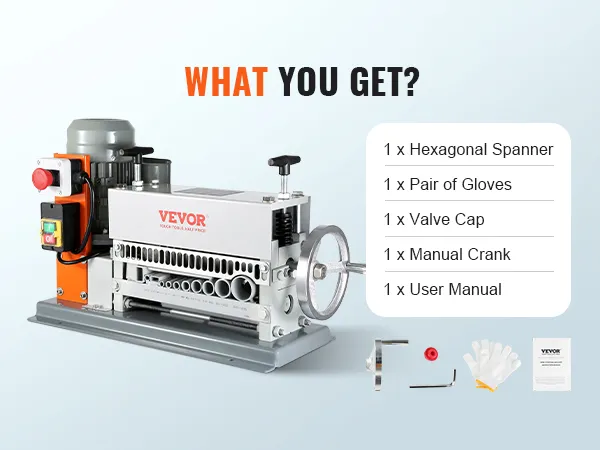
- Complete Accessories: We want you to feel confident while using our copper stripper, which is why we've included a pair of gloves to protect your hands from dirt and injury. But that's not all! We've also supplemented the instructions with tips on the perfect stripping angle, so even if it's your first time, you can jump right in and start stripping copper like a pro! With our user-friendly design and helpful extras, you'll be a wire-stripping whiz in no time!
Frequently Bought Together
Reviews
About this item


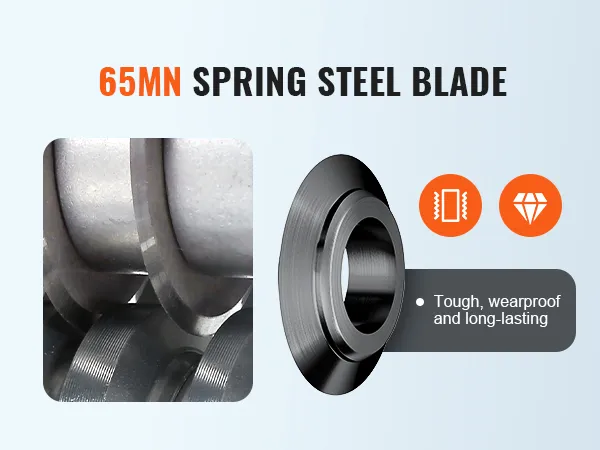
65 Mn Spring Steel Blades for Extended Durability and Precision Cuts
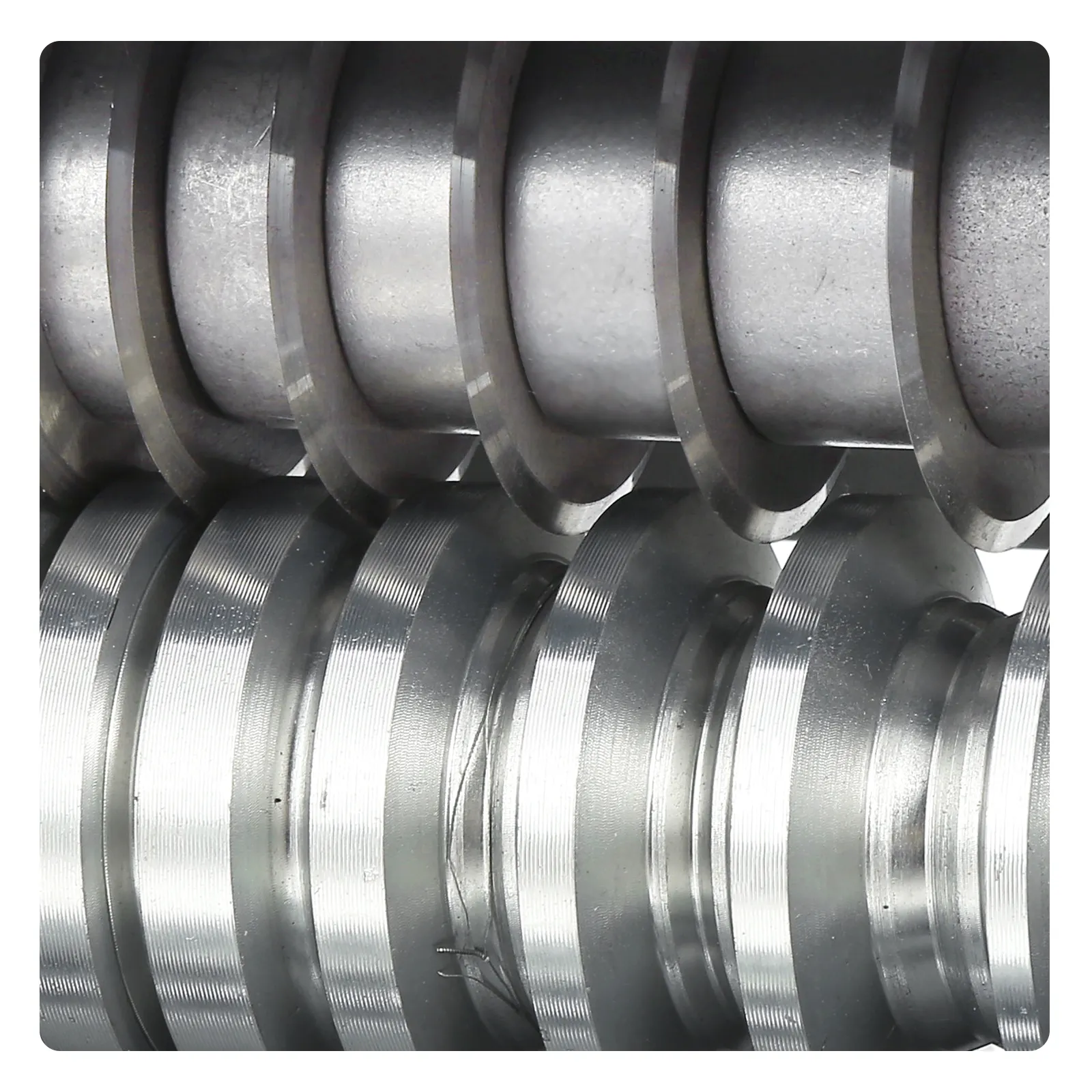
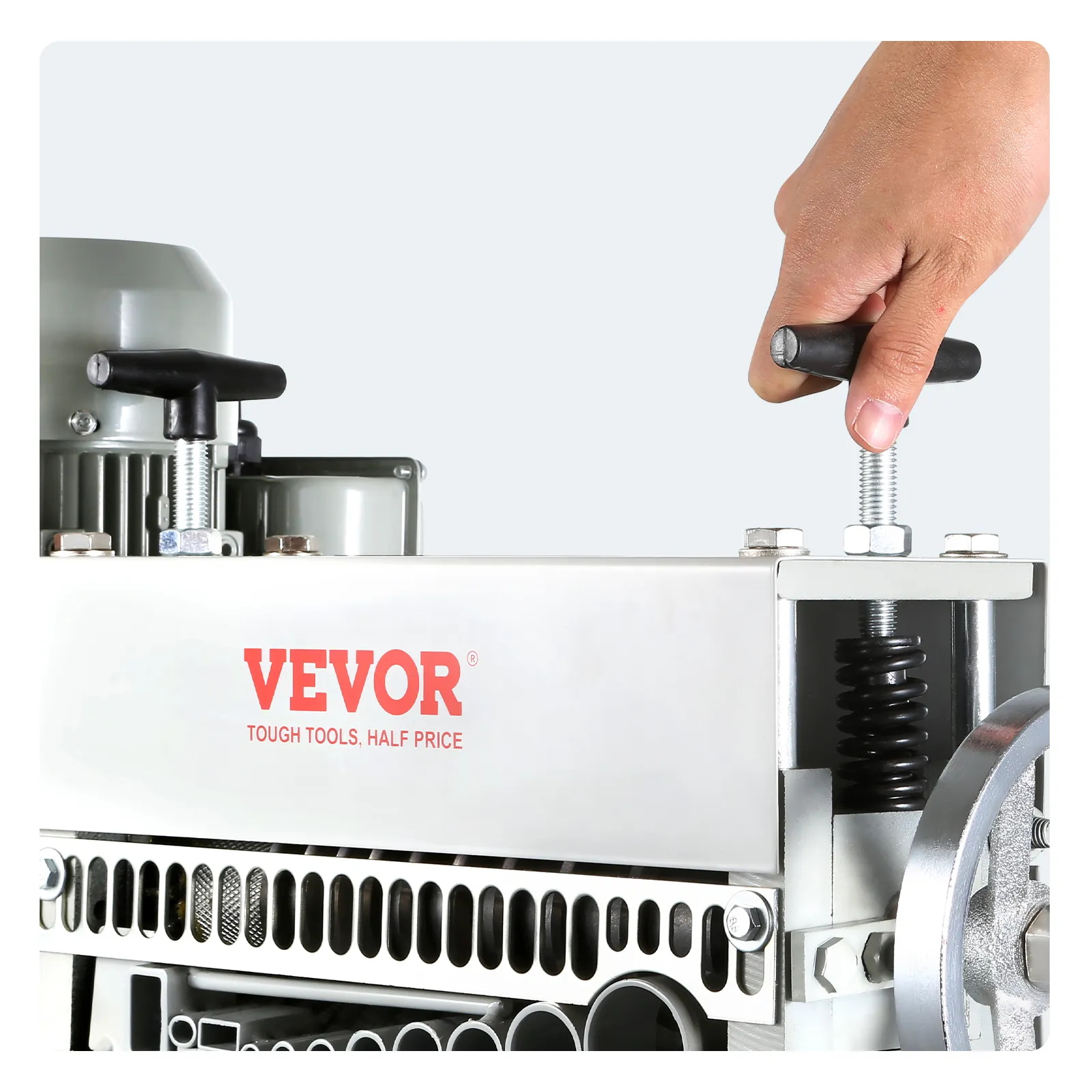
A high carbon steel called 65 Mn spring steel makes the cutting blades of this machine very flexible and long lasting. Because 65 Mn spring steel does not change shape under long term stress, the blade edge stays precise and sharp even after heavy use, which is not typical with regular steel blades. Blade longevity directly affects downtime and replacement costs in copper recycling plants that process large volumes of scrap.
When stripping wire, precision is just as important as durability. A blade that wears out quickly makes uneven cuts, leaves nicks in copper, and wastes materials. Over time, the spring steel maintains its sharp edge, ensuring the insulation can be removed easily without damaging the copper beneath. This feature keeps the value of recycled copper safe, which is critical when recycling centers sell their products by weight or purity grade.
Dual Operation Modes with Manual Crank Backup and Electric Power
To guarantee continuous workflow, this wire stripping machine has two different operating modes. The 370W electric motor maximizes throughput by operating the stripping mechanism at full speed under typical circumstances. The incorporated manual crank handle enables continuous operation without electrical input during a power outage or in areas without a reliable power supply, keeping your workflow moving regardless of site conditions.
Whether operating manually or electrically, quality and consistency are maintained because the manual crank provides full access to the stripping channels and blade system, making it more than just a limited emergency feature. The machine's dual mode versatility makes it ideal for remote job sites, field recycling operations, and facilities with sporadic power. Purchasing a machine with integrated operational redundancy reduces the likelihood of costly work stoppages during crucial production periods.
Cast Iron Construction and All-Inclusive Accessories for Secure Recycling of Scrap Copper
During high-speed stripping cycles, the automatic wire stripping machine for scrap copper cast-iron frame provides the structural rigidity needed to absorb vibration. The unit's solid footprint on the workstation at 36.6 kg minimizes movement and enhances cut precision. Additionally, compared to sheet-metal housings, cast iron's inherent damping properties significantly reduce noise transmission, creating a more controlled working environment during extended shifts in recycling copper scrap.
To get operators up and running right away, VEVOR comes with a full accessory kit. While thorough instructions describe appropriate stripping angles to help novice users obtain clean results from their very first run, a pair of protective gloves shields hands from sharp wire ends and debris. Both seasoned recyclers and novices can confidently incorporate this instrument into their workflow with minimal ramp-up time, as the machine is ready to use right out of the box and comes with helpful instructions.
11 Channel Design for Wide Wire Gauge Compatibility (1.5–40 mm)
This machine's ability to do many things is a key part of its design. With its 11 stripping lines and 10 blades, it can simultaneously handle wires ranging from 1.5 mm to 40 mm in diameter. You do not need to buy extra tools or switch between machines to work with hard-core, soft-core, multi-conductor, and monofilament wires, because the range is so wide. There is only one setup that works with all common methods of recycling scrap copper.
The channel layout makes it less likely that wires will slip or blades will be out of line by carefully guiding them into the cutting zone. It does not take much work to make the channel system work with both thick power lines and thin communication cables. Because of this, the machine is especially useful for places that handle mixed wire loads daily and need reliable results across all sizes.
370W Motor for High Speed Automatic Wire Stripping Machine for Scrap Copper
The VEVOR automatic wire stripping machine for scrap copper features a powerful 370W motor that enables it to strip wires at 26.8 meters (88 feet) per minute. This motor will help you get things done quickly, whether you are sorting cable inventory at a factory or recycling big batches of wire. The built in gearbox maintains a steady stripping speed by transferring torque as efficiently as possible, even under load.
The hands free design makes the workplace safer, prevents operator fatigue, and boosts raw speed. Users do not have to hold or guide lines through the cutting zone by hand, reducing the risk of slippage or misfeeding. Throughput and operator safety directly lead to lower labor costs and higher daily output for companies that make cables, recycle copper, and make copper products.
Hole Size Markings on the Automatic Wire Stripping Machine for Scrap Copper
The addition of clearly labeled hole size markings next to each channel on this automatic wire stripping machine for scrap copper is one of its most notable improvements. Operators no longer need to make trial and error modifications in between tasks because they can quickly and visually determine the appropriate channel for any particular wire diameter. In mixed load settings where wire gauge changes regularly during the work shift, this capability is especially helpful.
Reduced downtime between batches results from quicker channel selection. Over the course of a week or month, those saved minutes add up to considerable productivity gains in a recycling facility that processes dozens of wire types every day. To ensure the markings remain readable even after prolonged use in dusty or oily workshop environments, they are engraved directly into the device rather than affixed as stickers. Regardless of operator expertise level, setup becomes dependable and repeatable.