Back To School
Deals
VEVOR Commercial Ice Maker 500 lbs/24 h Self-Cleaning Ice Machine - Head Only


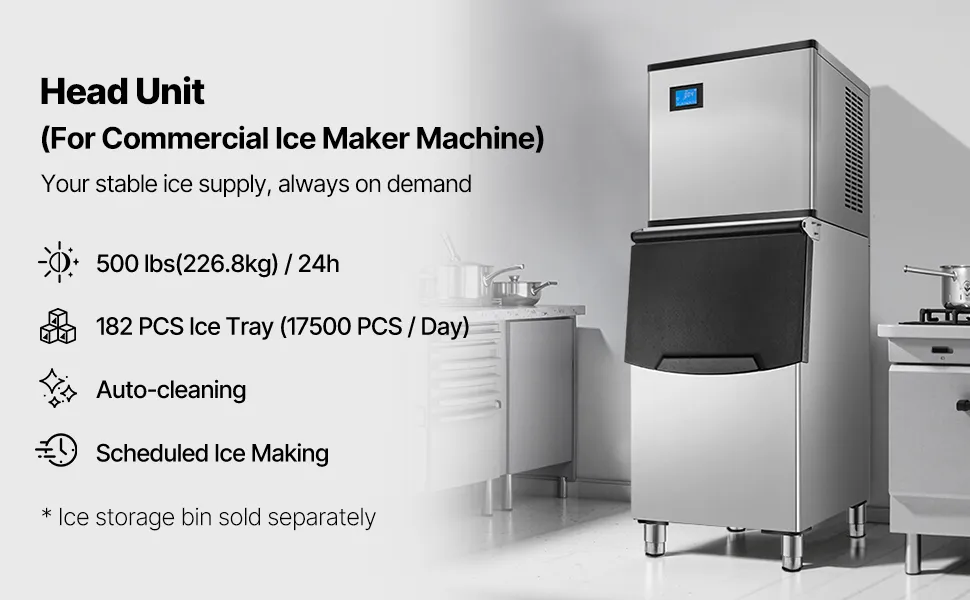
- Large Ice Production: The commercial ice maker (head) can produce 500 lbs of ice per 24 hours, which is approximately 17,500 pieces of ice, providing a continuous supply of ice in large quantities.
- Fast Ice Production: The commercial ice maker is equipped with 182 ice trays. You can adjust the thickness of the ice by increasing or shortening the ice-making time. The powerful compressor can produce ice cubes in just 12-15 minutes.
- One-Button Cleaning: The commercial ice maker machine features a one-touch self-cleaning function, providing you with a clean and healthy ice-making environment and ensuring that the ice cubes are clean.
- Intellingent Control Panel: The electronic touch display allows you to adjust the thickness of the ice by increasing or shortening the ice-making time. The one-button auto-clean function makes the machine more convenient. The indicator lights on the panel allow you to monitor the status of the ice maker in real-time.
- Ice Making Reservation: With the commercial ice machine’s reservation function, you can plan ahead more easily and set the optimal ice-making time based on your business needs.
Frequently Bought Together
Reviews
About this item


Ice Machine Head Unit Rated for 500 lbs of Daily Output
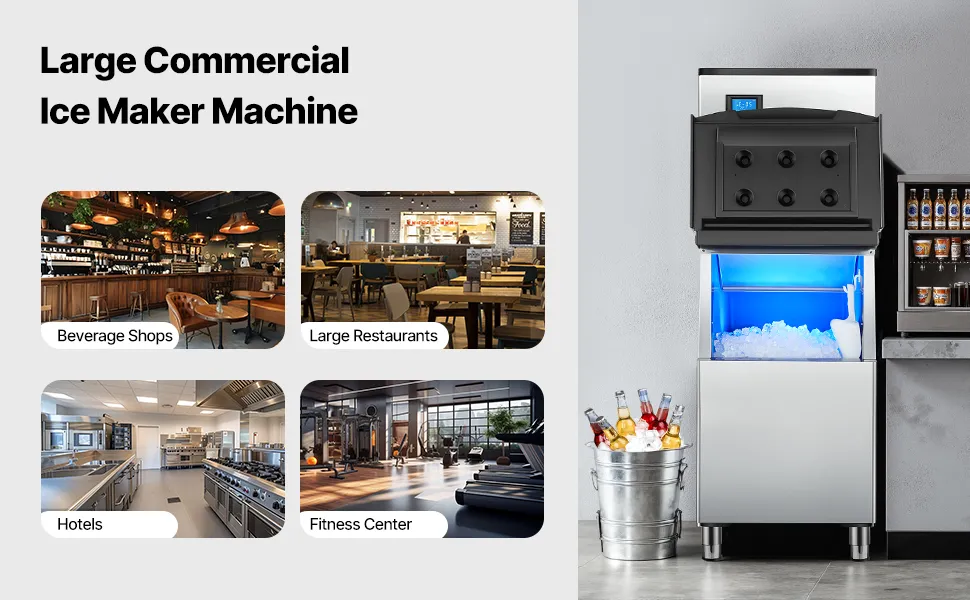
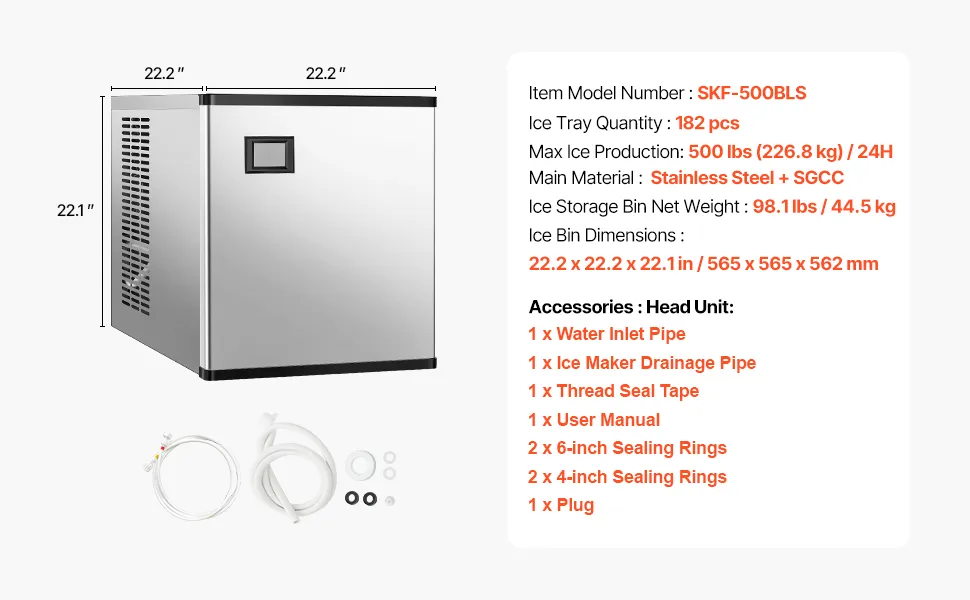
This ice machine head unit is rated to produce 500 lbs (226.8 kg) of ice in 24 hours, or about 17,500 individual pieces in one day of continuous operation. So it’s good for companies that have a constant, heavy demand for ice over long service hours, not lighter, intermittent use. It’s a higher-end production capability.
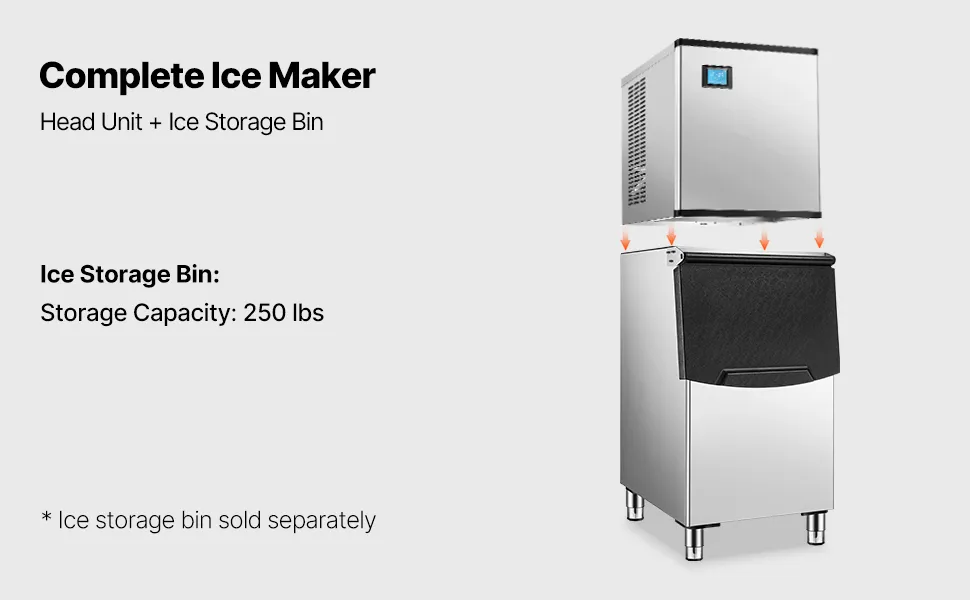
The unit’s head-only design allows a storage bin to be sized separately from the head, so operators can scale storage capacity to their needs, rather than choosing a combined unit with a fixed size. The separation lets large venues, high-traffic bars, or multi-outlet food service operations size their operations for actual peak demand. This level of output helps to ensure that businesses that need a steady, high volume of ice to keep up with their supply will not run out during peak hours.
182 Ice Trays Produce Fresh Cubes in 12-15 Minutes
This unit has 182 individual ice trays and can perform production cycles in as little as 12-15 minutes, allowing for more frequent, smaller batches to keep fresh ice replenishing steadily rather than infrequent large batches. That cycle speed is most important during long periods of high demand, when the ice needs to regenerate quickly to avoid supply gaps.
The length of each production cycle can be adjusted to control ice thickness. This allows operators to control cube density for applications such as beverage service, food display, and general cooling. This flexibility allows a single machine to meet different ice requirements across service areas without the need for separate equipment. This unit is designed for higher-volume production with tray count and adjustable timing, without sacrificing the consistency of the finished ice.
Stainless Steel Construction for Commercial Durability
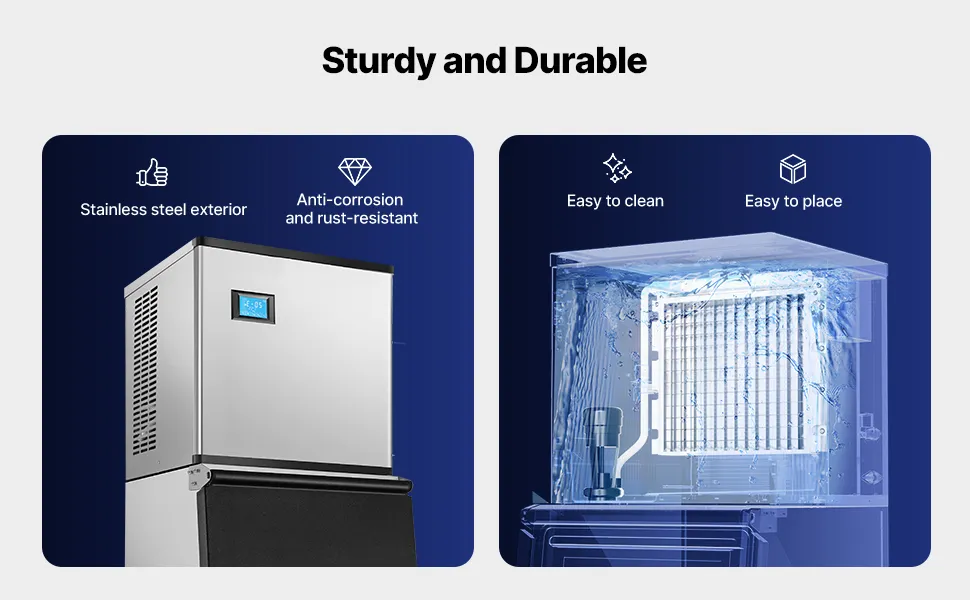
The housing for this ice machine head unit is mostly made of stainless steel. Stainless steel is used because it is corrosion-resistant in the constantly wet, water-exposed environment created by the ice production process. That type of resistance is important for equipment designed to operate daily, often 24 hours a day, in commercial environments where downtime for repair or replacement immediately affects business operations.
The unit weighs 98.1 lbs / 44.5 kg, measures 22.2 x 22.2 x 22.1 in / 565 x 565 x 562 mm, and is sized for placement in a dedicated commercial kitchen or back-of-bar area above a separate storage bin. That weight and footprint reflect the more robust construction anticipated at this higher production tier. The stainless steel construction provides the long-term dependability required for the daily operation of this unit under sustained demand.
One-Touch Self-Cleaning for Consistent Ice Quality
At higher volumes, the need to maintain sanitary ice production becomes even greater, and this unit has a single-touch self-cleaning feature that cleans without scrubbing or complete disassembly. Commercial kitchens already struggling to schedule cleaning for multiple pieces of equipment will find it appealing that ice production cleans itself with the push of a button, removing a recurring task from staff’s to-do lists.
Regular self-cleaning also protects ice clarity and taste over time, as mineral or residue buildup inside the system can affect both the appearance and quality of finished ice, an issue that compounds more quickly on a higher-output unit running more frequent cycles. This cycle can be run by staff as part of normal daily operations, rather than scheduling extra deep-cleaning sessions. That built-in convenience is most important where the equipment runs almost continuously, and extended downtime is impractical.
Electronic Touch Display with Adjustable Ice Thickness
An electronic touch display provides the operator with direct control over ice thickness and cycle timing. Manual dial systems were replaced by a faster, more accurate interface designed for a higher-throughput machine. The staff can change the settings to match the type of ice needed for the current service period.
The panel has indicator lights to help you monitor status in real time without interrupting an active cycle to check progress, which is handy in busier commercial kitchens with several pieces of equipment running at the same time. Quick visual status checks allow staff to see completed cycles or identify problems early, which becomes more critical as cycle frequency increases at this level of production. A clear, responsive display in high-volume environments keeps monitoring efficient, rather than adding an extra burden of oversight.
Ice Machine Head Unit with Scheduled Reservation Function
This ice machine head unit has a reservation function, allowing operators to plan production around anticipated peak periods rather than running the unit on a fixed, undifferentiated cycle. Large venues hosting large events or multi-outlet operations that need to coordinate ice across multiple service points can scale production to meet anticipated spikes in demand.
This scheduling capability also enables more efficient operation overall, as production can be cut back during predictable slow periods rather than running at full capacity all the time, regardless of need, with production treated as a managed, planned resource rather than a constant background process. For businesses working at that higher tier of production, that timing control turns ice supply into a managed, planned resource. It is a practical fit for any high-volume operation coordinating ice production around variable demand patterns.