Back To School
Deals
VEVOR Commercial Ice Maker 300 lbs/24 h Self-Cleaning Ice Machine - Head Only


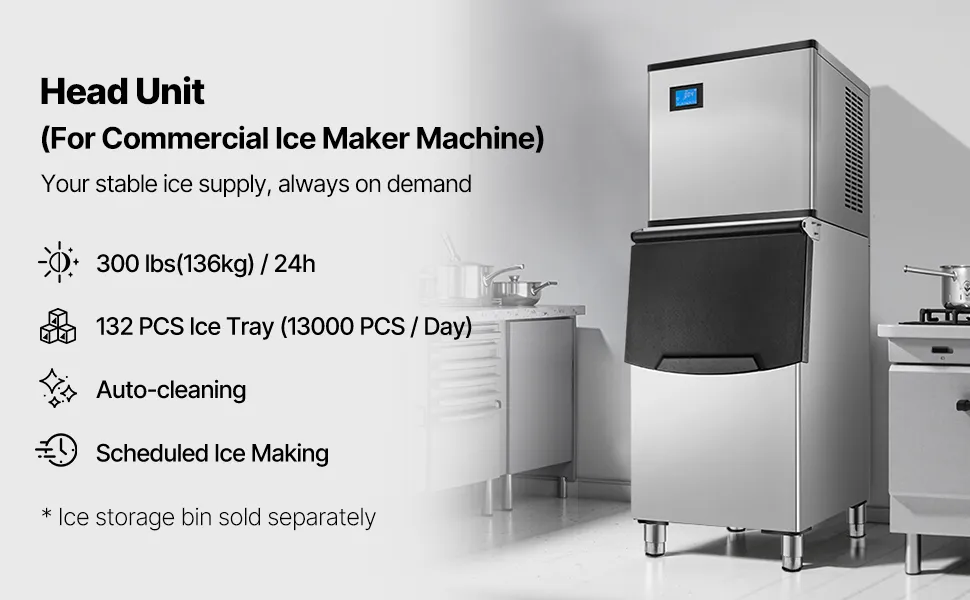
- Large Ice Production: The commercial ice maker (head) can produce 300 lbs of ice per 24 hours, which is approximately 13,000 pieces of ice, providing a continuous supply of ice in large quantities.
- Fast Ice Production: The commercial ice maker is equipped with 132 ice trays. You can adjust the thickness of the ice by increasing or shortening the ice-making time. The powerful compressor can produce ice cubes in just 12-15 minutes.
- One-Button Cleaning: The commercial ice maker machine features a one-touch self-cleaning function, providing you with a clean and healthy ice-making environment and ensuring that the ice cubes are clean.
- Intellingent Control Panel: The electronic touch display allows you to adjust the thickness of the ice by increasing or shortening the ice-making time. The one-button auto-clean function makes the machine more convenient. The indicator lights on the panel allow you to monitor the status of the ice maker in real-time.
- Ice Making Reservation: With the commercial ice machine’s reservation function, you can plan ahead more easily and set the optimal ice-making time based on your business needs.
Frequently Bought Together
Reviews 4.3
About this item


300 lbs per 24h Ice Maker Head That Outputs Around 13,000 Ice Pieces Daily
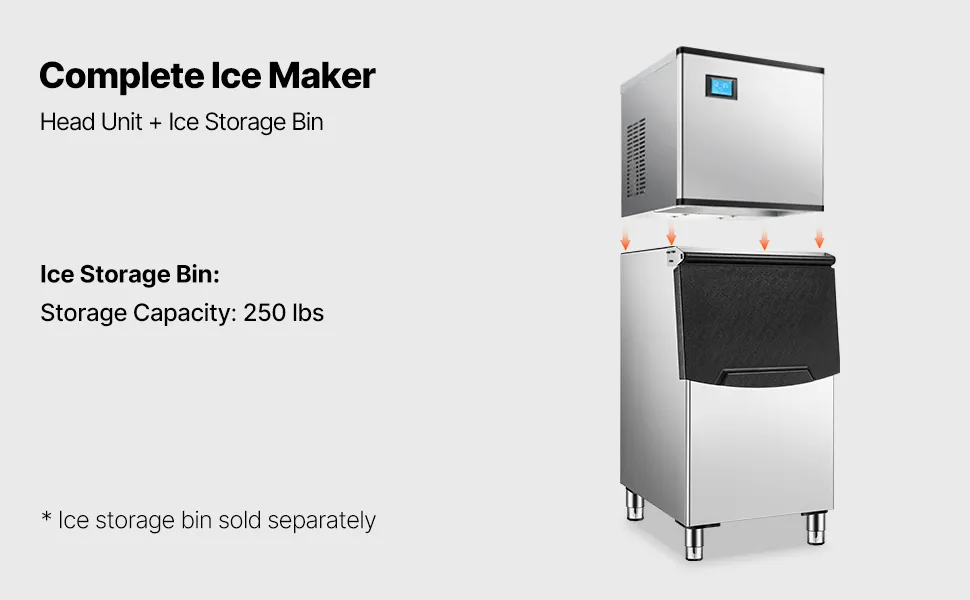
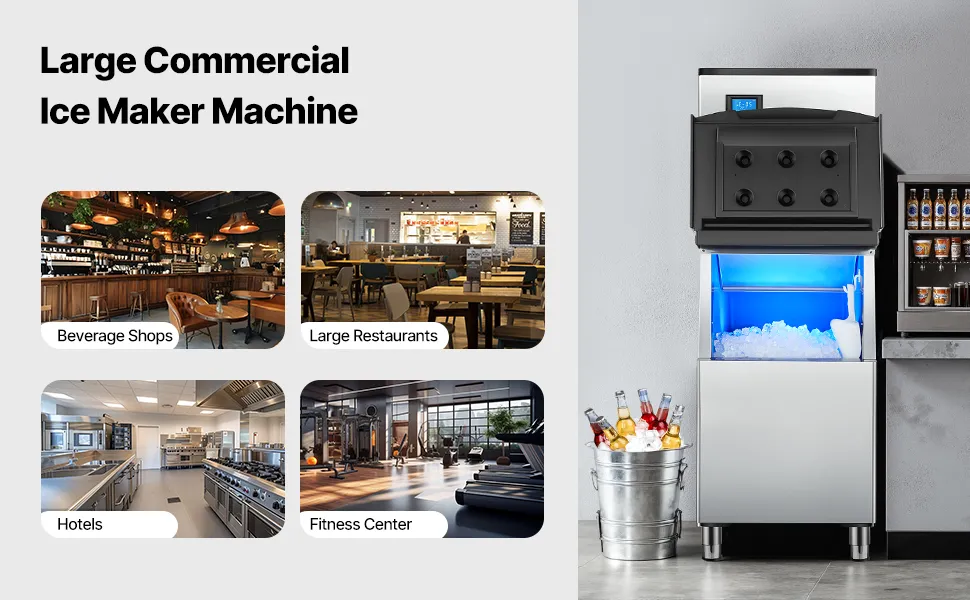
The ice maker head can generate 300 lbs (136 kg) of ice in a 24-hour period, which is over 13,000 individual ice pieces for continuous service throughout the operating day. This output level is perfect for high-demand settings such as hotel bars, restaurant serving lines, and catering companies, where you need to stay ahead of ice demand. The device is head-only and connects to a compatible storage bin. It means you can match it to a bin size that works for your workflow.
To run at that volume constantly requires a compressor and tray system optimized for prolonged output rather than occasional bursts, and this device is constructed accordingly. The stainless steel and SGCC construction can withstand the daily loads that would wear down lower-grade materials over time. In any commercial enterprise that relies on ice supply as a primary operating requirement, 300 lbs per day offers a substantial buffer against running short during peak service periods.
132-Tray Configuration for Non-Stop High-Volume Ice Production
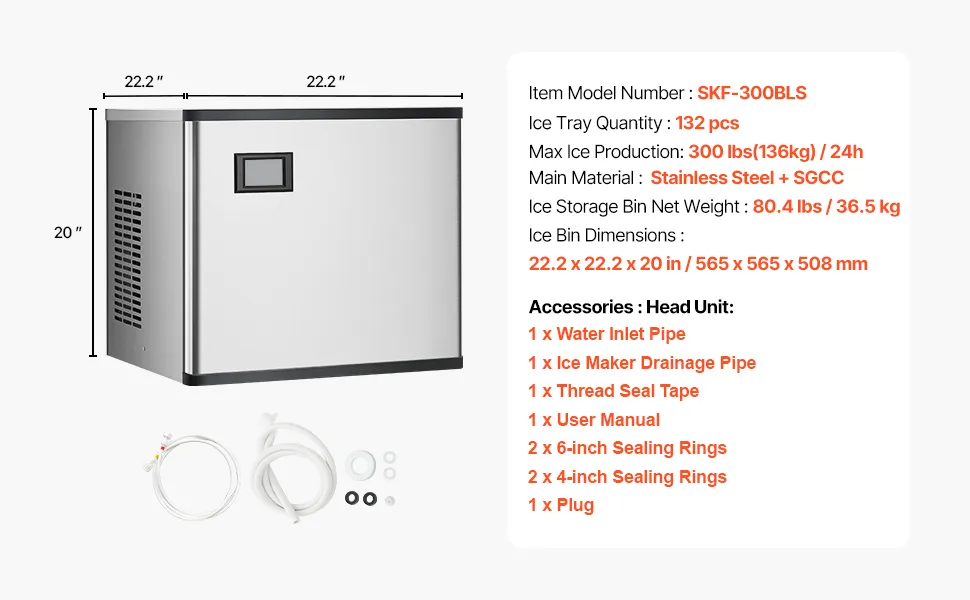
This VEVOR machine can produce a large volume of ice throughout the day thanks to its 132-piece ice tray design. The machine also makes 132 ice cubes per cycle, so it can keep a high output without needing to freeze for longer. Now, you'll get more ice faster, making the unit a great option for busy restaurants, cafes, bars, and other commercial settings where you need a constant supply of ice.
Another feature is the flexible tray system. You can change the freezing duration to modify the thickness of the ice cubes to your liking. Thin ice is good for cooling drinks, but thicker cubes will remain frozen longer for cooling and food presentations. It can make many cubes at once, and they are all rather uniform. This feature makes our machine convenient and versatile for many routine tasks.
12–15 Minute Cycle Time for Fast and Consistent Ice Maker Head Output
Each production cycle on this ice maker head takes 12 to 15 minutes from start to finished ice. It keeps output flowing at a rate that fits high-traffic service demands without significant pauses between batches. Instead of making ice in large batches only occasionally, the machine constantly restocks its storage bin at that rate throughout the day. The important thing is to keep the cycles brief and consistent.
That cycle speed is possible because of the compressor behind it, which can operate repeatedly without significant recovery time between batches. That’s the difference between commercial-grade equipment and lighter-duty machines that need longer rest periods. Faster cycles also imply that if ice supply decreases during an unusually busy period, the machine recovers the shortage more quickly.
Ice Making Reservation Function to Plan Production Around Your Business Hours
The reservation function helps you pre-program ice production: the machine will automatically start a cycle at a predetermined time. That scheduling feature is a godsend for firms that open early or require ice on hand before staff arrive. Configure the machine to start making ice overnight so a full stock is ready when service starts. Scheduling production based on actual business hours also prevents the machine from running when not needed, reducing energy use during quiet times without sacrificing supply during peak periods.
Operating on a reservation basis works particularly well for places with regular busy periods, such as restaurants with established lunch and dinner services or event spaces with scheduled programs. Instead of running the machine at full capacity all day, you may align production cycles with the highest demand for ice. Such control makes the machine easier to manage and more efficient to run throughout a full working week.
Electronic Touch Display with Real-Time Indicators for Full Panel Control
The touch display lets you adjust ice thickness directly by adjusting the cycle time, and the interface is so easy to use that staff can operate it correctly with minimal training. Real-time indicator lights tell you at a glance the machine's current status: production cycle, cleaning cycle, or standby – so you always know what the ice maker head is doing without opening it. All key controls and status readouts are available on the front panel, simplifying operation during a busy service shift.
The auto-clean function is one button and on the same panel, so starting a cleaning cycle is a one-step action, not a multi-step procedure. One panel manages scheduling, thickness control, cleaning, and status monitoring, ensuring a clean workflow that is easy to hand off between workers. Touch controls also work effectively in commercial kitchen conditions, provided the display surface is well protected against moisture and cleaning agents.
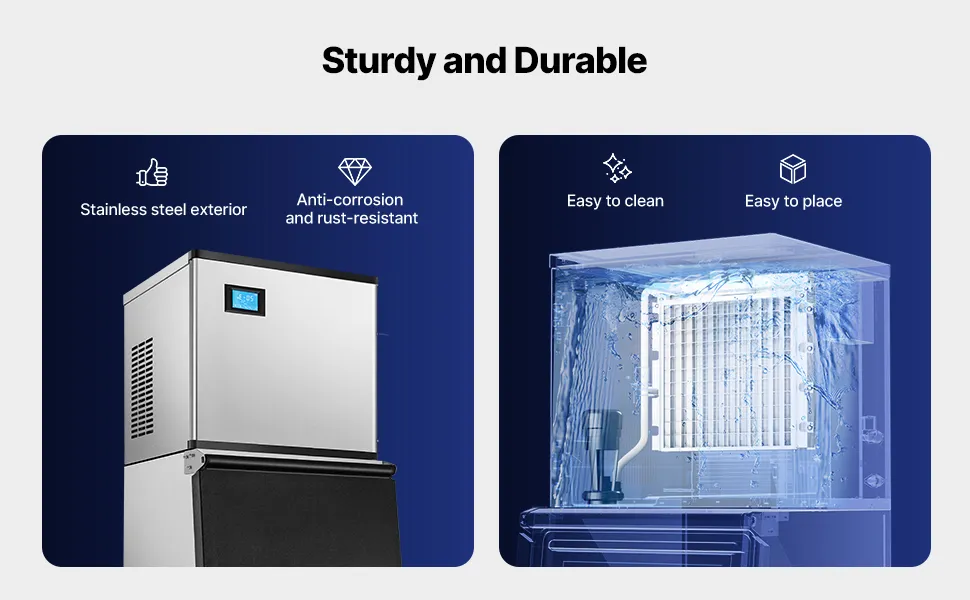
Stainless Steel and SGCC Construction for a Durable, Food-Safe Ice Maker Head Build
The exterior shell and key interior surfaces are a combination of stainless steel and SGCC to provide corrosion resistance and structural stability throughout the unit. Stainless steel is the material of choice for food-contact surfaces in commercial equipment because it resists bacterial growth, does not absorb odors, and is easy to clean without degrading during repeated sanitizing. SGCC further enhances the frame-and-panel structure, keeping the device at a manageable 80.4 lbs (36.5 kg) with a footprint of 565 x 565 x 508 mm.
The weight provides the device with operational stability while remaining practical to position and level on a business counter or equipment stand. The material mix also holds up well to the constant, moisture-heavy internal environment that ice producers operate in, whereas inferior materials rust or disintegrate at seams over time. In a bar or a professional kitchen, a commercial ice maker head will be in use every day, and the quality of the construction will affect how long it can run before it needs repair or its surfaces restored.