VEVOR Tub Transfer Bench for Bathtub, 400 lbs Capacity Heavy Duty Shower Chair with Arm, Backrest and Curtain Slot, Height Adjustable Shower Bench Bath Seat for Adults, Seniors, Elderly and Disabled

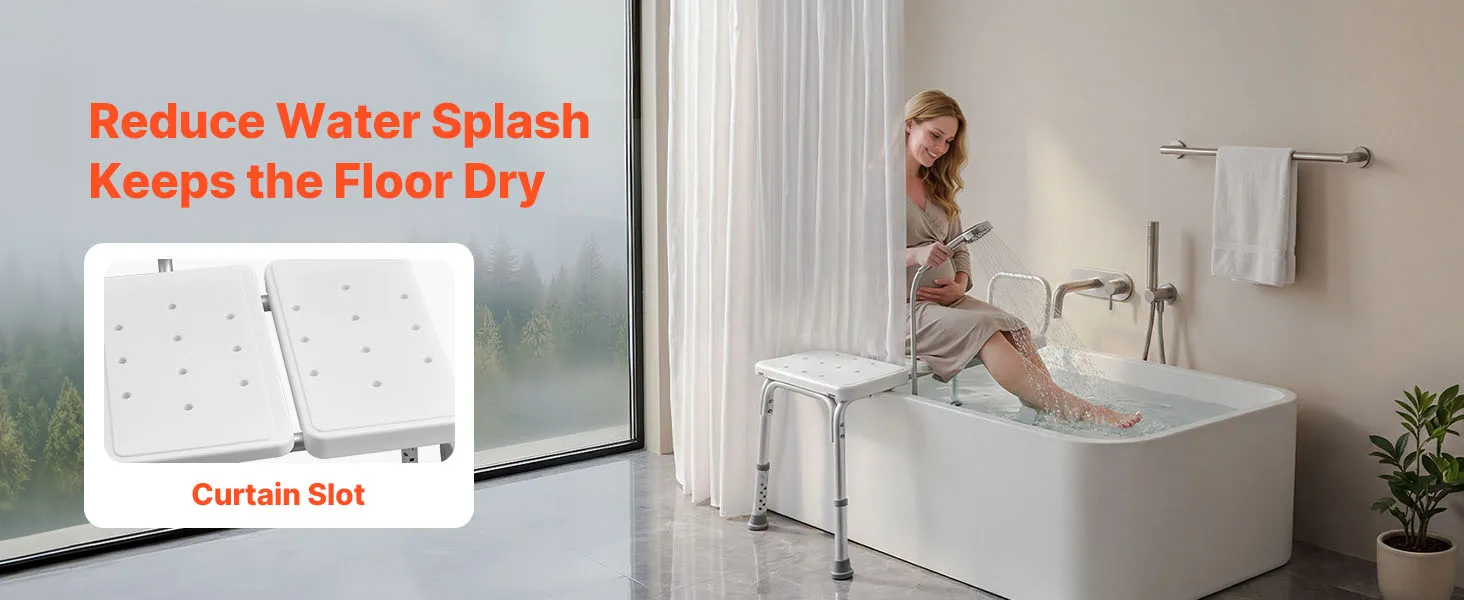
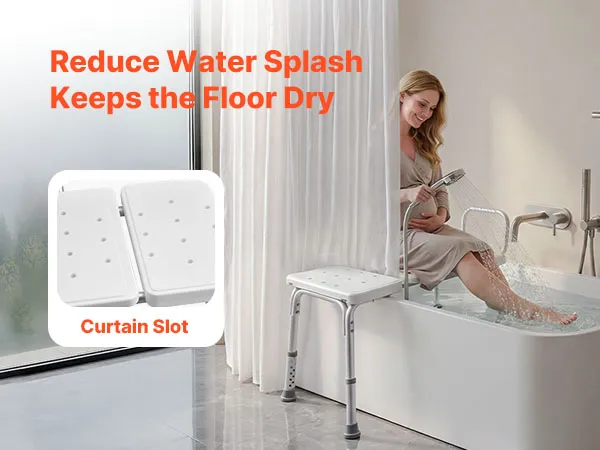
- Curtain Slot Design: This tub transfer bench features an upgraded bath curtain slot that allows you to pull the curtain smoothly without obstruction. The design helps keep water inside the tub and stops splashes from wetting the bathroom floor
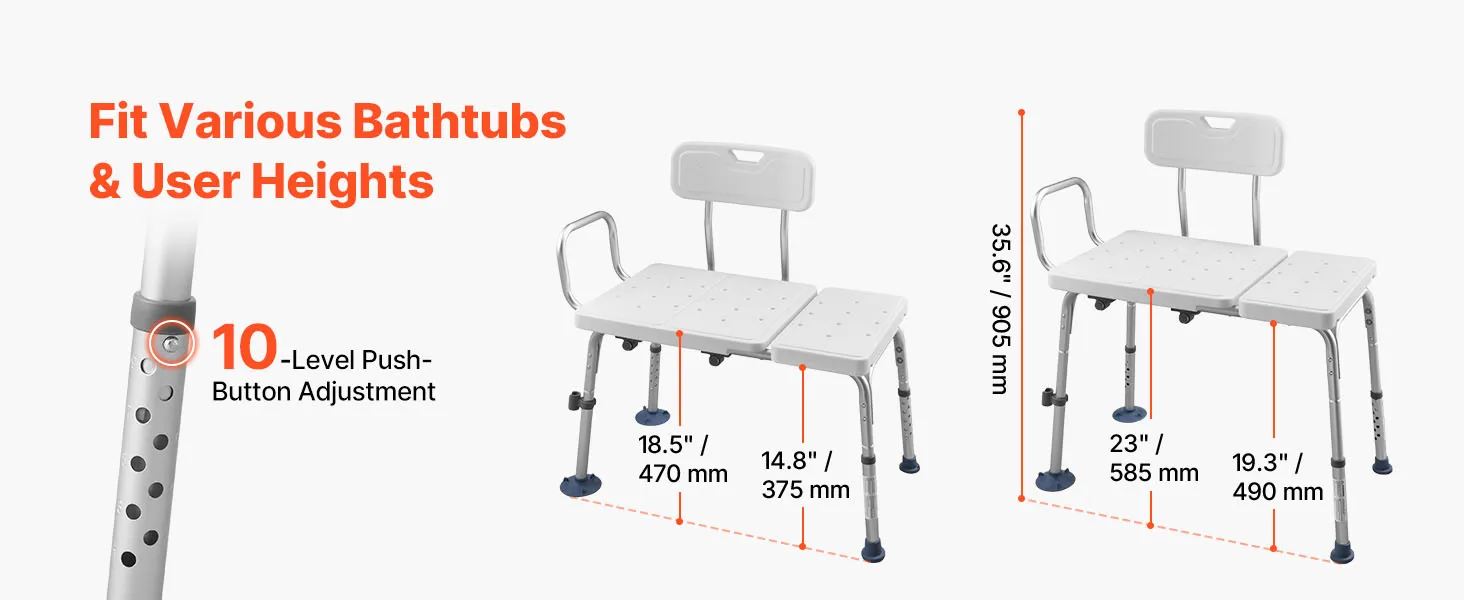
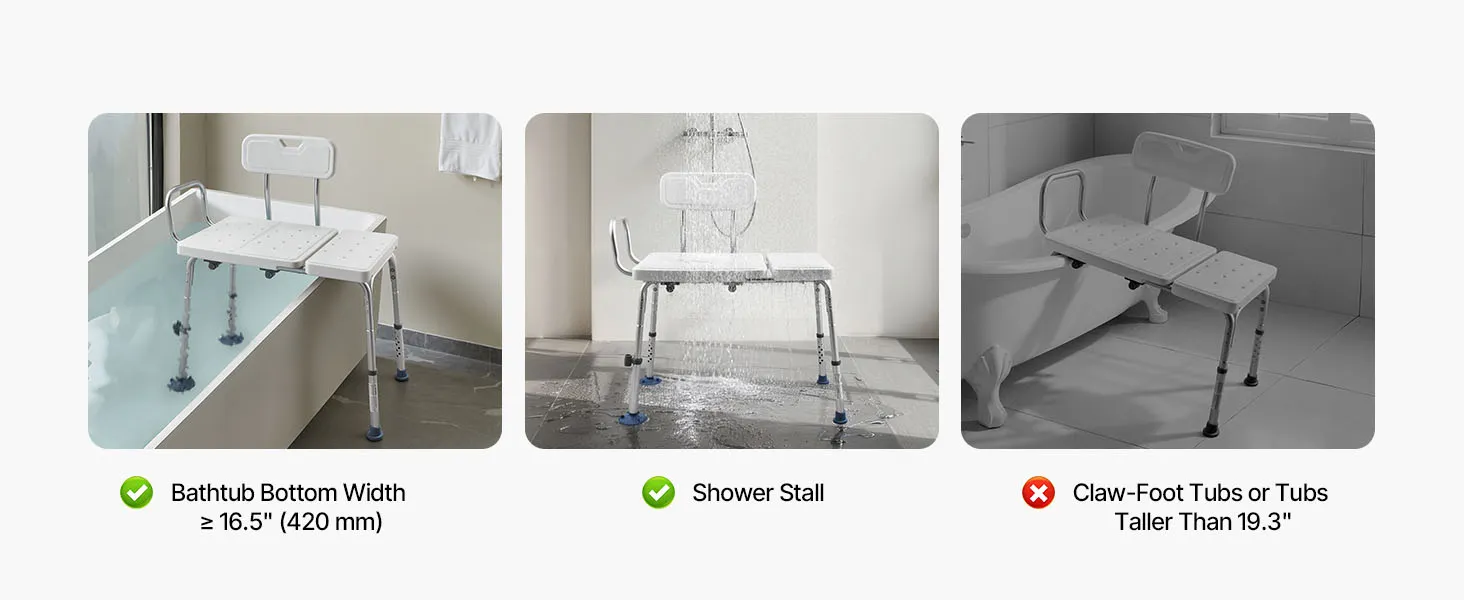
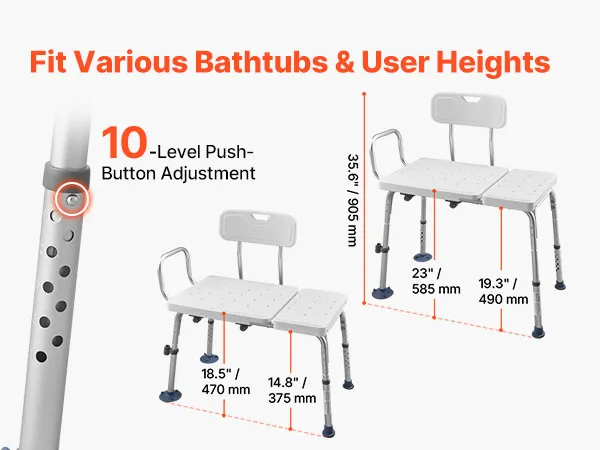
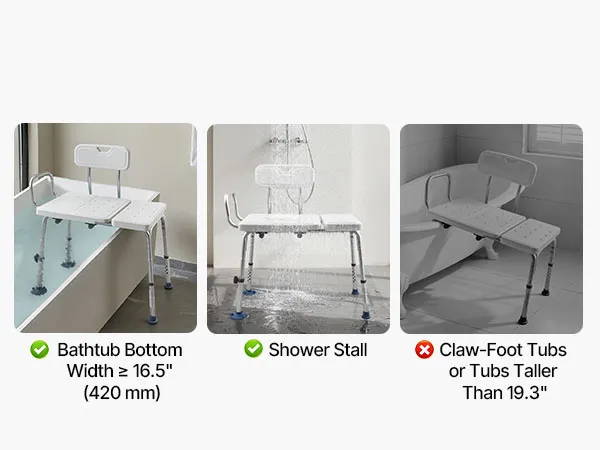
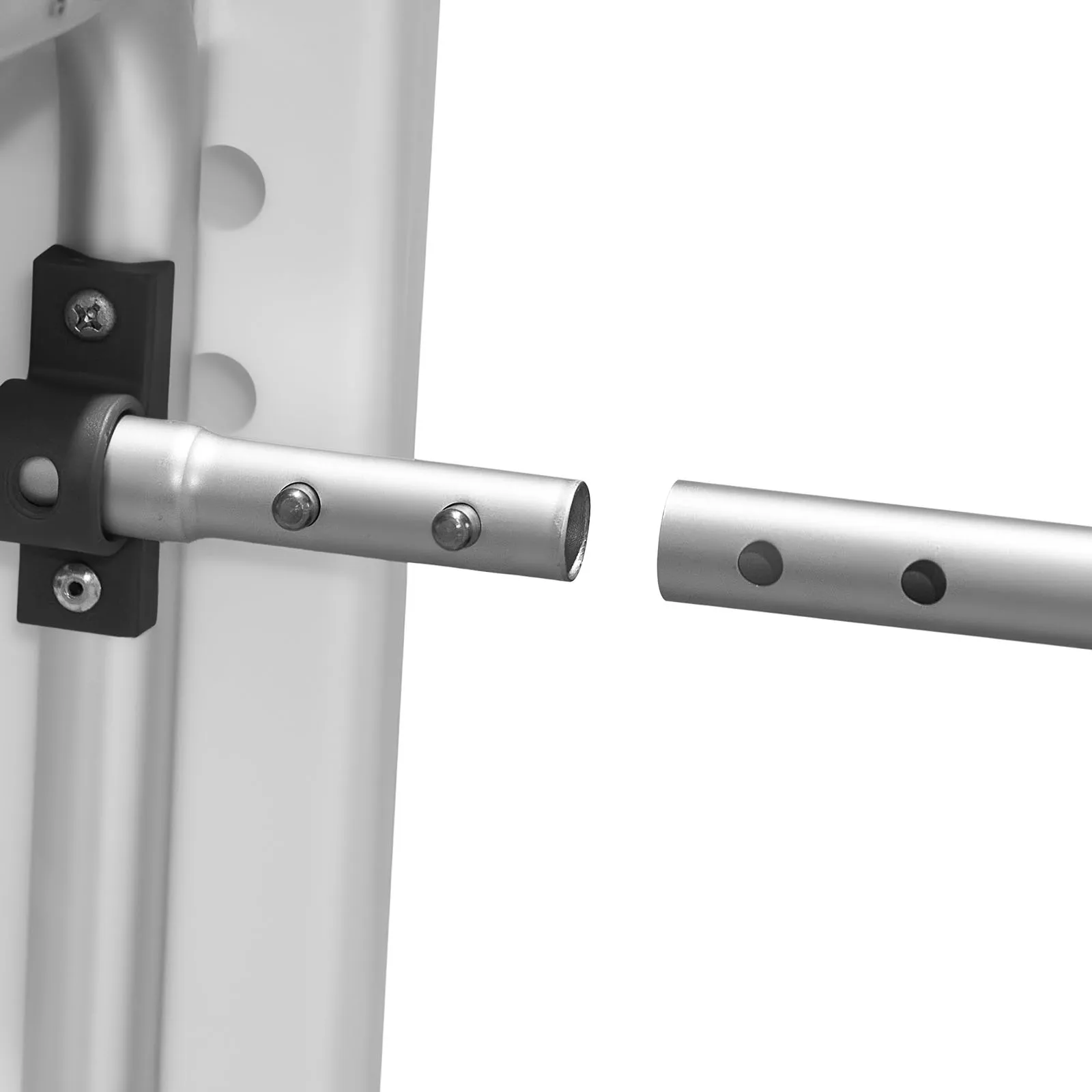
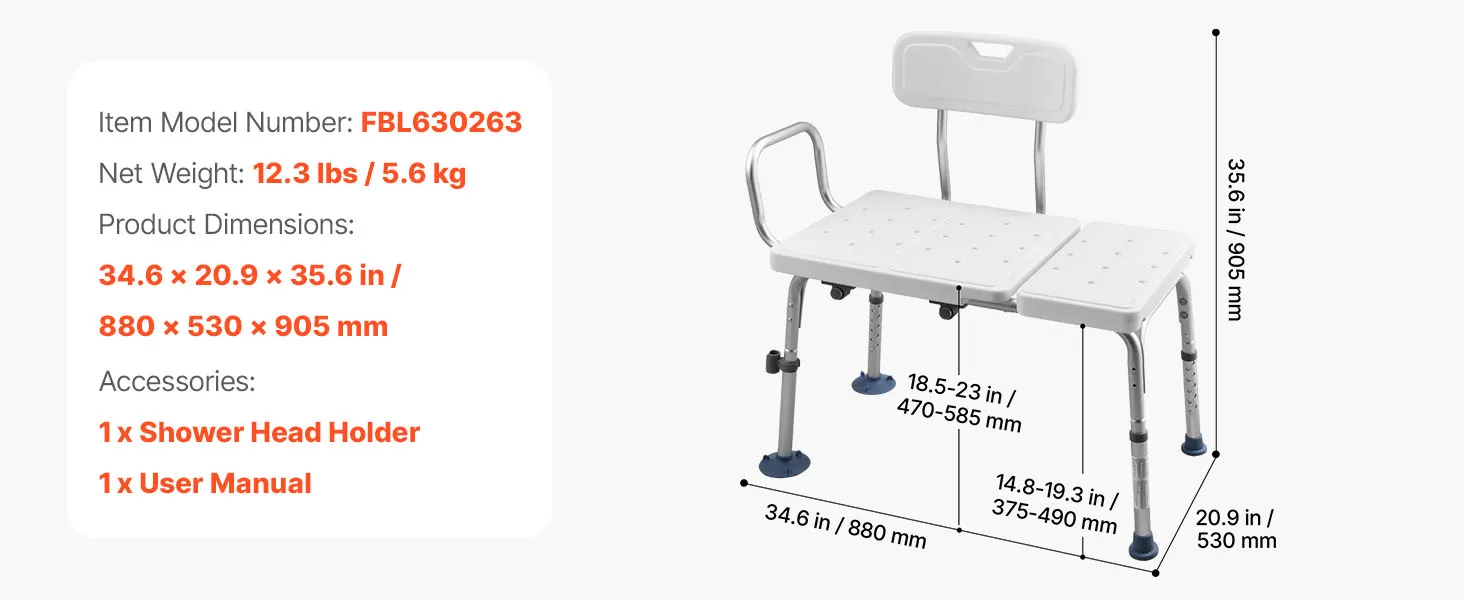
- Adjustable Height: Our shower chair provides 10-level push-button height adjustment. Seat-to-floor height ranges from 14.8" to 19.3" (375–490 mm), fitting bathtubs with bottom widths ≥16.5" (420 mm). Not for tubs over 19.3" (490 mm) or claw-foot tubs
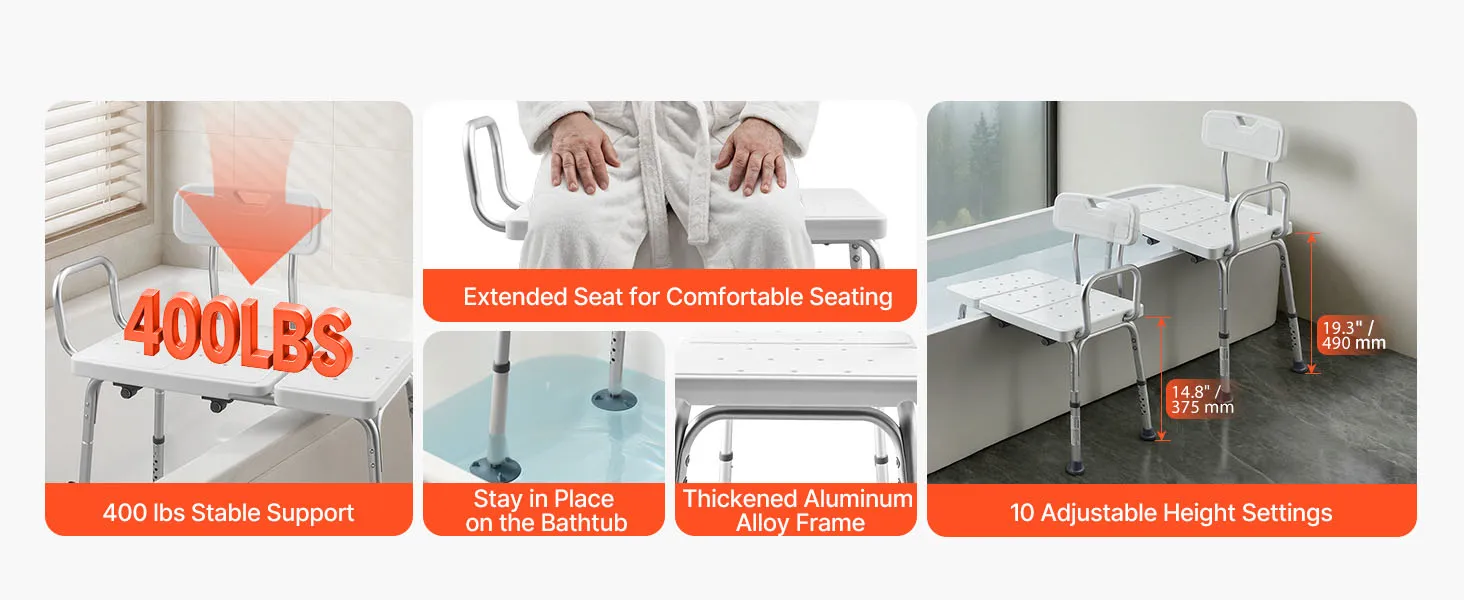
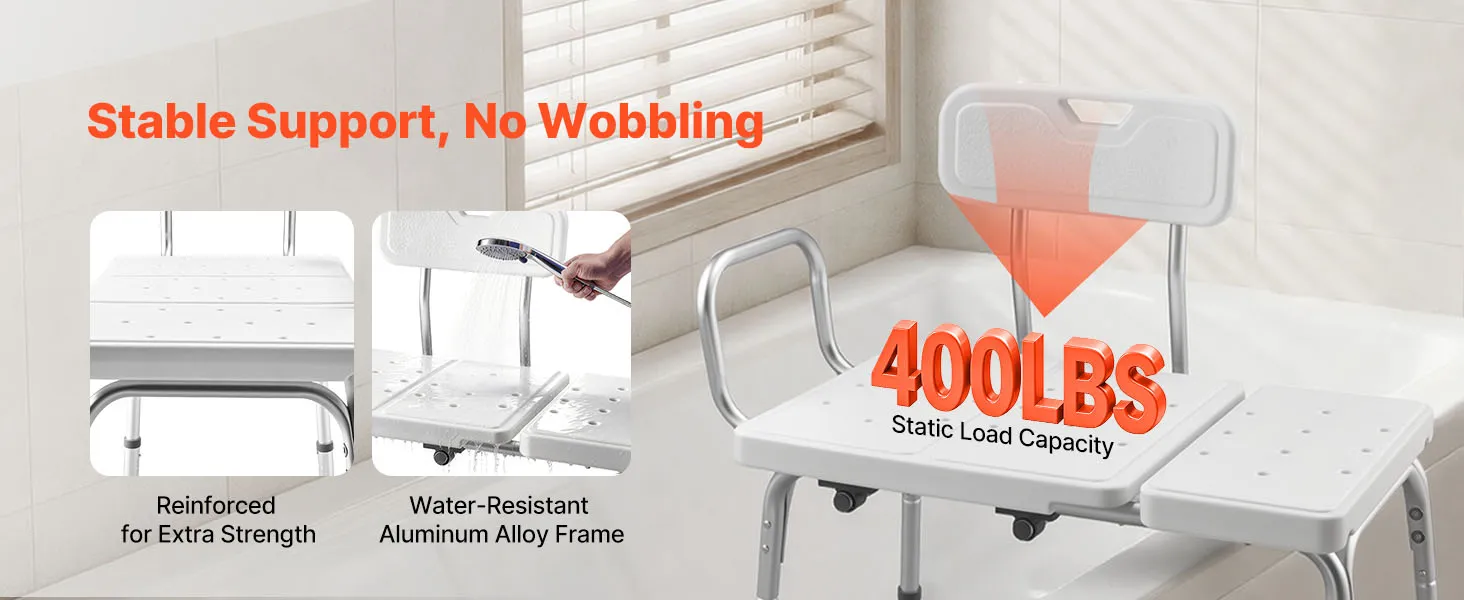
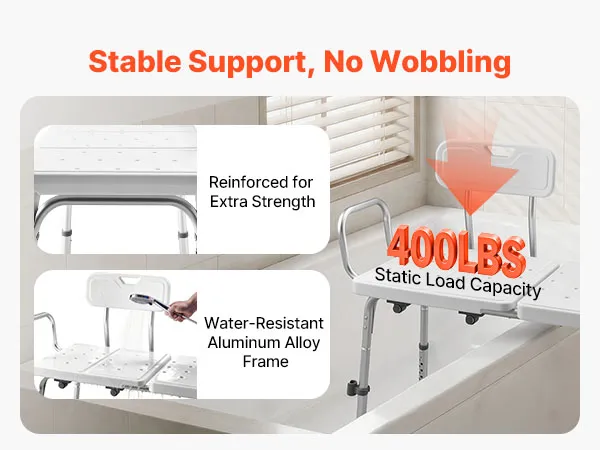
- 400 lbs Heavy-Duty Capacity: The shower transfer bench is built with a thickened aluminum alloy frame and reinforced U-shaped side braces for added stability. It supports up to 400 lbs (180 kg) static load for steady sitting and transfers
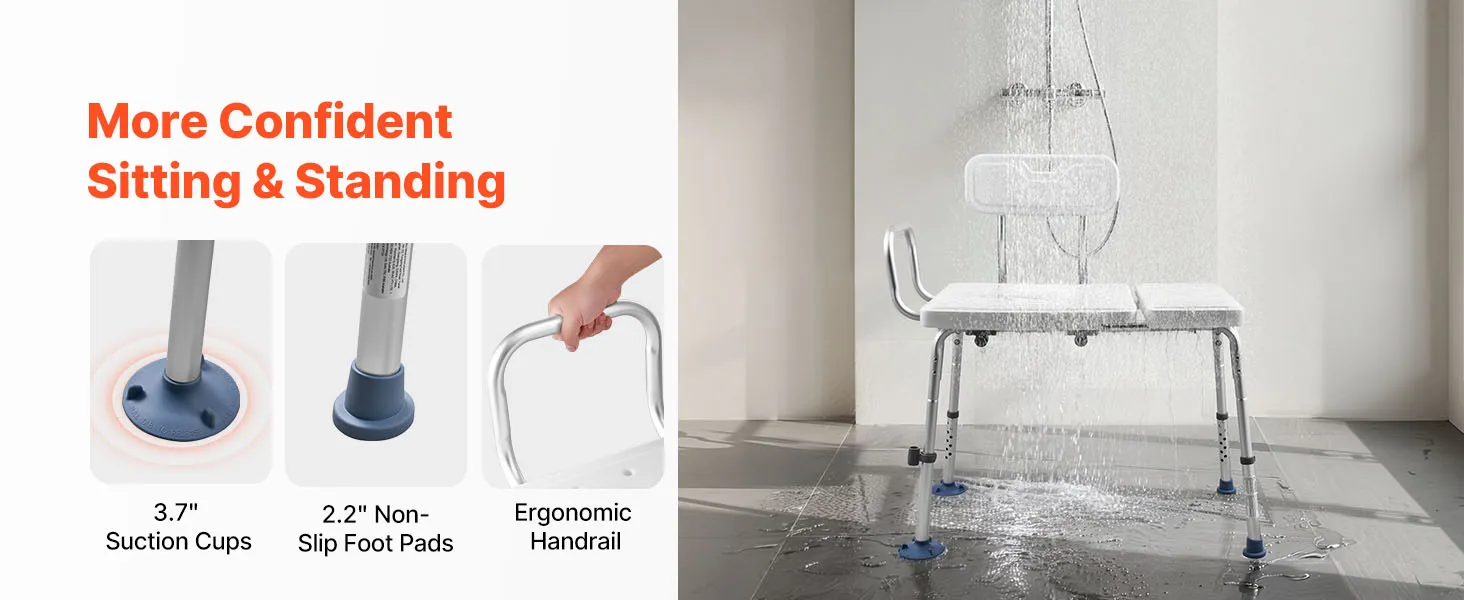
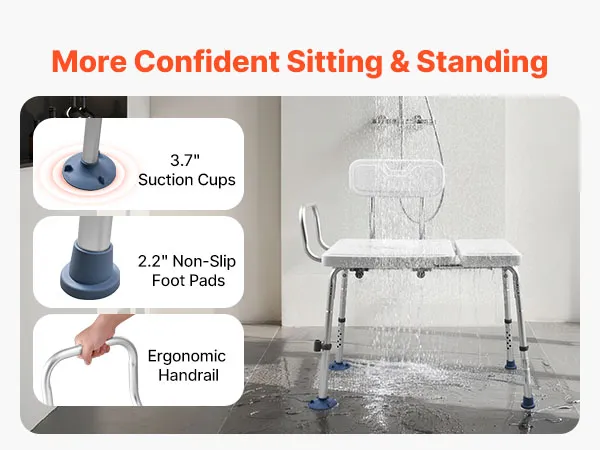
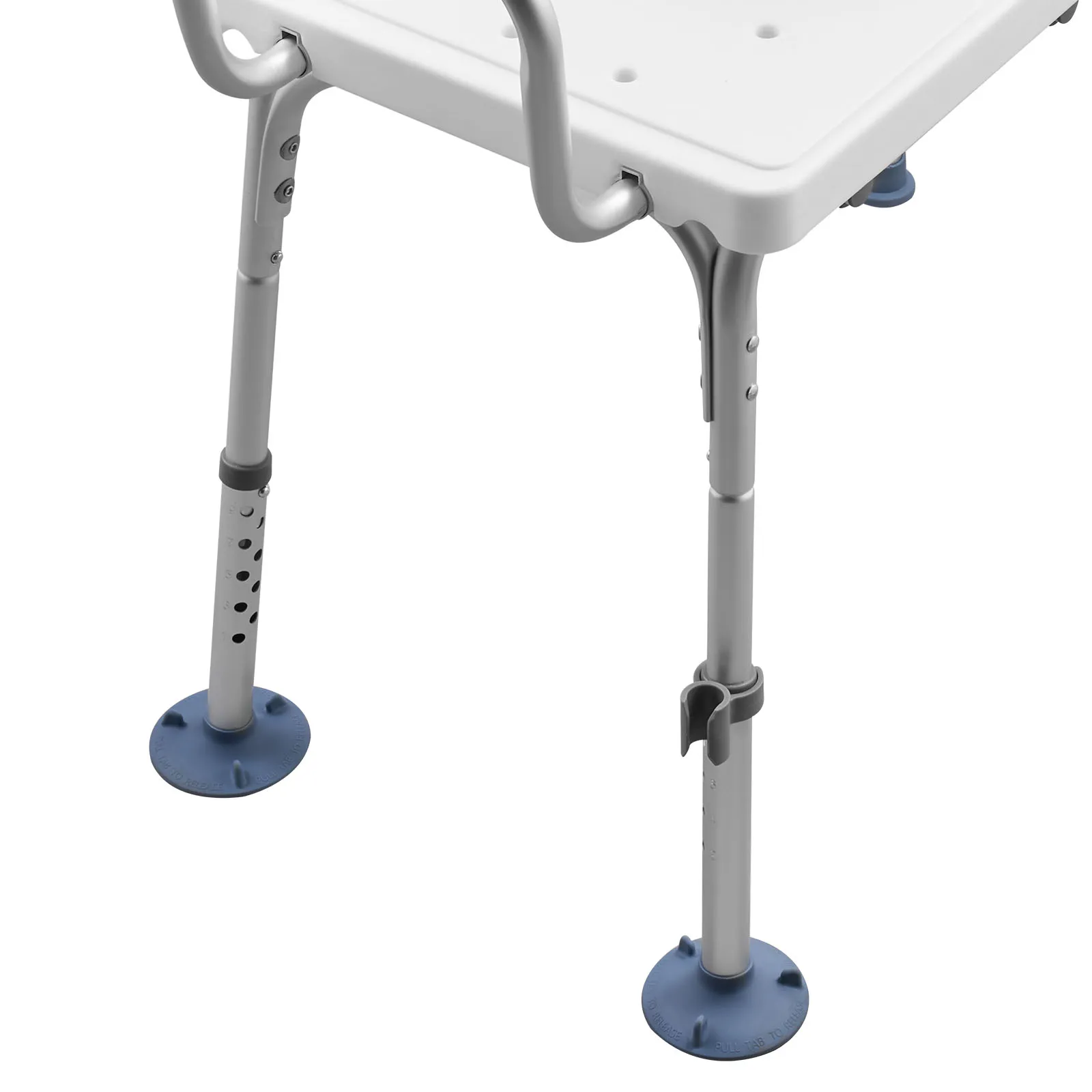
- Non-Slip Feet: This transfer tub bench features four base feet, including two 3.7" (95 mm) suction cups and two 2.2" (55 mm) non-slip foot pads for enhanced grip. Working with the handrail, they provide more confidence when sitting down or standing up
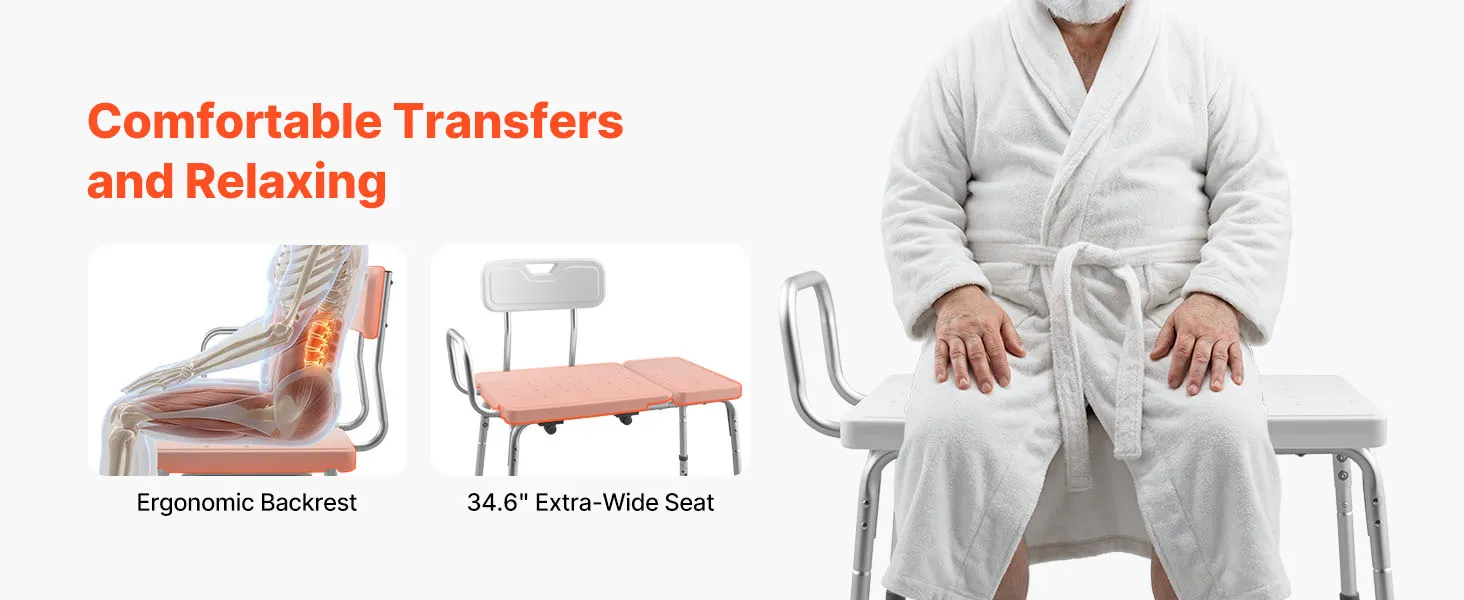
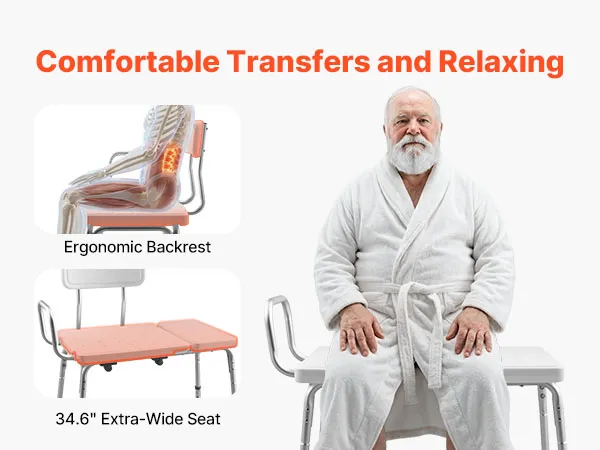
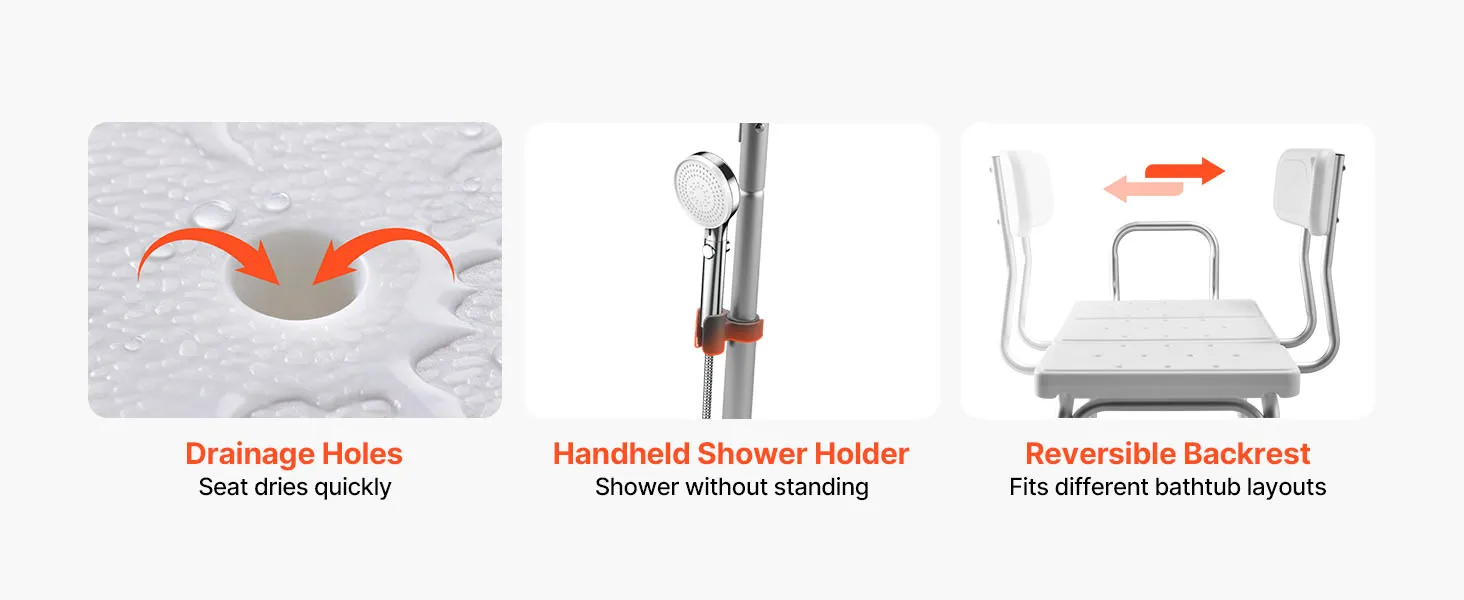
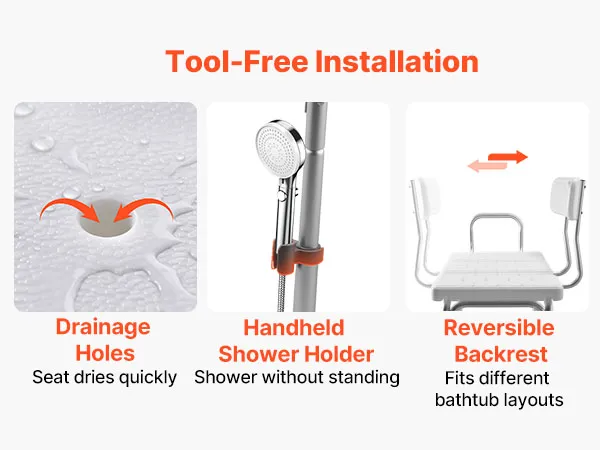
- User-Friendly Design: Designed with user habits in mind, our tub bench features a supportive backrest and a spacious seat for relaxed leaning. Drainage holes help the seat dry quickly, while the handheld shower holder allows showering without standing
Frequently Bought Together
Reviews
About this item


400 lbs / 180 kg Capacity Tub Transfer Bench for Seniors with Aluminum Frame
This tub transfer bench for seniors, which is rated to support up to 400 pounds (180 kg), is constructed on a thickened aluminum alloy frame with strengthened U-shaped side braces, rather than a lighter frame that would bend during frequent sitting and standing. When stepping in or out of the tub, full body weight briefly rests on one side of the bench, which is when the static load rating is particularly important for elders or anyone recovering from surgery.
A bench rated at 250-300 lbs, where frequent transfers can gradually loosen joints, is rated with less leeway and is not as durable over years of daily use as a frame built for a 400-lb static load. Because a bench that flexes mid-transfer increases fall risk at the very moment when stability is most important, that additional capacity serves as a safety buffer rather than just a specification number.
10-Level Height Adjustment from 14.8 in to 19.3 in for a Custom Fit
Instead of imposing a single fixed height on every bathroom, the bench can be adjusted to match a specific tub edge thanks to its 10 push-button levels, which range from 14.8 inches to 19.3 inches (375–490 mm) off the floor. Although it isn't intended for tubs wider than 19.3 inches (490 mm) or claw-foot tubs, which lack the flat rim the bench depends on for stability, that range covers bathtubs with a bottom width of 16.5 inches (420 mm) or more.
A seat that is too high or too low affects how much work a transfer requires and how much strain it places on the knees or lower back, so getting the height right is more important than it might appear. Instead of settling for the closest of two or three coarse settings, ten adjustment levels provide sufficient granularity to reach a comfortable height.
Non-Slip Feet with 3.7 in Suction Cups and 2.2 in Pads for Secure Footing
Instead of using a single foot style for all four contact points, the bench is supported by four base feet: two 3.7-inch (95 mm) suction cups and two 2.2-inch (55 mm) non-slip pads. During a sitting transfer, the non-slip cushions offer traction on the outer feet without locking the bench in place, while the suction cups directly grasp the tub floor for the two feet bearing the most weight.
Because the suction points prevent sliding at the precise moment weight shifts onto the bench, especially on wet tile or an enamel tub surface where standard rubber feet tend to slide, that combination, when combined with the included handrail, provides greater confidence when sitting down or standing up than non-slip feet alone would.
Curtain Slot Design to Keep Water Inside the Tub
Instead of being pinned outside the bench, which typically allows water to spill onto the bathroom floor during a shower, an integrated curtain slot lets the shower curtain hang and move naturally past the seat. Without that type of opening, bathrooms frequently have the curtain bunched to one side, creating a gap where water spills onto the floor with each use. The curtain can be smoothly pulled over its whole range without snagging on the bench frame, thanks to the placement of the slot.
Water collecting around a transfer bench creates the very slide hazard the bench is designed to minimize; therefore, that detail is more important than convenience. In an area of the bathroom that is already more dangerous, keeping the curtain properly sealed against the bench, rather than wrapped awkwardly around it, keeps the floor drier and eliminates another variable.
Supportive Backrest and Drainage Holes for Comfortable, Dry Seating
Instead of requiring regular core activation to stay upright on a flat seat, this tub transfer bench for seniors combines a wider seat with a supportive backrest to give users something to lean on during a longer shower. That difference in effort may determine whether seniors with balance or exhaustion concerns can continue showering independently or will begin to require assistance.
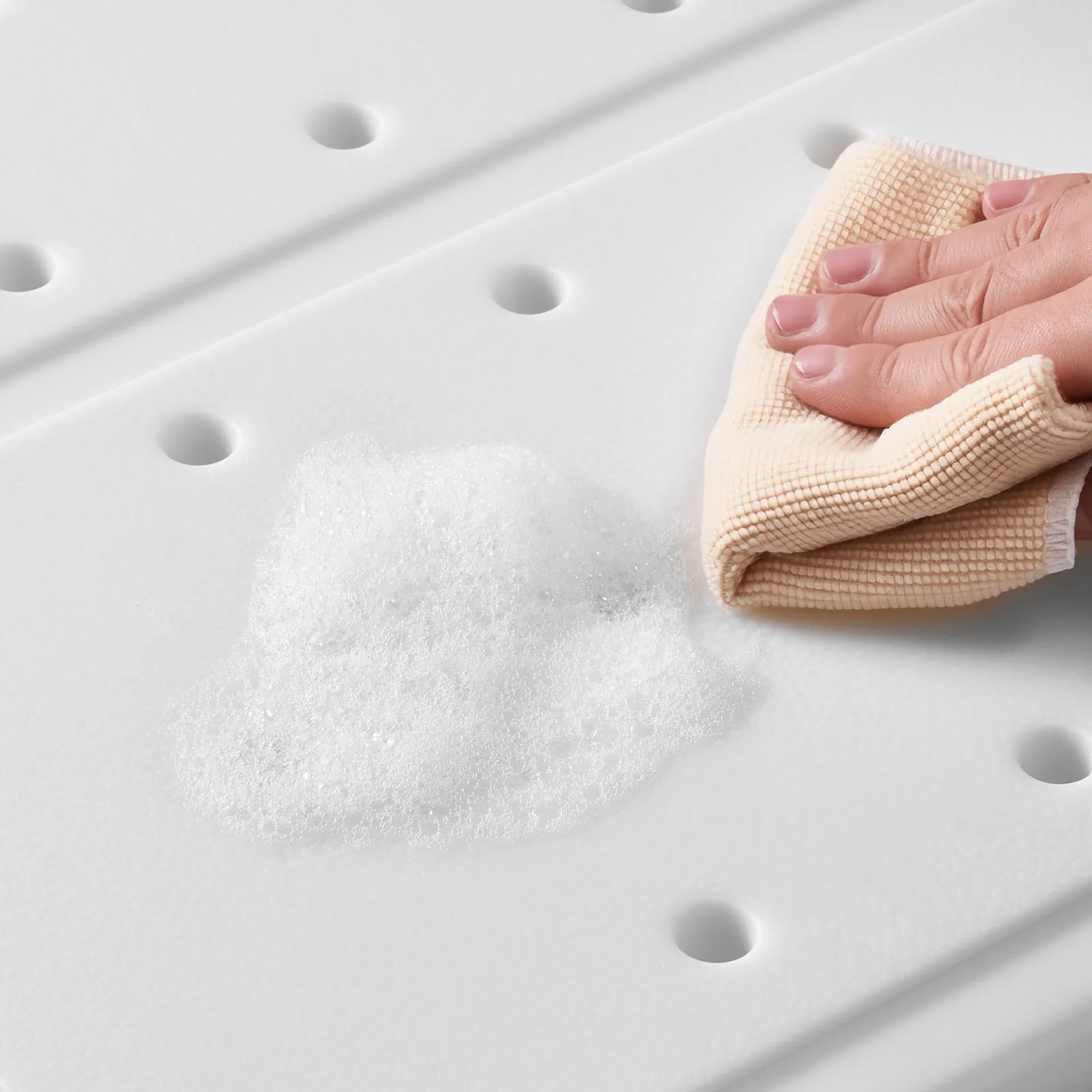
To prevent the seat surface from becoming wet and slick between uses, drainage holes across the seat allow water to flow through rather than collect beneath the user. Showering doesn't require holding the showerhead the entire time, thanks to a handheld shower holder attached to the frame, freeing a hand for washing or the railing.
Lightweight 12.3 lb Tub Transfer Bench for Seniors, Easy to Move
This tub transfer bench for seniors weighs only 12.3 pounds (5.6 kg), making it light enough for a caregiver or the user to lift, adjust, or transport between bathrooms without assistance. That stands in stark contrast to the 400-pound weight rating it can support while in position; despite this, the bench itself remains manageable.
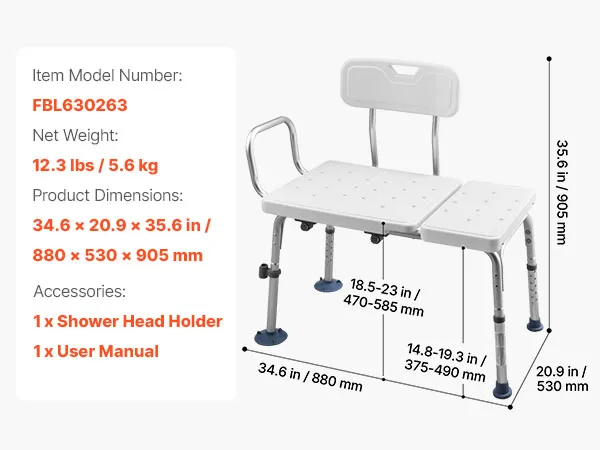
The bench's overall measurements of 34.6 x 20.9 x 35.6 inches (880 x 530 x 905 mm) allow it to fit inside a typical tub-and-shower footprint without taking up much room. It also folds down compactly enough to be stored in a closet or against a wall when not in use. It is useful for everyday, independent use rather than something that can only be handled by a caretaker, thanks to its balance of low weight and heavy-duty capacity.