VEVOR Standing Desk Frame Triple Motor, Electric 3 Leg Corner Table Legs, Adjustable Height 60-125 cm, 4 Memory Height Settings Stand Up Sit to Stand Desk Leg Riser for Office Home Worksation,Black


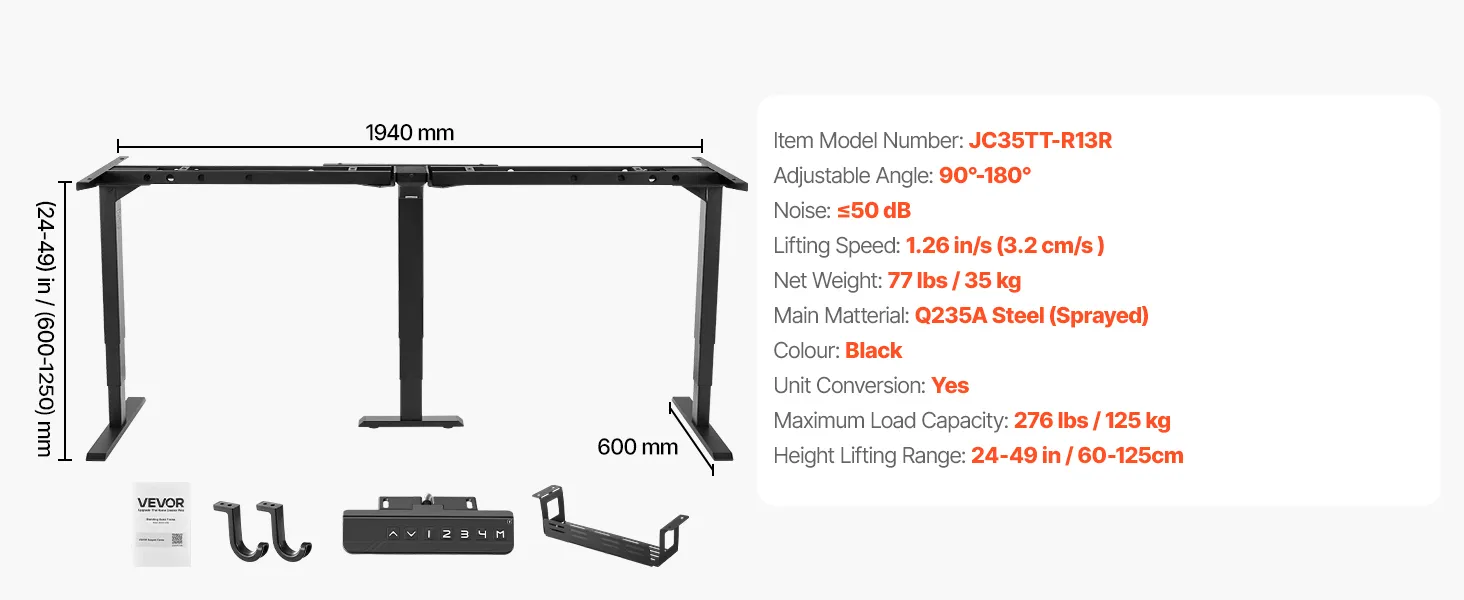
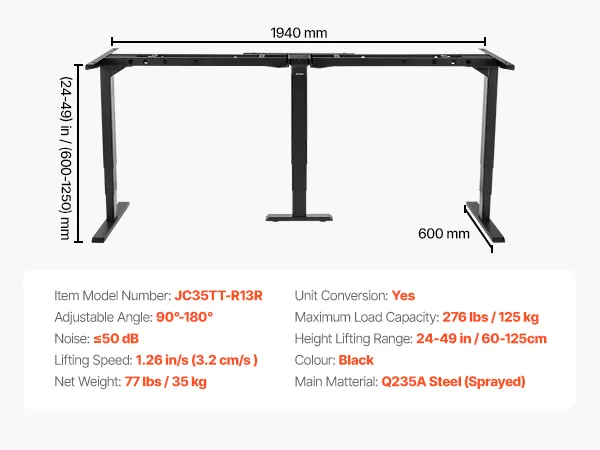
- Sit to Stand: The standing desk frame supports a 24–49" height range and 90–180° angle adjustment, fitting users 59"–79" tall. Easily transition between sitting and standing for work, productivity, or relaxation
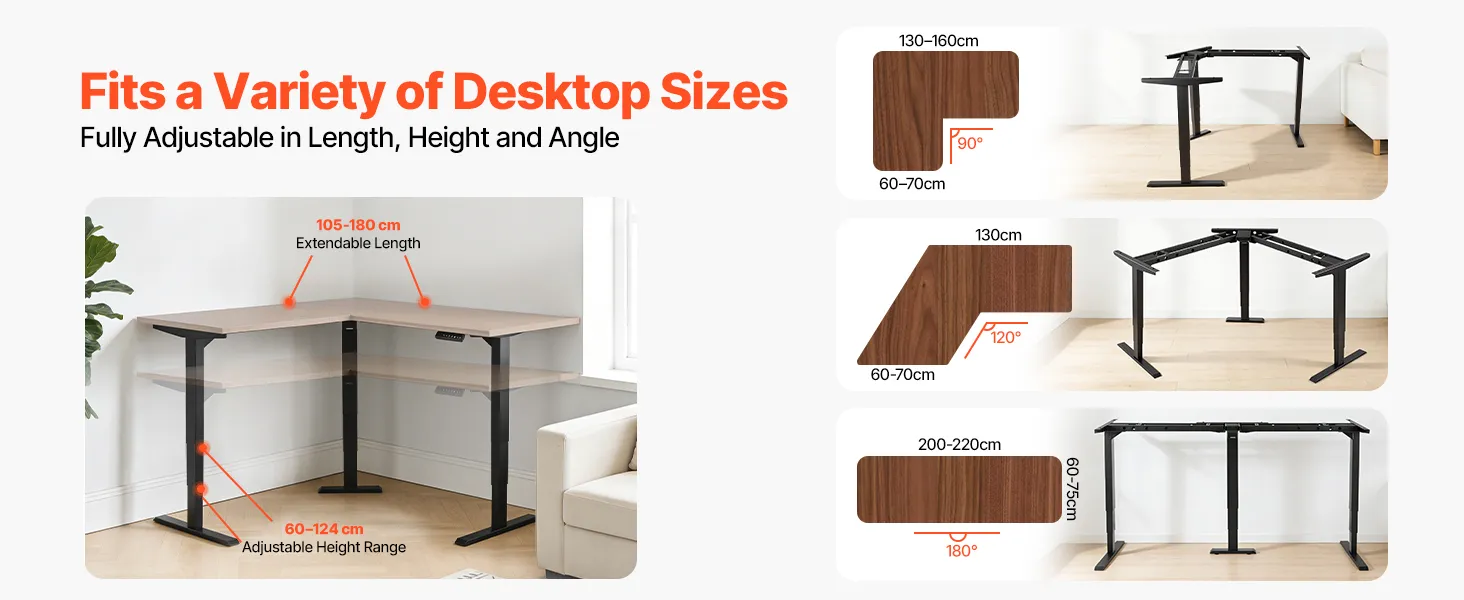
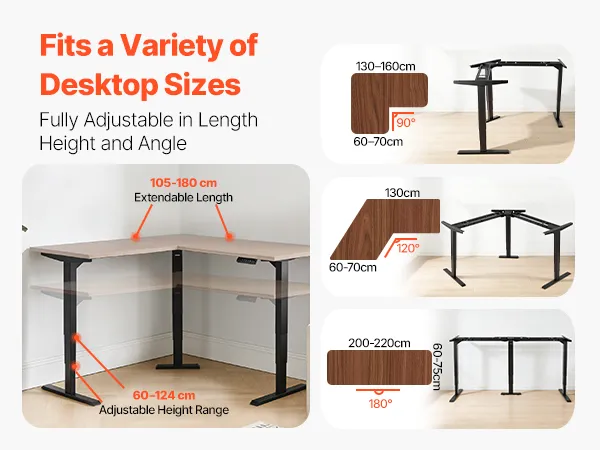
- Versatile Tabletop Compatibility: Designed with premium standing desk legs, this frame is compatible with many tabletop styles, including 90° corner, 120° mitered, and 180° straight desktops, allowing you to customize your workspace
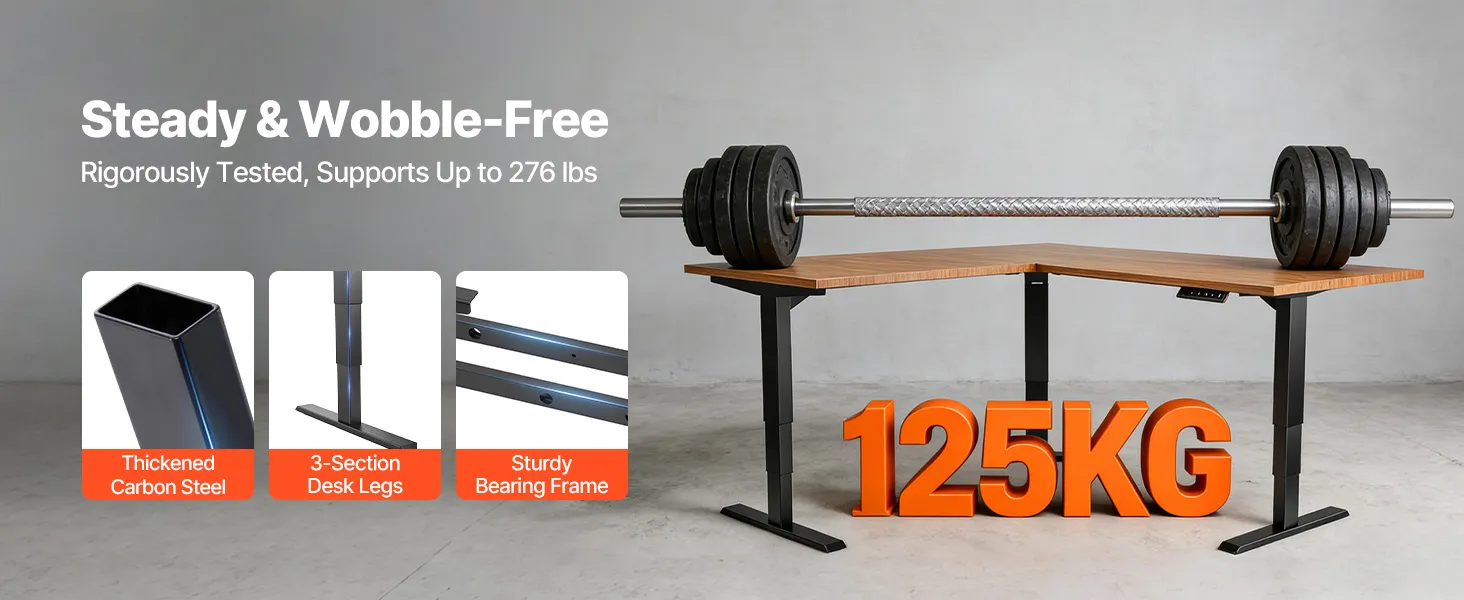
- Three-Motor System: These powerful adjustable desk legs outperform single-motor desks with a lifting speed of 1.26 in/s and operating noise below 50 dB. Built from high-quality Q235A carbon steel, they support up to 276 lbs for a stable workspace
- Smart Control Panel: The advanced system enhances the functionality of these adjustable table legs, 4 memory presets for one-touch height adjustment. The anti-collision system automatically retracts upon detection to avoid damage, protect family members
- Easy Organization: Keep your setup neat with practical desk legs accessories, including an under-desk cable tray for wire management, hooks for headphones or bags, and built-in USB ports for convenient device charging
Frequently Bought Together
Reviews
 an***
an***  Vilius Sa*** El***
 About this item


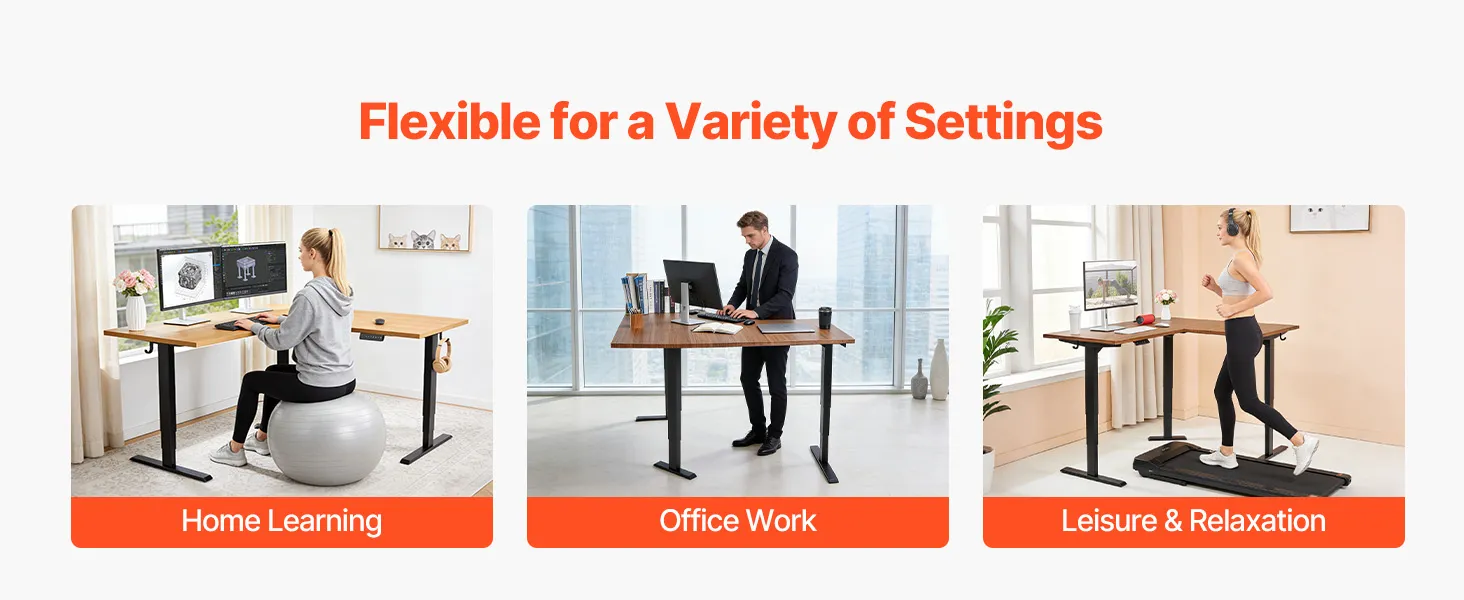
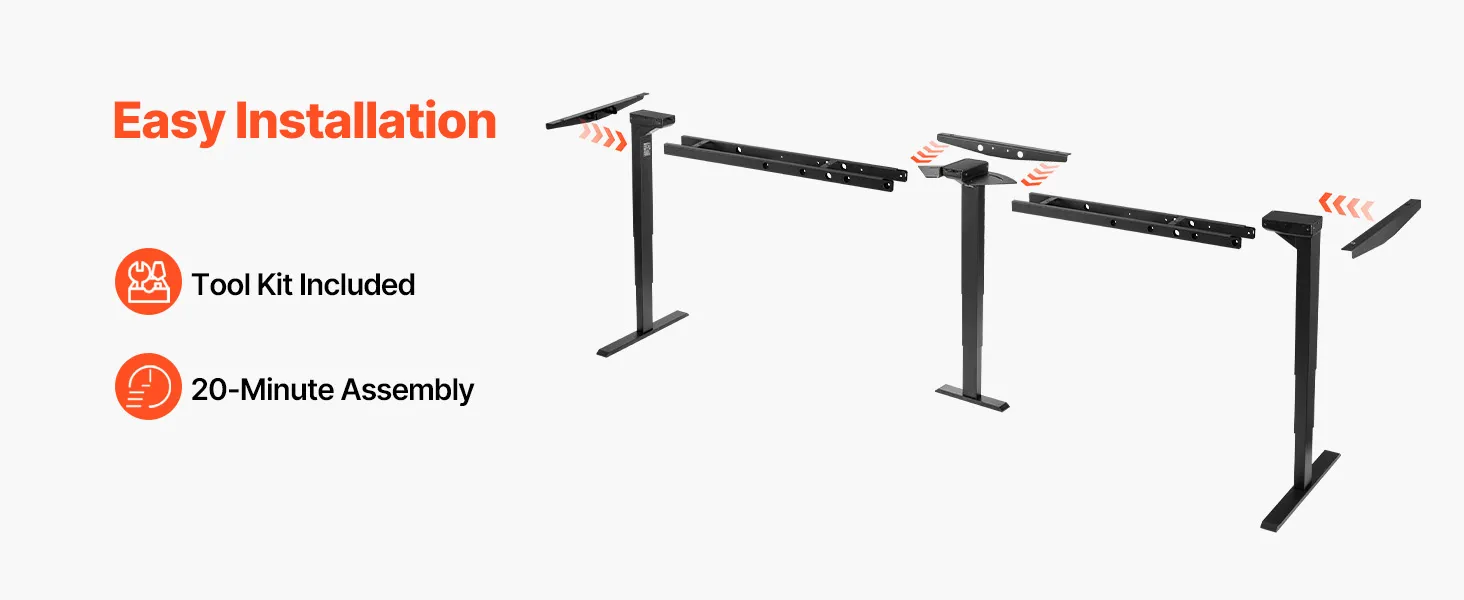
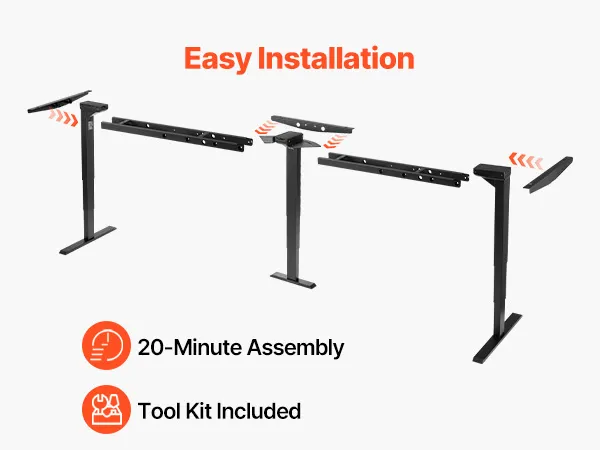
Triple Motor Standing Desk Frame with 1.26 in/s Lift Speed
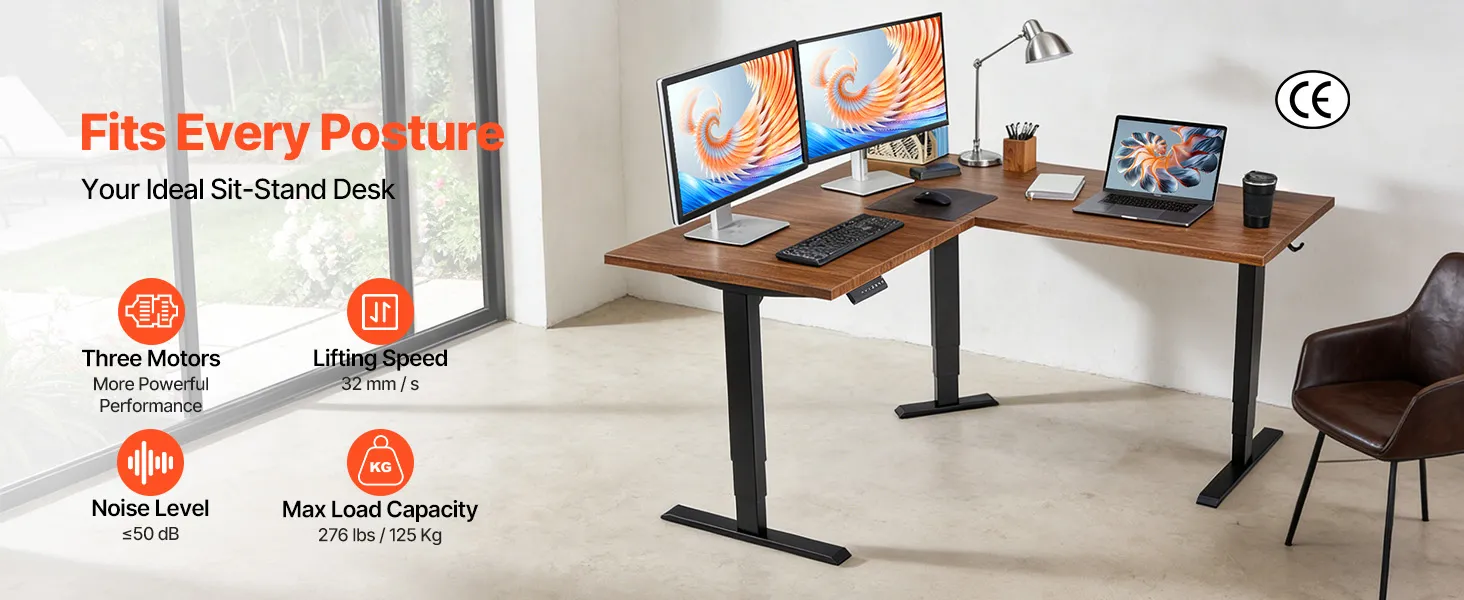
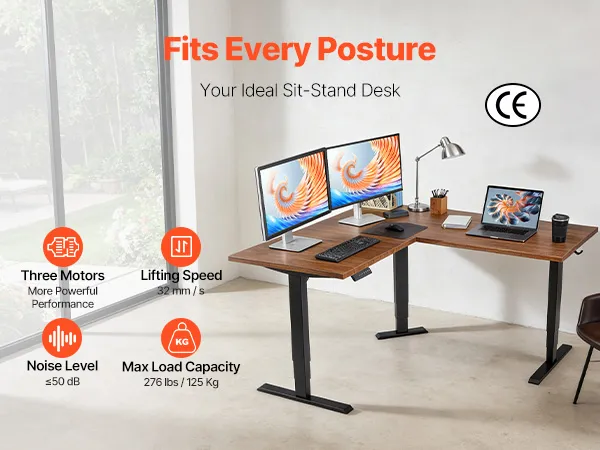
With three motors rather than the standard two, this triple motor standing desk frame can raise desktops at 1.26 in/s (3.2 cm/s), significantly faster than most dual-motor frames. Not only does the additional motor increase speed, but it also distributes the load over three lift points rather than just two, which becomes increasingly important as the frame's footprint and tabletop size increase.
The additional motor does not result in a noisier, more disturbing lift because operating noise remains below 50 dB despite the increased power. This combination of speed and quiet operation keeps daily changes quick for a desk frame designed to handle large corner tables without being a disturbance to anybody nearby. Frequent height adjustments feel natural rather than something you avoid, thanks to that blend of control and power.
90°-180° Angle Adjustment for Corner, Mitered, and Straight Tabletops
This frame is designed to accommodate corner desktops, 120° mitered tops, and straight 180° tabletops on the same frame since it can be adjusted across a 90°–180° angle range, unlike a typical rectangular frame. A real corner desk frame differs from a normal frame that only works with a rectangular top because of its angle flexibility. Most standing desk frames are constructed around a single rectangular form, so that kind of shape adaptability is rare.
This adaptability allows one frame to accommodate tabletop forms that a two-leg frame cannot support, such as an L-shaped workstation with a huge monitor array or a wraparound desk for numerous screens. It is not a general-purpose add-on, but rather a particular feature for a certain type of workspace. That range of supported angles eliminates a significant limitation that most frame solutions don't solve for anyone creating a corner workstation from scratch.
24-49 in Height Range Fits Users from 59 in to 79 in Tall
The frame supports users between 59" and 79" tall at a truly correct sitting or standing height rather than a compromise setting by adjusting via a 24"–49" (60–125 cm) height range. Even with the additional complexity of a three-leg, angle-adjustable design, that is the same working range you would anticipate from a typical sit-stand frame. Because of this consistency, everyday utility is not compromised by the additional structural complexity of the three-leg design.
You have both ergonomic range and tabletop flexibility in the same frame since the height range doesn't decrease to make room for the corner-desk capability. That is especially important for a triple motor standing desk frame that supports a shared office setup because multiple people will likely use it. Setting up a corner workstation for a revolving group of employees is an important aspect for any workplace.
Q235A Steel Frame Rated for 276 lbs Maximum Load Capacity
Despite covering a significantly larger corner or wraparound tabletop, the frame, which is made of Q235A steel with a sprayed finish, can sustain up to 276 lbs (125 kg), the same load capacity as VEVOR's standard two-leg frames. This frame weighs significantly more than a typical two-leg design at 77 lbs (35 kg) net weight, which represents the extra steel required for a three-leg, wide-footprint structure.
Instead of flexing at the corners as a smaller frame might under an enormous top, a large corner desktop is kept stable by the combination of that additional weight and the three-point support structure. This stability is what keeps the entire surface level when two or three monitors are arranged across an angled desktop. A two-leg frame stretched across the same footprint couldn't match that structural advantage.
4 Memory Presets with Anti-Collision Protection for Safer Adjustments
You may save distinct settings for sitting, standing, and any intermediate position without having to manually adjust the height every time thanks to the control panel's four memory height presets. This feature is helpful because it's more difficult to return to a precise, comfortable height by sight on a frame this large than it is on a smaller desk. When multiple people depend on the same frame throughout the week, having four distinct presets also means fewer compromises.
In a broad corner layout, where shelves, cabinets, or a second desk piece may sit closer to the frame's path, an anti-collision system will immediately stop the frame if it detects resistance during an adjustment. During a height change, that automatic retraction is designed to safeguard surrounding furniture and anyone standing close to the desk. On a frame this size, where tabletop reach makes collisions more difficult to predict, that protection is crucial.
Triple Motor Standing Desk Frame with Cable Tray, Hooks, and USB Ports
Given how much more cable and device clutter a wraparound corner layout tends to accumulate, this triple motor standing desk frame has an under-desk cable tray and hooks to keep cords, chargers, and bags organized and off the floor, a greater benefit than on a regular desk. Keeping cables in one location is even more important for a workstation with three angled tabletop sections than it is for a single straight desk.
In a multi-monitor, multi-device corner configuration, built-in USB ports provide easy device charging right at the desk, eliminating the need for a separate power strip or extension cord for each device. Taken as a whole, these details transform a large corner frame from a vast surface with cables flowing all over it into a well-organized workstation. That combination is what separates an orderly layout from a disorganized one on a frame this size.