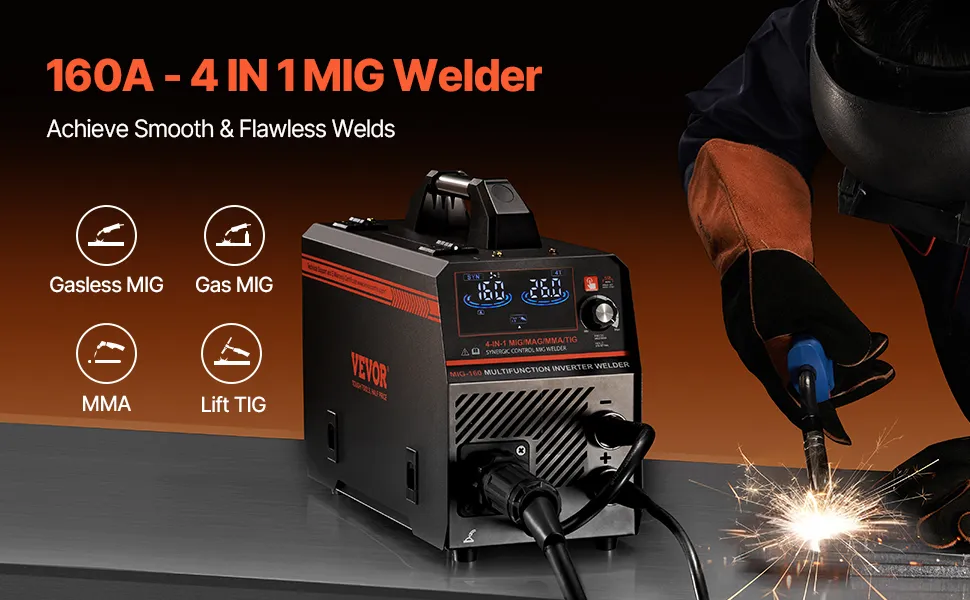
- 4-in-1 versatility: Supports lift TIG, gasless MIG, gas MIG, and MMA welding.
- Intelligent control: Auto-adjusts current and wire feed speed for optimal performance.
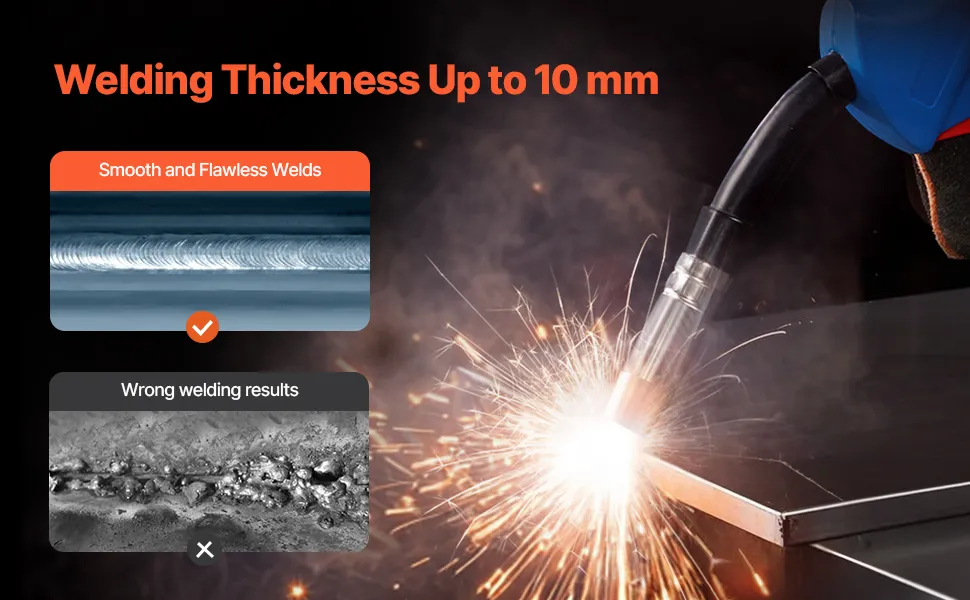
- Powerful 160A output: Welds up to 10mm thickness on multiple materials.
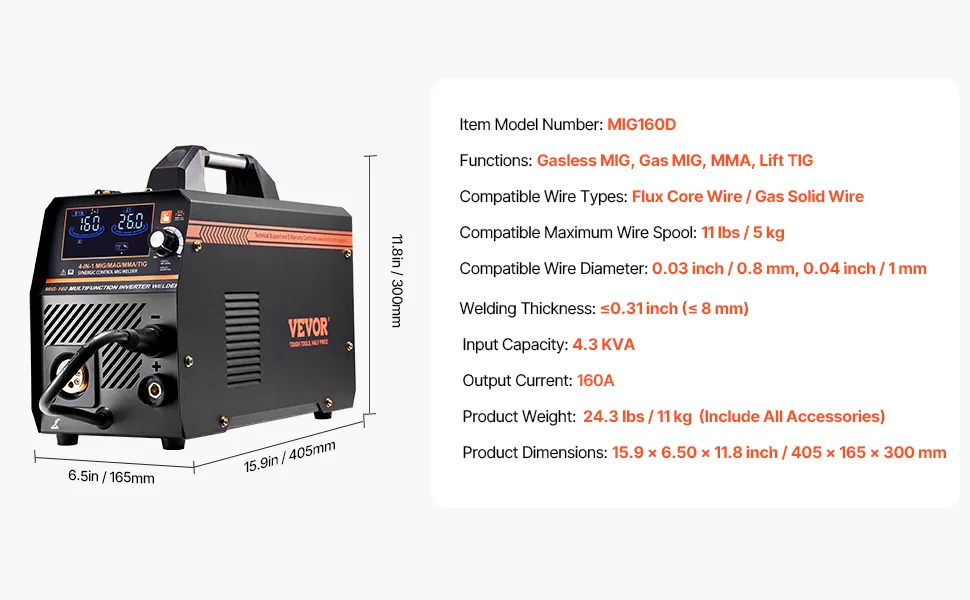
- Item Model Number MIG160D
- Functions Gasless MIG, Gas MIG, MMA, Lift TIG
- Compatible Wire Type Flux Core Wire / Gas Solid Wire
- Compatible Maximum Wire Spool 11 lbs / 5 kg
- Compatible Wire Diameter 0.03 inch / 0.8 mm, 0.04 inch / 1 mm
- Welding Thickness ≤ 0.39 inch (≤ 10 mm)

About this item


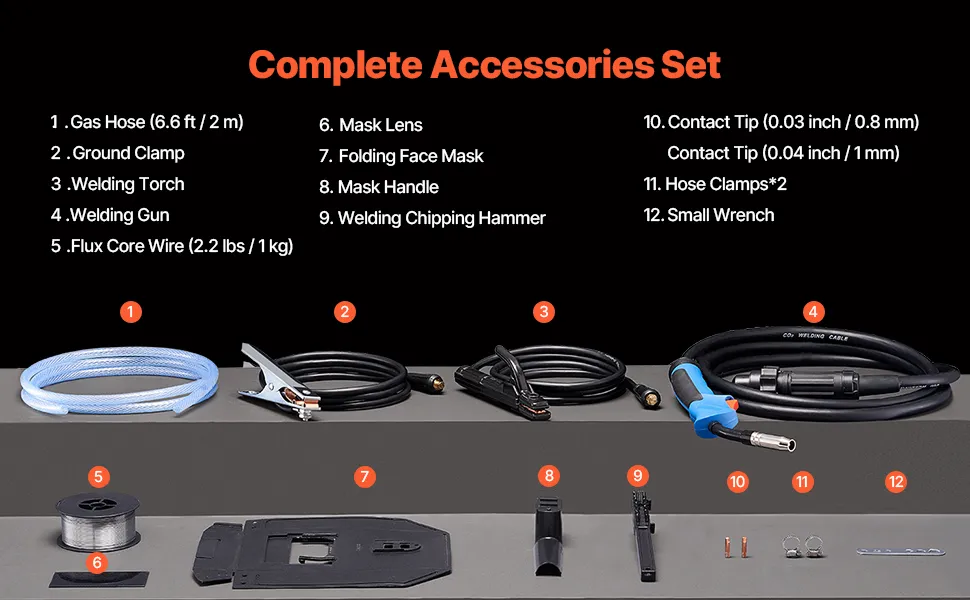
4 in 1 Welder Design for Gas MIG, Flux Core MIG, Stick, and Lift TIG Welding
For those who do different welding jobs from week to week, it’s nice to have just one 4 in 1 welder instead of three or four different machines taking up space in the shop. This VEVOR unit can perform gas MIG, gasless flux-core MIG, stick MMA, and lift TIG welding, all in one 24.3-lb frame. This unit can tackle everything from thin sheet metal repairs to steel gate fabrication to square pipe framing, and you never have to change equipment between tasks.
This flexibility is most beneficial when a project's materials vary from job to job. Mild steel, stainless steel, cast iron, and cage work all respond differently to heat input and wire type. With stick, MIG, and TIG functions built into one body, you are never stuck using the wrong process for the material in front of you, whether you are in a home garage, on a farm, or out on a busy job site.
Synergic Control Technology for Automatic Current and Wire Feed Adjustment
Setting welding parameters manually can be time-consuming and often results in inconsistent, uneven beads, especially for less experienced users still learning the relationship between voltage and wire speed. The synergic control system on this machine automatically reads the wire diameter and voltage. It adjusts the current and wire feed speed accordingly, making it easier to set up a MIG before you strike an arc on the first pass of the day.
Two modes of operation, 2T and 4T, give you direct control of trigger behavior during longer welds. 2T is for the short tack welds where you hold the trigger just long enough to make a quick spot weld, while 4T keeps the arc on for longer seams, without tiring your hand over a long session. In other words, the machine adapts to the weld length and position and doesn’t impose one trigger style on all the jobs you take on.
160A Output Current for Welding Thicknesses Up to 10mm
This machine with a 160A output current is well within range for materials up to 10mm thick (0.39 inch), which covers most jobs a home shop, farm, or small fabrication business will realistically face, including mild steel framing, stainless fixtures, sheet metal panels, and square pipe stock, all without the machine straining or producing weak, porous beads that need rework later. The 4.3 KVA input draw is still on a normal household circuit.
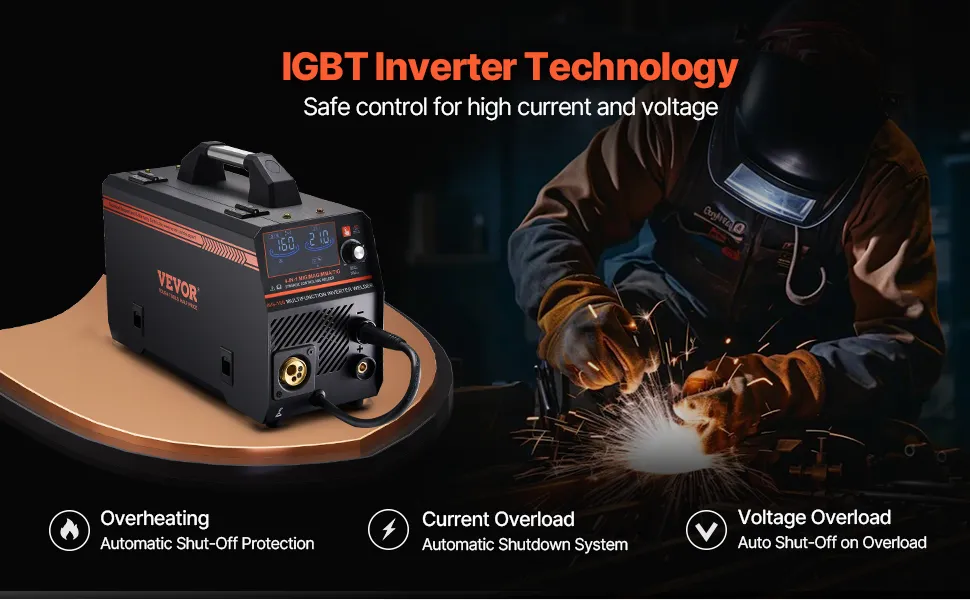
Higher amperage doesn’t guarantee a clean weld. Still, it comes with IGBT inverter technology that maintains output regardless of the thickness of the material being worked on in a project, rather than dipping or spiking at random times. Builders get the consistent penetration this 4 in 1 welder’s output range delivers, even when switching between thinner and thicker stock on the same piece, whether it’s repairing cast iron or building metal cages.
Flux Core and Gas Solid Wire Compatibility for Versatile Material Use
Wire compatibility determines how much a welder can accomplish in a day. This machine accepts both flux-cored and gas-shielded wire, the two most common consumables for MIG-style welding. It supports a spool capacity of up to 11 lbs (5kg), which is enough wire to get through a full day of welding without reloading and interrupting the welding process. It supports diameters of 0.03 inch (0.8mm) and 0.04 inch (1.0mm).
Flux core wire is better for outdoor or windy job sites where shielding gas would blow away before it can protect the weld pool, while gas solid wire provides cleaner, lower-spatter welds, better suited to indoor shop work. With both options built into one machine, your wire choice is dictated by the job site and the material you have on hand, not which welder happens to be available in the shop that day.
HD LCD Screen Display for Clear and Intuitive Welding Control
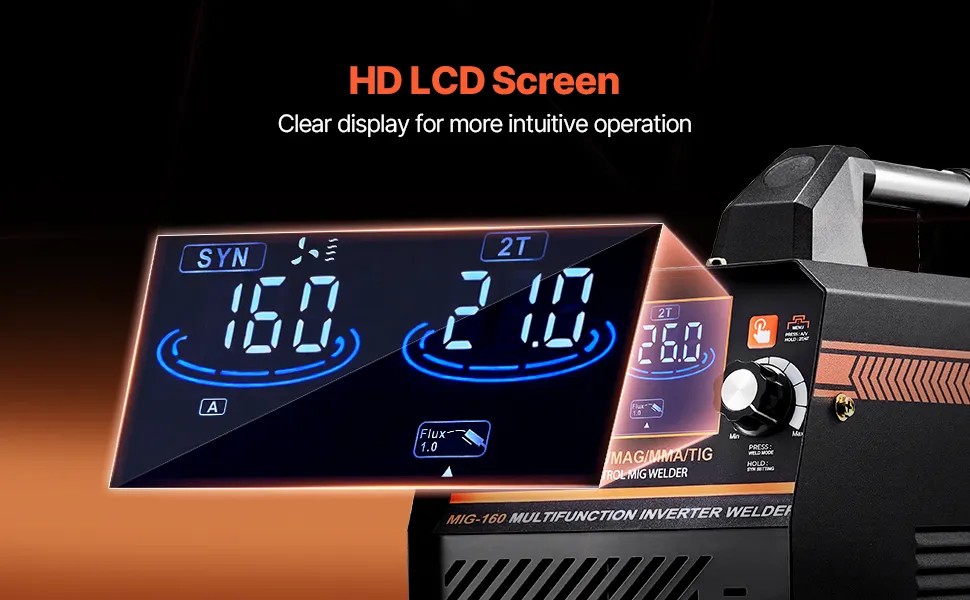
The HD LCD screen displays current settings clearly so you can check at a glance, even with your welding gloves on and your helmet flipped down between passes. You can check voltage, wire speed, and active mode right on the display before you strike an arc, reducing setup errors, especially when switching from stick to MIG to TIG in the same work session on different parts of the same project.
The display, coupled with built-in overheat and overload protection, makes this 4 in 1 welder safe to use for extended sessions without unexpected shutdowns. If the internal temperature gets too high or current draw exceeds a safe level, the protection circuitry kicks in before any real damage occurs, making the inverter last a lot longer than you’d expect from occasional weekend use alone.
4 in 1 Welder Built-In Overheat and Overload Protection for Safe Operation
As session length and amperage increase, safety features become more important, and this welder includes overheat and overload protection as standard, not as a paid upgrade or add-on accessory. If you do a lot of long MIG passes or long stick welding, you’ll create a lot of heat inside the inverter, and the protection system will shut the machine down before that heat turns into an expensive repair bill for the owner.
Current overload protection offers a second line of defense against power surges that silently damage unprotected inverters during months of normal use. If you’re looking to buy a few welding machines at a time, the multi-process abilities and built-in safety circuits are exactly what make a 4 in 1 welder worth keeping in the shop for years versus one that’s going to need replacing within 12 months of heavy use.
Frequently Bought Together
Fall Upgrade
VEVOR MIG Welder, 160A Synergic Mig Welding Machine, 4-in-1 Gas MIG/Flux Core MIG/Stick/Lift TIG Multi-Process Welder Machine with IGBT Inverter Technology and LCD Screen Display