Deals
VEVOR Hay Nets for Horses, 4PCS, 0.9 m Extended Length, 38 x 38 mm Holes, PE Material, with Four Carabiner Hooks, Hanging Slow Feed Hay Nets for Horses, Sheep, Cattle, Alpacas, and Livestock


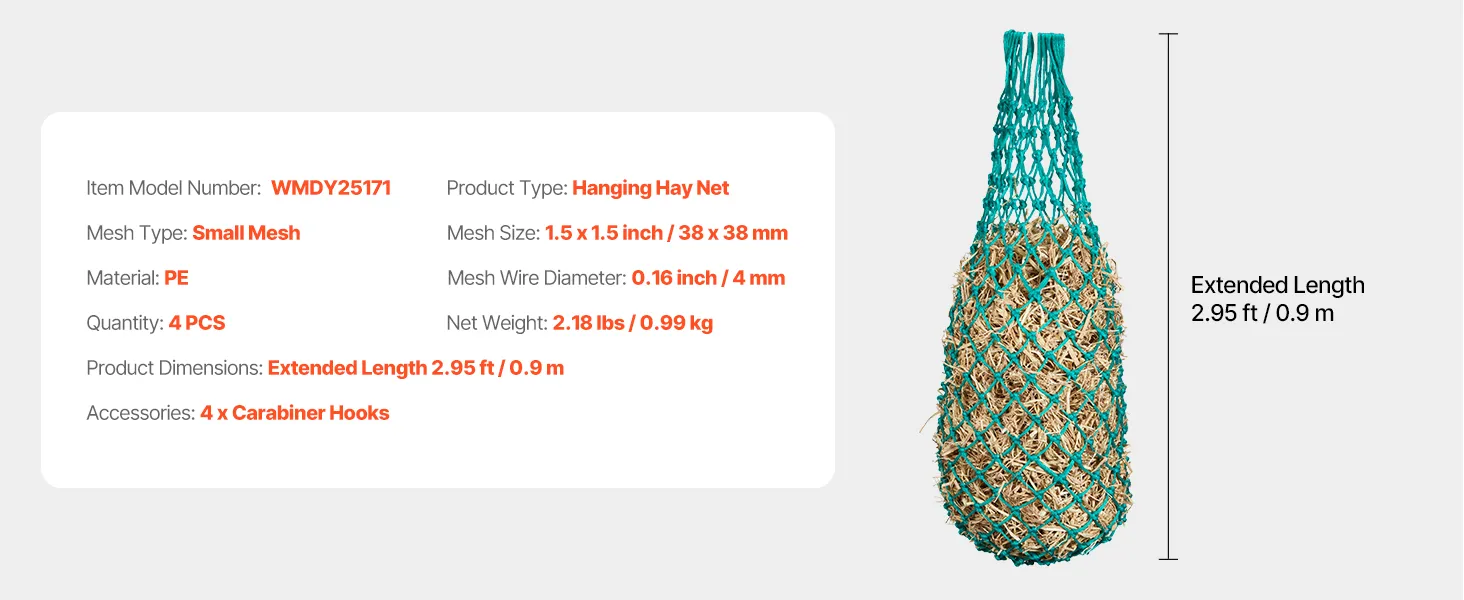
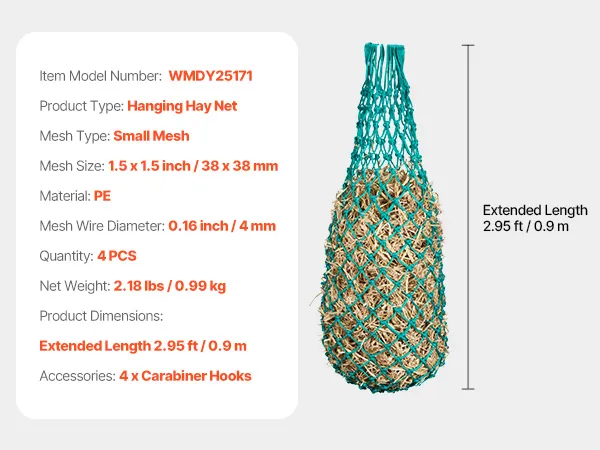
- Quick Filling Design: These hay nets for horses include a 4-pack of 2.95 ft hay nets, each with a 13 lbs capacity. Suitable for timothy, orchard, and alfalfa. Wide-opening design allows fast filling for an efficient, comfortable feeding experience
- Durable Material: Woven from 0.16 in thick premium PE, this slow feed hay nets for horses provide excellent toughness and wear resistance. Sturdy construction with knotted design enhances tensile strength, ensuring long-lasting use without deformation
- Scientific Slow Feeding: Featuring 1.5 in mesh, the hay nets mimic natural grazing, slow eating, avoid overeating, and reduce risks of bloating or ulcers, supporting optimal digestion for horses
- Reduce Feed Waste: The horse hay nets mesh limit spillage and dropped hay, keeping feed fresh and clean. They minimize waste and save costs while maintaining a tidy, clean feeding area for your horses
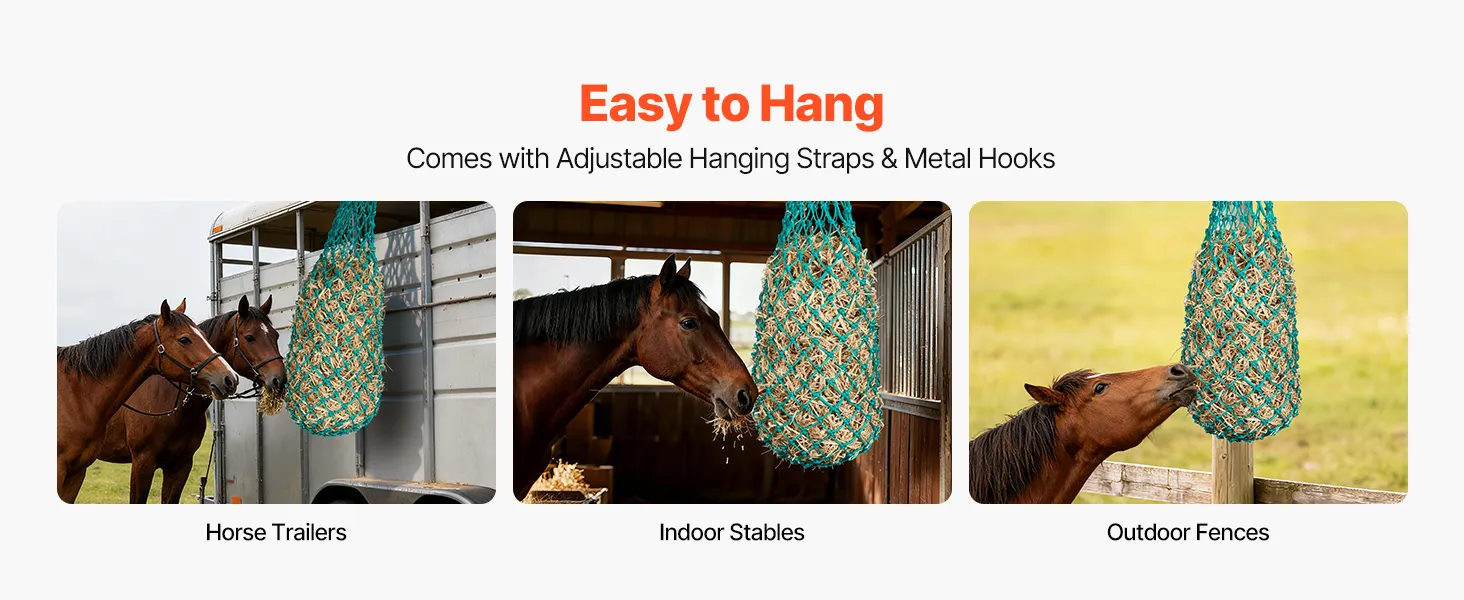
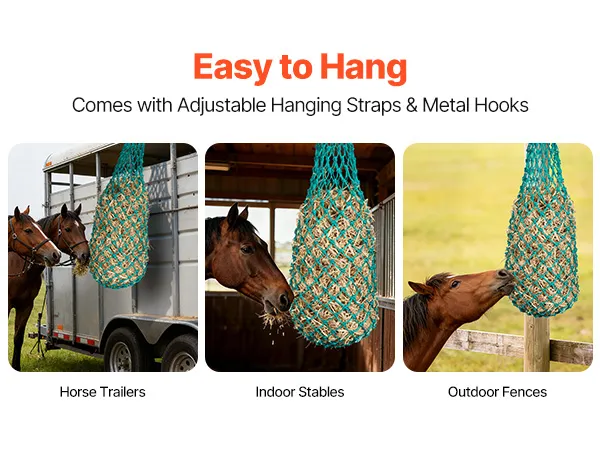
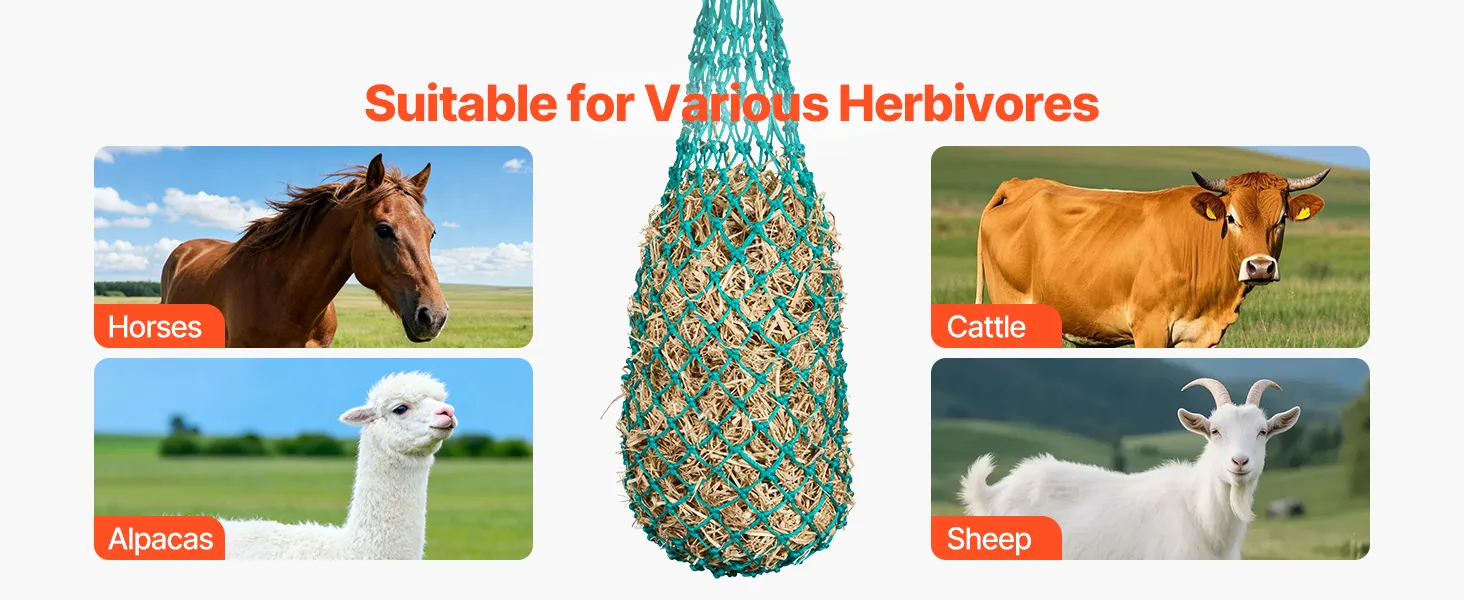
- Wide Application: Our slow feeder hay nets for horses are ideal for stables, paddocks, outdoor training areas, and short-term feeding trips. They are suitable for horses, goats, alpacas, and rabbits, making them easy to feed multiple animals efficiently
Frequently Bought Together
Reviews
About this item


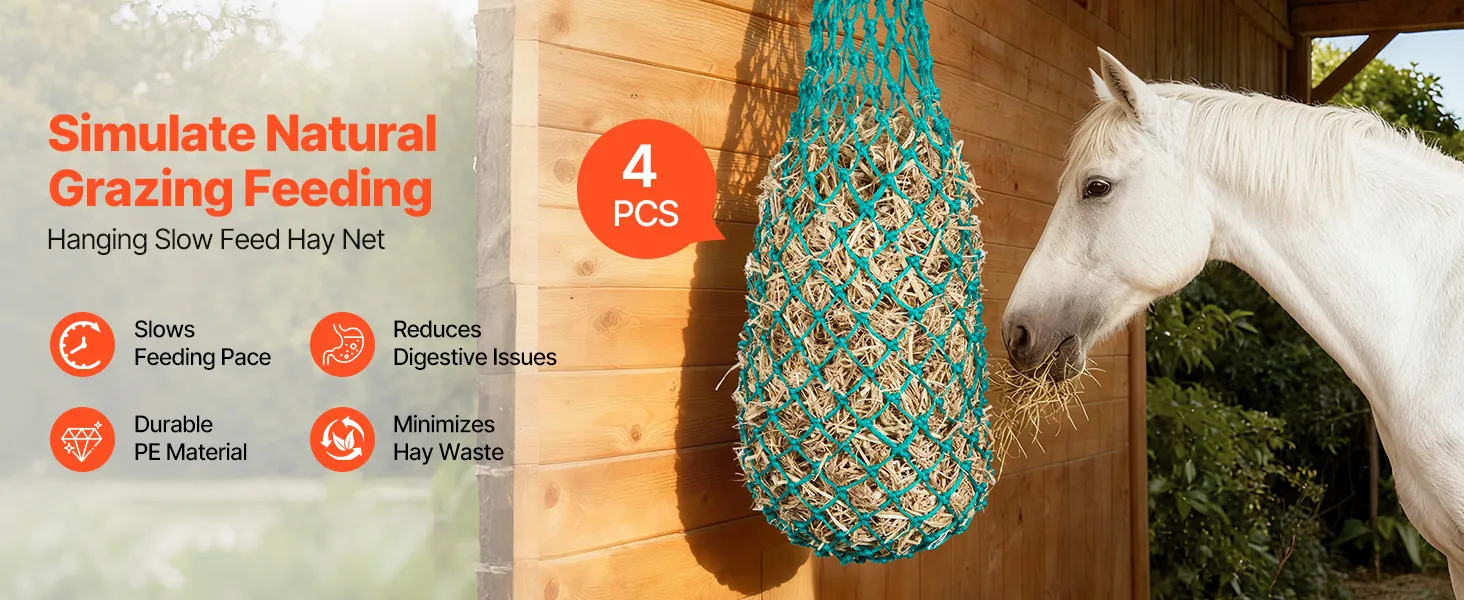
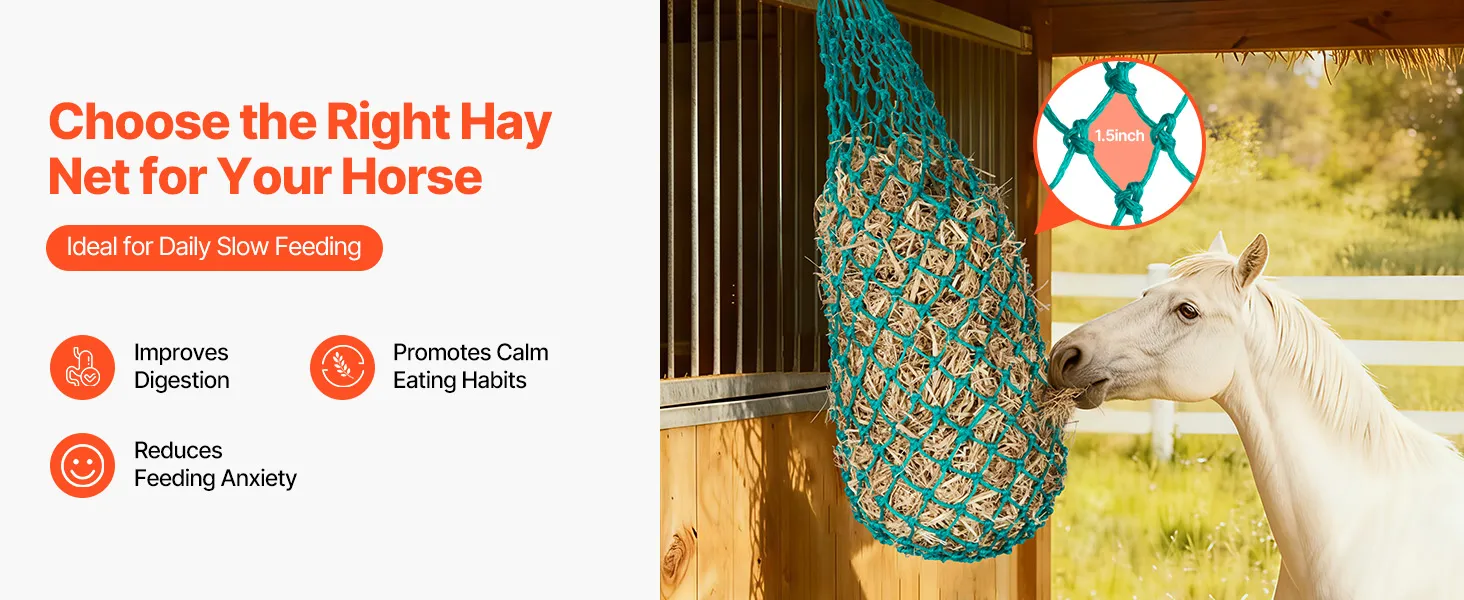
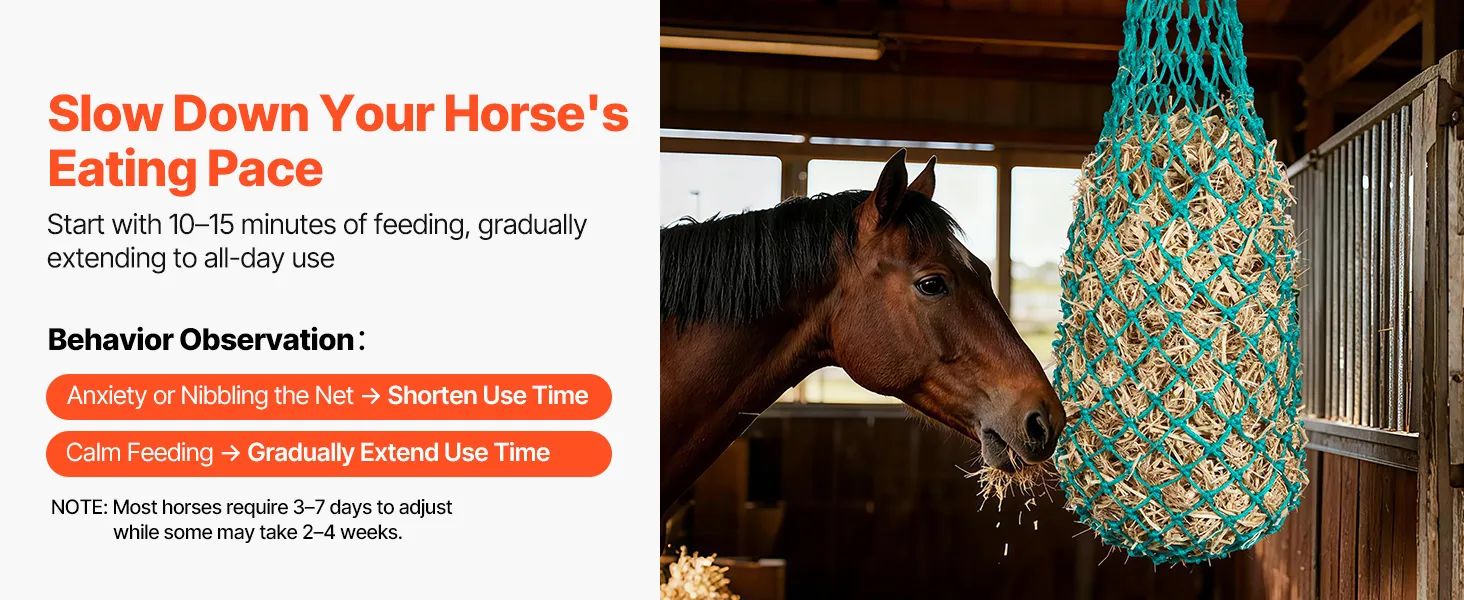
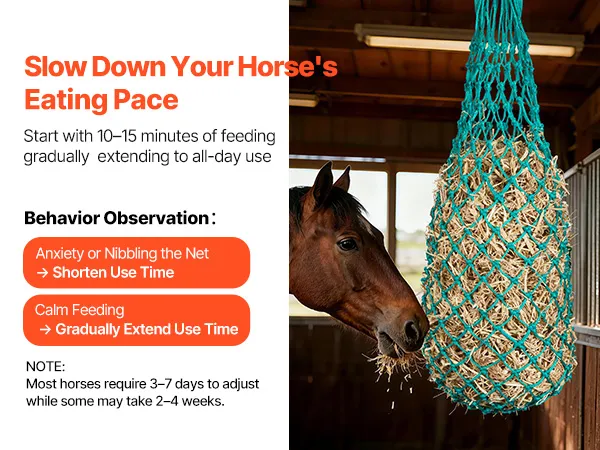
Precision-Engineered 38x38mm Mesh Controls Natural Grazing Patterns
These slow feed hay nets for horses are designed to support healthier feeding habits while reducing waste. The mesh size is designed based on typical horse feeding behavior to help extend feeding time while maintaining steady nutritional intake rates.
Feeding time goes from 30 minutes with free-choice hay to 2 to 4 hours with these nets, which is very close to the 16 to 18 hours a day that horses naturally graze. Controlled access to portions leads to more chewing, which increases saliva production, improves nutrient absorption, and helps maintain the pH of the digestive system.
Industrial-Grade 4mm PE Filament Withstands 2000+ Feeding Cycles
Made from 4 mm-diameter polyethylene strands, these hay nets can withstand aggressive animal feeding and weathering stresses that would destroy other types of netting. The PE molecular structure provides superior abrasion resistance against horse teeth and hooves while maintaining flexibility over a temperature range from -40°F to 160°F. Tensile-strength tests show that each strand has a breaking strength of 300 pounds.
The strands are securely fused to improve durability at the knotted junction points, which are stronger than the base material itself. Incorporating UV stabilizers into the material during production stops photodegradation, which can break down materials in outdoor settings.
Optimized 0.9-Meter Capacity Accommodates 13-Pound Hay Loads
The extra-long 0.9-meter length makes it easier to handle and provides a suitable feeding size for most horses. Up to the 13-pound limit, the size works well for both loose and compact hay.
The longer design helps distribute hay more evenly along the entire net length than shorter options do, reducing competition zones and uneven eating patterns. The overall design ensures the net stays stable during feeding, so it does not sway too much, bother the horses, or put stress on the mounting points.
Specialized Carabiner System Enables Slow Feed Hay Nets for Horses Mounting Flexibility
The three-mm steel structure and the four carabiners feature a durable steel construction with a zinc-plated finish included with the kit, making them resistant to corrosion in barn environments. The locking design keeps the clips secure during use, and the tool-free connection to different mounting points enables this. The gate opening width accommodates metal tubing, wire mesh, and wooden rails up to 12 mm thick.
Multiple attachment points help evenly distribute weight and prevent net distortion during feeding. The carabiner placement system lets you adjust the height from 24 inches to 72 inches, so it can fit horses of different sizes and feed preferences.
Feed Waste Reduction System Reduces Hay Costs by 45%
Controlled feeding with slow feed hay nets for horses helps reduce hay waste compared to ground feeding. Eliminating trampling, wind spreading, and contamination losses reduces waste.
Compared to loose ground feeding, the amount of clean hay that animals eat can increase compared with ground feeding. The raised eating position keeps bedding materials, manure, and dirt from mixing into the ground hay, making it unsafe to eat. For typical hay consumption trends, the return on investment typically occurs within 60 to 90 days of implementation.
Multi-Species Application Range Covers Equines, Ruminants, and Camelids
These slow feed hay nets for horses are suitable for all horse types, from 200-pound Shetland ponies to 2,000-pound draft horses, with mesh sizes that fit different muzzles and feeding habits. The net system works well for small ruminants like sheep and goats because it reduces aggression and can help reduce feed waste. Camelids, such as alpacas and llamas, tend to waste less feed.
The mesh size works well for animals with different tooth structures and feeding habits. Animal farms that use standardized slow-feed methods report that their animals are healthier and that feed costs decrease across all species. The 13-pound size is enough for horses to eat every day or for smaller animals to eat over several days.
All-Weather Durability with Slow Feed Hay Nets for Horses Performance Standards
Polyethylene does not absorb water like natural fiber options do, which is what causes mold to grow and materials to break down. The material resists moisture in outdoor use.
Chemical-resistant properties prevent breakdown when they come into contact with ammonia in barns or with acids from fermented hay. The UV protection exceeds ASTM requirements for outdoor plastic use; after 2000 hours of accelerated UV exposure, the strength loss is less than 10%. The material's properties ensure it works the same way across all temperature zones and geographic areas.
Rapid-Fill Architecture Streamlines Daily Feeding Routines
The wide opening allows loading hay, loose hay, and chopped forage without any special tools or methods. The average time to fill a net is 90 seconds for experienced handlers and 3 minutes for beginners who use the right method. The 4-net setup allows batch filling for multiple horses or rotation plans that ensure hay is always available.
When used correctly, it makes filling quick and efficient. The flexible material can be compressed while being filled, but it will expand to its full size once hung. When not in use, the nets take up very little room in the barn because they fold up into a 12x8-inch footprint.