Squat Equipment




Results for Squat Equipment
Dedicated lifters can use VEVOR squat equipment to safely and effectively work out their lower bodies. We have a wide selection of hex bars for neutral-grip deadlifts, safety squat bars, and adjustable squat racks. VEVOR has machines that can hold 1000 lbs or more, work with Olympic barbells, and are made of reinforced steel. From beginners learning the right way to lift weights to advanced players aiming to improve their competition totals, our collection is ideal. It offers stability, adjustability, and safety features that help you get stronger over time at a price you can afford.
VEVOR Squat Equipment: Professional-Grade Tools for Safe Progressive Strength Training
Are you looking to build really strong legs at home without giving up the safety and flexibility of gym equipment? VEVOR squat equipment brings professional-level training into homes with bars, racks, and other components to hold heavy weights and withstand heavy use for years. Powerlifters, athletes, individuals in rehabilitation, and fitness fans can all use our systems. We have a wide range of squat equipment that meets or exceeds commercial gym standards.
Choose Squat Equipment by Weight Capacity & Equipment Type
By knowing the load ratings, you can ensure your squat training tools can handle your current strength level. Choosing the right types of squat equipment enables you to handle years of progressive overload as you get stronger.
Weight Capacity Ratings for Different Training Levels
The load capacity tells you how much weight the squat equipment can safely hold. Beginner and general exercise equipment for squats usually has a total weight capacity of 500 to 700 lbs. It is enough for beginner lifters whose working weights stay well below these limits for months or years of training. A 500-lb capacity can hold Olympic safety squat bars that weigh 45 lbs and 455 lbs of plates.
Strong players who work hard, on the other hand, quickly get past their starting levels. These lifters should look for mid range racks and bars that can hold 800 and 1000 lbs. It gives them enough headroom above the weights they're using. The squat equipment in this range features safety features that account for dynamic loads, failed lifts, and future strength gains.
Powerlifters, advanced lifters, and serious strength athletes need squat racks that can hold 1000 to 1500 lbs. Dynamic forces from a 500-lb squat can exceed 700 lbs during a hard descent or rebound out of the bottom position. For this group, 1000-lb ratings are necessary, not too high. Commercial-grade home squat equipment rated at 1200–1500 lbs provides these heavy lifters with the stability and structural strength they need.
Hex Trap Bar Specifications and Training Applications
The hex trap bar is one of the most useful pieces of squat equipment for home gyms. Its unique open-center design lets you perform various deadlifts, farmer's walks, shrugs, and modified squats. A standard hex bar trap bar features a 56-inch handle-to-handle width. That means people from 5' to 6'+ can do deadlifts without any width restrictions. The hexagonal frame typically provides lifters with about 24 to 26 inches of space inside where they can stand. The handle length is usually between 6 and 8 inches, which is the right length for a comfy grip.
The weight sleeve length indicates how much weight you can put on a trap bar hex bar. Standard 10-inch sleeves can hold three to four full-size Olympic plates on each side, for a total weight of 270 to 360 lbs. Extended 16-inch sleeves can hold five to six plates on each side, for a total weight of 450 to 540 lbs. Advanced lifters who regularly do deadlifts over 400 lbs need models with longer sleeves.
Safety Squat Bar Design and Shoulder-Saving Benefits
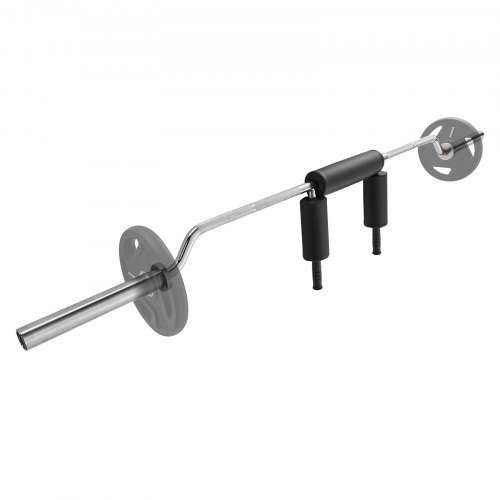
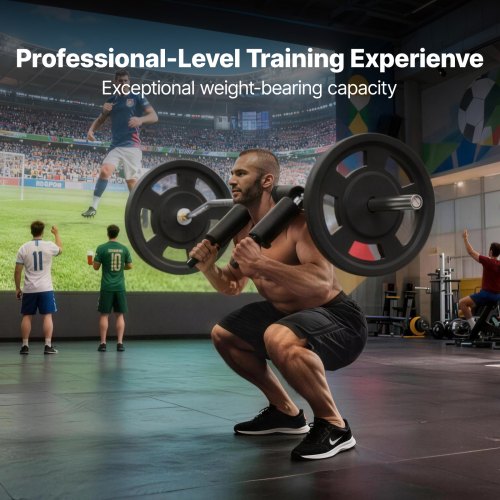
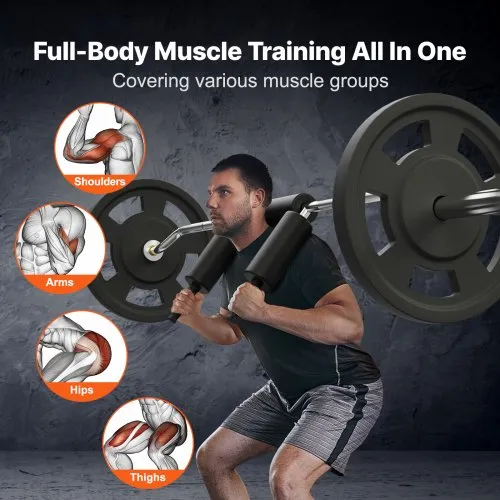
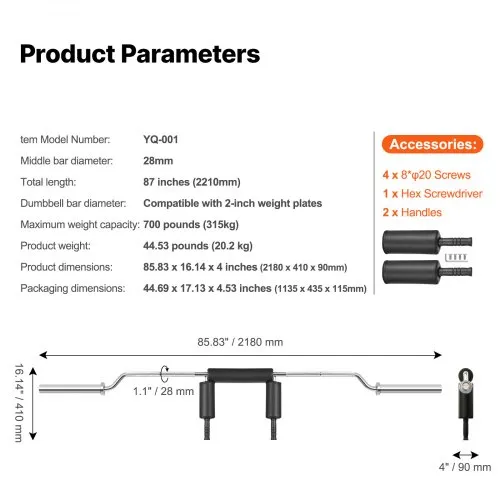
Safety squat bars help lifters with shoulder injuries, limited mobility, or posture problems. The safety squat bars are cambered, with the barbell bent forward from the shoulder pads. This moves the lifter's center of gravity slightly forward compared to straight Olympic bars. A slight forward shift changes biomechanics; to maintain your balance, you naturally have to lean your torso forward a bit more.
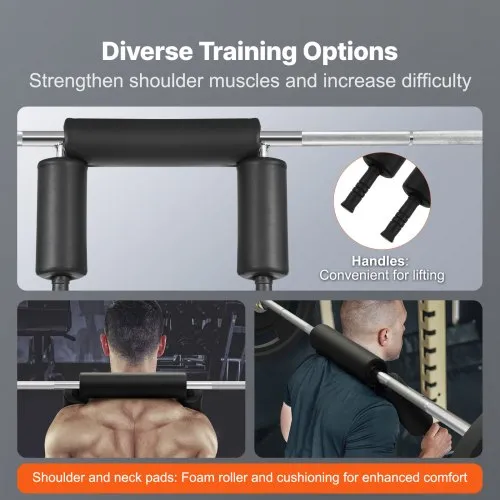
Shoulder yokes with padding reduce the direct bar-on-shoulders pressure that can be painful or even cause injury for lifters. The thick padding is usually 2 to 3 inches of high-density foam covered in vinyl or leather. It disperses the weight across a bigger area of the shoulder and upper back, avoiding the painful pressure points that straight bars cause.
Some modern safety squat bars have handle angles that can be changed to fit people with different arm lengths and shoulder mobility levels. People who are shorter tend to like handle angles that are more vertical. Larger users often prefer handle angles that can be adjusted to allow a more forward-angled grip for comfort. Fixed-angle handles are a compromise for users who find it hard to position themselves, but most lifters can easily get used to normal angles.
Olympic Squat Rack Versus Power Rack Systems
Freestanding squat racks and protected power racks differ in safety features, space needs, and training options. So it's important to know which system will work best for your needs and space limitations. Two separate uprights with J-hooks form a squat rack for squats, bench presses, and overhead presses. It has small areas that are about 48" x 48". The open design lets you move around the racks while you lift, which is helpful for Olympic lifts.
Standalone racks, on the other hand, don't have the built-in safety features that power racks do. Hence, you'll need to buy separate spotter arms or safety straps. If there are no safety systems in place, failed lifts can result in dumping weight backward or forward. This can be risky in home gyms without spotters and could damage floors, walls, or nearby equipment.
Power racks, also called "power cages," have four posts that support lifting areas and safety bars or straps at different heights. These built-in safety features automatically catch failed lifts, so you can train hard until your muscles give out without the help of a helper. Lifters place safety squat bars one to two inches below their squat depth.
Select Squat Equipment Based on Safety Features & Adjustability
The equipment's safety features often determine whether it can be used for different exercises and by more than one person. It can also help protect users during heavy lifting sessions that cause muscle failure.
Safety Catch Systems and Failure Protection
Safety catch mechanisms work like automatic spotters to keep people from getting hurt when lifts don't go as planned. Pin-and-hole safety systems use solid steel pins inserted through holes in the uprights of the racks. This creates rigid platforms that catch the bar when a lift fails. The pins hold the bar in place so it doesn't drop further, protecting lifters. To make a change, you have to take out the pins, move them to different holes, and then put them back in. It takes 30 to 60 seconds per adjustment.
Strap-style safety systems hang adjustable straps between the uprights. It creates flexible catching surfaces that bend slightly under load, preventing the bar from falling. Most strap safeties use quick-release pins or carabiners for their height adjustments. This means the height can be changed in 5–10 seconds without removing the straps, which is much faster than most pin-and-hole methods. The quick change is beneficial for lifters who do circuits or switch between exercises that require different safety heights.
Height and Width Adjustment for Multiple Users
For adjustable racks, the upright height ranges from about 72 inches for small home gyms. Larger or commercial gyms have 90 inches adjustable racks. J-hooks and safety catches are placed at higher maximum heights on taller uprights. It makes them suitable for very tall users (6'3"+) who need higher starting positions for squats and overhead presses.
Some modular squat equipment is assembled with bolts, allowing you to adjust the upright height by adding or removing parts. It lets you rearrange your squat equipment to fit the new space, rather than buying a whole new rack. You can change the exercise room and weight storage capacity by adjusting the width between the uprights.
Shop VEVOR Squat Equipment for Serious Strength Training
VEVOR squat equipment is made to professional standards and comes in a variety of configurations to help you reach any power goal. Our range has the weight capacity, adjustability, and sturdiness that serious lifters need. For example, we have specialized hex trap bars for neutral-grip deadlifting and safety squat bars that reduce shoulder stress. Because it is made of heavy-duty steel, it can hold more than 1000 lbs. VEVOR is the best choice for squat equipment. Take a look at our whole collection right now and lay the groundwork for years of steady strength gains.
FAQs
What weight capacity do I need for home squat equipment?
500–700 lbs is a good range for beginners. For a safe training margin, intermediate lifters should look for equipment rated for 800 to 1000 lbs. Powerlifters and lifters with a lot of experience should look for 1000- to 1500-lb ratings. The squat equipment can handle heavy weights and has dynamic force safety margins.
Do I need a full power rack, or is a squat rack sufficient?
Power racks have safety catches built into the entire cage, which are essential for training alone and failing safely. For the same level of safety, squat racks need their own safety devices. If you have the room and money, get power racks. If not, add safety arms to squat racks.
How much space do I need for squat equipment?
A basic squat equipment rack needs an area of about 4' x 4' (16 square feet). Power racks need 28 square feet (4' x 7') of space. Allow 2 to 3 feet of space on all sides for safe moving, loading plates, and emergency exits. For racks, this means a minimum of 8 feet by 8 feet and a maximum of 8 feet by 11 feet for power racks.