VEVOR Pneumatic Strapping Tool Hand Held Strapping Machine for 1/2"-3/4" PET
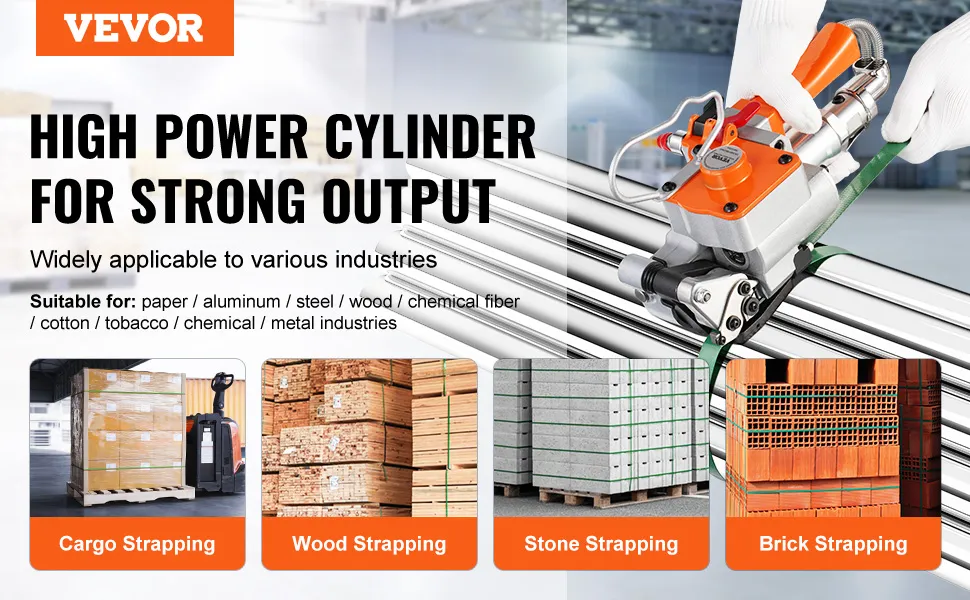
- Perfect for Various Industries: Whether you're in paper, aluminum, steel, wood, chemical fiber, cotton, tobacco, chemical, or metal products, our pneumatic strapping tool is here to help. It handles everything from wood boards and marble to bricks and steel, boosting your efficiency and product quality across the board.
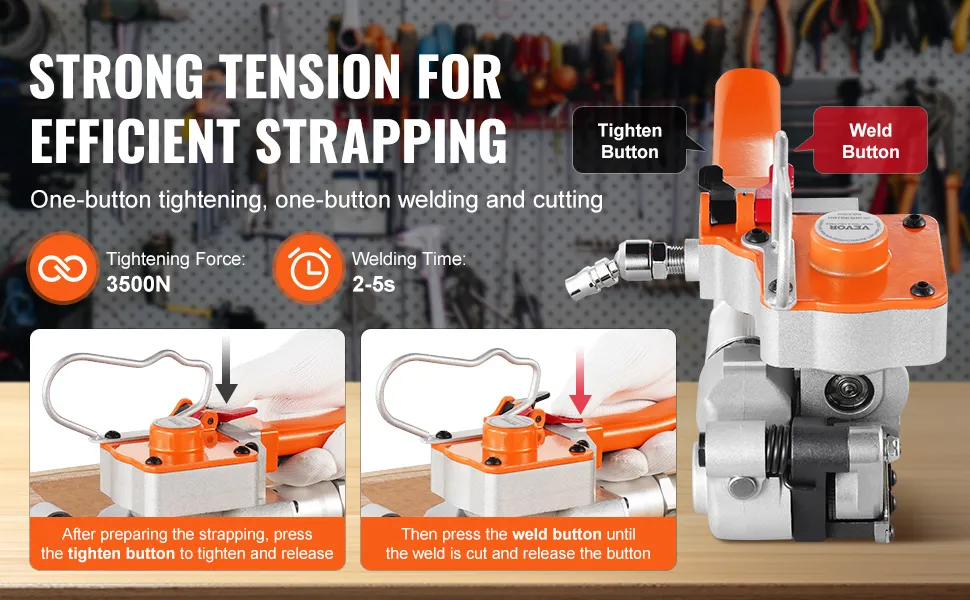
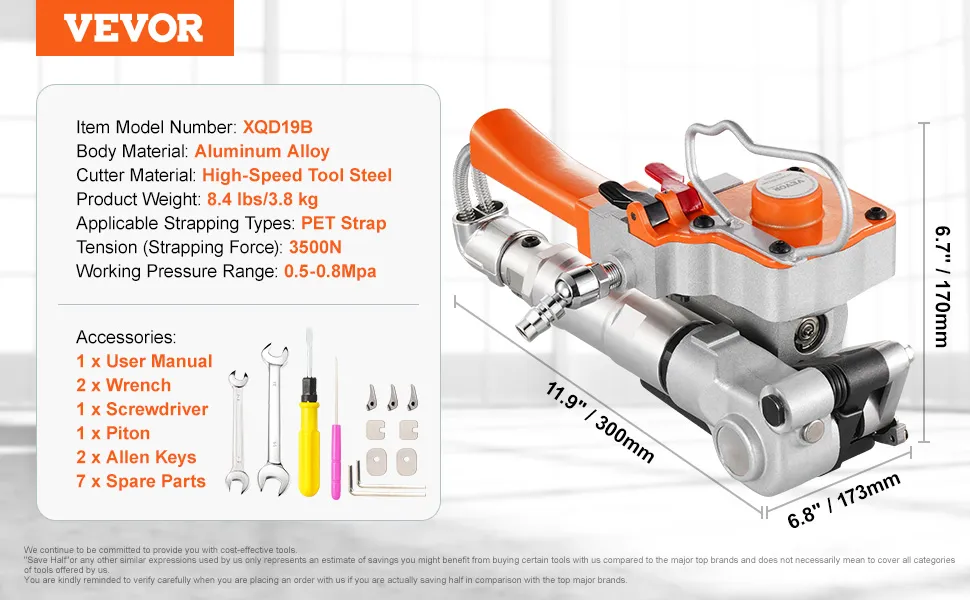
- Powerful Performance: Our pneumatic strapping machine packs a punch with a high-power cylinder, delivering 3500N of tension. It works at 0.5-0.8Mpa pressure and has a welding time of just 2-5 seconds. Compatible with 0.5"-0.75" wide PET straps, it's perfect for securing items of various sizes and weights, ensuring a snug fit for safe transport and storage.
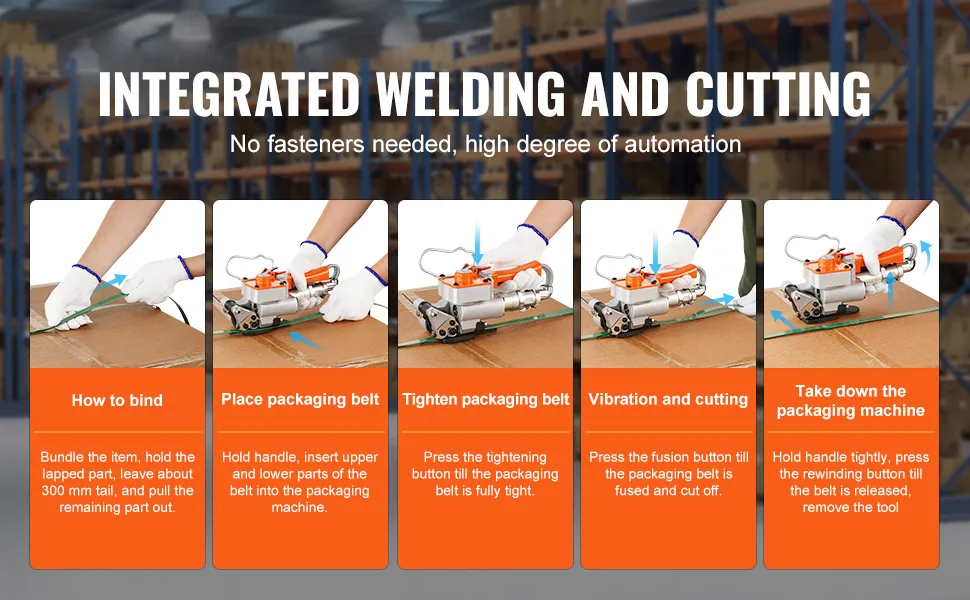
- Easy to Use: This pneumatic banding tool is super easy to use. With friction heat welding, you don't need buckles—just one button to tighten and another to weld. Even beginners can get the hang of it quickly with minimal training. It's a real time-saver, letting you handle lots of packages fast and efficiently.
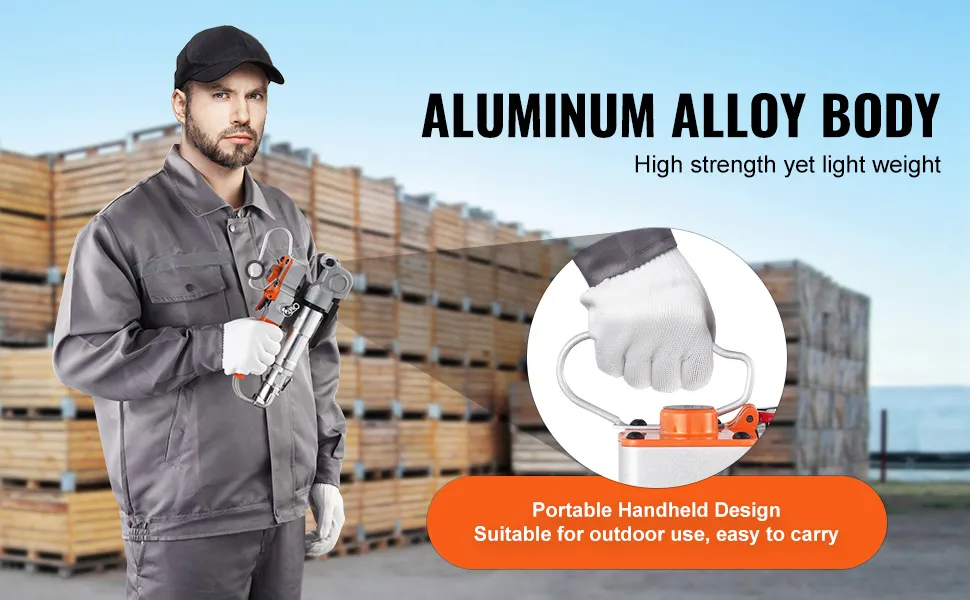
- Sturdy Aluminum Alloy Body: Our handheld strapping machine's aluminum alloy body is both lightweight and tough. It's easy to carry around and operate, with excellent corrosion resistance for all kinds of environments. Measuring just 11.9" x 6.8" x 6.7" and weighing 8.4 lbs, it's portable and durable, perfect for long-term outdoor use.
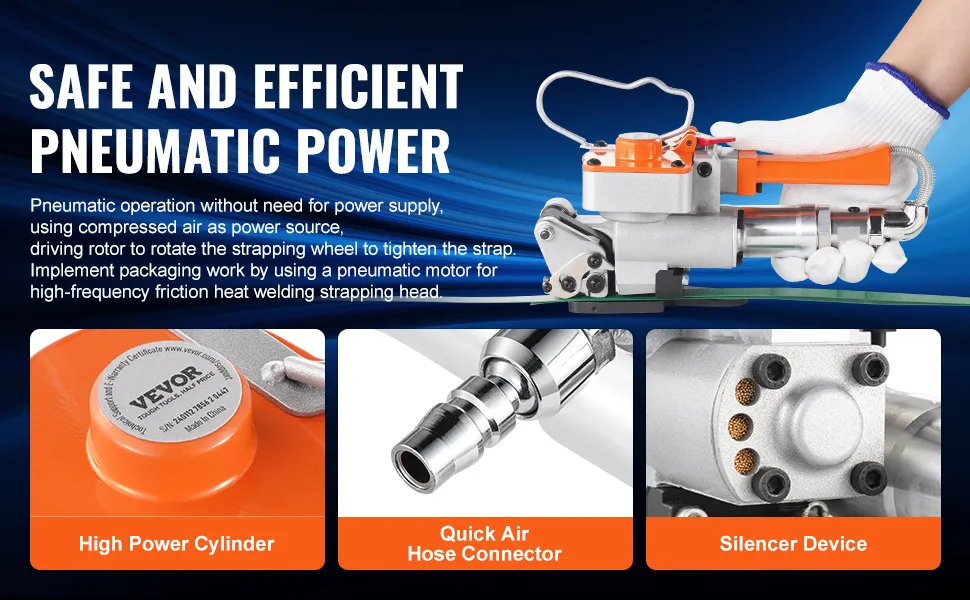
- Safe and Reliable: Powered by compressed air, this automatic strapping tool keeps working without needing a power cord or batteries. It's safe to use in humid, flammable, or explosive environments, avoiding the risks of battery-related issues. Its simple air-powered design reduces the chance of motor failures, making it a stable and durable choice for your packaging needs.
Frequently Bought Together
Reviews
About this item


VEVOR Pneumatic Strapping Tool Delivers 3500N Maximum Tension for Heavy-Duty Industrial Packaging
The VEVOR pneumatic strapping tool can generate a maximum tension force of 3500N, more than enough to hold down heavy, dense, or oddly shaped loads that standard electric or manual strapping tools can't. This level of force ensures that PET straps are tight enough to prevent loads from shifting during transport, stacking, or handling in a warehouse.
The high-power pneumatic cylinder operates at a pressure range of 0.5 to 0.8 MPa and maintains consistent tension across all strap widths and load types for which this tool is rated. The air-powered cylinder maintains a full 3500N force from the first strap of the shift to the last, unlike battery-powered tools, which see tension output decrease as the charge runs out.
Compatible with 1/2" to 3/4" Width PET Plastic Straps Across 9 Major Industrial Sectors
The pneumatic strapping tool is designed to work with PET plastic straps 0.5 to 0.75 inches wide. It covers the two most common strap sizes used in industrial packaging. This dual-width compatibility lets a single tool work on multiple packaging lines in the same building, so you don't need to buy separate tools for each strap type. It reduces the number of tools you need and makes training easier.
This width range covers the strap sizes best suited to each type of material, including paper, aluminum, steel, wood, chemical fiber, cotton, tobacco, chemicals, and metal products. Because the straps work with a wide range of materials, procurement teams can use the same strap specification across all departments and the same tool model across the whole operation.
Friction Heat Welding in 2–5 Seconds Eliminates Buckles and Speeds Up Packaging Throughput
The tool's friction heat-welding mechanism creates a bond between the ends of the PET strap by carefully controlling the amount of frictional heat generated. It means there is no need for metal buckles, clips, or seals. Buckle-free sealing lowers material costs per package, eliminates the sharp metal edges that make handling dangerous, and reduces the supply chain's reliance on a separate fastener part that needs to be stocked, inventoried, and manually loaded for each strapping job.
The weld cycle takes only 2 to 5 seconds, making it one of the fastest ways to seal with handheld pneumatic strapping tools in this tension class. At a production rate of several hundred packages per shift, a weld time of 2 to 5 seconds instead of 10 to 15 seconds for applying a manual buckle means that each operator can process more packages each day, which lowers the cost of labor per packaged unit without having to change the line speed or hire more people.
Aluminum Alloy Body at 8.4 Lbs and 11.9" × 6.8" × 6.7" Dimensions Enables Full Portability
The tool housing is aluminum alloy, about one-third the weight of steel but with the same structural strength. The handheld strapping machine weighs 8.4 pounds, which is still within the range of ergonomic handling for one person to use for a full shift without straining their arms, unlike heavier steel-bodied tools that require many repetitive strapping cycles.
The tool can fit into tight pallet configurations, narrow bundling positions, and cramped warehouse shelf arrangements where bigger tools can't work as well, thanks to its body measuring only 11.9 inches by 6.8 inches by 6.7 inches. This compact form factor provides full functional access no matter how the load is secured, whether overhead, to the side, or on the ground.
Pneumatic Strapping Tool Air-Powered Operation at 0.5–0.8 MPa Enables Safe Use
This strapping tool is safe to use in areas with combustible dust, flammable vapors, or high ambient moisture, as it uses compressed air rather than electricity or lithium batteries. These include chemical storage facilities, cotton processing plants, grain-handling operations, and tobacco warehouses, where battery or motor failures can lead to serious consequences.
The tool works with standard industrial compressed air systems that have an operating pressure range of 0.5 to 0.8 MPa. This means it can be connected directly to the facility's existing air supply infrastructure without any special pressure-regulation equipment beyond a standard inline regulator. The tool works wherever a compressed air line reaches, and it can maintain full 3500N tension all day long without needing to be charged, undergo battery swaps, or manage power cords.
Two-Button Operation with Separate Tighten and Weld Controls Reduces Training Time for New Operators
The control interface is simplified to just two buttons: one starts the tensioning cycle, and the other starts the welding cycle. Separating the two main operations into separate controls prevents sequencing mistakes in which an operator starts welding before full tension is reached. This mistake can result in weak seals and requires cutting and reapplying the strap, wasting both time and material.
New operators can learn to strap things correctly and in the right order in a short time because the two-step process follows the task's logical mental model: tension first, then seal. You don't have to change modes, change parameters, or figure out how to use the multi-function button while you're making things. This ease of use is especially useful in places where many people are coming and going.
Corrosion-Resistant Aluminum Construction Supports Long-Term Outdoor and Harsh Environment Use
The tool's body is naturally resistant to rust, oxidation, and surface damage that can occur to steel-bodied tools in humid, rainy, salty, or chemically active industrial environments. This is because aluminum alloy is naturally corrosion-resistant. Steel needs protective coatings that chip and wear over time, but aluminum forms a stable oxide layer that repairs itself when exposed to air without any help from the operator.
This pneumatic strapping tool's resistance to corrosion is a direct factor in how long it will last when used in outdoor lumber yards, construction sites, agricultural loading docks, or marine freight environments. A tool that stays structurally and functionally sound after years in a harsh environment, without rusting, seizing moving parts, or damaging the cylinder mechanism, costs much less to own than coated steel tools that need to be repaired or replaced early due to wear and tear from the environment.