20V Power Tool Batteries




Results for 20V Power Tool Batteries
Discover VEVOR's extensive selection of power tool batteries, designed to fit a wide range of cordless tool platforms and workloads, from occasional do-it-yourself projects to full-day professional job site operations. Whether you require a high-capacity lithium ion battery for power tools to extend runtime between charges, a direct replacement power tool battery for a worn-out OEM pack, or a compatible 20V power tool battery for an expanding collection of cordless tools, VEVOR offers dependable performance in every application, all supported by its reputable quality and after-sales support.
VEVOR Power Tool Batteries for Cordless Drills, Saws, and Job Site Tools
Do you find yourself running out of battery in the middle of a task, or paying top dollar for OEM replacement packs that degrade just as quickly? At a fraction of the cost of the original equipment, a high-quality replacement power tool battery restores full runtime to your current cordless tool collection. The lithium-ion power tool batteries from VEVOR include the voltage classes, amp-hour capacities, and tool platform compatibilities required for tradespeople and do-it-yourselfers to continue working uninterrupted.
Voltage, Capacity, and Brand Compatibility: Choosing the Right Power Tool Battery
The three factors that determine whether a replacement power tool battery offers safe, full-performance operation in your particular cordless equipment are voltage rating, amp-hour capacity, and tool platform compatibility.
Voltage Classes and Matching Battery Voltage to Your Tool Platform
The fundamental requirement for every power tool battery is voltage; for safe, proper functioning, it must match the rated voltage of your tool. Power output and torque are significantly reduced when a lower-voltage battery is used in a tool rated for a higher voltage. Using a battery with a higher voltage than the tool is rated for puts the motor and electronics at risk of harm. The 20V MAX platform, which includes drills, circular saws, reciprocating saws, impact drivers, and oscillating tools from the most well-known tool companies, is one of the most widely used voltage classes in consumer and professional cordless tool ecosystems.
Designed to meet the precise voltage requirements of the 20V MAX platform, VEVOR 20V power tool batteries deliver the nominal and peak voltages needed for the tool's motor and electronics to operate at full capacity. Beyond 20V, 18V batteries are still widely used in many professional-grade ecosystems and older tool platforms, while 40V and 60V batteries power high-demand tools like blowers that need high power output, string trimmers, and large circular saws. VEVOR product pages list the compatible voltage class for each battery model; by verifying the precise tool voltage needed before purchase, both do-it-yourselfers and trade experts can avoid one of the most common and costly replacement battery errors.
Amp-Hour Capacity and How It Translates to Real-World Runtime
The feature that directly affects how long a power tool battery lasts between charges under normal operating conditions is the amp-hour (Ah) rating. Although it seems simple in principle, a 2.0Ah lithium ion battery for power tools can provide up to roughly twice the runtime of a 1.0Ah pack at the same discharge rate. In practice, however, runtime is also dependent on the tool's current demand, which varies widely between moderate drilling and heavy cutting.
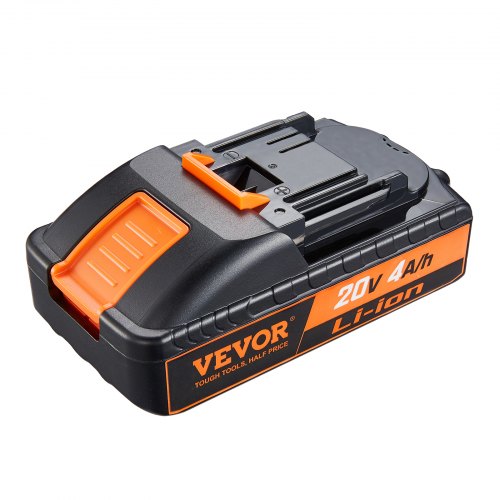
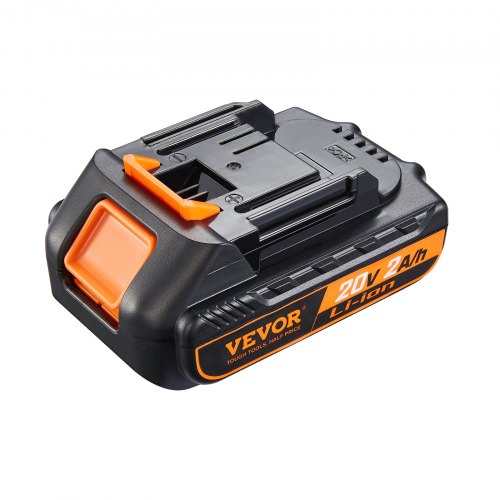
DIYers can typically use a 2.0Ah 20V power tool battery to run a drill or impact driver for brief periods. You can finish typical fastening and light drilling chores well within the pack's runtime before recharging is required. For continuous cutting, grinding, and demolition work over a half-day without a charge interruption, trade experts require a 4.0Ah replacement power tool battery. The most demanding job site applications, such as operating reciprocating saws, angle grinders, and high-draw instruments constantly for prolonged work sessions, are intended for high-capacity 5.0Ah and 6.0Ah packs. To assist you in choosing the capacity that best suits your actual working pattern, VEVOR power tool batteries range from 2.0Ah to 6.0Ah. Each product page includes projected runtime information for popular tool uses.
Brand and Tool Platform Compatibility for Replacement Batteries
A battery that physically fits but communicates wrongly with the tool's battery management system results in inconsistent performance, premature cell deterioration, or outright tool rejection. Compatibility is the practical test that every replacement power tool battery must pass before it produces value. High-quality lithium-ion batteries for power tool replacements are designed with compatible battery management system (BMS) electronics that mimic the original OEM battery's communication protocol. This feature enables the tool to identify the pack, appropriately manage charge and discharge cycles, and turn on protection circuits for thermal and over-discharge events.
VEVOR power tool replacement batteries address the main 20V platform ecosystems in the consumer and professional markets by listing compatible tool brands and model series on each product page. Before buying any third-party replacement batteries, it is best to confirm compatibility at the battery and tool model levels rather than assuming broad brand-wide compatibility. Customers can verify that a replacement power tool battery will function properly with their specific tool models before making a purchase, thanks to VEVOR's compatibility listings, which are kept up to date per SKU and include precise model number references rather than ambiguous brand-level claims.
Cell Chemistry, BMS Protection, and Battery Safety Standards
The chemistry of the lithium-ion cells in a power tool battery dictates the battery's total cycle life, energy density, discharge rate capabilities, and thermal stability. Power tool applications that demand high-drain lithium-ion cells, specifically those rated for continuous discharge rates of 20A or more, are necessary because motor current draw increases dramatically while cutting, driving, and grinding under load. Standard consumer lithium-ion cells designed for low-drain devices cannot handle these discharge rates without producing excessive heat and degrading their capacity very quickly.
Every excellent 20V power tool battery has a battery management system (BMS) that tracks cell voltage, temperature, and discharge current in real time. When any of these parameters approaches a threshold that could harm the cells or trigger a thermal safety event, the BMS cuts power delivery. Multi-layer BMS protection for VEVOR power tool batteries covers over-discharge, over-charge, short circuits, and over-temperature conditions across all cells simultaneously. The two specifications that are most commonly compromised in inexpensive replacement batteries are cell quality and BMS sophistication. VEVOR product pages clearly outline cell grade and protection circuit features, enabling customers to evaluate the longevity and safety engineering of each battery before making a purchase.
Charging Time and Lifespan: What Determines Long-Term Value in Power Tool Batteries
Two factors that distinguish truly cost-effective replacements from inexpensive packs that require frequent replacements are charging speed and total cycle lifespan, which define a replacement power tool battery's overall cost per use over its working life.
Charging Time by Capacity and Charger Compatibility
The amp-hour capacity of the battery and the charger's output current rating are the two factors that determine how long it takes to charge a lithium ion battery for power tools. It takes about four hours to fully charge a 4.0Ah replacement power tool battery using a typical 1A charger. This rate is suitable for charging overnight between workdays, but it is not ideal for mid-job top-ups on a busy job site. The same 4.0Ah pack can typically be charged in about 1 to 2 hours using a fast charger rated at 2A to 4A, allowing you to resume working at lunch or between morning and afternoon work sessions.
Another important factor to consider is charger compatibility; if you use a charger that is not rated for the battery's voltage and chemistry, you risk overcharging, damaging cells, and, in extreme cases, overheating. VEVOR advises matching each battery with a charger appropriate to its voltage class and cell chemistry. VEVOR 20V power tool batteries are compatible with conventional 20V platform chargers. Many VEVOR battery models come in kit configurations that include a suitable charger, making it easier for customers to replace both a worn-out battery and an aged charger at once or to set up a new cordless tool platform.
Cycle Life, Capacity Retention, and Getting Maximum Lifespan from Your Battery
A key factor that establishes a lithium-ion power tool battery's long-term value is its cycle life, or the number of full charge-discharge cycles it can withstand before its capacity falls below 80% of its initial rating. Professional-grade replacement power tool batteries with high-quality lithium-ion cells are usually rated for 500–1000 full cycles before experiencing noticeable capacity deterioration. This feature translates to two to four years of daily professional use, or much longer for infrequent do-it-yourselfers.
Both cell quality and usage patterns affect capacity retention throughout the battery's service life. Long-term full-discharge storage of a 20V power tool battery results in lithium plating on the cell anodes, permanently reducing capacity. Cell health is considerably better preserved when stored between uses at 40–60% charge in a cool, dry place, rather than at full charge or full discharge. Avoiding prolonged high-temperature operation, such as charging or discharging in hot environments or under direct sunlight, helps prevent thermal stress that can cause lithium-ion cells to lose capacity more quickly. Each VEVOR power tool battery comes with care and storage instructions, providing customers with the knowledge they need to extend its lifespan and get the most out of each replacement battery over many years of use.
Why Choose VEVOR Power Tool Batteries?
When it comes to reliable replacement batteries for power tools, VEVOR offers the voltage accuracy, amp-hour capacity, BMS protection, and tool platform compatibility that both do-it-yourselfers and tradespeople require. Every model is designed for safe, full-performance operation, from small 2.0Ah packs for modest cordless tool use to large 6.0Ah lithium-ion batteries for power tools that run all day under job-site demands. Maintaining your cordless tools is easier than ever thanks to affordable prices and trustworthy after-sales service. Get power tool batteries from VEVOR right now.
FAQs
Can I use a VEVOR replacement power tool battery in my existing cordless tools?
Yes, you can use the battery as long as its voltage matches the tool's rated voltage and the model is compatible with the tool's platform. To ensure proper BMS communication, always confirm model-level compatibility before purchase. VEVOR replacement power tool batteries list compatible tool brands and model series per product.
What amp-hour capacity do I need for professional job site use?
4.0Ah to 6.0Ah lithium-ion batteries are a strong option for trade professionals who use high-draw instruments for prolonged periods. These capabilities offer enough runtime to enable uninterrupted half-day to full-day cutting, grinding, and demolition operations.
How long does it take to charge a 20V power tool battery?
A rapid 2A to 4A charger takes 1 to 2 hours to charge a 4.0Ah 20V power tool battery, while a regular 1A charger takes about 4 hours. To ensure safe, accurate charging throughout the battery's life, always use a charger compatible with the voltage class of your battery.
How many charge cycles do lithium-ion power tool batteries last?
Replacement power tool batteries with high-quality lithium-ion cells have a 500–1000 full charge-discharge cycle rating before the capacity falls below 80%. Batteries used daily in professional settings usually last two to four years; for infrequent do-it-yourselfers, the same pack can last much longer.
How should I store a power tool battery when not in use?
Keep power tool batteries 40–60% charged in a cool, dry place away from heat sources and direct sunlight. Keep in mind that deep discharge can cause lithium plating, which permanently reduces cell capacity. Avoid storing the battery entirely discharged. Good storage practices greatly increase capacity retention and overall cycle life.