Air Compressor Head Pump












Results for Air Compressor Head Pump
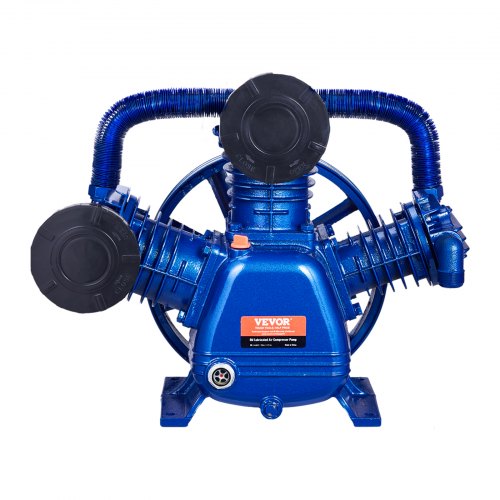
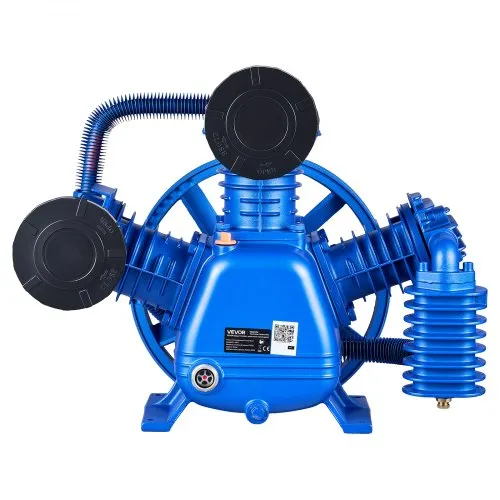
An air compressor head pump is the working core of a piston air compressor, the unit that actually squeezes the air. An electric or gas motor turns its crankshaft through a belt and flywheel, driving pistons up and down inside the cylinders. On each stroke, intake valves draw in outside air, the piston compresses it into a smaller volume, and discharge valves push it into the storage tank at higher pressure. Mounted on the tank and paired with a motor, it is the part that sets how much air the system delivers and how much pressure it can build.
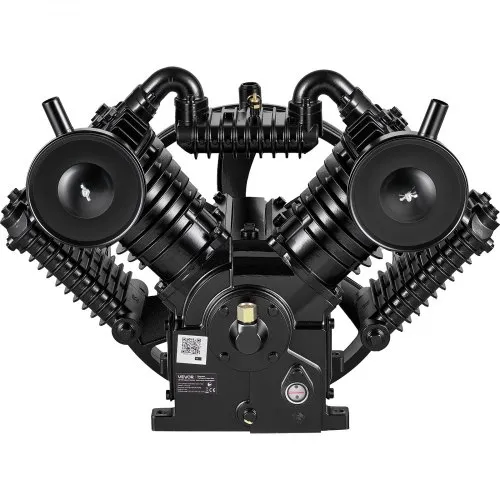
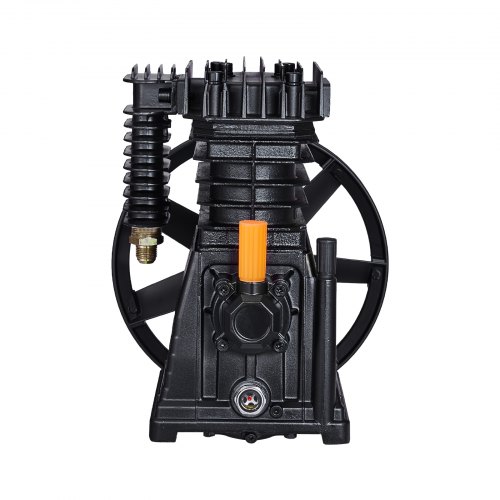
This range runs from a 2 HP oil-free compressor pump at 5.2 CFM to twin cylinder air compressor pumps at 3 to 5.5 HP and 3 and 4 cylinder dual stage cast iron pump heads at 5 to 10 HP, delivering up to 30 CFM and 185 PSI. Single stage heads suit general shop air, while two stage heads build the higher pressure that heavy tools need, all within the wider air compressor parts and accessories line. Typical uses are pump replacement on a worn compressor, output upgrades, custom compressor builds, auto repair, and woodworking shops.
Five things decide what you need:
- Motor match: pair the pump's rated HP with your motor so neither runs overloaded.
- Airflow: add up the CFM your busiest tools draw at 90 PSI and choose a pump above it.
- Pressure: single stage heads reach about 115 to 145 PSI, two stage heads up to 185 PSI.
- Lubrication: oil-free pumps cut upkeep, while oil-lubricated heads last longer under heavy duty.
- Fit: check the mounting bolt pattern, port sizes, and flywheel bore against your tank and motor.
Compare every model in the full air compressor head pump range, or browse the wider air compressor tools collection for motors, regulators, and hoses.
Air Compressor Head Pump Types at a Glance
Pump heads differ most in how many times they compress the air and how they are cooled and lubricated, so the five types below are split by the traits that change output and service life.
| Pump Type | Compression Stages | Lubrication | Typical Output | Trade-off |
| Oil-free single stage | One | None needed | About 5 CFM, up to 145 PSI | Low upkeep and clean air, but shorter life under constant duty |
| Splash-lubricated single stage | One | Oil splash from the crankcase | About 11 CFM, up to 116 PSI | Simple and durable for garages, at modest pressure |
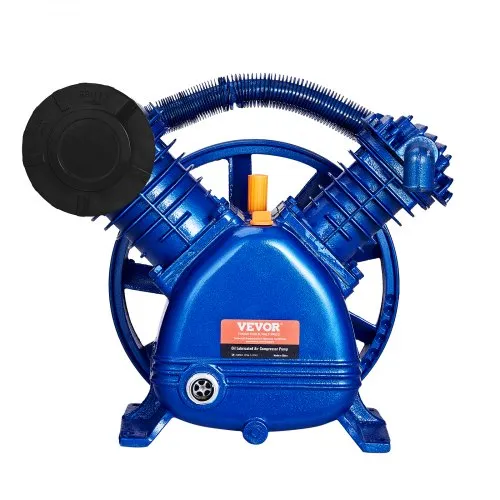
| Twin cylinder single stage | One | Oil lubricated | About 6 to 12 CFM, up to 145 PSI | Smoother airflow than one cylinder at the same HP |
| Twin cylinder two stage V-type | Two, with intercooling | Oil lubricated | About 6 CFM, up to 185 PSI | High pressure in a compact head, with lower airflow |
| Multi-cylinder two stage cast iron | Two, with intercooling | Oil lubricated | About 15 to 30 CFM, up to 185 PSI | Most air and pressure for shops, but needs a large motor |
VEVOR Air Compressor Head Pumps for Workshop, Garage, and Industrial Use
Do you need a straight replacement for a malfunctioning compressor pump, more pressure, or improved dependability? Because VEVOR air compressor head pumps are designed to work with common compressor tanks and motor combinations, replacements and upgrades are simple. VEVOR meets every level of performance demand, offering everything from small 2 hp air pumps for light workshop use to heavy-duty 5 hp machines designed for continuous industrial use.
Air Compressor Head Pumps by Stage Configuration and HP Rating
The two fundamental characteristics that determine whether a compressor pump is appropriate for your application are stage arrangement and horsepower rating. Each model in VEVOR's lineup is designed to meet the pressure and duty cycle requirements of its intended usage, and it includes single and two stage versions across a useful HP range.
Two Stage Air Compressor Pump: Maximum Pressure for Demanding Applications
Before sending air to the tank, a two stage air compressor compresses it twice: first in a larger low-pressure cylinder, then in a smaller high-pressure cylinder, with intercooling between stages. Compared to single-stage pumps, this two-step compression technique produces much higher output pressures while producing less heat per unit of compressed air, increasing the pump's efficiency and prolonging component life under continuous operation.
The two-stage air compressor pump models from VEVOR are designed for applications that frequently require high pressure and extended duty cycles. The increased PSI output of two stage compression is required for sandblasting, heavy shop equipment, spray painting large areas, and industrial pneumatic instruments. Simply put, single-stage pumps cannot meet the pressure requirements of these applications without overtaxing their components and significantly shortening their service life.
One important durability benefit is the intercooling effect between compression phases. VEVOR's two-stage pump reduces thermal stress on seals, valves, and cylinder walls, thereby reducing wear in single-stage designs operating at high pressures by cooling air between the first and second stages. A two stage air compressor pump is the best long-term investment for workshops and facilities that run their compressors frequently during the workday to maintain performance and reduce maintenance frequency.
Single Stage Air Compressor Pump: Reliable Performance for Light to Medium Duty
A single stage compressor pump is a simple, affordable solution for applications that do not require high output pressure, as it compresses air in a single stroke from ambient to tank pressure. Light-duty impact wrenches, blowguns, staplers, tire inflators, and brad nailers all function well within the pressure range provided by a reliable single-stage pump, without the extra complexity of two-stage compression.
The single stage pump types from VEVOR are designed to be simple to install and compatible with common compressor tanks and motor setups. For consumers that demand reliable compression without industrial-grade output requirements, the simpler internal design results in fewer components to maintain and a more affordable price point. Single stage performance is completely adequate for home garages, small workshops, and general-purpose air supplies.
The most common reason consumers purchase a single stage pump is for replacement, and VEVOR's products are sized to work with popular compressor tank frames and motor mounting arrangements. Product descriptions include explicit information on bolt patterns, port sizes, and flywheel compatibility, eliminating the uncertainty that causes frustration when replacing compressor pumps. With a direct-fit VEVOR replacement, you can restore your current compressor to full output without replacing the entire unit.
2 HP Air Compressor Pump: Compact Output for Home and Light Workshop Use
Home garages, small workshops, and light-duty job sites where typical operating pressures and modest airflow are sufficient can all benefit from a 2 horsepower air compressor pump. Without the bulk, weight, or power consumption of higher-rated models, this pump delivers enough CFM to operate nailers, staplers, inflation equipment, and light pneumatic instruments.
The 2 horsepower air compressor pumps from VEVOR are suitable for workshops with limited space or residential garages where a large industrial compressor would be impractical, as they are small enough for bench mounting or installation on smaller tank frames. Despite having a smaller footprint, VEVOR's 2 HP pumps are constructed with the same high-quality valve assemblies, cylinder coatings, and bearing specifications as bigger versions, providing dependable service life commensurate with their duty cycle requirements.
A VEVOR 2 hp air compressor pump provides a cost-effective way for consumers to restore full operation without buying a new compressor when replacing a broken OEM pump on an existing compressor. Direct replacement matching is supported by compatibility requirements in VEVOR's product listings, and the competitive price point makes replacing the pump properly the better option than continuing to run a deteriorated unit that uses too much energy and produces less.
5 HP Air Compressor Pump: High-Output Performance for Heavy Duty Demands
The high CFM output and raised pressure capacity needed by demanding shop tools, continuous-duty spray applications, and multi-user air systems where multiple tools run concurrently from a shared supply are provided by a 5 hp air compressor pump. With five horsepower, the pump delivers much more air per minute than lesser ones, keeping up with high-consumption instruments like heavy-impact wrenches, die grinders, and DA sanders without letting tank pressure drop during extended use.
The 5 horsepower air compressor pump models from VEVOR are designed to meet the mechanical and thermal requirements of high-output operation. Long continuous duty cycles are supported by heavy-duty cylinder castings, sturdy valve assemblies, and high-quality piston ring materials, without the rapid wear that lighter pumps experience when overloaded. Over the course of the pump's service life, its build quality translates directly into a lower total cost of ownership for professional shops, car body shops, and industrial maintenance operations.
A full high-performance compressor system, customized to your unique pressure and volume needs, can be created by combining a VEVOR 5 hp air compressor pump with a motor and a tank of the right size. For effective, dependable operation from the moment of installation, it is easy to verify that your current motor matches the pump's design operating point using VEVOR's product specifications, which include motor HP compatibility ranges.
Sizing a Pump Head to the Job
Stage and horsepower tell you what a head can do; the tools on the end of the hose tell you what it must do, so start from the job and work back to the pump.
| Shop Use | Pump Priority | Key Number to Check | What to Watch For |
| Tire inflation and nailers | 2 to 3 HP single stage | 4 to 6 CFM at 90 PSI | An oversized pump short-cycles and wears the pressure switch |
| Auto repair with impact wrenches | 5 HP twin cylinder | 10 to 15 CFM at 90 PSI | Impact guns drain small pumps quickly under steady use |
| Spray painting large panels | 5 HP or larger two stage | Steady CFM at the gun | Fit a water separator, since oil and moisture ruin a finish |
| Sanding, grinding, sandblasting | 7.5 to 10 HP multi-cylinder | Continuous CFM above the tool rating | Continuous tools need a pump sized for full duty cycle |
| Custom compressor build | Pump matched to motor and tank | Pulley ratio and pump RPM | Set the pulley so the pump turns at its rated RPM |
Cylinder Configuration and Compatibility in Air Compressor Head Pumps
Whether a replacement or upgrade pump installs correctly and operates as intended depends on factors other than stage count and HP rating, such as cylinder configuration and compatibility with your current compressor components.
Twin Cylinder Air Compressor Pump: Balanced Output and Smoother Operation
Compared to single-cylinder designs that generate compressed air pulses with each stroke, a twin cylinder air compressor delivers more continuous airflow into the tank by using two pistons that operate in alternating compression strokes. Because of this continuous-delivery feature, the tank's pressure fluctuates less, resulting in smoother tool performance and reduced stress on your air system's downstream regulators and connections.
Compared to a single-cylinder air compressor handling the entire compression load, VEVOR's twin-cylinder models distribute the compression load between two cylinders, reducing the peak mechanical stress each component endures per cycle. Longer valve life, reduced piston wear, and more consistent output pressure during prolonged operation are all directly affected by this load distribution, which is especially beneficial in workshop settings where the compressor runs for extended periods.
Because both pistons contribute to air volume with each crankshaft revolution, twin cylinder configurations also offer higher CFM output within a given HP rating as compared to analogous single-cylinder systems. A dual-cylinder air compressor pump from VEVOR delivers higher output within the same power consumption envelope as a comparable single-cylinder unit, allowing consumers who require additional airflow to avoid upgrading to a larger motor.
Compatibility and Installation: Getting the Right Fit First Time
Compatibility is the practical criterion for determining whether an upgraded or replacement air compressor head pump can be installed without modification. Important compatibility variables include the sizes of the inlet and outlet ports, the pump displacement relative to your motor's HP rating, the flywheel bore and keyway dimensions relative to your motor shaft, and the pump's mounting bolt pattern relative to your compressor tank saddle.
VEVOR provides comprehensive compatibility information for all its air compressor head pump models, including suggested motor HP ranges, mounting dimensions, and port diameters. You can avoid the annoyance of obtaining a pump that does not match the motor's output capability or requires built-in adapters by cross-referencing these specs with the documentation or physical measurements of your current compressor before placing an order.
VEVOR's precise specification tables make it easy for customers to match a pump, motor, tank, and hardware into a cohesive system when building a compressor from parts rather than replacing an OEM unit. Starting with precise compatibility data yields a dependable outcome on the first try rather than after expensive trial and error, whether you are building a bespoke workshop compressor or replacing a failing pump.
Best-Seller Comparison
With cylinder layout and fit covered, the five top pump heads on the page are compared below by power, airflow, stage, and pressure so you can match one to your motor and tools.
| Product | Horsepower | Airflow | Compression Stage | Lubrication | Max Pressure | Best For |
| 2HP Oil-Free Compressor Pump, 5.2 CFM | 2 HP | 5.2 CFM at 90 PSI | Single stage | Oil-free | 145 PSI | Only oil-free pump here; low upkeep for home garages |
| 3HP Twin Cylinder Pump, 11.8 CFM | 3 HP | 11.8 CFM | Single stage | Splash lubricated | 116 PSI | Most airflow per HP here; a solid garage replacement head |
| 10HP 4-Cylinder Dual Stage Pump, 30 CFM | 10 HP | 30 CFM | Two stage | Oil lubricated | 175 PSI | Highest airflow here; multi-tool shops and continuous use |
| 5HP 3-Cylinder Dual Stage Pump, 14.9 CFM | 5 HP | 14.9 CFM | Two stage | Oil lubricated | 175 PSI | Two stage pressure on a 5 HP motor; auto repair bays |
| 10HP 3-Cylinder V-Type Pump, 17.5 CFM | 10 HP | 17.5 CFM at 90 PSI | Two stage | Oil lubricated | 185 PSI | Highest pressure here; heavy tools needing top PSI |
Why Choose VEVOR Air Compressor Head Pumps?
With twin cylinder variants that offer smoother output and longer service life, VEVOR air compressor head pumps come in every configuration, from a 2 hp air compressor pump for home garage use to a two stage air compressor pump designed for industrial pressure demands. Performance enhancements and appropriate pump replacement are affordable without going over budget, thanks to competitive prices. With dependable post-purchase assistance, every VEVOR pump is a secure investment. Get your system operating at peak efficiency by shopping the entire lineup of air compressor head pumps.
FAQs
What is the difference between a single stage and a two stage air compressor pump?
Compared to a single-stage machine, a two stage air compressor pump compresses air twice to achieve higher pressures with less heat. While two-stage types are appropriate for sandblasting, industrial tools, and high-pressure applications, single-stage pumps are enough for standard shop equipment.
Can I replace my existing pump with a VEVOR air compressor head pump?
Yes, as long as the motor's HP compatibility, flywheel bore, port size, and mounting bolt pattern match your current configuration. To ensure a direct match before purchase, VEVOR provides comprehensive compatibility criteria for each model.
Is a twin cylinder air compressor pump better than a single cylinder?
A dual cylinder air compressor pump reduces wear per cycle by distributing the compression force across two pistons and providing smoother, more continuous airflow. The twin cylinder arrangement is a better long-term option for meeting increased CFM requirements and for continuous workshop use.
What HP motor do I need for a 5 HP air compressor pump?
A motor rated at or above 5 HP is necessary for a 5 HP air compressor pump to run at its design output without overloading. To help ensure proper coupling, VEVOR's product descriptions provide suggested motor HP ranges for each pump model.
Is the pump head the entire air compressor or a replaceable part?
It is a replaceable part. The pump head is the compressing unit that bolts onto the tank and connects to the motor by a belt. When it wears out, swap just the head and keep the tank and motor. Browse replacement options in the air compressor head pump range.
What is the difference between an oil-lubricated and an oil-free compressor pump head?
An oil-lubricated head runs its pistons in oil, so it runs cooler and lasts longer under heavy duty, but needs oil checks. An oil-free head uses sealed, coated parts, needing almost no upkeep and giving cleaner air, though it wears faster under constant use, like this 2 HP oil-free pump.
How do I choose the right size air compressor pump head for my current motor?
Match the pump's rated HP to your motor, then check that the motor shaft fits the flywheel bore and keyway. Set the pulley ratio so the pump turns at its rated RPM. A 5.5 HP twin cylinder pump suits a 5 HP motor class, for example.
How long does an air compressor pump head typically last?
It depends on duty cycle and care. An oil-lubricated cast iron head with clean oil and air filters can run for thousands of hours, while oil-free heads wear sooner under heavy use. Regular oil changes, filter cleaning, and draining tank moisture extend service life the most.