Attic Ladders








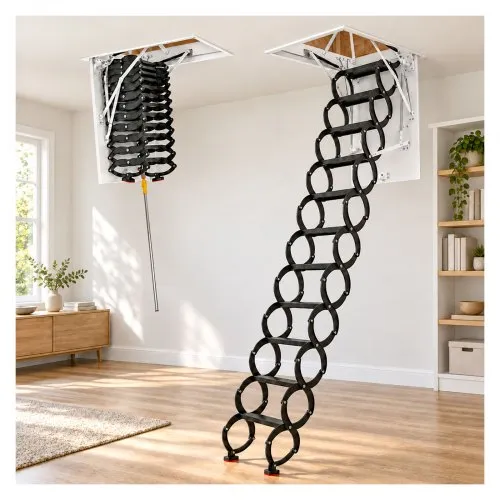


Results for Attic Ladders
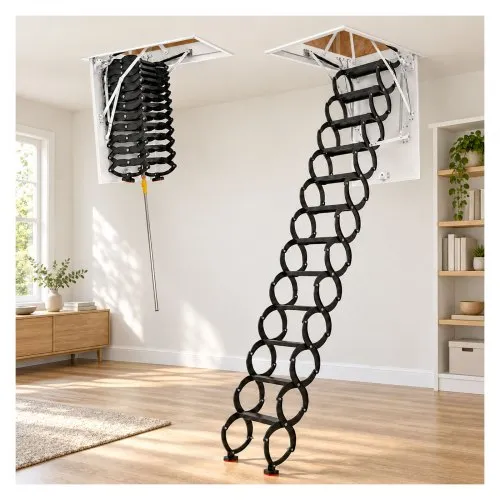
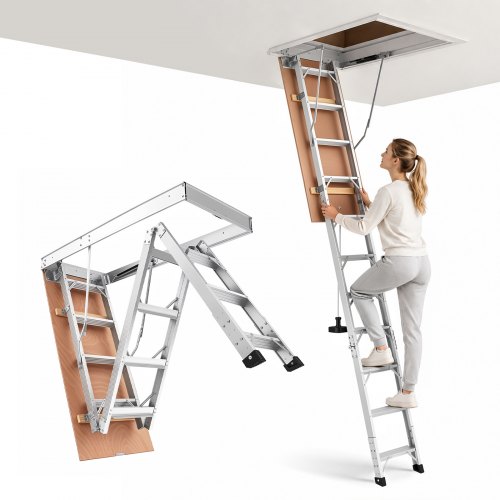
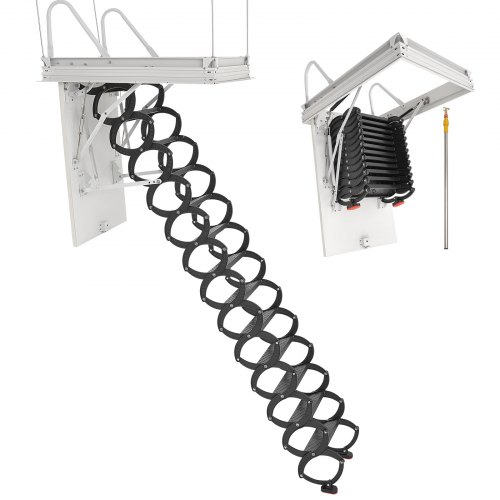
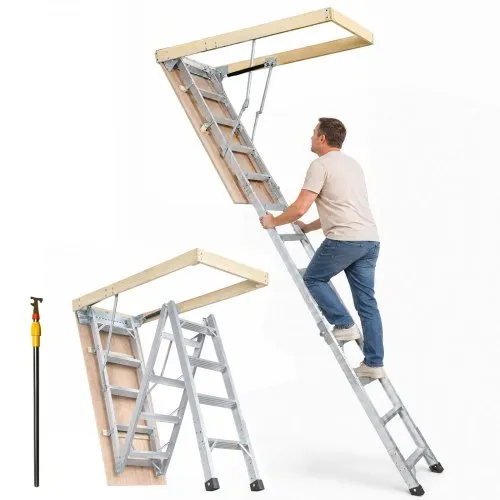
With specialized designs suitable for both residential and light commercial applications, VEVOR attic ladders provide secure, practical access to attics. Our wide range of products includes heavy-duty attic pull down steps rated for regular use, telescoping attic ladders with adjustable height combinations, and foldable attic ladder alternatives for small ceiling installations. With precisely made parts, safe mounting hardware, and simple operating procedures, each system turns unusable attic space into usable storage space. VEVOR combines structural integrity, low price, and simple installation support, whether you are outfitting rental properties with dependable access solutions, upgrading existing access in a century-old home, or installing new attic stairs in a modern development.
VEVOR Attic Pull Down Steps with Versatile Sizing and Heavy-Duty Construction
Are you dealing with outdated ladder systems that do not comply with modern safety regulations, or with unstable, unsafe access to your attic? Attic ladders fulfill the vital need for safe vertical access in homes with limited square footage by providing the necessary infrastructure for making safe and effective use of overhead storage spaces. VEVOR's access solutions help property managers maintain secure building access across residential portfolios, contractors finish renovation projects, and homeowners optimize storage space.
Size, Weight Capacity & Opening Requirements for Proper Installation
To ensure safe operation and long-term dependability, choose attic ladders that match your ceiling height, opening size, and load requirements. VEVOR provides carefully designed setups to handle a wide range of structural conditions.
Ceiling Height Compatibility and Extended Reach
With precisely measured section lengths and extension mechanisms, VEVOR attic ladders can reach ceiling heights of 7 to 12 feet. The most popular ceiling height range for contemporary buildings is 8 to 10 feet. Standard residential models feature folding attic stairs that deploy easily and require minimal space beneath the ceiling opening. Extended-length variants can reach heights of 10 to 12 feet while preserving structural integrity and comfortable climbing angles, making them ideal for houses with vaulted ceilings, additional rooms, or commercial areas with elevated ceiling planes. Because its movable bottom sections can accommodate a 6-8-inch range without requiring custom-length manufacturing, the telescoping attic ladder design is especially useful in situations where ceiling heights are not standard.
Because flooring thickness, ceiling treatments, and insulation compression affect the actual deployment length, proper measurement should account for the distance between the final ceiling surface and the finished floor rather than the rough framing dimensions. By providing thorough measurement instructions and templates, VEVOR helps customers confirm compatibility before purchase, saving them the aggravation of discovering dimensional discrepancies during installation. When the ceiling height falls between standard size increments or when replacing old ladders built at non-standard angles, certain models' adjustable feet allow height adjustment of 2-4 inches.
Weight Capacity Ratings and Safety Factors
Load capacity specifications directly affect user safety and determine which attic ladder models are suitable for a given application. The 250–350-pound weight capacity of VEVOR's residential-grade foldable attic ladder systems is sufficient for one person and for carrying items such as storage boxes, seasonal decorations, or small equipment. Although users should always ensure their loaded weight stays well below the maximum rating, this capacity can safely accommodate the majority of adult users while still providing room for travel items. In professional settings where professionals must carry tools, building materials, or equipment that require greater safety margins, heavy-duty commercial models with 375–500-pound ratings are essential. These improved systems distribute loads over wider ceiling joist spans thanks to strengthened hinge mechanisms, thicker step treads, and improved mounting hardware.
Although each manufacturer has a different safety factor built into their rated capacities, quality systems such as VEVOR's use 3:1 or 4:1 design ratios. This feature means that a ladder rated at 300 pounds can withstand 900–1200 pounds before failing, giving users a significant margin of safety against unforeseen overload. Attic pull down steps installed solely into drywall or plaster will collapse catastrophically regardless of the ladder's inherent strength; weight capacity depends on correct installation into structural ceiling joists rather than merely into ceiling finish materials.
Rough Opening Dimensions and Structural Requirements
The right type of attic ladder for your installation site depends on the size of the ceiling opening. This size also affects the structural changes required during installation. VEVOR attic ladders usually have openings that are about 22.5 inches by 54 inches for small setups and 30 inches by 60 inches for full-size access, with enough space to climb. When keeping the structure and insulation working well while lowering ceiling penetration is important, or when ceiling joist spacing is limited, smaller apertures are more appropriate.
Larger openings make it easier to enter and exit, especially for those who need more space or are carrying heavy items. To ensure installations are safe and comply with the rules, VEVOR provides detailed framing schematics that show how to build headers, strengthen joists, and distribute loads correctly.
Step Width, Tread Depth, and Climbing Comfort
The number and size of steps significantly affect how safe and comfortable a person feels while climbing. VEVOR attic ladders typically have step widths of 12 to 16 inches. The wider treads make it easier to place your feet and give you more comfort when going up and down. The tread depth, or the distance from front to back where your feet hit the stairs, on folding attic stairs is usually 3 to 4 inches. This feature provides most shoes with enough grip while keeping the stairs' small, folding shape. According to the standard stair code, the vertical distance between steps is about 10 to 12 inches.
Certain VEVOR models improve grip by adding slip resistant tread surfaces with textured coatings, grooved designs, or rubberized inlays. This feature is especially useful when the steps are dusty or when people wear shoes with smooth soles. The angle of the climb has a big effect on how comfortable it is. Sloped installations take up less floor space but make it harder to climb. Sloped installations make them safer and easier to get, but they need more room below. Most attic pull down steps are set at 60 to 70 degree angles, so they take up the least amount of room and are easy for people of all sizes and levels of confidence to use.
Material & Installation Type for Durability and Ease of Setup
Construction materials and mounting techniques impact installation complexity, maintenance needs, and durability. VEVOR offers installation methods and material selections that cater to varying skill levels and priorities.
Material Construction and Longevity Characteristics
VEVOR produces steel, aluminum, and wood attic ladders, each with unique benefits for specific uses. The strength to weight ratios of aluminum foldable attic ladder models are excellent, and they often weigh 30 to 40 percent less than steel systems of the same size while still supporting comparable loads. This lighter weight makes it easier for one person to install the ladder alone. It reduces operator fatigue, which is especially useful when the ladder is used daily.
Painting is never necessary with this material, and it will always look good with only the occasional cleaning. Usually made of pine or a related softwood, wood construction offers conventional aesthetics that complement the character of historic homes and sufficient strength for domestic applications at affordable prices. Periodic inspection of wood for cracks, warping, or deterioration is necessary, especially in unconditioned attic spaces with significant temperature and humidity fluctuations. For homes or businesses where the absolute maximum weight capacity justifies the increased weight and any corrosion issues, steel folding attic stairs offer the highest strength and stiffness.
Installation Methods and Mounting Systems
VEVOR offers attic ladders in fully assembled, partially assembled, and kit forms, which affect installation time, required skills, and the accuracy of final adjustments. Fully constructed systems come with ladder parts already hinged and operational, requiring only final installation to ceiling joists and rough opening preparation, which a skilled DIYer can finish in two to four hours. Although the assembled size of these systems makes it more difficult to navigate through doorways and up existing steps, they reduce alignment issues and guarantee factory quality hinge performance. Connecting ladder pieces and attaching springs or gas struts during installation are necessary for partially constructed models, which increases complexity but also reduces shipment size and frequently lowers prices.
While kit versions offer optimal shipping efficiency and customization during assembly, they are best suited for seasoned installers accustomed to precise alignment processes. Kit versions arrive as individual components that must be assembled. Systems intended for installation from below, where a single installer positions and secures the unit using a stepladder, and those that require attic-side access for proper alignment and attachment have different mounting frame designs. Careful calibration is necessary during installation of VEVOR's telescoping attic ladder systems with adjustable parts to ensure seamless extension and retraction free from binding or misalignment. Certain variants feature insulated door panels that increase the R value, reducing heat loss through the access aperture.
Why Choose VEVOR Attic Ladders for Reliable Overhead Access?
VEVOR provides engineered access solutions for both residential and commercial applications that combine value pricing, user friendliness, and structural integrity. To properly use overhead storage spaces across various building types, our attic ladders offer the size flexibility, weight capacity, and material options required. VEVOR's product line covers a wide range of access needs, from heavy duty telescoping attic ladder systems for demanding commercial applications to small foldable attic ladder units for installations with limited space. With thorough installation instructions, prompt customer support, and low pricing, VEVOR makes high quality attic access accessible and affordable. Explore VEVOR's entire selection of attic ladders now to turn your attic into a safe, practical storage space.
FAQs
How do I measure for the correct attic ladder size?
The majority of homes with 8 to 10 ft ceilings use conventional sizes, while custom heights call for extended or adjustable models. Measure the distance between your completed floor and finished ceiling, as well as the approximate opening measurements between ceiling joists.
Can I install an attic ladder myself, or do I need a professional?
Most VEVOR attic ladders can be installed in 2 to 4 hours by a competent DIYer with rudimentary carpentry skills; however, professional assistance is recommended for projects that require cutting joists, installing headers, or structural alterations.
What weight capacity do I need for safe attic access?
Select a capacity of 250 to 300 pounds for normal household use, 350 to 400 pounds for larger users or frequent heavy lifting, and 400 to 500 pounds for commercial use or for the greatest safety margins.
Do attic ladders work in homes with limited headroom below the ceiling?
Telescoping, appropriately sized folding attic stairs work in conventional ceiling heights, but make sure the floor footprint of the deployed ladder does not block doorways or hallways or create trip hazards in confined areas.
How do I maintain my attic ladder for long term reliability?
Lubricate hinges and springs regularly, check for damage or looseness, ensure mounting hardware stays tight, and ensure opening and closing mechanisms work smoothly without binding or requiring excessive force.