Backwash Hose






Results for Backwash Hose
You can browse a full selection of backwash hose for swimming pools, above-ground pools, commercial facilities, and moving water in general. VEVOR has reinforced PVC lay flat tubes in 1.5, 2, 3, and 4 inch diameters and 50 to 105 foot lengths. Every size has abrasion-resistant cloth construction, secure clamp fittings, and honest pricing, so you can use it to empty a sand filter after a busy swim week, drain a pool for the winter, or pump water off of a job site.
VEVOR Backwash Hoses for Pool Filters, Draining, and Water Transfer
If your hose is too short, you might see filter waste flooding your lawn. Too-small or split tubing can turn a ten-minute job into a mess. VEVOR backwash hoses are easy to store because they roll out flat and can handle high flow rates without kinking. If you match the pump port diameter, the discharge distance, and the connection type, cleanup will be easy.
Choosing the Right Diameter and Length for Your Pool and Pump
Length decides where the water ends up, while diameter controls how fast it flows. The sections below cover each factor and how to choose the right size.
1.5 Inch and 2 Inch Hoses for Residential Pools
The 1.5-inch size matches the most common port on home filter systems. No adapters are needed to connect a 1.5-inch PVC lay flat hose to standard multiport valves on above-ground pools or smaller in-ground sand filters.
Two inches is the other common size for homes. A 2-inch pool drain hose can handle higher flow from 1.5 HP and 2 HP pumps. Depending on the head pressure and run length, it can move between 80 and 120 gallons per minute. This is the port that most in-ground systems installed over the last 20 years use.
It is more important than buyers think to get the diameter right. When you undersize, you create backpressure, which stresses the pump seal and significantly slows discharge. Oversizing costs more and takes up more space than necessary. Before you buy, use a tape measure to check the threaded outlet on your multiport valve. At first glance, 1.5-inch and 2-inch fittings look the same. The right-size backwash pool hoses protect your tools and make cleanup much faster.
3 Inch and 4 Inch Hoses for Commercial and High-Volume Jobs
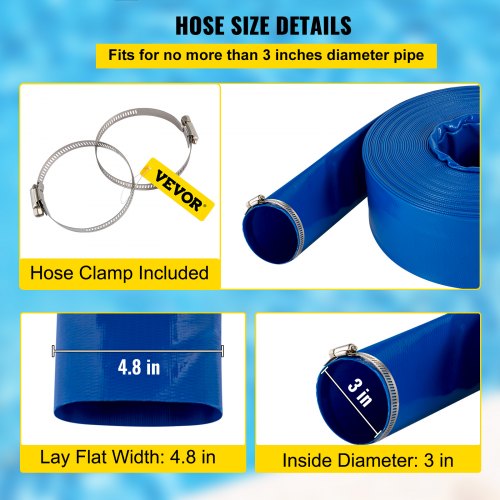
Larger diameters serve a different purpose. With a 3-inch PVC discharge hose, trash pumps, industrial pool systems, and dewatering equipment can all send 200 to 300 gallons per minute through a single line. At the top of the range, a 4-inch heavy duty discharge hose can be used to drain water from construction sites, move irrigation water between farms, clean up after floods, and maintain municipal pools. With the right pump, the flow rate exceeds 400 gallons per minute.
Scale changes for handling. A 100-foot length of 4-inch hose weighs a lot more than the same length of 2-inch hose, so plan on two people to help set up and roll it. Water weight also matters. A charged 4-inch line can hold several hundred pounds of water, so it will not move once it starts to run. Before starting the pump, secure the outlet end. For contractors and building managers, these bigger backwash hoses make drain-cleaning jobs that used to take hours easier, as they require only one setup.
Length Options from 50 to 105 Feet
Where your waste water actually goes depends on the length, and that choice should get more thought than it does. Most suburban lots with a pool near the property line can reach a street drain, drainage ditch, or gravel bed with a 50-ft pool backwash hose.
When drainage routes are long, longer runs work. With a 100 ft pool backwash hose, you can clean up bigger yards, keep wastewater away from foundations and garden beds, and reach storm drains on a wide frontage. This is the length that most people with an in-ground pool choose.
At its longest, a 105 ft heavy duty backwash hose gives you more reach and stronger construction for daily or industrial use. Keep in mind that longer runs slightly lower flow due to friction loss, by about 5 to 10 percent over 100 feet at normal pressures. Also, know the rules in your area, because many cities and towns limit where you can dump pool waste. Choosing the right backwash hose length can prevent the erosion and lawn damage short runs cause.
Matching Hose Size to Your Actual Setup and Site
It is more important to look at your equipment and your land layout than any spec chart. An above-ground pool that is 24 feet long, has a 1 HP pump, and drains into a ditch 40 feet away only needs a 50-foot 1.5-inch hose.
Now consider a 20,000-gallon in-ground pool with a 2 HP pump and a storm drain across the street. The scene has changed. Now, a 100-foot run of 2-inch hose is the right choice, since a smaller diameter would slow the pump and a shorter run wouldn't reach.
The third group is commercial work. Hotels with pools, aquatic centers, and dewatering contractors need 3- or 4 inch lines that can be set up every day over concrete and gravel and still last. Check your pump port, measure the distance to your discharge point, and estimate how often you use the hose before you shop. Sizing backwash hoses based on real-world situations is better than guessing. This will save you money and time.
Material Construction and Connector Types on Backwash Hoses
Whether the hose lasts one season or ten depends on what it is made of and how it is attached. See this information before you place your order.
PVC Fabric Construction and Durability Factors
A throwaway hose is not the same as a long-lasting tool in terms of construction quality. When you pull a 2-inch PVC fabric lay flat hose across concrete decks and gravel, it does not wear down because it has a woven polyester jacket inside a flexible PVC shell.
Wall thickness and weave density matter. You can resist abrasion and punctures heavier grades, but thin economy tubing splits at the fold lines after one or two seasons. Also, look for UV stabilization, since sunshine quickly breaks down unprotected PVC.
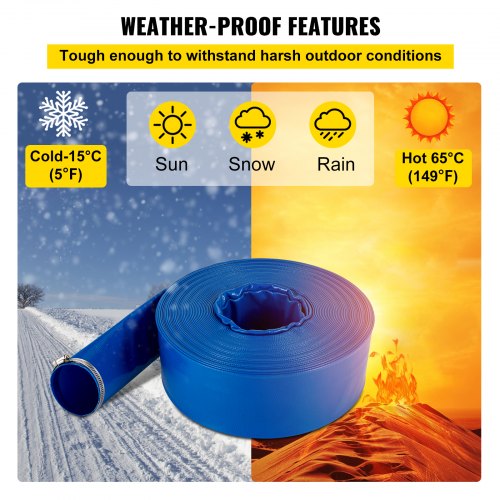
The temperature range is also important. Most PVC lay-flat tubing stays flexible between 20°F and 150°F, but it gets very stiff when it freezes. Fully drain and store inside over the winter to keep the creases from breaking. After using a saltwater pool, rinse and dry before rolling. When you handle them this way, good backwash hoses will not leak and will stay flexible for many seasons of regular use.
Camlock Fittings, Clamps, and Secure Connections
Quick setup and leak-free operation depend on the type of connection. Lever-action couplings on a pool drain hose with camlock connectors snap together in seconds without any tools. This makes it the fastest option for frequent use.
The easier option is a clamp-on extension. If you tighten stainless steel band clamps over a barbed fitting on a lay flat water transfer hose with clamps, it takes a few minutes with a screwdriver but is cheaper and holds securely.
Make sure the part you use fits the valve. Many threaded multiport outlets need a barbed adapter, but most pump discharge ports are already camlock-ready when they leave the factory. Check the gaskets every season, as the most common cause of spray leaks is a hardened camlock seal. Keep extra clamps and seals on hand. With the right connectors, backwash hoses connect safely and stay put under full pump pressure every time.
Why Choose VEVOR Backwash Hoses?
With diameters of 1.5, 2, 3, and 4 inches and lengths of 50, 100, and 105 feet, VEVOR offers reinforced PVC fabric, UV protection, and camlock and clamp connection options. You can get abrasion-resistant lay flat tubing and complete fittings at prices much lower than what you would pay at a pool supply store. They also offer quick post-sale customer service and easy refunds. Check your pump port size and the distance you want to discharge to make sure you have the right hose.
FAQs
What diameter fits my pool filter?
Find out how big the outlet on your multiport valve is. Smaller in-ground and above-ground systems use 1.5-inch pumps, while larger in-ground pumps use 2-inch pumps. Most commercial equipment needs 3 or 4 inches.
How long should the hose be?
Add 10 feet of extra space between your filter and where the water will drain. Most suburban lots are fifty feet away, while larger yards and street drains are one hundred feet wide.
Camlock or clamp connections?
Camlock connections are quick and easy, and you don't need any tools. Clamps work just as well and cost less, but you need a screwdriver. Both work consistently as long as the gaskets are in good shape.
How should I store the hose over winter?
Let it dry all the way through, then roll it up loosely and keep it inside. If you used salt water, rinse it off, and so on. Most hoses crack because of freezing water and tight folds.