

Explore VEVOR's full line of bead breakers for garages, farms, repair shops, and mobile service trucks. Choose from hydraulic rams that hold up to 10 tonnes, air-powered units, small manual models, and slide-hammer designs that work on everything from ATV wheels to tractor tires. Professional and amateur mechanics alike can rely on the units' hardened-steel construction and reasonable prices. This tool fits the tire on your jack stands.
Ever use a sledgehammer and a pry bar for an hour to break through a sidewall that would not move? If you break a tire off the rim, it should not damage the rim. Bead breakers from VEVOR apply controlled force exactly where needed to break the seal in seconds, not minutes. A configuration works for your workspace and the work you need to do, whether you're on farm equipment in the field or changing trailer tires in the driveway.
With the right power source, you can work faster, wherever you work, and with more tire. In real-life service situations, here's how the three main types stack up.
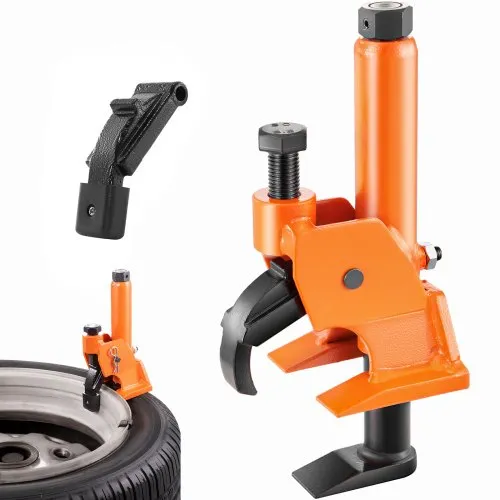
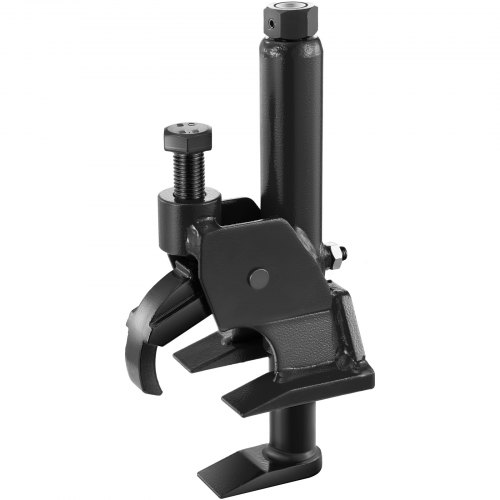
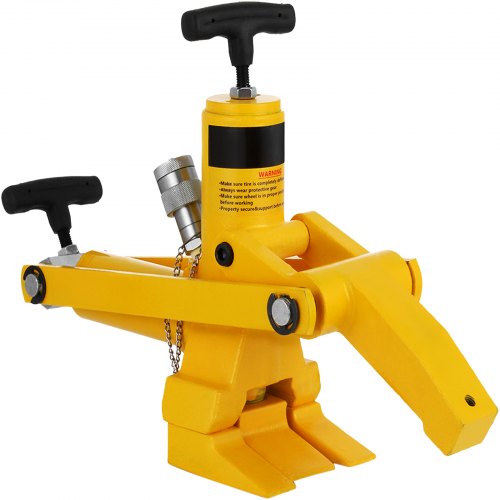
A hydraulic tire bead breaker] takes your light pushing effort and turns it into thousands of pounds of force that separates the beads. Most VEVOR models have 5 to 10 tonnes of thrust, which is more than enough to pop the seal on agricultural rubber that has been ignored for a long time and on rusted wheels.
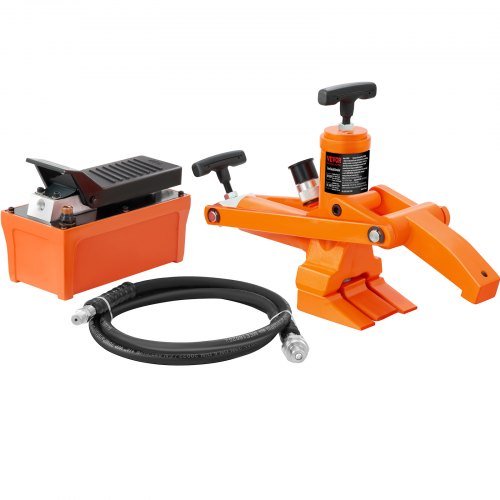
Because it is a hydraulic bead breaker with foot pump, you can place the shoe against the sidewall without using either hand. That matters when you are wrestling a big wheel on rough ground and need to make small adjustments mid-stroke. You can also "feather" pressure instead of committing to a full hit when you use your foot.
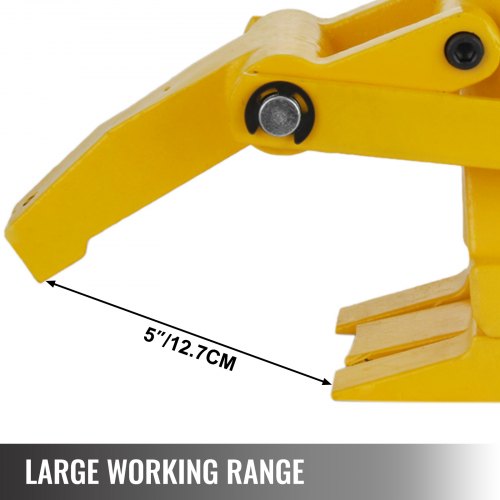
Find a hydraulic tyre bead breaker with a wide contact shoe and an adjustable stroke length. It is less likely that pinching will occur on tubeless tires when you wear wide shoes because they spread the force across a larger area of the sidewall. With an adjustable stroke, one tool can work on both narrow ATV tires and wide float tires. Shops that deal with various goods, fields that have tractors and other farm equipment, and anyone who is sick of losing arm strength in the middle of a job can all benefit from hydraulic units.
You don't have to pump a pneumatic bead breaker by hand; you just pull a release. That difference really matters if you break twenty wheels every day. Cycle times shorten significantly, and operators get tired far less often during a full shift. The air hydraulic bead breaker sits between these two groups. It has a shop air motor that powers an internal hydraulic pump, so it offers hydraulic power with pneumatic ease of use. Most work well at 90 to 120 PSI, which is a normal range for a 60-gallon compressor.
Air-driven tools do tie you down to a hose, which makes it hard to move around. That does not matter for a fixed repair bay. If you do not have a truck-mounted compressor, you can not use this group for work on the side of the road or in remote farm areas. You might want to look at air models if your bay already has lines running through it and the extra space is worth it. These bead breakers pay for themselves most quickly in shops that service trailer fleets and light commercial vehicles.
A manual tire bead breaker does not store energy; instead, it uses force. Long handles and cam-action pivots allow one person to use simple mechanical advantage to generate a lot of force. Nothing to leak, plug in, or charge. To store tools or attach to a trailer, portable tire bead breaker units remove weight. For barns, boats, and workplaces not connected to the power grid, many work well with a manual tire changer stand to create a full no-power tire station. It only takes a minute to set up.
You should also mention the slide hammer for breaking tire beads. It clamps to the rim edge and uses a sliding weight to shock the bead free. It works great on smaller wheels and in small spaces where a full-size frame will not fit. Plus, it costs much less than powered options. People who use bead breakers only occasionally, mobile techs with limited truck space, and workers in places without compressed air or power should use manual bead breakers.
Start with the biggest tire. A tractor tire bead breaker requires a deep-reach shoe and considerable force. It also needs to handle 38-inch rims and stiff R-1 lugged sidewalls. When you undersize, it's better to fight the tool than the tire. Passenger and light truck work is not nearly as hard. Medium-sized hydraulic or solid-manual units can easily move 13-inch and 20-inch wheels. Tires for ATVs, lawn mowers, and wheelbarrows do not require much load capacity, but they do need narrow tires that fit shallow drop centers.
Size matters less than frequency. A basic manual type is fine for two tire changes a year. Powered equipment with rebuildable seals and replaceable wear parts is necessary for daily business use. Also think about where the work is done. Self-contained bead breakers that do not need an outside source are best for field repairs. Fixed bays help with speed. If you are honest about how you actually work, you will not have to buy twice.
When choosing a tool, its build quality and attention to detail determine how long it will last. Take the time to read these specs carefully.
Not marketing copy, but frame thickness, weld quality, and rated tonnage are what make a heavy duty bead breaker what it is. Look for steel frames at least 5 mm thick, fully welded joints rather than bolted plate, and a stated working load with extra capacity above it. The ram's mass should be well above your worst-case tire. A heavy duty tire bead breaker that can hold 10 tonnes can break through a farm bead that would stop a 3-ton unit in its tracks, and it can do this without always having to work at full speed.
Powder-coated or zinc-plated finishes can resist the water, mud, and tire grease that are common in service areas. The most common reason cheap tools break too soon is rust at the pivot points. Check whether the user can change the seals and shoes. Rebuildable bead breakers cost a little more initially but much less over their lifetime.
Steel on aluminum can damage painted or alloy rims, but the tire changer tool with rubber pad saves them. Just this feature alone is worth the extra money if you work on other people's cars or just like your own wheels. With an adjustable shoe angle, the tool can bite properly into a range of sidewall profiles. People's tires with flat, straight sides work fine with fixed-angle shoes, but the tall, curved sidewalls of flotation and tool tires make them slip.
The unit does not walk during a stroke because the base geometry is stable. Wide bases, non-slip feet, and bolt-down holes help deliver force in a controlled, predictable way. Finally, consider storage. Folding the handles, separating the rams, and keeping the frames compact makes it easy to store bead breakers in a truck box instead of a shop corner.
VEVOR offers hydraulic, pneumatic, manual, and slide hammer styles in the right sizes for everything from mower tires to tractor tires. You get honest tonnage ratings, hardened-steel construction, and rim-safe rubber padding at prices much lower than those of specialty tool brands. You also get quick post-sale customer service and a guarantee on every unit. Stop using a sledgehammer to break down sides that won't budge. At VEVOR, you can look through all of their bead breakers to find the right one for your next tire job.
Aim for at least 8 to 10 tonnes. Agricultural sidewalls are thick and often corroded all the way to the rim. Having more capacity prevents the tool from stopping mid-stroke and reduces stress on its seals and frame.
It should not, as long as it has a rubber-padded shoe. Positioning is also important. Never put the shoe directly on the wheel lip; instead, press it against the tire sidewall near the rim edge.
Yes. Foot-pump hydraulic and slide-hammer designs are designed for one-person use. Before putting pressure on the wheel, make sure it is flat on the ground or on a changing stand.
For pneumatic and air-hydraulic types, the pressure should be 90-120 PSI. No electricity is needed; you can use manual or hand-pump hydraulic units anywhere.
After each use, wipe it down and keep the pivots lightly greased. Periodically, check the hydraulic fluid level. To keep the full rated force, replace worn shoes and seals as needed.