Book Carts



















Results for Book Carts
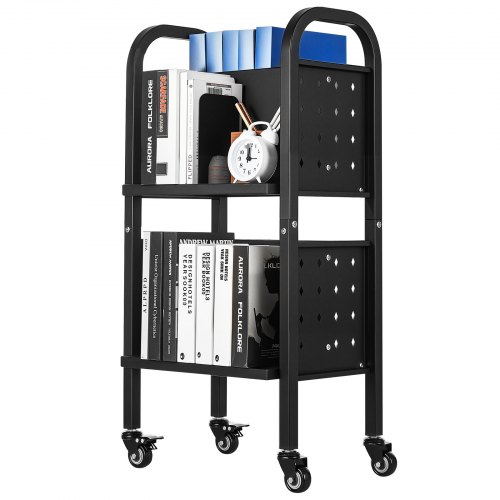
From small single-sided models for cramped aisles to double-sided book cart designs for maximum capacity, VEVOR's book carts meet every shelving and transportation need. This array includes lockable caster wheels for safe storage between uses, heavy duty steel construction for everyday commercial use, and mobile bookcarts for classrooms and libraries. Whether you call it a book cart, a library book cart, or just a book cart, the equipment in this collection is designed for real everyday use, not just a spec sheet. You can move books with confidence because each cart is designed for real shelving and transportation tasks.
VEVOR Book Carts for Libraries, Schools, and Offices
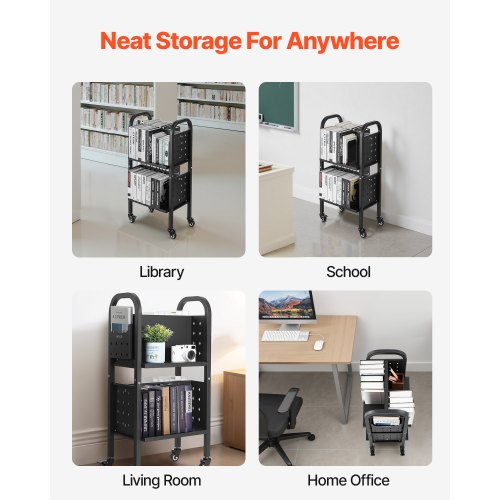
Unsure which book carts are best for your space? Choosing between heavy-duty, double-sided, and single-sided carts takes some thought. VEVOR keeps things simple with steel library carts designed for everyday commercial use, double-sided W-shaped book carts for greater capacity, and single-sided L-shaped book carts for tight aisles. A book cart fits your space and budget, whether your staff calls it a library bookcart or a library book truck.
Choosing the Right Type of Book Cart for Your Space
The book cart you choose depends on your aisle width, how many volumes you move at once, and how often you use the cart during the day. VEVOR offers several primary book cart categories, along with the best places for each.
Single-Sided L-Shaped Book Carts for Compact Storage
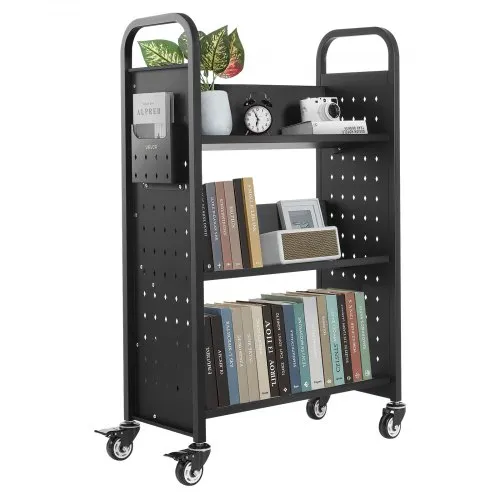
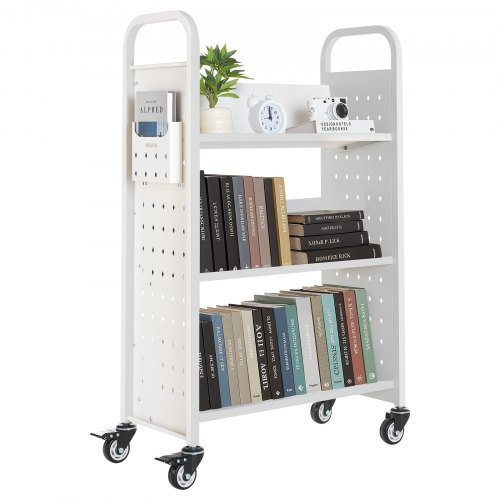
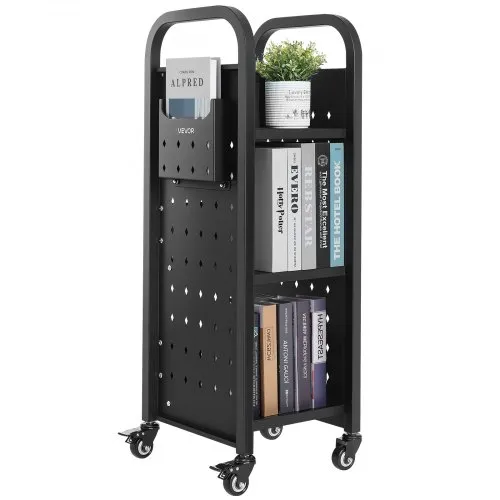
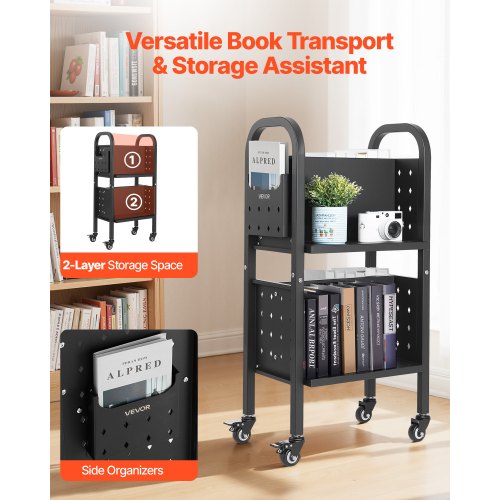
In narrow aisles where a double-sided cart won't fit without blocking passage, single-sided L-shaped shelf carts are practical because they tilt books to one side. This design lets a staff member or librarian push the cart through confined passageways typical of older or densely shelved libraries while accessing volumes from a single, consistent side.
The single-sided L-shaped shelf carts from VEVOR are ideal for bookmobile loading, reshelving carts going through the stacks, and any other scenario where aisle width, rather than overall capacity, is the limiting constraint. Additionally, compared to a level shelf, the inclined shelf design prevents books from slipping off during transit.
Single-sided L-shaped carts prioritize practical navigation over maximum shelf capacity, which matters more in day-to-day use than raw book count in many library layouts, especially for libraries with tight aisle spacing or anyone who needs a book cart that moves easily through crowded spaces.
Double-Sided W-Shaped Book Carts for Maximum Capacity
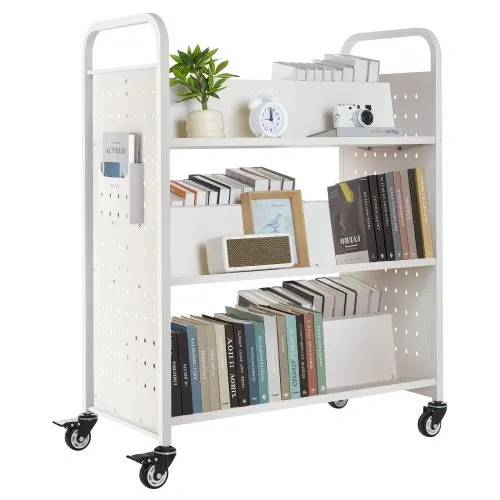
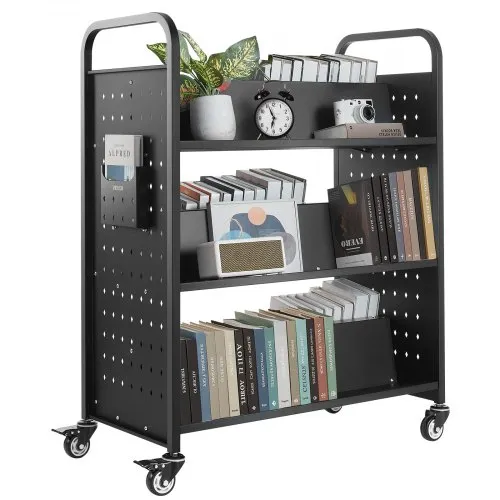
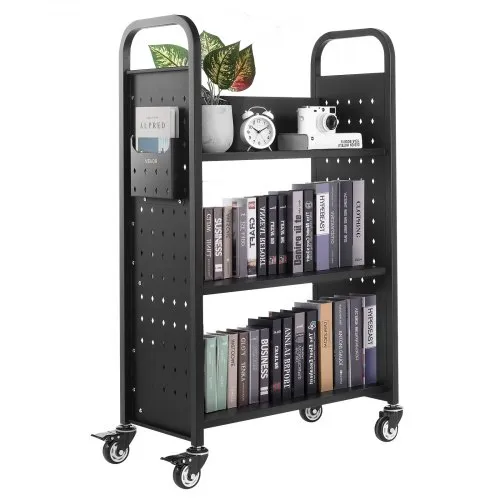
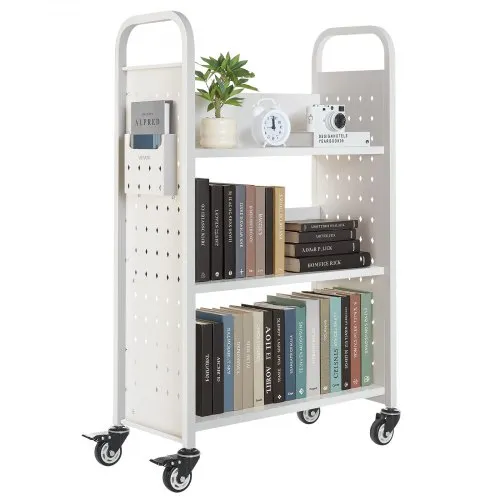
Double-sided book carts nearly double the capacity of a single-sided cart in a comparable footprint, with shelves angled toward both sides in a W-shaped profile. When libraries are moving a lot of books at once, like during reshelving after a busy time or when processing a big donation or new acquisition batch, this is crucial.
VEVOR's double-sided W-shaped shelf carts let staff access books from either side without traveling around the cart, making them ideal for wider aisles or open floor areas where the extra width doesn't create a navigation challenge. When carrying large amounts of books, this reduces the number of trips required compared with single-sided models.
The decision between double-sided book cart designs for maximum capacity and single-sided carts for small spaces depends on how many books you usually need to transport in a single trip and the width of your particular aisle. The additional capacity that a double-sided cart provides is typically more useful for libraries with wider stack aisles.
Rolling and Mobile Book Carts for Library and Classroom Use
A rolling book cart solves the core problem of moving books without carrying stacks by hand, supporting staff productivity and reducing fatigue from constantly lifting heavy loads during a shift. In situations where wheeled mobility is more important than fixed shelving, such as library reshelving, classroom book distribution, and general office document transportation, any rolling book cart works well.
To prevent organized sections from shifting during transport, rolling library carts designed expressly for library use often include features like book supports or dividers. This matters when a cart is loaded with volumes already divided by call number or subject. These rolling library carts significantly reduce the time needed to re-sort books once they reach their destination, and a moving bookshelf cart with the same organizational qualities works equally well outside a traditional library context.
Although cart designs vary, the term library book trucks, which refers to the same fundamental rolling cart concept, is still frequently used in library supply catalogs. This category includes both general mobility rolling bookshelf carts and library-specific models with sorting capabilities. Book carts primarily move books efficiently without manual hauling.
Lockable Caster Wheels and Mobility Features
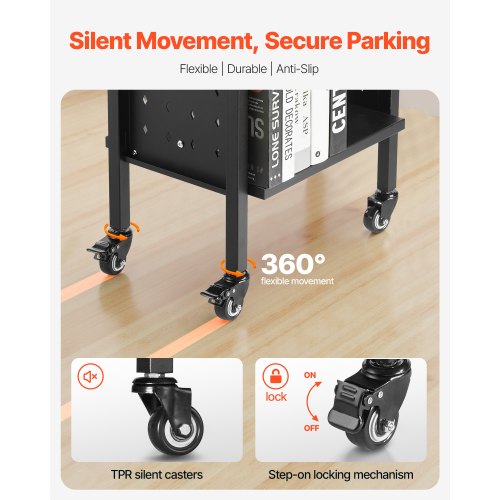
A mobile book cart's daily performance depends on wheel and caster features beyond basic rolling capacity. In busy library settings where an unsecured cart could roll suddenly, lockable caster wheel book carts let staff secure the cart at its destination, preventing unwanted movement while books are shelved or sorted.
Over years of regular use, the quality of caster wheels affects both durability and maneuverability. A book cart with wheels suited to the carpet, tile, or concrete floors in your building will roll more smoothly and require less effort to push than one with wheels that aren't suited to the surroundings. After a few weeks of regular use, any book cart with wheels that aren't compatible with your flooring will feel much more difficult to push.
Checking wheel-lock functionality and floor-surface compatibility before purchasing is as important as shelf configuration for any library or school with high daily cart traffic because, regardless of capacity, a cart that is hard to push or doesn't stay put once positioned causes daily frustration.
Matching Book Carts to Material and Capacity
Selecting the proper cart configuration is just half the work. How well that cart really withstands years of regular library or classroom use depends on its material and weight capacity.
Steel and Heavy Duty Construction for Durability
Material selection affects both a cart's longevity and its safe weight capacity. Steel library carts resist dents, cracks, and wear that lighter materials show after frequent daily loading and unloading. This matters for institutions that use carts regularly rather than occasionally.
Heavy-duty book carts are especially designed for high-traffic areas where regular consumer-grade carts deteriorate rapidly with continuous use. Unlike light home or small office use, these usually include sturdier shelf supports, stronger frames, and higher-rated caster wheels designed to withstand daily professional wear.
Investing in steel construction and heavy ratings up front is typically less expensive over time than replacing a lighter-duty cart that wears out after a year or two of continuous use in public libraries, school libraries, or any other organization moving books daily across a full staff shift.
Choosing Capacity for Your Collection
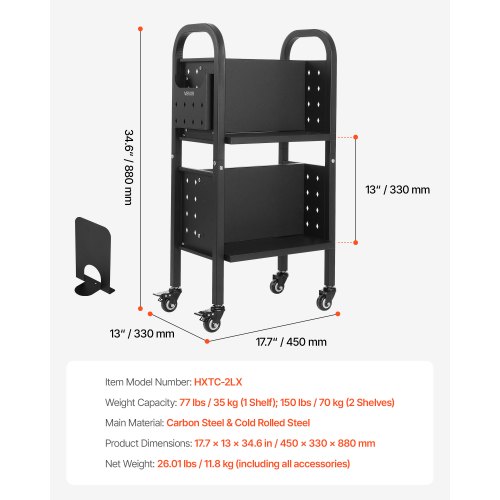
Weight capacity should be more than simply a general safety; it should reflect your real normal load. When a book cart is overloaded beyond its rated capacity, it risks tipping or shelf failure, especially when navigating entrances, elevators, or uneven flooring, where abrupt shifts in weight distribution matter more than on a level, open floor.
Because bigger publications, such as reference books or bound periodicals, may not fit normal shelf spacing intended around typical paperback and hardback dimensions, checking shelf depth and height clearance against your typical book sizes is just as important as the overall weight rating. Matching cart capacity and shelf dimensions to your collection can help avoid safety concerns and the frustration of volumes that don't fit the available shelves.
Why Choose VEVOR Book Carts?
Whether you're looking for a regular cart or a specialist library book cart, VEVOR offers a genuinely broad selection of book carts, including single-sided, double-sided, and heavy-duty variants, so you're not forced to compromise on capacity or maneuverability just because of what's in stock elsewhere. Mobility options include open floor layouts and compact library aisles, and prices stay low for both standard and steel construction. Choosing the ideal book cart for your space is simple, supported by VEVOR's standard warranty and customer service. Browse the full selection of book carts to choose the one that best fits your collection and budget.
FAQs
What distinguishes double-sided book carts from single-sided ones?
For tight aisles, single-sided L-shaped carts tilt books to one side. In larger areas, double-sided W-shaped carts can nearly double their capacity by angling shelves toward both sides.
Does a library book cart need lockable caster wheels?
Yes, particularly in crowded settings. When staff members are shelving or organizing books nearby, lockable caster-wheel book carts and moving bookshelf cart designs with locking wheels stay stationary.
Is the additional expense of a steel library cart worthwhile compared to a regular cart?
Generally, yes, for regular institutional use. Replacing a lighter-duty cart within a year or two is usually pricier than using steel construction, which endures wear better than lighter materials.
What is the maximum weight that a sturdy book cart can support?
Before loading, confirm the manufacturer's rated capacity, as it varies by model. Overloading a book cart creates a real risk of tipping or shelf failure during transit.
Can a rolling book cart pass through regular doors?
Most single-sided carts and typical rolling book carts can easily pass through conventional doorways. Because double-sided W-shaped carts are wider, measure your entryway and aisles before purchasing to avoid a sizing mismatch.