Deals
Deals by Categories




More Ways to Save

Best Sellers
Best Sellers by Categories
New
New by Categories
Download VEVOR App 

Get 5,00€ Off 99,00€+ Orders on Your First 3 App Orders
Scan the QR code to download
SKU: SCJGSZKJ6YCWKW1BQV2
Copy


+12
More


VEVOR Core Drill Machine 2.03-16 cm Dia 2000W Handheld Core Drill Rig for Mixing
4.7 788 Reviews
104 90 €
Earn at least 2% points on purchases or save up to 15%.
Each when you buy 0+.
Shop
Get -% off for new user
Get 5,00€ Off 99,00€+ Orders on Your First 3 App Orders.
Download Now


Features & Details
- Versatile Multi-Function Use: Whether you need precise drilling or mixing cement, paint, or glue, this core drill machine handles it all with ease. The symmetrical auxiliary handle ensures comfort and stability, even during extended use. Quickly switch between different modes to meet a variety of construction needs.
- Powerful Core Drilling Efficiency: Equipped with a 2000W motor and adjustable speed, this core drill rig can handle hole sizes ranging from Φ0.8-6.3 in / Φ20-160 mm effortlessly. Whether drilling large or small holes, this tool ensures every task is efficient and precise.
- Handheld Design for Maximum Control: The core drilling machine features optimized weight distribution and structural design, allowing easy handling in various construction environments. Whether working in tight spaces or at elevated heights, you can easily adjust the drilling angle and depth for perfect results every time.
- Wet & Dry Cutting Capabilities: Our concrete core drill supports both dry and wet cutting modes. Dry cutting is ideal for fast drilling in dry environments or high-efficiency scenarios, while wet cutting reduces dust and heat, providing enhanced safety and comfort during operation.
- Engineered for Precision Drilling: The coring drill is designed for easy operation when drilling through reinforced concrete, red brick, marble, and more. It meets professional standards and is versatile enough for various tasks like installing air conditioners, kitchen pipes, stair railings, and even highway maintenance.
Product specification
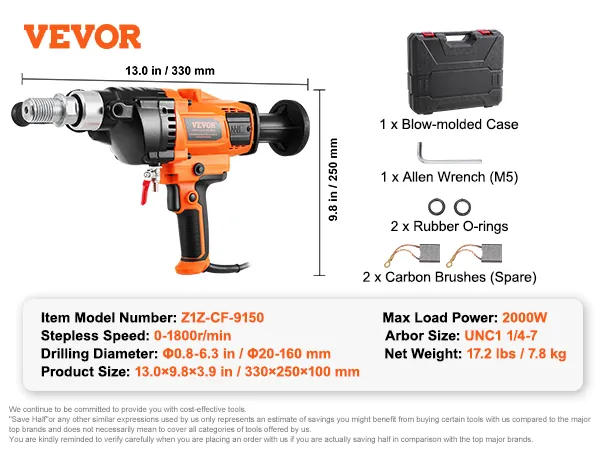
- Item Model Number Z1Z-CF-9150/CF-DCD06
- Max Load Power 2000W
- Drilling Diameter Φ0.8-6.3 in / Φ20-160 mm
- Arbor Size UNC1 1/4-7
- Net Weight 17.2 lbs / 7.8 kg
Frequently Bought Together
Reviews
About this item
Questions and Answers
Explore
Reviews 4.7
All reviews are from verified purchases
Average rating based on 788 reviews
Reviews 4.7
All reviews are from verified purchases
See all 788 reviews
About this item
Product specification
- Item Model Number
- Z1Z-CF-9150/CF-DCD06
- Max Load Power
- 2000W
- Drilling Diameter
- Φ0.8-6.3 in / Φ20-160 mm
- Arbor Size
- UNC1 1/4-7
- Net Weight
- 17.2 lbs / 7.8 kg
Description


Effortless Drilling Every Time!
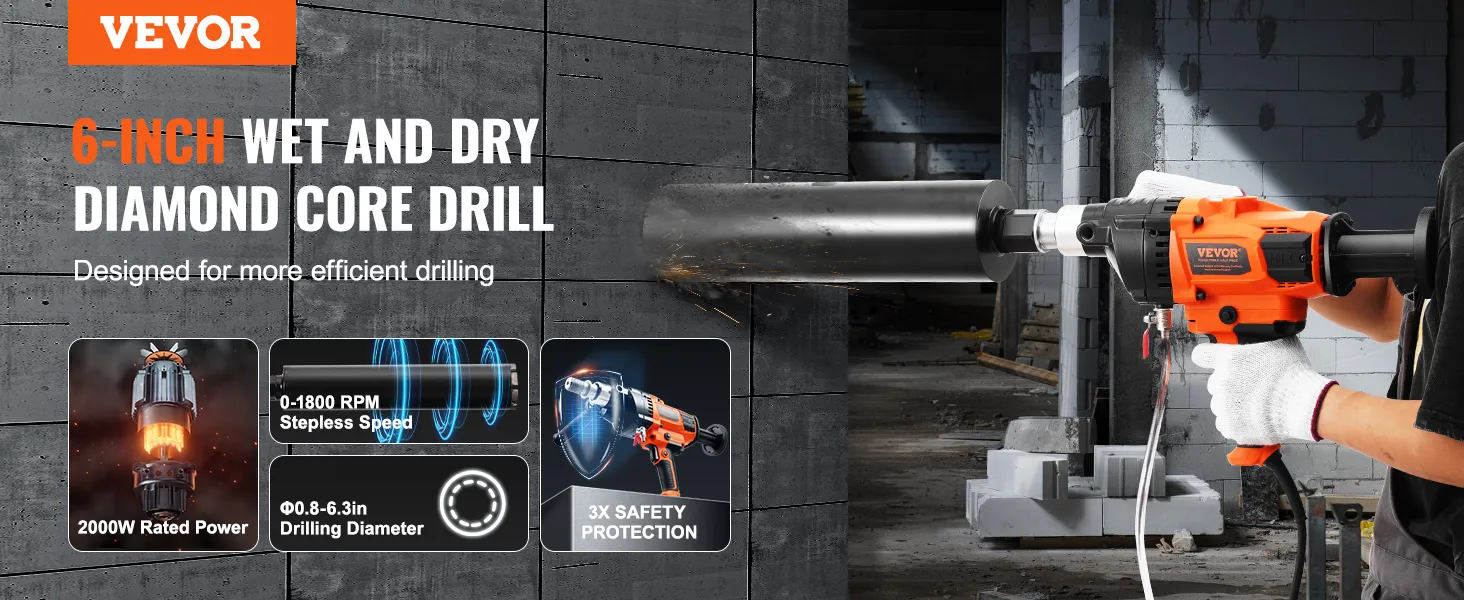
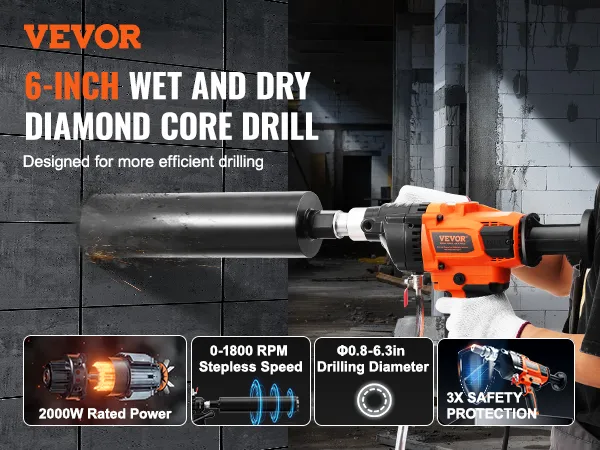
The core drill machine's 2000W motor provides ample power for tackling tough materials, making the drilling process faster and more stable. The adjustable speed allows you to fine-tune the speed based on different materials and project requirements, ensuring precise control.
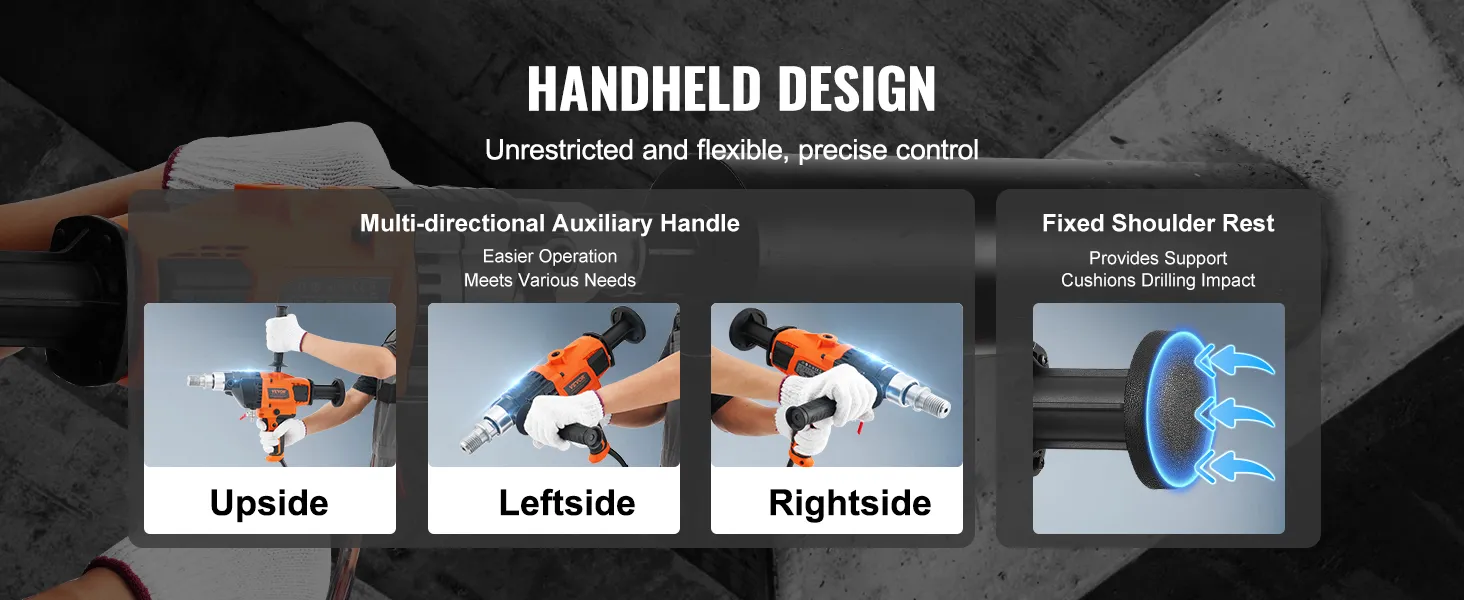
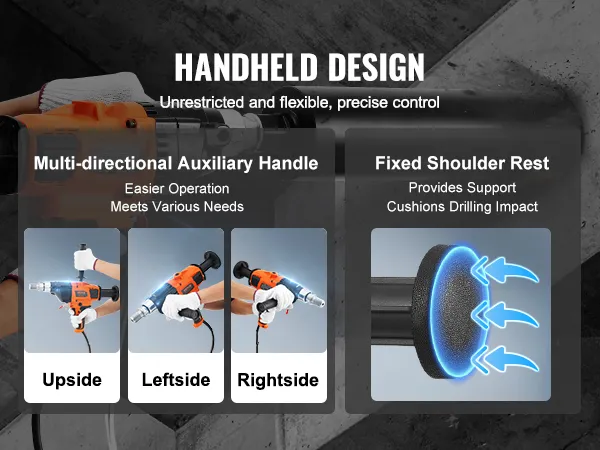
The lightweight handheld design makes the core drill rig easy and comfortable to use, perfect for precision drilling tasks. It allows you to operate in tight or irregular areas. Whether adjusting the drilling angle or working in confined positions, it meets your needs, increasing efficiency.
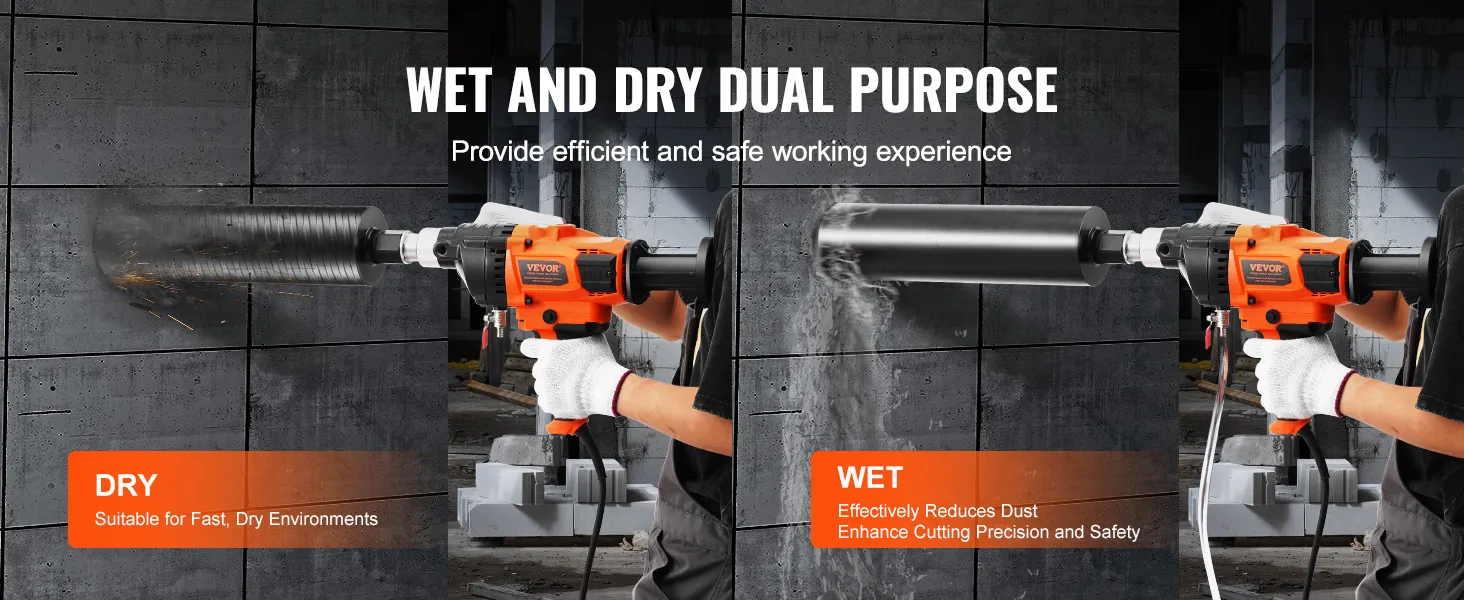
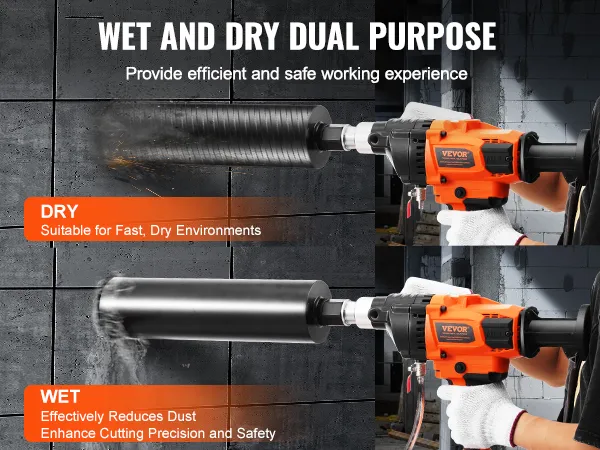
Experience superior cutting and debris removal speed with the dry cutting mode. The wet cutting mode reduces dust and overheating during operation, improving safety and comfort in the work environment. It also helps reduce tool wear, extending the core drilling machine's lifespan.
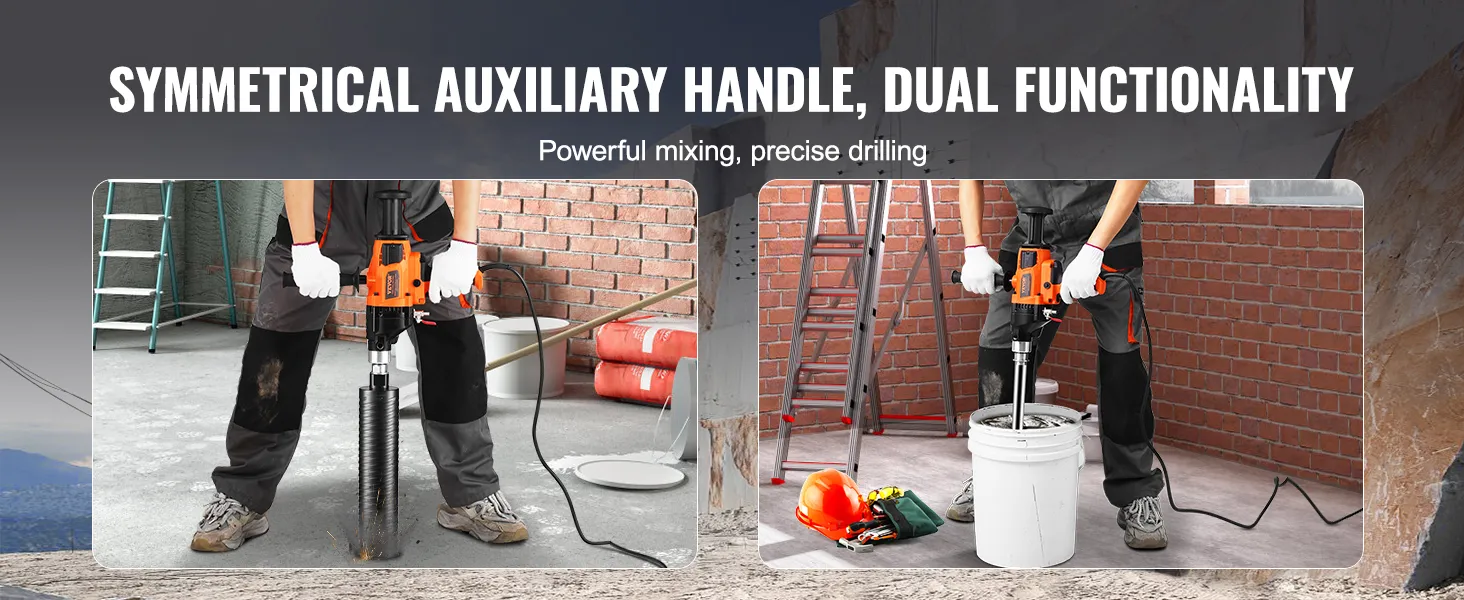
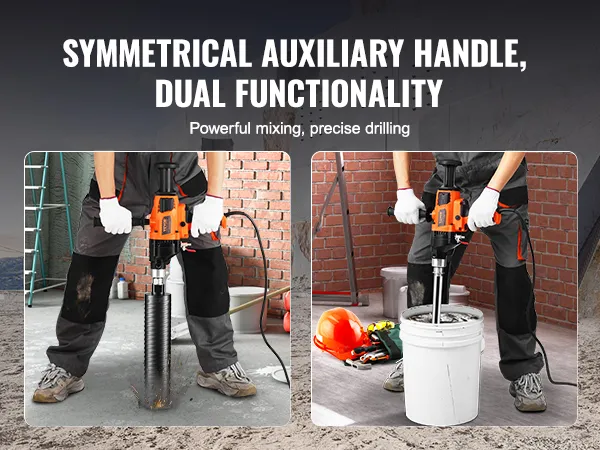
This handheld concrete core drill not only excels at efficient drilling but also features a powerful mixing function. It’s ideal for mixing various construction materials like cement, paint, and glue, providing you with a convenient and efficient solution for your project needs.
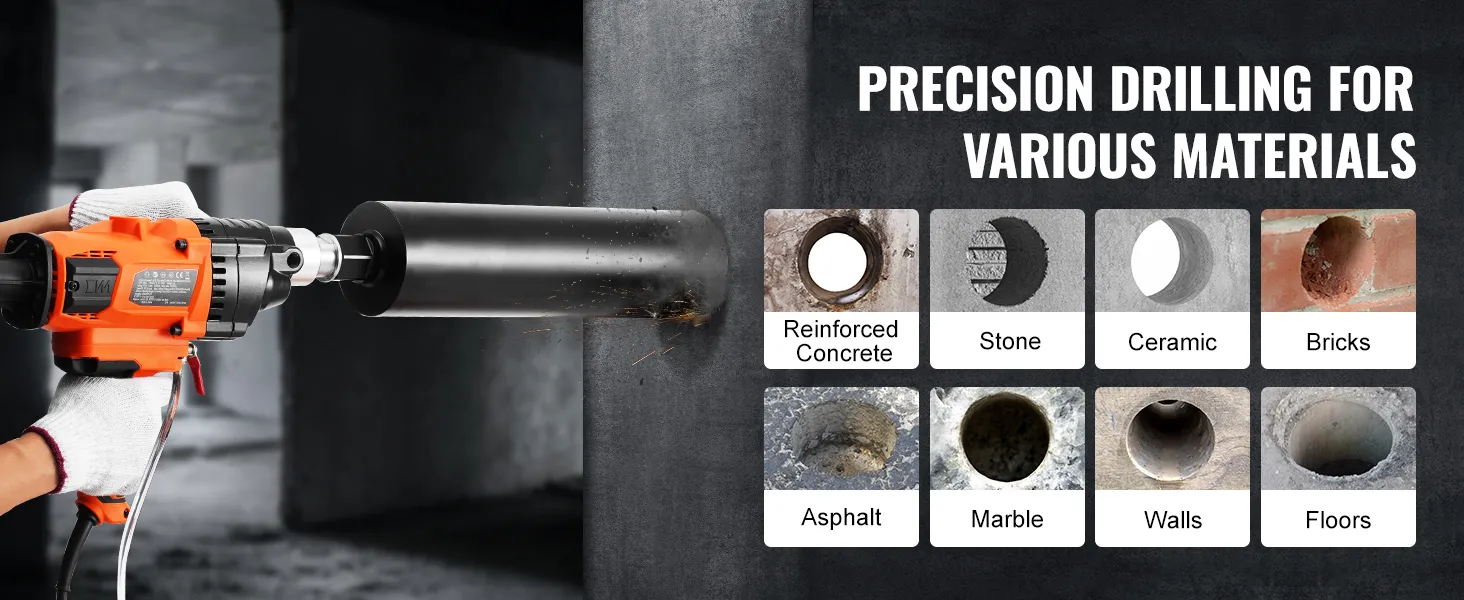
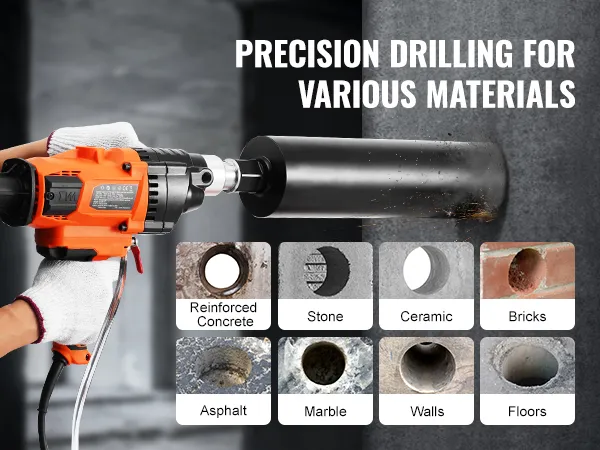
Our coring drill can efficiently cut through a variety of materials such as reinforced concrete, stone, asphalt, marble, ceramic, walls, floors, and bricks, meeting the needs of various construction projects.
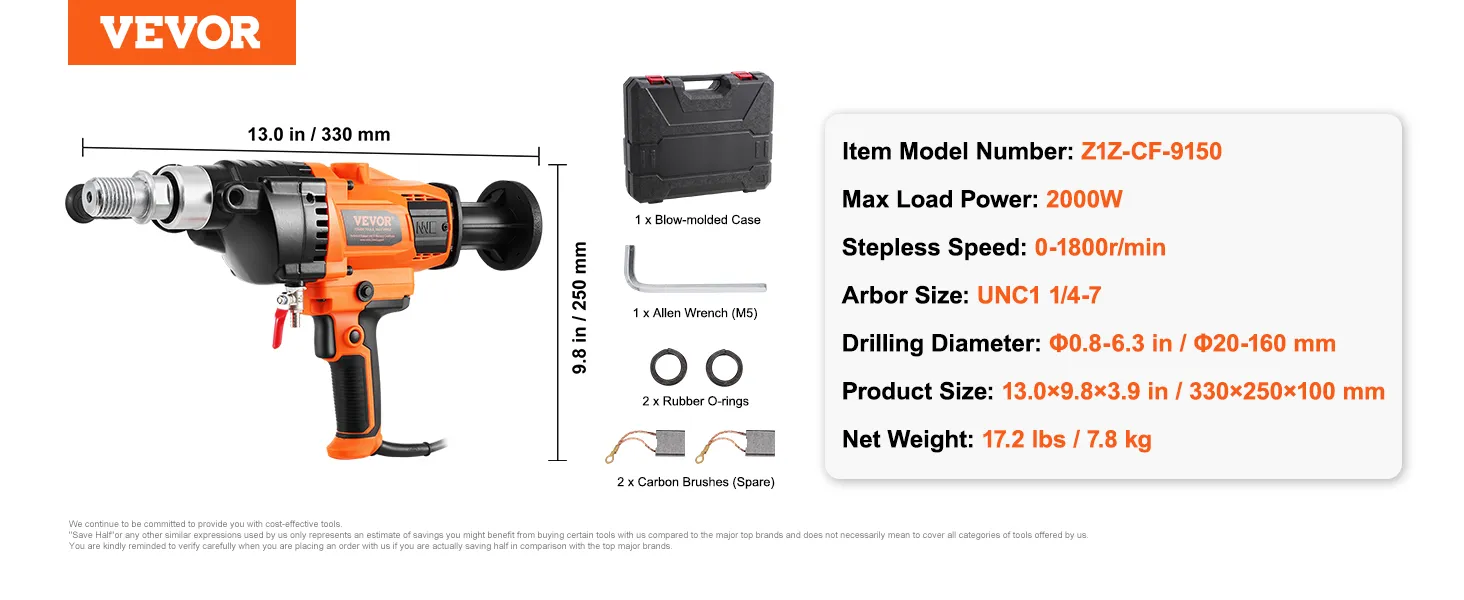
Hand Core Drill with 2000W Motor and Adjustable Speed for Drilling and Mixing
A 2000-watt motor with variable speed control drives the hand core drill. It can efficiently drill holes from Φ0.8 to 6.3 inches (Φ20 to 160 mm) in a wide range of materials and for all kinds of projects. The motor delivers constant torque with no loss of performance as resistance increases while drilling a hole in dense reinforced concrete or hard aggregate. What’s unique about this machine is that it's a multi-functional, not single-function, drill rig. It can mix cement, paint, and glue, and core drill.
So it’s a real dual-purpose tool for construction and renovation work where you need to drill and mix on the same job. Switching between functions quickly means there is no need to carry a separate mixing tool to an area where drilling is also taking place. The 2000W motor tackles both jobs at the power level professional work requires without the performance trade off that lighter duty multi-function alternatives demand.
Optimized Handheld Design for Control in Tight Spaces and Elevated Positions
The hand core drill machine is designed with balanced weight distribution. The 17.2 lb frame is balanced for use, so the operator does not need to fight the tool's center of gravity while controlling the drill's angle and pressure. If you work at height or in a tight wall cavity, unbalanced tools force you to compensate with grip strength rather than technique. That design addresses that problem. The handheld format provides direct positional control for angled penetrations, elevated bores, and spaces where a stand-mounted rig cannot be positioned.
Access situations such as air conditioner sleeve penetrations through exterior walls, routing kitchen pipes in finished interiors, and stair railing anchor bores all require handheld operation as the only feasible option. The optimized weight distribution allows the operator to precisely dial in the drilling angle and depth at various positions, without fatigue building to the point of affecting hole accuracy or necessitating a stop mid-stroke.
Wet and Dry Cutting Modes for Safe, Dust Reduced Operation on Any Surface
Wet cutting channels water through the bore during operation, flushing debris from the cut and cooling the bit face during the stroke. The diamond segments wear out more quickly over time as heat builds up in the bit, reducing cutting efficiency and the effective hole diameter. Water prevents that heat buildup, increasing bit service life and maintaining a constant bore diameter from entry to full depth. In the context of indoor renovation, the wet mode is preferred because it reduces airborne dust, as particulate levels affect the operator's health and the cleanliness of the finished surface.
Dry cutting is used in outdoor activities and site conditions where access to water is limited or where controlling water runoff near finished surfaces adjacent to the work is not feasible. There’s no need to make any adjustments to switch between modes or to connect or disconnect the water line. Because both modes use the full 2000W motor output, the performance difference between wet and dry is limited to the benefits of water cooling and debris flushing, not a reduction in drilling speed or torque on either setting.
Hand Core Drill with Φ20–160 mm Drilling Range and UNC1 1/4-7 Arbor
The Φ20–160 mm drilling diameter range covers small conduit penetrations at the low end and large pipe sleeves or ventilation openings at the high end, all with the same hand core drill without changing machines or reconfiguring the drivetrain. This range covers most penetration diameters used in residential and light commercial construction. The arbor uses a UNC 1 1/4-7 thread, a standard professional size, so it fits a wide range of third party core bits that are not included with the kit.
If the job specs call for a diameter outside the standard range, it's easy to find a compatible bit without needing thread adapters. Standard arbor compatibility future proofs the machine as the job scope expands, and additional bits extend its capabilities without requiring a new tool to accept them. The machine weighs 17.2 lbs, so it is light enough to carry and operate solo across a full day of varied drilling and mixing tasks at different locations.
Symmetrical Auxiliary Handle for Stability and Comfort for Extended Use
The symmetrical auxiliary handle gives you a balanced two-handed grip. During drilling, the motor's torque reaction is evenly distributed between both arms. If you're using a 2000W machine in single-grip mode, a secondary handle helps distribute torque more evenly, so the primary grip hand doesn't fatigue as quickly and you have better control and precision over longer sessions.
The symmetrical design allows use by both right and left handed users without changing the handle position. The auxiliary handle provides continuous stability, helping ensure uniform mixing depth and coverage during mixing operations as the tool runs continuously as the operator moves the mixing attachment through the material. Extended-use comfort is important for jobs with multiple holes or long mixing sessions, where the primary limiting factor in how long the operator can maintain accurate control is grip fatigue.
Precision Performance On Red Brick, Marble, And Reinforced Concrete
The machine is designed to overcome the material's resistance levels that most quickly reveal the limitations of undersized drill rigs. Reinforced concrete consists of hard aggregate and steel reinforcement. If the torque is not enough, the bit can get hung up on rebar. The motor is 2000W, which is enough power for both jobs and avoids the torque spikes that cause lighter machines to stall in the middle of a hole. Brick and marble have different resistance profiles.
Brick is abrasive but uniform, and marble is dense and brittle at the edge of the bore. Variable speed control solves both problems. Slower on marble to minimize edge chipping and produce cleaner walls around the hole. Faster to cut through brick quickly without slowing the bit down. The machine is built to professional standards for trade and contractor use in air conditioner installations, kitchen pipe penetrations, highway maintenance cuts, and structural anchor bores.
Product guides and documents
User manual-en (PDF) Review
Questions and Answers (2)
Qual a tensão desta máquina
Este produto utiliza tensão de 220V.
By vevor
Helpful
(
0
)
A máquina é cor de laranja ou amarela?
Este produto é de cor laranja.
By vevor
Helpful
(
0
)
Security & Privacy
FREE Returns
Professional Service
Compare with similar items
Similar Items You Might Like
People Who Bought This Item Also Bought
Best sellers in this category
People Who Viewed This Item Also Viewed
Your Browsing History