Coring Tools






































Results for Coring Tools
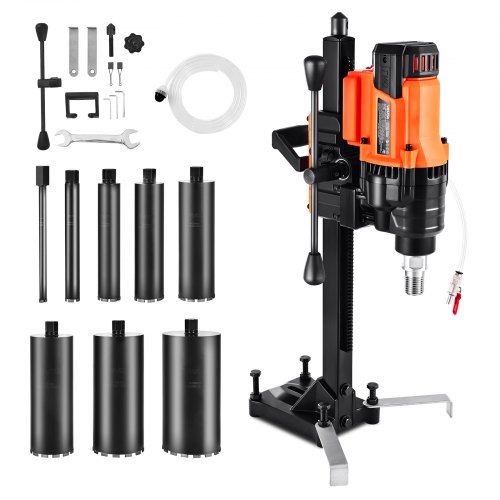
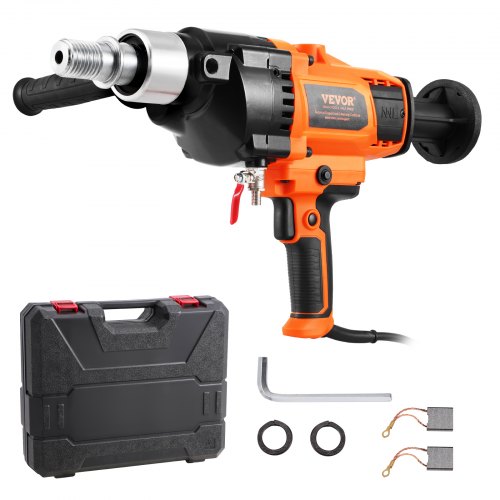
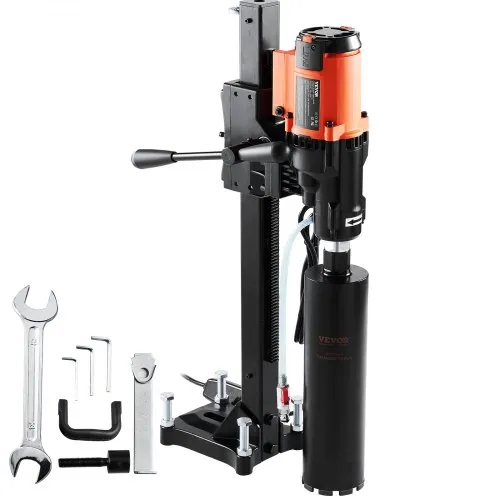
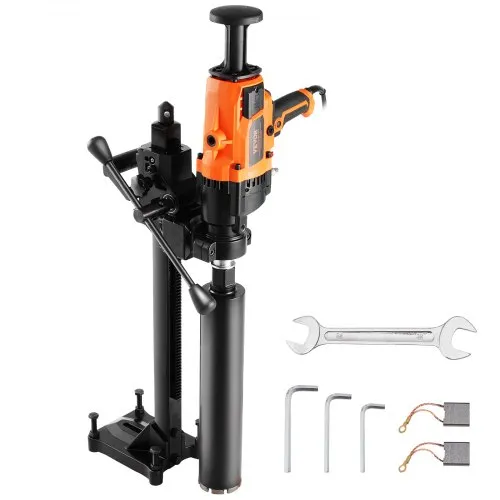
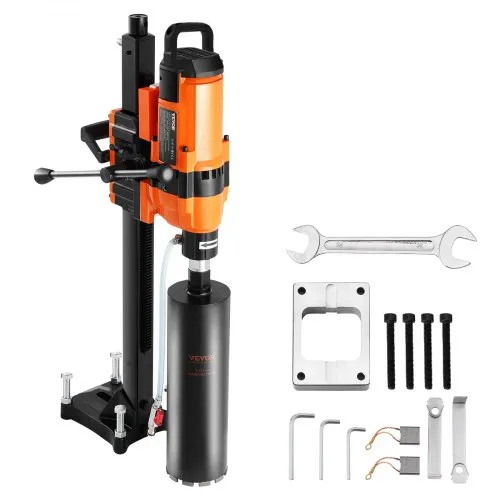
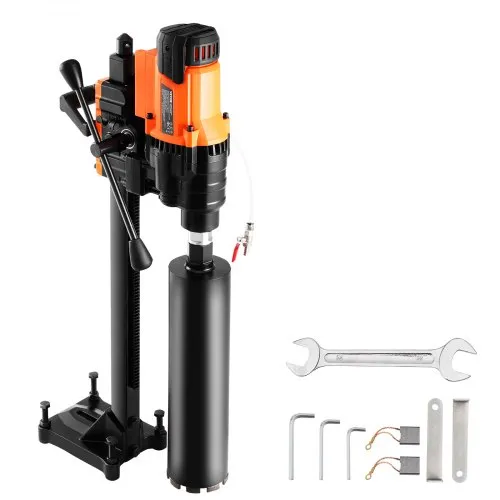
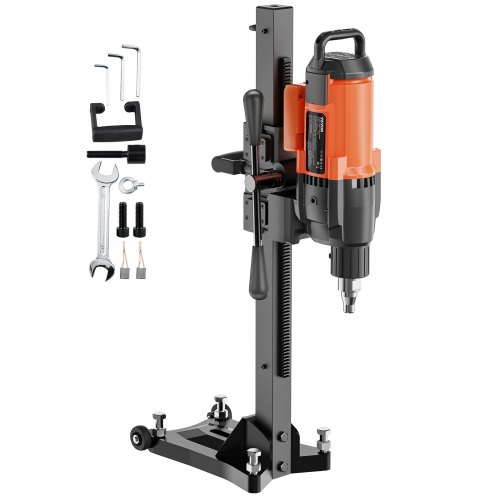
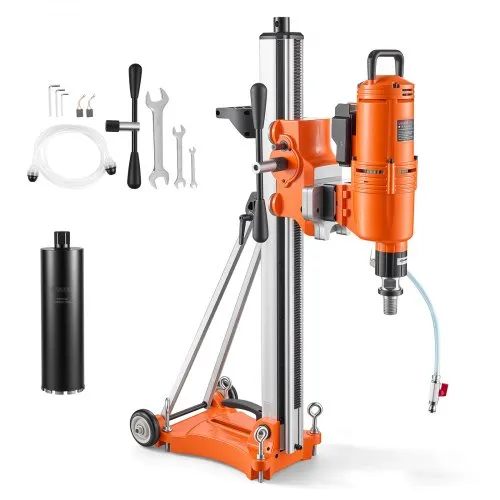
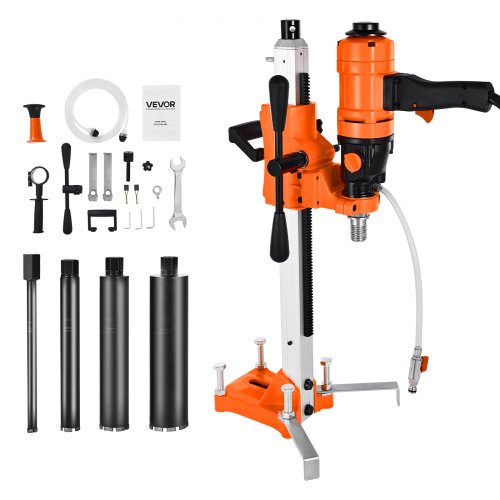
VEVOR diamond core drilling machines range from 4 to 10 inches in diameter and come as stand-mounted rigs, portable devices, or 2-in-1 variants that can be converted between the two. Whether you call it a coring machine, coring drill, or drill for core drilling, each rig can operate in wet and dry conditions, cutting precise holes in stone, brick, and concrete. Any diamond core drill rig in this portfolio can be equipped with bits sold separately for repeat work, and motor power ranges from 1500W handheld units to 3500W stand-mount rigs.
VEVOR Diamond Core Drilling Machines: Handheld and Stand-Mount Rigs Compared
Do you need to cut a neat, circular hole in concrete without cracking the surrounding slab? Instead of hitting the material, a core drilling machine employs a hollow bit with a diamond tip to grind through it, leaving an undamaged core sample and a smooth borehole. These coring drills range from 4-inch handheld core drill machines for plumbing and electrical work to 10-inch stand-mount rigs for larger structural openings. This lets you match the machine to the hole size instead of using a single drill for every task.
Mounting Type and Bit Size: Choosing the Right Diamond Core Drilling Machines
Two factors quickly narrow the choice of VEVOR diamond core drilling machines: the size of the hole you're really cutting and whether you need to hold the drill by hand or mount it on a stand.
4-Inch Handheld Core Drills for Small, Precise Holes
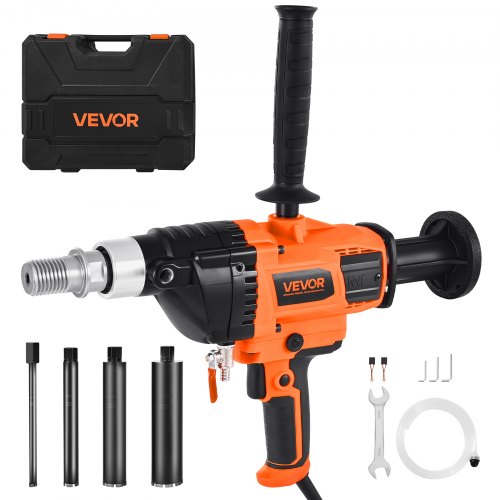
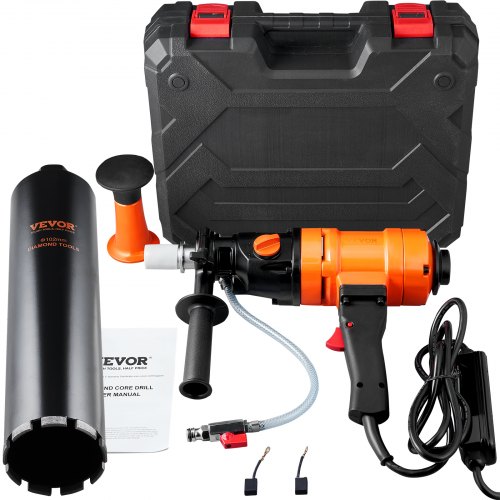
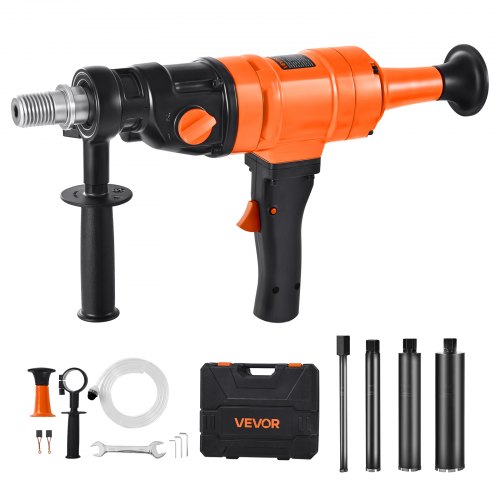
A 4-inch portable core drill is designed for modest penetrations, such as coring test samples where stand-mounted equipment isn't needed, cutting an access hole for plumbing, or passing conduit through a wall. The VEVOR model uses a 1500W motor with two speed settings up to 2400 RPM to drill three- to four-inch holes in concrete, brick, or block.
Portability eliminates setup time when fastening a stand to the surface, which matters for jobs that require a few holes rather than a full day of coring. Without a stand's mounting plate to reference, built-in bubble levels help keep the bit square to the surface. This feature matters more on a handheld unit than on a stand-mounted one, where the base keeps the bit aligned.
For electricians, plumbers, and HVAC technicians who need sporadic penetrations rather than production coring, this size works well. A tiny portable unit is lighter, less expensive, and quicker to remove from a truck than setting up one of VEVOR's bigger diamond core drilling machines for a single hole. Still, it will tire out an operator more quickly when drilling dozens of holes a day than a stand-mounted rig.
8-Inch Core Drills: Handheld, Stand-Mount, or 2-in-1
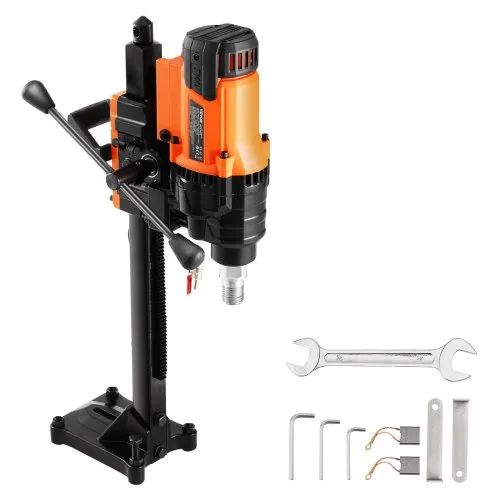
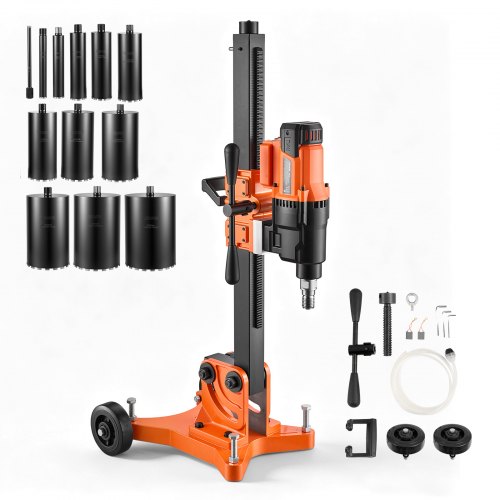
VEVOR offers the most configuration options for eight inches: a stand-mount rig, a straight handheld device, and a 2-in-1 handheld & stand-mount core drill that can be switched between the two. Stand-mount variants increase to 2500W or 3000W with a slower, higher-torque single speed better suited to a full 8-inch bore, while the portable version operates at 1800W with two-speed options.
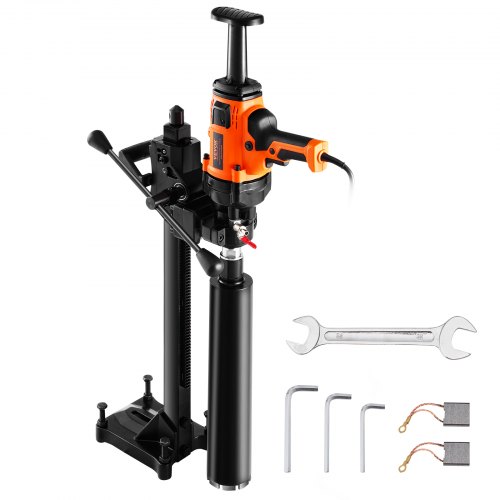
If your work truly fluctuates, such as a short handheld hole on some days and a full-diameter bore that requires the stability of a base plate on others, the 2-in-1 model is worth taking into consideration. It only makes sense if you would otherwise buy two separate diamond core drills, since it costs more than either dedicated version.
If you frequently drill 8-inch holes, a specialized stand-mount rig makes more sense because the extra torque and stability cut through reinforced concrete more reliably than a portable device struggling to stay straight at that diameter. Handheld or 2-in-1 options avoid buying a largely idle setup for sporadic 8-inch holes mixed with smaller tasks.
10-Inch Core Drill Rigs for Maximum Diameter
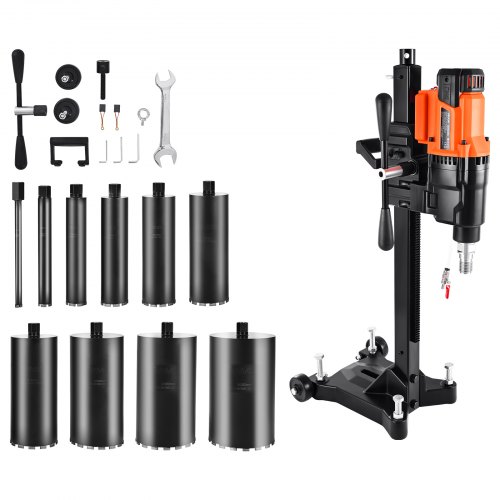
With a hole this big, torque and vibration make a handheld grip impractical and unsafe, so VEVOR's range enters stand-mount-only territory at 10 inches. This size core drill with a stand holds the bit perfectly straight throughout the whole depth of the cut by bolting or vacuum mounting to the surface.
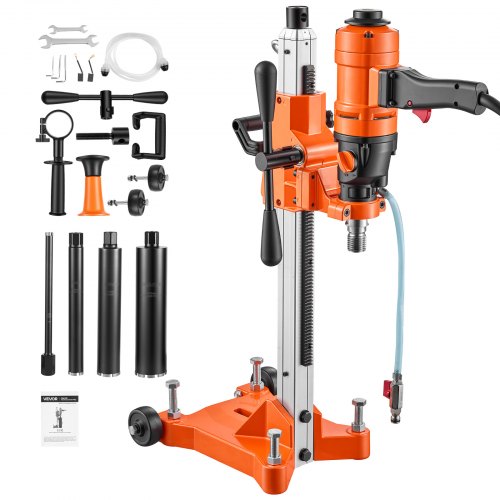
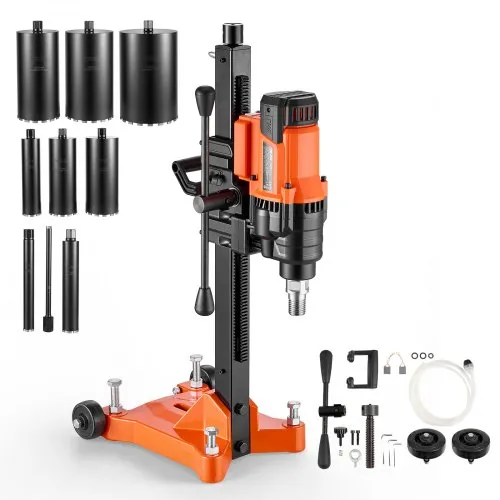
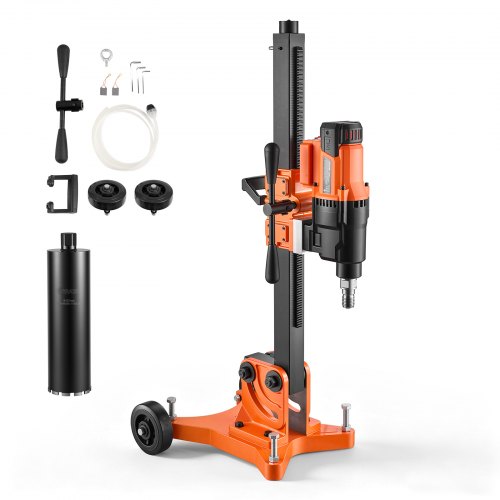
VEVOR offers 10-inch concrete core drill rigs in two configurations, including one mounted on wheeled casters to move the rig between holes on a larger job without raising the entire stand each time. These have a 2500W motor with two speed settings, providing enough torque for reinforced concrete without stalling through a thick slab.
This size is appropriate for structural holes such as utility runs that require more than a conventional plumbing hole, HVAC ductwork, and large pipe penetrations. Because these are some of the largest diamond core drilling machines available, establish your exact hole-diameter requirements before buying a 10-inch rig when an 8-inch concrete core drill would suffice.
Variable Speed and Motor Power Across the Lineup
These diamond core drilling machines differ more in motor power and speed settings than the bit-diameter figures indicate. Since concrete, brick, and natural stone all cut best at different rates, and going too fast through a soft material can shorten bit life rather than speed up the process, a variable-speed diamond core drill lets you adjust RPM to match the material.
While some mid-range models offer true stepless variable speed from 0 to 1800 RPM, some VEVOR portable units have two fixed speed settings. Because the stand's added leverage reduces the RPM needed to maintain cutting speed at the diamond segments, stand-mount rigs often run at slower, fixed rates.
Generally, larger bits grinding through reinforced concrete are better suited to lower RPM with more torque, whereas smaller-diameter bits and softer material suit higher RPMs. Since a high-wattage motor at the incorrect RPM for your bit size won't necessarily cut any quicker, comparing a machine's speed range to your typical bit size and material is a better buying signal than motor wattage alone.
Wet/Dry Operation and Application for Diamond Core Drilling Machines
How diamond core drilling machines handle heat and dust matters as much as their size, and it depends heavily on what you're drilling and where.
Wet and Dry Core Drill Rigs: Choosing the Right Method
To cool the diamond segments and remove debris during cutting, a wet core drill circulates water through the bit. Most VEVOR dry and wet core drill rig models default to wet operation because it keeps the bit cooler, prolongs its life, and reduces airborne dust.
Dry operation avoids water, which matters indoors when bringing a water line to the task is impractical or when a wet slurry would damage flooring. Because dry coring produces more dust, it usually uses a dust shroud or vacuum attachment instead of water for dust control.
Since most VEVOR diamond core drilling machines are designed to handle both, the decision typically comes down to the job location rather than the machine itself: dry indoors, where water damage is a concern, and wet outdoors for structural work, where water runoff is not an issue. Before purchasing, make sure a model is configured for your project by checking its dust port and water fitting.
Applications and Diamond Core Drill Bits
These kinds of concrete coring tools are used for a variety of tasks, such as utility line access, HVAC ducting openings, plumbing and electrical penetrations, and structural testing where a core sample is taken for laboratory examination. Although bit selection is more important for masonry than the machine itself, a stand-mount rugged concrete core drill for brick & stone can handle both concrete and masonry. Diamond core drilling machines with interchangeable bits are worth the cost in part because of their versatility.
You can tailor the segment type and diameter to the material and hole size with diamond core drill bit sets available separately. Reinforced concrete with rebar benefits from a bit rated for that use, since the wrong segment wears out quickly on steel, while softer materials like brick typically cut well with conventional segments.
More than most purchasers realize, matching the bit to the material matters, since the same machine can perform as expected with the right bit and feel underpowered with the wrong one. A job stalling over a single worn segment can be prevented by keeping a few spare parts on hand, especially the size most frequently used.
Why Choose VEVOR Diamond Core Drilling Machines?
VEVOR diamond core drilling machines come in portable, stand-mount, and 2-in-1 forms, with diameters ranging from 4 to 10 inches. They may be used for concrete, brick, and stone in wet or dry conditions. A matching machine is available for both full structural holes and sporadic plumbing penetrations, with motor power ranging from 1500W handheld devices to 3500W stand-mount rigs. A first handheld device and a complete production rig are both reasonable purchases, since prices vary greatly by size and mount type. Browse the lineup, match the machine to your bit size, and use VEVOR's support staff and return policy.
FAQs
Should I buy a handheld or stand-mount core drill?
When setup speed matters more than stability, a handheld drill suits occasional smaller holes, usually 4 to 6 inches. Stand-mount rigs are better for everyday use or larger diameters because their increased stability improves accuracy and reduces operator fatigue.
What's the difference between wet and dry core drilling?
Wet drilling prolongs bit life with less dust by passing water through the bit to cool it and remove debris. For indoor jobs where runoff is impractical, dry drilling eliminates the need for water and is typically used in conjunction with a dust shroud or vacuum.
What size core drill do I need for a plumbing penetration?
A portable core drill is ideal for most plumbing and electrical penetrations, which are between 4 and 6 inches in diameter. Usually, for stand-mount setups, larger utility runs or HVAC ductwork require 8 inches or more.
Can the same core drill machine handle both concrete and brick?
With the correct bit, yes. Cutting speed and bit longevity depend on matching the diamond segment type to concrete, brick, or stone, but the machine itself works on a variety of materials.