


VEVOR Deep Well Submersible Pump, 750W 230V 60Hz, 7.1 m³/h Max Flow 75 m Max Head, with 9.1 m Electric Cord, Stainless Steel Water Pump for Industrial, Irrigation&Home Use, IP68 Waterproof Grade


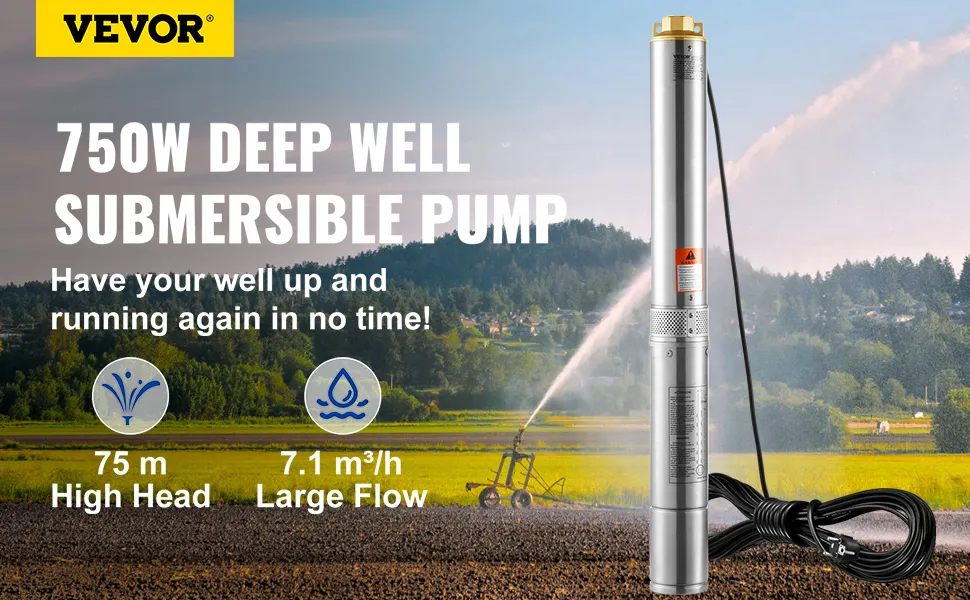
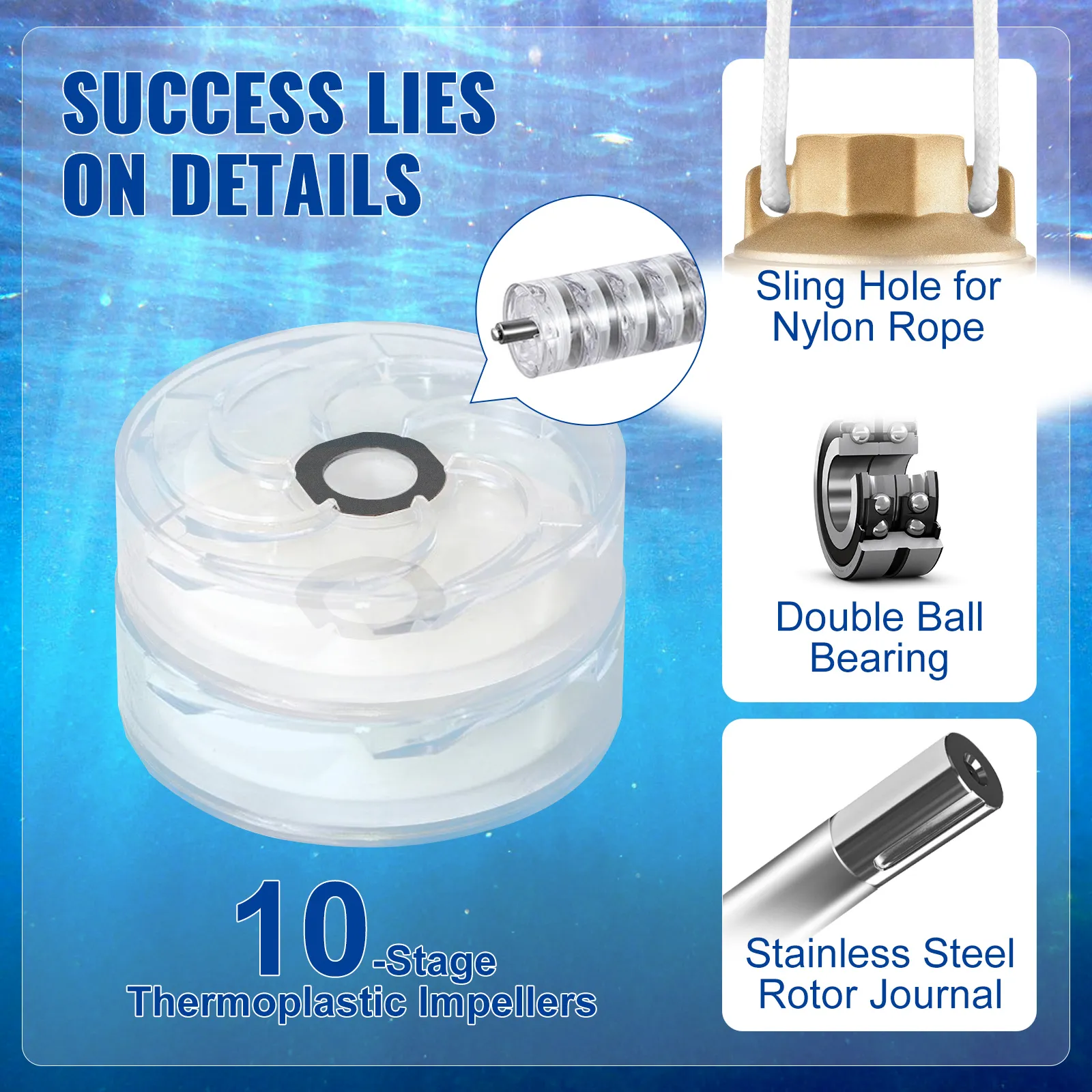
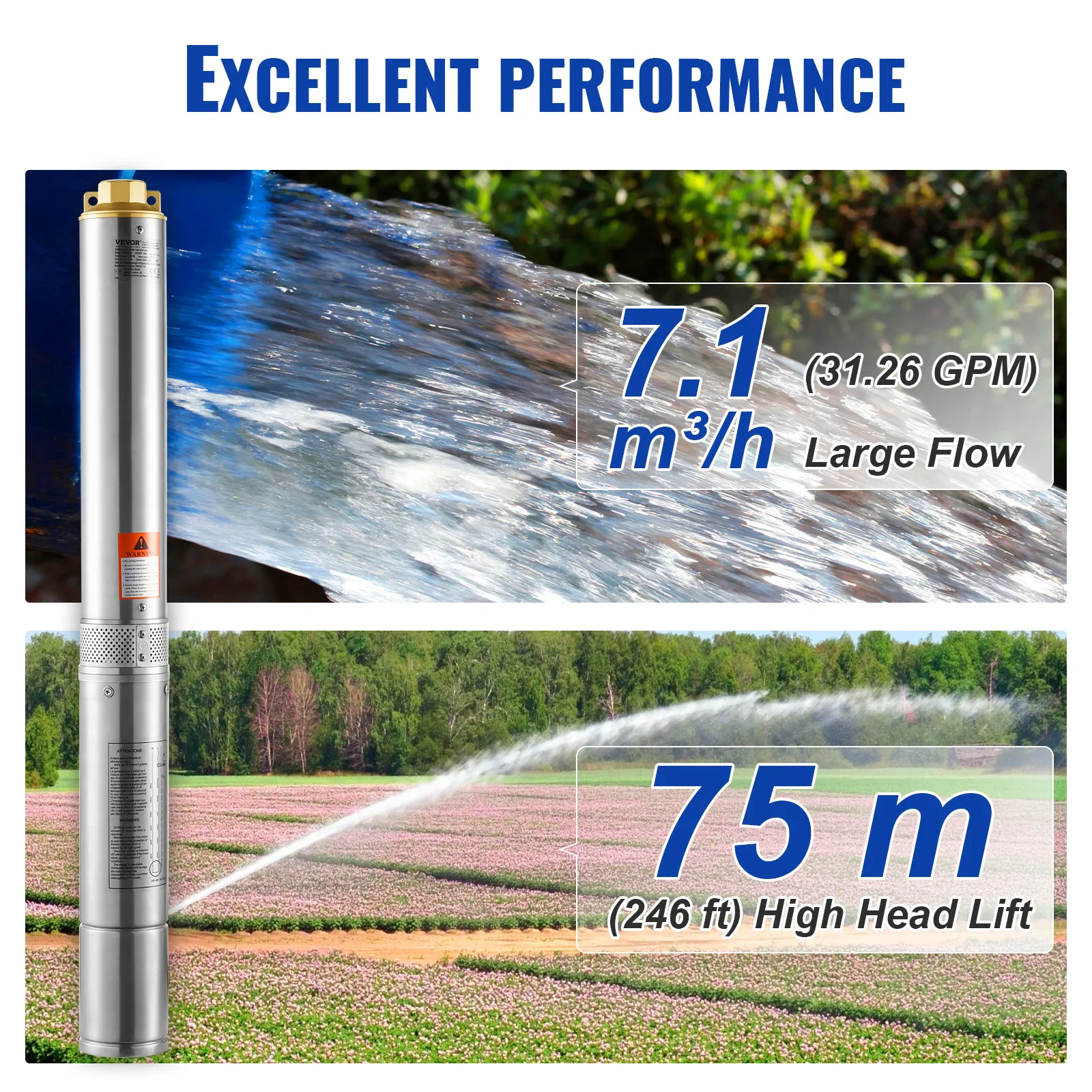
- Enhanced Pump Flow & Head: Power: 750W, 230V; Discharge: G1¼ (The diameter of the well casing must be 10 mm larger than the pump diameter). This deep well submersible pump is designed with 10-stage thermoplastic impellers, providing 7.1 m³/h max flow and 75 m max head. It comes with a 9.1 m electric cord, making life without modern plumbing a lot easier. Pump out your worries with ease and relax. No challenge is too big for you.
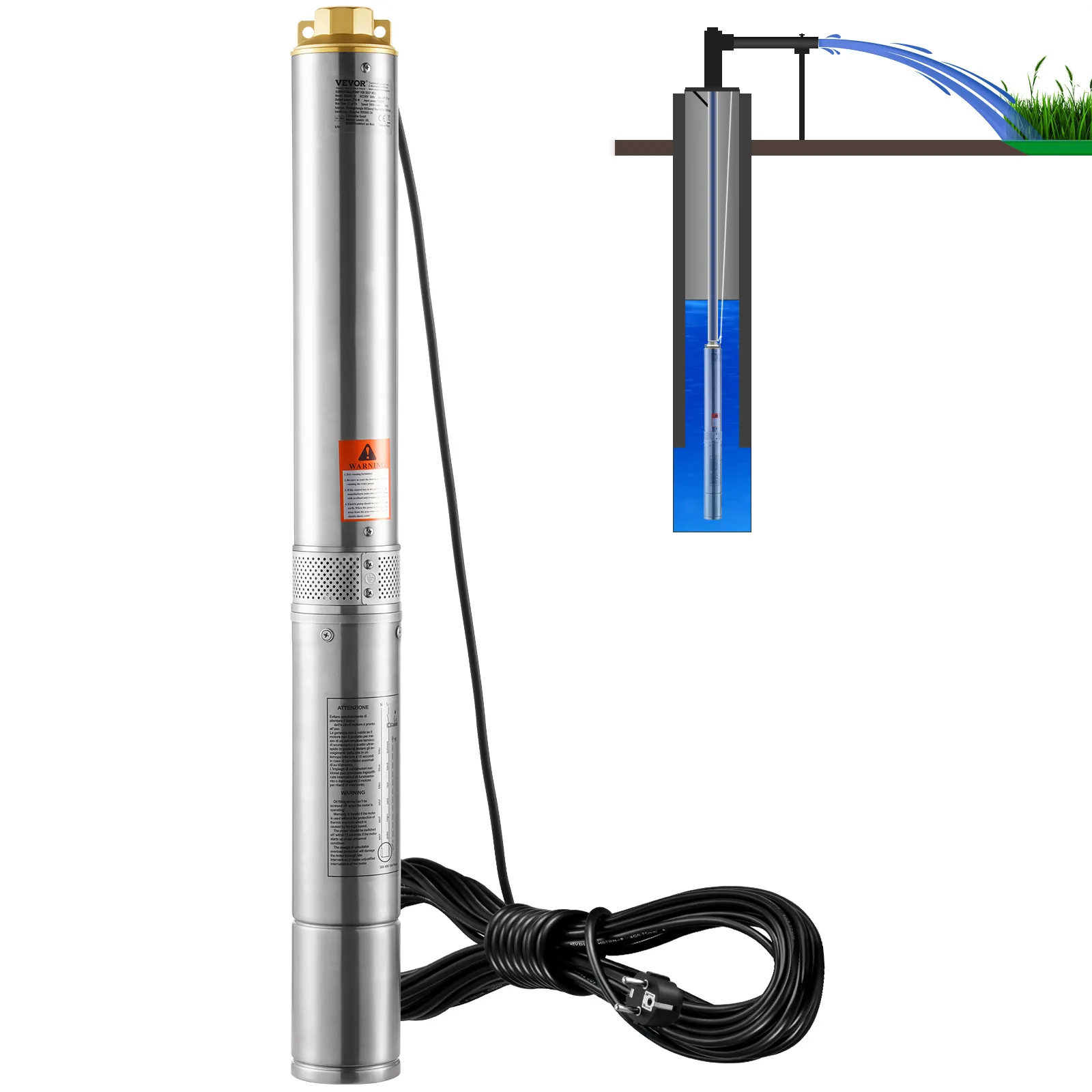
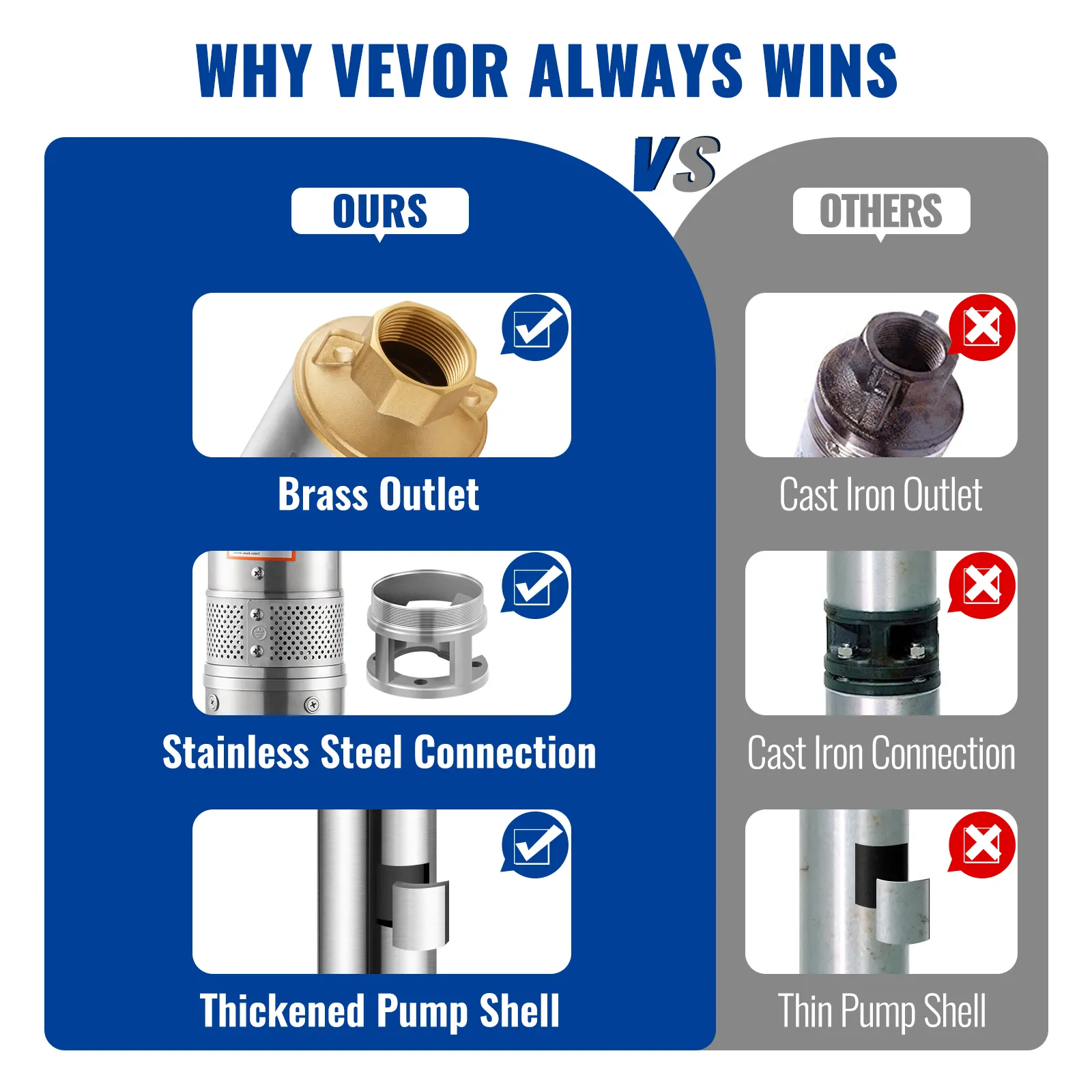
- Upgraded Stainless Steel: The whole frame of our deep well pump is unlike anything on the market. It is made of stainless steel, including the outlet and connecting components. You don't have to worry about it becoming rusted or corroded after being underwater for a long time. With CE certification and IP68 waterproof grade. Stop wasting time! The perfect choice is in front of you!
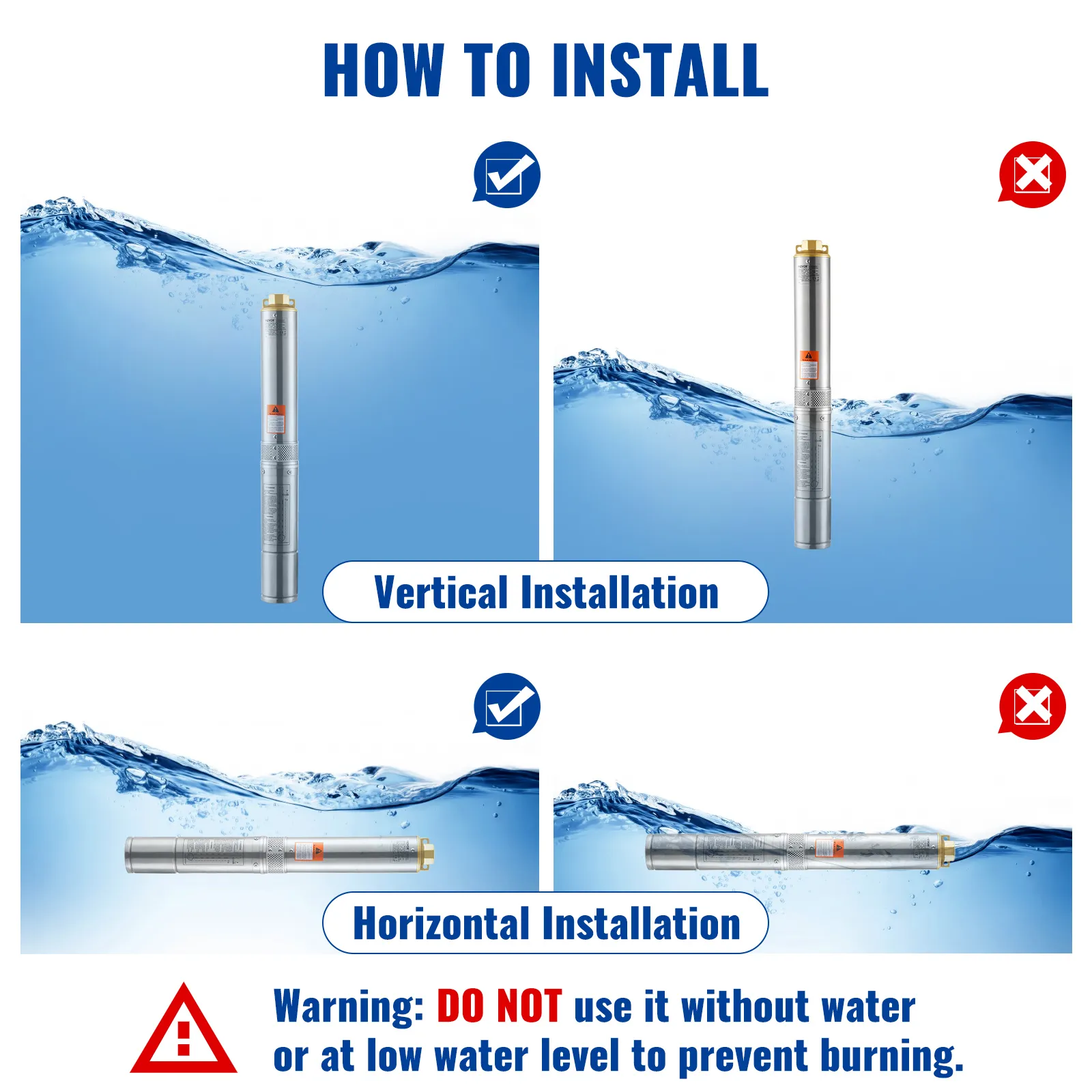
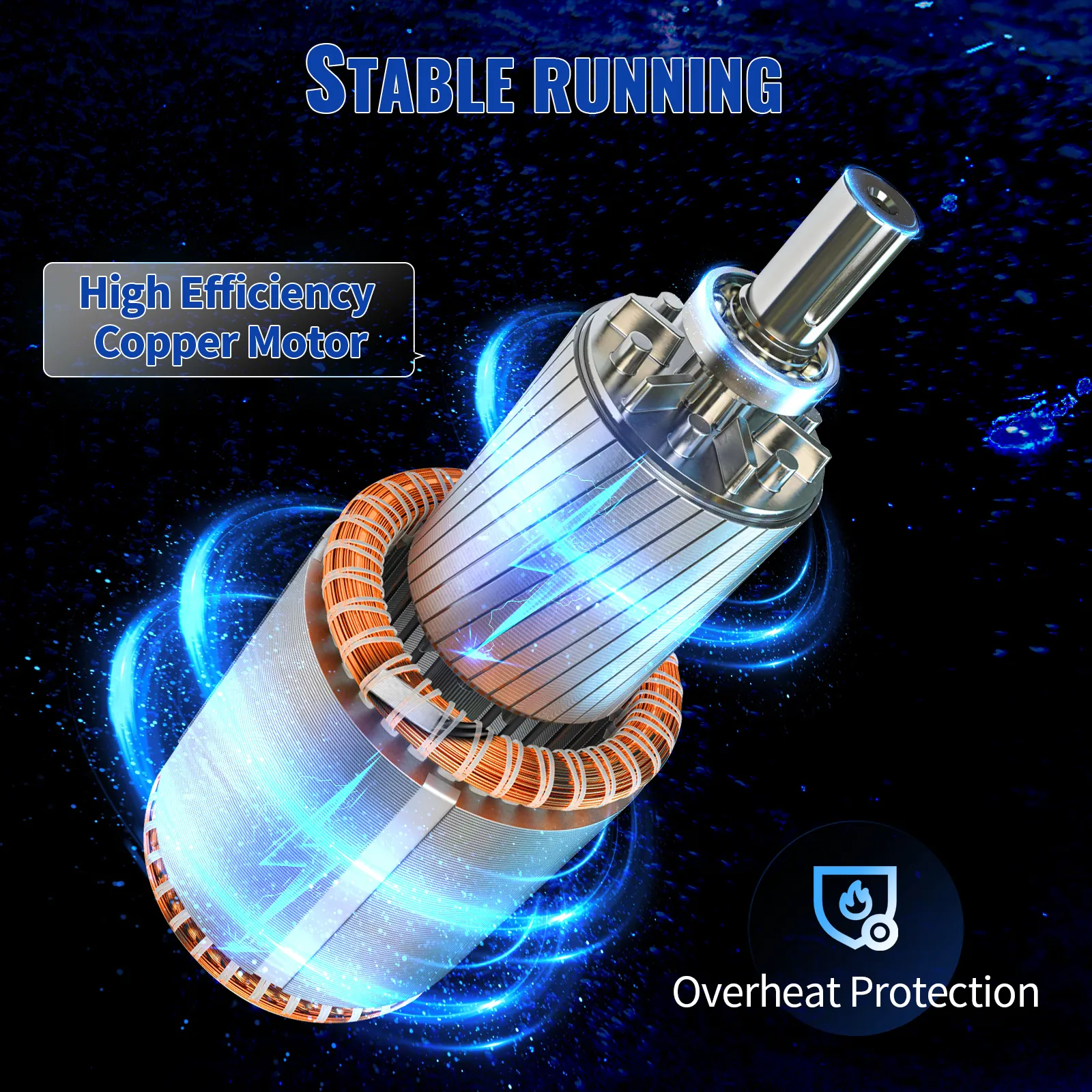
- Reliable Copper Motor: Are you tired of previous submersible well pumps failing you? Are you ready for consistent satisfaction and quality? The powerful copper motor and high-precision rotor promise long-term stable running. The motor features built-in overheat protection, allowing it to automatically stop when stuck or during abnormal situations to prevent burning. NOTICE: DO NOT use it without water or at a low water level to avoid idle running.
- Trouble-free Check Valve & Filter: This well pump has a built-in check valve to prevent back-flow (an additional check valve is highly recommended). The stainless steel filtration mesh is designed to filter impurities. You can add a layer of gauze in front of the filtration inlet for a new drilled well that may contain excessive granular sediment. Keep impurities out without the headache.
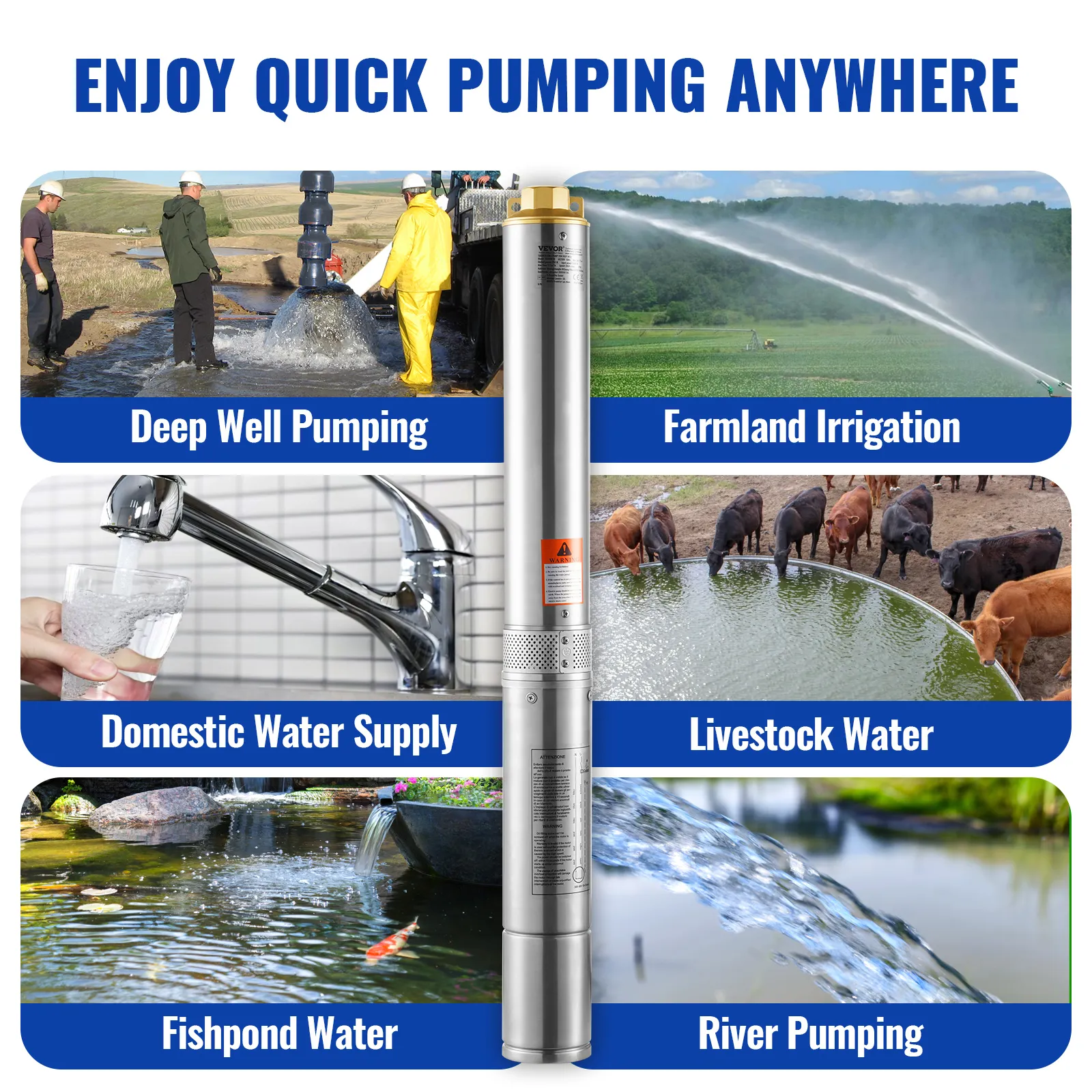
- Use It Anywhere: Whether you want to solve water supply problems for industry, farmland, or home, this deep water well pump is the one you can trust. It works excellently as a garden water source and sprinkler for the kids. You can use the pump for extracting water from deep wells, reservoirs, canals, rivers, and other water-lifting works.
Frequently Bought Together
Reviews
 Légumes de la Fernière Fortin giuseppecolombo08

 patrice.p
About this item


- Enhanced Pump Flow & Head
- Upgraded Stainless Steel
- Reliable Copper Motor
- Trouble-free Check Valve & Filter
- Premium Tough Quality
- Incredibly Low Prices
- Fast & Secure Delivery
- 30-Day Free Returns
- 24/7 Attentive Service
- Premium Tough Quality
- Incredibly Low Prices
- Fast & Secure Delivery
- 30-Day Free Returns
- 24/7 Attentive Service
- Item Model Number: 4SDM4/10
- Material: Stainless Steel
- Power: 1HP / 750W
- Voltage: AC230V, 50Hz
- Max. Flow: 7.1 m³/h / 31.26 GPM
- Max. Head: 75 m / 246 ft
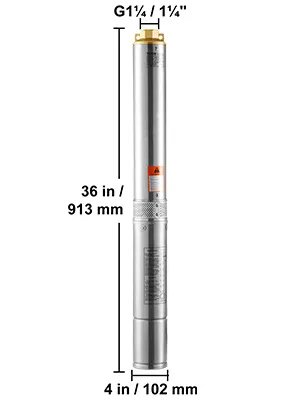
- Discharge Size: G1¼ / 1¼"
- Electric Cord Length: 9.1 m / 29.9 ft
- Impeller Stages: 10
- Max. Speed: 2850 r/min
- Certification: CE
- Waterproof Grade: IP68
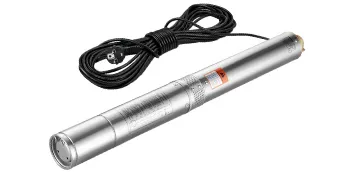
- 1 x Deep Well Submersible Pump
- 1 x Electric Cord
- Premium Tough Quality
- Incredibly Low Prices
- Fast & Secure Delivery
- 30-Day Free Returns
- 24/7 Attentive Service
- Premium Tough Quality
- Incredibly Low Prices
- Fast & Secure Delivery
- 30-Day Free Returns
- 24/7 Attentive Service
- Enhanced Pump Flow & Head
- Upgraded Stainless Steel
- Reliable Copper Motor
- Trouble-free Check Valve & Filter
- 1 x Deep Well Submersible Pump
- 1 x Electric Cord
- Item Model Number: 4SDM4/10
- Material: Stainless Steel
- Power: 1HP / 750W
- Voltage: AC230V, 50Hz
- Max. Flow: 7.1 m³/h / 31.26 GPM
- Max. Head: 75 m / 246 ft
- Discharge Size: G1¼ / 1¼"
- Electric Cord Length: 9.1 m / 29.9 ft
- Impeller Stages: 10
- Max. Speed: 2850 r/min
- Certification: CE
- Waterproof Grade: IP68
VEVOR 1 HP Submersible Deep Well Pump for 75 Meters Deep Reach
The VEVOR 1 HP submersible deep well pump delivers reliable performance at intermediate depths. This pump is designed for intermediate-depth wells, draws only the power needed, has a 750W rating, and operates on AC 230V / 50Hz. It's not aiming to be the biggest pump on the market; it's trying to be the perfect one for a certain kind of well, and it accomplishes that.
That focus is evident in the 75 m (246 ft) maximum head rating, which covers a large share of residential and small-farm wells without splurging on capacity nobody uses. The G1¼ discharge keeps things flowing easily, and a 9.1 m (29.9 ft) line is included so there's no need for an extension cable on installation day. Basic specs, suitable for general purposes.
10-Stage Impeller Design Behind the 7.1 m³/h Flow Rate for Steady Output
Having a figure on a spec sheet doesn't mean the flow will hold while the pump is actually running. This one does, thanks to the 10-stage impeller design it carries inside. Each stage adds a little pressure to the previous one, so when the water reaches the outlet, it has genuine force behind it – not just volume.
The output is 7.1 m³/h (31.26 GPM). This amount is well suited for garden irrigation, residential taps, and light farm applications. Staging divides the task so that no single impeller is overworked by trying to do the entire job alone. That's a flow that doesn't flake out much between the occasional little watering session and the longer, steady pumping run – the kind of dependability you stop noticing because it just works.
Full Stainless Steel Body for Reliable Rust and Corrosion Resistance
While many well pumps use stainless steel selectively, this unit features fully stainless steel construction from the chassis to the connection components. This one does: the frame, the outlet, and every connecting part are made of the same corrosion-resistant material, so there is no place in the construction where a cheaper metal quietly waits to rust away after a few seasons under water.
That homogeneity isn't simply a marketing thing. It addresses a real and prevalent failure problem. Mixed-metal pumps are more likely to fail first at the seams where two different materials meet underwater, because that's where galvanic corrosion does the greatest damage. Together with CE certification and IP68 protection for sustained submersion, this feature helps reduce that risk. This 1 hp submersible deep well pump has a seriously long run time before aging becomes an issue.
Copper-Wound Motor With a Built-In Safety Shutoff Pure for Worry-Free Operation
For most pump failures, the story usually begins with the motor. This 1 hp submersible deep well pump uses copper windings, not cheaper wire alternatives, and the difference is measurable: copper conducts more efficiently, operates cooler under prolonged load, and produces more consistent torque over the motor's life. It's the quiet sort of dependability that only becomes apparent in hindsight when the pump keeps pumping.
Supporting that is automated overheat protection. If the motor overheats, stalls, or enters an abnormal condition, it shuts off power rather than pushing through and burning out. This protection is crucial when the system is left unattended during an overnight watering cycle or a weekend away. One important rule remains, though. Never let it run dry. Even a short time without water can cause damage that overheat protection cannot prevent.
Check Valve and Filter Mesh Working for Cleaner Water Flow
Two unglamorous elements are key to long-term durability here, yet neither gets much attention on a spec sheet. Features a check valve to prevent water from flowing back down the well column when the pump is shut off. If you don't have such protection, you have backflow, which means lost pressure, more difficult restarts, and sometimes water flowing backward altogether.
The second element is a stainless-steel filter mesh at the entrance that catches dirt and debris before they reach the motor. New wells, in particular, tend to kick up loose granular debris in the first few weeks of operation, so using a prefilter over the intake is a wise extra step until the water settles and flows clear. Neither feature is exciting. Quietly, they extend the life of everything else in the pump.
One 1 HP Submersible Deep Well Pump, Endless Use Cases
It's tempting to believe that a 1 hp submersible deep well pump of this size is designed for a single use, but that's not how it works in practice. The application changes, but the pump's job remains the same whether the unit is pumping water from a backyard well, a farm reservoir, a slow-moving canal, or a stretch of river. The pump manages that transition without complaint.
Make sure the well casing is at least 10 mm larger than the pump body. Once installed, the rest falls into place. Easy, too, is running a garden sprinkler on a Saturday afternoon, meeting a family's daily water needs, or assisting with smaller irrigation on a working farm. That range of jobs, accomplished equally well, is really the main purpose of a pump at this power level.
