


VEVOR Wall Chaser, 34 mm Cutting Depth Wall Cutting Machine 2500W Wall Groove Cutting Machine 38 mm Cutting Width Wall Slotting Machine With 5 Saw Blades 115 mm Diameter 6300r/Min with Infrared Ray


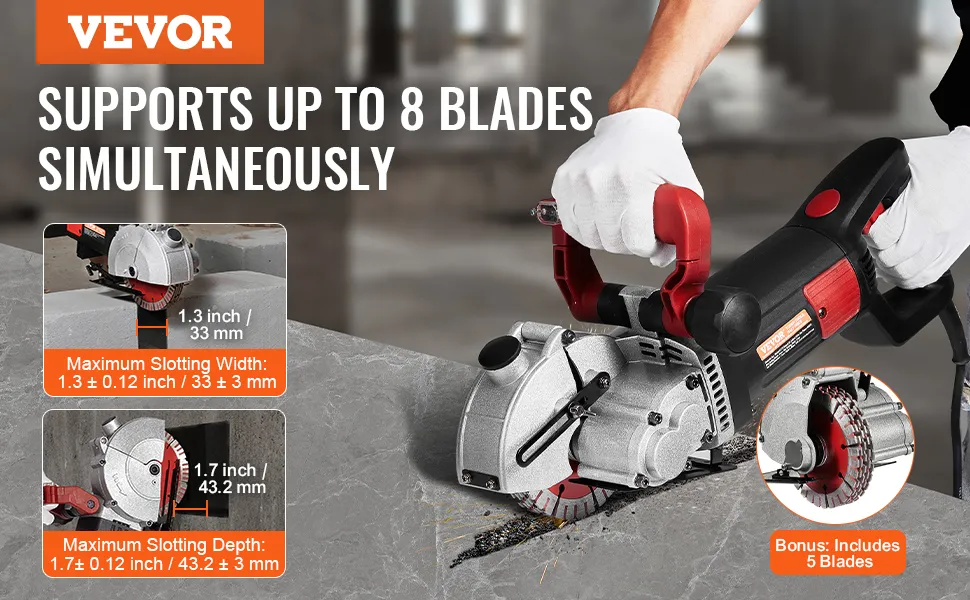
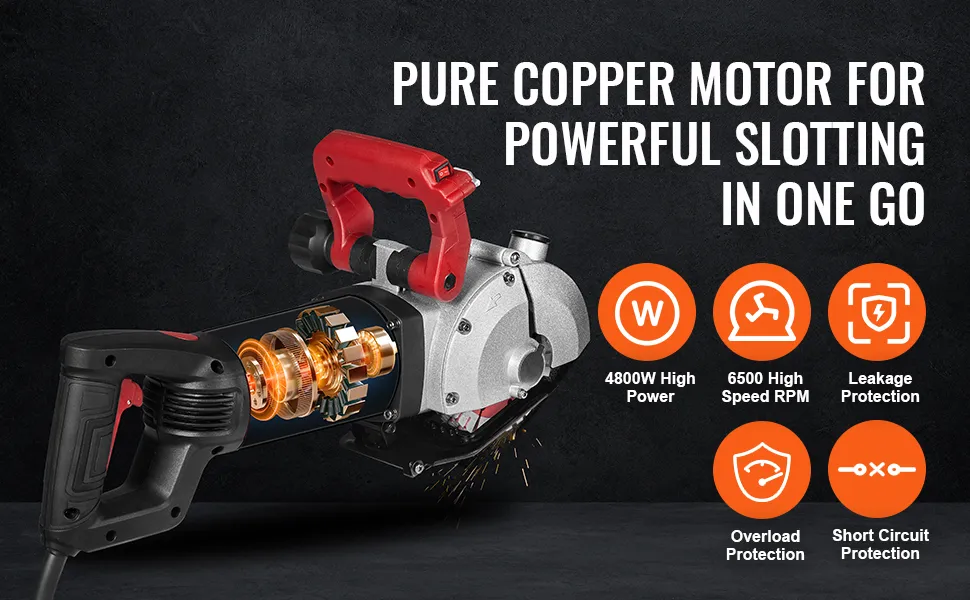
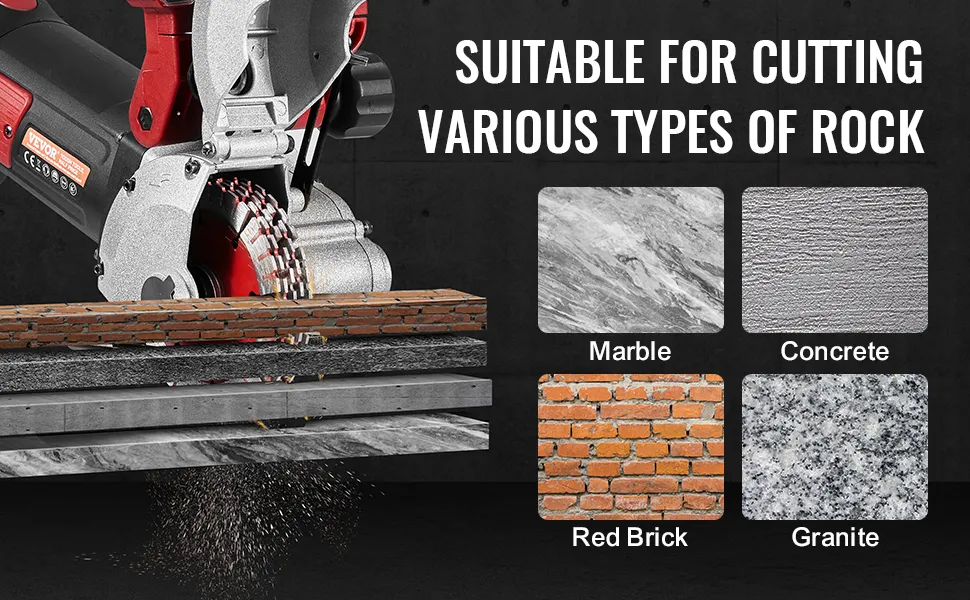
- Powerful & Efficient Groove Cutting: Load up to 4800 watts of power, the wall chaser can deliver up to 6800 rpms, letting you cut marble, concrete, lumber and bricks, providing a maximum cutting width of 1.5 inch and a cutting depth of 1.3 inch.
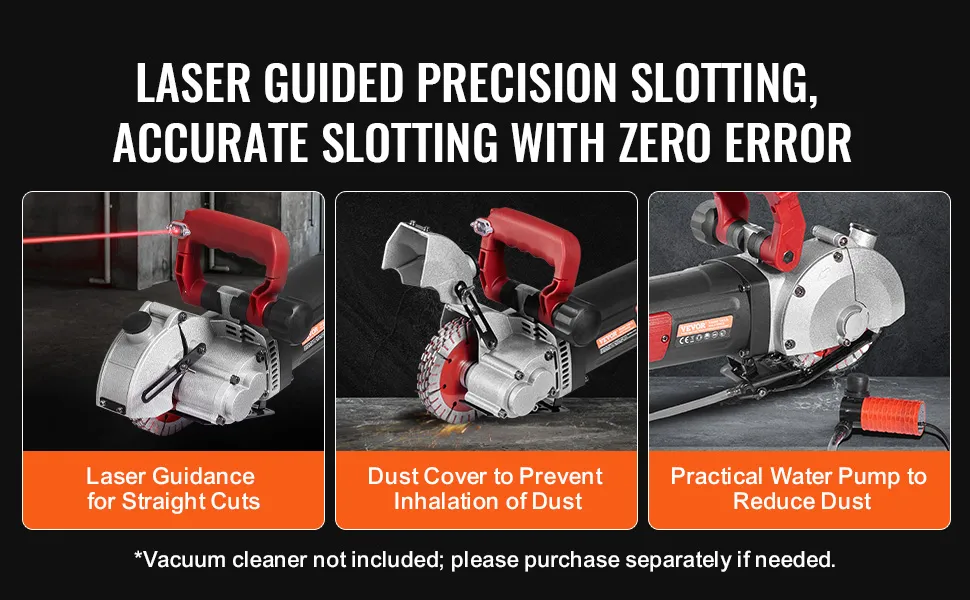
- Accurate Cutting: This grooving cutting saw features advanced laser guide that ensures unbiased cutting; Adjustable cutting width and depth base on your actual surface for more accurate results; Saw blade diameter: 6.3"/160mm.
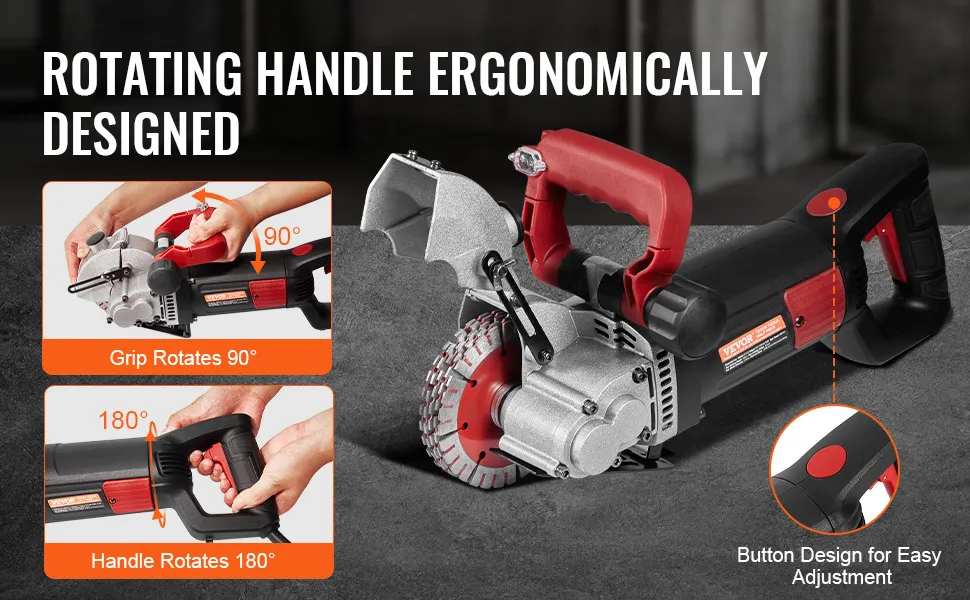
- Ergonomic Handle: This wall chaser has a swivel handle with a comfortable grip that can be rotated at 180 degrees left and right, meaning you can do multi-angle cutting depending on the job site demands from concrete to marble, you'll enjoy a high performance cutting with Vevor electric wall chaser.
- More Safe Operation: This slotting machine is equipped with a leakage protector, offers short circuit protection and overload protection for safe operation; the moveable blade cover and water pump can greatly reduce dust and facilitate the grooving work.
- Wide Application: Versatile and powerful, the electric wall chaser can easily cut narrow channels into brick, stone or concrete walls for installation of in-wall electrical sockets, conduits, water pipes, etc, perfect for electricians and plumbers.
Frequently Bought Together
Reviews
About this item


Wall Chaser Machine With 2500W Full Copper Motor
This wall chaser machine is powered by a 2500W full-copper motor and is designed to cut through concrete, brick, marble, and lumber non-stop, with no drop-off in power that lower-grade motors experience under load. All-copper construction dissipates heat better than the budget motor windings found in lighter-duty grooving tools. A motor that overheats halfway through a job is likely to lose torque at the very moment when a cut requires it most – through dense materials such as brick or aggregate-laden concrete.
The aluminum head helps keep the front-heavy cutting assembly lighter than an all-steel design would be, which is important during long periods of overhead or vertical wall work, where every extra pound counts. It’s designed to run on standard mains power, operating at 220-240V and 50Hz, and doesn’t require a separate transformer or a special outlet setup on most job sites. And with standard power compatibility, the tool can move from one job site to another without worrying about power supply mismatches.
34mm Cutting Depth and 38mm Width for Precise Grooves
Maximum cutting depth of 34mm and width of 38 mm, 38 mm conduit pipe, and electrical socket installation work without multiple passes to final depth. Both dimensions decrease from that maximum, so the tool adjusts to shallower cuts when a job requires less material removal. Full-depth cuts on every job are a waste of material and a more-than-necessary weakening of the surrounding wall structure.
And that adjustability is important because not every groove needs maximum depth. Running thin electrical wiring requires a shallower channel than installing water piping does. The ability to dial in the exact depth and width for each task, rather than cutting everything at max and wasting material, keeps the work cleaner and reduces unnecessary wall damage. Matching depth to the actual job also speeds the patching and finishing work that follows once cable or pipe is installed.
Laser-Guided Machine for Accurate Cuts
An infrared laser guide projects a straight line ahead of the blade, so cuts run true, even on long wall sections where freehand guidance tends to wander. That visual reference is most important on cuts that must remain perfectly level for conduit runs or matched parallel grooves. A few millimeters of drift over a long run can cause the fixtures at the far end of a wall to be out of true.
For electricians and plumbers who have to run cable or pipe channels that must line up with fixtures at both ends, laser guidance takes the guesswork out of marking and tracking a line by eye. A wall chaser machine without that guidance depends entirely on the steadiness of the operator; this one compensates for human drift before it becomes a crooked groove. That accuracy is most important on jobs where the end of the finished groove will be visible for a short time before drywall or plastering covers it, because mistakes are expensive to correct after the fact.
180° Swivel Handle for Multi-Angle Cutting
The handle rotates 180 degrees left and right. It allows the operator to adjust the grip angle without moving their entire body for each cut direction. That range includes overhead cuts, low cuts near the floor, and everything in between, without having to compensate with an awkward wrist angle. The fixed-handle tools often require awkward body positioning, which contributes to fatigue more quickly than the cutting does.
A comfortable, adjustable grip also reduces fatigue during a full day of cutting, which is important for jobs involving grooving multiple walls or long, continuous runs. Often, tools with fixed handle positions require the operator to hold the same awkward angle for hours. But with a swivel handle, the grip can follow the cut, rather than vice versa. That difference in wrist and shoulder strain adds up big time over the course of a full workday for anyone doing multiple grooving jobs back-to-back.
Built-In Safety Protection With Dust-Reducing Water Pump
The wall chaser machine has leakage, short-circuit, and overload protection for the most critical electrical failure points on a tool operating in and around water and concrete dust. That layered protection reduces risk on job sites where power and water lines are often close together. Overload protection, in particular, prevents damage to the motor when making long cuts through dense materials that draw more current than typical use.
The combination of a water pump and movable blade cover dramatically reduces airborne concrete dust compared toared to dry-cutting alone, improving both visibility during the cut and air quality on enclosed job sites. It also means less dust to clean up later and less wear and tear on nearby tools and surfaces from falling debris. That reduction in dust is particularly helpful for indoor work because airborne silica dust from dry concrete cutting is a known respiratory hazard on enclosed sites.
Wall Chaser Machine Kit With 5 Blades and 115mm Diameter
The machine comes with five 115mm-diameter blades, sized to match the 34mm depth and 38mm width capacity of the cutting head. The machine can accommodate up to 8 blades at once for wider channel cuts in a single pass, useful when a job requires grooves wider than a single blade can manage.
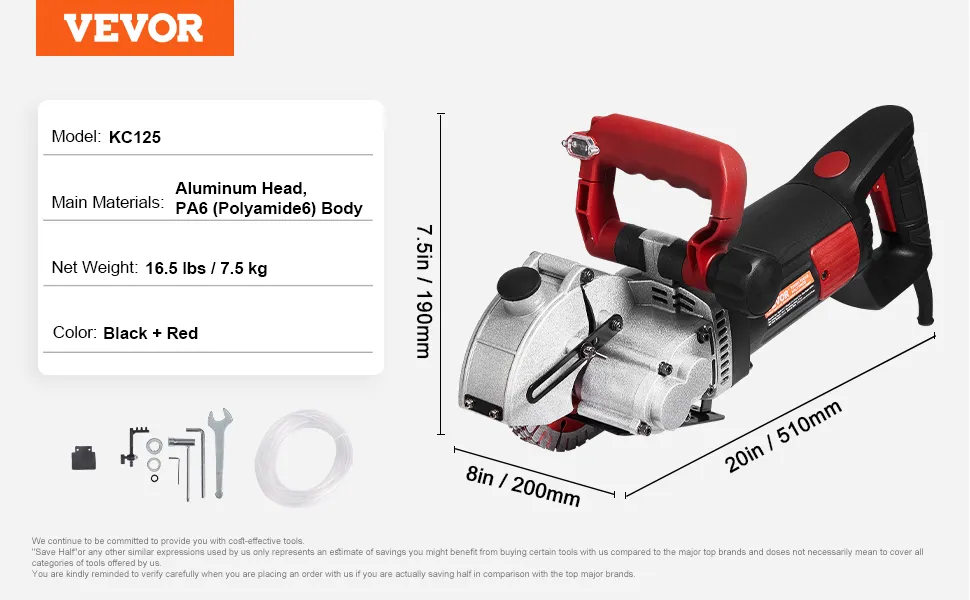
The unit is easily handled by a single person for the duration of a full job at 8.3kg and 510 x 200 x 190 mm, without becoming a two-handed lift between cuts. That mix of included blades plus expandable capacity takes care of most of the usual wall-chasing tasks for electricians and plumbers, cutting channels for sockets, conduits, or water lines, without needing to buy extra blades. Also, if you have spare blades from the get-go, you’ll spend less time waiting around for replacement parts in the middle of a job, especially on jobs that cut through harder materials, like dense brick or aggregate concrete, which wear down blades more quickly.
