VEVOR 7-in-1 Wi-Fi Weather Station, 177.8 mm TFT Display, Wireless Solar Powered Outdoor Sensor, Rain Gauge, Indoor Outdoor for Weather Forecast, Wind Speed Direction, Temperature, Humidity, Rainfall


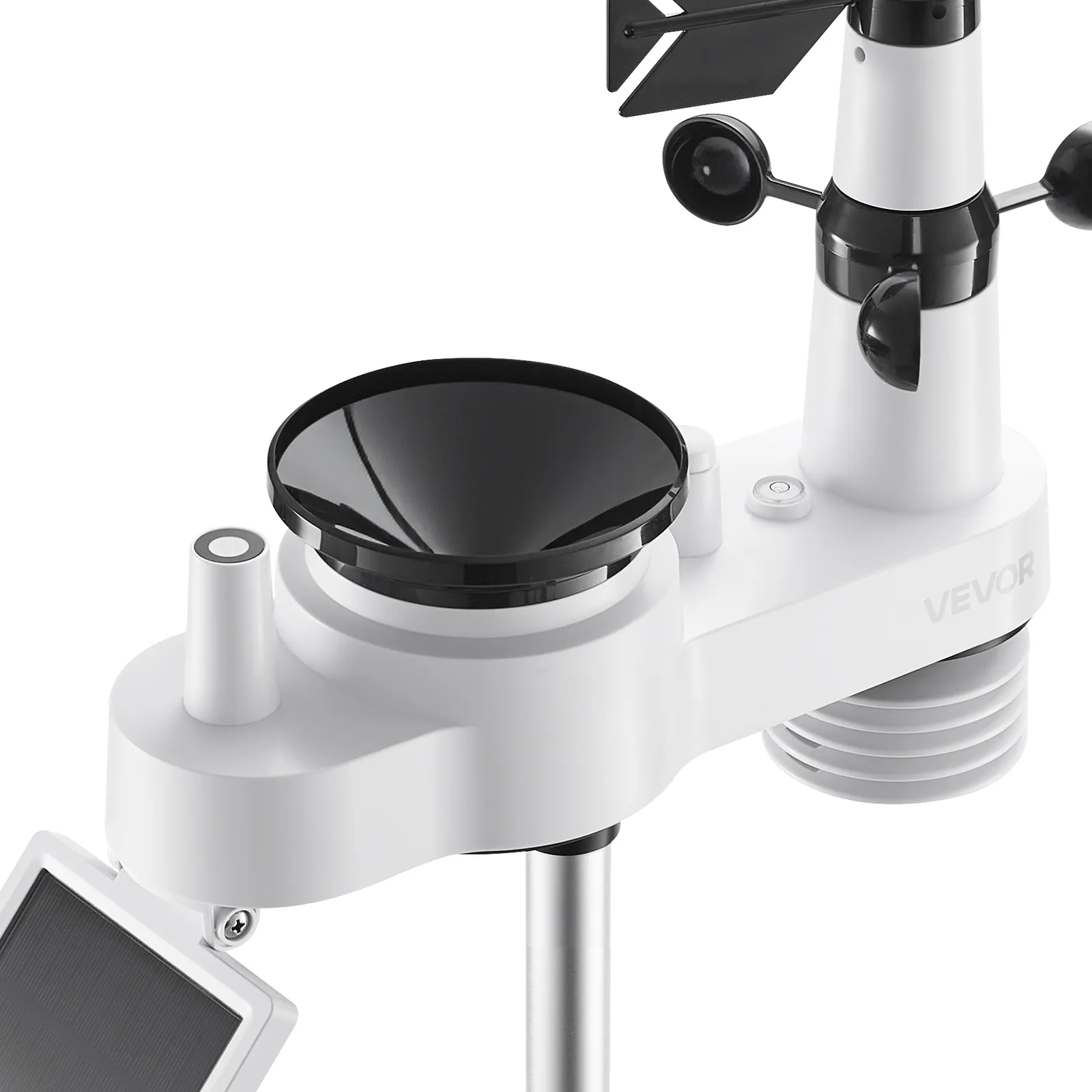
- 7-in-1 Outdoor Sensor: Monitor temperature, humidity, rainfall, wind speed, direction, sunlight, etc—plus dew point, moon phases, and 6-12 hour forecasts. 4 major upgrades: 1. The sensor's internal components have been comprehensively upgraded to better resist rainwater intrusion. 2. Supports NiMH battery charging. 3. Supports SmartLife App, no need to register with weather websites, and no ads or paid plans. 4. Simplified installation saves you valuable time
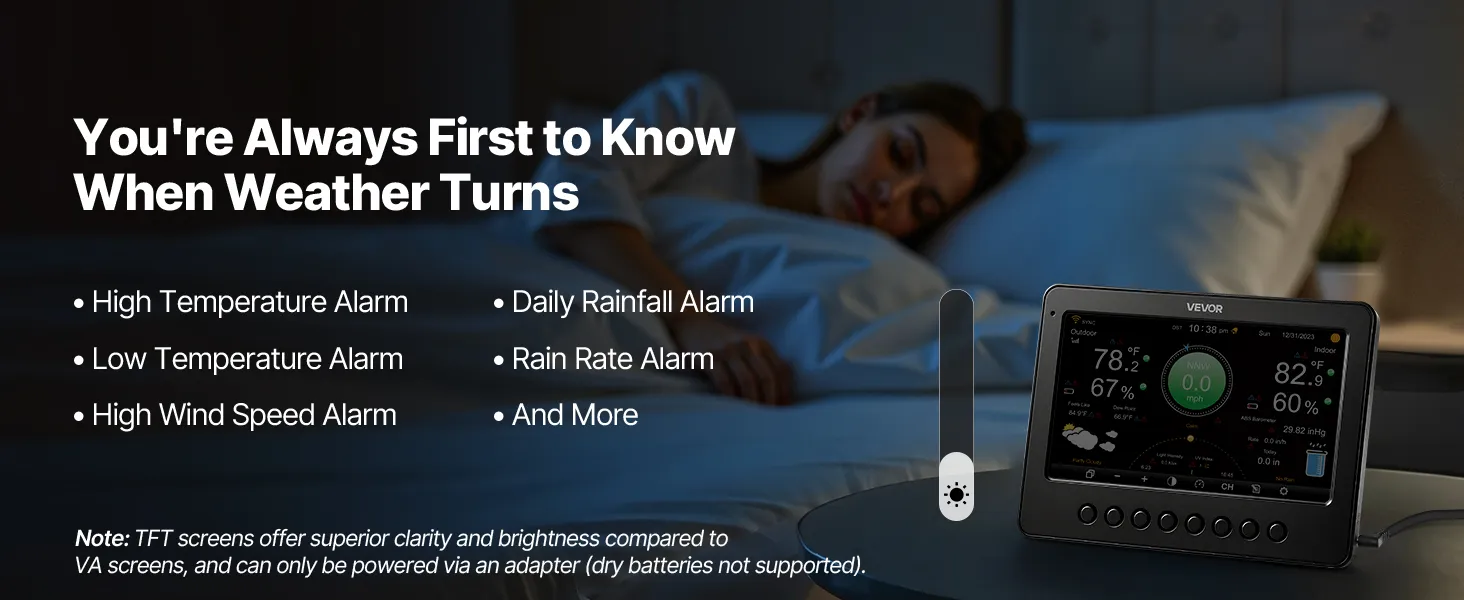
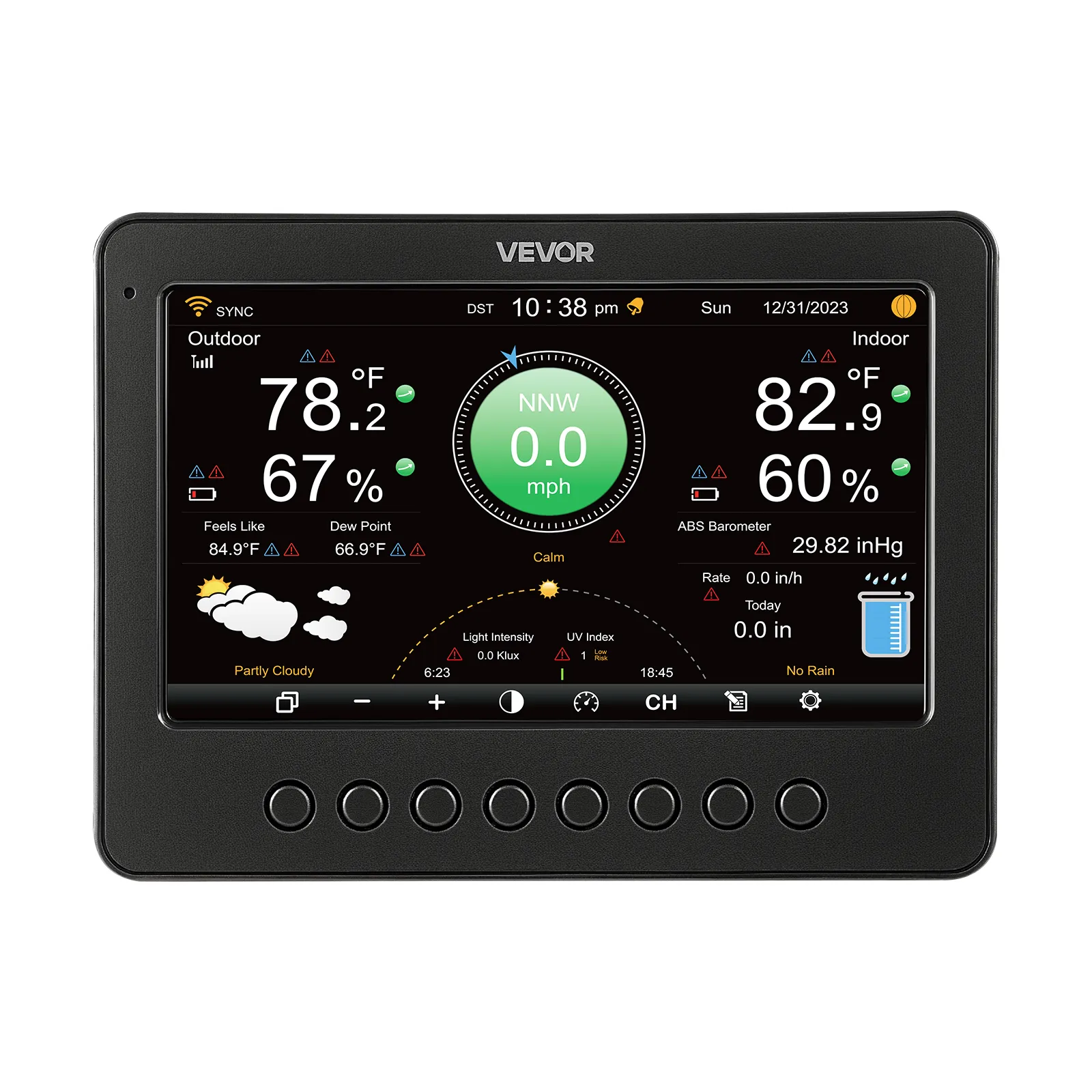
- 7-Inch HD Display: Enjoy a crystal-clear view of all your weather data with our wireless weather station. The large display with 4 brightness levels fits well in your living room or bedroom for day or night reading
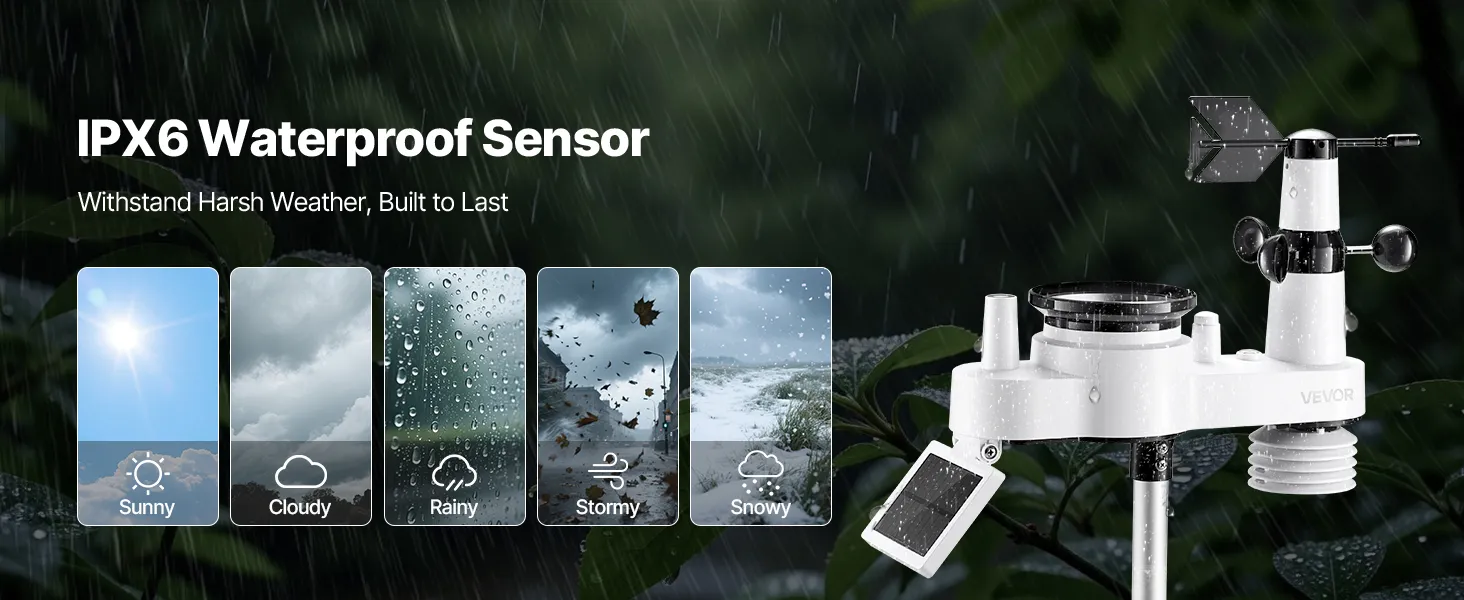
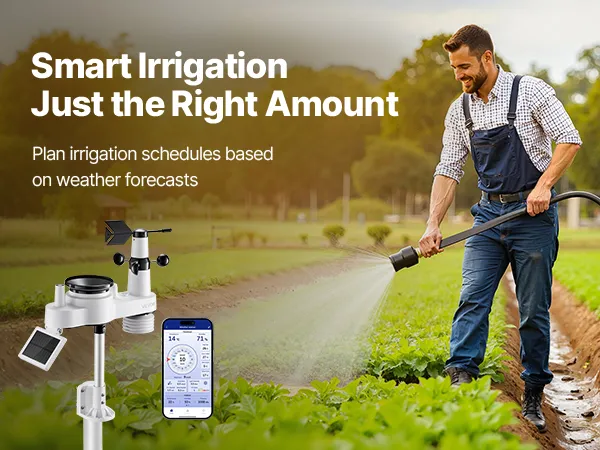
- 328.08 ft Transmission Distance: Install your outdoor sensor wherever you need it—on rooftops, farms, or gardens. With an IPX6 waterproof rating, this outdoor sensor delivers reliable data even in heavy rain
- Wi-Fi Smart Remote Control: Stay connected on the go. Sync our indoor outdoor weather station with the Smart Life app to view, store, analyze, and share real-time weather data from your personal weather station—anytime, anywhere
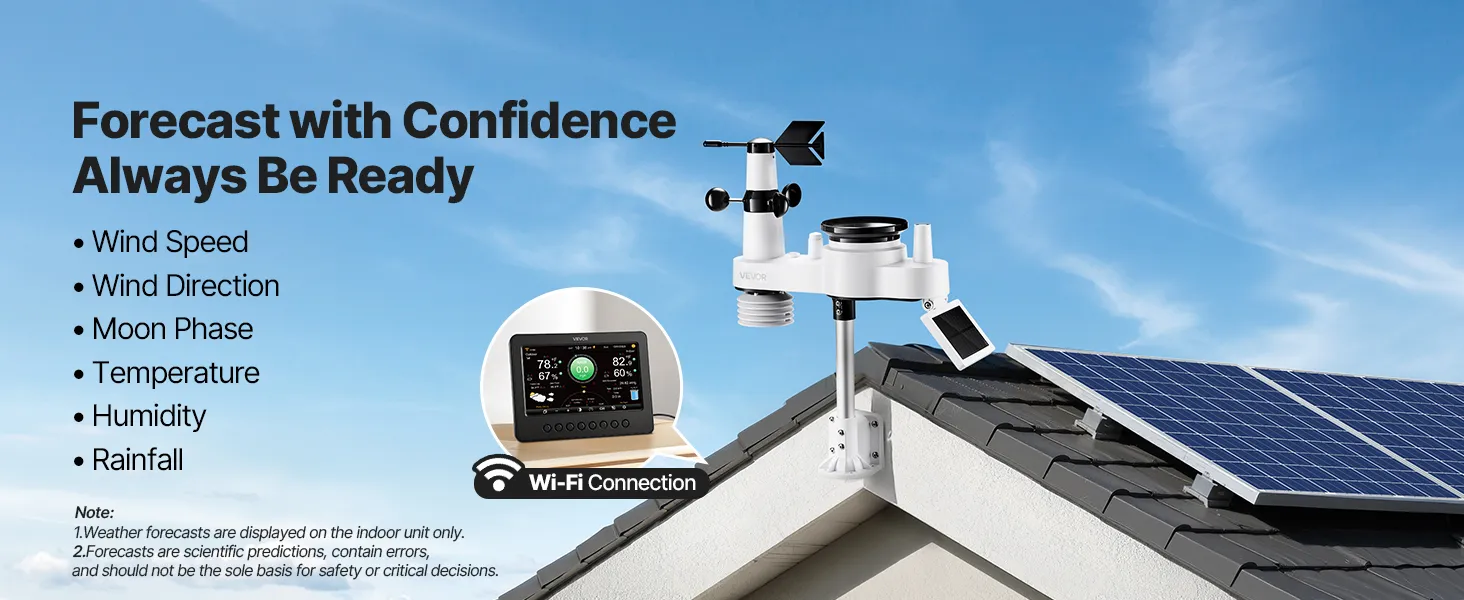
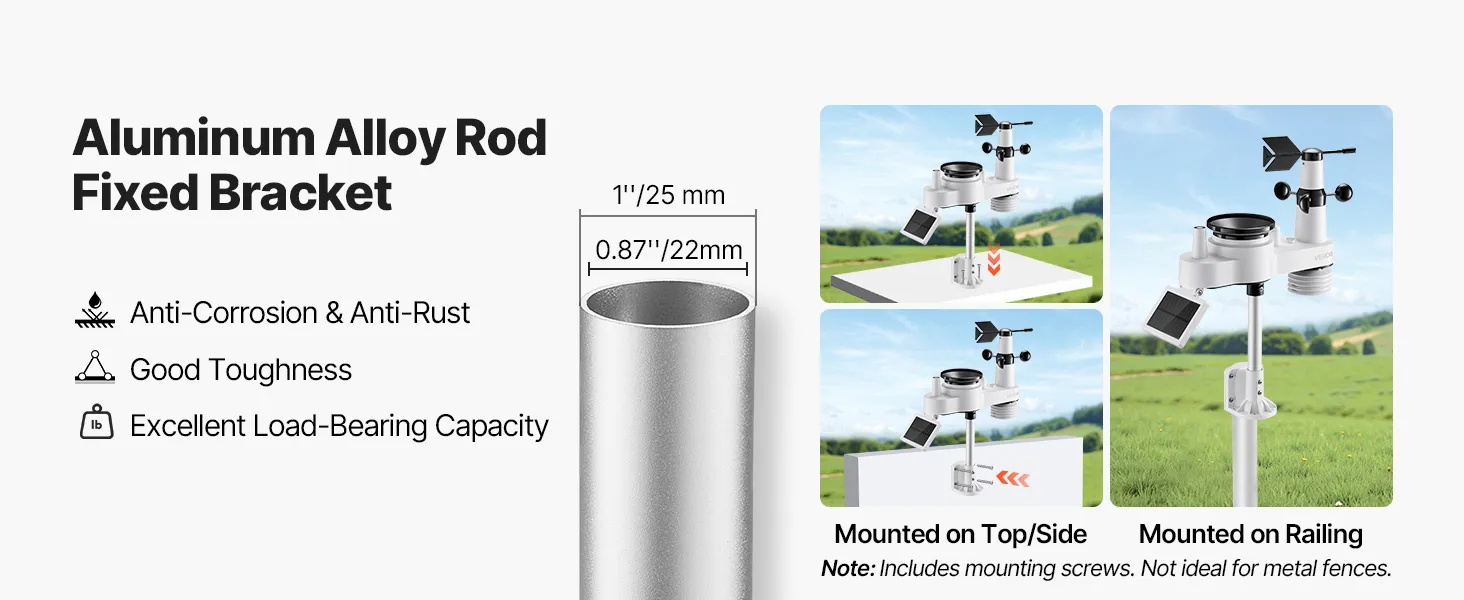
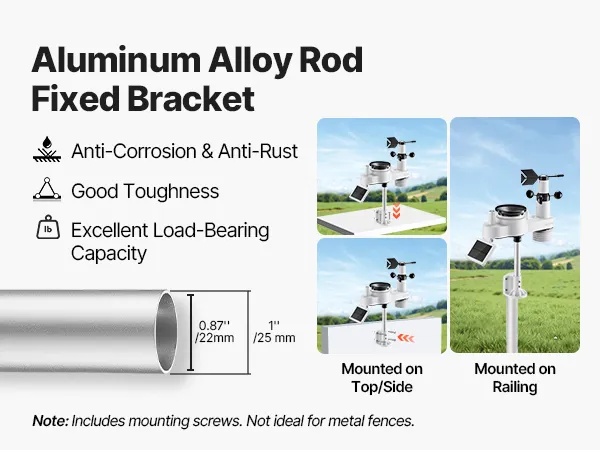
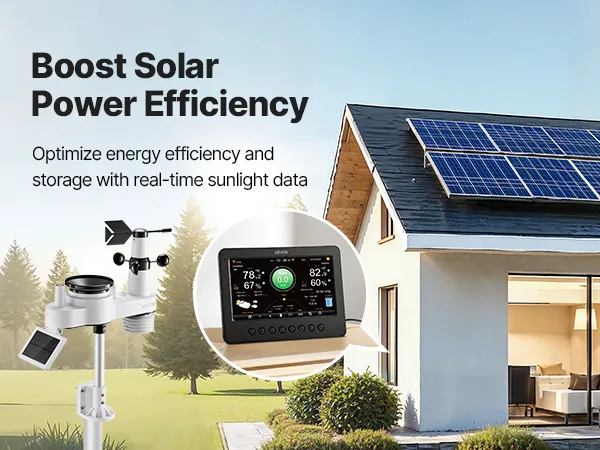
- Solar Powered, Built to Last: High-efficiency solar panels absorb solar energy during the day and charge the battery at night—cutting energy costs. Our digital weather station comes with an aluminum alloy rod fixed bracket for long-term use
Frequently Bought Together
Reviews
 larhat73

 sebi974 emilio2 Harry
 About this item



Indoor Outdoor Home Weather Station with 7-in-1 UV Sensing
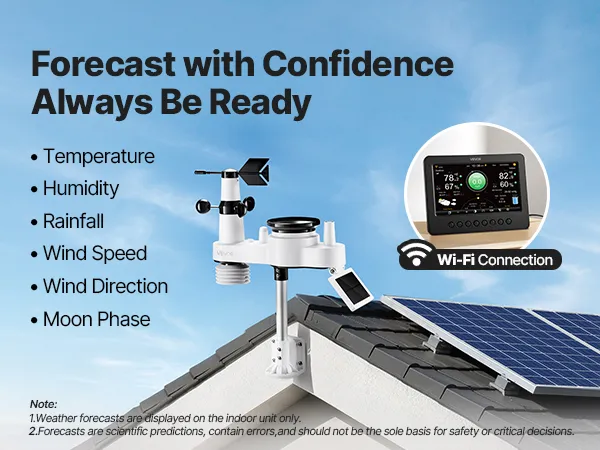
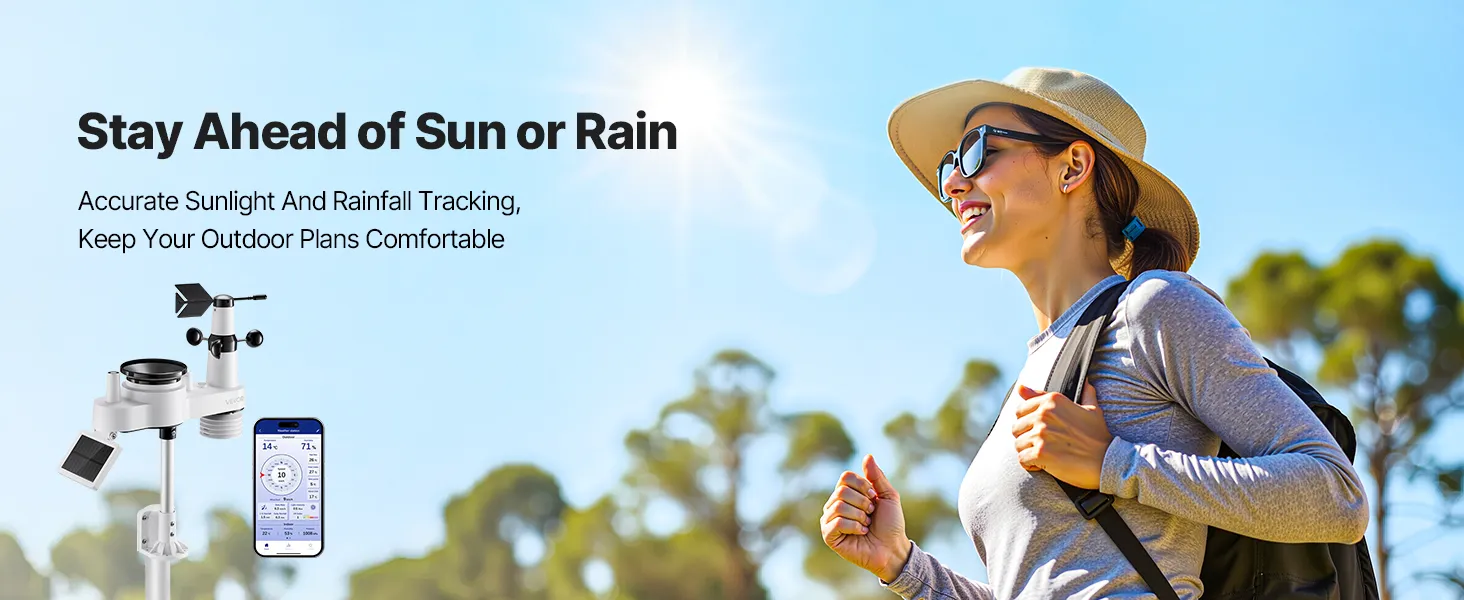
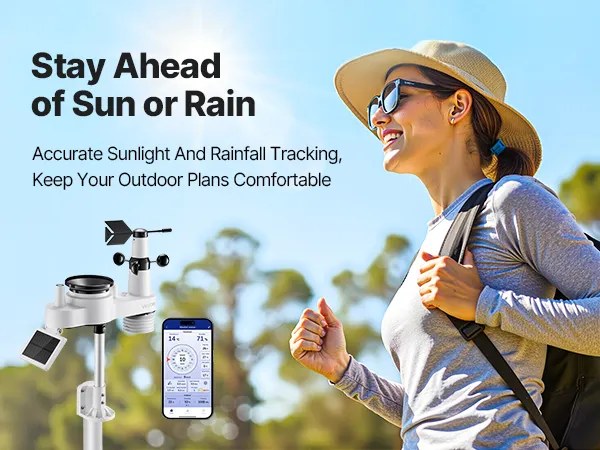
This indoor outdoor home weather station measures seven conditions simultaneously, including UV levels, temperature, humidity, rainfall, wind speed, and wind direction. That UV reading is a real differentiator; it’s not just a simple temp-and-rain setup; it gives you a daily sense of sun intensity, which matters for anyone planning time outside or just trying to track exposure through the seasons.
In addition to the core sensor data, the system computes dew point, moon phase, and short-range forecasts for the next 6-12 hours. It all goes to one indoor display, so instead of looking at five different gadgets spread around the house, a single screen provides the complete outdoor picture from the sensor mounted outside.
7-Inch TFT Color Display for Sharp Indoor Readouts
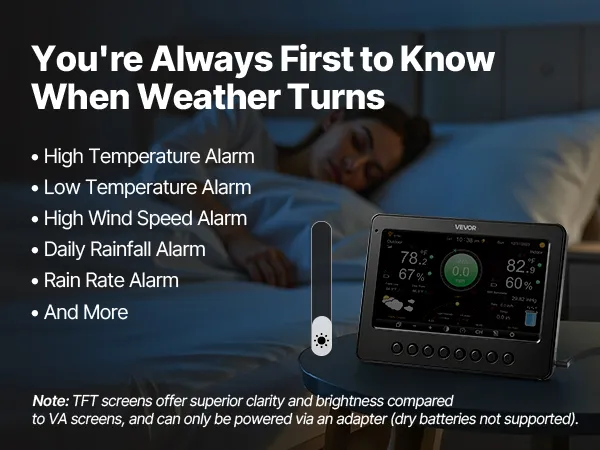
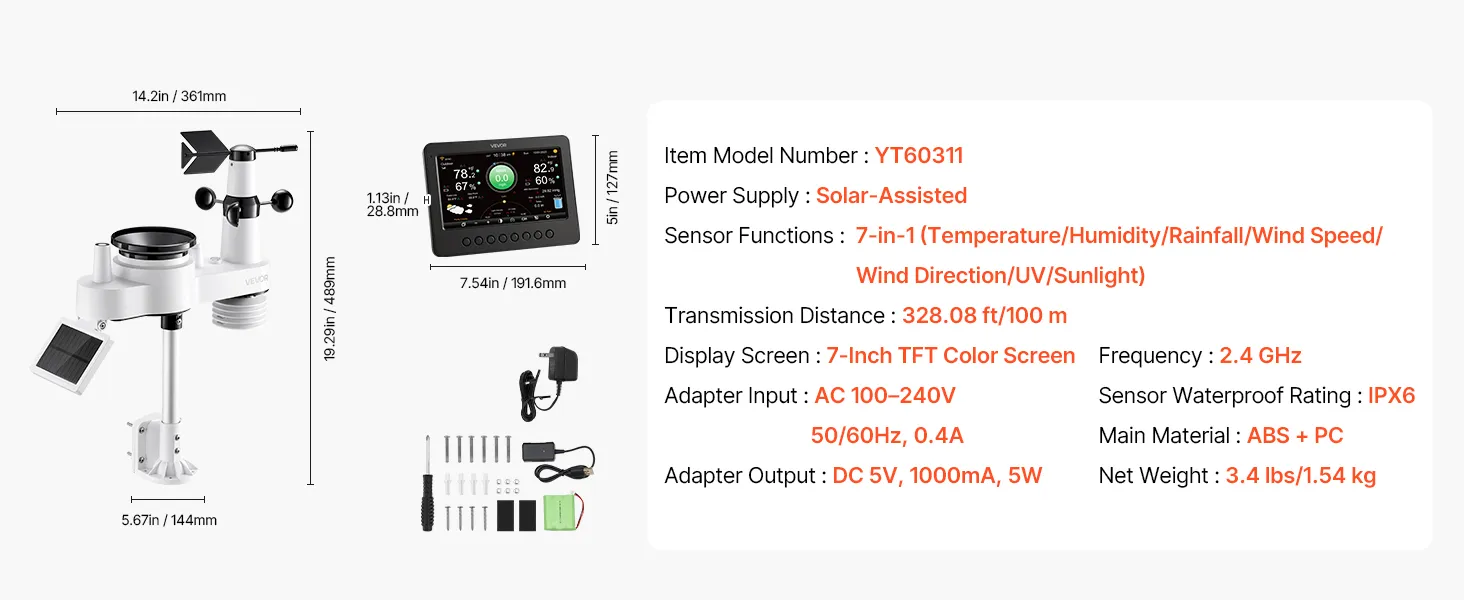
The indoor unit has a 7-inch (177.8mm) TFT color screen that provides sharp, vivid readouts easy to see at a glance from across a room. Adjust the display from bright daytime visibility to a less-distracting dim glow at night with four brightness levels, which is important if this indoor outdoor home weather station ends up sitting on a nightstand or bedroom dresser.
TFT panel color contrast makes scanning data easier than simpler monochrome displays. Temperature, humidity, and wind readings can be visually separated rather than appearing as one block of text. That kind of quick legibility adds up for everyday use – you aren’t squinting or waiting for your eyes to adjust to see if rain is coming.
WiFi Smart Life App Sync for Remote Weather Access
The weather station connects to the Smart Life app via 2.4 GHz Wi-Fi and lets you view, save, and share weather data from your phone, not just from the indoor display. You don’t need to register for an account on a separate weather website, and the app is ad-free and doesn’t have paid tiers, so it’s easy to use right from the start.
Only 2.4 GHz networks are supported; 5 GHz doesn’t work, and the WiFi connection and data sync will only work if the power adapter is plugged in. Once you have it installed, you can access your home’s weather data remotely from anywhere, a giant step up from having to go out to the yard and check a gauge.
328 ft Transmission Range with IPX6 Waterproof Sensor
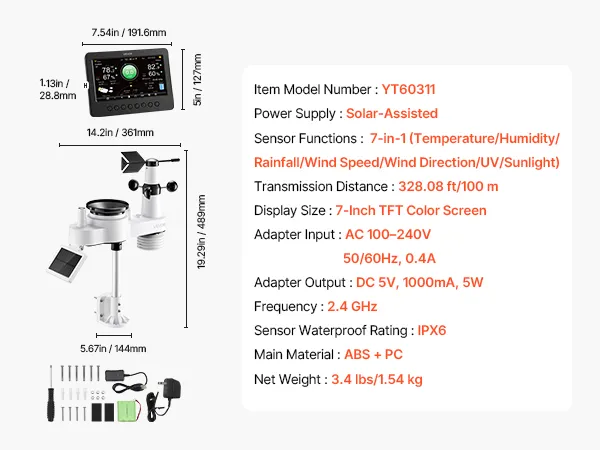
The outdoor sensor transmits up to 328 feet (100 meters) to the indoor display, so you can place it on a rooftop, garden post, or farm structure and still maintain a connection to the house. That’s enough for most homes, provided the route between the sensor and the display is clear of heavy interference. Large trees, metal roofing, and walls can all eat into that range faster than open outdoor space does.
The sensor is IPX6 waterproof-rated, so it’s built to keep working in the rain, even heavy rain, without any water ingress affecting performance. The 328 ft range is only as effective as the proper placement of the device (away from TVs, power lines, metal fences, etc., that can interfere with the signal) to hold up in everyday outdoor conditions. It’s a good idea to test the connection at the planned mounting location before permanently securing the bracket.
Solar-Assisted Power with Aluminum Mounting Bracket
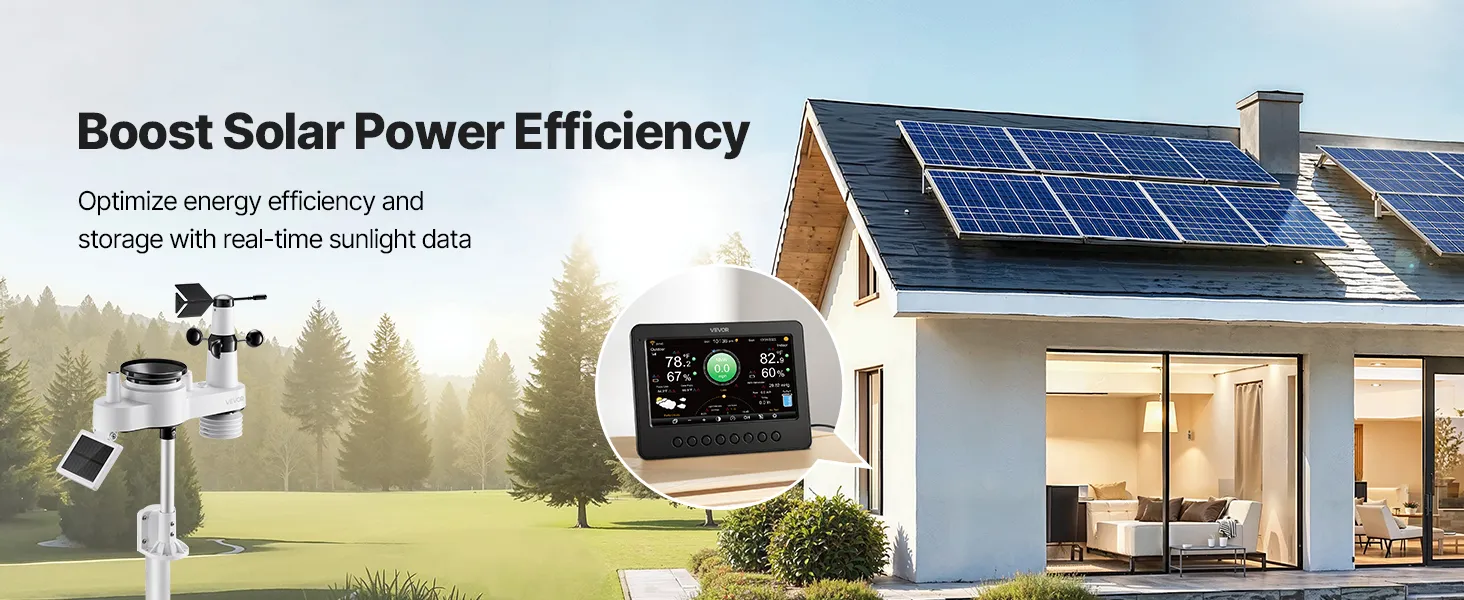
Plus, a high-efficiency solar panel powers the unit’s battery, so you won’t have to replace or recharge it as often as you would with a battery-only sensor. It’s this solar-powered capability that helps to make the sensor really low-maintenance once installed and operational. Even with shorter winter days, the panel still charges the battery enough to keep the sensor going through the night.
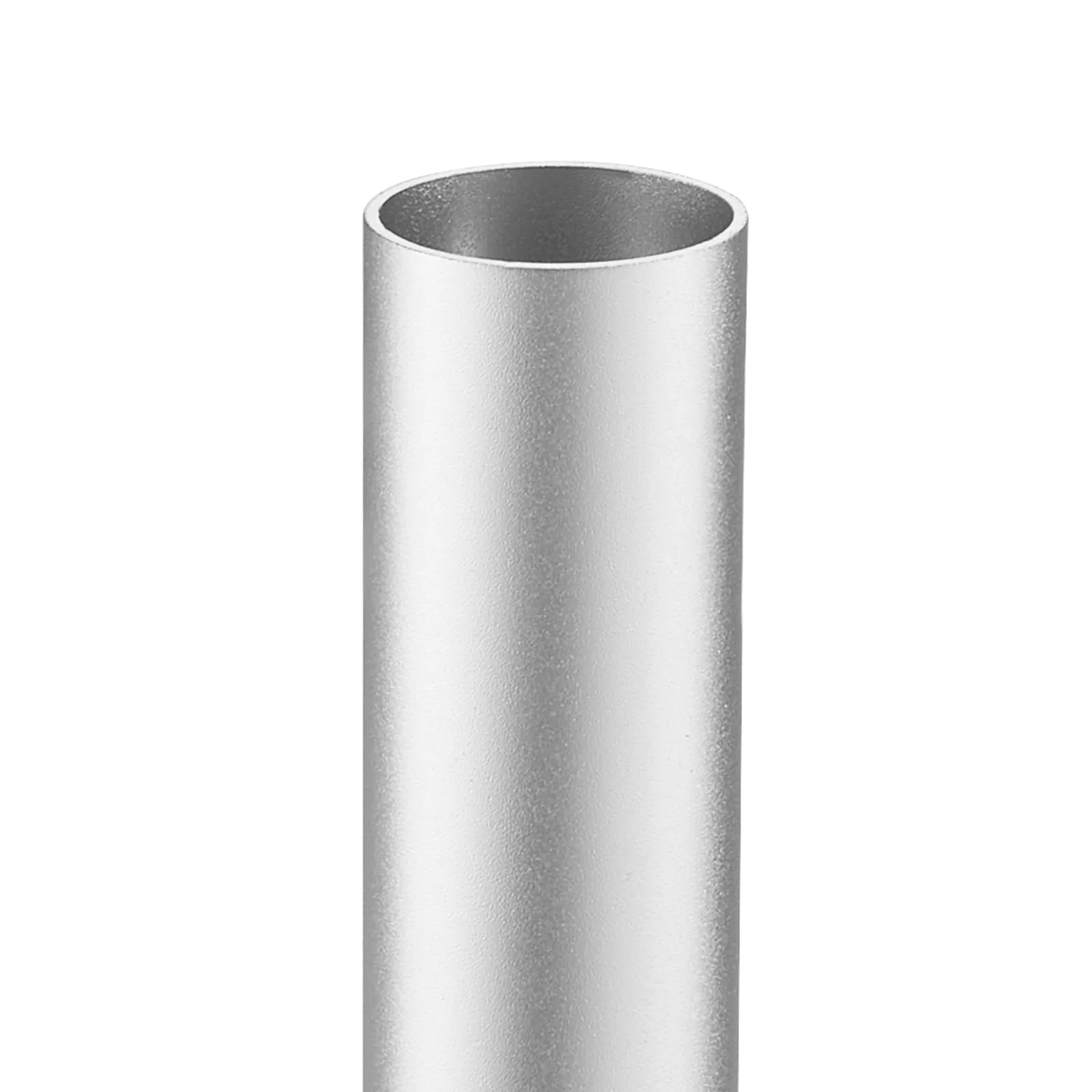
This sensor is equipped with an aluminum alloy rod and a fixed bracket. Designed for outdoor use, it will withstand wind, rain, and seasonal weather without working loose over time. An indoor outdoor home weather station designed to be left outside permanently needs a mounting setup as sturdy as the sensors themselves. One of the more common reasons outdoor sensors drift out of position and start giving inaccurate readings is a loose or flimsy mount.
3.4 lbs Indoor Outdoor Home Weather Station for Easy Setup
The indoor display clock measures about 7.3 x 5.4 x 1.1 inches and weighs about 3.4 lbs, while the outdoor sensor unit measures about 14.21 x 13.8 x 19.25 inches. That combo keeps the indoor display small enough to fit on a shelf or counter, and the outdoor sensor is the right size to house all seven sensor functions in a single unit.
Setup is supposed to be easier than older multi-piece weather stations, with most of the work limited to mounting the outdoor sensor and syncing it to the indoor display and app. For those creating a home weather monitoring system for the first time, the easier installation process removes much of the friction once associated with separate, individually wired weather instruments.