Fall Upgrade
VEVOR Rotary Welding Positioner, 500 kg Load Capacity, -45° to 90° Tilt Angle Welding Positioner Turntable Table, 0.2-2 RPM Speed Control, Electric and Foot Pedal, for Cutting, Grinding, Assembly
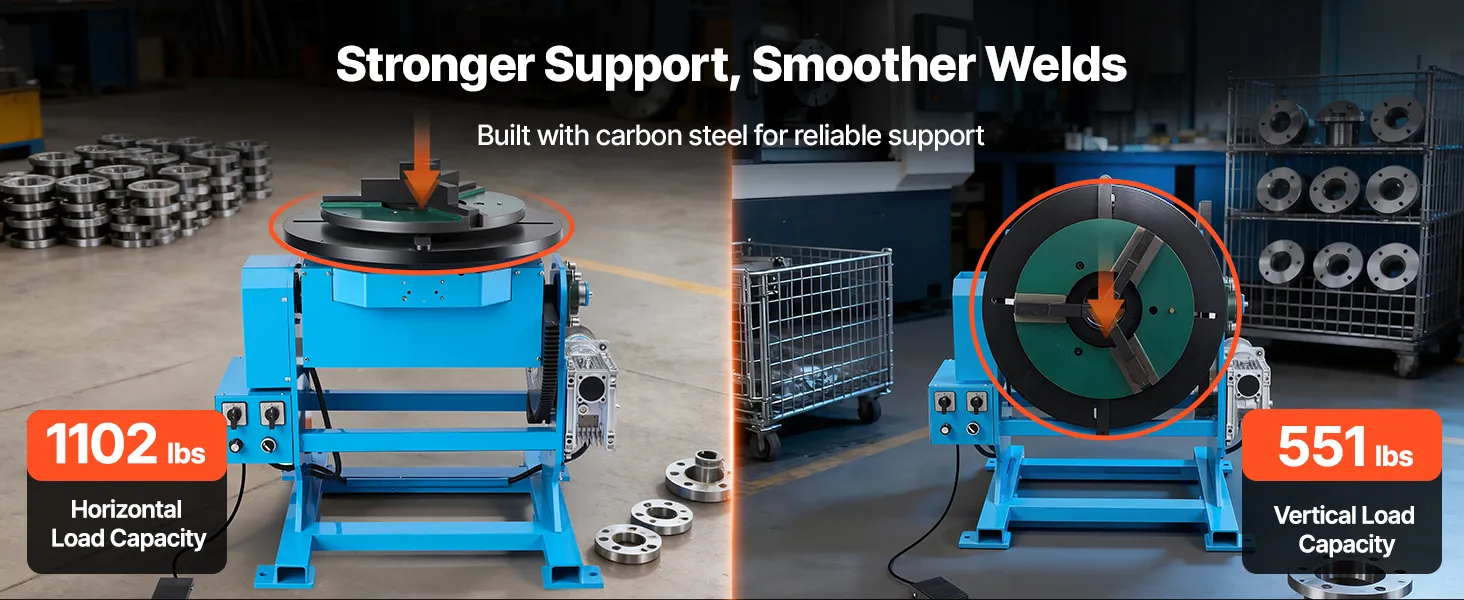
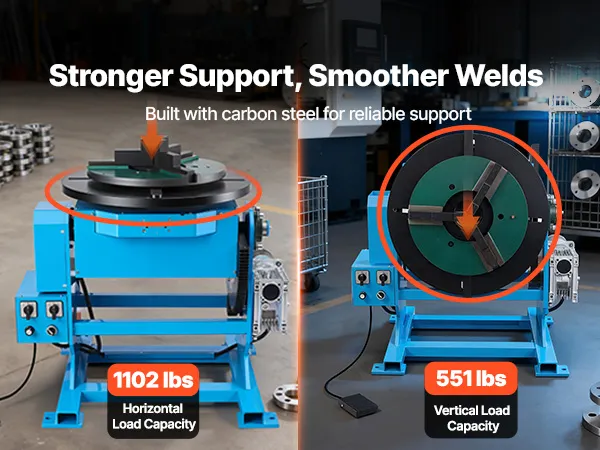
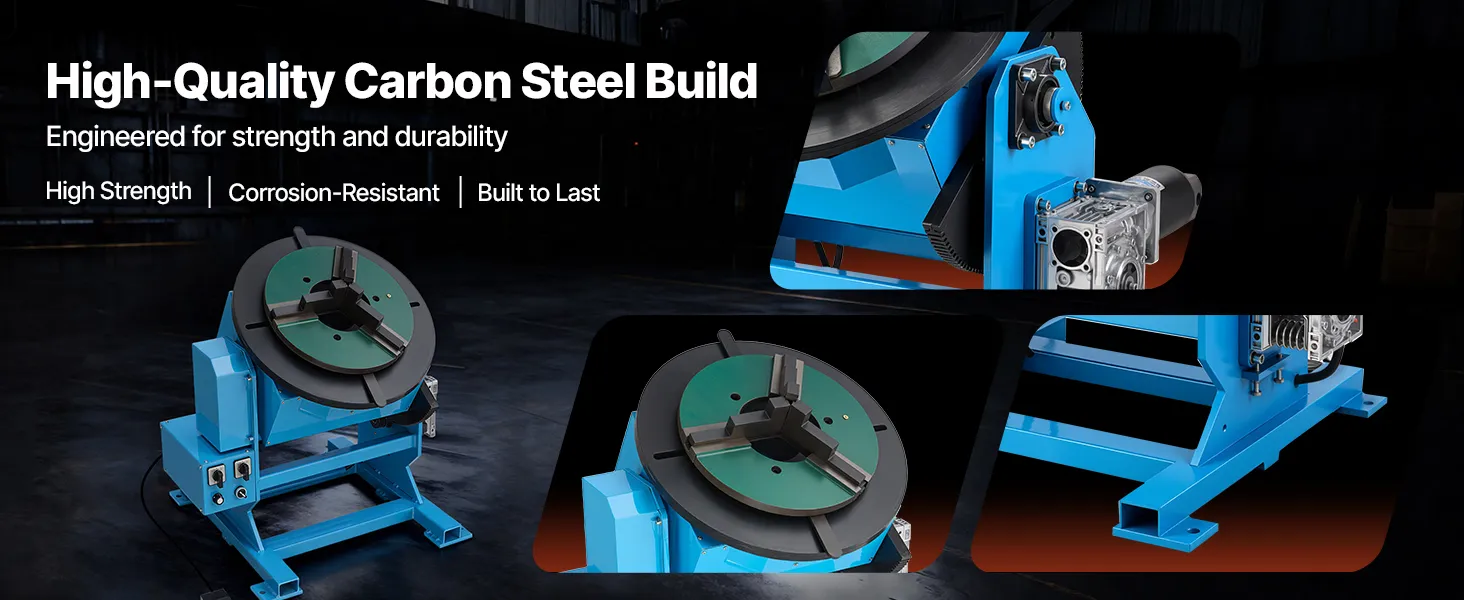
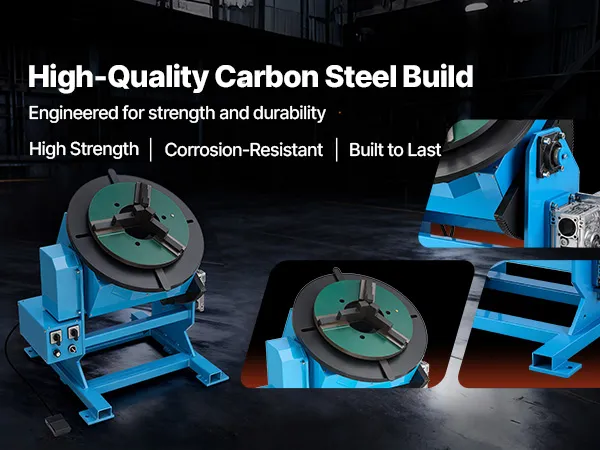
- High Load Capacity: This rotary welding positioner supports up to 1102 lbs horizontally and 551 lbs vertically. The premium carbon-steel construction ensures stable performance during heavy-duty welding tasks
- Core Welding Support Strength: The carbon-steel frame securely holds a wide range of workpieces, delivering excellent stability in both horizontal and vertical operations. Our welding rotary table positioner is essential for achieving high-precision welds
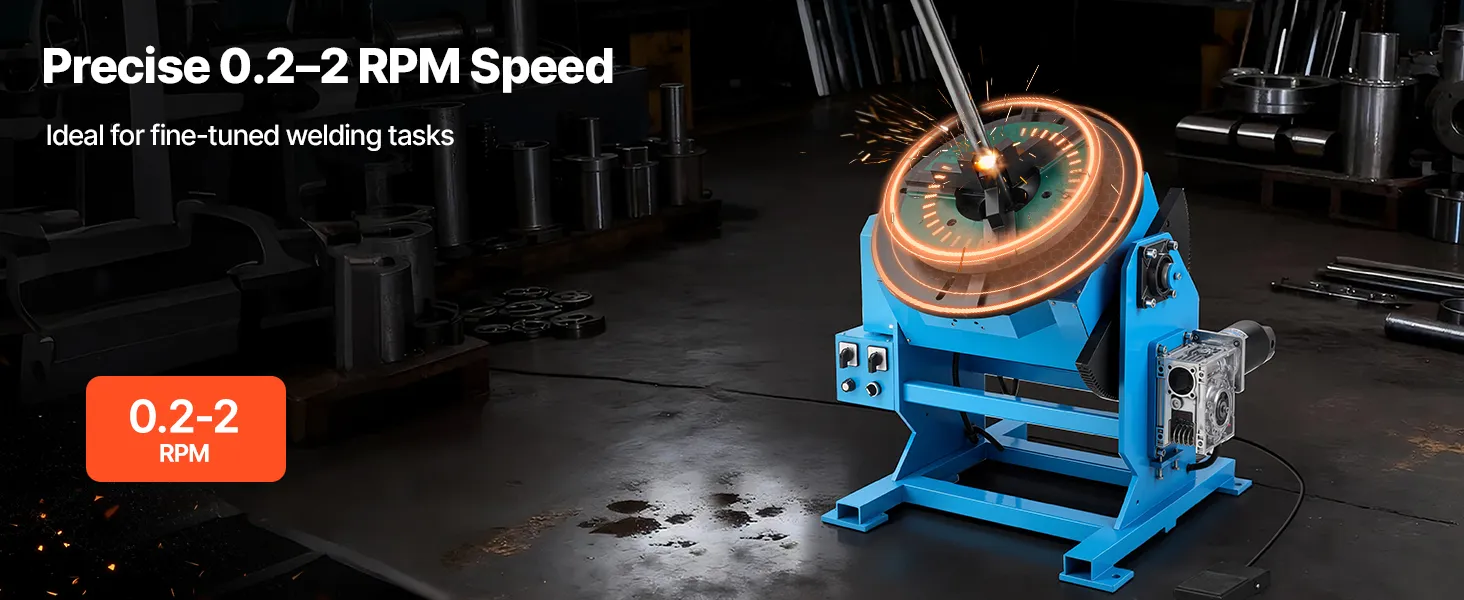
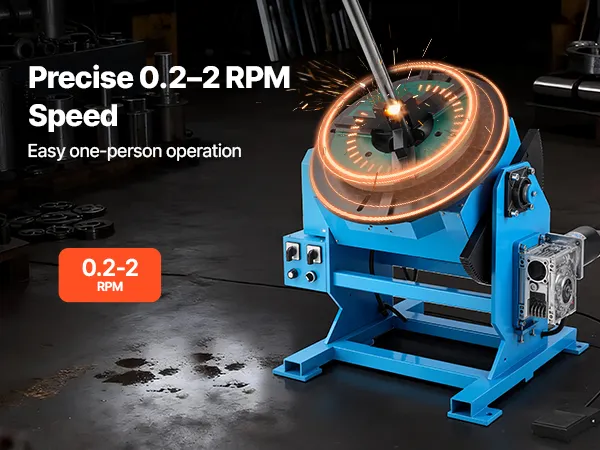
- Precision Welding Control: With a 0.2-2 RPM rotation range, the welding positioner turntable table delivers slow, stable rotation for high-quality, consistent welds, especially on complex parts
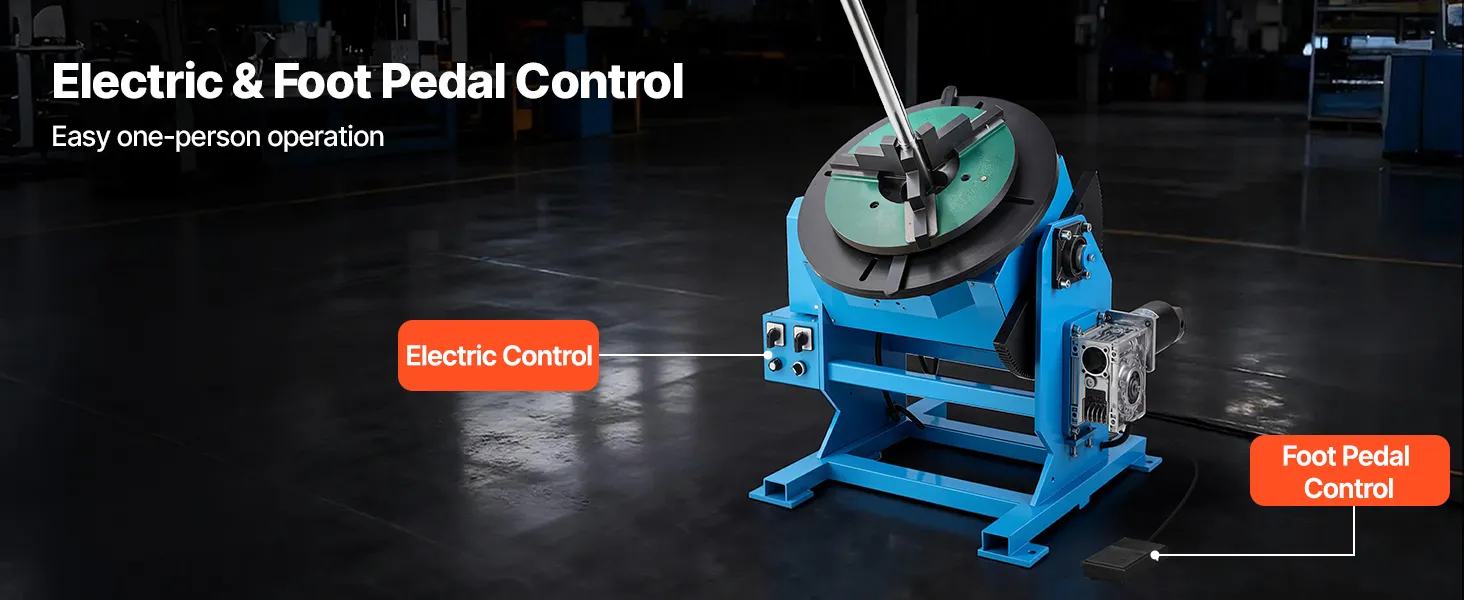
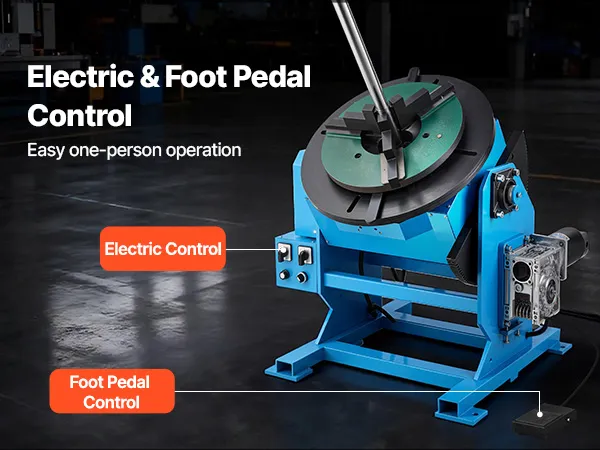
- Flexible & Easy Control: Our positioner turntable machine features both electric control and a foot pedal switch for effortless, hands-free operation. It enhances welding efficiency while reducing operator fatigue
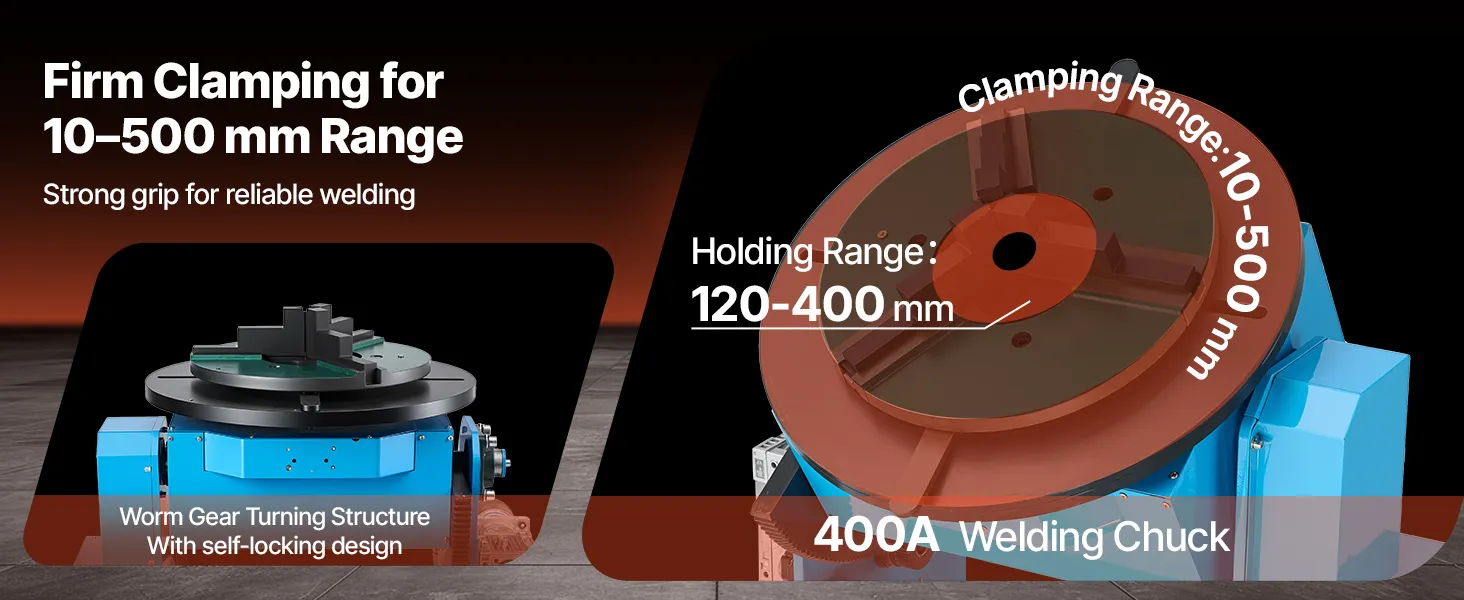
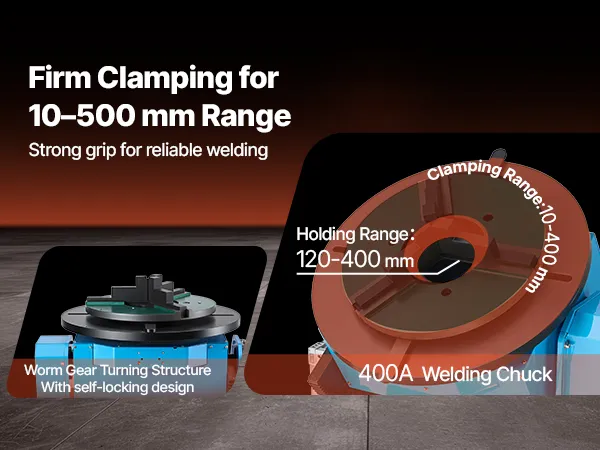
- Wide-Range Welding Chuck: The 400A chuck provides a 0.4-19.7 in clamping range and a 4.7-15.8 in holding range, enabling our welding positioner turntable to securely hold a broad range of workpieces
Frequently Bought Together
Reviews
About this item


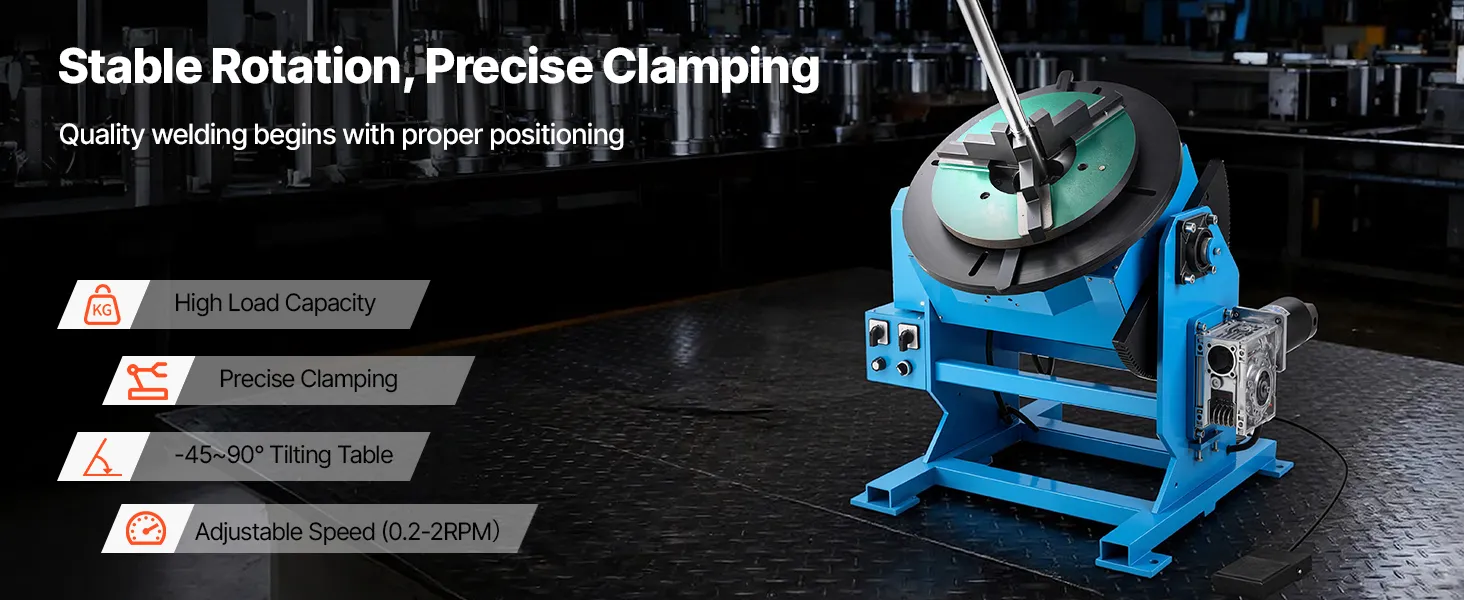


Rotary Welding Positioner with 500 kg Horizontal Capacity and Carbon Steel Frame
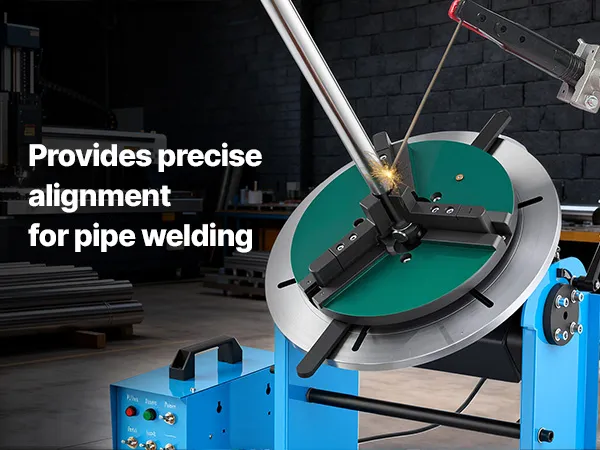
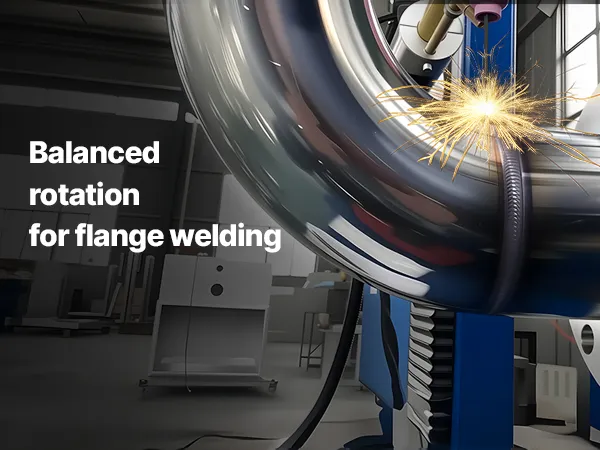
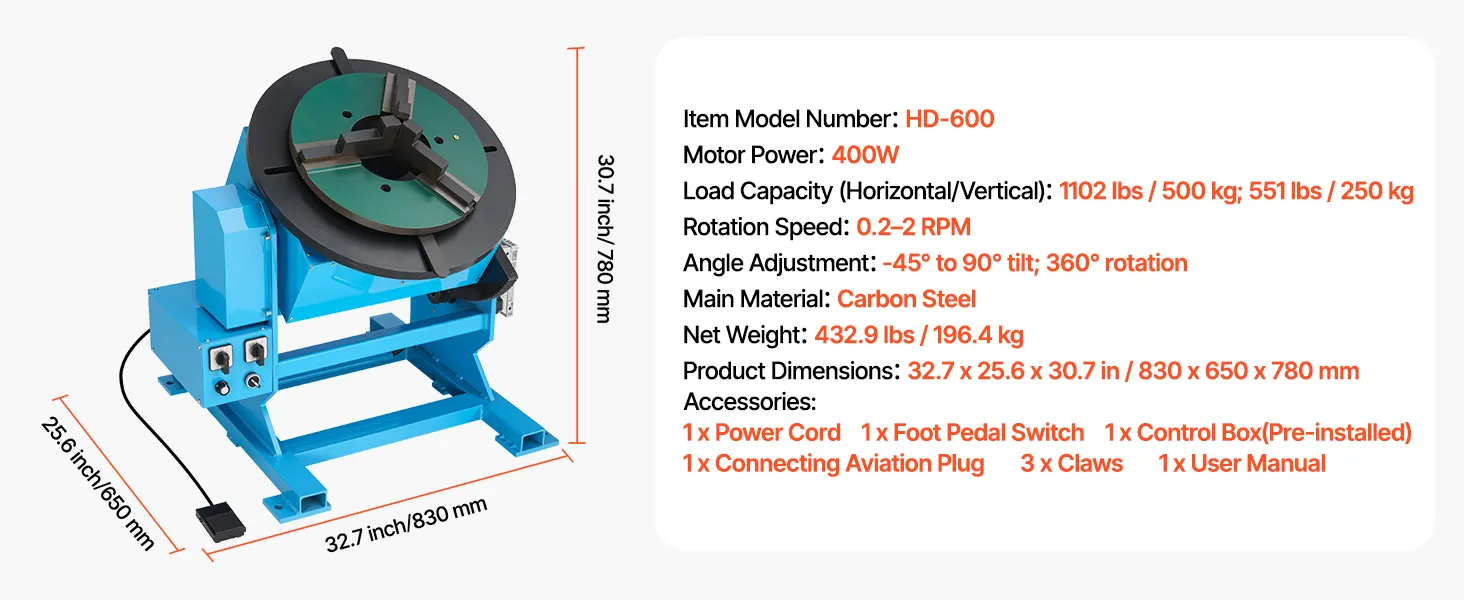
The horizontal load rating of the VEVOR rotary welding positioner is 500 kg (1102 lbs), and the vertical load rating is 250 kg (551 lbs). This load capacity makes it suitable for handling large fabricated assemblies, heavy pipe sections, flanges, and structural components that are too big to move by hand between weld passes. The carbon steel frame transmits these loads through a rigid, deformation-resistant structure that maintains its dimensional stability and alignment geometry under sustained heavy-duty welding conditions.
This professional machine weighs 196.4 kg (432.9 lbs) and measures 32.7 × 25.6 × 30.7in. It was designed for stationary workshop use. The heavy base mass directly reduces vibrations while the machine is rotating under load. This keeps the workpiece stable and in the same position throughout the welding arc, helping maintain consistent weld bead geometry.
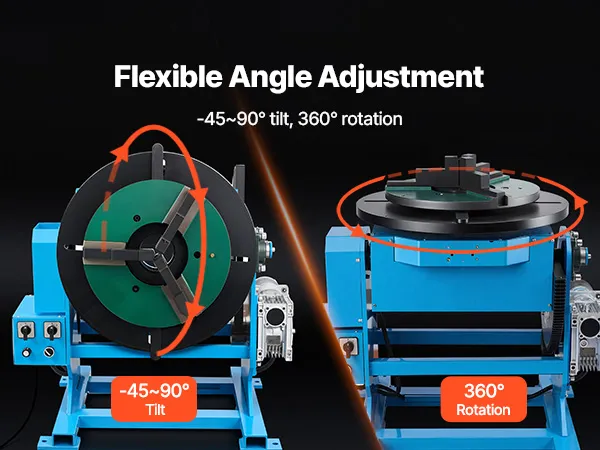
-45° to 90° Tilt and 360° Rotation for Full Workpiece Positioning Range
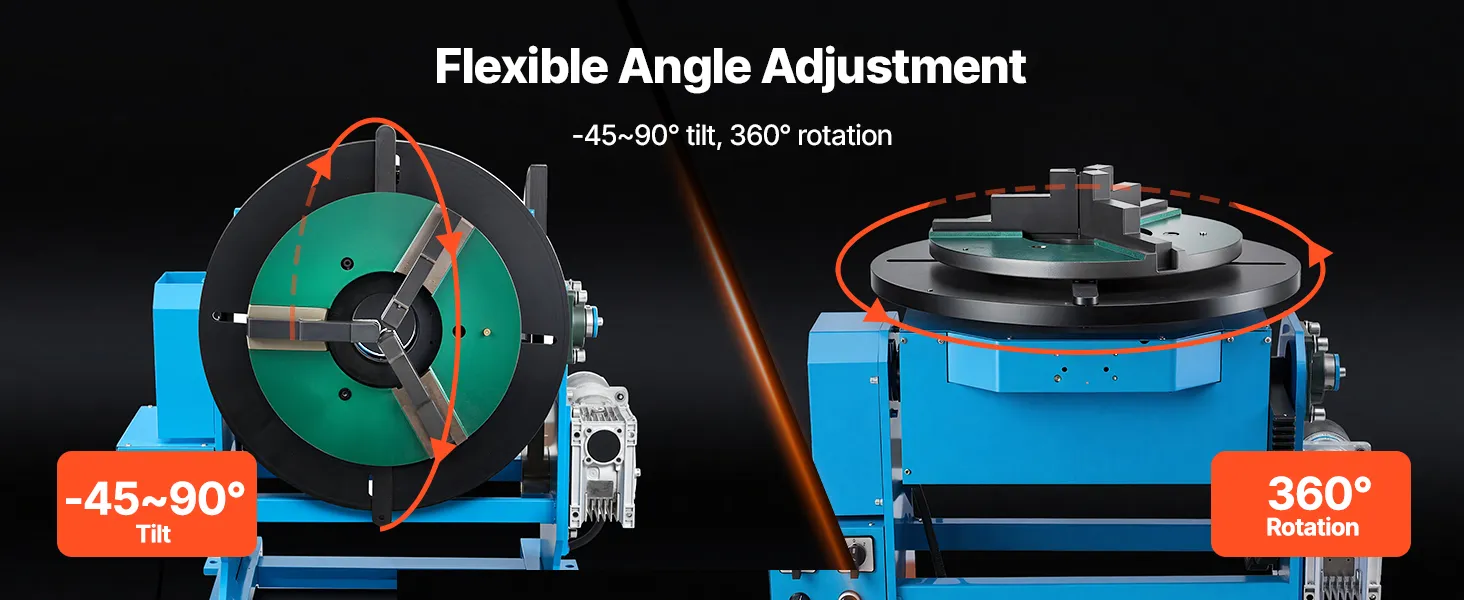
The rotary welding positioner tilts from -45° (below the base plane and past the horizontal position) to +90° (fully vertical). This gives the user a 135-degree tilt adjustment range, including flat, inclined, vertical, and all intermediate positions. Many welding applications benefit from positioning the weld joint in a flat or horizontal orientation. This wide tilt range supports a wider range of welding positions.
Together, the tilt adjustment and the continuous 360° rotation form a two-axis positioning system that can bring any weld seam on the workpiece to the welder's chosen flat position. This eliminates the need to move the workpiece between weld passes in complex multi-joint fabrications. This feature also reduces cycle time and maintains a constant torch-to-work distance throughout the welding sequence.
0.2–2 RPM Variable Speed Control for Slow, Consistent Weld Bead Deposition
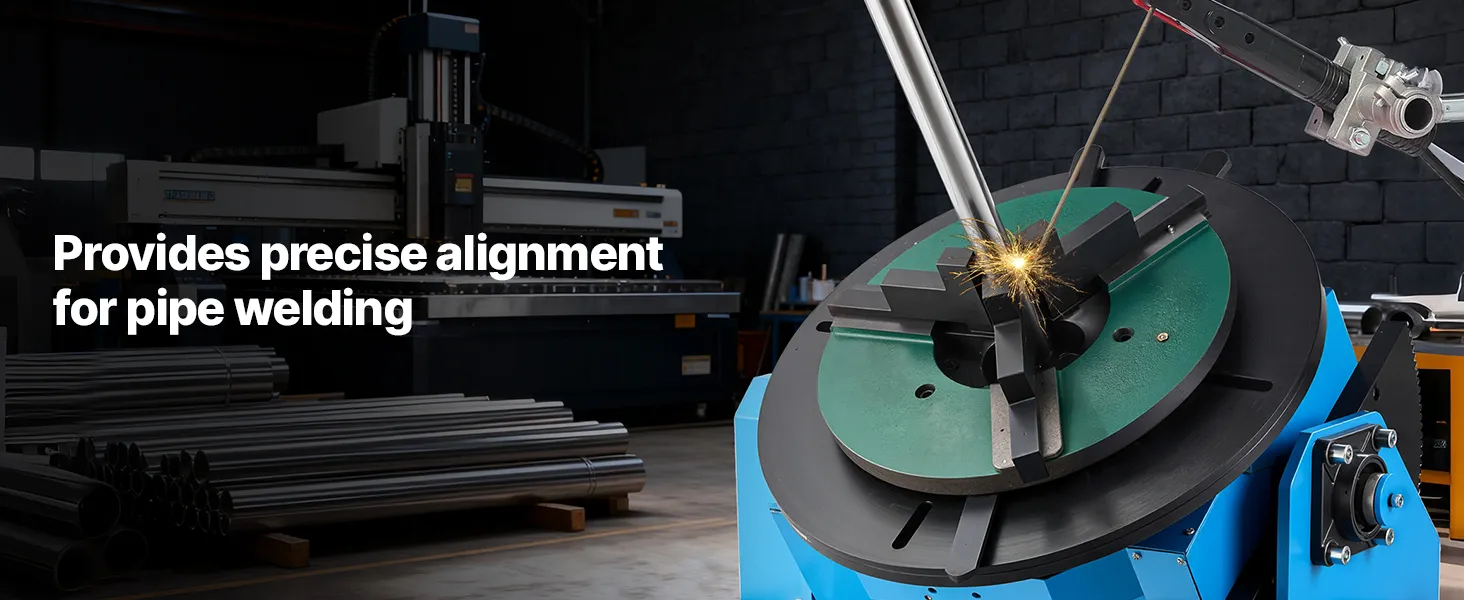
The rotation speed ranges from 0.2 to 2 RPM. This allows the turntable to move slowly and precisely for automatic and semi-automatic welding processes where the workpiece spins past a stationary welding torch. At minimum speed, the positioner completes one full revolution every 5 minutes, producing the extremely slow, consistent arc travel speed needed for high-deposition TIG and MIG weld passes on thick-walled pipe and large-diameter flange faces.
The adjustable speed range allows the operator to match the rotation speed to different workpieces and welding processes. With variable speed, the operator can precisely match the surface travel speed at the weld joint to the job's process parameters. This is an advantage over fixed-speed positioners, which operate at a fixed speed and do not heat the workpiece evenly across different diameters at the same rotation speed.
400A Chuck with 0.4–19.7 in Clamping Range for Broad Workpiece Compatibility
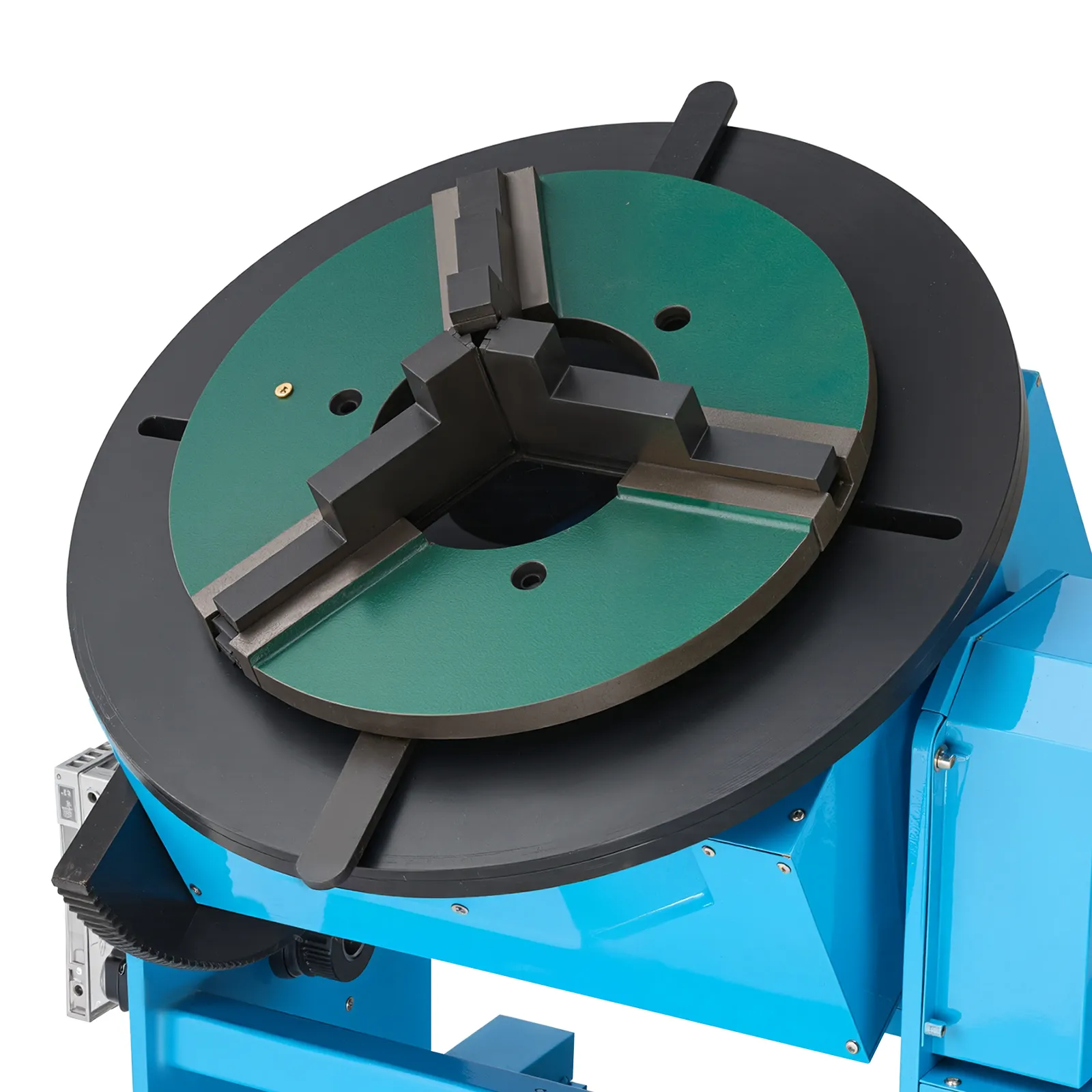
The 400A chuck is designed for welding applications and securely holds the workpiece during rotation. This eliminates the need for separate ground clamps, which can cause changes in resistance and unstable arcs if not placed correctly. The built-in ground path from the chuck to the turntable and the machine frame provides the welding current with a steady, low-resistance return path, regardless of the workpiece's shape or size.
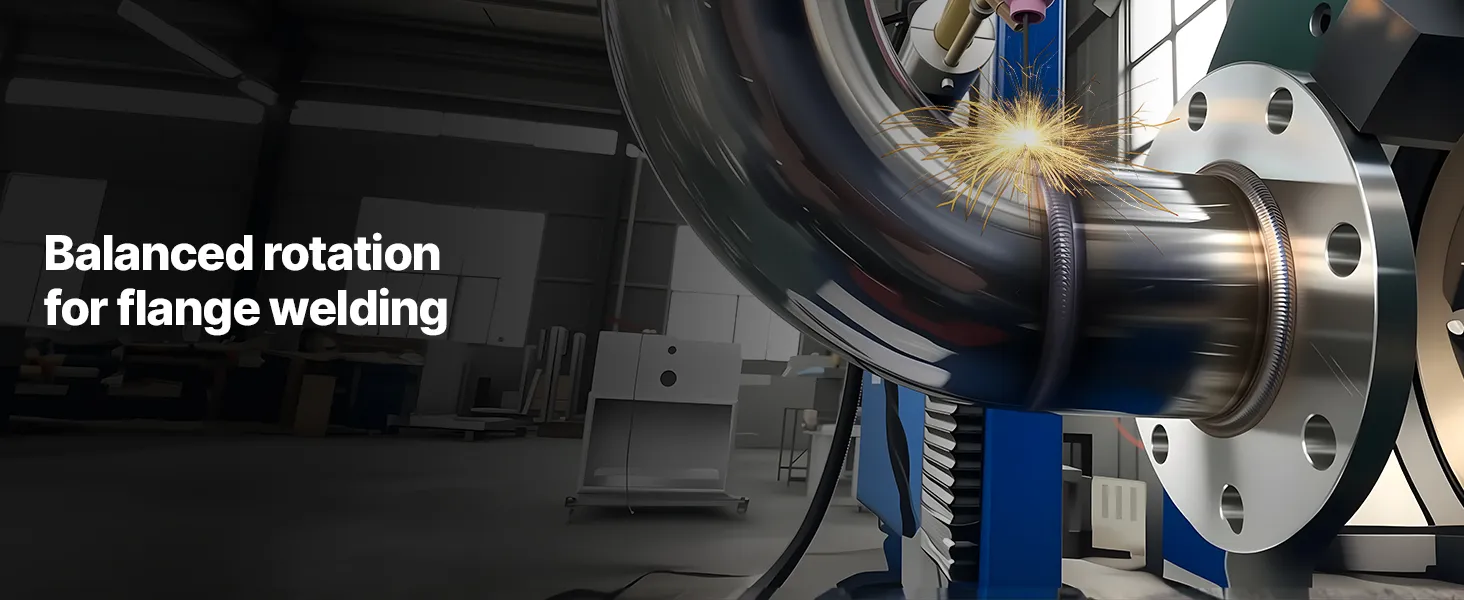
The chuck accommodates workpieces from 0.4–19.7 in (10–500 mm), so it can hold everything from small pipe stubs and precision parts at the narrow end to large-diameter flanges, rings, and cylindrical workpieces at the wide end. The recommended workpiece diameter range is 4.7 to 15.8 inches, which is the depth of engagement between the chuck jaws and the workpiece. This provides a secure grip across the full clamping diameter range, so most standard fabrication tasks do not require any extra fixturing.
Rotary Welding Positioner with Dual Electric and Foot Pedal Control for Hands-Free Operation
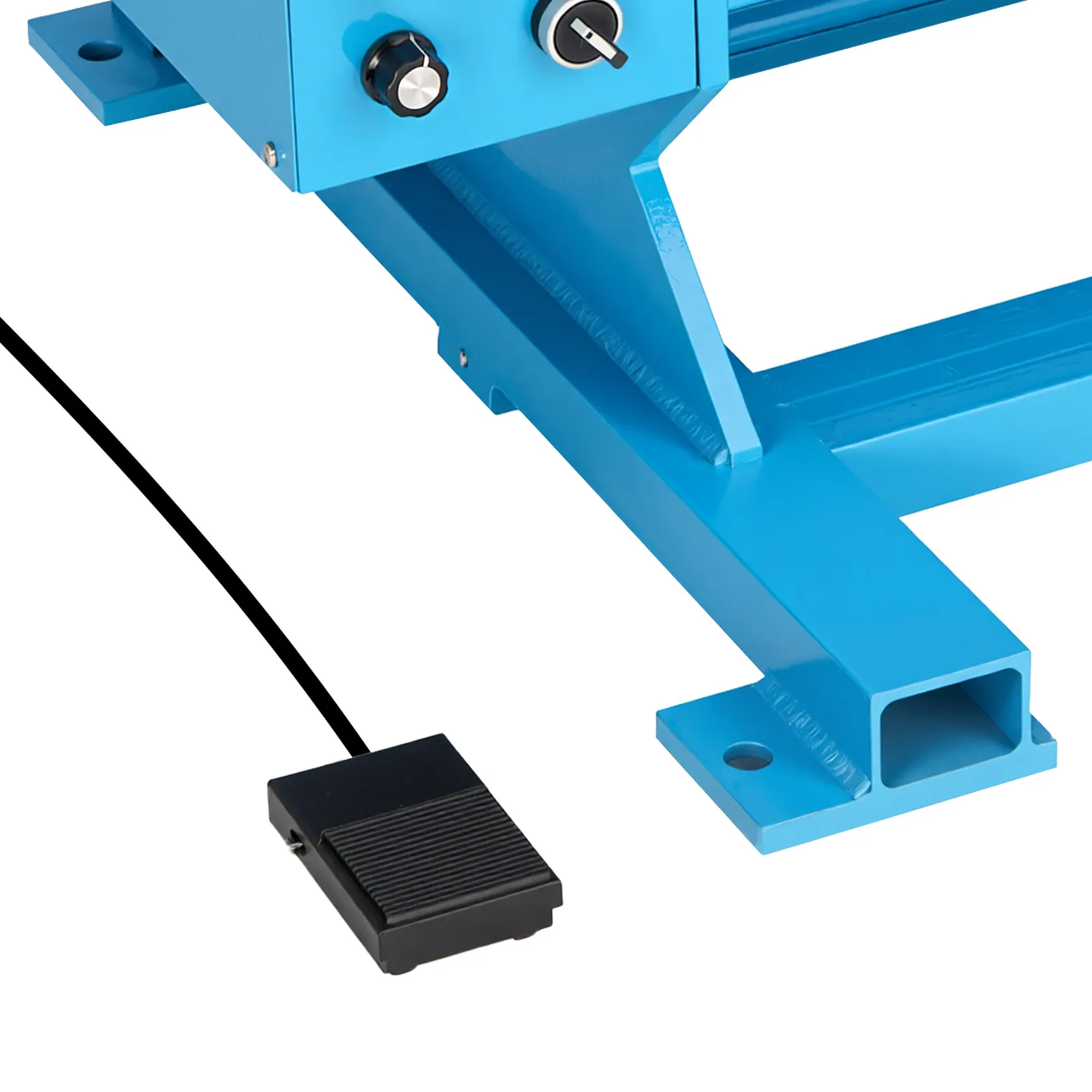
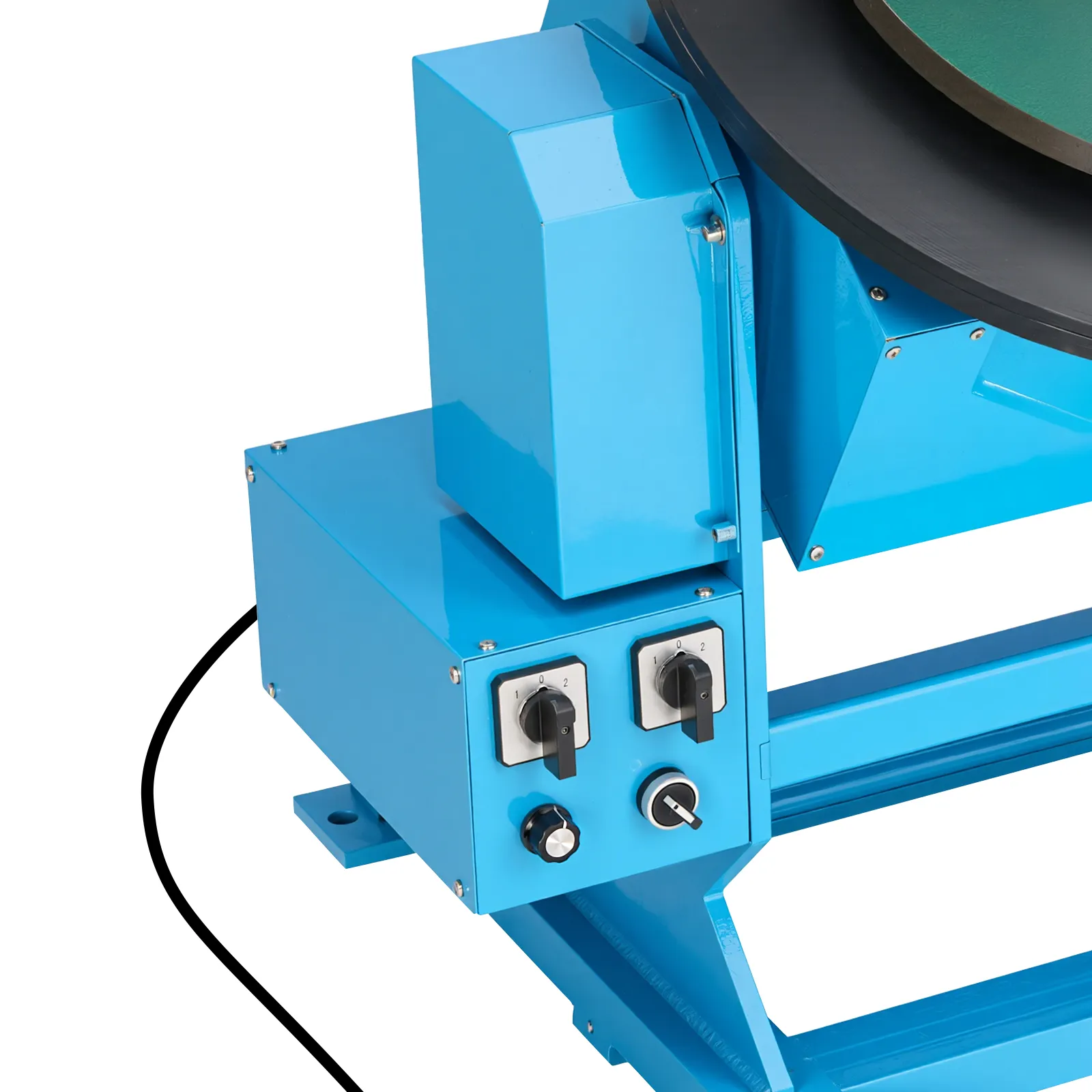
You can use either one or both of the two separate control methods on this rotary welding positioner, depending on the welding job. When the welding torch is not in use, the electric control panel can start, stop, change the direction of rotation, and increase or decrease speed. This lets you set up, position, and handle your work between weld passes. The foot pedal switch starts and stops rotation while the welder is working, allowing them to keep both hands on the torch and filler rod during welding.
It is best to use foot pedal control for TIG welding because you need both hands to control the torch and filler wire simultaneously, and moving one hand away from the weld affects arc stability and bead shape. The foot pedal lets the welder stop rotating at any point during the pass without breaking the arc or moving their hands. This gives them the precise start-stop control they need to place tacks and finish joints on complicated seam shapes.
Built-In Timer, TIG Sync Cable, and 400W Motor for Advanced Welding Workflow Integration
The rotary welding positioner's automatic function includes a built-in timer that stops rotation after a preset interval, allowing the operator to program the rotation duration for each weld pass and automatically return the workpiece to the start position without manual monitoring. When set to the right arc travel speed and weld length for a given joint, the timer works best. This makes it possible to use the same rotational times on multiple identical workpieces in production settings.
The included TIG sync cable enables synchronization between the welding positioner and compatible TIG equipment. The 400W motor produces enough torque to maintain a constant rotational speed, even though the workpiece's shape and weight cause changes in resistance during the rotation cycle. This prevents speed fluctuations, which would otherwise cause the bead width and heat input to be uneven across the weld seam.