VEVOR 149.9 cm Handrails for Outdoor Steps Staircase for Porch Deck Side-mount

- Friendly Reminder: This handrail is made of 201 stainless steel and may have a potential risk of rusting outdoors. Please confirm installation space before purchase. Use a blue Scotch Brite pad to clean rust if needed
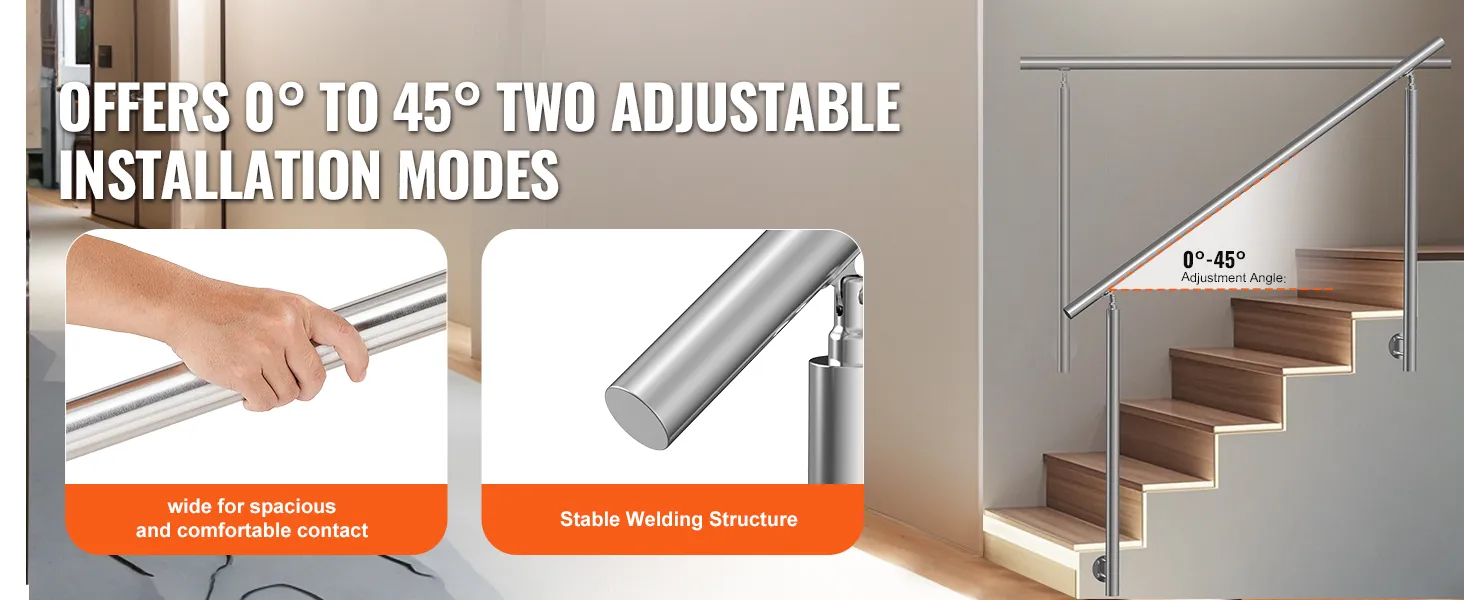
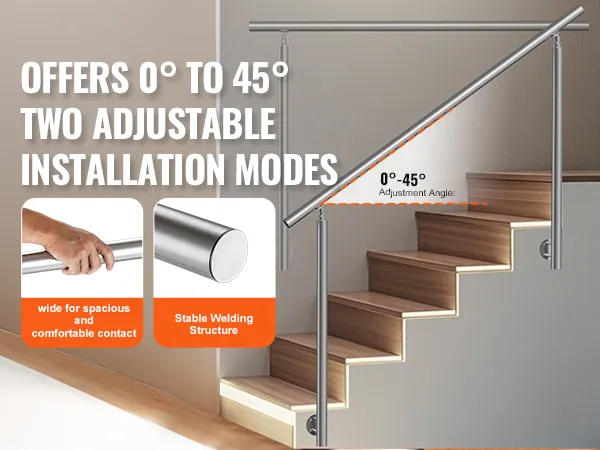
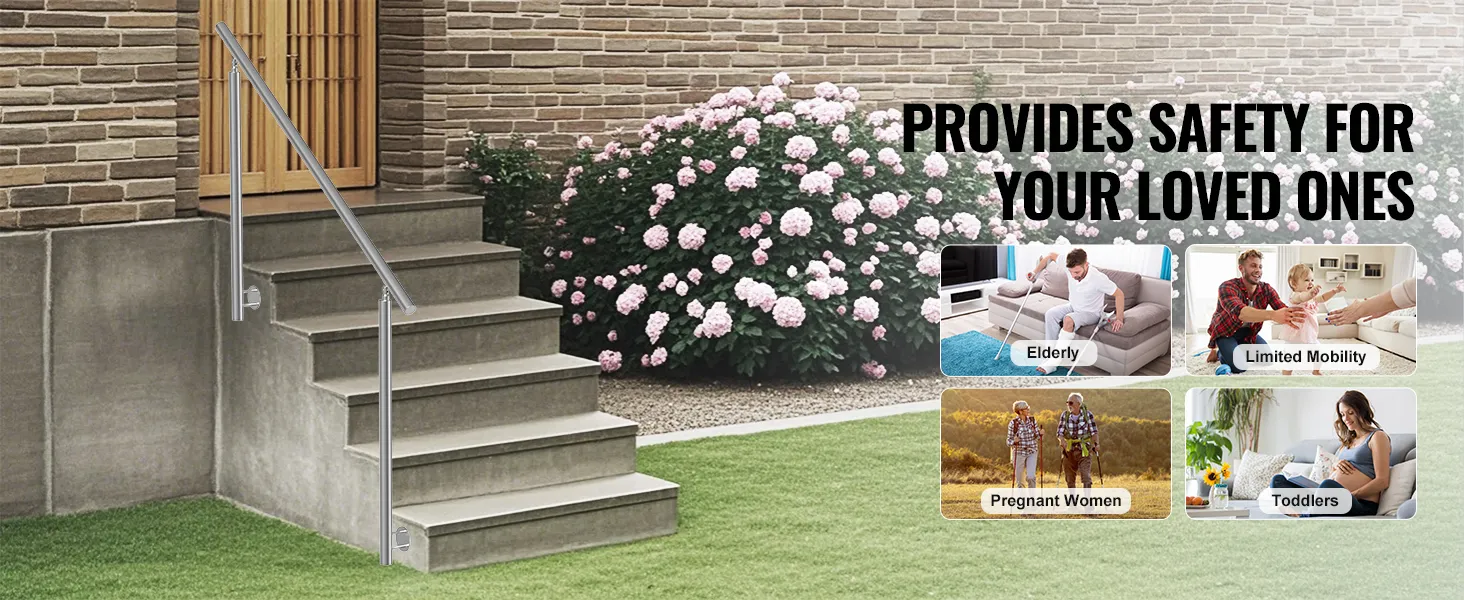
- 220 lbs Heavy-Duty Capacity: This stair handrail is built to last, offering reliable safety and support for both the elderly and children. Its reinforced design provides a comfortable grip, ensuring secure use for pregnant women and seniors as they navigate stairs. 0°-45° Adjustable Angle: The handrail features an adjustable range from 0 to 45 degrees, making it ideal for most doorsteps, garage entrances, garden railings, and more. This flexibility allows it to accommodate various stair configurations effectively.
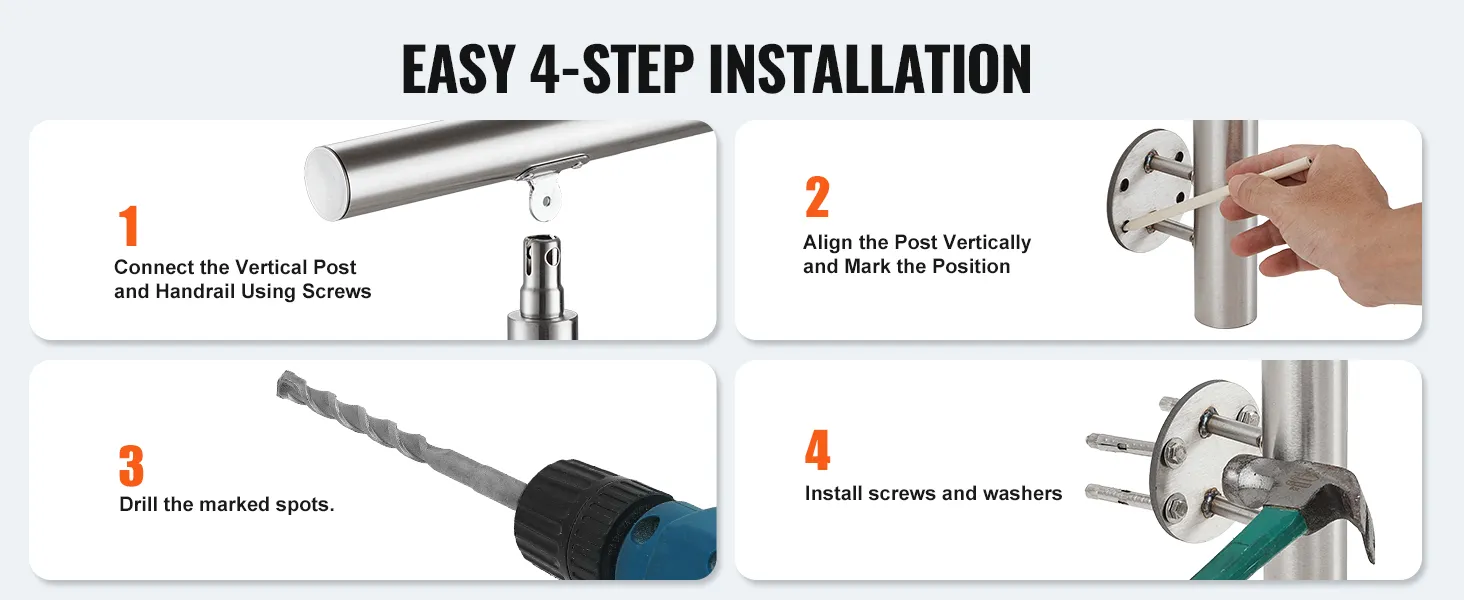
- Easy Installation: Equipped with stainless steel expansion bolts for double reinforcement, enhancing stability. Additionally, a user-friendly manual is included to make the installation process straightforward and hassle-free.
- Versatile Use: This outdoor stair railing can be installed on concrete, wood floors, tiles, marble, and other solid surfaces. Its unique design complements various stair types, ensuring both functionality and style.
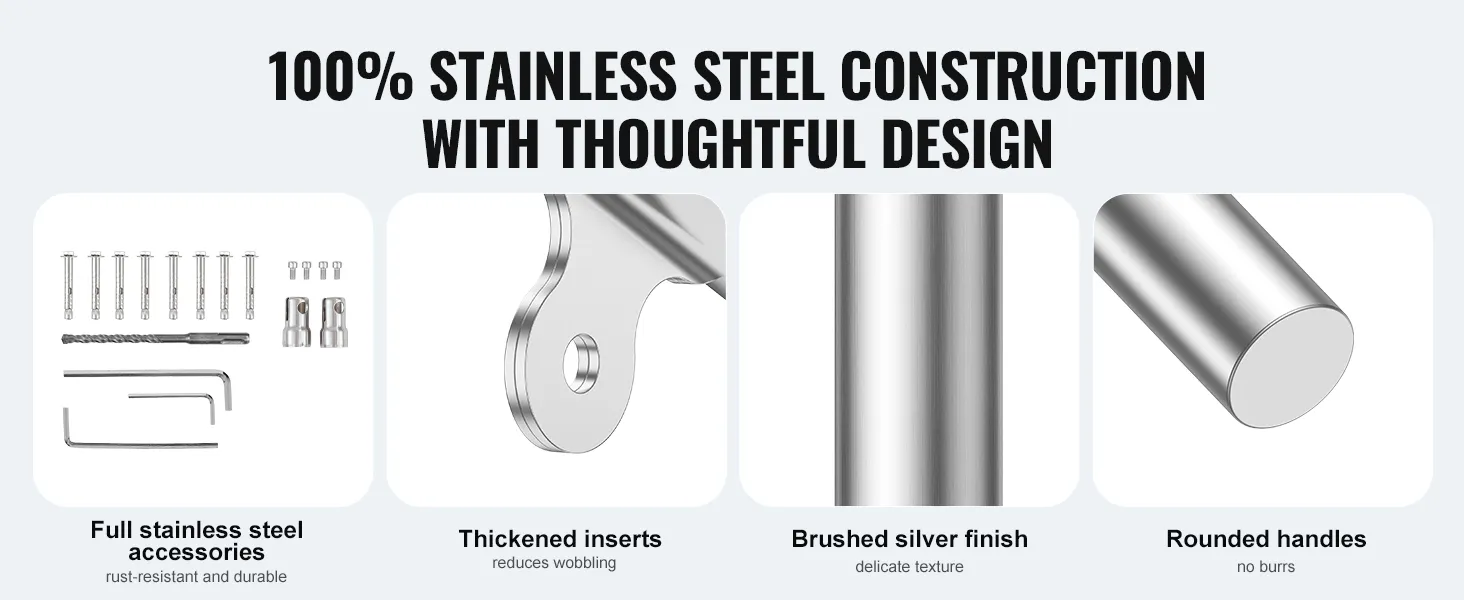
- Sturdy Accessories: We provide a complete set of installation hardware, including screws, nuts, expansion bolts, and metal anchors, for robust support at both ends. This comprehensive kit ensures a smooth and secure installation process.
Frequently Bought Together
Reviews
 jan.demedts
 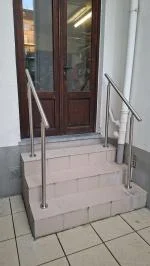 elveveek
 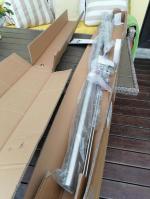 ch*** ja***
 About this item


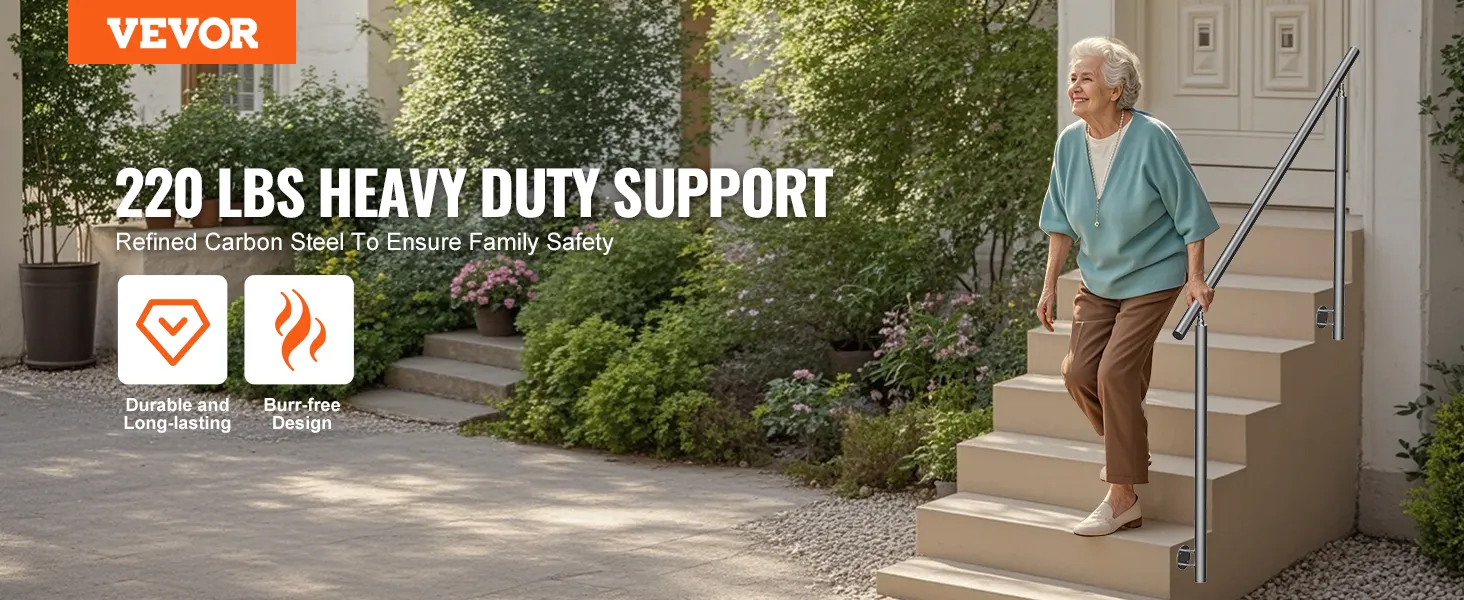
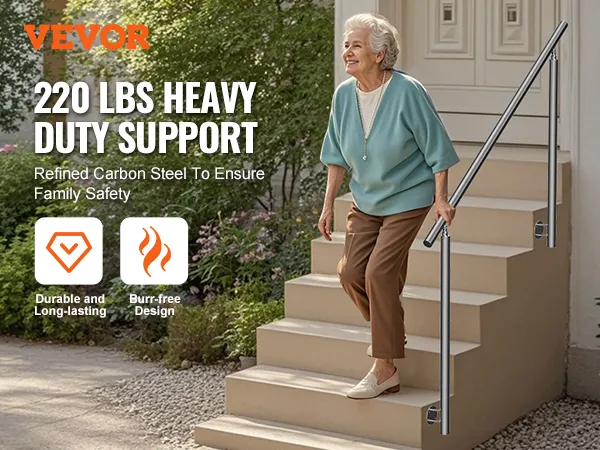

Side Mounted Handrail for Outdoor Steps With Low-Profile Bracket Design
This side mounted handrail for outdoor steps mounts to the side of a staircase, rather than the tread surface, leaving the walking path completely clear and preventing the step’s surface from being interrupted by floor-mounted brackets. This rising style is suitable for staircases where a clean, unobstructed tread is important, e.g., narrower steps or steps with a finished surface that should not be drilled into directly. Side mounting also works well on staircases where there's limited room on the tread itself for floor-mounted hardware.
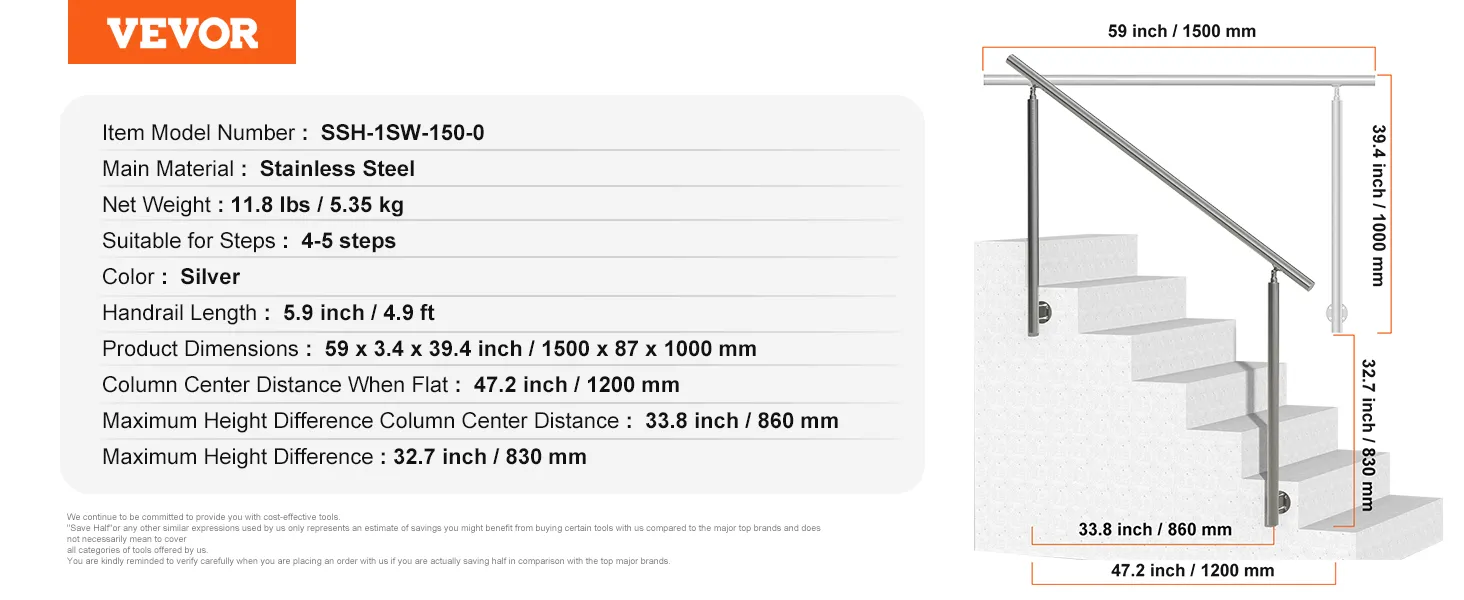
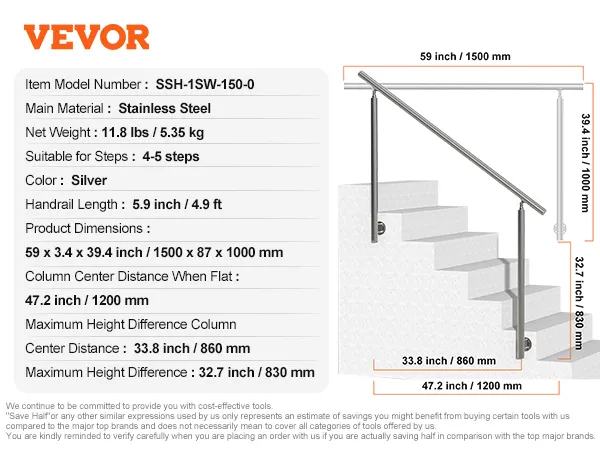
The bracket design is small, measuring only 3.4 inches wide by 39.4 inches tall, and tucks away to the side of a staircase or wall, without protruding into walking space. That low-profile footprint is most crucial on tight porches or deck stairs where floor space is already at a premium. On staircases shared with foot traffic on both sides, this small footprint keeps the rail useful without becoming an obstacle in its own right.
220lbs Load Capacity for Dependable Stair Support
This side mounted handrail for outdoor steps is engineered to support up to 220 lbs and provides a steady point of support for elderly users, children, and pregnant people on porch steps, deck entries, or garden paths. The rail is designed to be reinforced so it doesn’t flex when someone leans on it for balance, yet remains solid under actual body weight.
But load capacity matters most when you stumble, not when you’re walking up and down the stairs. If you have limited mobility or are recovering from an injury, you need a rail that can take some real pressure to keep a staircase usable and not become a hazard when you’re on unstable footing. A rail bending under that kind of pressure can give you a false sense of security when you need it most.
0-45° Adjustable Angle Fits Most Step Configurations
Instead of forcing a set incline onto steps it was not intended for, this rail can accommodate the true slope of a porch, deck, or garden stairway, thanks to an adjustable range of 0 to 45 degrees. This range covers a wide variety of standard outdoor stair configurations without the need for a custom-built rail. Most residential porch and deck staircases fall comfortably in that adjustable window.
By setting the angle during installation, the rail will follow the actual pitch of the steps it is mounted on and avoid the gap or mismatch that a fixed-angle rail can leave at either end. Once that angle has been chosen, it will be constant during normal daily use and will not require adjustment over time. That one-time setup step is all that is normally needed for the life of the installation.
59in Length With Adjustable Column Spacing for Sloped Steps
The 59-inch (1500mm) long rail is perfect for longer porch or deck staircases where a shorter rail would not cover the entire run of steps. The distance between columns is 47.2 inches (1200mm) for level ground and 33.8 inches (860mm) for sloped steps of a height differential. This range of adjustment means the same rail will work on both level entryways and stepped transitions, no separate model required for each.
That spacing range allows a maximum height difference of 32.7 inches (830mm) between mounting points, accommodating most residential outdoor stairs without custom measurements. The key to a level rail, pitched correctly all the way along, is getting the column spacing right when installing. Because this version mounts to the side rather than the tread, accurate spacing is also important to keep bracket alignment clean against the staircase structure.
Side Mounted Handrail for Outdoor Steps With Installation Notes on Stainless Steel
This side mounted handrail for outdoor steps is manufactured from 201 stainless steel, a grade that provides good strength and a clean finish but carries some risk of surface rust with long-term outdoor exposure, especially in humid or coastal climates. Any surface rust that appears is usually light and can be cleaned off with a simple abrasive pad – you don’t have to replace any parts. 304 stainless steel, a higher grade, is more resistant to long-term exposure to outdoor moisture. That’s a different maintenance profile.
Outdoor exposure varies widely across regions and climates. It is worthwhile to consider the installation environment before purchase. For installation in drier or covered locations, the risk is lower. In constantly wet or salty outdoor air, occasional surface cleaning may become part of normal upkeep over the rail's lifetime. If you are purchasing in a coastal or high-humidity area, plan for that occasional maintenance from the beginning and don’t treat it as an unexpected problem later on.
Complete Installation Kit With Reinforced Mounting Hardware
The kit includes screws, nuts, expansion bolts, and anchor bolts for each end of the mount, so there’s no need to buy additional hardware before you get started. The double reinforcement at the mounting points adds extra stability where the rail must bear the most force during everyday use.
A clear installation manual leads you through the mounting process, which is important for a DIY installation, as getting the bolts in the right place the first time means you don't have to redo work later. The rail weighs only 5.35kg (11.8 lbs), so it is light enough for one person to position and secure it during installation without needing someone else to hold it in place. For a side-mount design in particular, having all hardware on hand from the start matters even more, as bracket alignment against a vertical surface takes more precision than a simple floor mount.