
Deck Railings








Results for Deck Railings
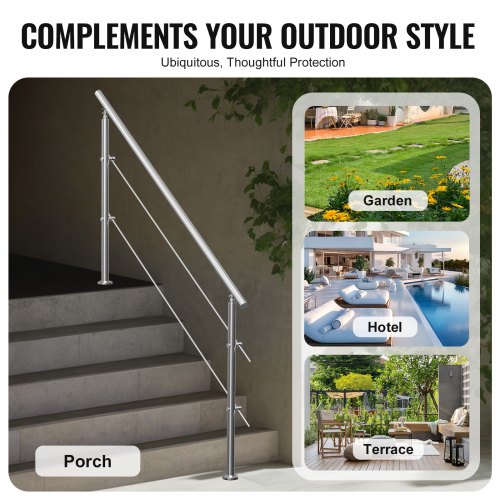
Deck railings are the guard systems that close in the open edges of decks, porches and stairs to help stop falls. This range holds complete cable kits, top rails, stainless cable fittings, metal balusters, glass clamps and short step handrails. Posts and brackets bolt to the deck frame and steps, then balusters, cables and glass fill the space below a grip rail. They serve wood and composite decks, concrete steps, porches and balconies. Unlike fence panels they target guard spacing rules, and unlike indoor banisters they are coated for weather. Check your local code before building.
Cable railing parts include complete 6.5 ft kits with posts and packs of T316 end fittings for 1/8 in cable. Balusters and spindles come in aluminum and galvanized steel from 26 to 44 in, in round, square, flat and wavy profiles, sold in packs of 10 to 125. Deck stair railings cover one to seven steps with arched, square tube and wrought iron designs. Glass railing clamps hold tempered panels on balconies, and wall-mounted handrails up to 15 ft suit indoor stairs. Most parts come in matte black, with silver and white options. Homeowners, deck builders and property managers fit them on new builds and repairs.
Five things decide which one fits:
- Rail length: how many inches of grip rail you get with each purchase.
- Metal grade: the steel and alloy type, and how it holds up outdoors.
- Mounting base: what surface the posts and brackets fasten into.
- Stair angle: how steep a slope the rail can follow.
- Grip profile: the shape and width of the part your hand holds.
Browse every deck railing product on this page and match the parts to your deck and stairs before ordering any hardware.
Deck Railing Types and Accessories at a Glance
Each railing type and accessory is built differently, so the table below compares what it includes, how it mounts and the metal used.
| Type | What It Includes | Mounting | Metal |
|---|---|---|---|
| Complete cable railing kit | 3 posts 36 in tall, a 6.5 ft square tube top rail and about 82 ft of cable | Drilled level posts, base not specified on the product page | 304 stainless, matte black powder coat |
| Invisible cable fittings | 40 receivers and 40 swage stud ends for 1/8 in cable | Wood and metal posts already in place | T316 stainless |
| Aluminum balusters | 61 pack of 29.5 in pickets | Screw between top and bottom rails | Aluminum alloy, matte black coat |
| Galvanized steel balusters | 61 pack of 36 in hollow rectangle pickets with end caps and screws | Pre-drilled holes for rail screws | Galvanized steel, black finish |
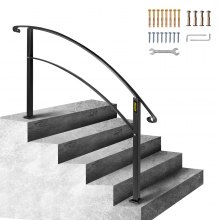
| Transitional step handrail | 37.4 in arched rail for 2 to 3 steps | Concrete, wood, tile, marble and brick, adjusts 5° to 40° | Carbon steel, black |
VEVOR Deck Railing Supplies for Every Deck, Stair, and Outdoor Structure
Are you looking for a full deck railing supply for a new building or deck balusters and spindles to replace the ones already there?
Getting the right deck railing materials can make your deck safer, look better, and last longer. VEVOR deck railing supplies are designed for outdoor use and can withstand weather, heavy loads, and normal daily use. They use high-quality materials and ensure the sizes are right for real deck-building and remodeling jobs. Many outdoor structures in the VEVOR range have compatible railing options.
Deck Railing Supplies by Type and System Components
To choose the right deck railing products, you should first know what the different parts are that make up a whole railing system. From the posts to the balusters, VEVOR offers components to build or improve a deck fence.
Deck Railing Supplies for Complete and Coordinated Builds
A deck fence system can include all the essential parts in a coordinated package. It comes with posts, rails, balusters, and hardware to build a safe, complete railing. VEVOR deck fence systems are made so that all of their parts can be used together without any problems or mismatched sizes.
It is easier to plan and buy things when you buy a whole system. You don't have to get each part separately and hope that it all works together on site. Each VEVOR deck railing supply comes with clear instructions outlining what it includes and the linear footage it covers.
You can use these methods to build a new deck or replace the railings on an old one. For safety reasons, the VEVOR systems are designed with appropriate post spacing, rail height, and baluster spacing. With a full railing system from VEVOR, the whole edge of your deck will look professional and uniform. The standards for each part are the same, so the finished railing looks good from every angle.
Balusters and Spindles for Safety and Style
Deck railings have upright pieces called balusters and spindles that go between the top and bottom rails. Aside from keeping people from going through the railing, they also add a lot of style to the deck. There are various VEVOR deck balusters and spindles to suit different tastes.
The square baluster look is clean and modern. Round balusters can suit more traditional and classic deck styles. Decorative profiles add character and depth to the railing without any extra finishing work. You can get each style in regular lengths that fit most deck rail heights.
VEVOR's balusters and spindles within a given product line are the same size, which makes fitting easier. Most building codes require the space between balusters to be uniform for safety reasons. VEVOR tools make it easy to get the right spacing. Each baluster leaves the mill with a smooth, clean finish. In most cases, you don't need to sand or prime them further before installing them. A good choice of baluster style ties the deck railing supplies together, making the whole thing look sleek and well-thought-out.
Cable Railings for Modern and Open Deck Designs
For decks that need to keep the view clear, cable railings are a popular choice. Instead of solid balusters, the railing is filled with horizontal stainless steel wires that run between the posts. It has a clean, modern look and doesn't obstruct views of the garden, water, or scenery beyond the deck.
High-tensile stainless steel wires are used to make VEVOR cable railings. These cables are strong, rust-resistant, and designed for outdoor use. With the wire tensioning hardware, you can ensure each run has the right amount of tension for a neat, professional look. When properly tensioned, wire railings meet safety standards and don't take up much space.
Cable railing systems require posts that can withstand the lateral loads imposed by the cables. VEVOR offers posts and tools that are compatible to ensure the entire system works safely together. Cable railings look great on modern decks, especially those that are higher up or on the water, where the view is an important part of the outdoor area.
Deck Stair Railings and Outdoor Handrails for Concrete Steps
Deck stair railings and outdoor handrails for concrete steps are important safety features for any building that is higher than the ground. They help people move from one level to the next by providing support and safety. VEVOR makes stair railing parts specifically designed for installing stairs at an angle and for use with flat concrete steps.
The deck stair rails run around the stairs at an angle, connecting the ground to the deck-level railing. For a clean, safe fit, VEVOR stair railing parts are designed to accommodate standard step angles. For a consistent, code-compliant look, the top rail follows the stairs' pitch, while the balusters remain straight.
For front and side entrances, as well as outdoor stairs connected to homes and businesses, it's usual to need outdoor handrails for concrete steps. To securely attach VEVOR handrails to concrete steps, the kits include mounting hardware. If you place the handrail correctly, it will support you every day and meet safety standards for both home and business outdoor steps.
Which Deck Railing Part Fits Your Project
With the railing types covered, match your project to the conditions below to land on one product.
| Job | Confirm Before Purchase | Matching Specification | Recommended Product | Main Limitation |
|---|---|---|---|---|
| Open-view railing on a new deck edge | You are building a new level run and want the view kept open | 3 posts 36 in tall, 6.5 ft top rail, about 82 ft of cable at 3.19 in spacing | Complete cable railing kit | Corners need a separately sold connector |
| Cable infill between wood posts already in place | Your posts are already in place and you run 1/8 in cable | 40 receivers and 40 stud ends in T316 stainless | 40-pack invisible cable fittings | No longer studs for long runs with corners |
| Top cap for a cable run up deck stairs | Your stair run needs a top rail cut to its pitch | 6.5 ft rail in 304 stainless, 2 x 1 in rectangle, cuttable | 6.5 ft stainless top rail | Load rating not specified on the product page |
| Front porch with short concrete steps | Your steps rise no more than 16.5 in from bottom to top | 2 to 3 steps, 5° to 40° adjustment, 220 lb rating | Arched 2-3 step handrail | Rail diameter not specified on the product page |
| Entry steps with a flat landing | Your rail must sit level at 0° beside a landing | 2 to 3 steps, 0° to 40° adjustment, cross bar, 200 to 220 lb rating | Square tube 2-3 step handrail | Wood stairs need separately bought M8 x 60 screws |
Deck Railing Supplies by Material and Installation Method
The material you choose for your deck railing affects how it looks, how long it lasts, how much upkeep it needs, and how easy it is to install. VEVOR offers deck railing items made from various materials that work well across a range of outdoor settings and building styles.
Steel and Aluminum Deck Railing Materials for Strength and Durability
The two most popular metals used for deck railing supplies are steel and aluminum. Both materials are very strong and have a smooth finish that complements modern outdoor designs. Depending on the product line, VEVOR deck fence systems and parts are available in both types of materials.
The parts of a steel deck railing are strong and rigid. They don't bend or distort when they're loaded. VEVOR steel railings are powder-coated to keep the metal from rusting and breaking down when they are outside. The powder-coat finish also gives the railing the color and feel of a finished surface, without the need for paint or other treatments after installation.
Aluminum does not need a protective covering because it does not rust naturally. It is lighter than steel and easier to work with when assembling. For big deck projects where the total weight of the materials is important, aluminum deck balusters and rail sections are a good choice. Finishing standards for both steel and aluminum VEVOR goods are the same, giving them a professional look on any outdoor deck.
Installation Methods for Different Deck Railing Supplies
How deck railing items are put together depends on the type of railing, the structure of the deck, and the surface to which the posts are attached. Installation is easy with VEVOR deck railing solutions. For a full and safe installation, each product comes with all the tools and fittings you need.
Post mounting is the most basic part of any railing system. You can place VEVOR posts in two different ways: surface mount or fascia mount. Surface-mount posts are the most popular way to install wood deck structures. They connect to the top of the deck framing. When you use fascia mount posts, they connect to the side of the deck frame. This design keeps the post off the deck surface, which makes it look better.
To install a cable railing, you have to take extra steps, such as cutting the cables, threading them together, and tightening them. The VEVOR cable railing hardware comes with clear instructions and all the parts you need to make this process as easy as possible. Outdoor handrails for concrete steps are attached to the steps with anchor bolts that are drilled and set into the concrete. This makes the link strong and permanent. VEVOR deck railing installation is safe, stable, and done to a high standard if you follow the instructions that come with it and use the right tools.
Best-Seller Comparison
Before ordering railing parts, set the five best sellers side by side on rail length, metal grade, mounting base, stair angle and grip profile.
| Product | Rail Length | Metal Grade | Mounting Base | Stair Angle | Grip Profile |
|---|---|---|---|---|---|
| VEVOR 6.5 ft Complete Cable Railing Kit with Posts | 78 in | 304 stainless, matte black powder coat | Not specified on the product page | Not specified on the product page | Square tube, width not specified on the product page |
| VEVOR 2-3 Step Arched Transitional Handrail | 37.4 in | Carbon steel, rust-resistant finish | Concrete, wood, tile, marble and brick | 5° to 40° | 2 in wide arched rail |
| VEVOR 6.5 ft Rectangular Stainless Top Rail | 78 in | 304 stainless, matte black powder coat | Pre-drilled points, drill required | Not specified on the product page | 2 x 1 in rectangle |
| VEVOR 40-Pack Invisible Cable Railing Hardware | Not applicable, hardware only | T316 marine-grade stainless, the most corrosion-resistant here | 2x2 in wood and metal posts | Not specified on the product page | Not applicable, hardware only |
| VEVOR 2-3 Step Square Tube Handrail with Cross Bar | 40.5 in | Carbon steel, protective coating | Concrete anchors included, wood needs M8 x 60 screws | 0° to 40°, the widest span here | 2.4 in wide square tube |
Shop VEVOR Deck Railing Supplies for Every Build and Budget
VEVOR deck railing tools have everything you need for a full and safe outdoor railing system. This range includes wire railings, balusters and spindles, deck stair railings, and outdoor handrails for concrete steps. Each item is made from long-lasting materials and is intended for outdoor installation. When you pay fair prices, you can get good deck railing supplies without spending too much on your building or remodeling job. You can build with trust if you buy all of VEVOR's deck railing supplies today.
Frequently Asked Questions
What is included in VEVOR deck railing supplies?
VEVOR deck railing supply includes posts, top and bottom rails, balusters, and all the tools needed to assemble it. Check the description of each item to see exactly what it comes with. There are kits that cover a set amount of straight footage and options to purchase individual parts for building what you want.
Are cable railings as safe as traditional baluster railings?
Yes. When installed properly, with the correct post spacing and cable tension, cable railings meet standard deck safety requirements. It is important to tighten the wires so that there are no gaps bigger than four inches. The VEVOR cable railing hardware is designed to withstand and maintain proper strain for a safe, legal installation.
How do I install outdoor handrails on concrete steps?
Handrails for concrete steps made by VEVOR come with anchor bolt hardware. You put the anchor bolts in the concrete holes you drilled for the posts, then tighten the post base plates. Ensure you use the right drill bit size for the anchor bolt thickness, and check that each post is straight before tightening it all the way.
What is the difference between balusters and spindles?
Spindles and balusters are both names for the same vertical parts that make up a fence system. The word "baluster" is more often used in official and building settings. When you want to be more relaxed or traditional, you can use the spindle. It refers to the straight pieces that go between the top and bottom rails of a deck fence.
Can VEVOR deck railing supplies be used for indoor stair railings?
Yes. A lot of the parts that come with VEVOR deck railings also work well on indoor stairs. The finishes and materials are suitable for both indoor and outdoor use. Before you buy, review the product specifications to ensure the size and finish choices match your home's style and the layout of your stairs.
What are the typical height requirements for deck railings according to building codes?
Most US residential codes call for a guard at least 36 in tall on decks more than 30 in above grade, and many commercial codes ask for 42 in. Stair handrails usually sit 34 to 38 in high. The 36 in cable railing kit meets the common residential height.
What are the building codes for deck baluster spacing?
Most codes require gaps small enough that a 4 in sphere cannot pass between balusters, and the triangle under stair rails can be up to 6 in. Check your local rules before you build. The 36 in galvanized balusters come pre-drilled for even spacing.
What are the best options for aluminum balusters for my deck?
Choose powder-coated aluminum pickets sized to the gap between your rails, in a profile that suits the house, and buy enough for 4 in spacing plus spares. The 61-pack aluminum balusters come with screws and a matte black coat rated to AAMA 2604.
What are the benefits of using galvanized steel for deck railings?
Galvanized steel is stiffer than aluminum, so long runs flex less, and the zinc layer under the paint slows rust when the finish chips. It also costs less than stainless. The hollow galvanized steel balusters include end caps and screws.
Are black deck railings durable and weather-resistant?
Yes, when the black finish is a powder coat over stainless, aluminum and galvanized steel, which resists fading and chipping better than paint. Rinse salt and grime off each season. The matte black stainless top rail pairs a powder coat with 304 stainless.
Can you recommend stylish handrails for deck stairs?
An arched rail softens a traditional porch, while a square tube with a cross bar suits modern homes and a stainless rail over cable keeps the view open. The retro arch step handrail fits 2 to 3 steps and adjusts from 5° to 40°.
How do I install exterior stair railings safely?
Measure the rise and run, mark post spots near the top and bottom steps and fasten into solid framing, not just deck boards. Set the angle, tighten every bolt and lean on the rail before use. The square tube step handrail pivots from 0° to 40°.
What are common mistakes to avoid when installing stair railings?
Common slips include mounting into thin boards instead of framing, using the wrong drill bit for anchors, leaving gaps above 4 in and buying a rail too short for the full stair. The cable railing top rail can be joined for longer runs.