VEVOR Low Profile Floor Jack 2 Ton (4400 lbs) , Heavy Duty Aluminum Hydraulic Racing Floor Jack, Hydraulic Car Jack, Dual Piston Quick Lift Pump, 3.2"-14.6" Height Lifting Range (Yellow)

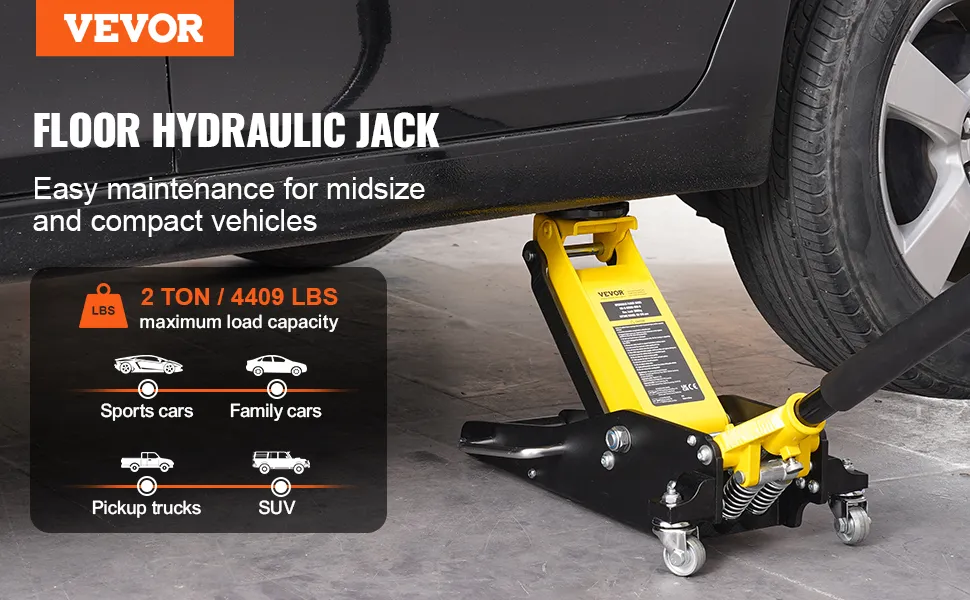
- 2T Maximum Capacity: Our floor jack can easily lift up to 2 tons / 4409 lbs, making it suitable for sports cars, family sedans, light pickups, and SUVs. It’s perfect for tasks such as tire changes, brake system inspections/repairs, exhaust system replacements, suspension maintenance, and other chassis-related work. Whether you're a professional mechanic or a DIY car enthusiast, lifting your vehicle is effortless.
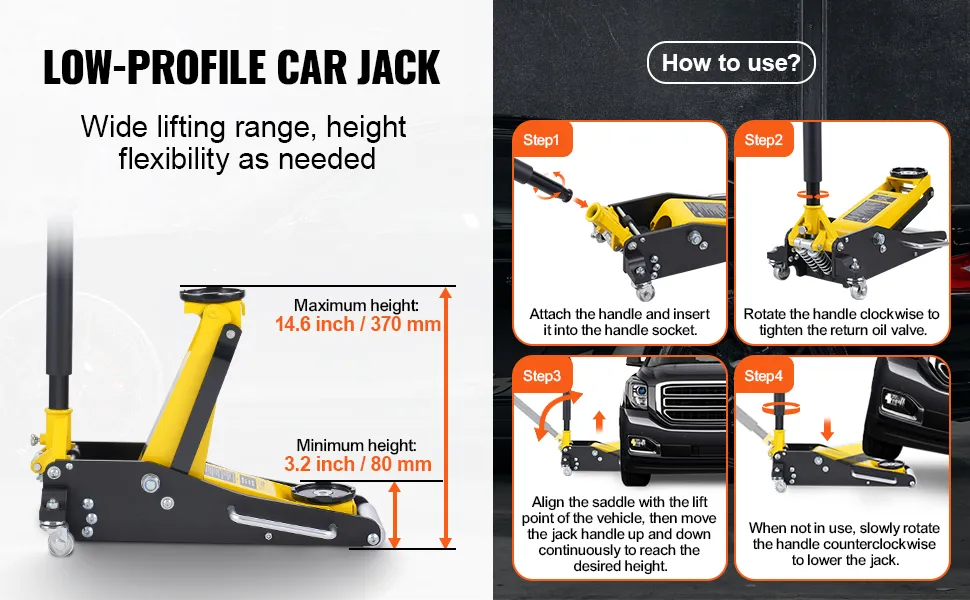
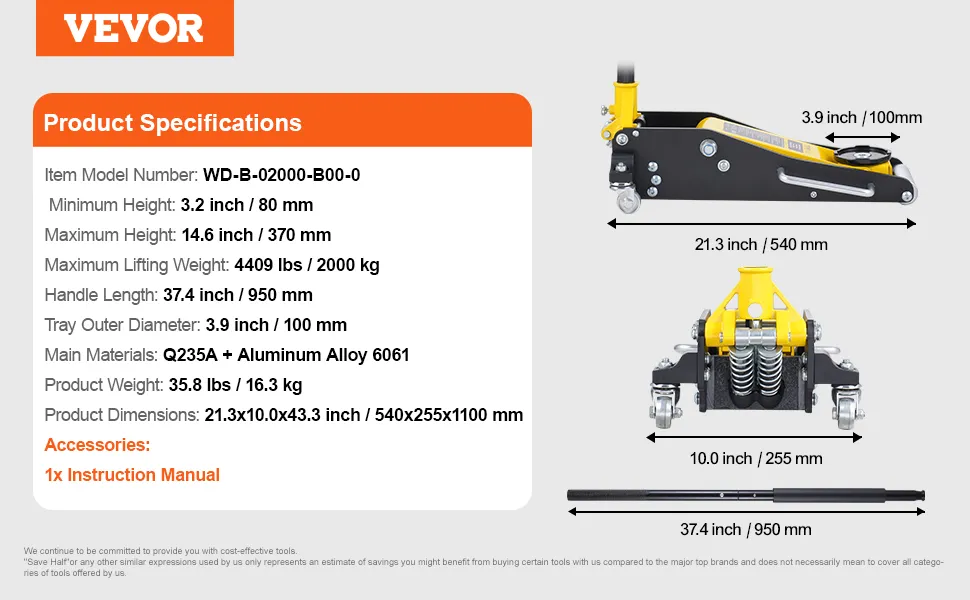
- Low Lifting Height: The minimum lifting height is 3.2 inches / 80 mm, and the maximum lifting height is 14.6 inches / 370 mm. Its low clearance allows low profile floor jack to slide under lower vehicles while providing enough height to lift the vehicle off the ground. To lower the vehicle, simply rotate the jack handle counterclockwise.
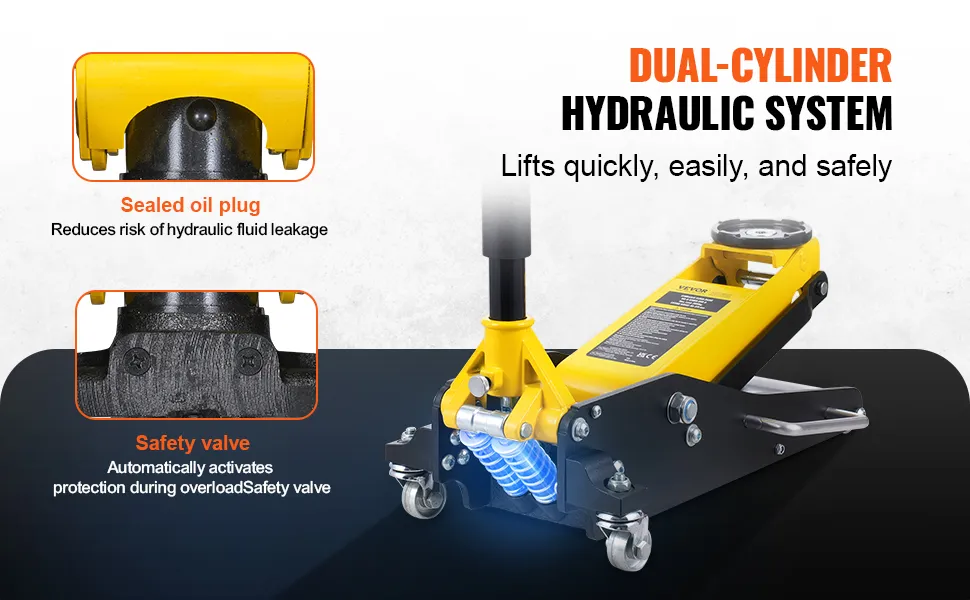
- Quick and Effortless: The high-performance low-profile car jack features a unique dual parallel pump system, which lifts most vehicles with just 3-1/2 pumps. It includes a reliable safety release valve that activates in case of overload to prevent damage or injury. The cylinder is sturdy and sealed to minimize oil leaks.
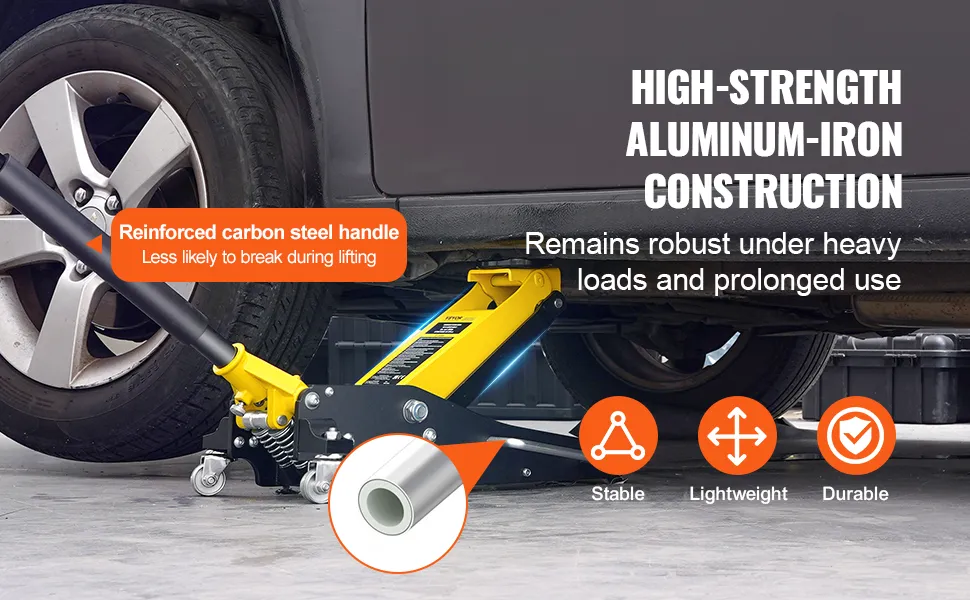
- Sturdy Aluminum-Iron Construction: Featuring a welded frame design, the small floor jack remains stable during use. It combines the stability of iron with the lightweight properties of aluminum, reducing wobbling, deformation, and corrosion, making it easy to carry and use. The handle, made of carbon structural steel, is reinforced and thickened to prevent breakage during lifting.
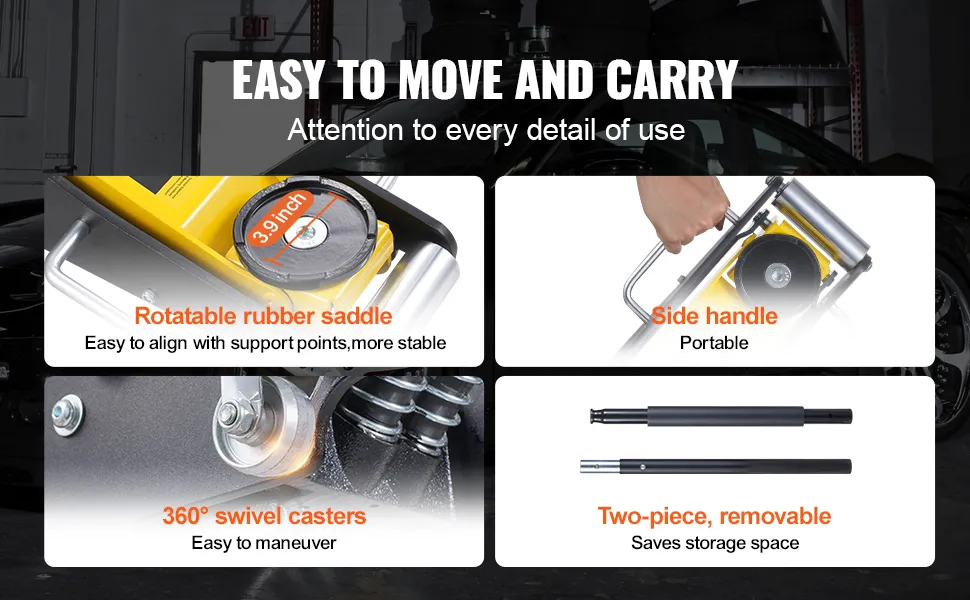
- Convenient Design: Thanks to the lever principle, the long handle makes lifting easier. The two-piece design allows the handle to be disassembled for compact storage. The rotating rubber saddle can be easily adjusted and aligned with support points during use, providing additional protection for the vehicle. The wheels at the base make the jack easy to move and maneuver, while the side handles make lifting the jack more convenient.
Frequently Bought Together
Reviews
 berndp20 rolandenmonique almresearch jj***
 About this item


2 Ton Low Profile Floor Jack with Dual-Piston Pump for Rapid Vehicle Lift
This VEVOR 2 ton low profile floor jack is different from others in this price range because it has two cylinders instead of one. It takes about 3.5 pump strokes to raise the saddle to the lifting position. Fewer pump strokes reduce effort when lifting multiple vehicle corners.
The sealed hydraulic cylinder is designed to help maintain lifting pressure during normal operation. If the load goes over 2 tons, the built-in safety overload release valve opens automatically, protecting both the jack mechanism and the operator.
80 mm Minimum Entry Height for Low-Clearance Sports Cars and Sedans
This 2 ton low profile floor jack can slide under sports cars, lowered sedans, and modified road cars that a regular floor jack cannot reach without ramps, thanks to its 80 mm minimum entry height. The low saddle shape allows the jack to approach the vehicle's jacking point from the ground and lift from a position already under the chassis. This eliminates the need for a ramp step, which takes extra time and effort to set up each time.
The 80 mm entry is the same as the steel single-piston type in the range, but the dual-cylinder pump gets to working height faster from the lowest height. Multiple lift cycles occur quickly, one after another. The faster pump rate reduces the total setup time for the session.
Q235A Steel and Aluminum 6061 Hybrid Frame for Strength and Low Weight
The frame combines Q235A structural steel and aluminum alloy 6061 to balance strength and weight. The tensile strength and weld integrity of Q235A are well-suited for pivot points, arm joints, and the pump housing. Aluminum 6061 is used instead of steel in parts that do not need to be as rigid. This lowers the overall weight without affecting the saddle's load capacity.
The result is a 16.3 kg unit, lighter than an all-steel jack of the same size. This makes it easier to move and load into a car's trunk for events. It is easier to keep the jack in working order because the aluminum sections do not rust in a damp garage.
Rotating Rubber Saddle and Overload Valve for Safe, Protected Lifting
No matter what angle you approach from, the rubber saddle rotates to line up with the chassis jacking point. This means you do not have to carefully line up the handle direction before pumping. This works in a small garage where the approach angle is limited by other equipment around the lift point, which isn't ideal for positioning.
The thick rubber surface prevents chassis rails, pinch welds, and sill edges from coming into direct contact with steel. This is important for people who own sports cars or modified cars, since damage to the sills can affect both the car's appearance and strength. The overload release valve acts as a mechanical safety ceiling, preventing the hydraulic system from exceeding its stated capacity. This mechanism is what often breaks the cylinder seal on cheaper jacks.
Two-Piece Detachable Handle with Side Carry Grips for Easy Transport
The handle is made of reinforced carbon steel and can be split in half for easy storage. When combined, the full-length handle provides the lever arm you need to pump the two-cylinder system easily. When the parts are separated, they occupy significantly less storage space. The unit can be extended to 1100 mm with the handle in place, but the split sections can fit into a boot or storage cabinet, whereas a full-length handle would not.
The 16.3 kg unit has two built-in side carry handles, allowing one person to lift it without holding the pump handle. If a mechanic moves the jack between lifting positions instead of rolling it, the side handles make it easier to carry across the workshop floor.
80–370 mm Lift Range Covering Sedans, Light SUVs, and Family Cars
The 2 ton low profile floor jack provides an 80–370 mm (3.2–14.6 in) lifting range suitable for most passenger cars, sedans, and many light SUVs. At the 80 mm minimum, it can work on a lowered sports car, and at the 370 mm maximum, it can work on a normal SUV. At its highest point, the saddle provides enough clearance to change tires, work on the exhaust, access the brake calipers, and remove the suspension on most family and light commercial vehicles without the need for extension adapters.
To lower, turn the handle counterclockwise. This slowly releases the hydraulic pressure, allowing for controlled lowering. The operator can stop at any height in the middle, which helps set up axle stands or ensure there is enough clearance before lowering the vehicle all the way to the ground.
2 Ton Low Profile Floor Jack with Swivel Casters for Smooth Positioning
For easier use in a home garage, where tires, toolboxes, or even the car's wheels can get in the way of a straight-line run-up, swivel casters let you move the jack in any direction during the approach. The swivel action lets the mechanic walk the jack in at an angle, change direction mid-approach, and seat the saddle under the jacking point without having to start over.
In a shed that is full of stuff, the yellow powder-coated finish makes it easy to find the jack among all the other tools. The color also makes it easier to see where the saddle is when you are bending over to slide the jack under a low car. This is better than darker finishes, which make the saddle harder to see in the dark.