VEVOR Electric Hoist, 998 kg Lifting Capacity, 1600W 220V Electric Steel Wire Winch with 427 cm Wired Remote Control, 1219 cm Single Cable Lifting Height & Pure Copper Motor, for Garage Warehouse Factory


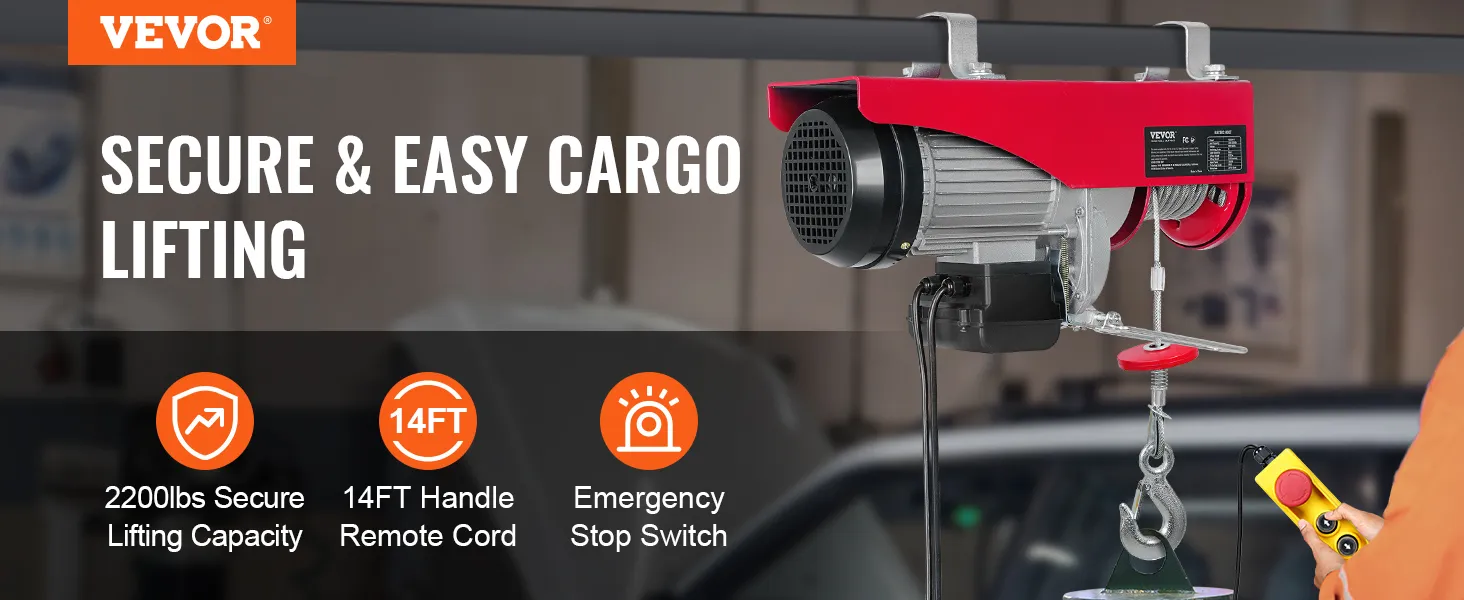
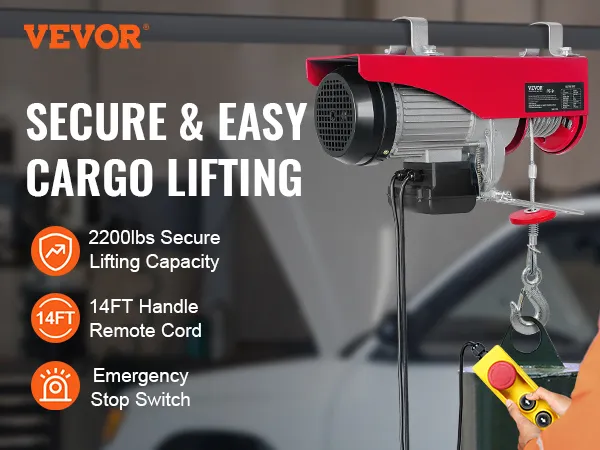
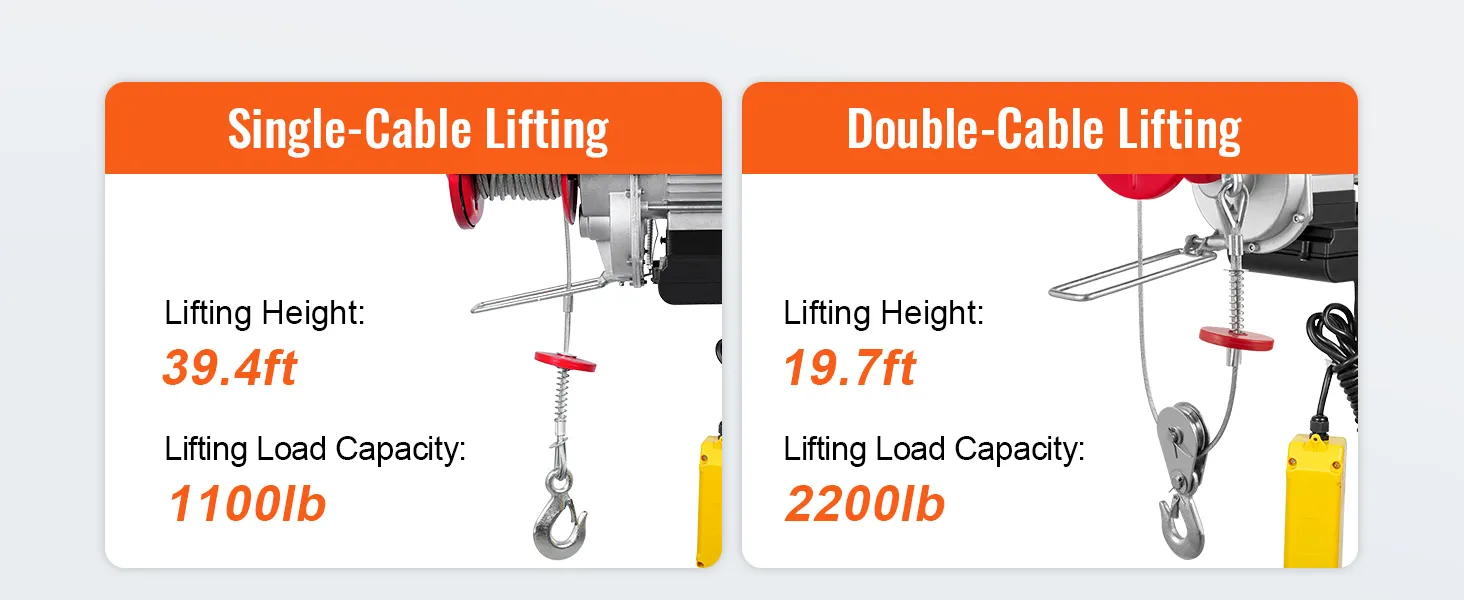
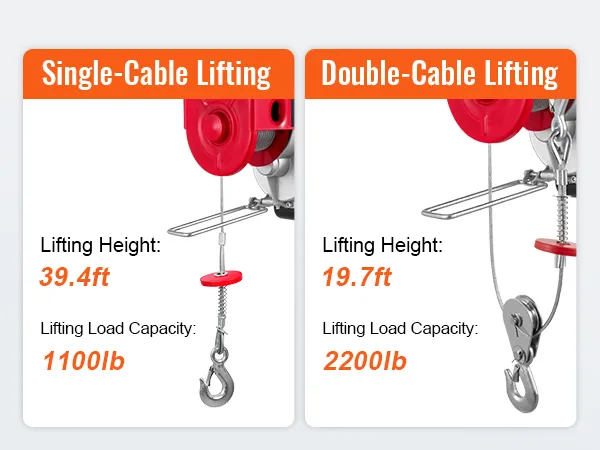
- 2200 lbs Load Capacity: This garage lifting machine can easily lift small engines, transmissions, large workshop tools, or construction supplies. Capacity: 1100 lbs (Single Line), 2200 lbs (Double Lines).
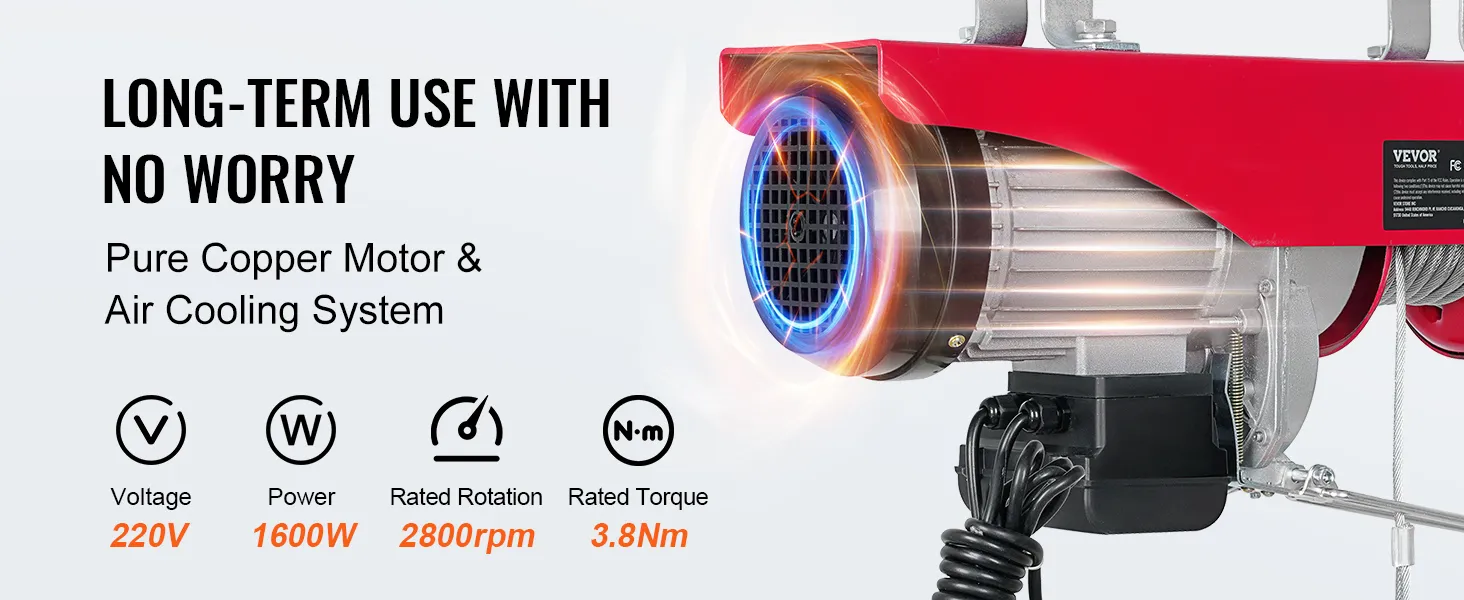
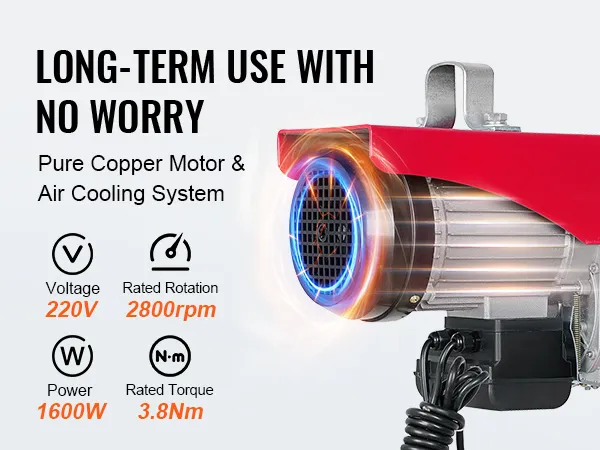
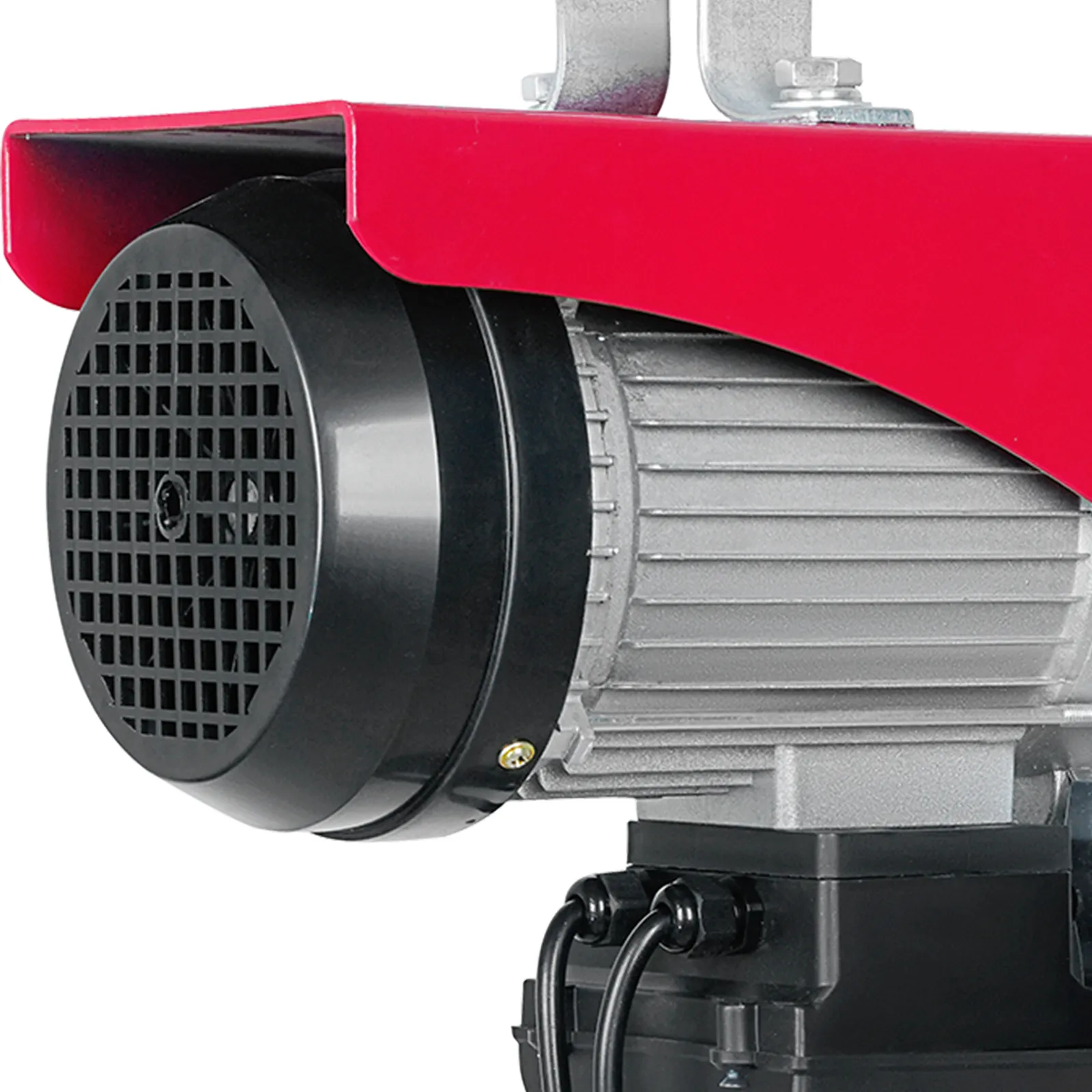
- Powerful Motor: The high-quality motor provides 1600W of strong power, which can withstand large forces without causing deformation of the electric winch. In addition, the large cooling fan can quickly cool the machine to avoid overheating. Therefore, this powerful motor ensures efficient operation and saves you more time and energy.
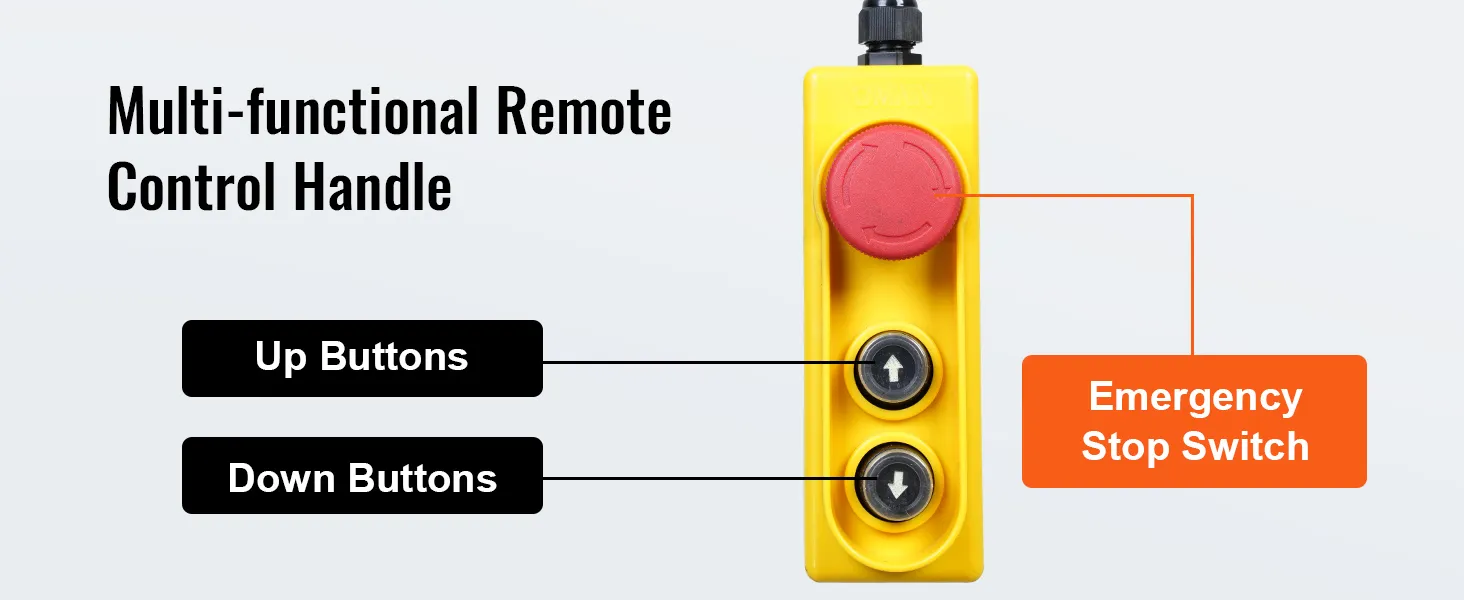
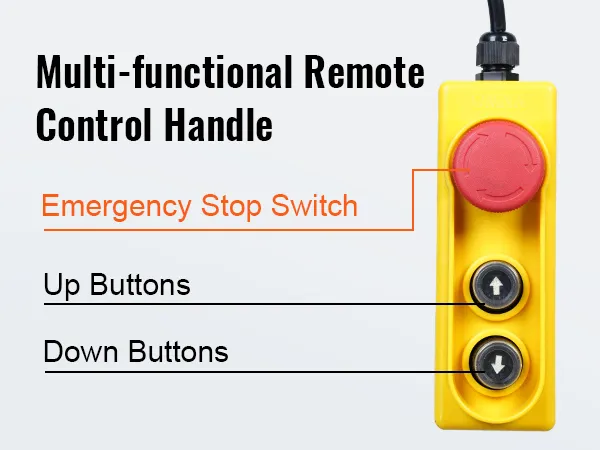
- Convenient to Install: It can be directly hanged on the ceiling using metal or solid wooden strips. Moreover, it is equipped with an emergency stop switch and electromagnetic braking system to avoid abnormal sliding.
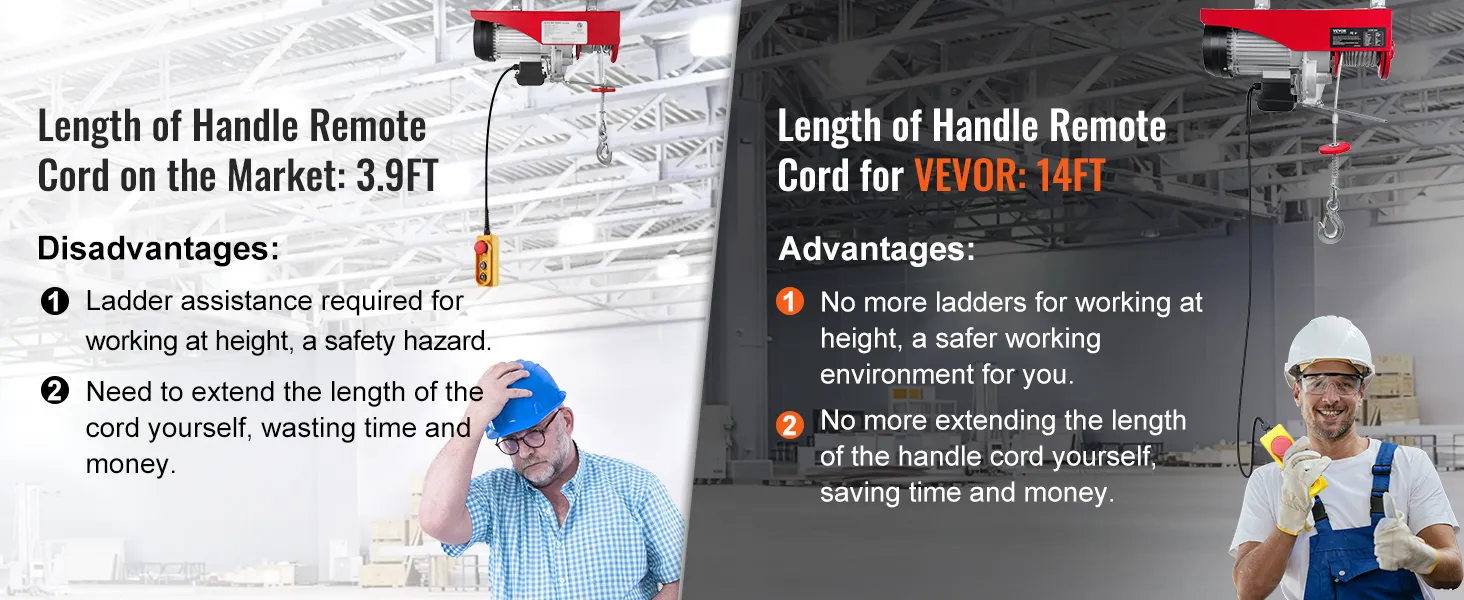
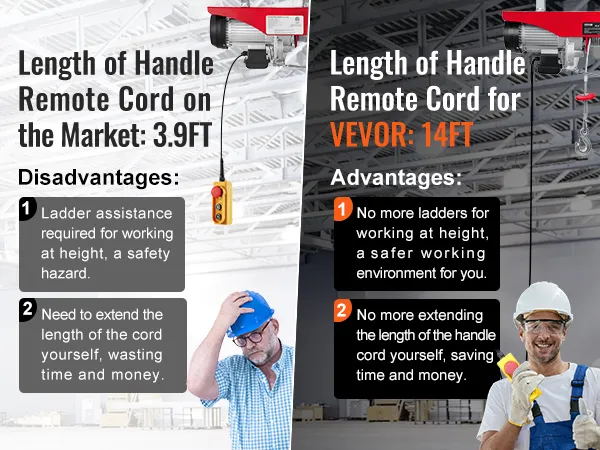
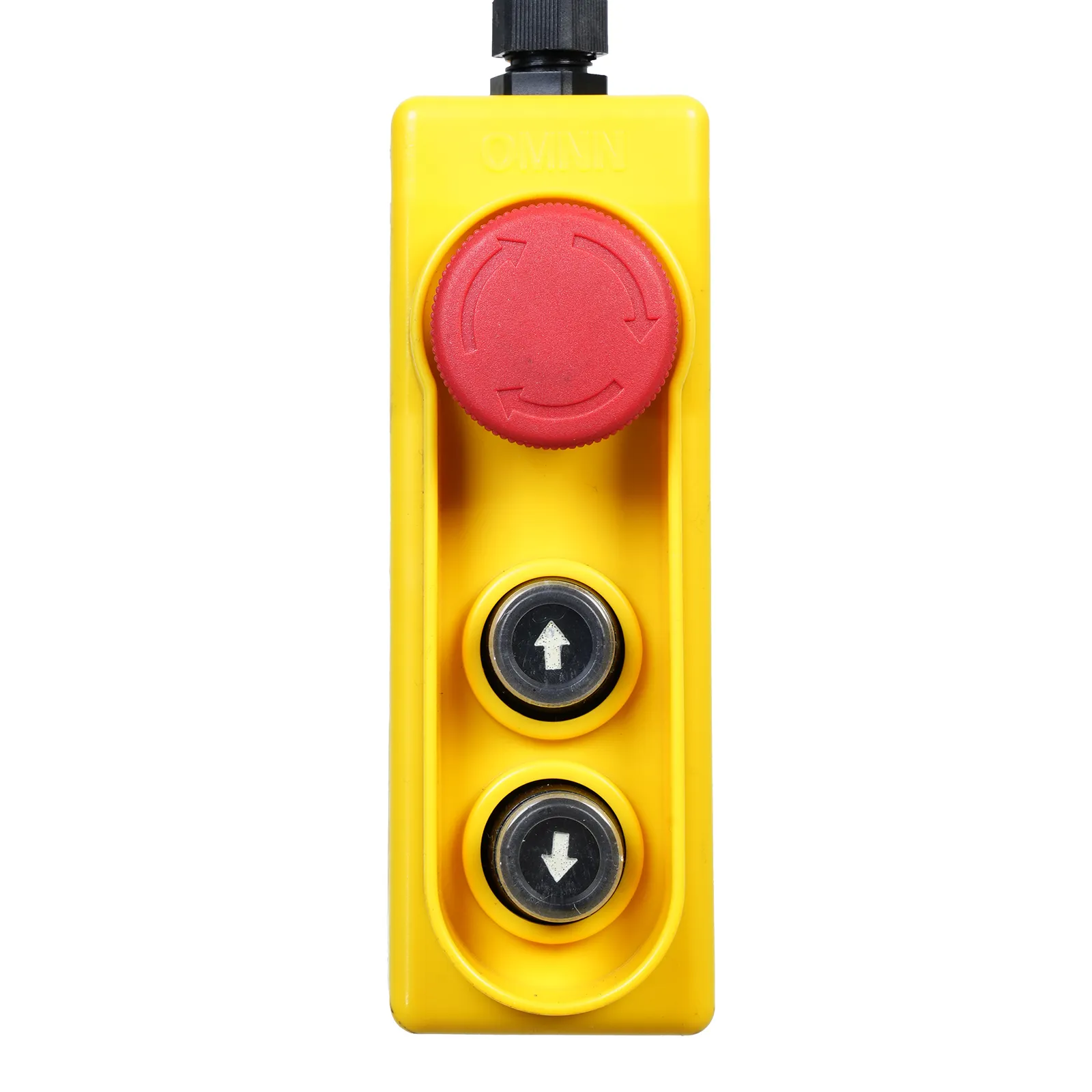
- Remote Control: Wired remote control is achieved through the switch of a controller on the cable installed on the machine. The length of the extended cable is approximately 14ft, allowing you to operate within a secure distance.
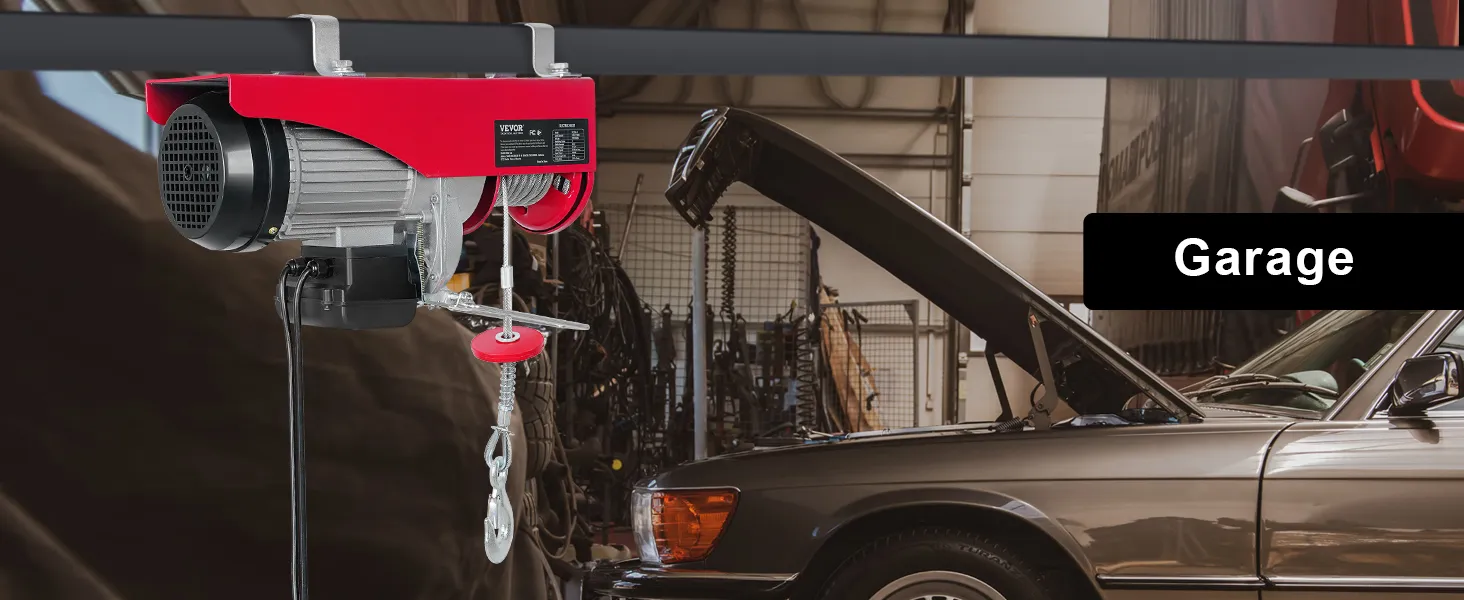
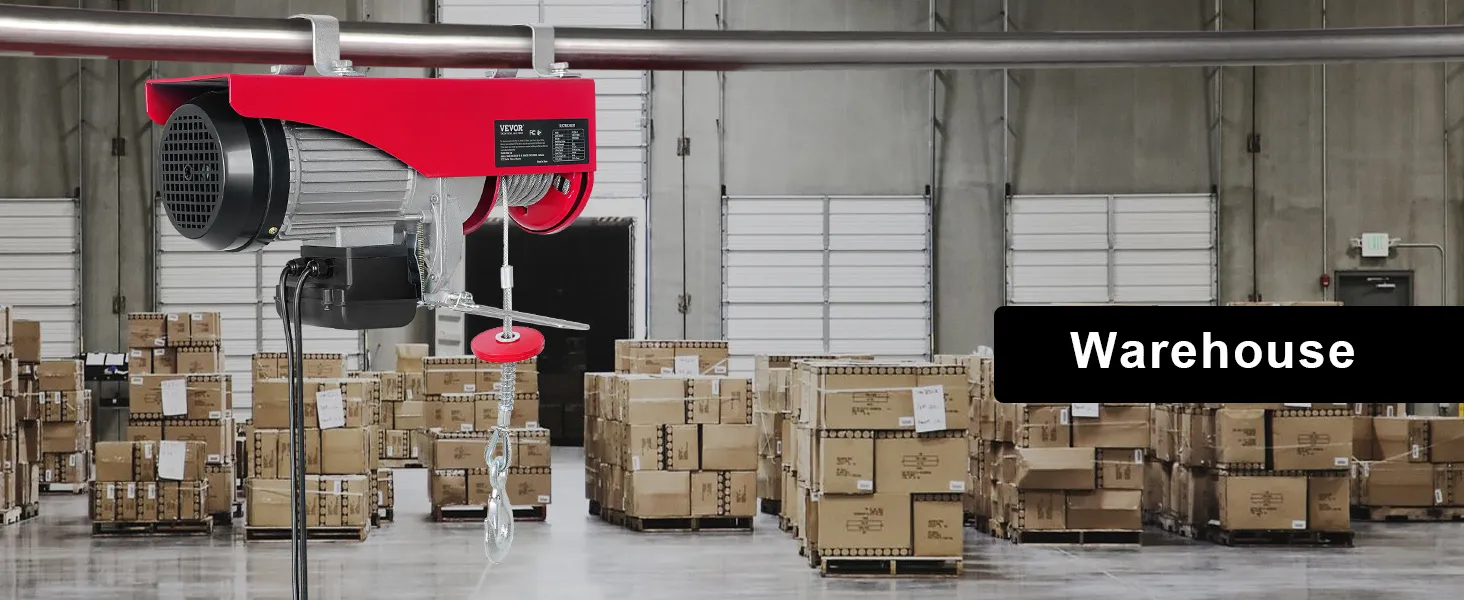
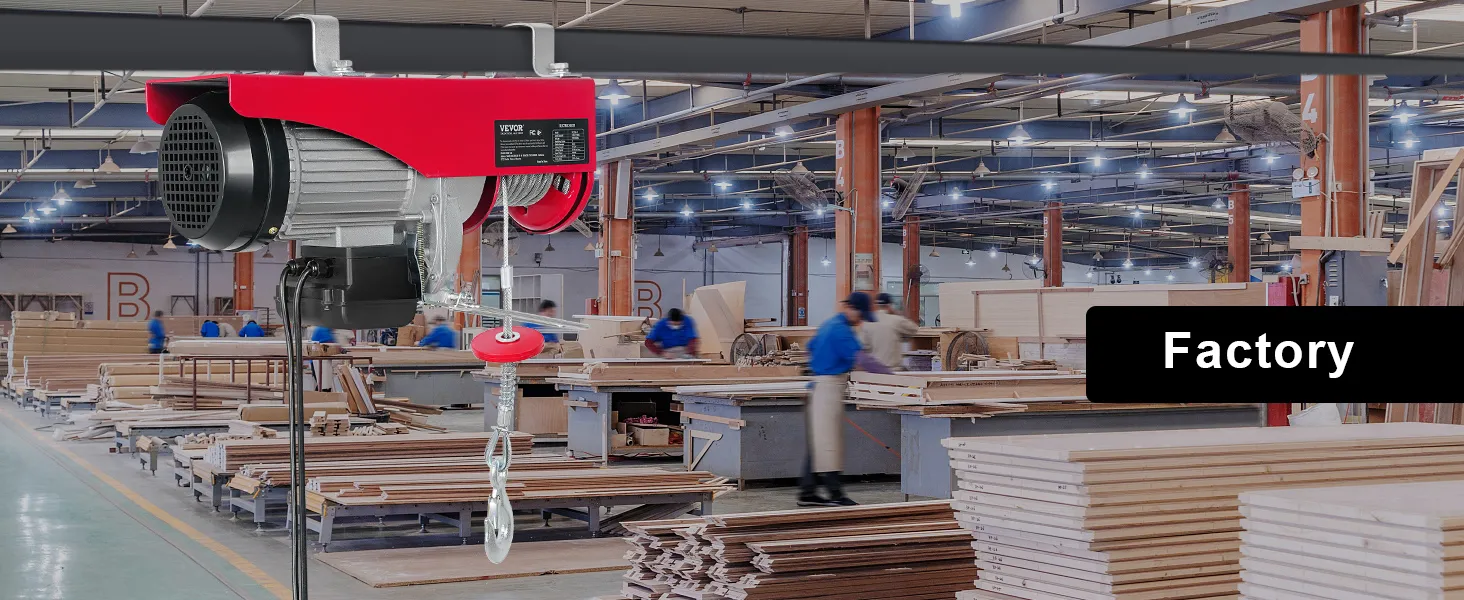
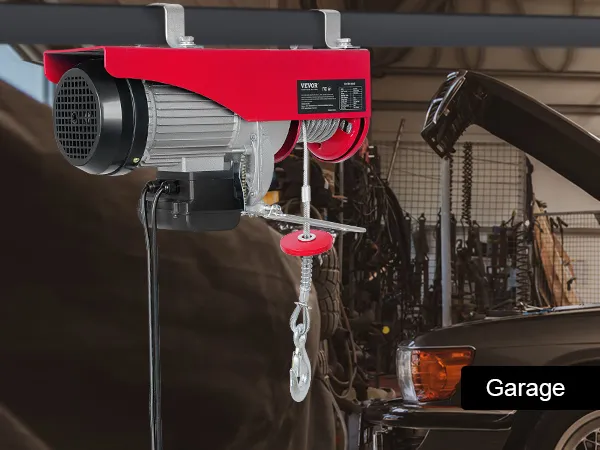
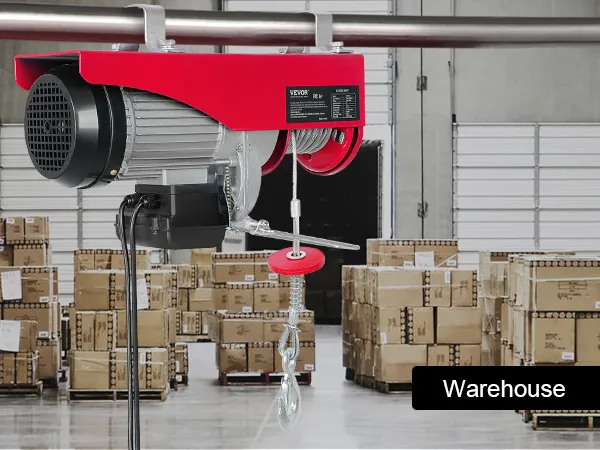
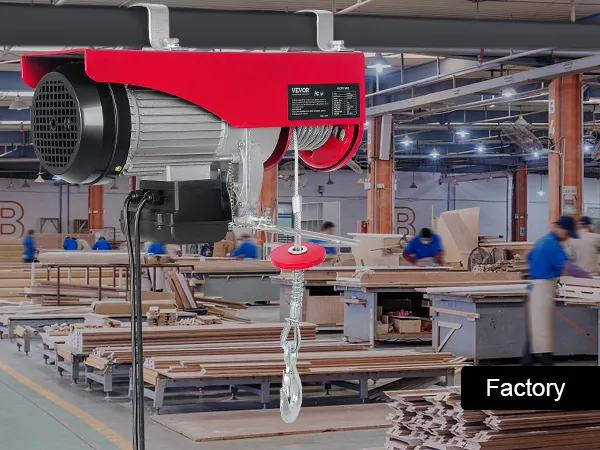
- Multiple Uses: It is widely used in garages, factories, warehouses and families, as well as professionals and amateurs; Suitable for repairing ships, cars, lawn mowers, golf carts, home decor, engines, boulders, trees, etc.
Frequently Bought Together
Reviews
 gennarobalzano65@gmail.co
 Larry Vossler
 Mats Lennartsson philip.popelier
 About this item


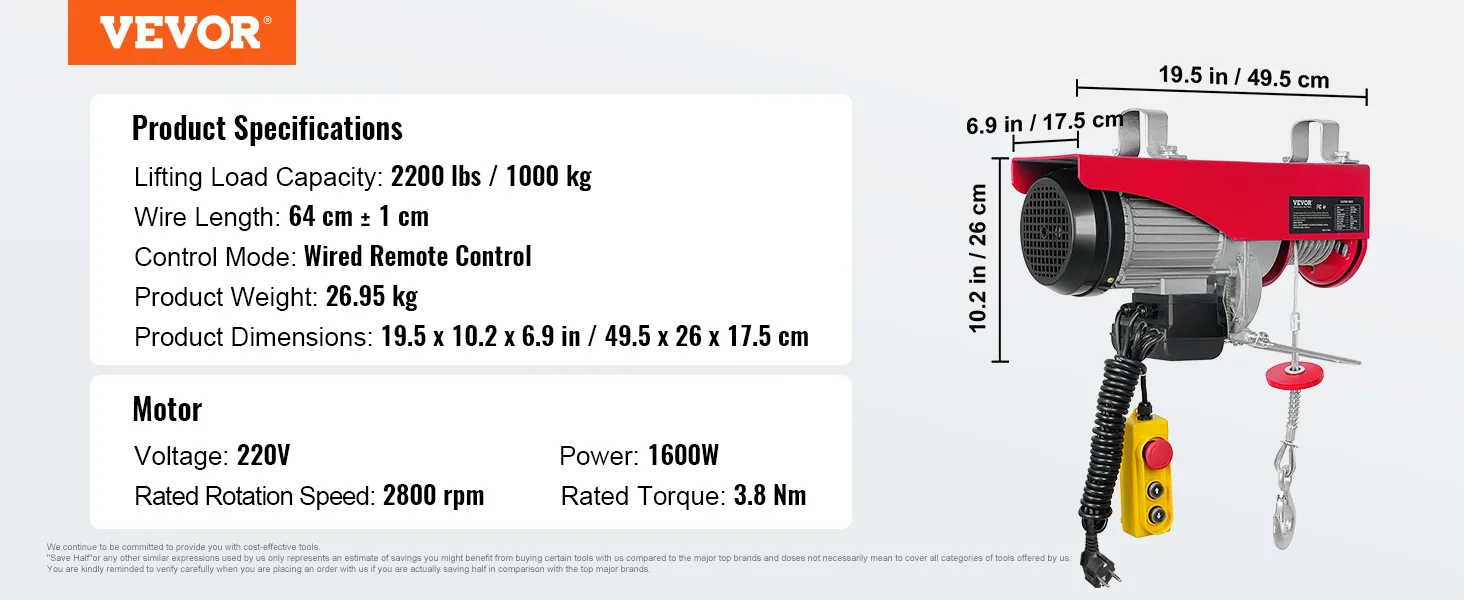
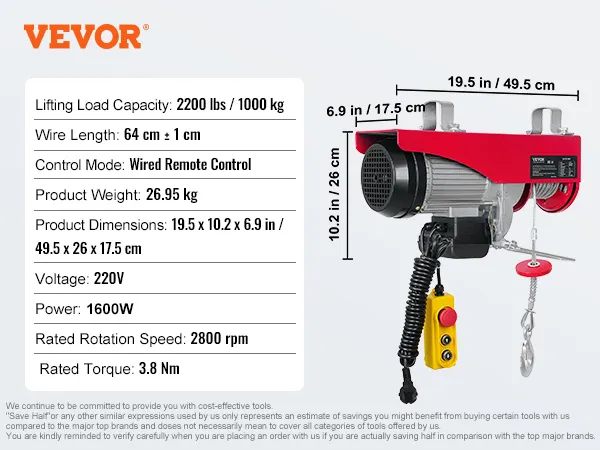
220V Electric Hoist with 2200 lbs Dual-Cable Capacity for Serious Workshop Tasks
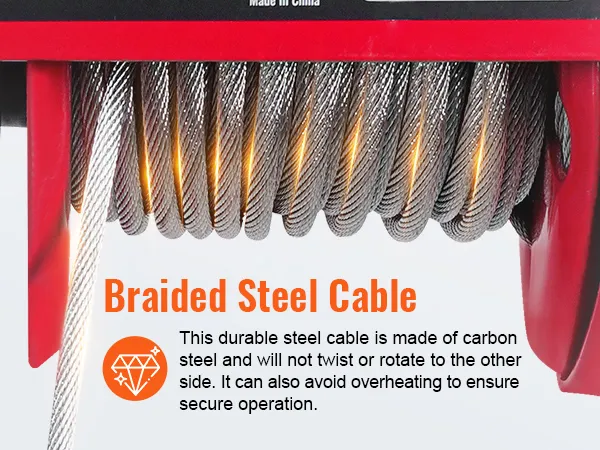
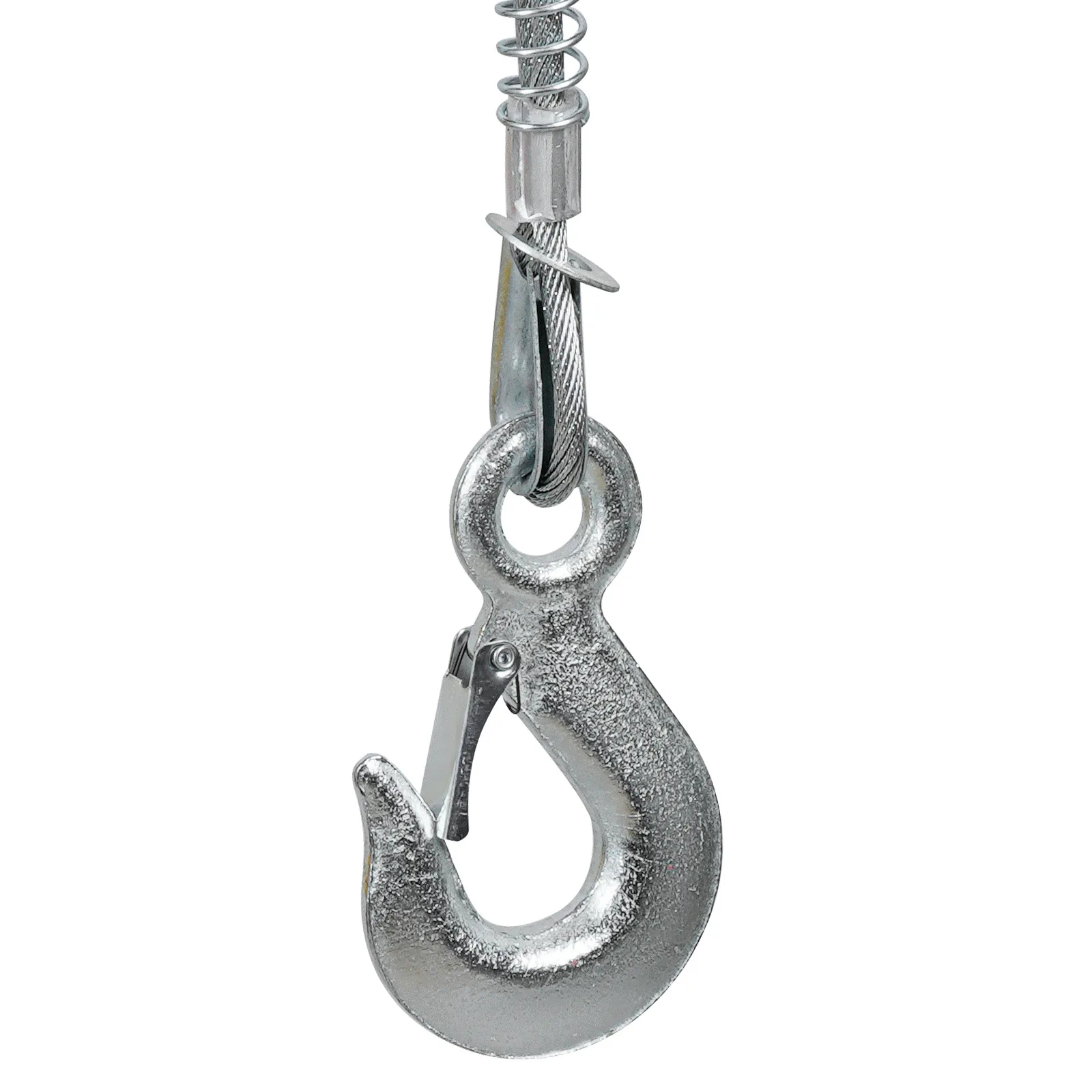
This VEVOR 220V electric hoist has a 1,000 kg (2,200 lbs) maximum lifting capacity when set up with two cables. That range is a good fit for engines, transmissions, compressors, heavy workshop tools, and building materials. Single-cable mode lifts up to 1,100 pounds more quickly and can handle lighter jobs without locking the machine into its slowest gear. Most garage and building ceilings are not an issue because the 40-foot lifting height is so high.
Most real-world workshop loads are also well below the stated maximum when running at 2,200 pounds on double cable. This is more important than most users realize. When you run below your maximum capacity, the cable, drum, hook, and frame are under less stress with each lift. That built-in headroom is not just a safety cushion on paper; it actually means that the product will last longer and work more reliably over years of heavy-duty use.
1600W Pure Copper Motor That Delivers Consistent Power Under Heavy Load
There is pure copper wire wound around the motor of this 220V electric hoist, not aluminum, which is cheaper to make but performs worse in every way. When you lift big things over and over, copper holds its shape better because it conducts electricity more efficiently and produces less heat per watt of output.
It can handle up to 2200 pounds, so the 1600W output is well matched. The motor has enough power to start a full double-cable lift smoothly and without any strain, which is when most motors are under the most stress. When units have trouble with the initial lift and draw too much current before the load starts moving, the motors wear out faster, and there is less consistency in what should be a controlled, predictable process.
Active Cooling Fan That Prevents Overheating During Extended Operation
All motors generate heat during operation. That heat is either controlled or left to build up. A workshop that does a lot of lifting (back-to-back engine pulls and repeated lifting cycles) will gradually overheat an uncooled motor until it either trips a safety switch or, worse, slowly breaks down over time. This unit is built with a large cooling fan that directly addresses the issue by actively removing heat from the motor housing while it is running, rather than relying on passive surface cooling alone.
This does not mean as much for occasional users. The cooling system, on the other hand, is what makes the difference between a machine that works the same at 5 PM as it did at 8 AM and one that slows down and stops working reliably under load. Consistent performance is important in professional environments such as workshops and repair facilities. It is not an afterthought that this motor has a cooling fan; it is what keeps it running at its rated power session after session.
Single and Double Cable Modes to Match Speed or Strength Requirements
This hoist has many useful features, including the ability to switch between single- and double-cable setups. Speed is the most important thing in single-cable mode, so it is great for moving smaller loads quickly without having to go as slowly as in double-cable mode. Spreading the load tension over two runs of wire, double-cable mode doubles the maximum capacity and makes it safer to lift heavy or oddly shaped loads on a single line.
In real life, this flexibility means the machine adjusts to the job, rather than making every lift go through the same setup. When you use a single wire, you can move a toolbox quickly. It is best to use two cables around an engine block or a fully loaded box for extra safety. Without additional modifications or accessories, this hoist's freedom makes it a real all-day workhorse rather than a one-use specialty machine.
Electromagnetic Brake and Emergency Stop for Locked, Secure Load Holding
The electromagnetic brake on this 220V electric hoist starts working as soon as the motor stops. It keeps the load in place without any extra power. There is no slow drift or creep; the load stays in place until the user tells it to move. This action is required for jobs that need to hold a load high while hands are free to guide, change rigging, or check for clearance below.
The emergency stop switch operates independently of the other settings. If a load moves, something gets in the way, or someone unexpectedly enters the lift zone, one press immediately stops all movement. Because these two systems are mechanically different, if one breaks, it does not affect the other. This level of redundancy is commonly preferred in professional lifting equipment. You do not have to buy either of them to get this unit.
220V Electric Hoist Ready for Garages, Warehouses, and Factory Floors
The two channel mounting brackets that come with the kit make installing the hoist to the ceiling very easy. They connect to crossbeams using metal or solid wooden strips, so you do not need any special hardware. Once it is set up, this 220V electric hoist can handle all the lifting jobs required in a working garage or facility, such as switching engines or gearboxes, moving heavy loads and materials, and repositioning equipment.
The range of uses goes beyond work in the car industry. The 2200 lb operating range includes engines, workshop machinery, building materials, tools, lawn mowers, and renovation equipment. With its 1600W copper motor, dual-cable flexibility, wired control, and multiple safety systems, this ceiling hoist is one of the most capable and reliable on the market at this price range.