VEVOR 2000 kg Electric Chain Hoist, 6.1 m Lifting Height, Three-Phase Overhead Crane with 100 m Wireless & 4.8 m Wired Remote Control, Double G100 Chain Hoist for Factories, Warehouses, Garages
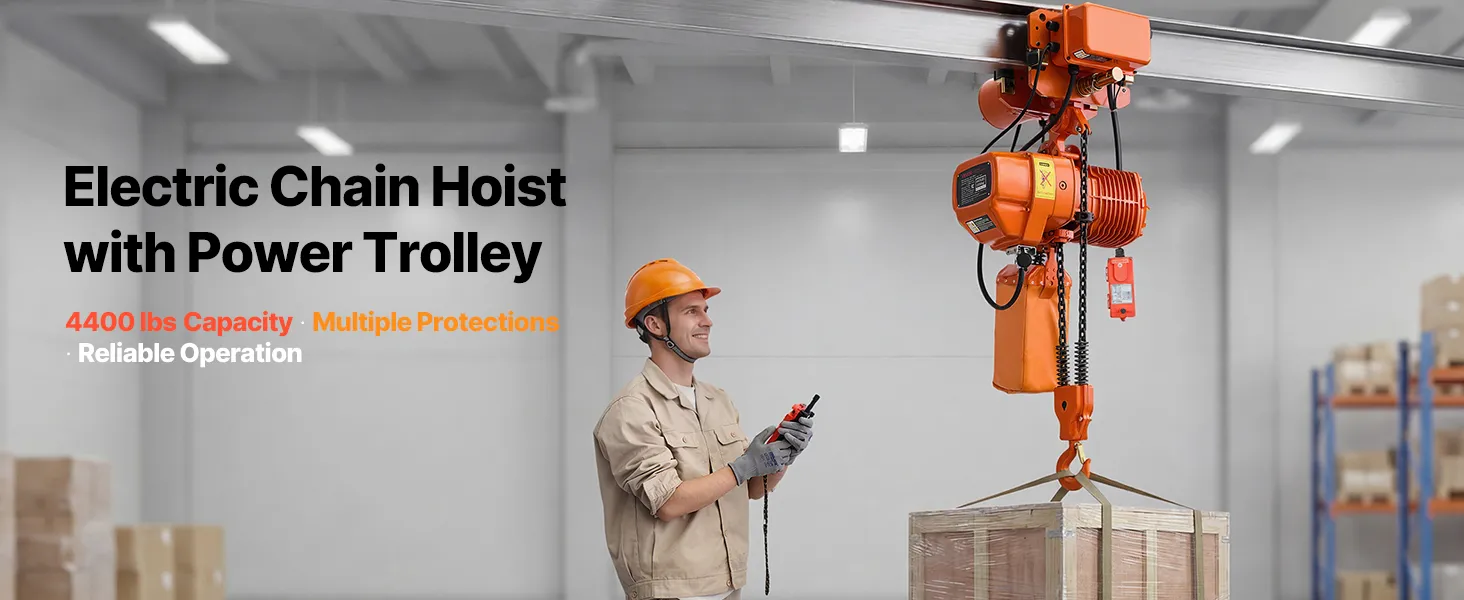
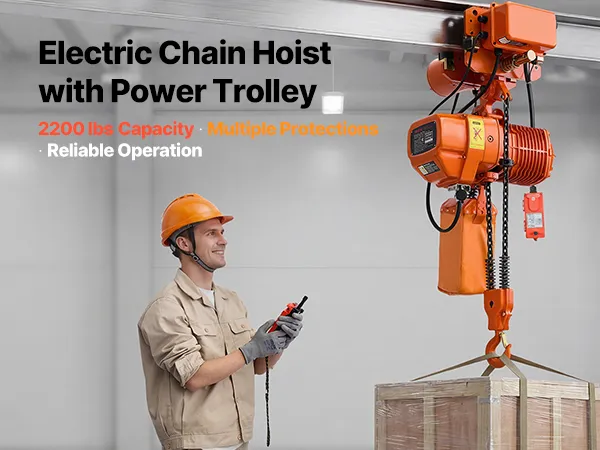
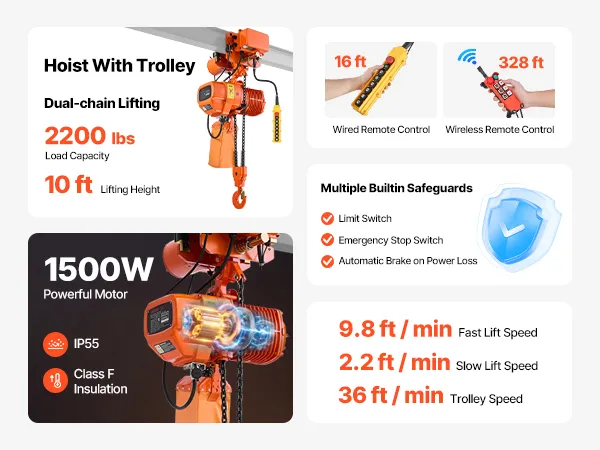
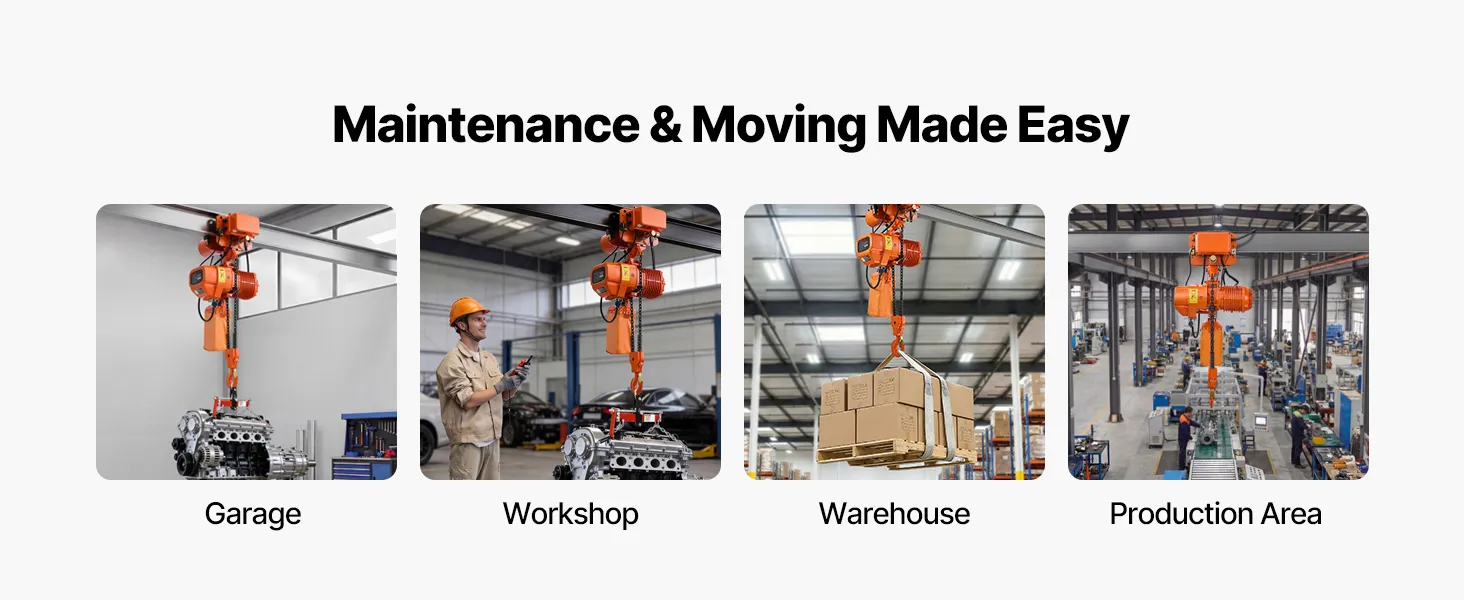
- Overhead Trolley Heavy Lifting: This electric chain hoist lifts up to 4400 lbs (2000 kg) with a dual-chain design for balanced strength and a 20 ft lift height. The hoist moves smoothly along beams or I-beams on 3-phase 380-415V, 50Hz power
- Easy Travel & Smooth Lifting: This overhead crane hoist combines trolley movement with dual-speed lifting for quick positioning and steady lifting. The smart design helps heavy loads move, lift, and land accurately in one smooth workflow
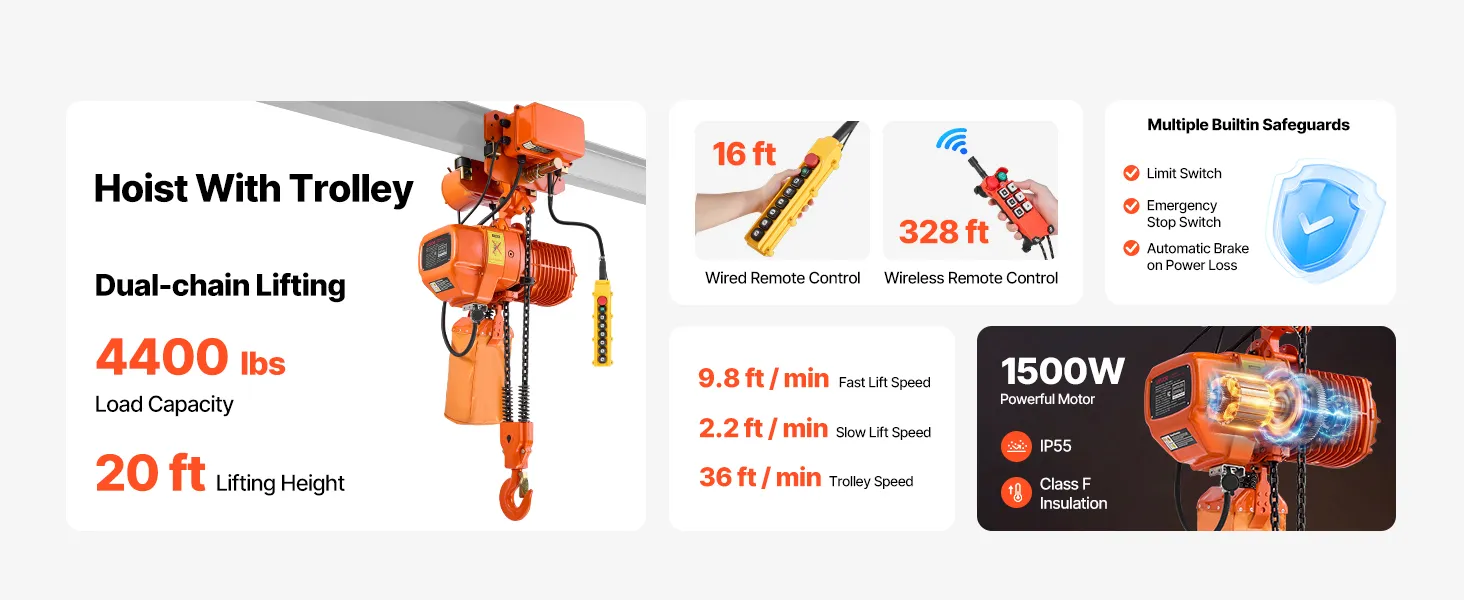
- Wired & Wireless Freedom: This chain electric lift hoist offers a wired pendant for close work and a wireless remote up to 328 ft (100 m). The flexible control options help you stay comfortable and confident on every lift
- Multiple Security Protections: This electric chain fall hoist includes upper and lower limit switches, auto braking on power loss, and an emergency stop. The built-in safeguards help every lift feel more secure and controlled
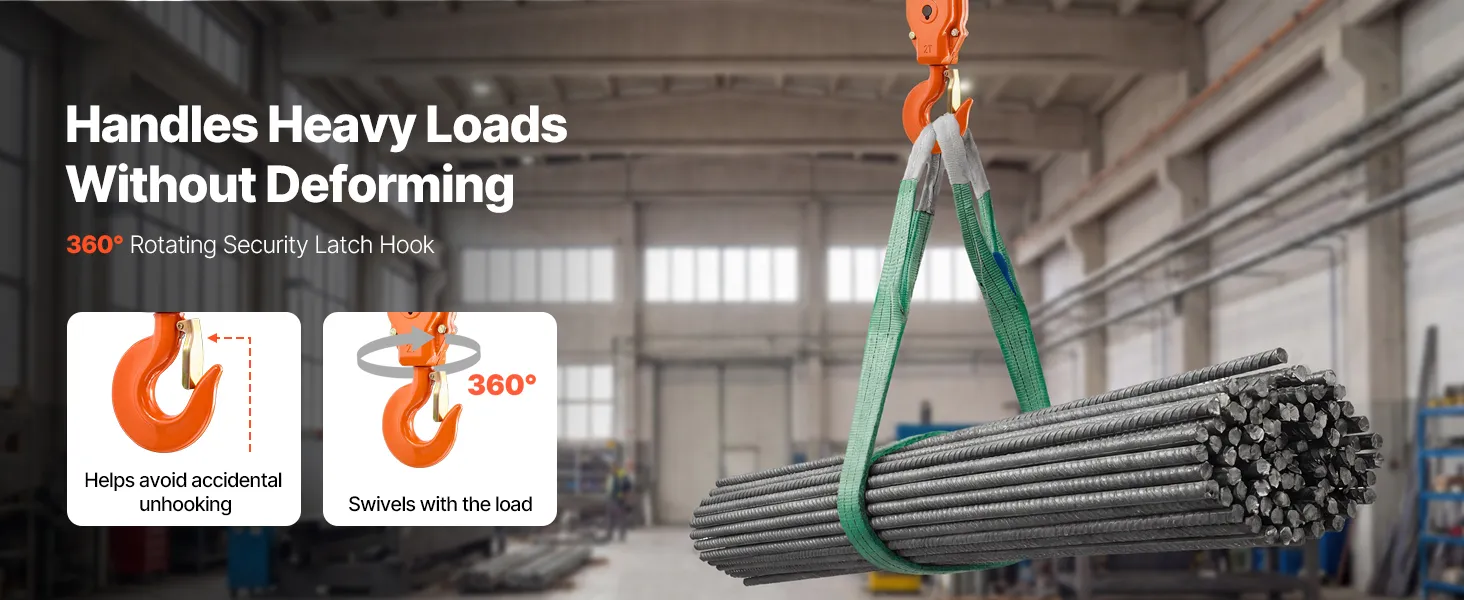
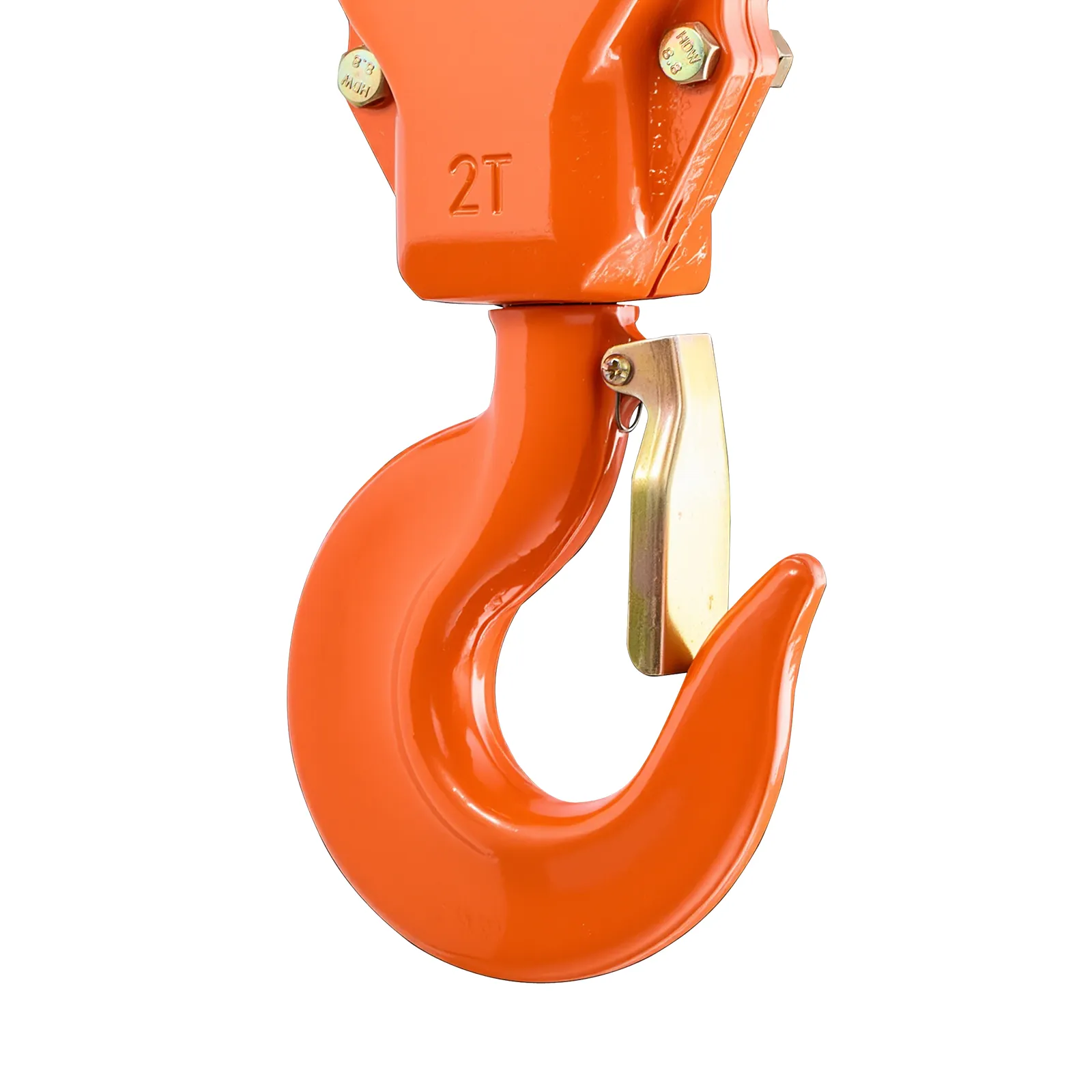
- Strong Build, Built to Last: This power electric hoist features the G100 alloy steel chains, a 360° rotating forged hook, and an aluminum housing. The IP55 motor, cooling fan, and F-class insulation support reliable daily use
Frequently Bought Together
Reviews
About this item


Upper and Lower Limit Switches with Auto Brake for Maximum Lift Safety
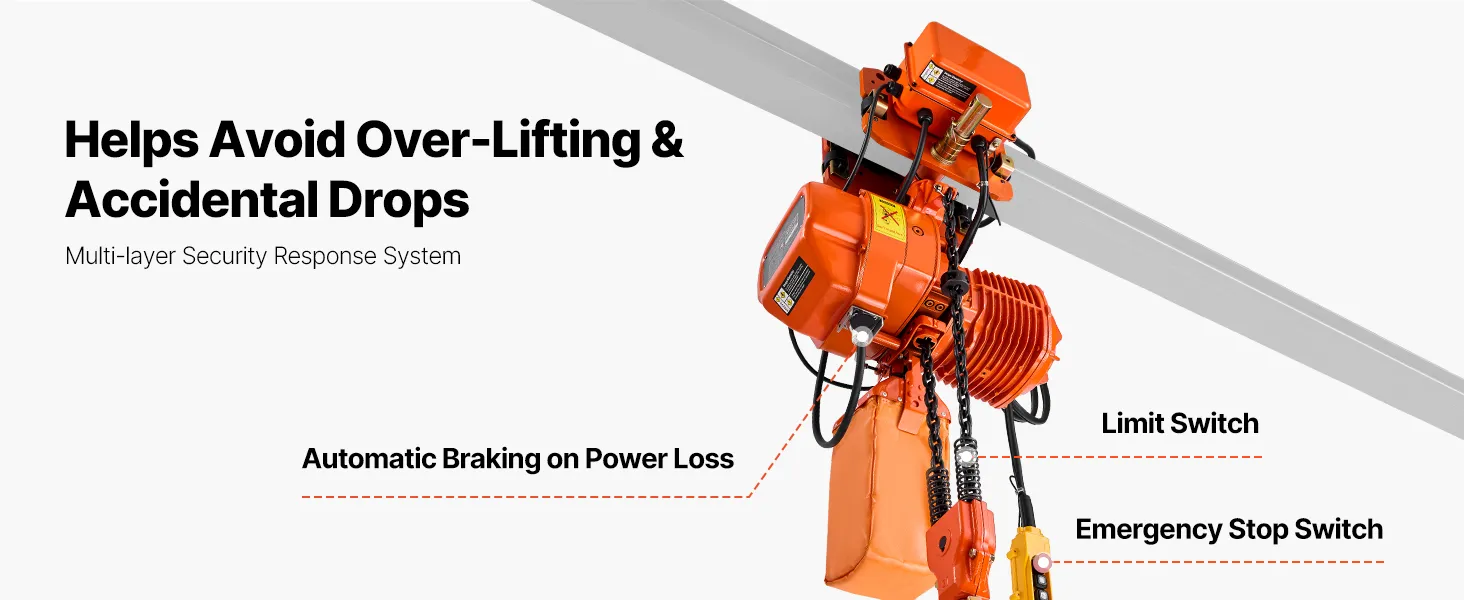
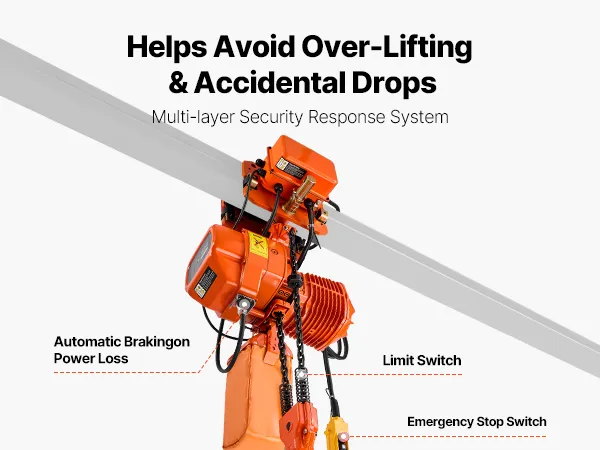
Upper and lower limit switches turn off the motor when the hook reaches the top or bottom of its travel range. Too much lifting could damage the hook block, and too little lowering could unwind the chain from the sprocket. Both switches engage at predetermined places and reset automatically when the operator changes direction, requiring no manual intervention to restore normal operation after a limit event.
As soon as the power goes out, whether due to an emergency stop order, a power cut, or a circuit fault, the hoist engages an automatic mechanical brake. Within milliseconds, the brake locks the load in place, preventing uncontrolled descent. Both the wired and wireless remotes have an emergency stop button that lets users turn off the lift right away from anywhere during use. This feature is an important extra layer of safety.
IP55 Rated Motor and F Class Insulation for Long Term Lift Electric Hoist Crane Reliability
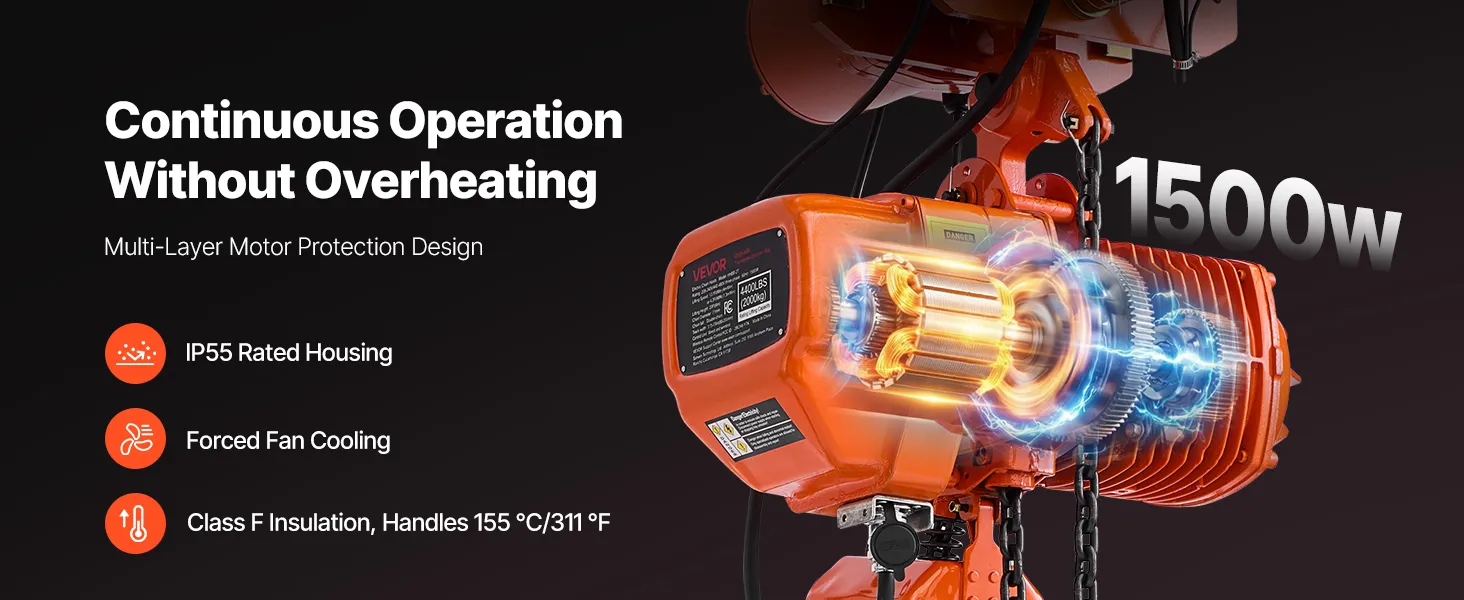
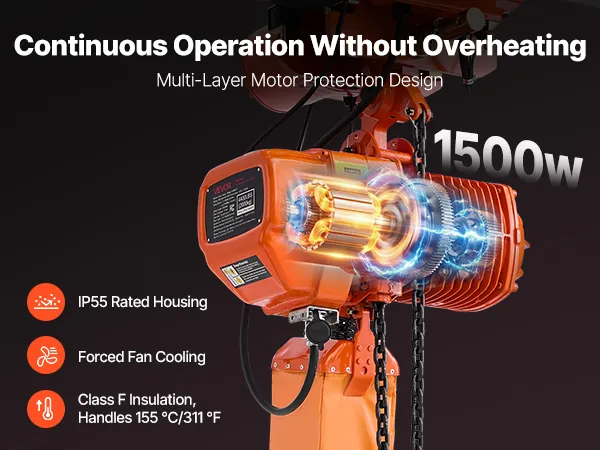
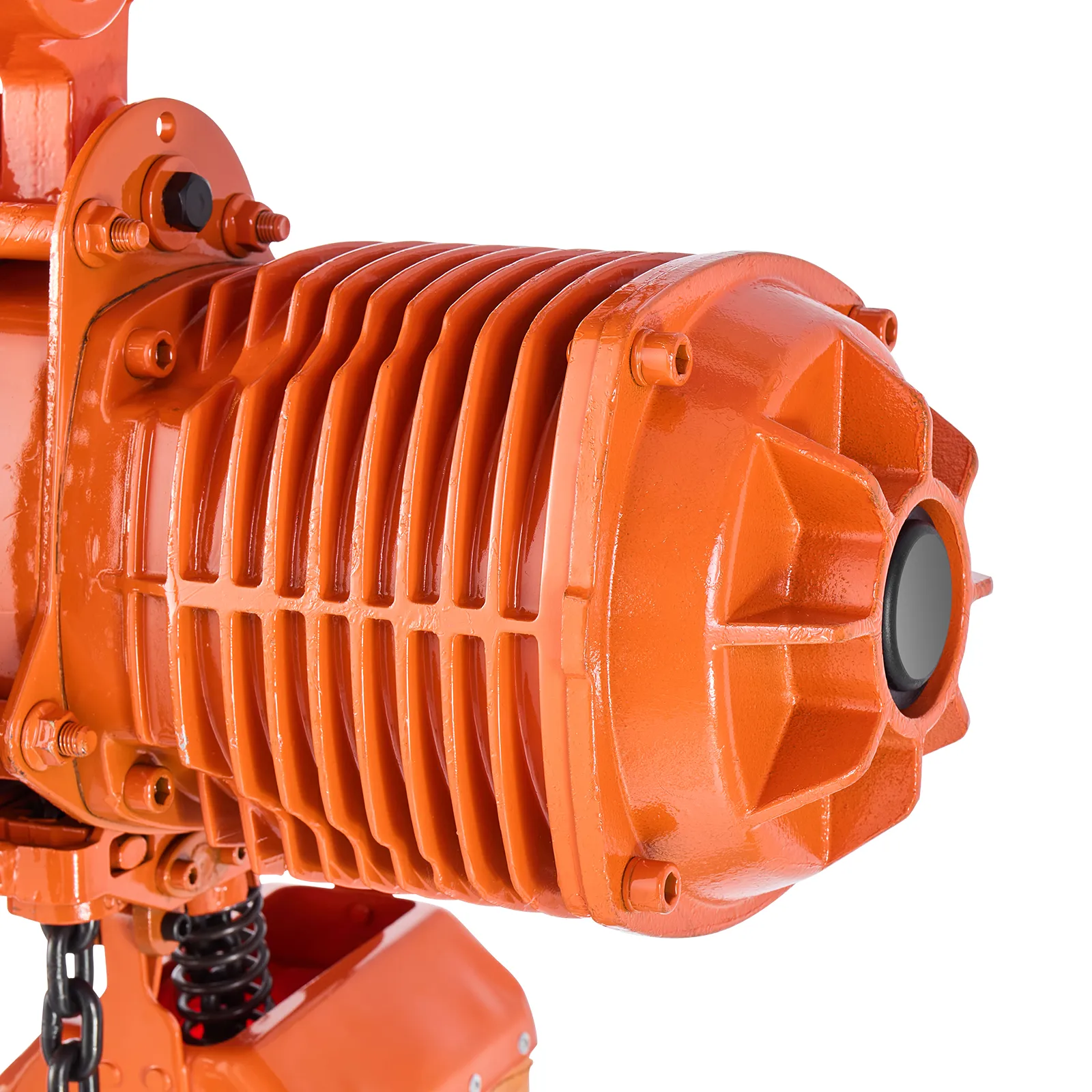
This lift electric hoist crane's motor has an IP55 rating, which means dust cannot enter in significant amounts, and low-pressure water jets from any direction cannot damage it. The motor case has a built-in cooling fan that continuously moves air through it while the motor is running. This feature prevents the motor from overheating, which would otherwise shorten the life of the windings under constant load. F-class insulation can withstand motor winding temperatures up to 155°C, above the normal operating temperature range for an industrial hoist, even under heavy stress.
The motor runs on three-phase 380–415V, 50 Hz power, which gives it more torque and better acceleration than single-phase motors. Three-phase motors also produce less vibration while running, which means the chain, drum, and gearbox tend to wear out less quickly. Under normal working conditions, maintenance teams benefit from longer service intervals and less frequent part replacements. This feature keeps the total cost of ownership low.
360° Rotating Forged Hook and Aluminum Housing for Durable Daily Operation
With the 360° rotating hook, workers can move the load in any direction without moving the crane or changing the rigging setup. Forming the hook body from forged steel creates a continuous grain structure through the shank and throat, making it highly resistant to bending and fatigue under repeated loading. When chain slings or shackles move horizontally, a safety latch helps prevent the load from coming off by mistake.
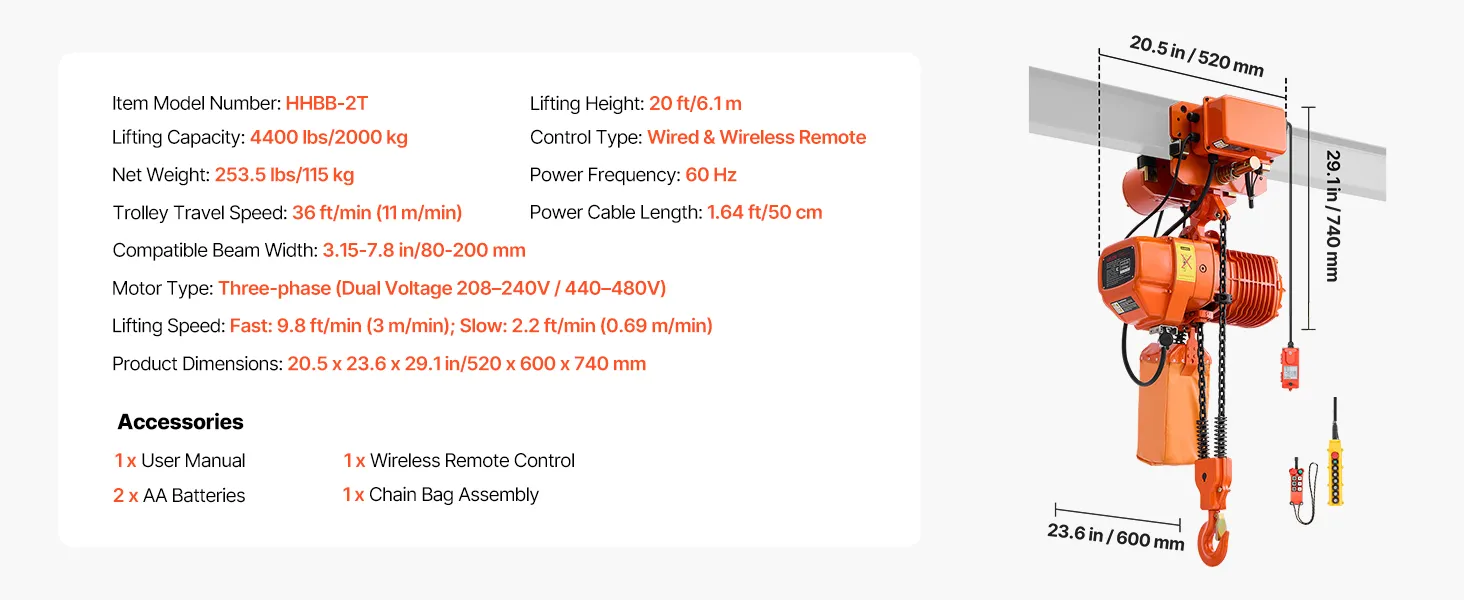
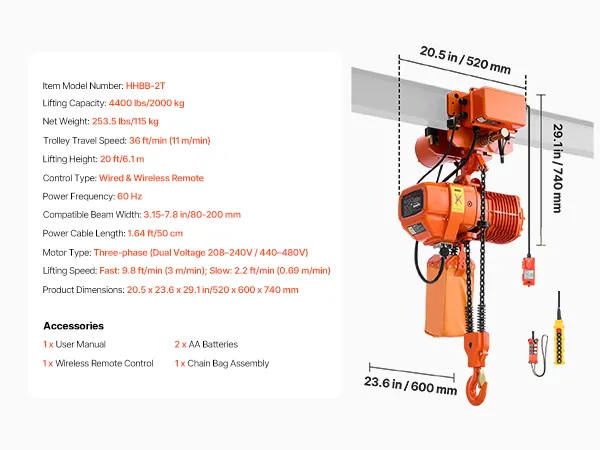
The aluminum housing keeps the unit's weight to a reasonable 115 kg (253.5 lbs). It houses the gearbox and motor assembly. Aluminum housings dissipate heat more quickly than steel ones and do not rust in wet or chemically active environments, so they typically do not require protective coatings. The compact footprint (520 × 600 × 740 mm) makes it possible to place on beam systems with little headroom. This feature makes the 6.1 m (20 ft) lift height more useful in low-clearance facilities.
Dual Speed Lifting System for Precise Load Positioning and Faster Cycles
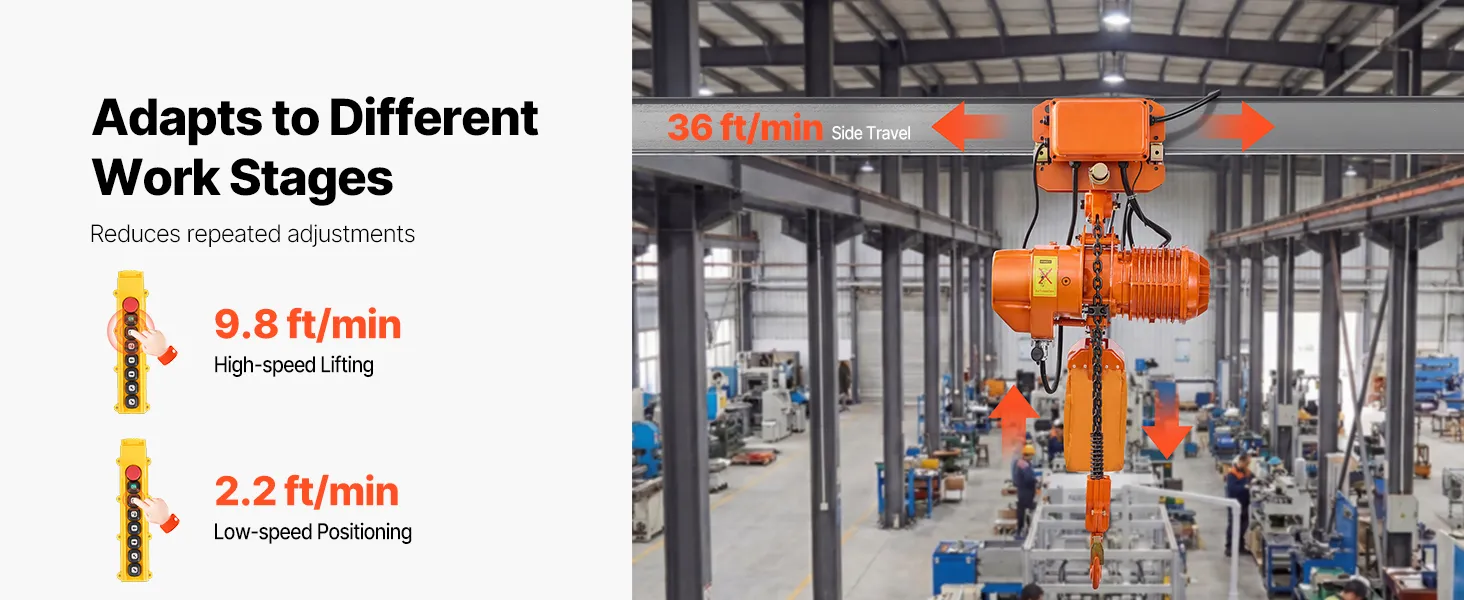
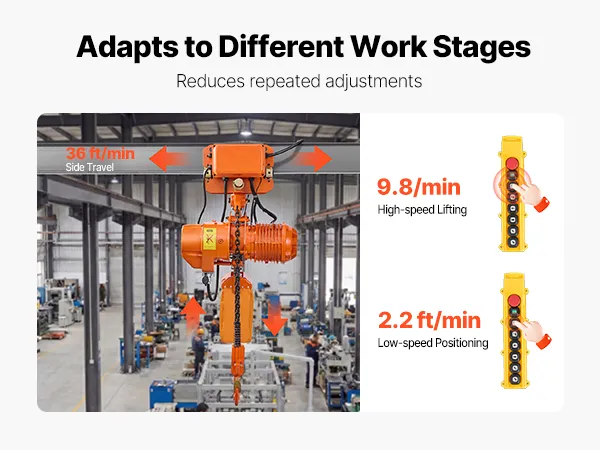
This overhead crane hoist has two lifting speeds to handle a wide range of jobs. The high speed makes it easy to move empty hooks or light loads into place quickly, reducing cycle time for repeated moves. The motor changes speed smoothly, so there is no sudden mechanical shock, and operators can do more lifts per shift without rushing through the important placement phase.
Switching to slow speed gives operators more control over the last few inches of motion as the hook approaches the load or landing zone. The lifting function and the trolley's movement work together to create a smooth workflow: place the trolley, lift the load, move to the drop point, and precisely lower the load. When you combine these two types of motion, you reduce manual repositioning, and production lines can run all shift long without unnecessary breaks.
Wired and Wireless Remote for Full Lift Electric Hoist Crane Control
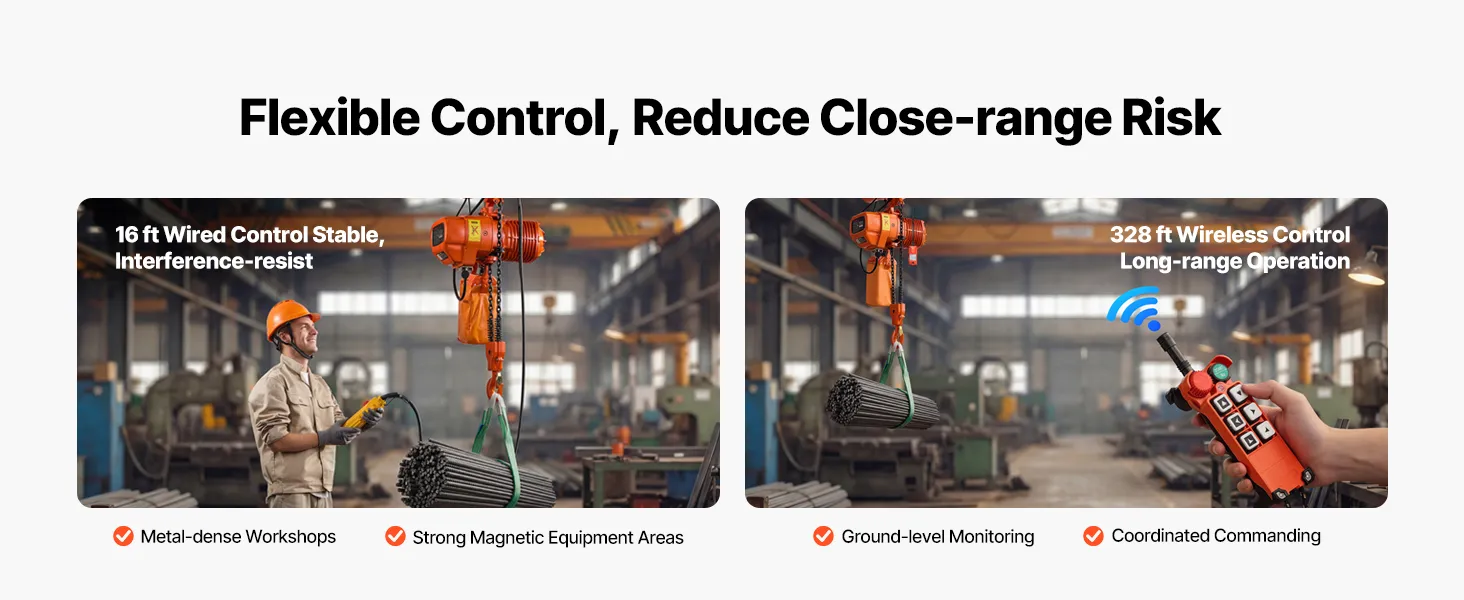
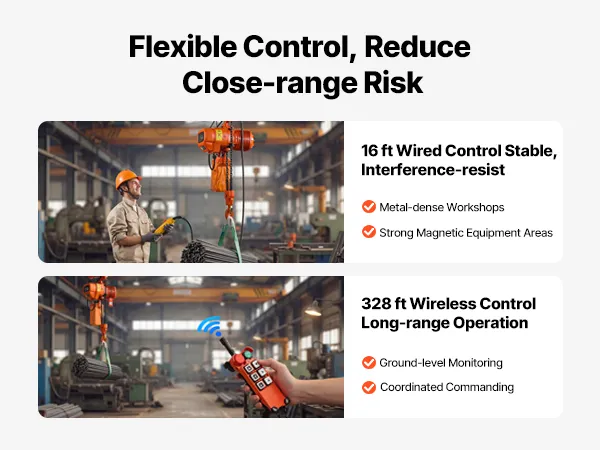
This lift electric hoist crane comes with a 4.8-meter wired pendant that lets workers control the hoist and trolley from close range by pressing a button. The wired connection provides a quick response and no signal delay, making it ideal for jobs where the operator is close to the load. The reinforced wire and sealed pendant housing keep dust and moisture away from the internal contacts, even in harsh industrial settings.
The wireless remote provides up to 100 m (328 ft) of control, allowing users to manage lifts across a wide bay without moving. It is designed to be reliable across the full rated distance for the receiver inside the hoist to handle commands. Both control choices work on their own, so crews can choose the right tool for the job without stopping work or switching hardware mid-task.
Dual G100 Chain Design Delivers 2000 kg Lift Capacity with Balanced Strength
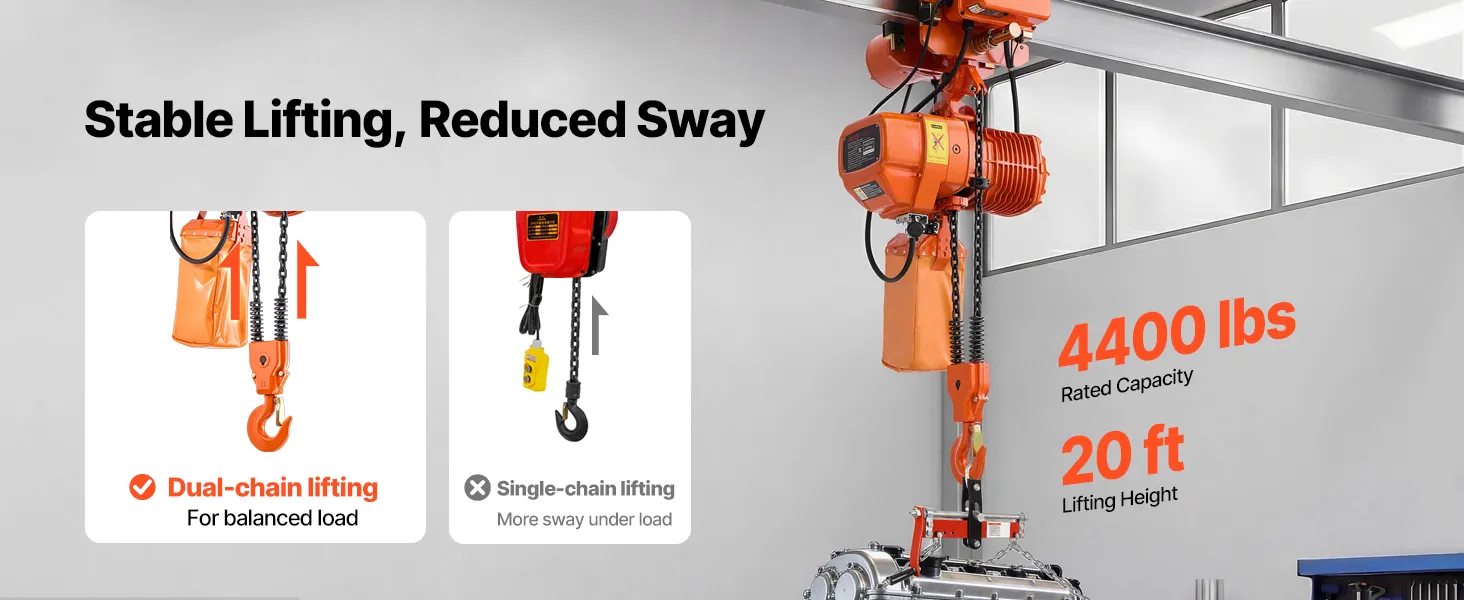
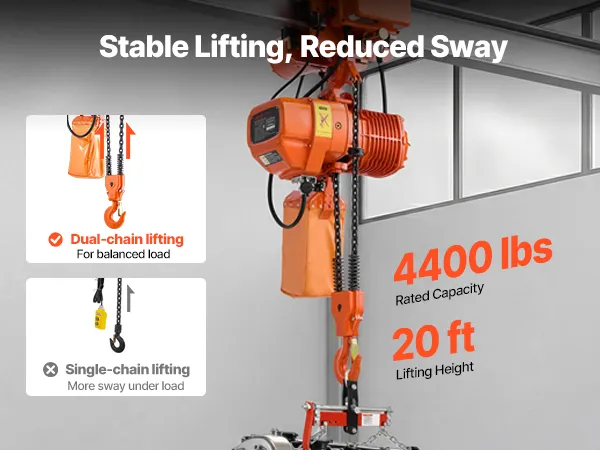
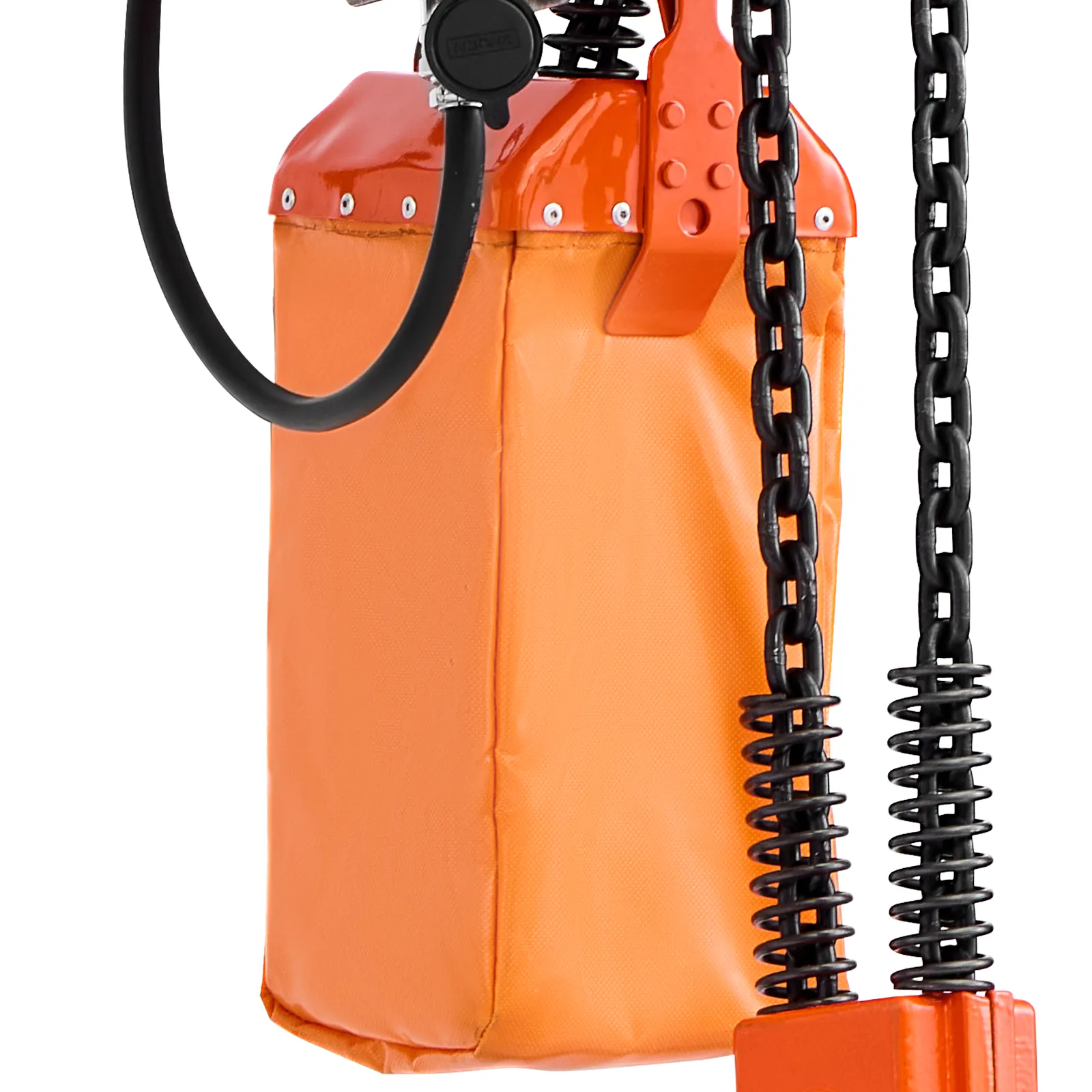
The dual G100 chain design of this lift electric hoist crane spreads the load evenly across both chains, allowing it to lift up to 4400 lbs (2000 kg). The balanced load path keeps heavy loads stable throughout every lift cycle and reduces stress on each link. Factory operators and warehouse teams rely on this configuration when moving engine blocks, steel coils, or large fabricated parts that require consistent support at full rated capacity throughout long production shifts.
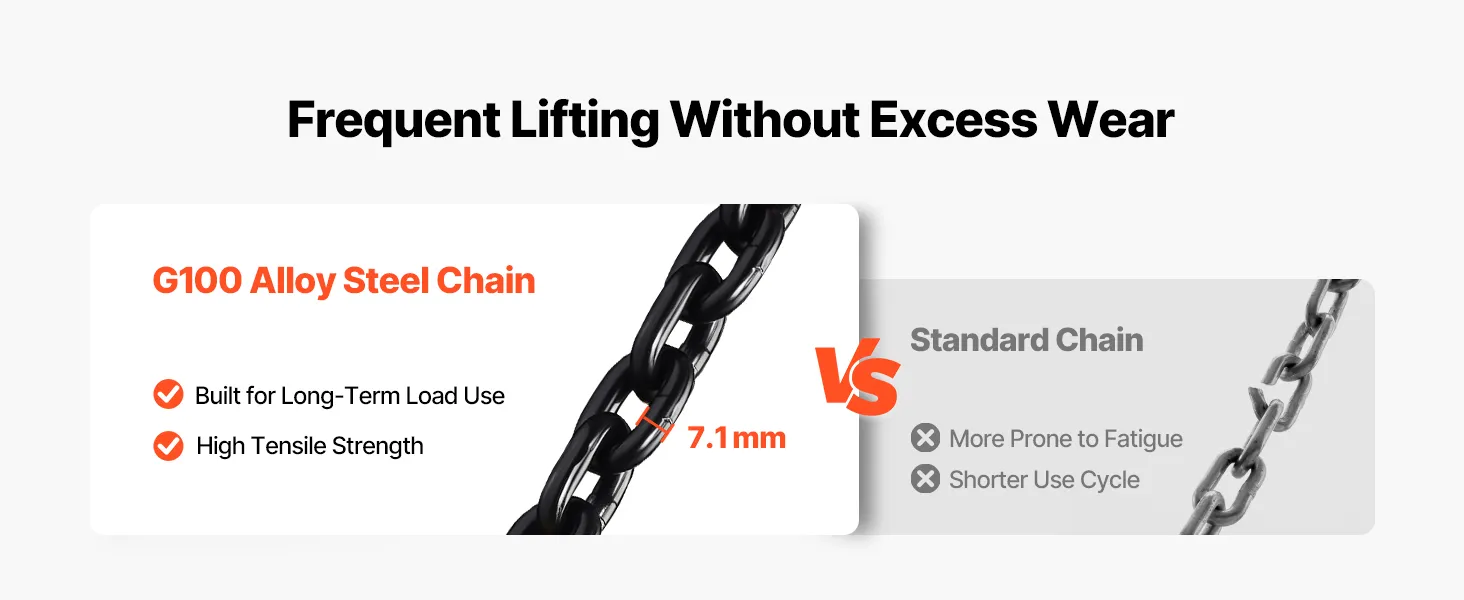
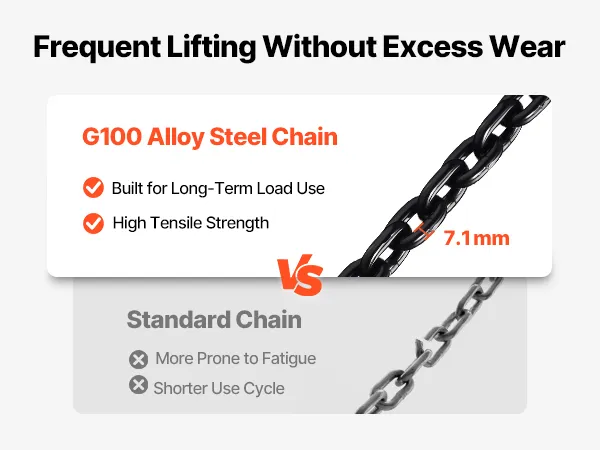
G100 alloy steel leads standard chain grades, delivering higher tensile strength than G80 alternatives. Each link can handle the rated load without deforming, allowing workers to run full capacity lifts over and over throughout the workday. The dual chain setup further enhances this strength advantage by distributing the load across two separate load paths at all times, significantly reducing chain fatigue.