


VEVOR Low Profile Floor Jack, 2 Ton Capacity, Steel Racing Floor Jack with Single Piston Quick Lift Pump & Wheels, Hydraulic Trolley Car Lift for Cars, Motorcycles, ATVs, Lifting Range 150-435 mm

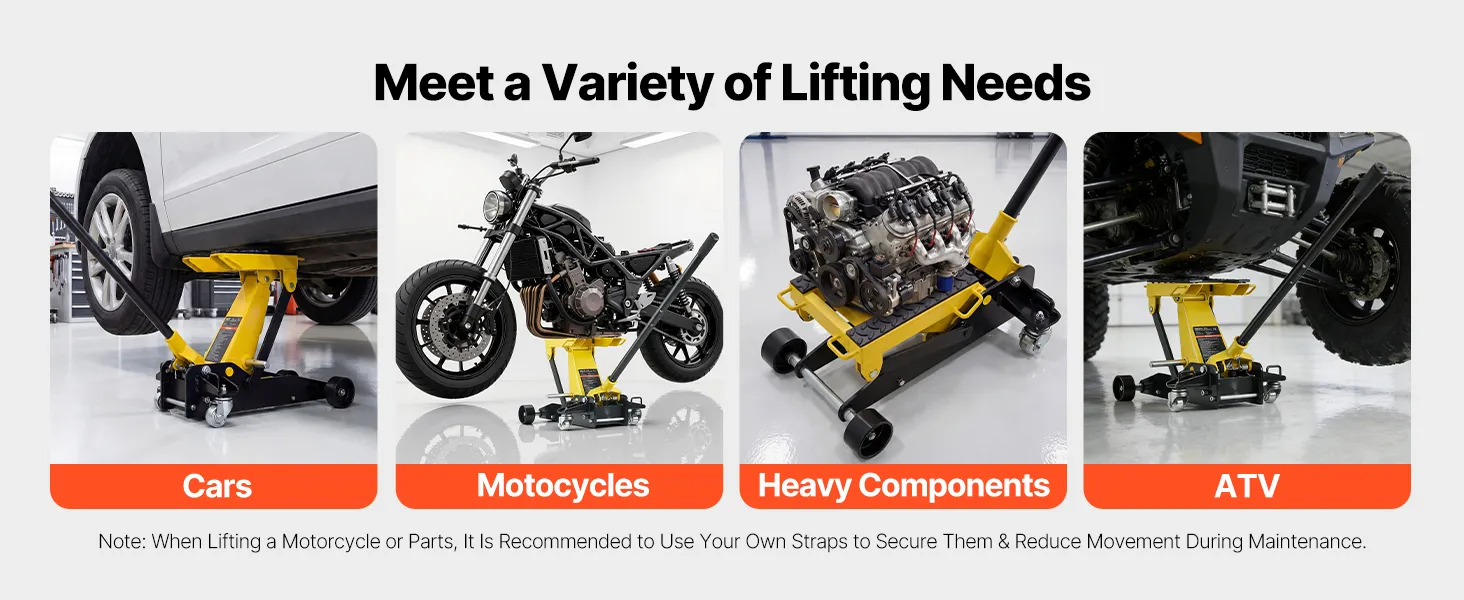
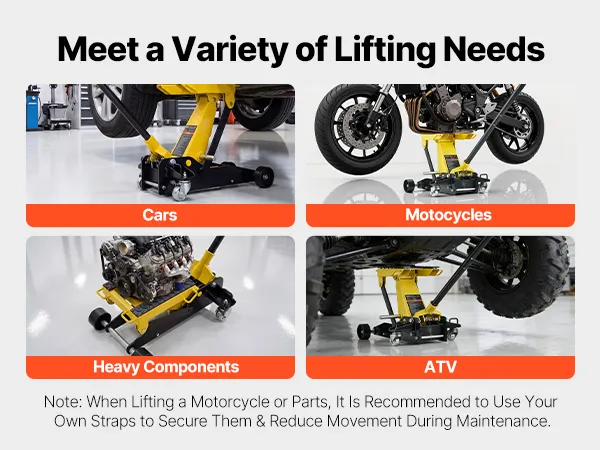
- Multi-Purpose Lifting: This low profile floor jack replaces multiple lifting tools, so your garage stays organized. Built from heavy-duty steel, the floor jack supports up to 2 tons (4,409 lbs). It easily lifts cars, motorcycles, and heavy components
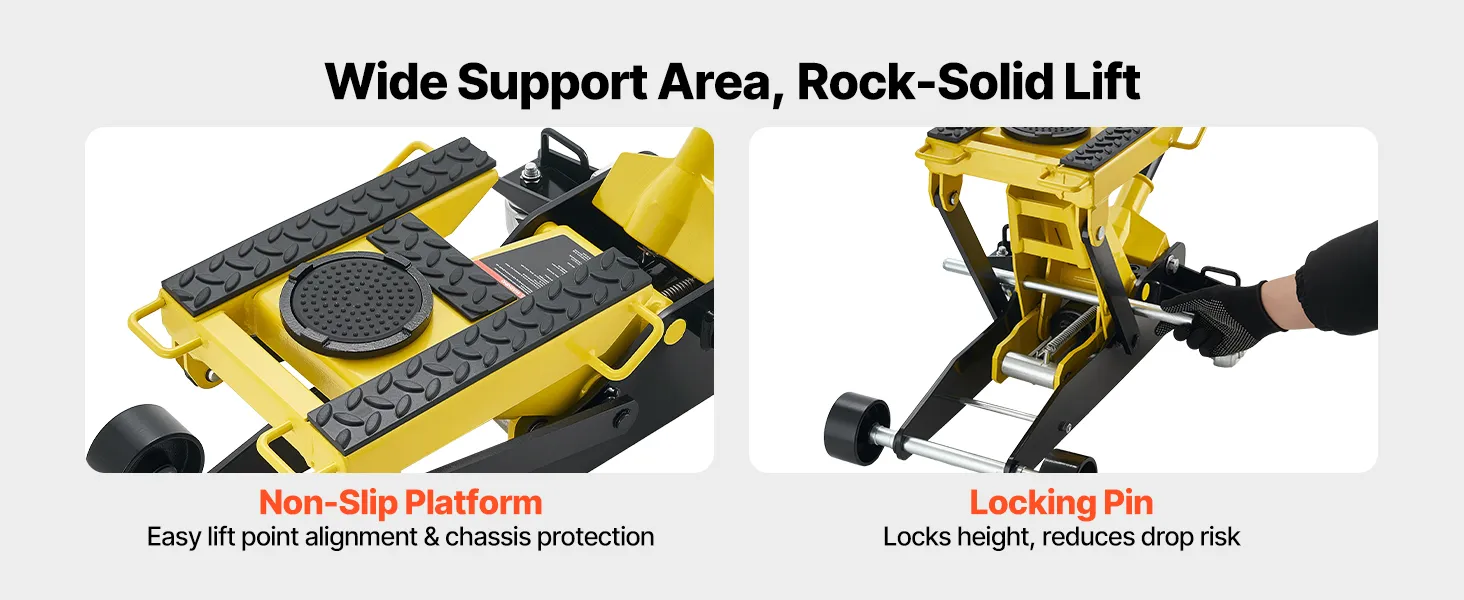
- Height Lock: The hydraulic floor jack includes a mechanical height-locking pin. The lock secures lifting height during extended support to reduce drop risk. It provides added confidence for tire changes, drivetrain service, and chassis work
- Large Non-Slip Platform: Our low profile jack features a 12 x 9.3 in (305 x 235 mm) oversized platform. The textured surface improves grip and helps align with lift points. It supports chassis and motorcycle engines while helping safeguard the underbody
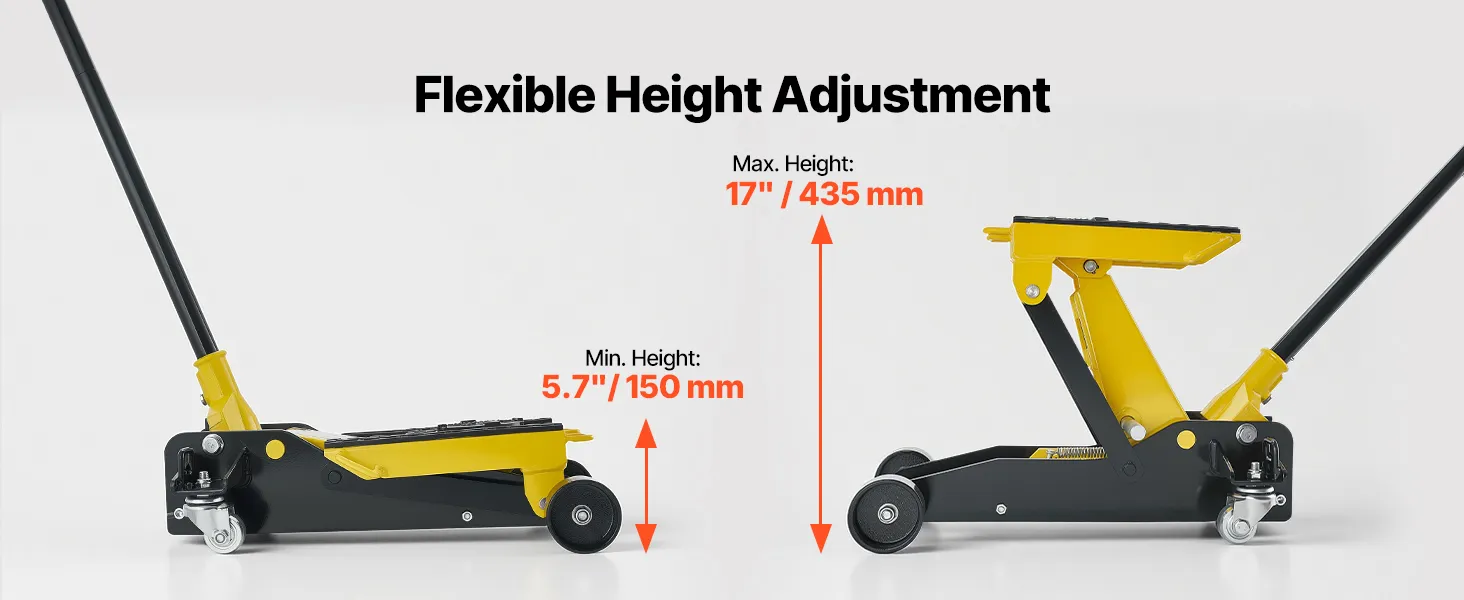
- Wide Lift Range: The floor jack lifts from 5.7–17 in (150–435 mm). The low-profile design slides easily under sedans, while providing ample lift height. Tighten the release valve and pump to raise, then turn the handle counterclockwise for smooth lowering
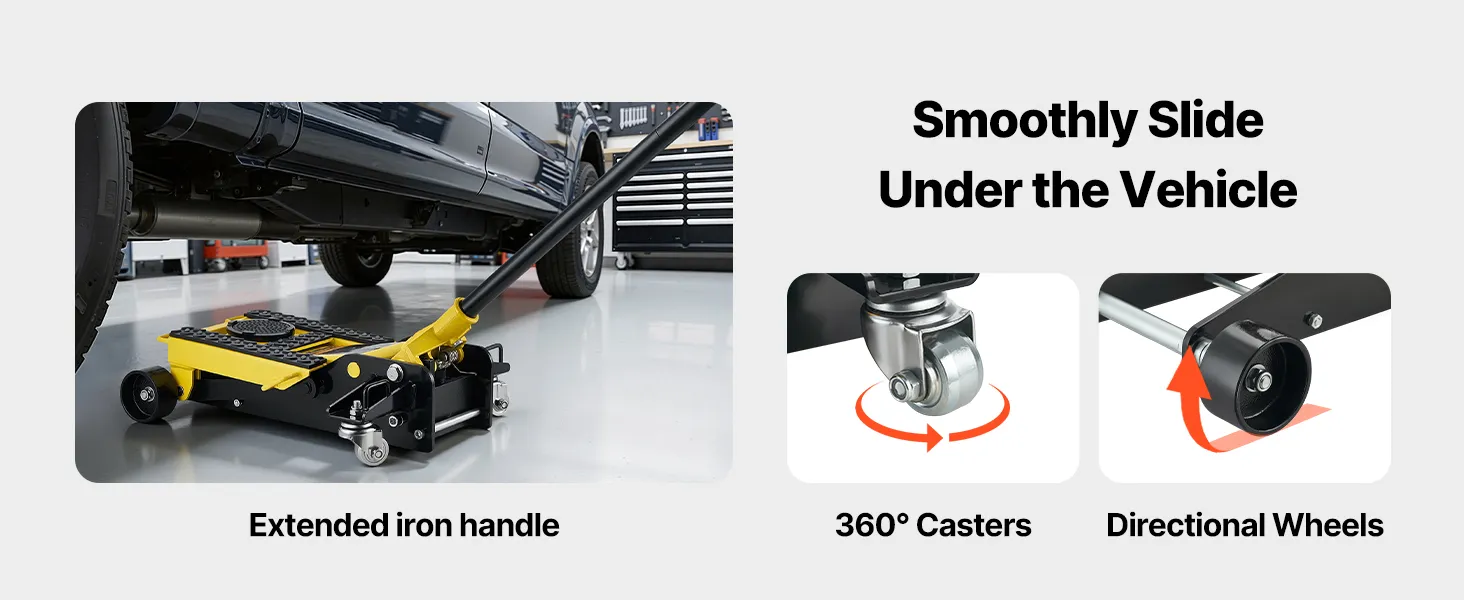
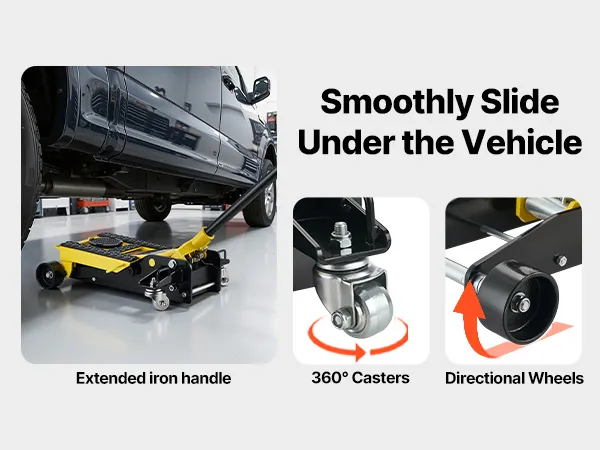
- 360° Smooth Mobility: This low profile car jack features an extended handle for better control. Two swivel casters and two fixed wheels help the floor jack roll smoothly on outdoor asphalt and slide easily under the vehicle with less effort
Frequently Bought Together
Reviews
About this item


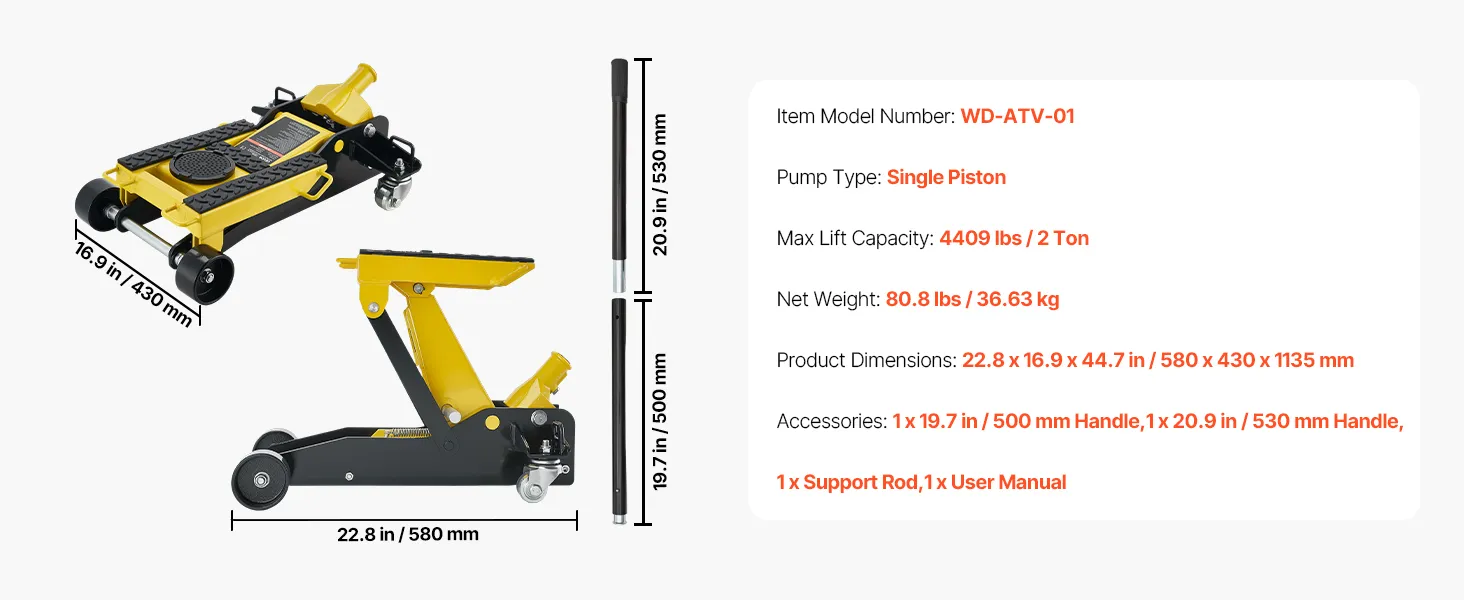
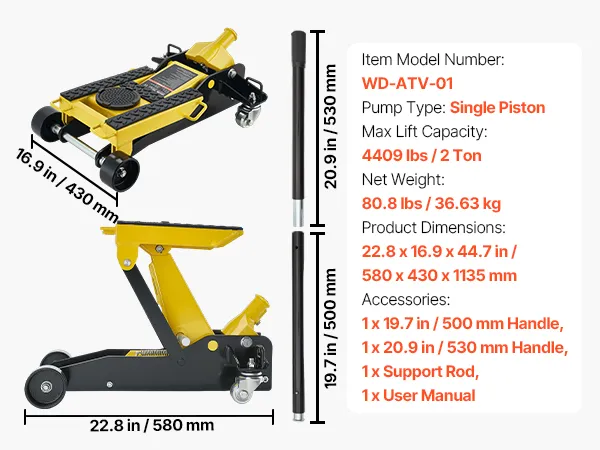
Low Profile High Lift Floor Jack with 150–435 mm Lifting Range for Cars and ATVs
One of the standout features of this low profile high lift floor jack is its 150–435 mm lifting range. It accommodates both low-clearance vehicles and applications requiring additional lift height. The 150 mm saddle height lets the jack slide under low-clearance sedans without scraping, and the 435 mm lift height gives you enough clearance to access the drivetrain and chassis.
For mechanics who work on a variety of vehicles, such as cars, bikes, ATVs, and RVs, this range means they do not have to buy separate jacks for different vehicle heights. At its lowest point, one unit fits under the rocker panel of a sports car. At its highest point, it raises an ATV part to a working height, reducing the need to keep different jacks for different vehicle types.
2-Ton Steel Construction That Handles Cars, Motorcycles, and Heavy Components
The 2-ton (4,409-pound) capacity comes from a heavy-duty steel frame instead of an aluminum or composite construction. Steel provides the structural strength needed to support heavy loads. This means that when a vehicle's full weight is transferred to the platform, the frame helps resist flex under load. At 36.63 kg, the unit has the right weight for that material, sacrificing portability for the rigidity required for safe vehicle lifting.
The hydraulic system helps maintain stable lifting pressure throughout operation. Always support the vehicle with appropriately rated jack stands before working underneath it. Lifting a small car to change the tires or a motorcycle engine to take out a part is no problem for this size.
Single Piston Quick Lift Pump for Fast, Efficient Height Gain Per Stroke
Compared with a conventional hydraulic pump, the single-piston pump works faster because each stroke adds a useful amount of height. It takes fewer strokes to reach the working height with a quick-lift pump, so you can raise the vehicle faster without putting in more effort. This is useful for routine jobs like changing tires. The handle extends to a length that provides a mechanical advantage without requiring you to crouch awkwardly to generate stroke force.
To lower, turn the handle anticlockwise to open the release valve. This lets the weight lower slowly and steadily instead of all at once. When removing the jack from a vehicle on stands or when precisely lowering onto a specific lift point, this controlled release lets the operator control how fast the vehicle falls back to the ground.
Mechanical Height-Locking Pin for Secured Support During Extended Work
The mechanical height-locking pin provides an additional hold independent of the hydraulic system. Putting the pin in locks the saddle position mechanically once the vehicle is raised. Because it is mechanical rather than hydraulic, the locking pin remains engaged independently of hydraulic pressure. The pin does not depend on fluid pressure, so it works no matter how high the vehicle is raised.
The pin connects easily and clearly, so it is simple to ensure the lock is in place before working under the car. The mechanical lock gives home mechanics who work alone a reliable way to ensure the car remains at the right height throughout the job, without having to re-pressurize the hydraulic system every so often.
305×235 mm Non-Slip Saddle Platform That Protects Lift Points and Underbody
The extra-large 305 × 235 mm saddle spreads the load over a bigger contact area at the lift point. This keeps the force from concentrating on one part of the vehicle's chassis or rocker panel. This wider contact area helps distribute the lifting force more evenly across the contact point.
With the textured non-slip surface, there is minimal lateral slippage during the lift cycle. This is especially important when positioning the jack under a slightly off-center lift point. When raised or lowered, the platform's size also accommodates motorcycles, ATVs, and other equipment with larger contact surfaces.
360° Swivel Casters and Fixed Wheels for Smooth Garage and Outdoor Positioning
The low profile high lift floor jack uses two rear swivel casters and two front fixed wheels for easier positioning. The swivel casters allow the rear of the jack to move easily, enabling the operator to angle the jack into place without moving the car. On the garage floor, the wheels roll with little resistance, and the long handle lets you guide it precisely without bending down.
The fixed front wheels maintain straight tracking when the jack is positioned from the front or back, which is the most common way to position the jack. This wheel combination rolls smoothly across garage floors and paved outdoor surfaces. For a jack with a 580 × 430 mm footprint, this design makes it easier to place it correctly on the first try.
Low Profile High Lift Floor Jack: Replacing Multiple Tools in One Compact Unit
This low profile high lift floor jack offers both low-entry and high-lift capabilities in one unit. The 150 mm entry height works with vehicles for which ground clearance is the main issue, and the 435 mm maximum reach can lift parts that are too high for standard low-profile jacks.
At 580 × 430 × 1135 mm, the jack is small enough to store without taking up as much space as two separate jacks. The single-unit method reduces setup time for mechanics working on different types of vehicles because they do not have to choose which jack to use or worry about using the wrong tool for the job. With the wheels and longer handle, it is easy and quick to move from storage to working position.
