VEVOR 5 Step Railing Stainless Steel Transitional Handrail fit for Level Surface and 1 to 5 Steps Adjustable Stair Railing Indoor Outdoor Step Railings 99.8 kg Capacity W/ Installation Kit Porch DIY

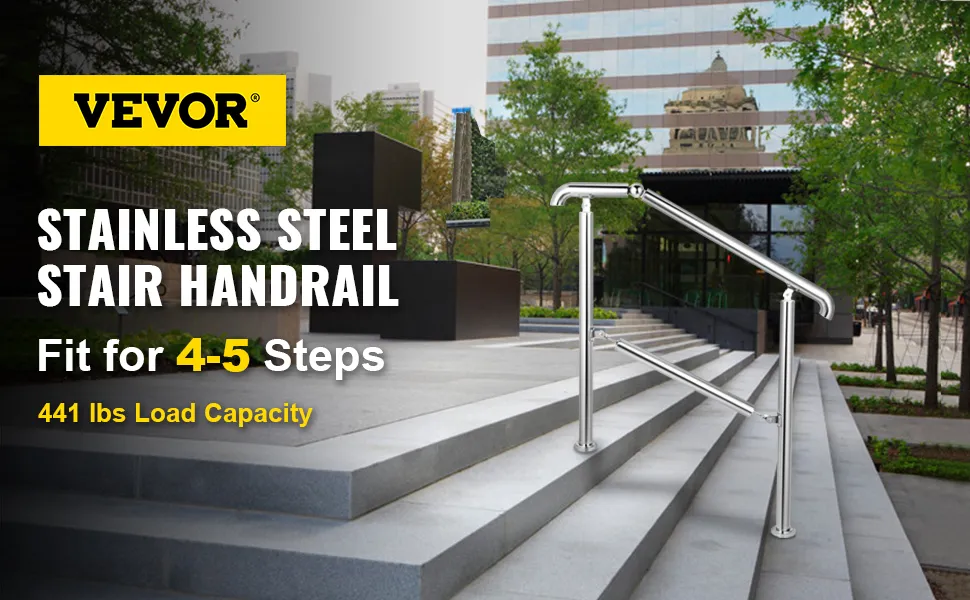
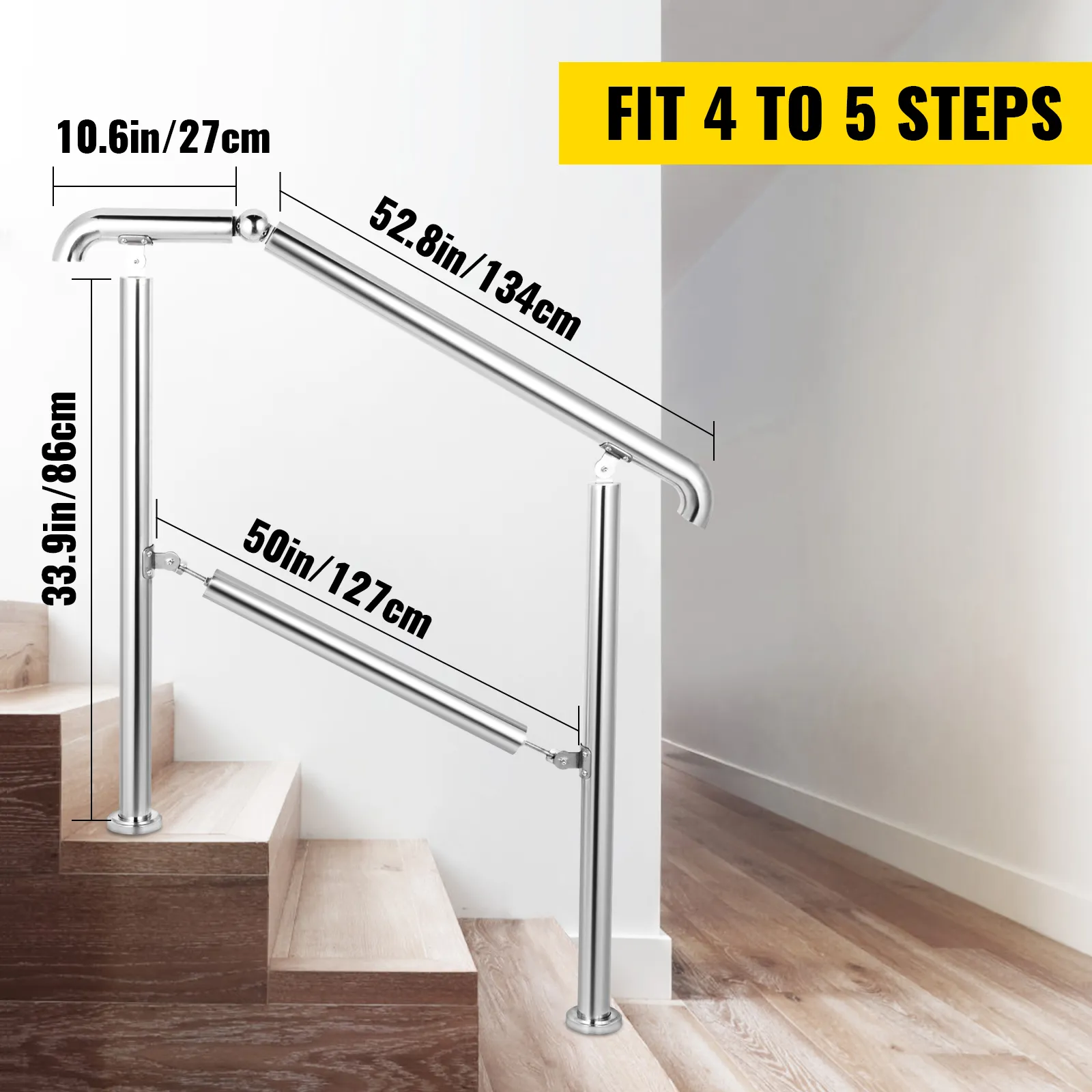
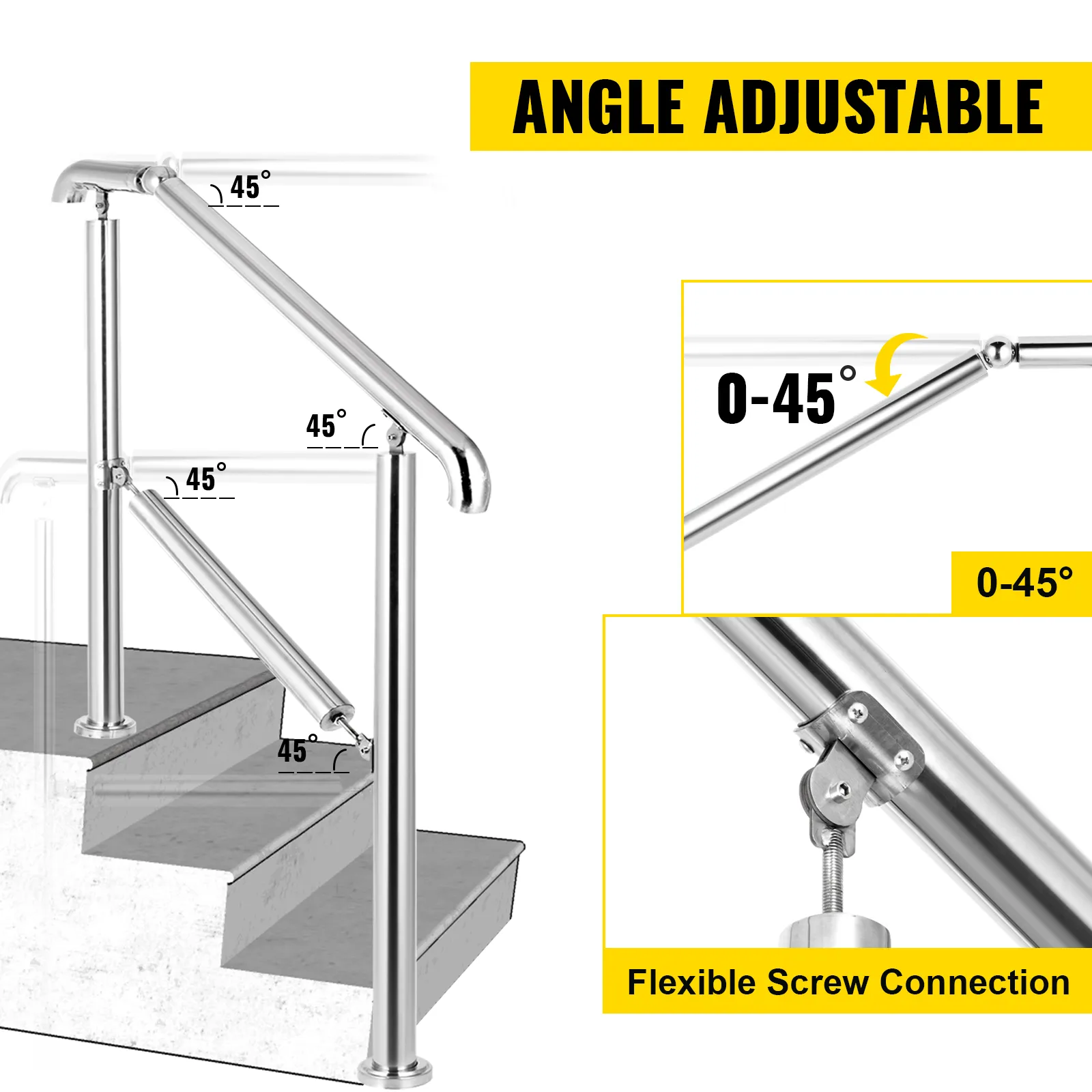
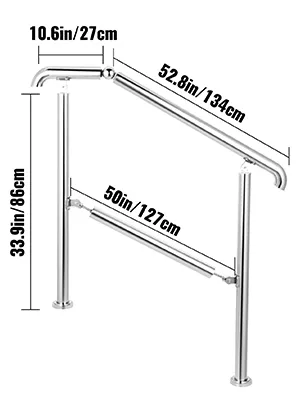
- Adjustable for 4-5 Steps: Product Size (W x H): 63.4" x 33.9"/161 x 86 cm; Distance Between Vertical Bars: 50"/127 cm. Due to the 0-45° adjustable angle, our handrail for outdoor steps fits your 4 or 5 steps. It is perfect for helping people keep balance when walking up and down the stairs in the rain or winter.
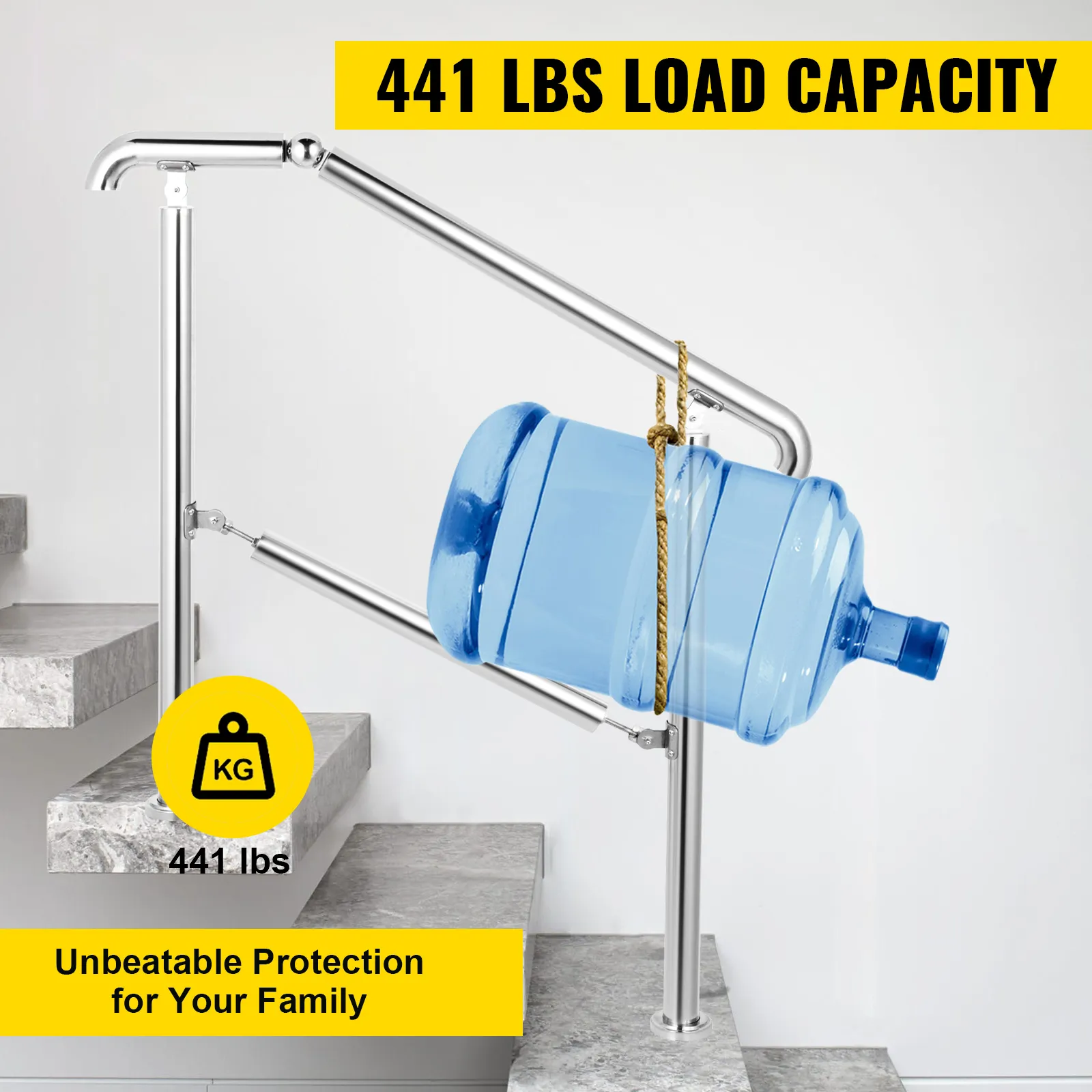
- High Bearing Capacity: With the 0.12"/3 mm thick base and 0.05"/1.2 mm thick tube, this outdoor handrail can hold up to 441 lbs/200 kg weight. As a reliable grab bar for your family, it provides extra security for the elderly, children, pregnant women, disabled family members, and people after surgery.
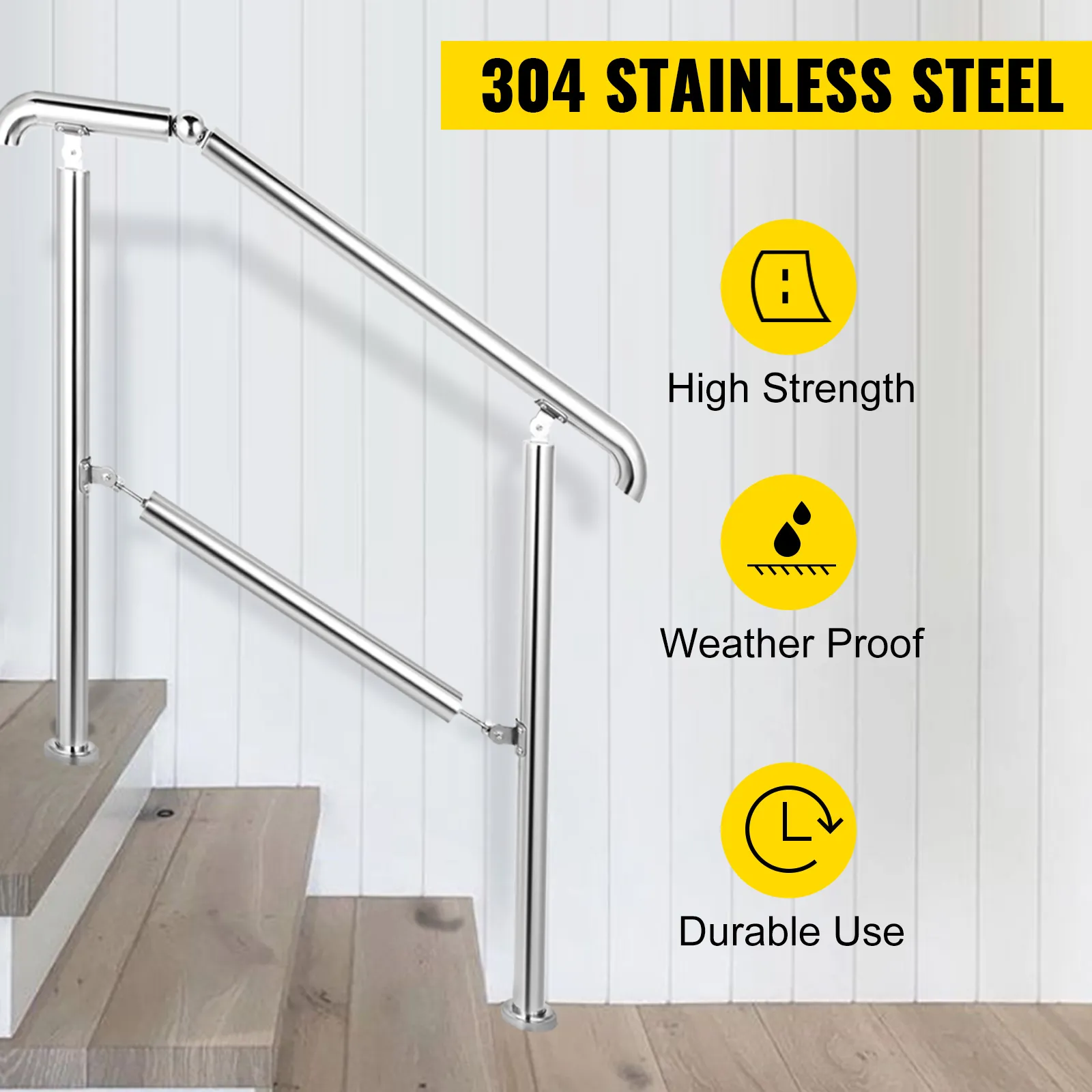
- Sturdy Stainless Steel: This handrail for steps is made from durable 304 stainless steel, precluding worry about corrosion or scratch. It features a smooth mirror finish, allowing you to clean it with water or cloth easily and quickly. The railing is designed to last for years, even exposed to the sun or rain.
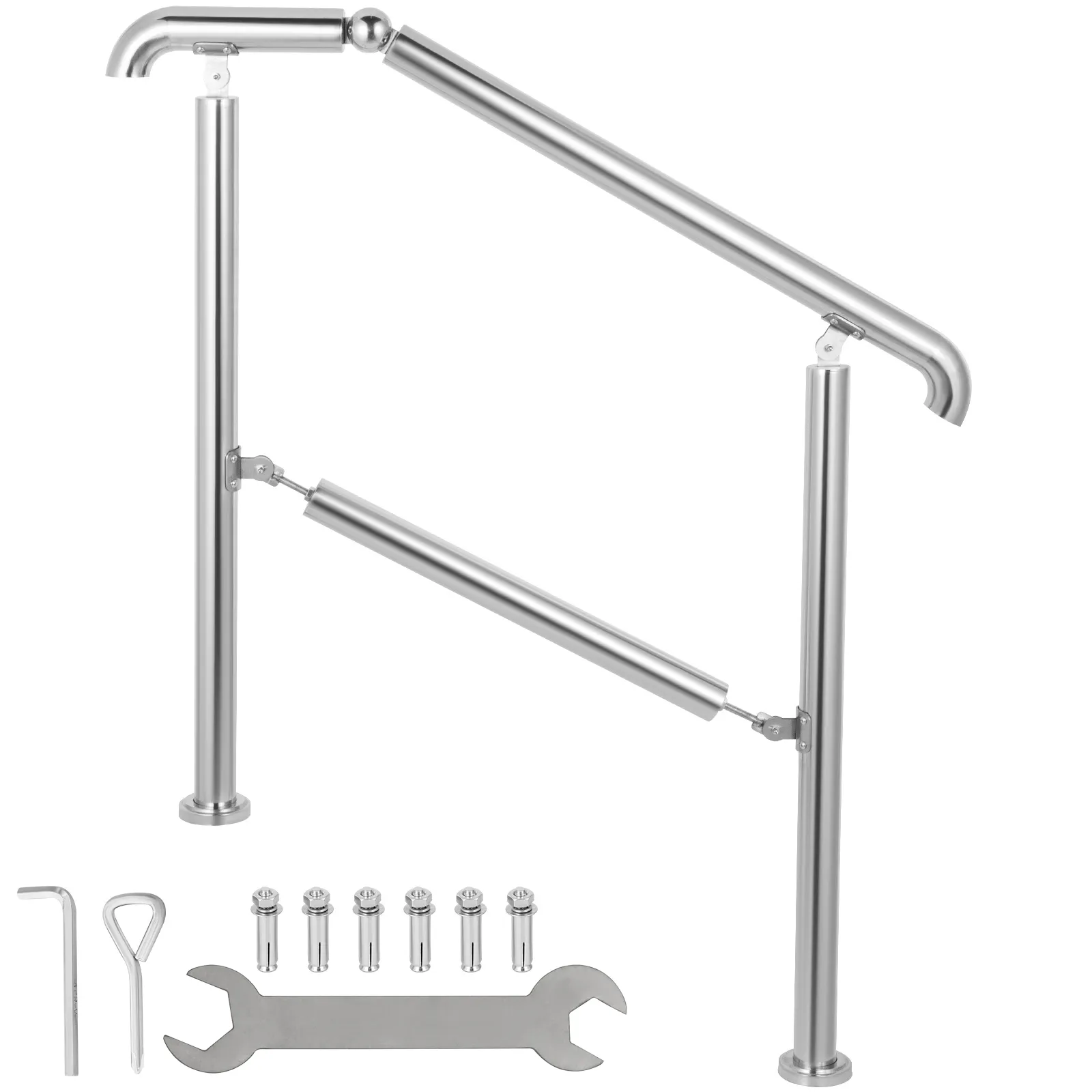
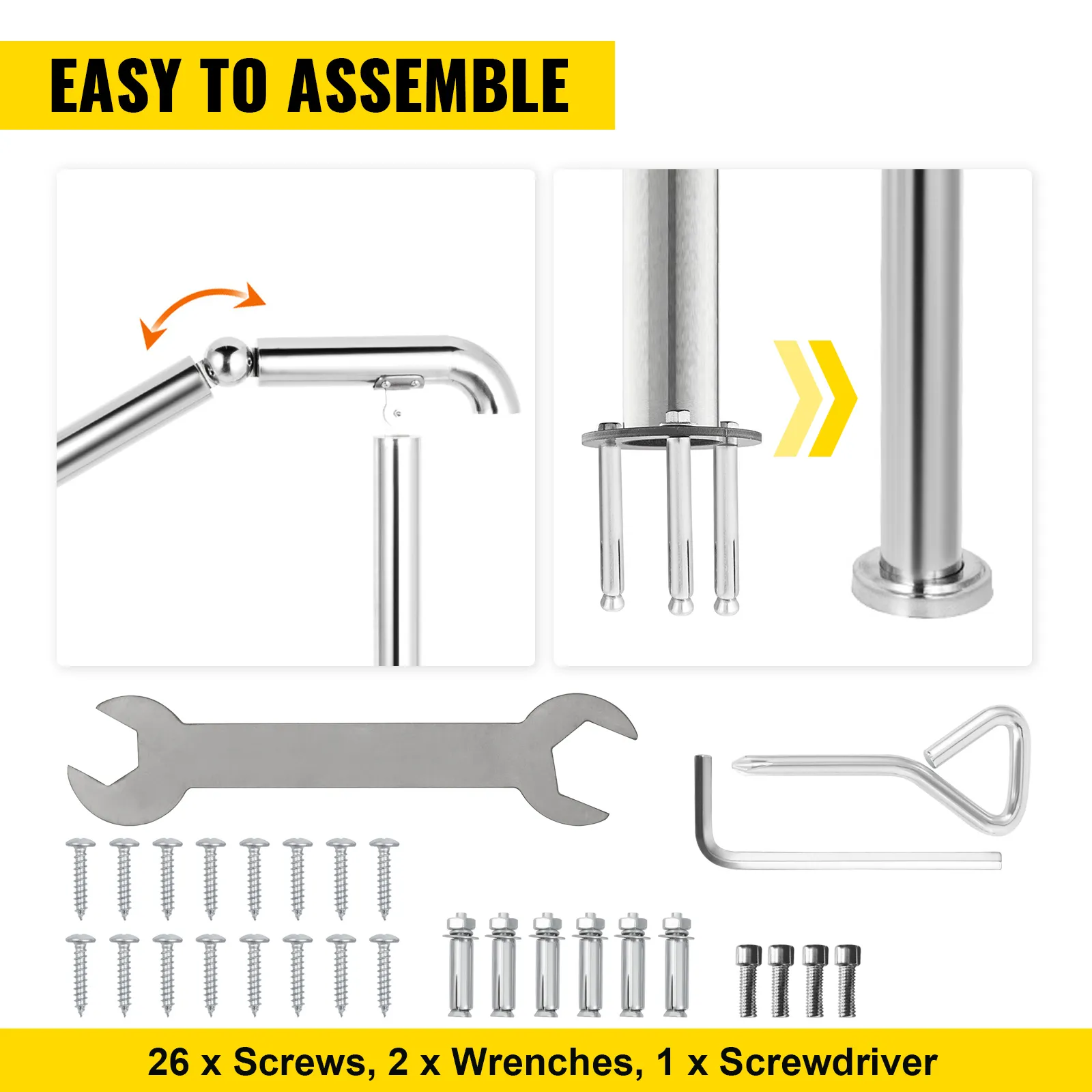
- Effortless Installation: Accompanying the exterior railing for porch are complete accessories for easy installation, including screws, wrench, screwdriver, etc. Just choose your desired location, mark it, drill holes on the mounting surface, set up screws with three φ0.35"/9 mm pre-drilled holes, and finally place base trim.
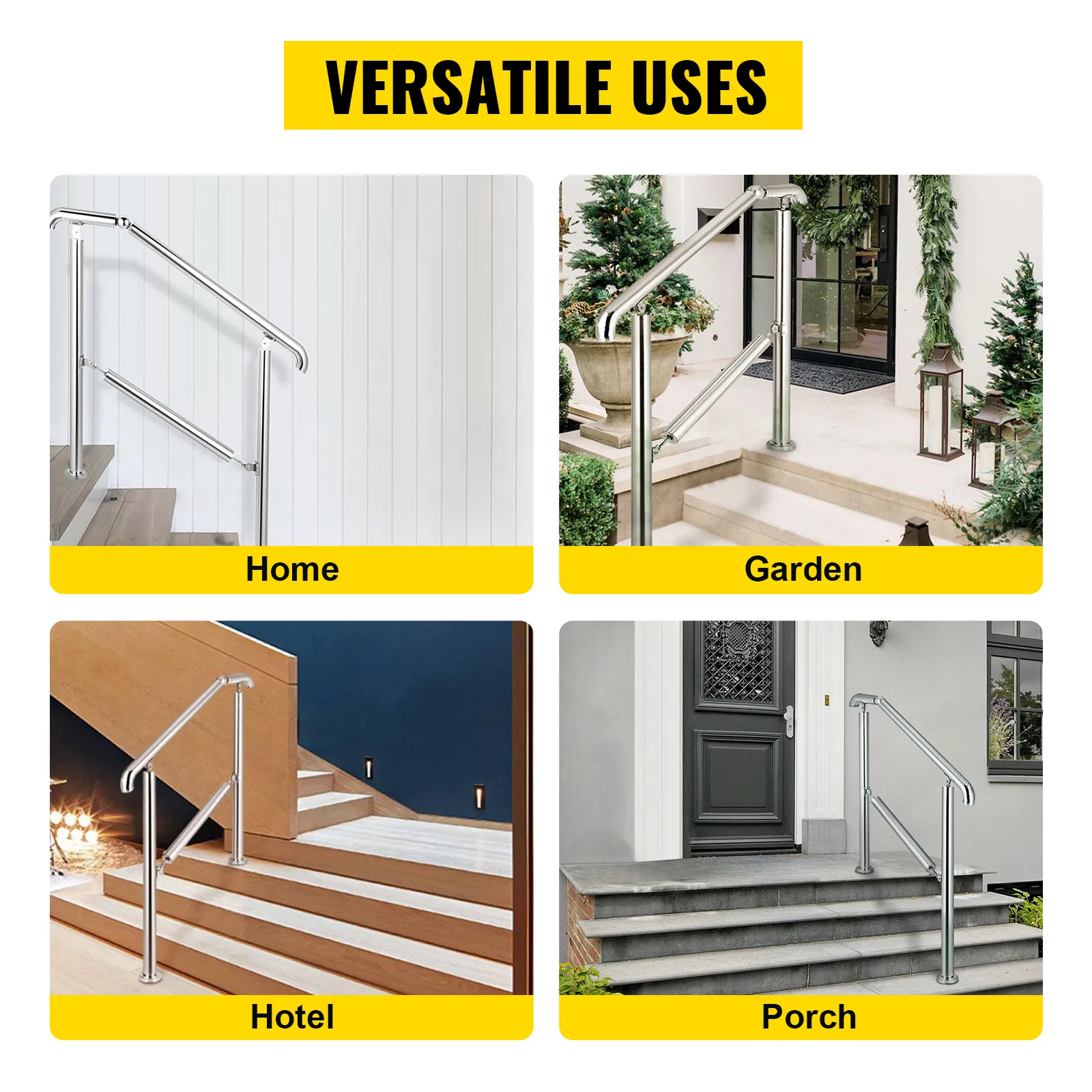
- Indoor & Outdoor Use: The stair railing is a must-have for your family with reliable performance. It can be installed on concrete, brick, and wood steps of porches, balconies, gardens, residential buildings, hotels, garages, etc. This stainless steel step railing is ideal for places you cannot attach to a wall or structure.
Frequently Bought Together
Reviews
About this item


- Adjustable for 4-5 Steps
- High Bearing Capacity
- Sturdy Stainless Steel
- Effortless Installation
- Premium Tough Quality
- Incredibly Low Prices
- Fast & Secure Delivery
- 30-Day Free Returns
- 24/7 Attentive Service
- Premium Tough Quality
- Incredibly Low Prices
- Fast & Secure Delivery
- 30-Day Free Returns
- 24/7 Attentive Service
- Model: BXG-5STEP
- Steps: 4 to 5
- Material: 304 Stainless Steel
- Adjustable Angle: 0-45°
- Load Capacity: 441 lbs/200 kg
- Product Size (W x H): 63.4" x 33.9"/161 x 86 cm
- Distance Between Vertical Bars: 50"/127 cm
- Base Diameter: 3.3"/8.5 cm
- Tube Diameter: 2"/5.1 cm
- Tube Thickness: 0.05"/1.2 mm
- Base Thickness: 0.12"/3 mm
- Pre-Drilled Hole Diameter: 0.35"/9 mm
- Product Weight: 17.2 lbs/7.8 kg
- Color: Silver
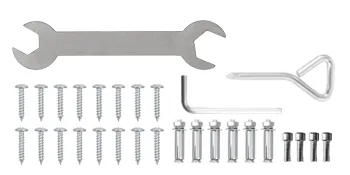
- 1 x Stair Handrail
- 16 x M4*16 Screws
- 6 x M8*60 Expansion Bolts
- 4 x M6*12 Socket Head Cap Screws
- 1 x Allen Wrench
- 1 x Open-Ended Spanner
- 1 x Screwdriver
- Premium Tough Quality
- Incredibly Low Prices
- Fast & Secure Delivery
- 30-Day Free Returns
- 24/7 Attentive Service
- Premium Tough Quality
- Incredibly Low Prices
- Fast & Secure Delivery
- 30-Day Free Returns
- 24/7 Attentive Service
- Adjustable for 4-5 Steps
- High Bearing Capacity
- Sturdy Stainless Steel
- Effortless Installation
- 1 x Stair Handrail
- 16 x M4*16 Screws
- 6 x M8*60 Expansion Bolts
- 4 x M6*12 Socket Head Cap Screws
- 1 x Allen Wrench
- 1 x Open-Ended Spanner
- 1 x Screwdriver
- Model: BXG-5STEP
- Steps: 4 to 5
- Material: 304 Stainless Steel
- Adjustable Angle: 0-45°
- Load Capacity: 441 lbs/200 kg
- Product Size (W x H): 63.4" x 33.9"/161 x 86 cm
- Distance Between Vertical Bars: 50"/127 cm
- Base Diameter: 3.3"/8.5 cm
- Tube Diameter: 2"/5.1 cm
- Tube Thickness: 0.05"/1.2 mm
- Base Thickness: 0.12"/3 mm
- Pre-Drilled Hole Diameter: 0.35"/9 mm
- Product Weight: 17.2 lbs/7.8 kg
- Color: Silver
5 Step Hand Rail Made From 304 Stainless Steel for Outdoor Durability
The type of stainless steel used to make this 5 step hand rail is 304, which is specifically designed to withstand exposure to rain, sunlight, and temperature changes without deteriorating. Unlike coated steel or aluminum, 304 stainless steel railings will not pit or rust-streak even after years of exposure on a porch or an outdoor staircase. For the first season, less expensive railings appear OK, but as weather exposure builds up, they begin to rust at screw heads and weld sites. Stainless steel completely avoids that point of breakdown.
The mirror finish is more than simply decorative; it quickly deflects water and grime, so a quick wipe with a cloth keeps the rail looking brand new without the need for scrubbing or expensive cleaners. Over time, the lower maintenance load becomes more significant than the initial cost difference between stainless and less expensive materials for residences with a railing exposed to the weather year-round. The time saved on maintenance over several years offsets the higher initial cost.
200kg Load Capacity for Dependable Stair Support
A 3 mm thick base plate and a 1.2 mm thick wall tube, both heavier than the majority of porch railings, are responsible for the 200 kg load rating. The additional material is not decorative; rather, it prevents the rail from bowing when someone leans on it in the middle of a step by making it firm under actual body weight. Although thinner tube walls may pass a static weight test, the lateral force of someone using stairs causes them to flex considerably.
For households with elderly parents, small children, or anyone recuperating from surgery, that bearing capacity is the true safety margin, not a marketing figure. This rail is designed to support that force at an angle, not simply when standing straight; a lower-rated rail would be fine on level ground but buckle under side pressure on stairs. This distinction is important since most falls happen when stepping, not when standing motionless.
0-45° Adjustable Angle Fits 4 to 5 Step Configurations
A staircase of 4 to 5 steps will have a real slope. This 5 step hand rail moves from 0 to 45 degrees to match the actual slope, since stairs seldom have a fixed rail angle. It doesn’t impose a standard incline on a porch that doesn’t fit; rather, the rail bends to match the steps that are already there. Fixed-angle railings often leave a visible gap at the top or bottom where the slope doesn’t match, which looks unfinished and decreases actual grip support at that point.
That range also covers transitions from a flat landing to a stair run, where rigid railings don’t generally line up. The setup is that you match the angle to your actual steps once during installation, rather than guessing at a preset incline that may be incorrect. Once locked in, the angle remains in place under normal use without repositioning.
161 x 86 cm Frame With 50" Vertical Bar Spacing
The size of this frame is suitable for a standard 4 to 5 step run, without any gaps at the ends, measuring 161 x 86 cm (63.4" x 33.9"). The space between vertical bars is 50". It makes the rail strong all the way through. If you had one thin support bar holding up the whole thing, it would not be as strong. Cheap rails tend to have wide bar spacing, which can cause a noticeable sag in the middle of a long run. This spacing keeps the structure rigid from corner to corner.
That spacing also matters for grip: Someone using the rail for stabilization has consistent bar placement to reach for at multiple points along the stairs, not just the top or bottom. That’s the sort of consistency that makes a rail truly usable instead of just there for a porch or walkway used daily. It also reduces the chance of someone lunging into a void and finding nothing to hold on to.
9mm Pre-Drilled Holes for Straightforward Mounting
It is installed using three holes, each 9 mm in diameter, per mounting point. The holes are sized for the included screws, so no other hardware is needed. The kit includes a wrench and screwdriver, so you don’t have to go looking for tools in a Saturday afternoon project. Most DIY installs take less than an hour once the mounting surface is marked and drilled.
Mark, drill, and set the screws, then add the base trim to cover the mounting hardware for a finished look. It is designed to attach to concrete, brick, or wood. It will cover most porch, balcony, and garage surfaces without the need for a structural wall for bolting, making it ideal for freestanding steps where nothing else is available to bolt into. That versatility means the same rail works on a poured-concrete porch and a wood deck, with no different hardware required for each.
5 Step Hand Rail Kit Built for Indoor and Outdoor Surfaces
This 5 step hand rail can be used indoors and outdoors, including garages, hotel entries, residential porches, and gardens, without the need for a separate rail for each surface type. Made with the same stainless steel that works for the outdoors, this finish won’t show the foot traffic and cleaning of an indoor environment. Multi-entry properties, such as a hotel with both interior stairs and an outdoor walkway, can standardize on one rail style rather than sourcing separate indoor and outdoor products.
The 7.8 kg rail is light enough for one person to position and hold steady for installation, even with a 200kg load rating once mounted. It's the combination of the install weight and the rail's actual standing strength that makes it practical for a DIY weekend project, rather than requiring a second installer just to get it into position. Once anchored, the weight that makes it easy to handle during setup does not affect how much load it supports day-to-day.