VEVOR Low Profile Floor Jack, 2.5 Ton Capacity, Aluminum & Steel Racing Floor Jack with Dual Pistons Quick Lift Pump, Hydraulic Trolley Car Lift for Sedans & Compact SUVs, Lifting Range 95-475 mm

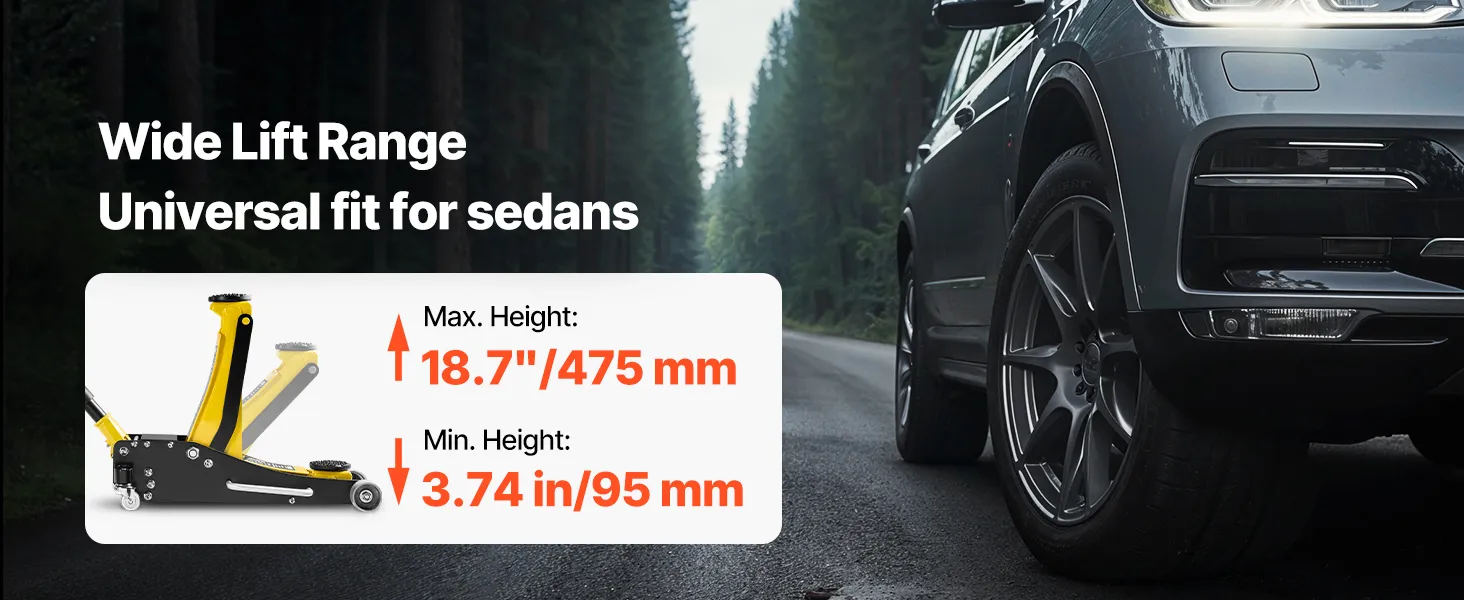
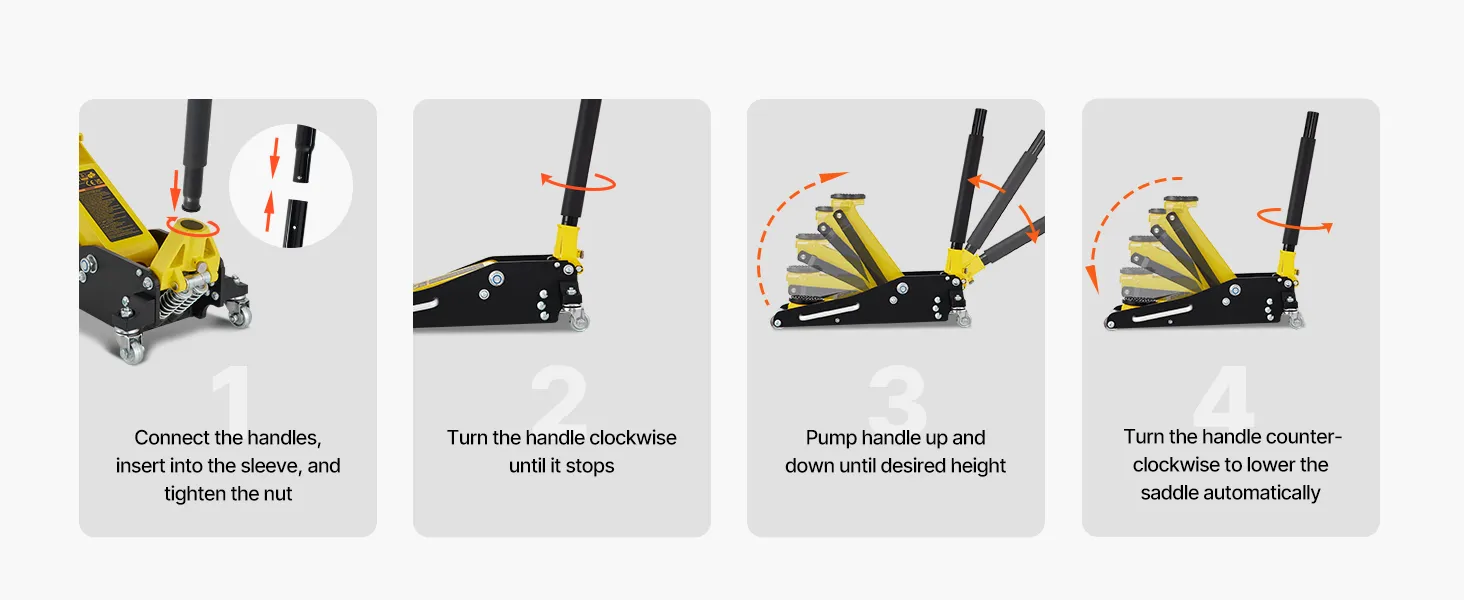
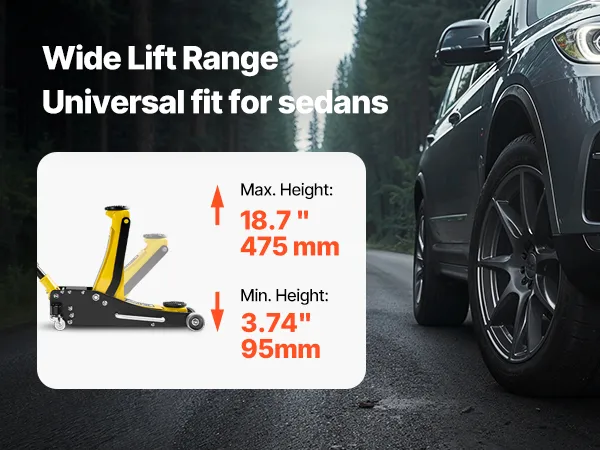
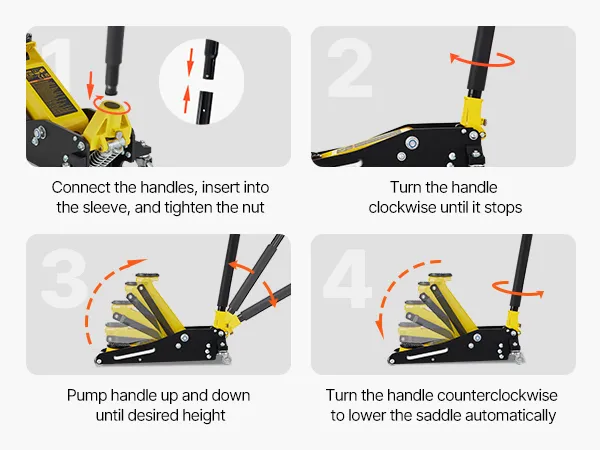
- Lifting Range: Our low profile floor jack lifts 3.74-18.7 in (95-475 mm). It slides under low-clearance sports cars or sedans while reaching high lift. Tighten the release valve and pump to lift, turn extended handle counterclockwise to lower smoothly
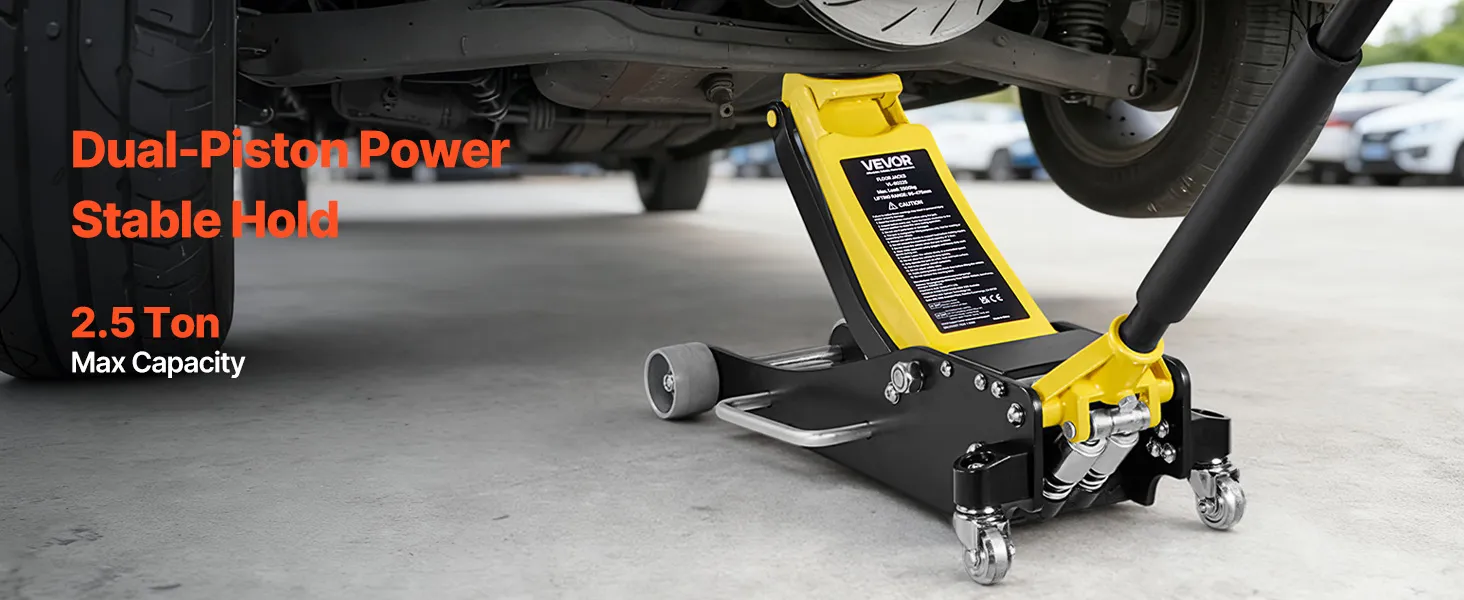
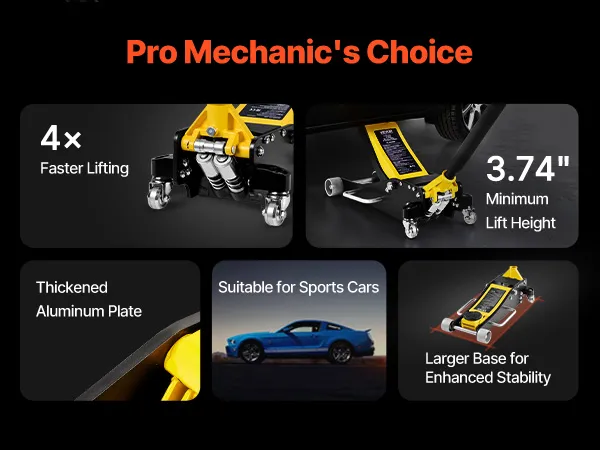
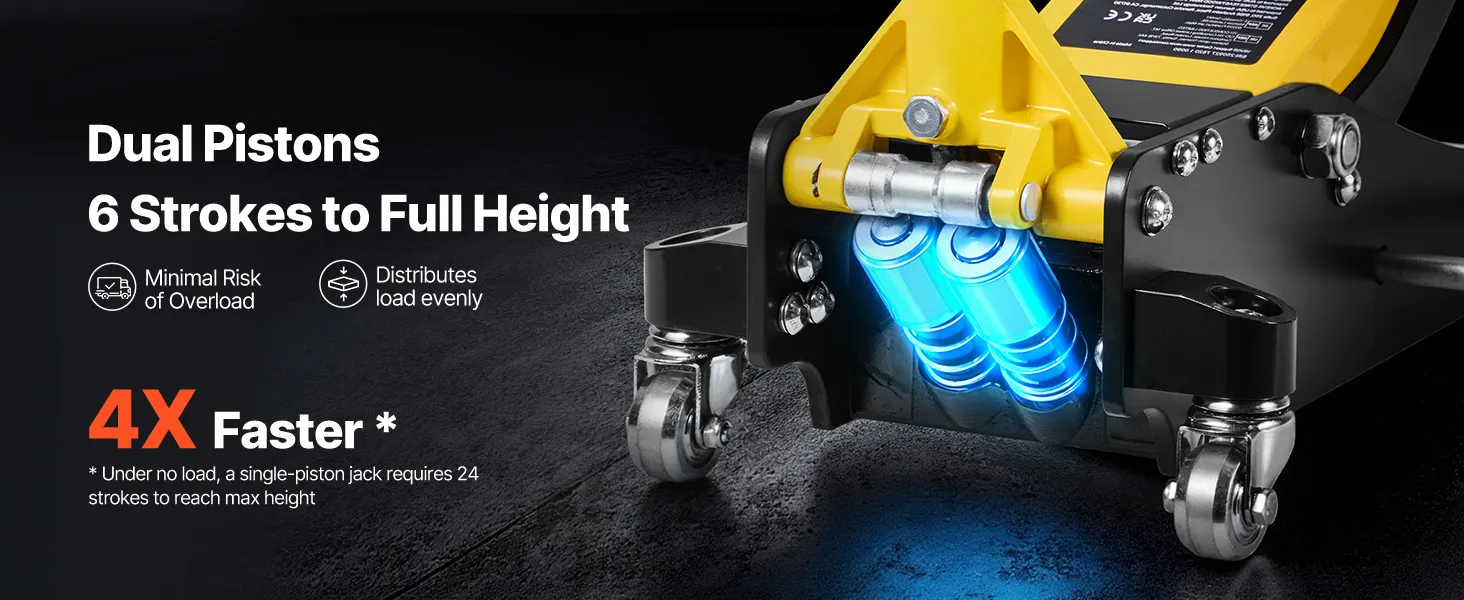
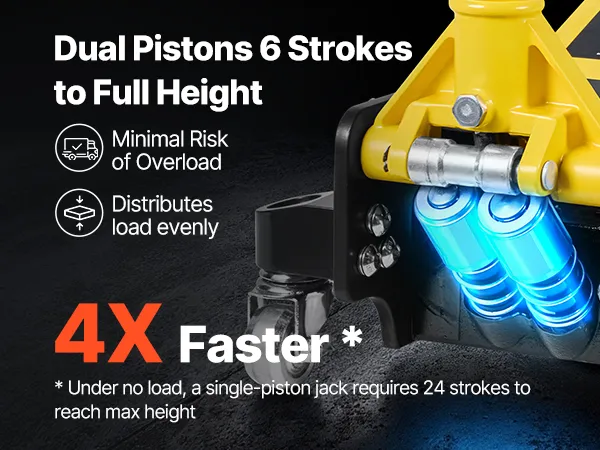
- Dual-Piston Quick Lift: Our hydraulic floor jack uses a dual-piston hydraulic system, reaching full height in just six pumps unloaded—4x faster than single-piston jacks. Even weight distribution and a leak-proof pump ensure stable, fast lifting
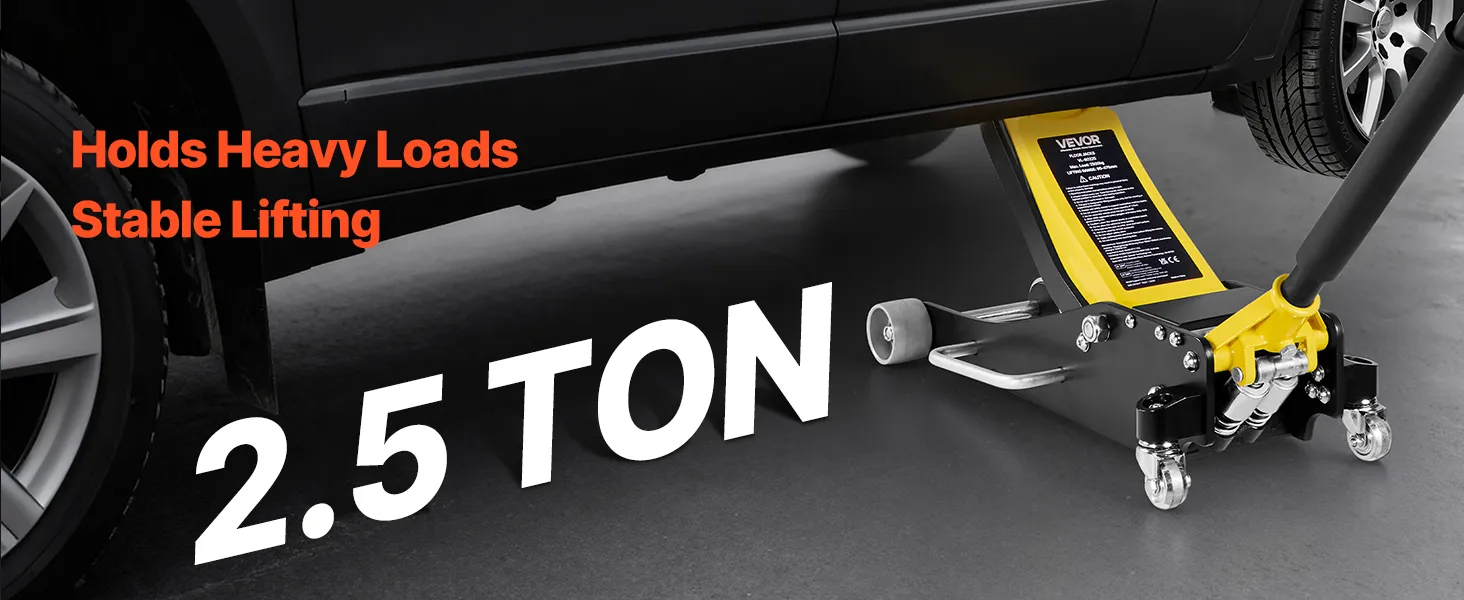
- 2.5T Max Load: Our floor jack supports 2.5 tons (5500 lbs), ideal for lifting sports cars, sedans, and compact SUVs. It's reliable for home maintenance, tire changes, brake checks, exhaust or suspension work. For extended support, use with jack stands
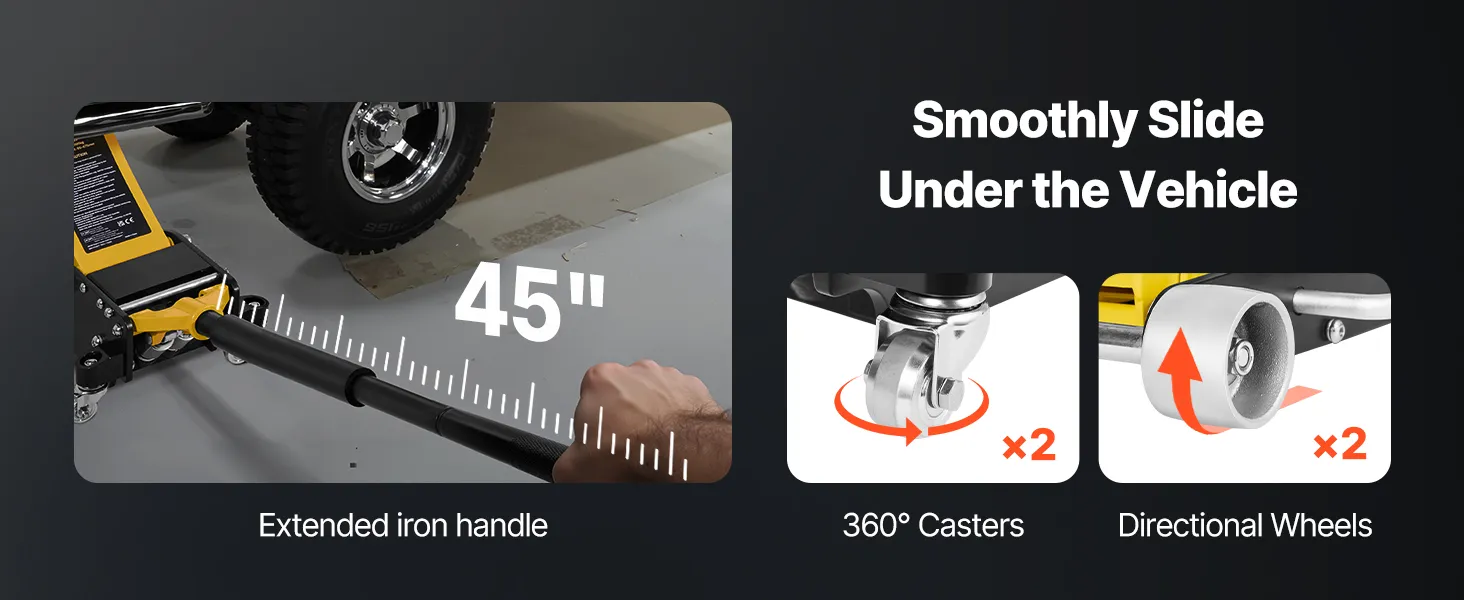
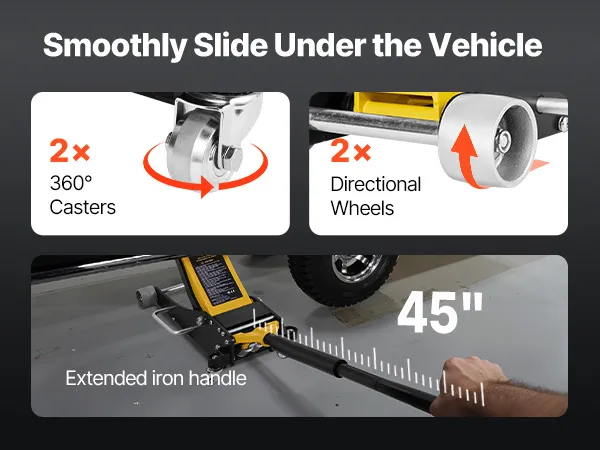
- 360° Easy Mobility: The low profile jack features an extended handle with two swivel casters and two directional wheels. It moves smoothly across outdoor asphalt, letting you position it under your vehicle without strain
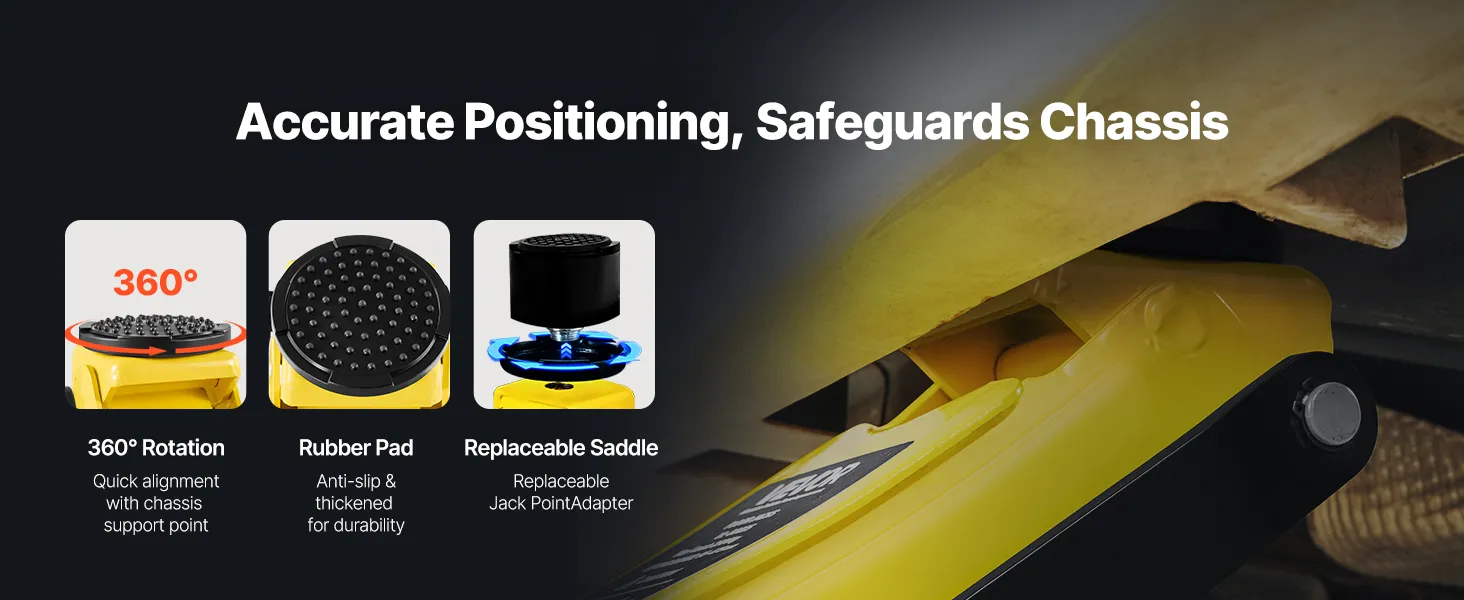
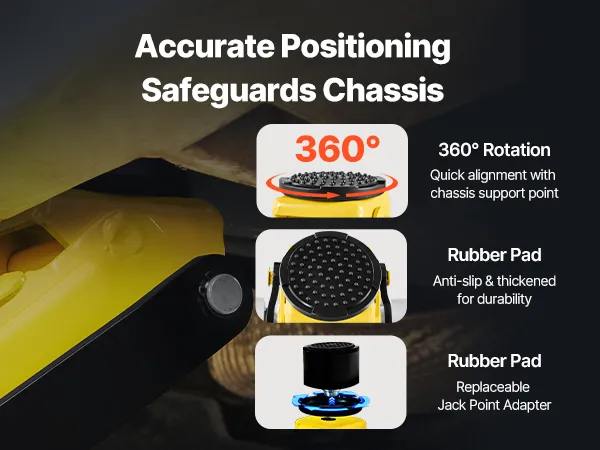
- Safe Support: Made of heavy-duty aluminum alloy and steel, this low profile car jack minimizes wobble or drop during lifting. The rotating saddle top with a non-slip rubber pad safeguards your vehicle's underside and quickly aligns with lift points
Frequently Bought Together
Reviews
 Da***
Da***  Da*** Ba*** José Manuel Rodriguez
 About this item




Low Profile Hydraulic Floor Jack with 95mm Entry Height for Racing and Sedans
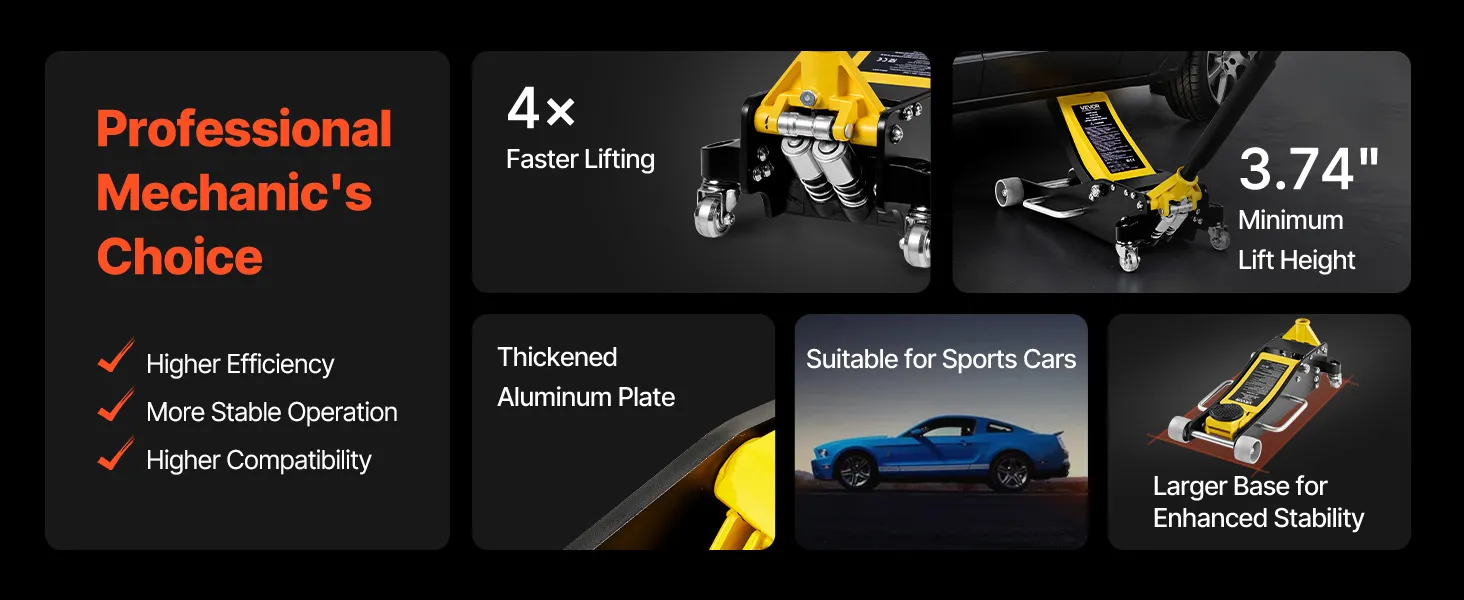
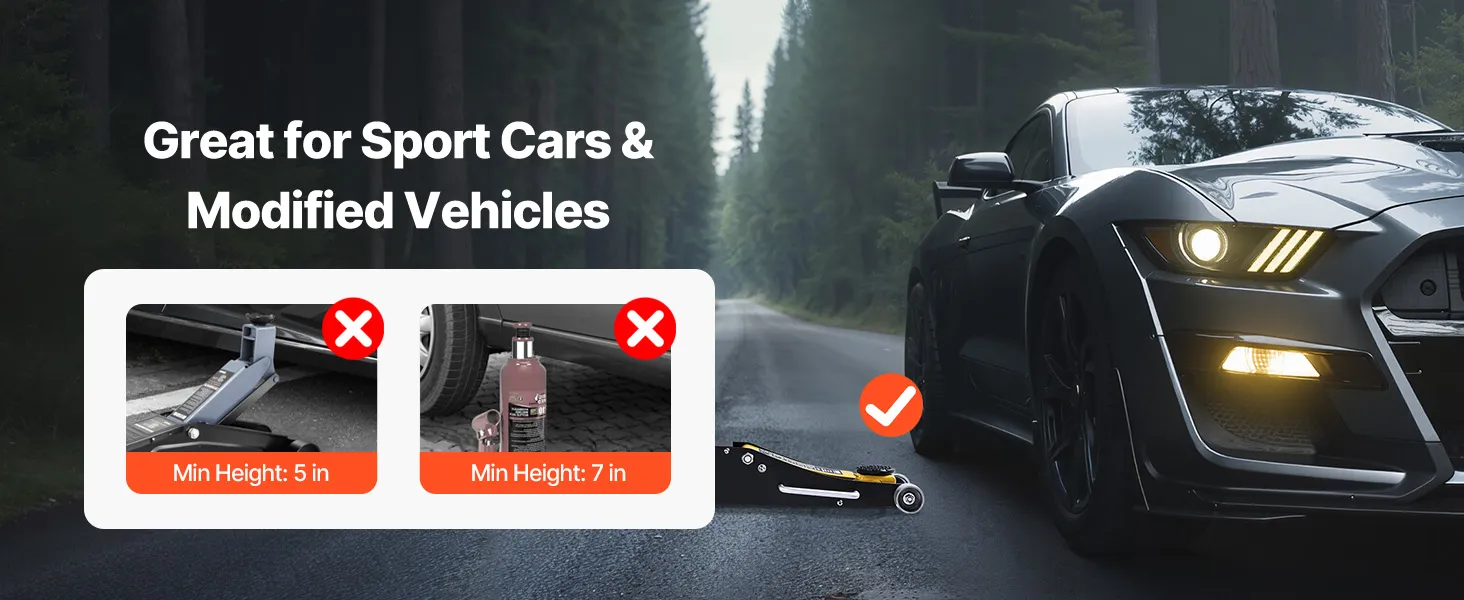
With a minimum lifting height of 95 mm (3.74 inches), this VEVOR low profile hydraulic floor jack is much easier to use on a wider range of low-clearance vehicles, such as modified sports cars, track-day vehicles, and lowered sedans. The 3.94-inch body profile lets the jack head slide under vehicle sills without first putting the car up on ramps. This saves time setting up each lift and lowers the risk of hitting the ground when the jack approaches.
With a maximum lift height of 475mm (18.7 inches), you have plenty of room to work on tasks like changing tires, servicing the suspension, and accessing the exhaust system on sedans and small SUVs. The wide 95–475 mm lifting range provides enough working clearance for tire changes, brake service, suspension work, and exhaust repairs on a variety of passenger vehicles.
Dual-Piston Quick Lift Reaches Full Height in Just 6 Pumps Unloaded
The main mechanical difference between this low profile hydraulic floor jack and single-piston floor jacks is its two-piston hydraulic system. It takes about six pumps to reach full unloaded height, which is about four times faster than similar single-piston designs. This is because the two pistons work simultaneously, moving twice as much hydraulic fluid per stroke. For workers who lift several cars every day, this difference in speed translates into a significant reduction in effort and total time on the job over the course of a full work session.
A two-piston system also spreads the hydraulic load more evenly across the pump than a single-piston design, thereby lowering the peak pressures in the hydraulic circuit during each stroke. The sealed hydraulic system maintains constant pressure throughout the cylinder's operating range. This ensures stable, consistent lifting from the lowest entry height of 95 mm to the highest of 475 mm, with no hesitation mid-lift or pressure drop under load.
2.5-Ton Capacity for Sports Cars, Sedans, and Compact SUVs
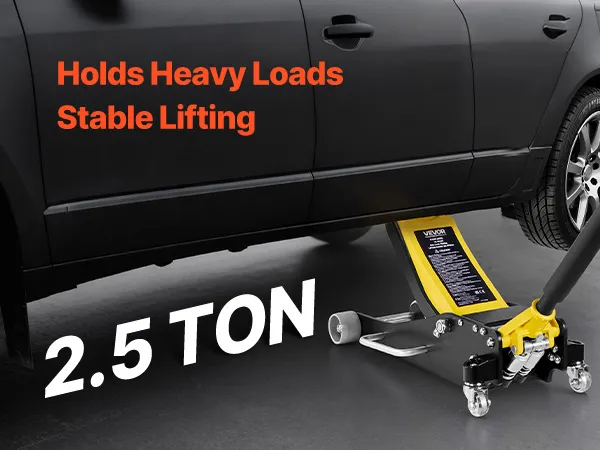
With a rated capacity of 2.5 tons (5,500 lbs), this low profile hydraulic floor jack can handle a much wider range of vehicle weights. It can lift heavier compact SUVs, loaded sedans, and performance vehicles that are close to or over the lower unit's safe working limit.
This capacity suits many vehicles commonly serviced in home garages and small workshops: sports cars that need track maintenance, daily-driver sedans that need brake or wheel work, and small SUVs that need suspension service. To keep the hydraulics working well and the saddle stable over the unit, it is most important to use the jack within its rated capacity with a meaningful cushion.
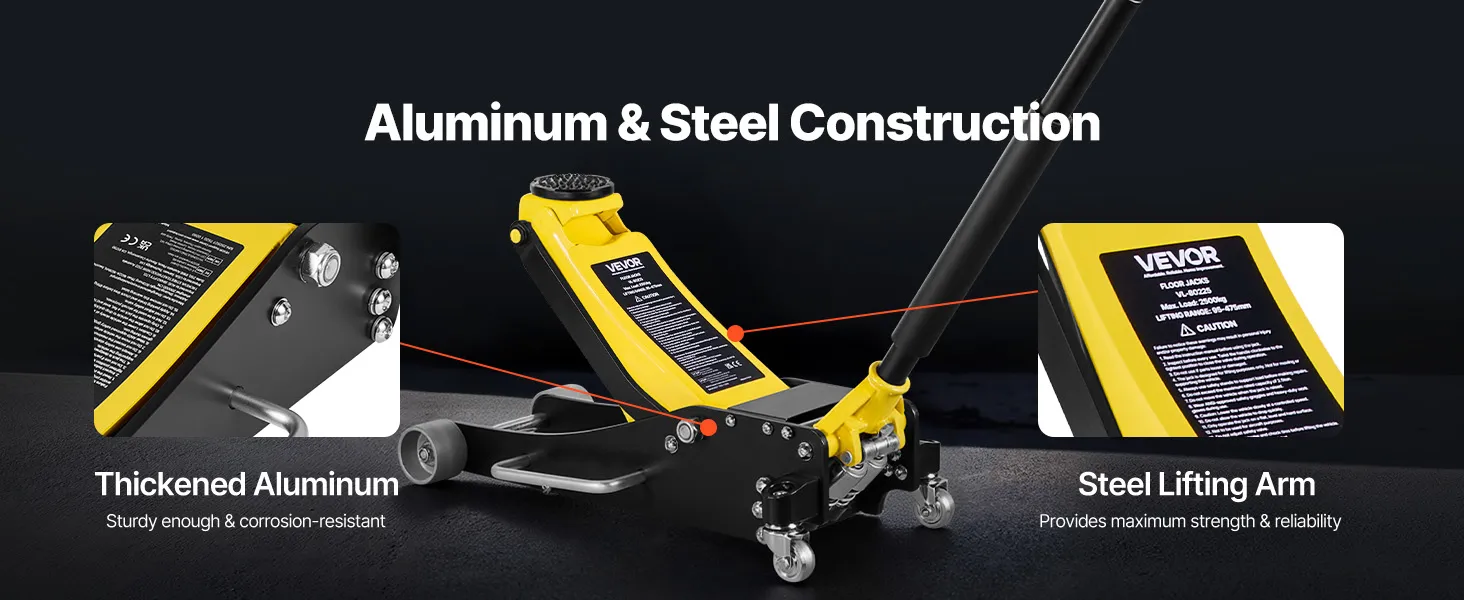
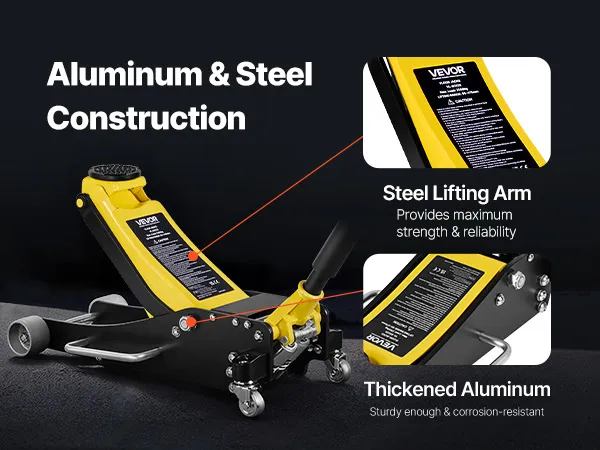
Aluminum Alloy and Steel Hybrid Frame for Strength Without Excess Weight
In parts of the frame that can be lightened without compromising structural rigidity, such as body panels, trolley arms, and non-load-bearing sections, aluminum alloy parts are used instead of steel. High-strength steel is used in areas such as the hydraulic cylinder mount, saddle post, and primary load-bearing joints, where tensile strength is most needed.
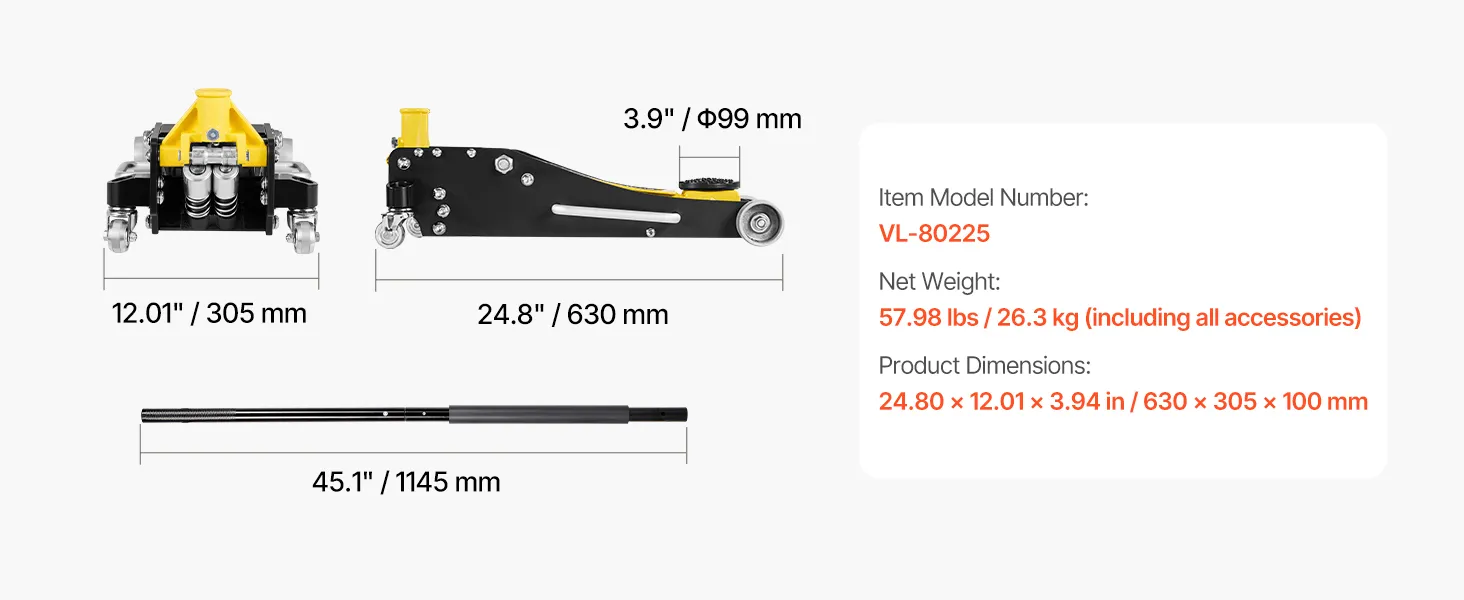
The combination of aluminum alloy and steel helps reduce overall weight while maintaining strength where it is needed most. The extended 45.1-inch (1145mm) handle gives the operator greater leverage during pump strokes, so they do not have to use as much hand force to generate enough hydraulic pressure to lift near the rated maximum.
Non-Slip Rotating Saddle with Rubber Pad for Chassis Point Alignment
There is a non-slip rubber pad on the rotating saddle at the top of the hydraulic cylinder that protects the vehicle's underside contact points from metal-on-metal wear during lift and return. Vehicle manufacturers specify chassis jacking points because lifting without protection at the wrong contact points can damage sill reinforcements, subframe brackets, and floor pan structures.
Because the saddle can turn freely, it automatically aligns with the shape of the vehicle's jacking point, regardless of the angle at which the jack contacts the frame. This rotational accommodation means you do not have to move the entire jack to achieve flat saddle contact on low-clearance vehicles, where the approach path between the ground and the jacking point is limited.
Anti-Loose Casters and Side Handle for 360° Outdoor Mobility
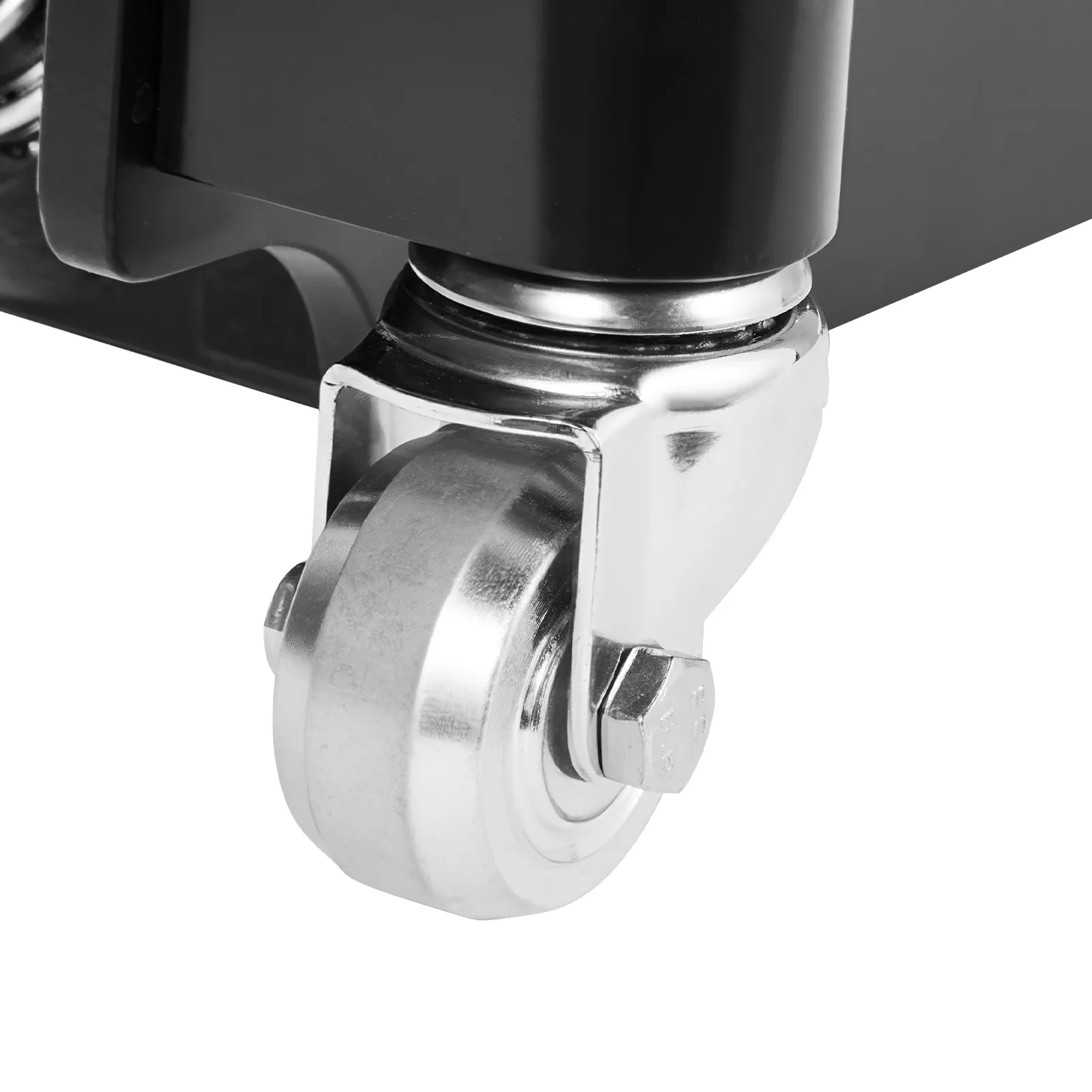
Two swivel casters and two directional rear wheels give the jack full 360-degree mobility on flat surfaces such as garage floors, asphalt, and paved outdoor areas. The high-strength casters are designed to maintain a tight fit even under vibration and lateral loading over time.
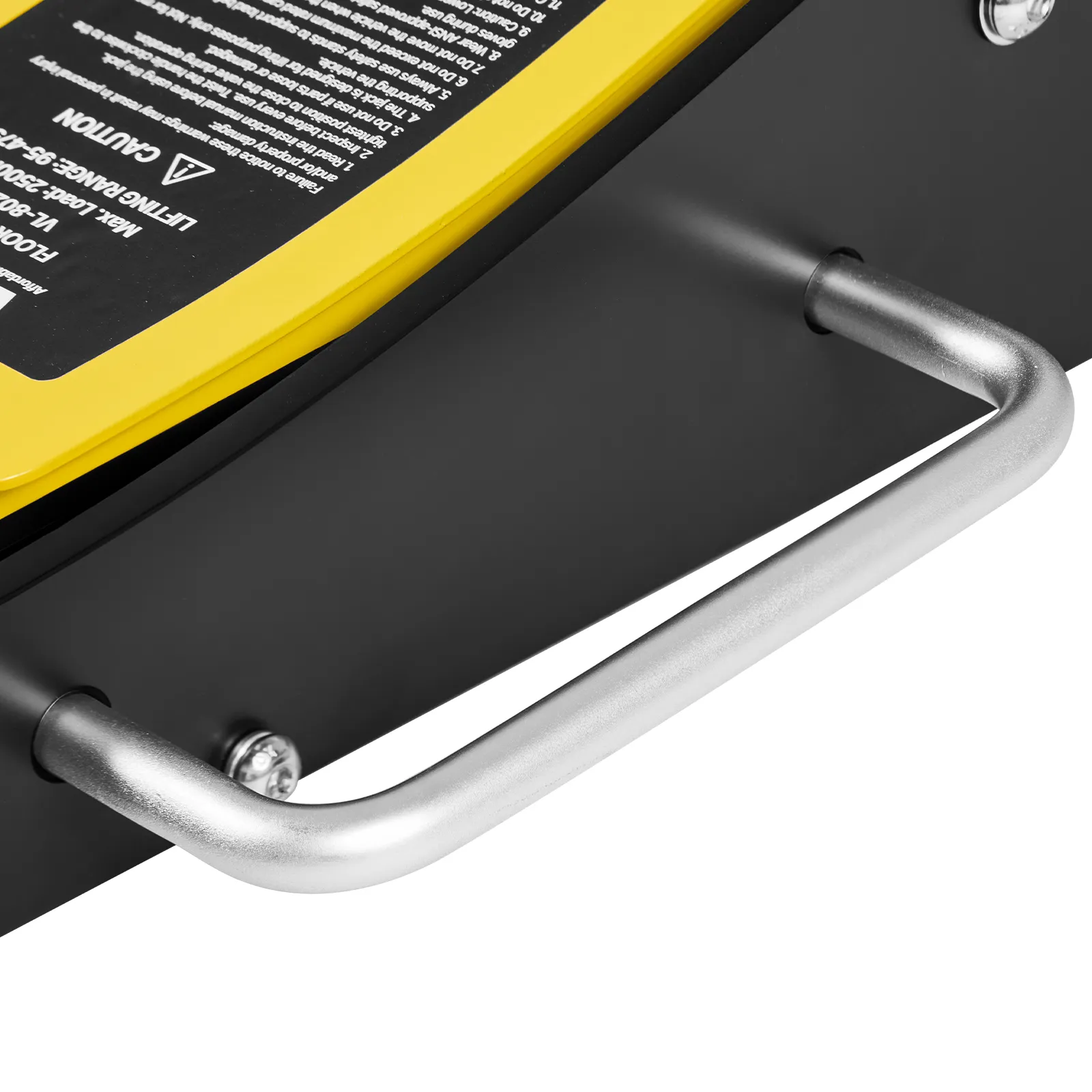
For easy repositioning on outdoor surfaces, the jack body has a side handle. This is useful for moving the jack between cars in the driveway or across a workshop floor without excessive lifting effort. The oil release valve has a simple tighten-to-lift and loosen to lower mechanism.
Low Profile Hydraulic Floor Jack for Home Garage and Professional Workshop Use
For garages, semi-professional workshops, and track-day prep areas where both speed and capacity are important, this low profile hydraulic floor jack is an excellent choice. The 95mm entry height, 2.5-tonne capacity, and dual-piston quick lift all meet the three needs that performance vehicle owners always put first: the ability to access low-clearance vehicles, the ability to lift heavier models, and a fast lift speed that does not require too much maintenance time.
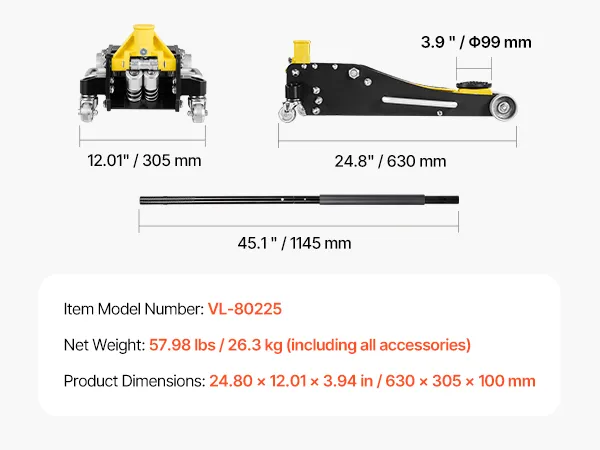
The 2.5-ton capacity and 475 mm maximum lift height provide the working clearance needed for routine maintenance on a variety of passenger vehicles. The dimensions of 630 x 305 x 100 mm make it easy to store in a normal garage tool bay, and the side handle makes it easy for one person to move the 26.3 kg unit into place before and after each use.