VEVOR Low Profile Floor Jack, 3 Ton Capacity, Steel Racing Floor Jack with Single Piston Quick Lift Pump, Hydraulic Trolley Car Lift for Sports Cars, Sedans, SUVs, Pickups, Lifting Range 130-500 mm

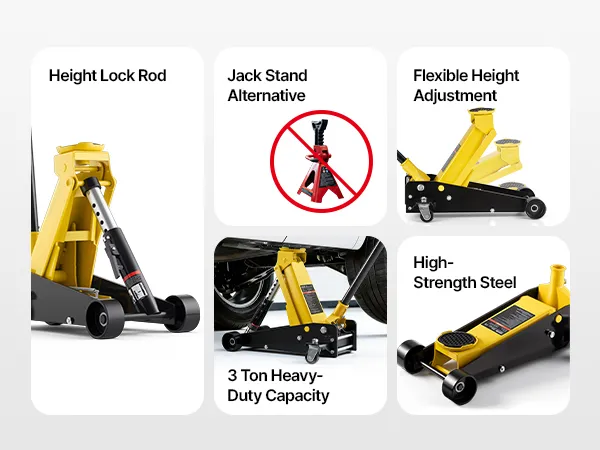
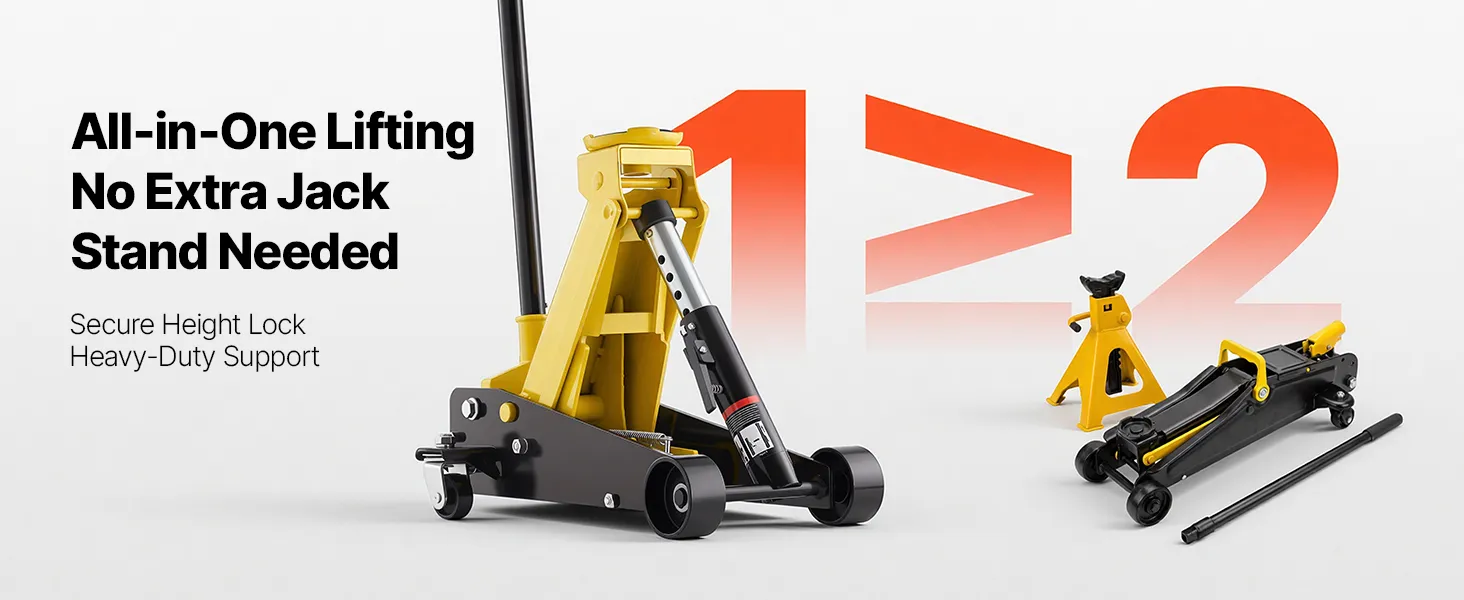
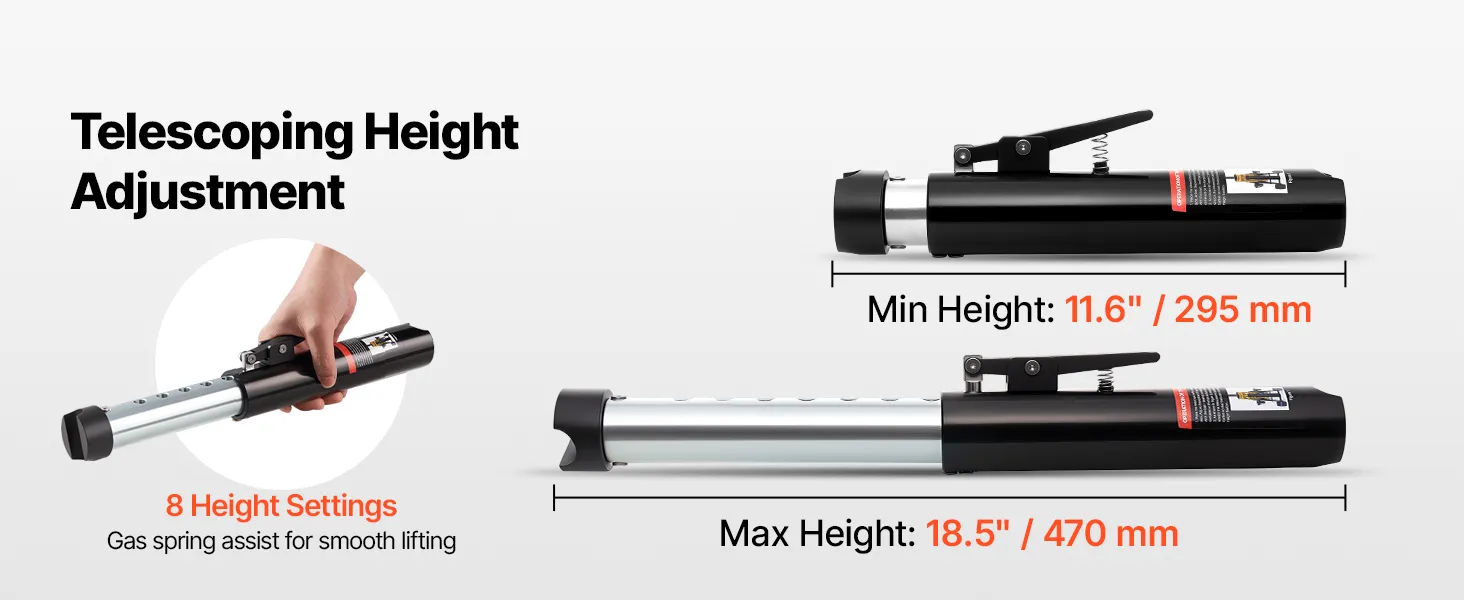
- Floor Jack & Support Rod Kit: Our low profile floor jack includes a telescopic support rod, providing 8 height settings (11.6–18.5 in / 295–470 mm). It serves as a jack stand, allowing the jack to stay height-locked while you work safely under the vehicle
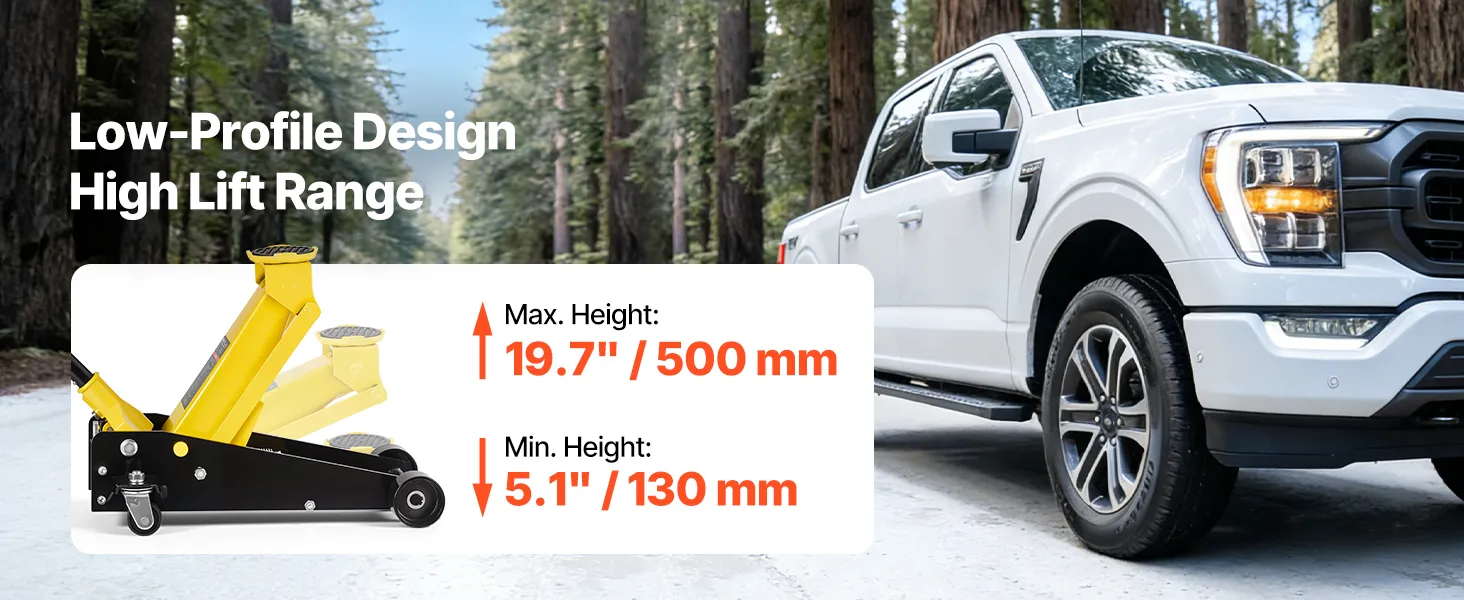
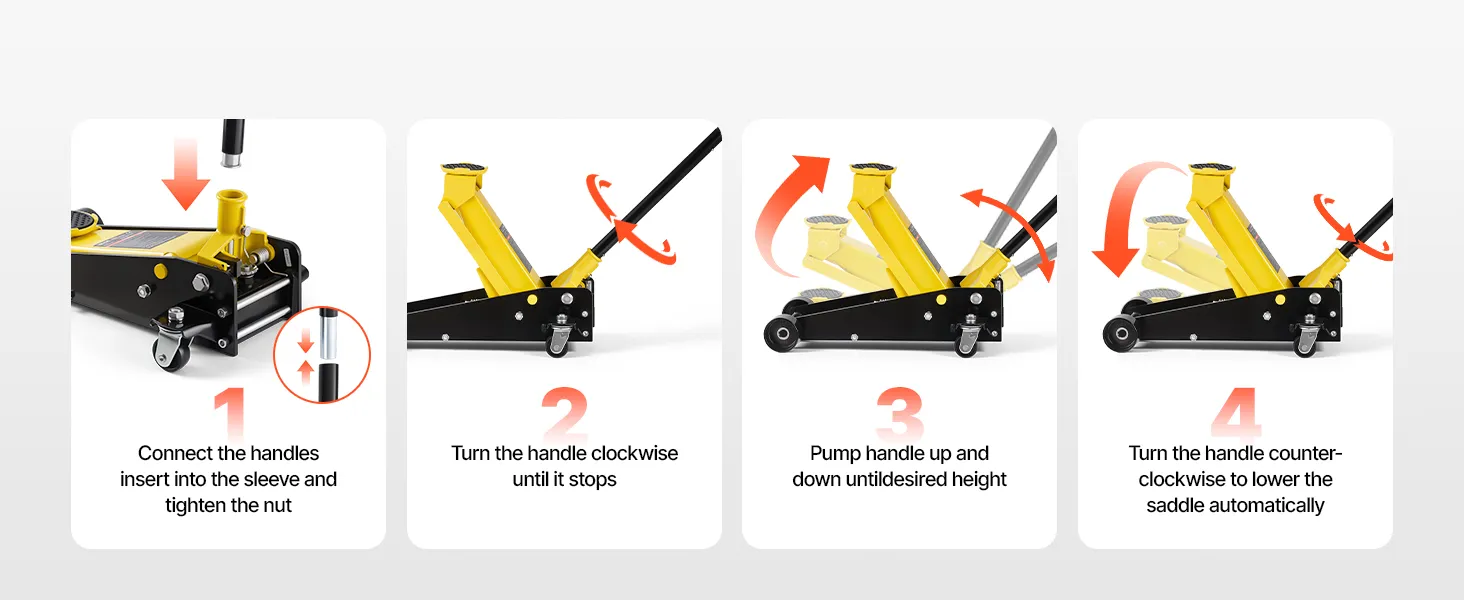
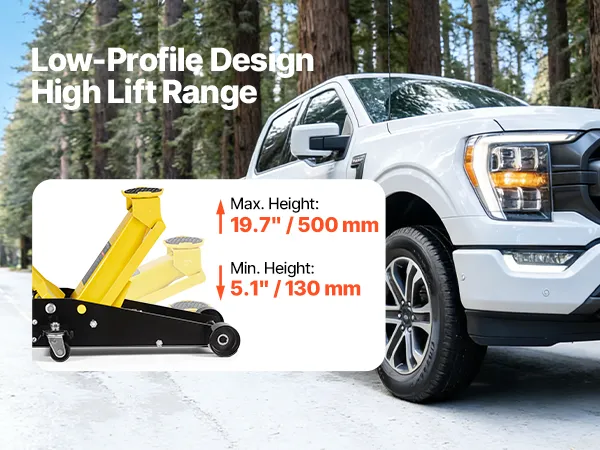
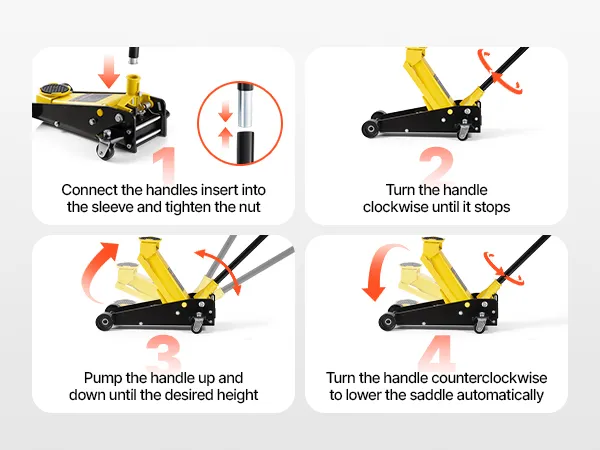
- Wide Lift Range: The floor jack lifts from 5.1–19.7 in (130–500 mm). Low-profile design slides easily under sedans, while providing ample lift height. Tighten the release valve and pump to raise, then turn the handle counterclockwise for smooth lowering
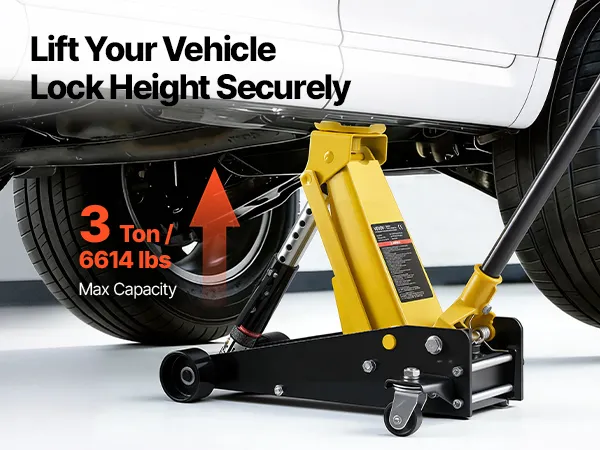
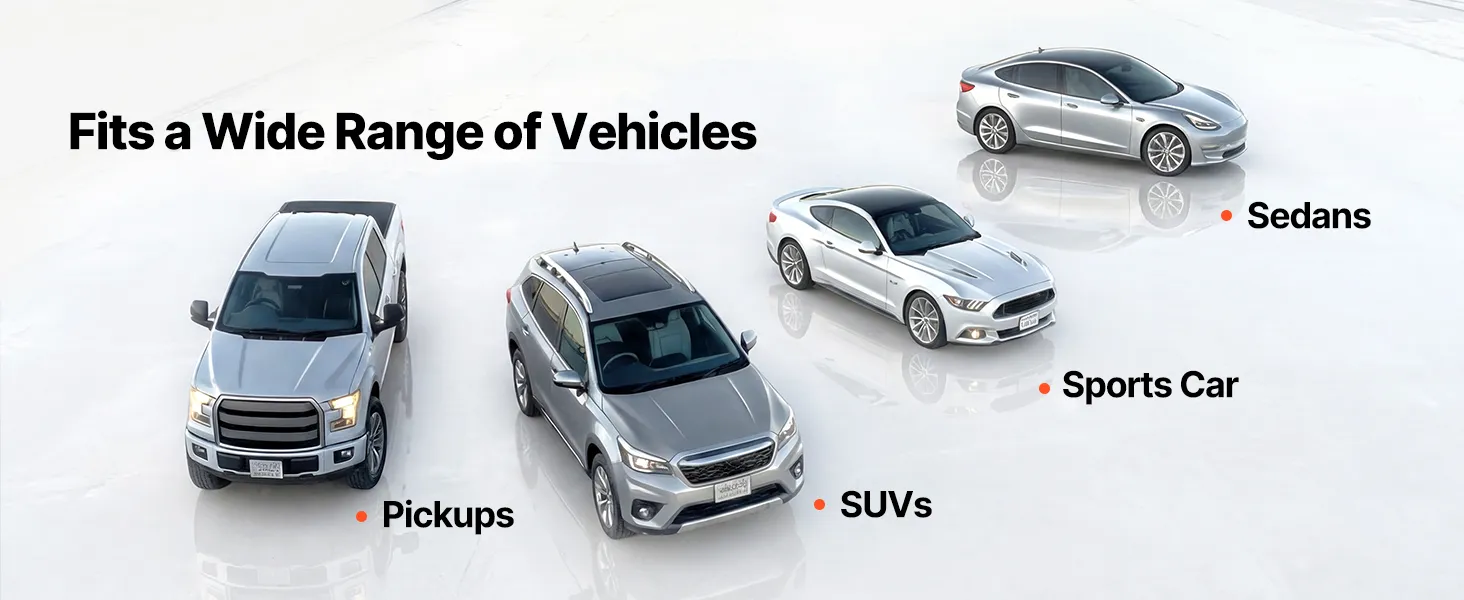
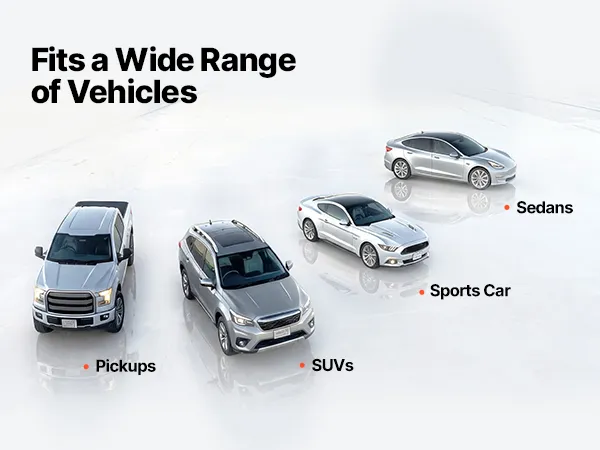
- 3T Max Capacity: Our hydraulic floor jack supports up to 3 tons (6,614 lbs), lifting sports cars, sedans, SUVs, and pickups with ease. It is ideal for tire changes, brake service, exhaust replacement, suspension maintenance, and other undercarriage work
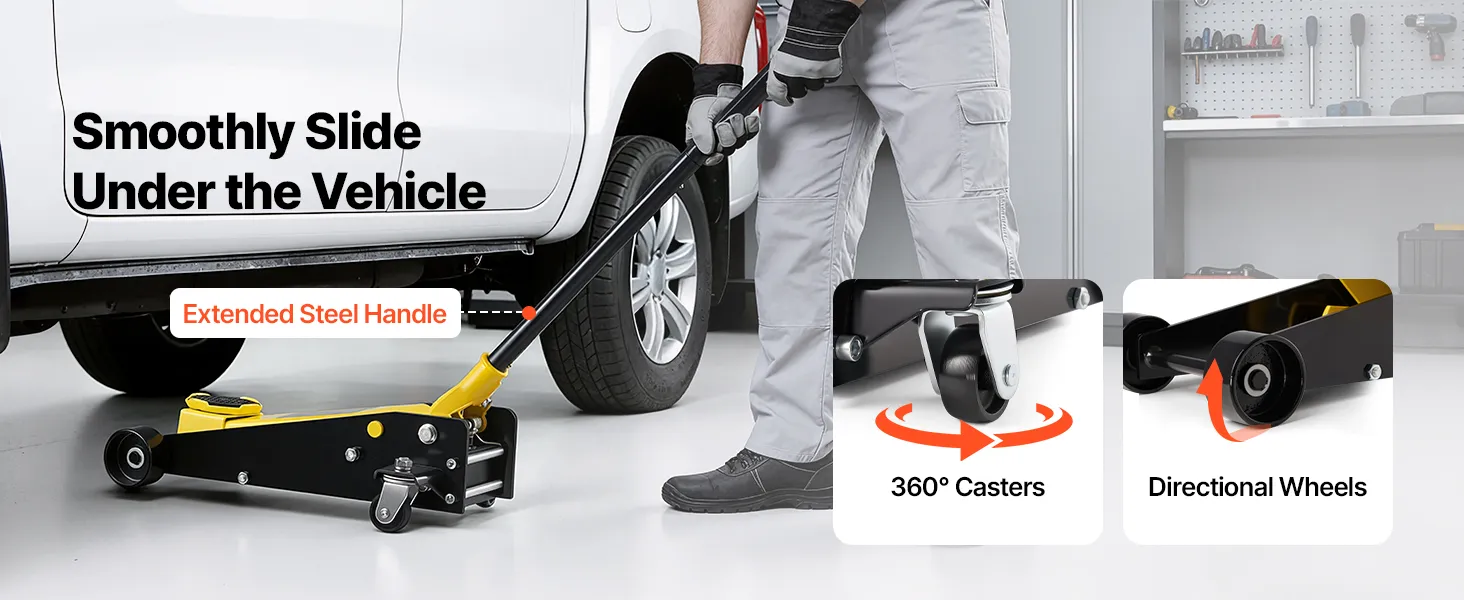
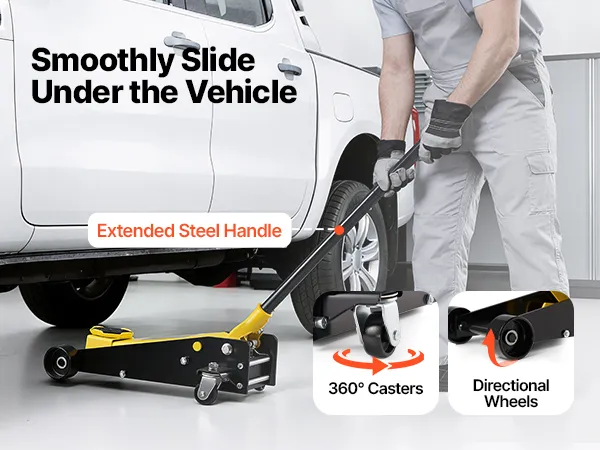
- 360° Smooth Mobility: This low profile jack features an extended handle for better control. Two swivel casters and two fixed wheels help the floor jack roll smoothly on outdoor asphalt and slide easily under the vehicle with less effort
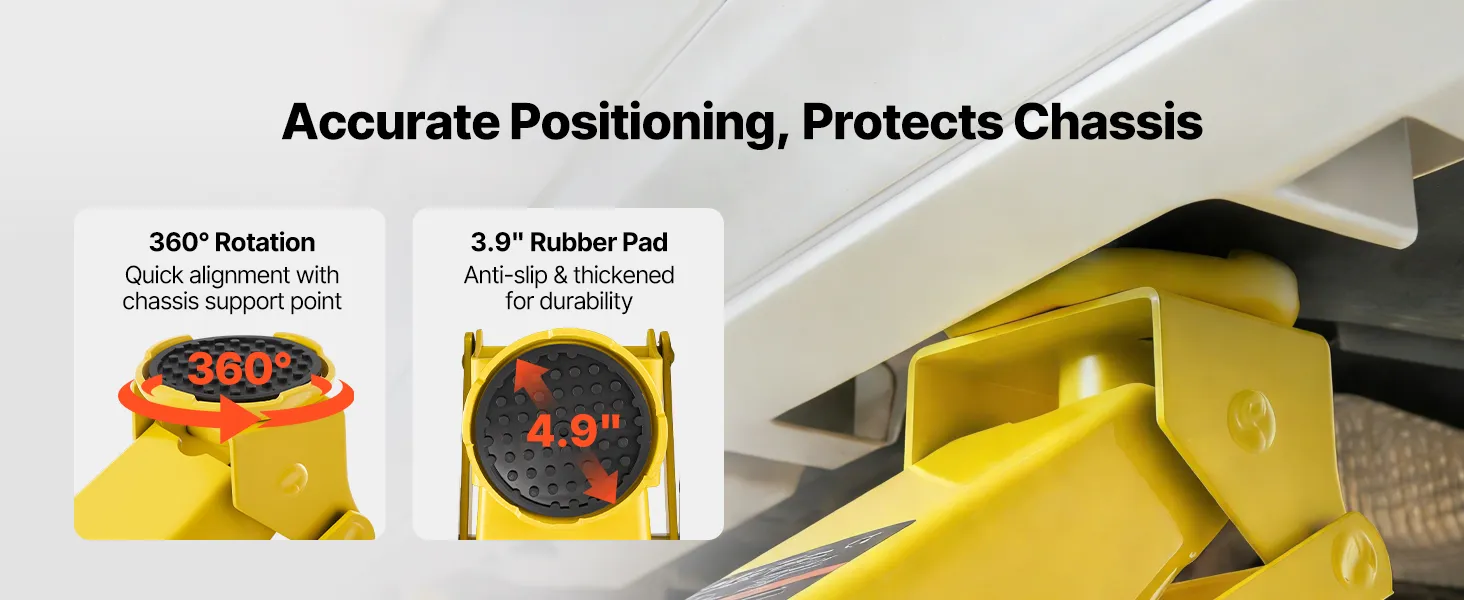
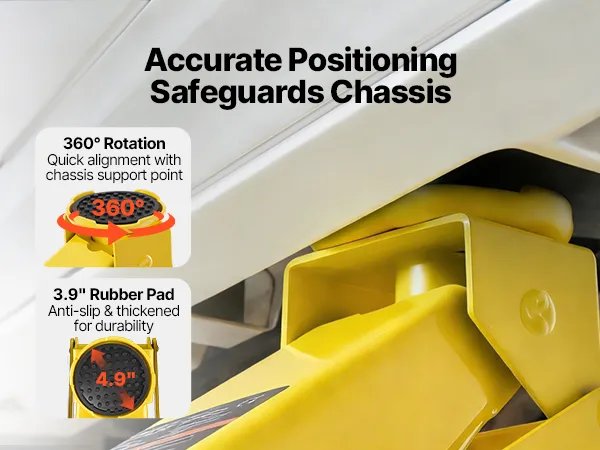
- Secure & Stable Support: The low profile car jack is built with heavy-duty steel for strength. The structure helps reduce wobble during lifting. A rotating saddle with a non-slip rubber pad safeguards the underbody and aligns easily with lift points
Frequently Bought Together
Reviews
- 100%
- 0%
- 0%
- 0%
- 0%
 maurice poirier
  CaptainCodeman
  Max Robert B.
 About this item


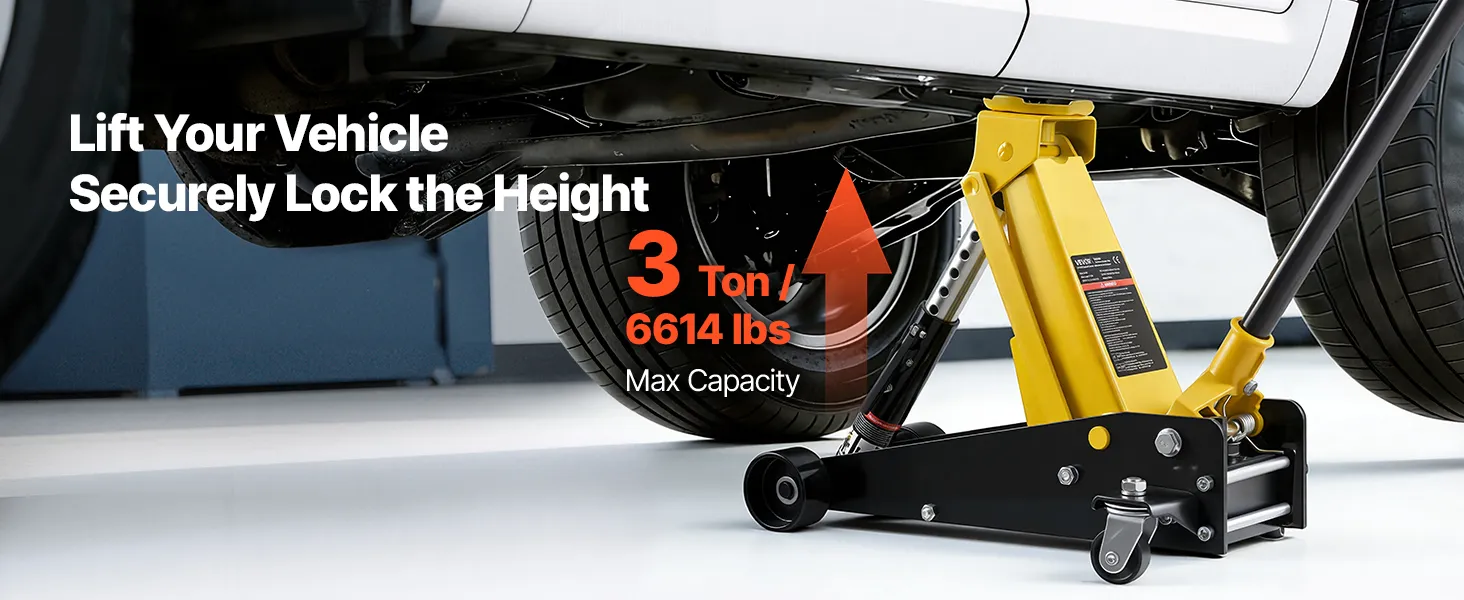
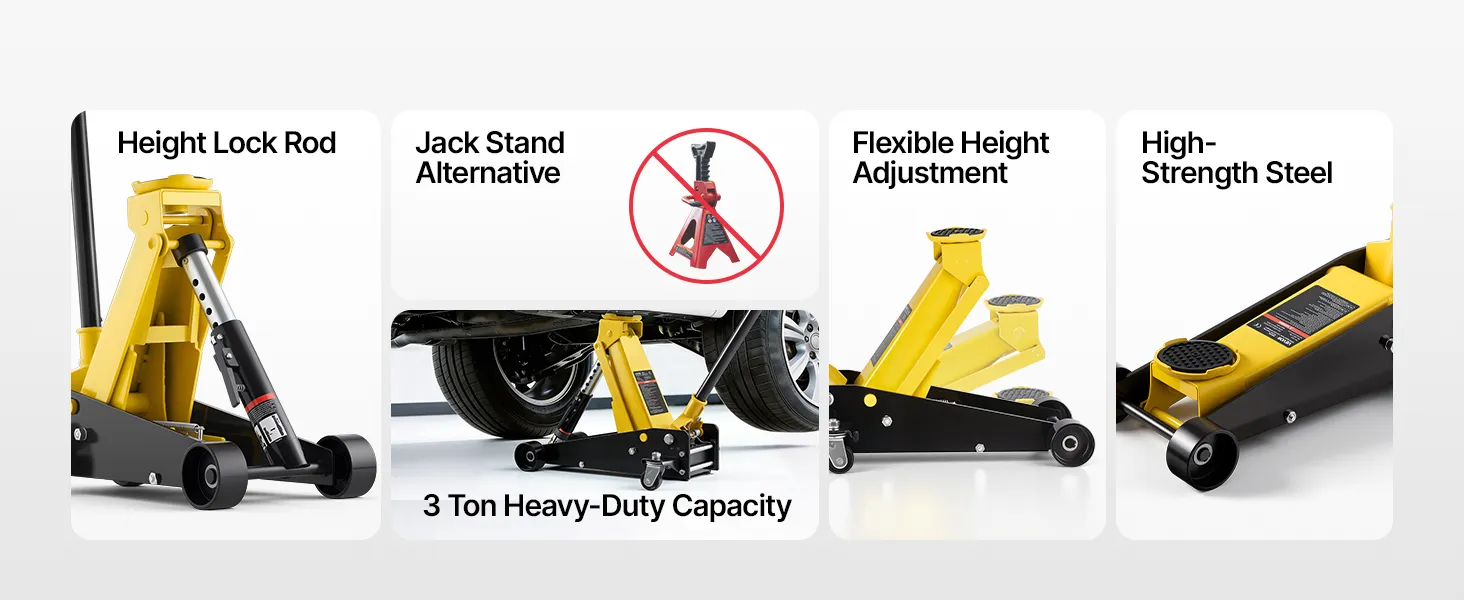
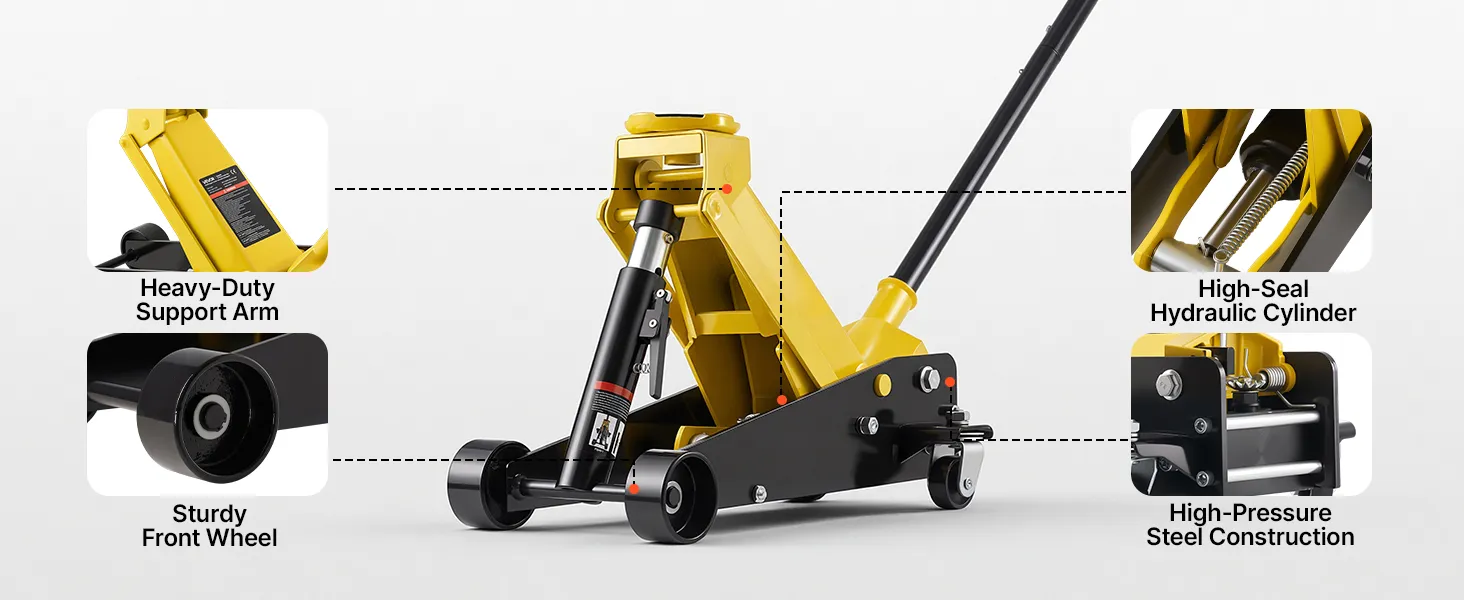
3 Ton Low Profile Jack with Telescopic Support Rod and 8-Position Height Lock
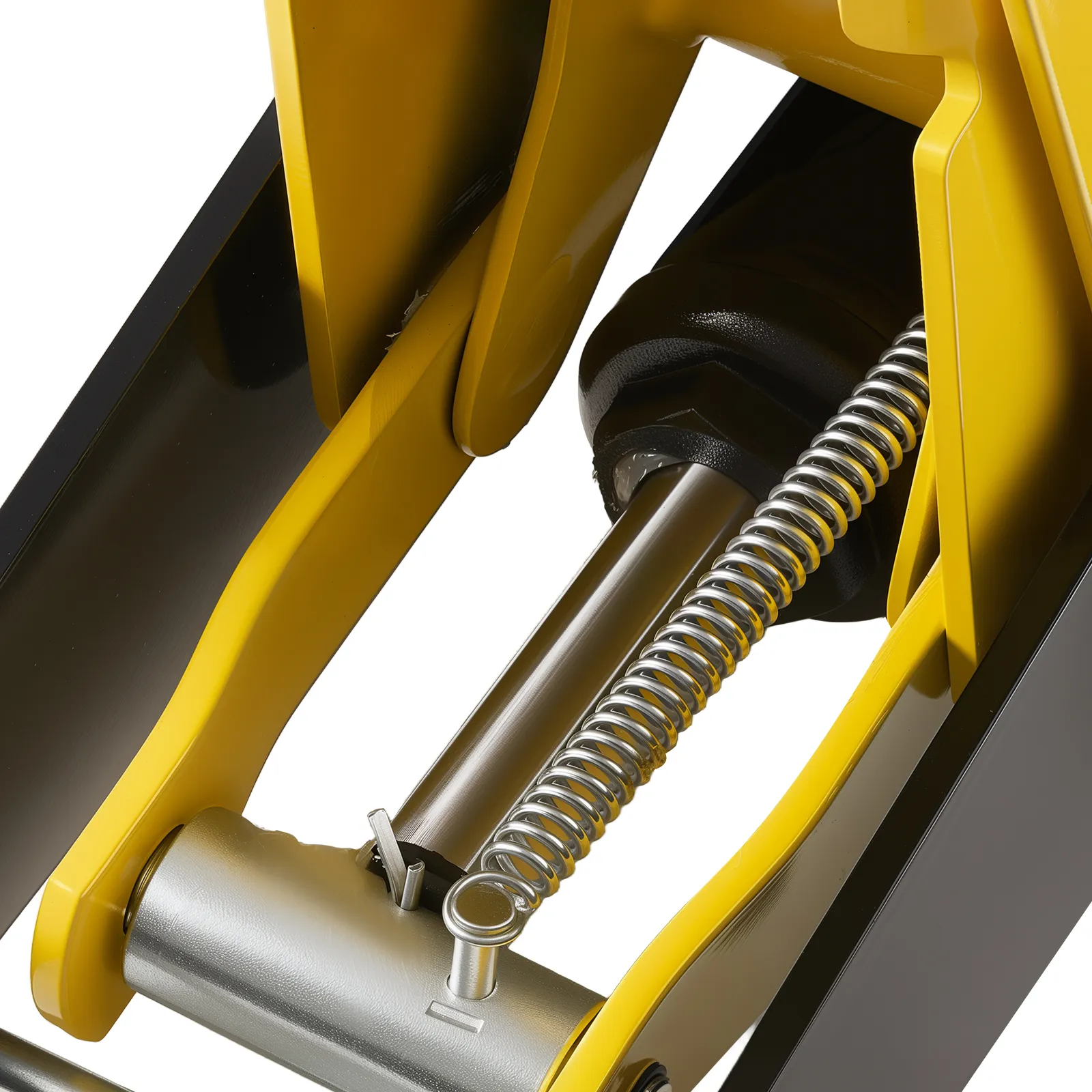
This 3 ton low profile jack comes with a telescopic support rod that adds a safety feature a regular floor jack cannot provide on its own. Following the vehicle's elevation, the rod extends between the jack's body and lift arm, locking the saddle mechanically in one of eight positions ranging from 295 to 470 mm. This mechanical hold operates independently of the hydraulic system. It maintains the vehicle's height even if fluid pressure changes during extended undercarriage work.
Eight height settings give you useful options for a variety of car types. The rod can be adjusted to fit the position, so it does not just depend on hydraulic pressure to hold it in place. This means the saddle can be locked lower for working on a sedan's brakes or higher for working on a truck's suspension.
Rotating Non Slip Rubber Saddle That Aligns with Any Lift Point Geometry
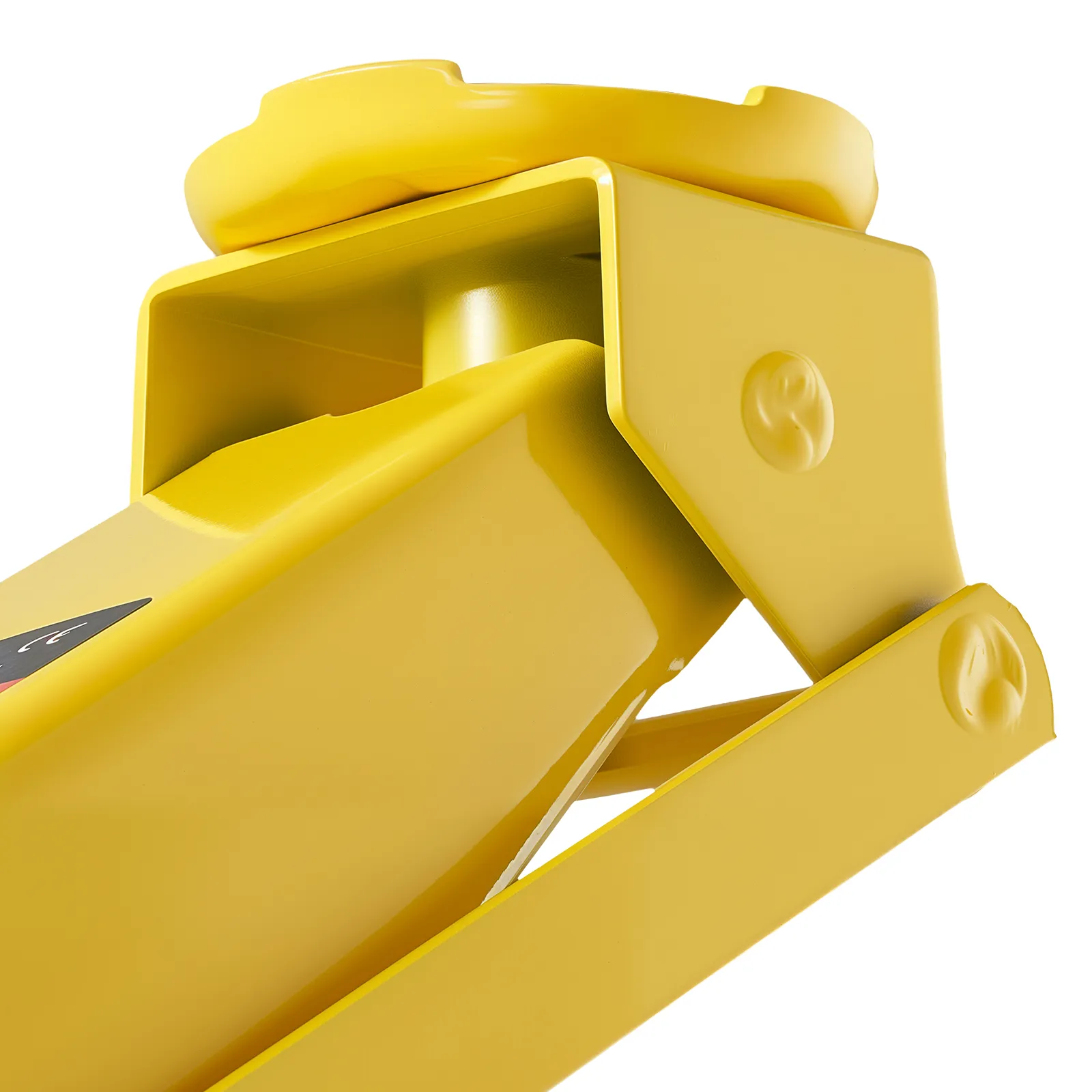
The saddle rotates to align with the vehicle's lift point, regardless of the approach angle, eliminating the need to reposition the entire jack to achieve proper contact. If the lift point is not exactly in the middle, the saddle will contact at an angle, distributing the load unevenly. The rotating saddle self-corrects for that offset, maintaining flat, centered contact throughout the raise cycle.
The non-slip rubber pad protects the lift point from sideways movement during lifting and cushions contact to prevent surface damage to coated underbody areas. That layer of rubber reduces the concentrated force that a bare metal saddle would send straight to the vehicle's structural section. This is especially important on newer vehicles with thin panel sections that are more likely to bend under point loads.
Single Piston Pump with Controlled Stroke by Stroke Height Progression
Instead of the larger jumps a dual-piston system makes, the single-piston pump raises the saddle in small, controlled steps with each stroke. This step-by-step progression lets you fine-tune how fast the vehicle rises, which is helpful when the goal height requires stopping at a specific place rather than reaching full extension.
Turning the handle anticlockwise gradually opens the release valve, and the descent rate tracks the valve opening. That fine control is helpful when putting a car on jack stands or lowering a raised component into alignment during reassembly. The single piston design also means fewer hydraulic components, fewer potential leak points, and a simpler long-term maintenance profile.
130 to 500 mm Lifting Range for Sedans, SUVs, Sports Cars, and Pickups
This 3 ton low profile jack's minimum saddle height of 130 mm makes it suitable for normal low-clearance sedans. These are cars whose undercarriages are between 130 and 180 mm above the ground, meaning a taller jack cannot fit without ramps first. That entry clearance works for most passenger cars, even those with mildly lowered springs or sport suspensions that slightly lower the factory ride height.
The 500 mm maximum lifting height provides adequate clearance for taller SUVs and pickups that require significant elevation for drivetrain and suspension access. With a total span of 370 mm, this jack can support sports cars, sedans, SUVs, and pickups. The 370 mm total span removes the need for a specialist jack at either end of the vehicle height spectrum across tire changes, brake service, exhaust work, and suspension maintenance.
Compact 600×350 mm Footprint That Stores and Maneuvers in Tight Garage Spaces
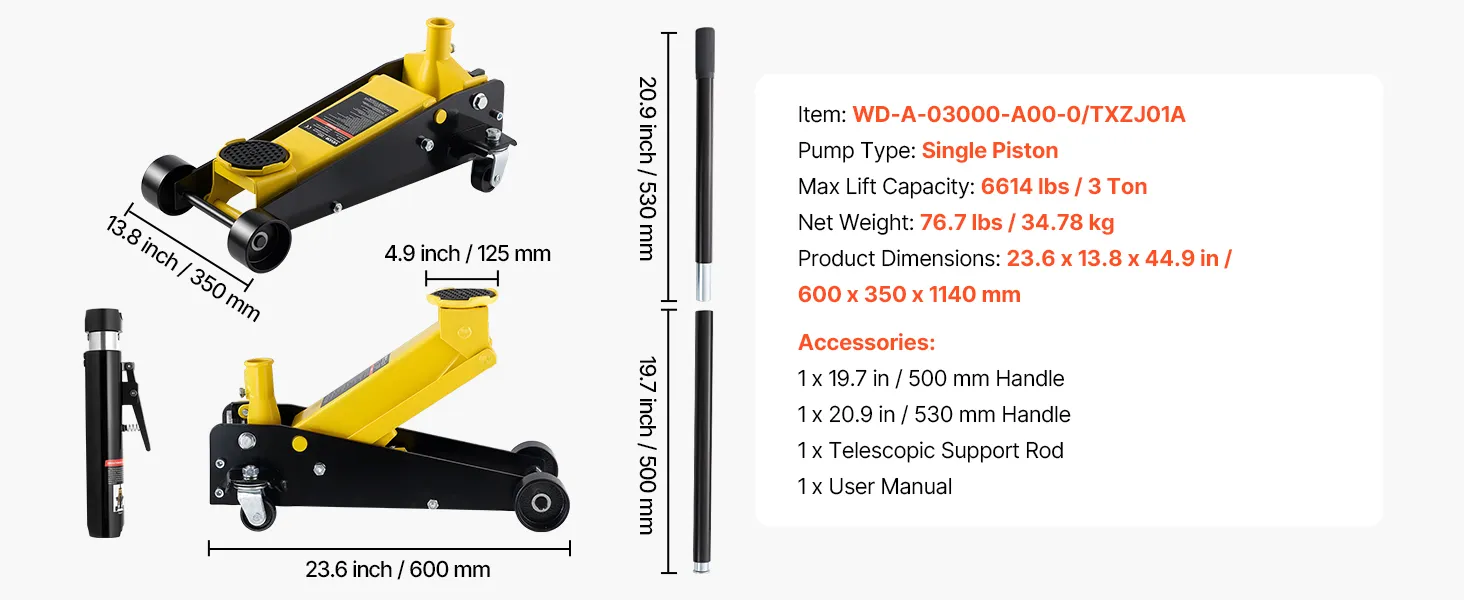
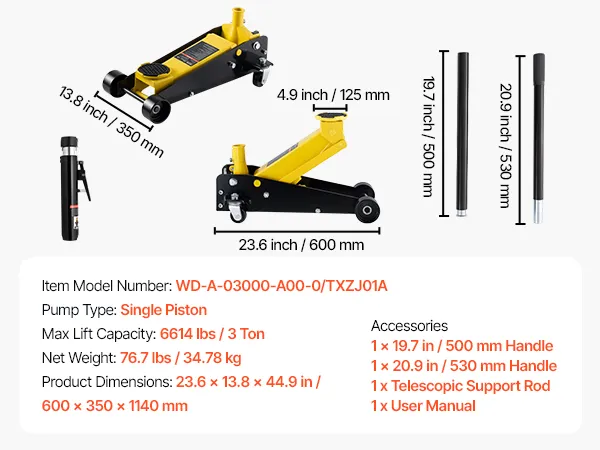
With dimensions of 600 × 350 mm, this model has the smallest footprint of all VEVOR 3-ton models, making it suitable for spaces with limited floor space. The narrower width makes it possible to park next to a car in a garage with only one car without taking up space to stand next to the car. It can also fit in storage spaces that wider jacks can't, like under a workbench or next to a tool chest.
The 3 ton low profile jack has the lowest standing height in the range at 1,140 mm and weighs 34.78 kg, sitting at the lighter end of the 3 ton class. Two rear swivel casters and two fixed front wheels provide the directional control needed to navigate a cluttered garage floor without requiring wide arcing movements between approach runs.
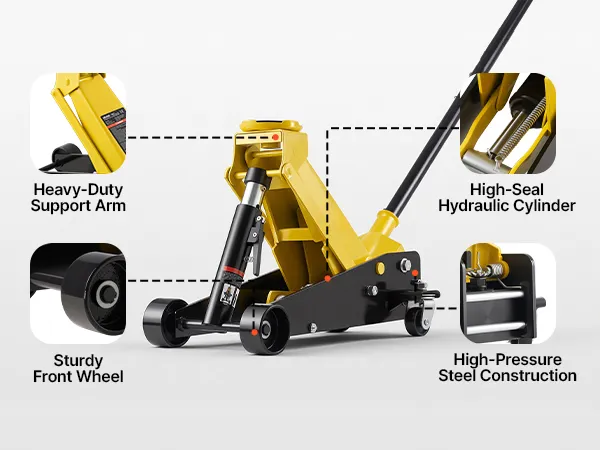
Heavy Duty Steel Frame That Reduces Wobble and Sinking Under 6,614 lbs
As the hydraulic pressure rises, the steel frame stays rigid in its dimensions. This keeps the frame from bending laterally as the load moves from the ground to the saddle. When lifting near the edges of a vehicle's undercarriage, where the load path is less straight, this rigidity keeps the vehicle rising vertically instead of moving side to side as the jack extends. This is an important stability feature.
Sinking under load is addressed by the sealed hydraulic power unit, which minimizes fluid leakage at piston interfaces and valve seats. Along with the telescopic support rod's mechanical height-locking, which is independent of hydraulics, the frame and seal design provides two lines of defense against unplanned descent during extended undercarriage tasks.
3 Ton Low Profile Jack with Reinforced Casters for Smooth Multi-Surface Mobility
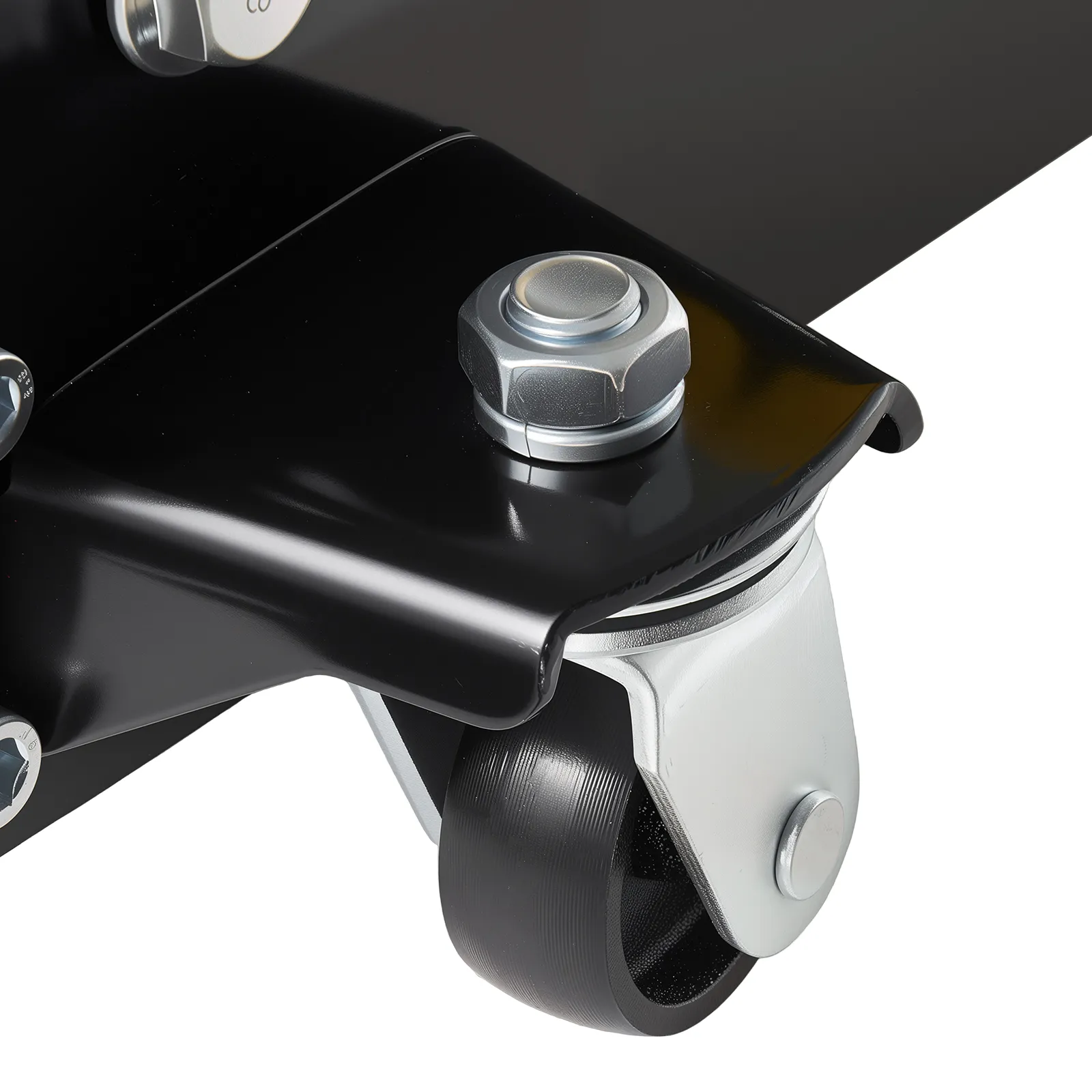
The mounting points for the casters are reinforced to prevent them from coming loose when moved frequently on hard garage floors. When there is lateral stress, standard attachments gradually come loose, adding play that makes steering less accurate and the approach less predictable. The reinforced connections maintain wheel alignment and rolling consistency across extended use without requiring periodic maintenance.
Two swivel casters on the back of the jack allow it to move easily during approach. This lets it line up with most lift points with just one move. On direct approaches, the two front wheels that stay in place keep the vehicle moving straight. The extended handle provides directional control from a standing position throughout maneuvering.