VEVOR Handrails for Outdoor Steps, 47.2in Length 3 Crossbars Stair Hand Rail Kit, Transitional Stainless Steel Railings w/ Installation Kit, Double-column Staircase Handrails for Seniors,Porch & Deck

- Friendly Reminder: This handrail is made of 201 stainless steel and may have a potential risk of rusting outdoors. Please confirm installation space before purchase. Use a blue Scotch Brite pad to clean rust if needed
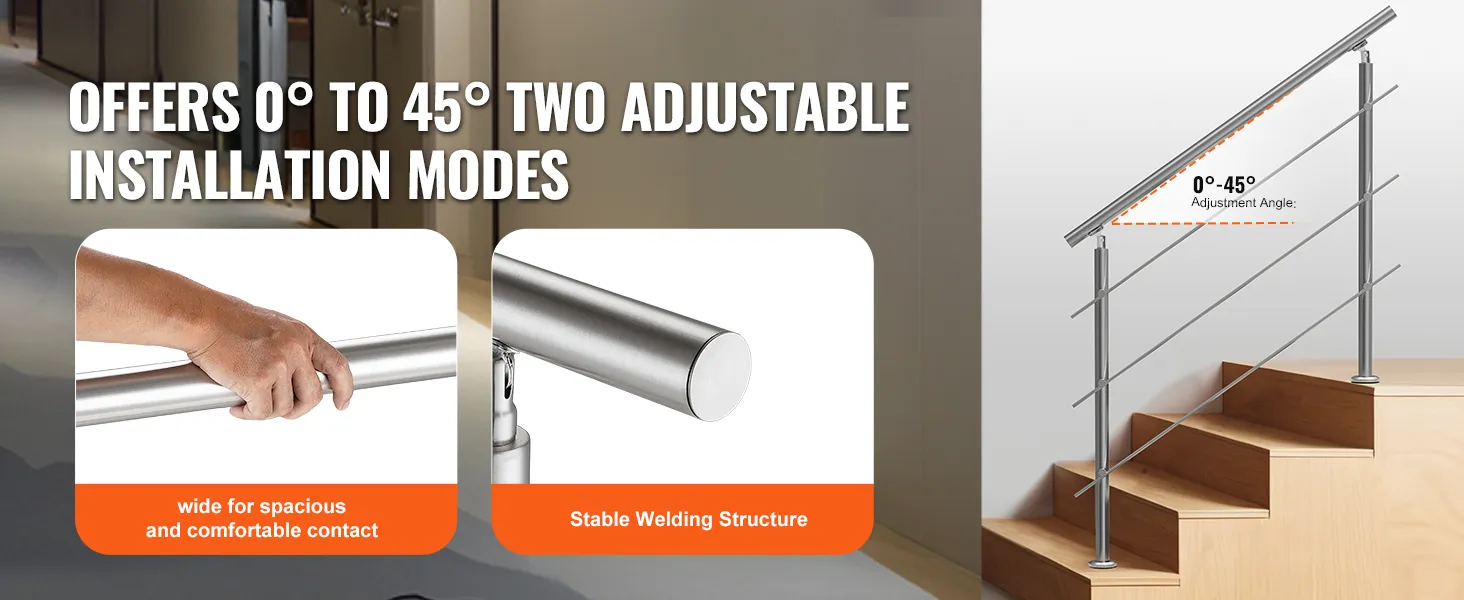
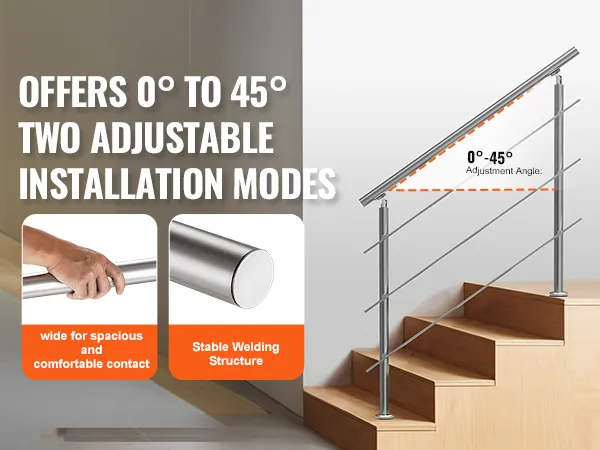
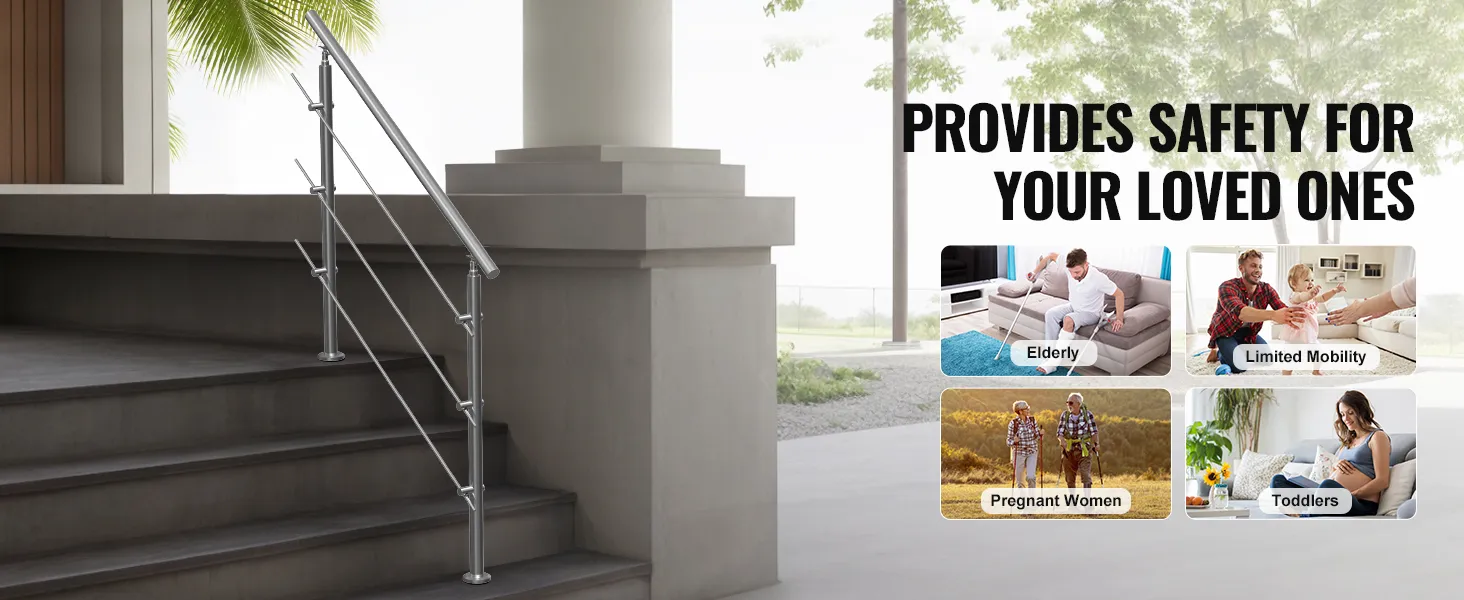
- 220 lbs Heavy-Duty Capacity: This stair handrail is built to last, offering reliable safety and support for both the elderly and children. Its reinforced design provides a comfortable grip, ensuring secure use for pregnant women and seniors as they navigate stairs. 0°-45° Adjustable Angle: The handrail features an adjustable range from 0 to 45 degrees, making it ideal for most doorsteps, garage entrances, garden railings, and more. This flexibility allows it to accommodate various stair configurations effectively.
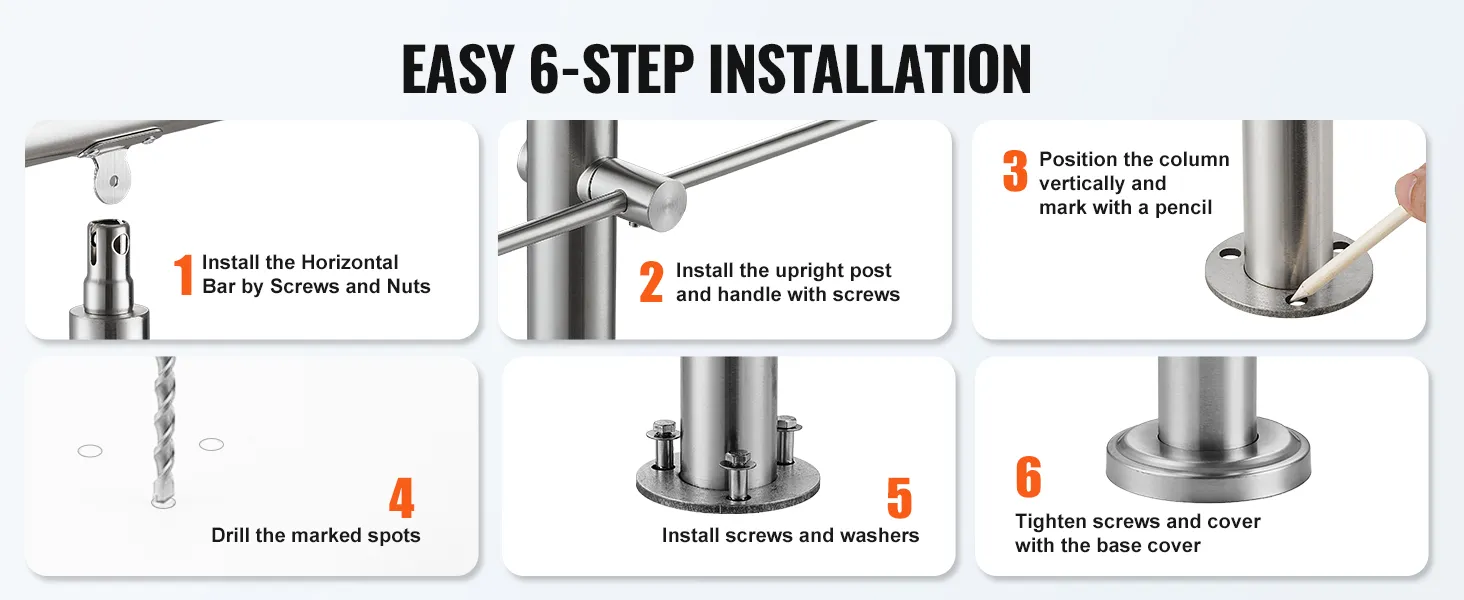
- Easy Installation: Equipped with stainless steel expansion bolts for double reinforcement, enhancing stability. Additionally, a user-friendly manual is included to make the installation process straightforward and hassle-free.
- Versatile Use: This outdoor stair railing can be installed on concrete, wood floors, tiles, marble, and other solid surfaces. Its unique design complements various stair types, ensuring both functionality and style.
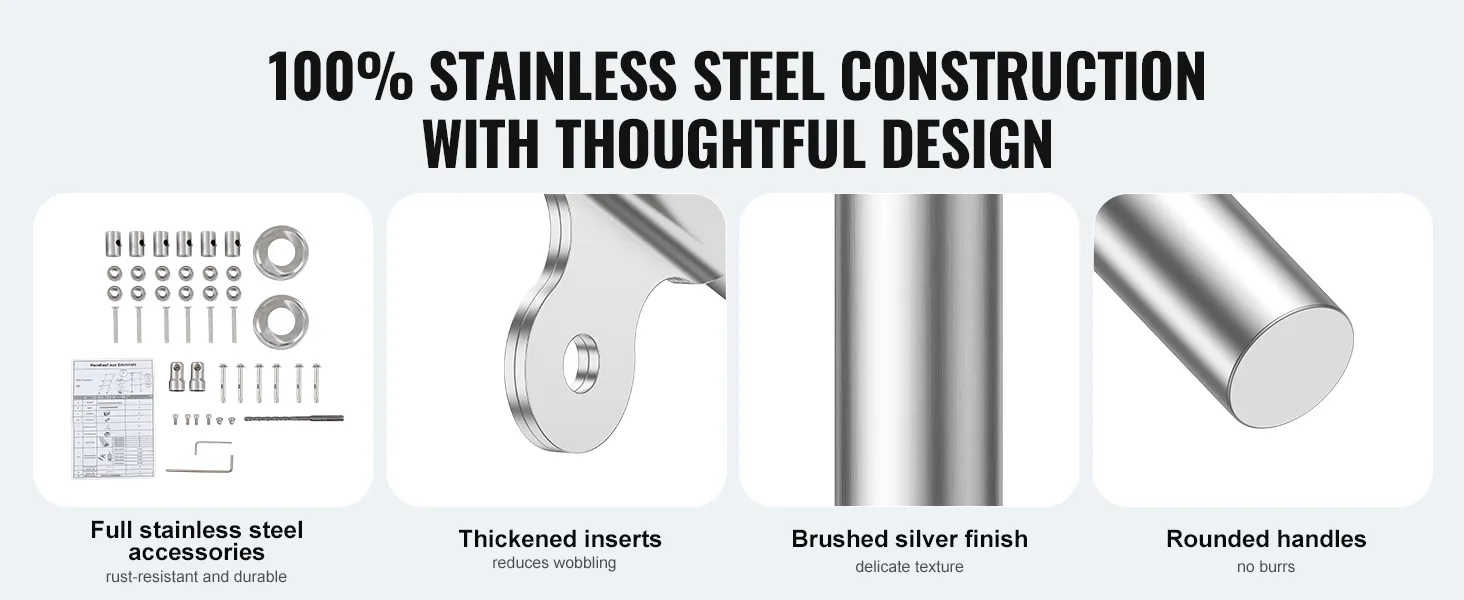
- Sturdy Accessories: We provide a complete set of installation hardware, including screws, nuts, expansion bolts, and metal anchors, for robust support at both ends. This comprehensive kit ensures a smooth and secure installation process.
Frequently Bought Together
Reviews
 Fernando Carvalho
  jan.demedts
 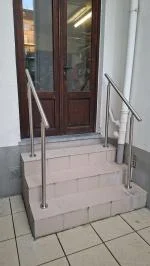 elveveek
 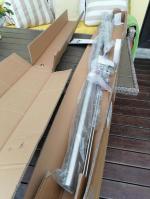 ch***
ch*** About this item


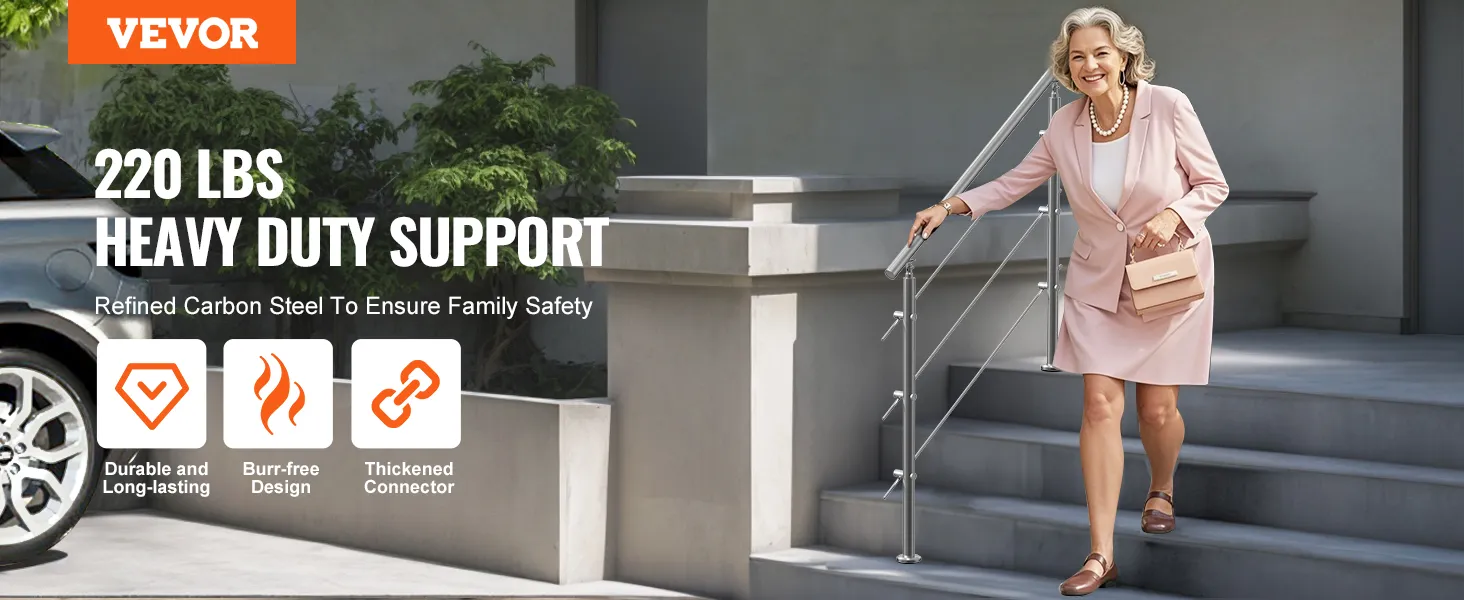

Outdoor Handrails for Steps with 220 lbs Load Capacity
Rated to hold up to 220 lbs, these outdoor handrails for steps provide elderly users, children, and pregnant people with a stable point of support on doorsteps, garage entrances, or short outdoor stair runs. The reinforced grip design means that the rail stays steady under real body weight and doesn’t flex just when someone leans on it. That stability is even more important on outdoor steps, where wet or uneven surfaces already make slipping easier.
Not just during normal walking, but more so during a real misstep or unsteady moment, the load rating is most important. If a rail won’t stand up under real pressure, the difference between manageable stairs and a serious fall hazard for the mobility-impaired or someone recovering from injury can be the difference between life and death. If a rail breaks under load, you have a false sense of security when you need solid support most.
Double-Column Design With Three Crossbars for Added Stability
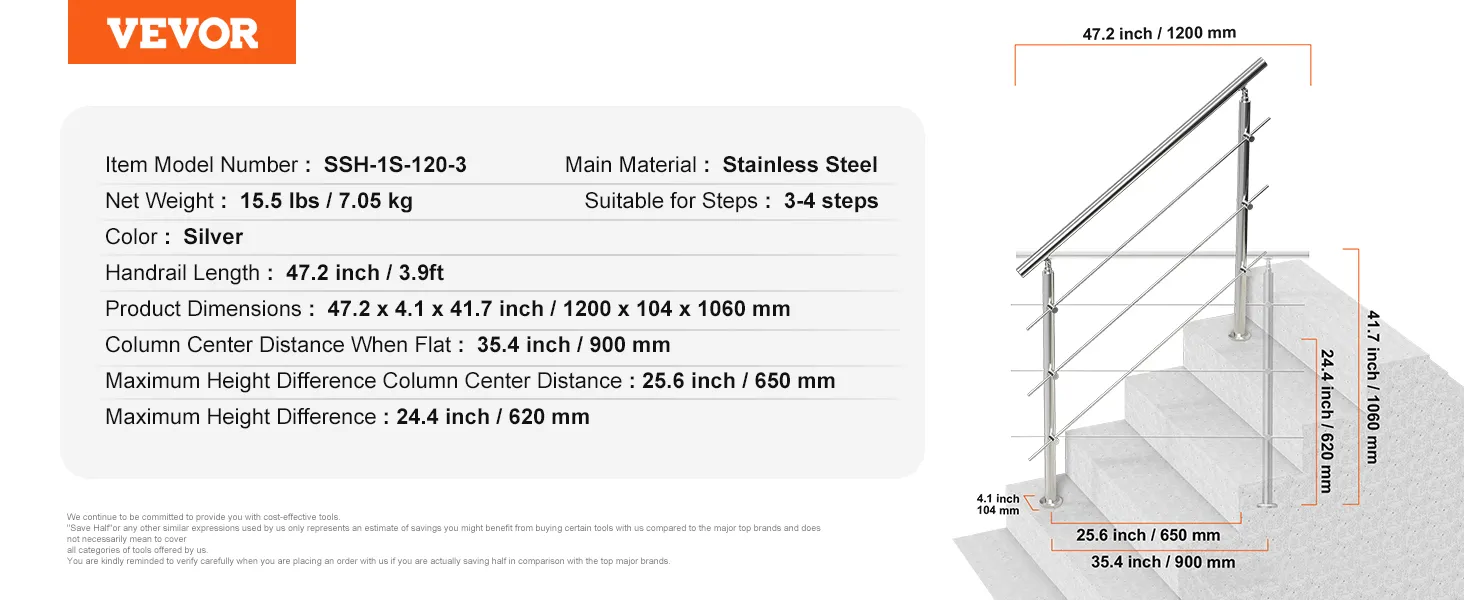
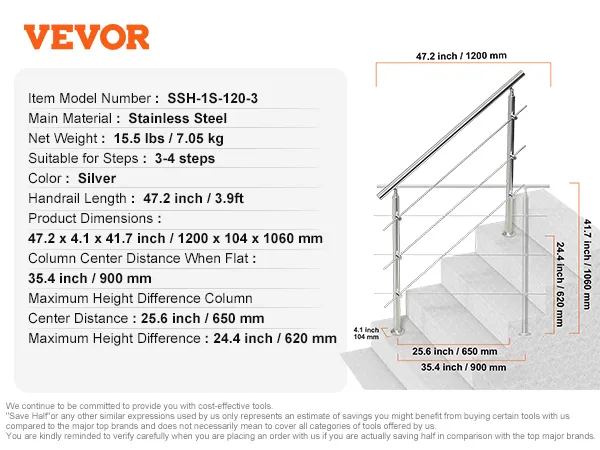
The outdoor handrails for steps are of double-column construction with three horizontal crossbars, giving a center distance of 35.4 inches (900mm) between support points on flat terrain. The wider stance distributes the weight across two anchor points rather than a single column, providing additional stability compared to a narrower, single-post design. The three crossbars also give more handholds along the length of the rail instead of just a single continuous bar.
To accommodate a maximum height difference of 24.4 inches (620mm) between the two mounting sites in the event of a change in stair height, the column center distance is increased to 25.6 inches (650mm). It includes the majority of short outdoor stair runs where the top and bottom of the rail exhibit a discernible difference in ground level. Maintaining the rail level and at the proper angle along the steps requires careful attention to the height difference during installation.
0-45° Adjustable Angle Fits Most Step Configurations
The rail provides an adjustable range of 0 to 45 degrees to match the real slope of a doorstep, garage entrance, or garden path rather than forcing a fixed inclination on stairs that don't match it. It eliminates the need to construct a rail specifically for a variety of common outdoor step designs. The majority of outdoor stair runs and home entryways are well within that flexible range.
The angle is set at the time of installation so that the rail follows the true pitch of the stairs on which it is installed, removing the gap or mismatch that can occur at either end of a fixed-angle rail. That adjustability is often what determines whether the rail fits correctly on the first try on uneven or non-standard step heights. After adjustment, the angle will remain fixed and will not need to be adjusted again in normal use.
Stainless Steel Construction With Installation Notes for Outdoor Use
This rail is made of 201 stainless steel, which is strong and has a clean finish, but can develop surface rust when used outdoors for extended periods, especially in humid or coastal environments. If light surface rust does appear, it is often easily removed with a simple cleaning pad and does not require replacement parts. It is a lower grade than the more expensive 304 stainless steel used in some other railing products that better withstand prolonged exposure to outdoor moisture.
Before purchasing, it is worth confirming the installation environment, as exposure to outdoor conditions varies significantly across regions and climates. In drier climates or in covered installation locations, the risk is reduced. In consistently wet or salty outdoor air, more frequent surface cleaning may be part of regular maintenance. If you’re a buyer in a coastal or rainy area, you want to build that maintenance step into your expectations from the start, not find out about it after installation.
Outdoor Handrails for Steps That Mount on Multiple Surface Types
The outdoor handrails for staircases are designed to mount to concrete, wood, tile, marble, and other solid surfaces, so you get one product that works on many types of steps without needing different hardware for each. That flexibility is important for properties where a porch, garage entry, and garden path all use different building materials.
Instead of purchasing a separate rail for each surface, a single product handles concrete steps at the front entrance, a wood deck at the back, and a tiled walkway elsewhere. It decides to buy, and future maintenance is much easier, as the mounting method and hardware are the same regardless of the surface. And consistency makes it easier to standardize replacement parts if anything ever needs servicing in a property with multiple entry points made of different materials.
Complete Installation Kit With Reinforced Mounting Hardware
No separate hardware purchases are needed before you get started, as the kit includes screws, nuts, expansion bolts, and anchor bolts for both mounting ends. Double reinforcement at the mounting points, exactly where the outdoor handrails for steps must withstand the greatest force, provides additional stability.
A clear installation manual to guide the mounting process is important for a DIY install, especially if you want to get the bolt placement right the first time and avoid having to redo your work later. At 5.9kg (13 lbs), the rail can be positioned and locked in place by one person, without the need for a second installer to hold it during mounting. This project is usually a one-and-done, with no second trip to the hardware store during installation, because all the hardware is included from the beginning.