



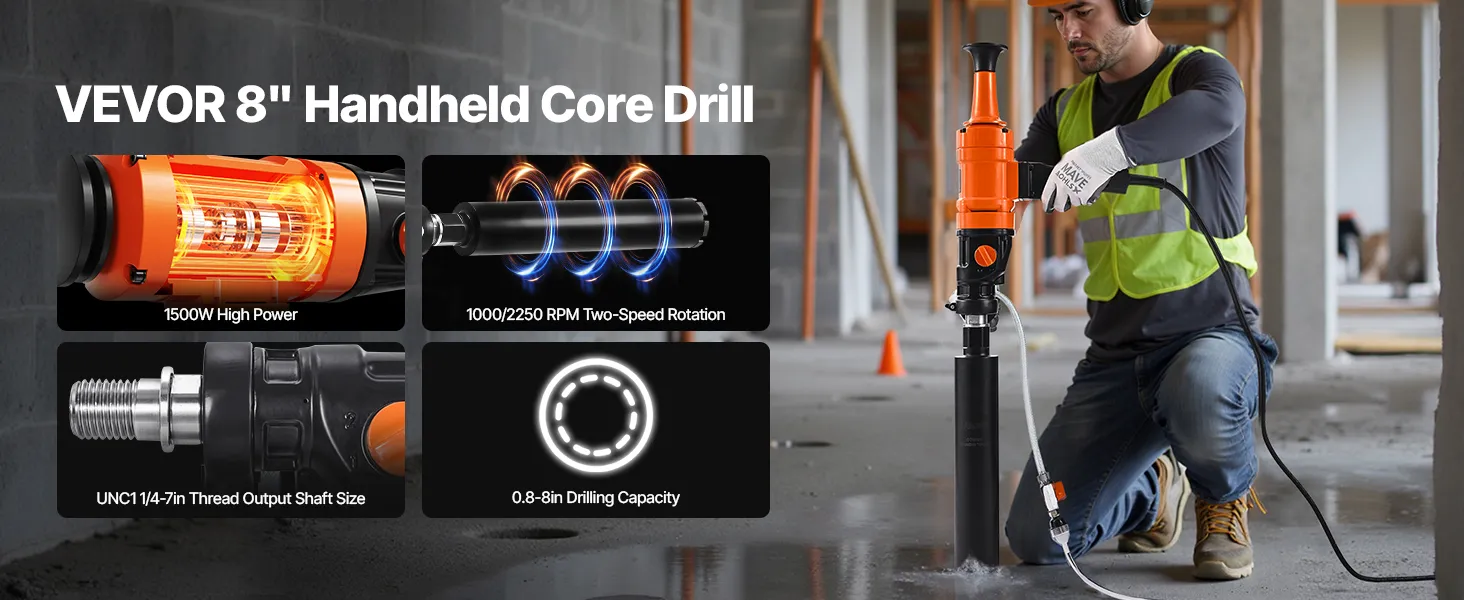
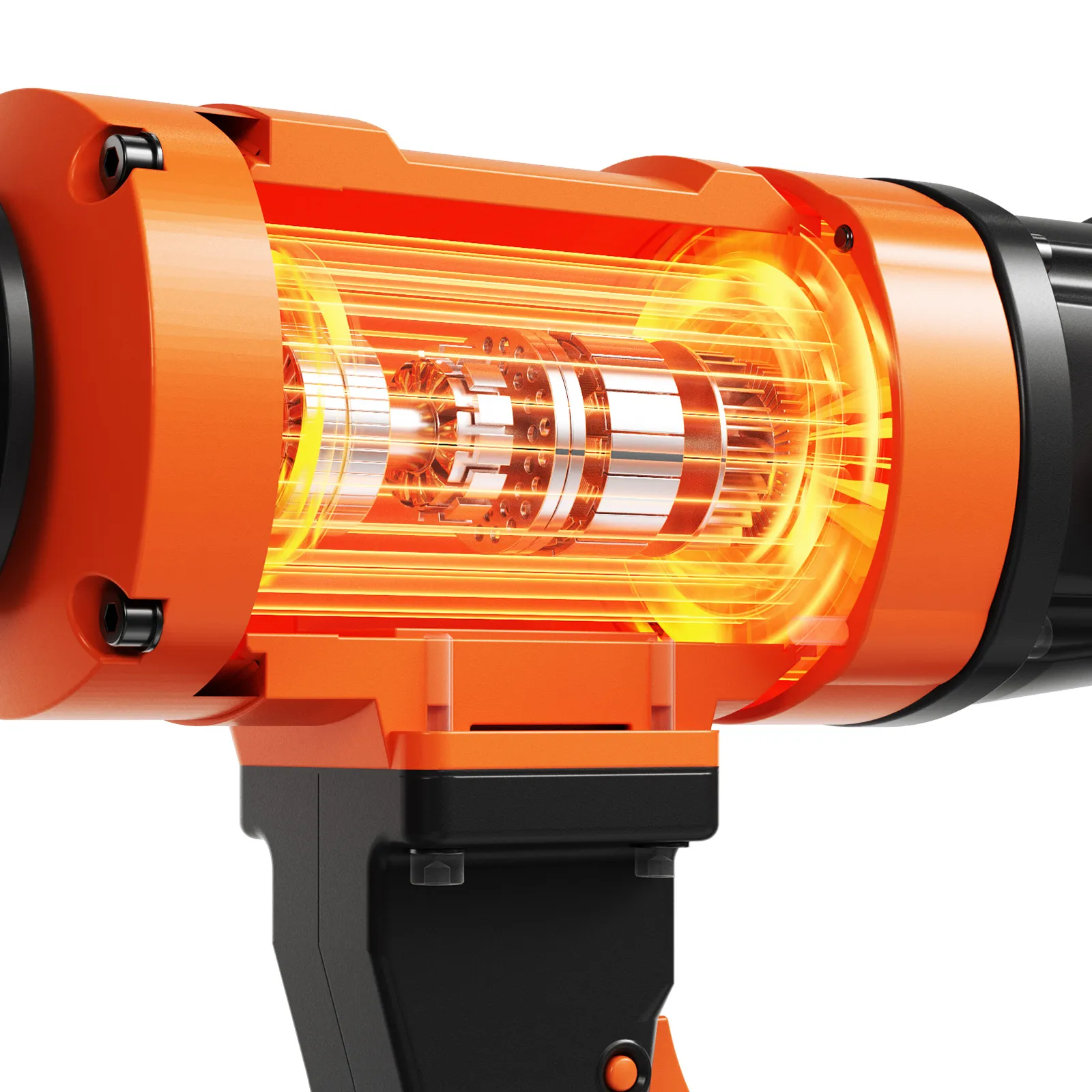
- 1500W motor with dual-speed settings for fast drilling up to 8 in holes.
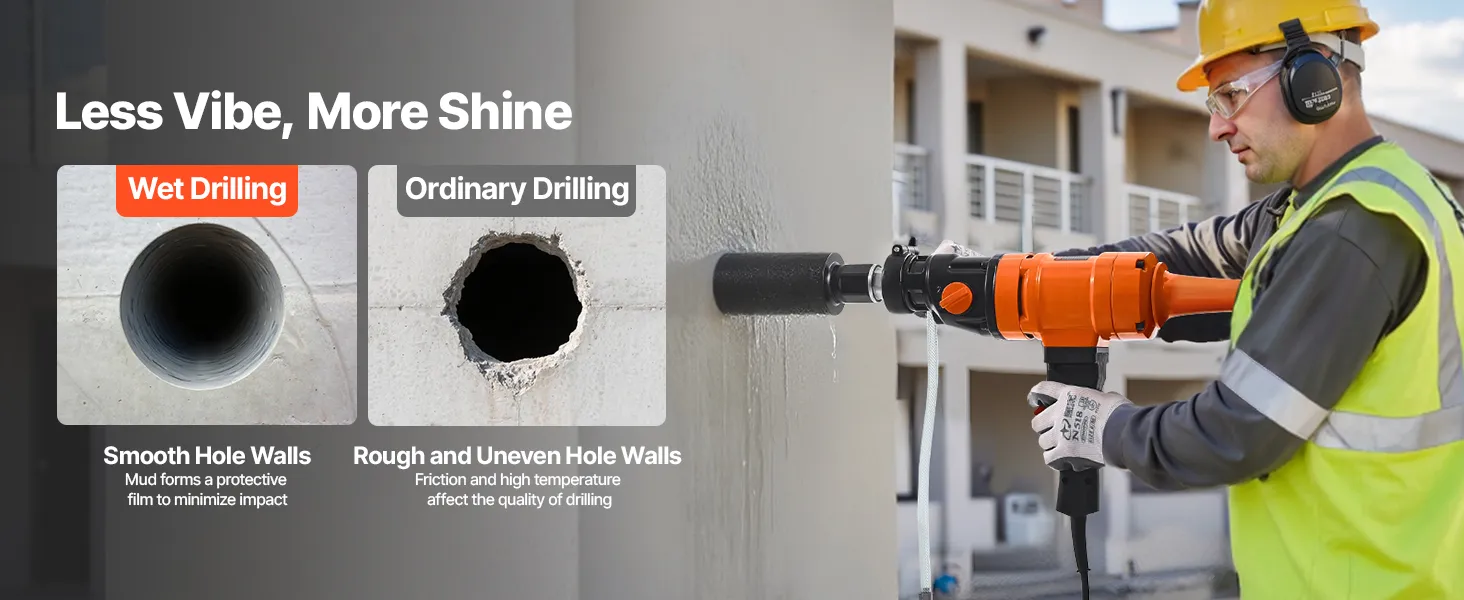
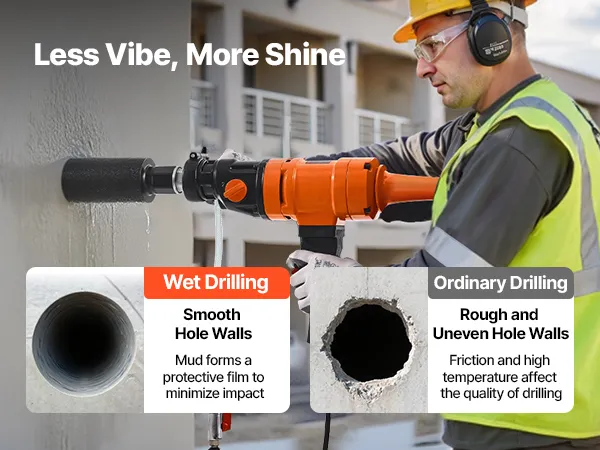
- Wet and dry drilling options for smooth, dust-free hole quality.
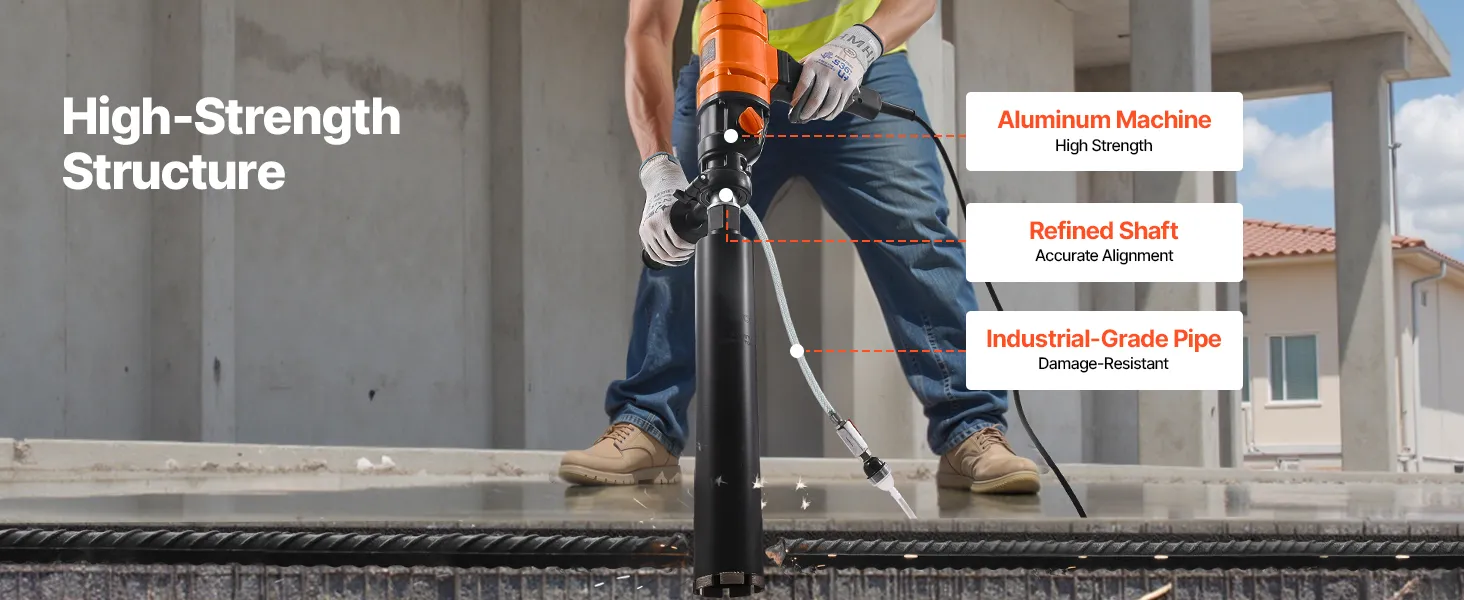
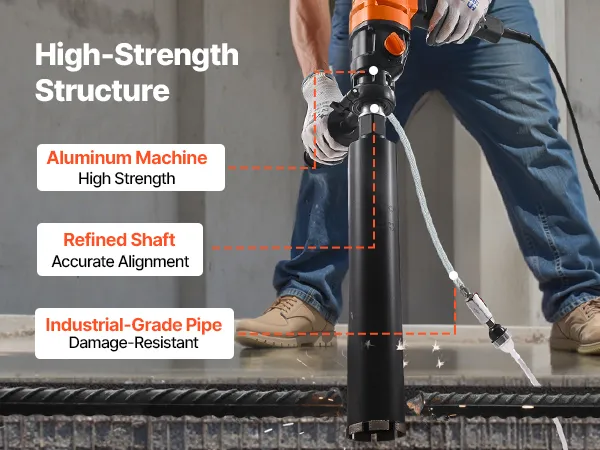
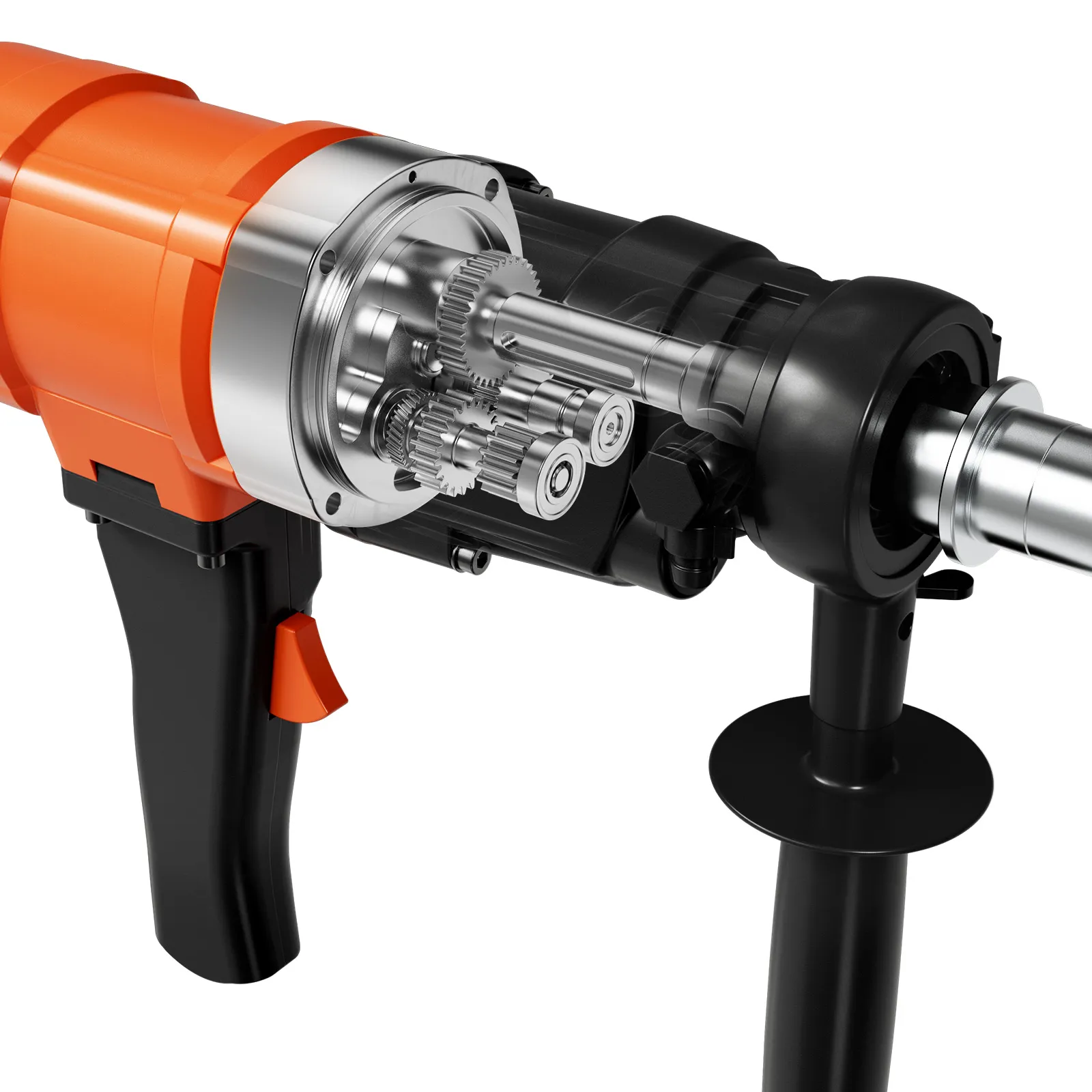
- Durable aluminum body with reinforced PVC hose and steel shaft for long-lasting use.
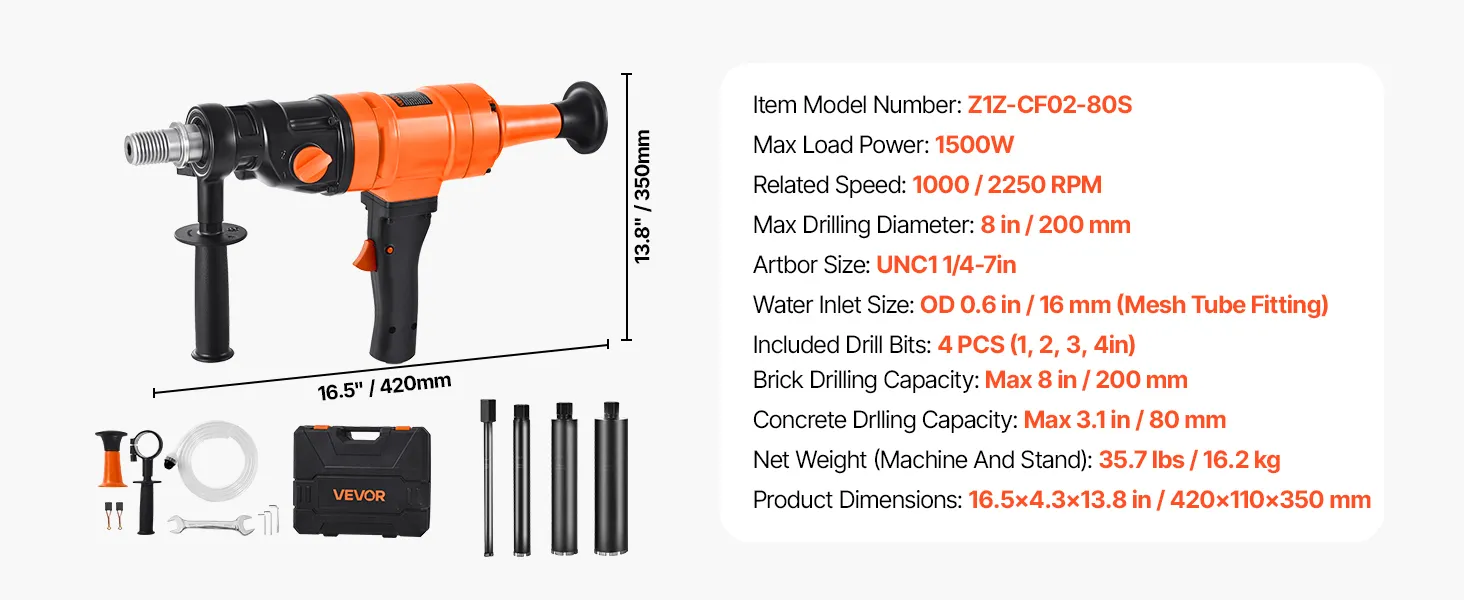
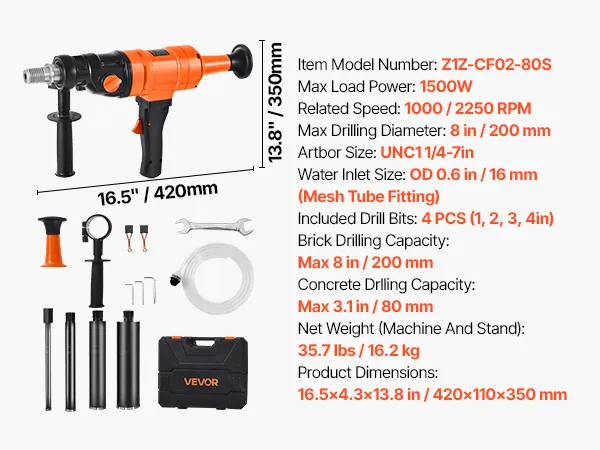
- Item Model Number Z1Z-CF02-80S
- Type Handheld
- No-Load Power 700W
- Max Load Power 1500W
- No-Load Speed 2-Speed Adjustable—1000 RPM (1st), 2250 RPM (2nd)
- Output Shaft Size UNC1 1/4-7 External Thread

About this item



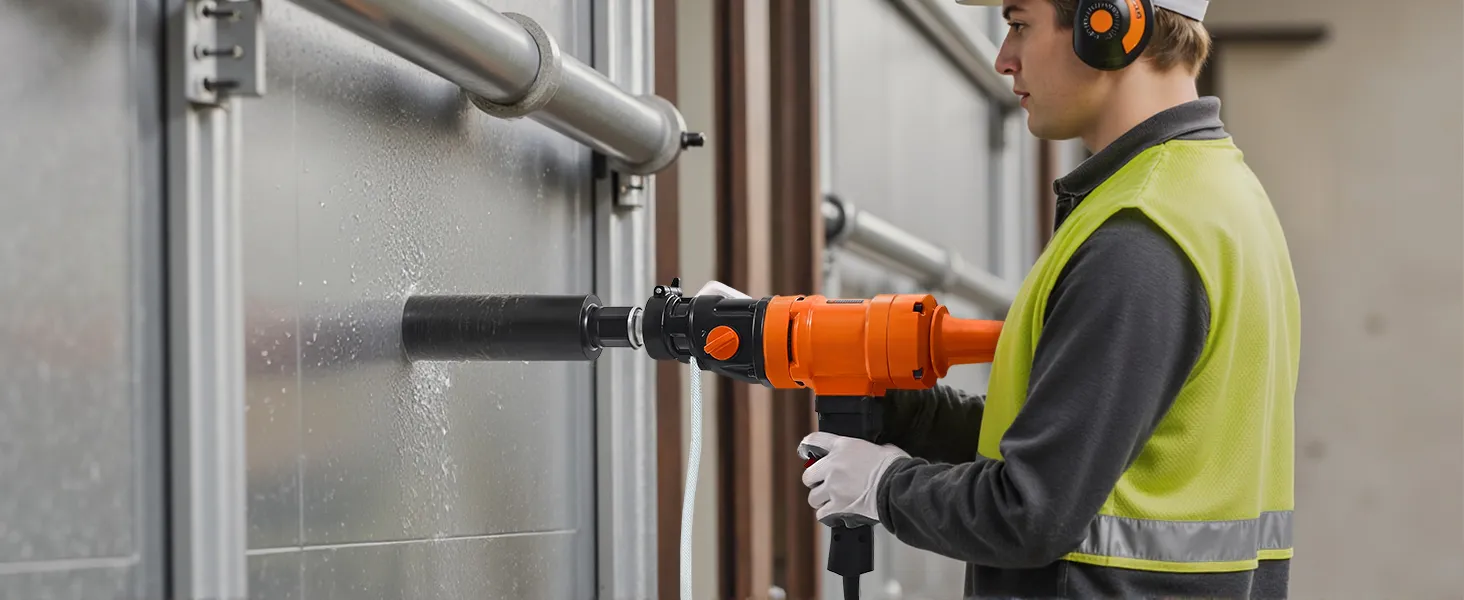
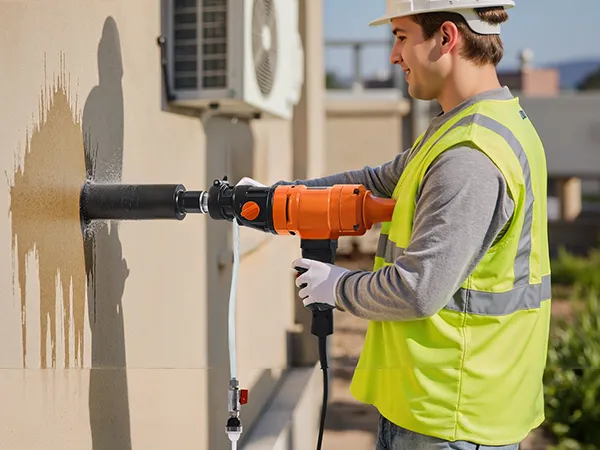
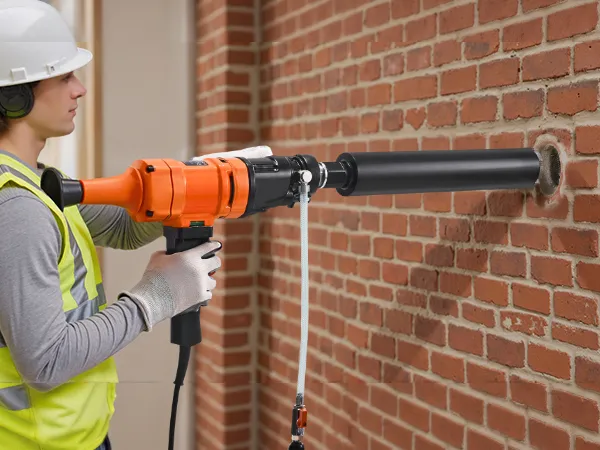

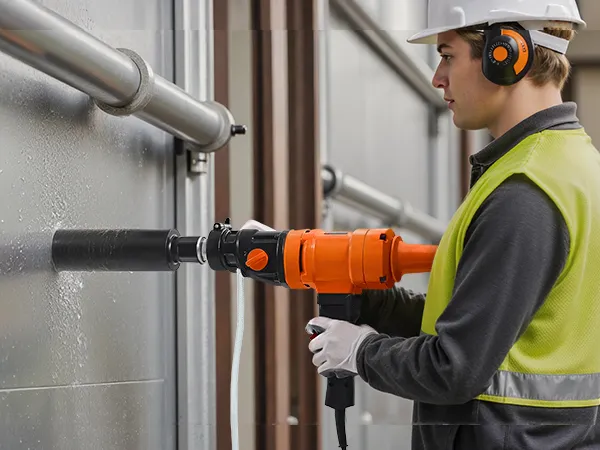
Hand Held Core Drill with 1500W Motor and Dual-Speed Settings for Fast, Controlled Drilling
The hand held core drill is powered by a 1500-watt motor at maximum load, drawing 700 watts at no load, so there's some reserve capacity left when the bit hits reinforced concrete or hard aggregate mid-hole. It ensures the motor delivers a consistent output for extended drilling without a thermal shutdown interrupting the work. The dual-speed settings run at 1000 RPM in first gear and 2250 RPM in second gear, allowing the operator to match the rotational speed to the material density and hole diameter.
First gear is used for reinforced concrete and larger-diameter bores, where slower, controlled penetration helps maintain segment integrity and produces a cleaner bore wall. Second gear is a cut through brick and stone; higher RPMs reduce job time without overloading the bit. You don't have to change tools to change speeds; it takes only seconds. It can keep up with a mixed-material job where you have to choose between performance and bit longevity due to a single fixed speed.
Wet and Dry Drilling Modes for Superior Hole Quality on Any Surface
The water inlet with a mesh tube, OD 0.6 in (16 mm), continuously feeds water into the bore during operation, enabling wet drilling. As the hole deepens, water flushes the cuttings out and cools the bit face throughout the run, preventing heat build-up that degrades segment bonding and reduces the effective hole diameter over time. The result is a smoother bore wall, less airborne dust, and longer bit service life than when drilling dry at the same diameters.
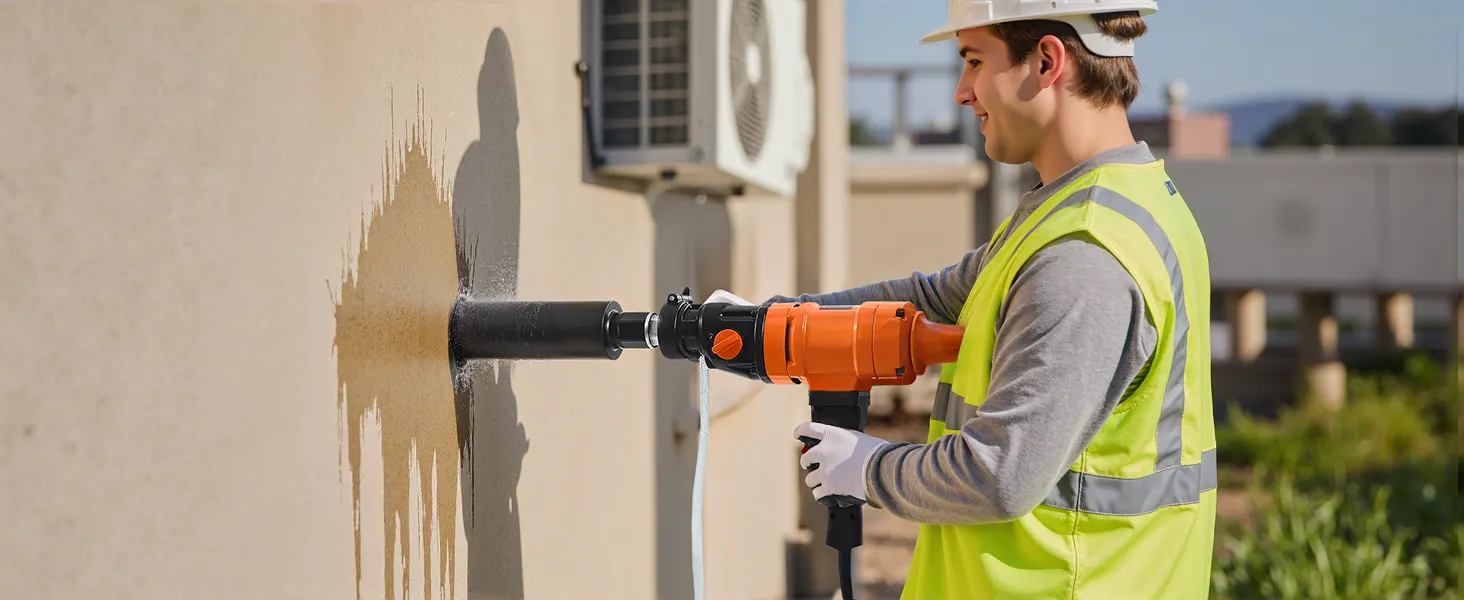
When it’s too difficult to manage water runoff around finished surfaces, such as outdoor jobs or places with limited water access, dry drilling is the best option. No internal setting changes are required to switch between modes; you need to connect or disconnect the water line. For indoor renovation work, such as AC penetrations, pipe routing through finished walls, and conduit runs, wet mode minimizes dust and ensures consistent hole quality from entry to full depth. It is useful for site conditions where the time to set up a wet operation outweighs the benefit to finish quality.
Built-In Clutch and Water-Seal-Free Design for Consistent, Safe Operation
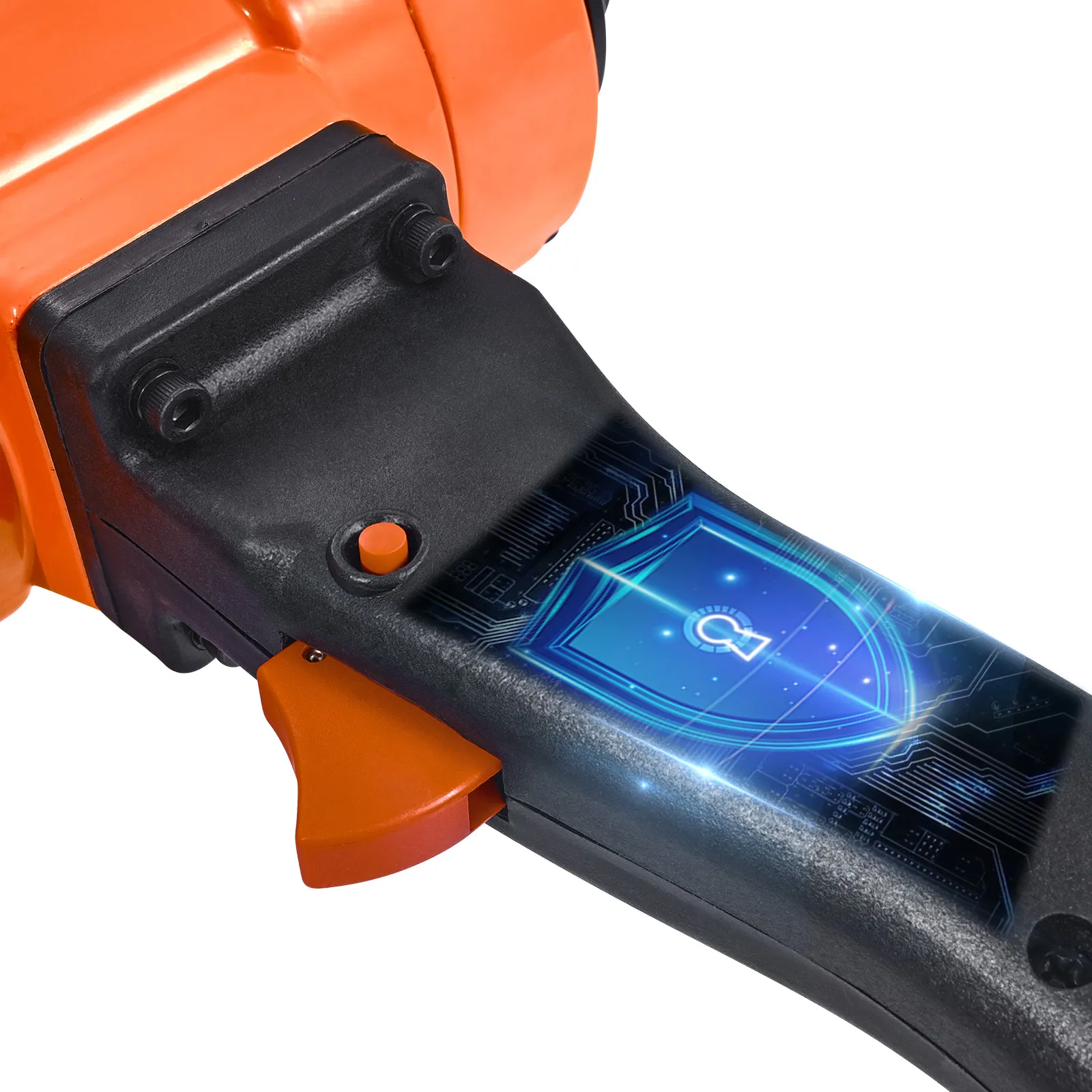
The built-in clutch senses resistance at the bit and automatically trips when the drill encounters an obstruction above its rated threshold. If the bit binds suddenly, the full motor torque is transmitted back through the frame to the operator's hands. A clutch disconnects the motor from the bit. That reaction is powerful enough to cause injury to the wrist and arm on a 1500W machine. That automatic trip cuts off the power before it gets to the operator.
Water-seal-free design removes a common failure point in standard wet-core drills. Standard water seals break down with heat and pressure cycling, ultimately leaking into the motor housing and causing electrical failure in the middle of a job. By removing the seal altogether, that mode of failure is eliminated from the machine's wear pattern. Both features can prevent the operator and the machine from the two most disruptive causes of sudden failures in drilling – bit binding and water ingress- without complicating the machine's operating procedure.
Hand Held Core Drill with Aluminum Body and Steel Output Shaft Built to Last
Cast aluminum body handles jobsite abuse and long-term use while keeping the machine's weight to only 17.6 lbs. For a hand held core drill used to drill multiple holes or in elevated drilling positions, arm and shoulder fatigue develops faster than most operators expect. Aluminum reduces the weight while maintaining the structural rigidity of the core drilling’s axial and rotational forces. The steel output shaft maintains its dimensional accuracy under continuous pressure cycling.
If a shaft deflects under load, it will cause runout in the bit, increasing the bore size beyond the intended diameter and reducing hole accuracy for jobs where fit tolerance is important for pipe or conduit installation. Reinforced PVC water hose provides greater durability, is crack-resistant under repeated pressurization, and is flexible enough to route around obstacles without kinking or restricting flow during operation. The materials chosen will affect not only the machine's first job but also its long-term performance.
8 in Brick Drilling Capacity and 3.1 in Concrete Rating for Wide Material Range
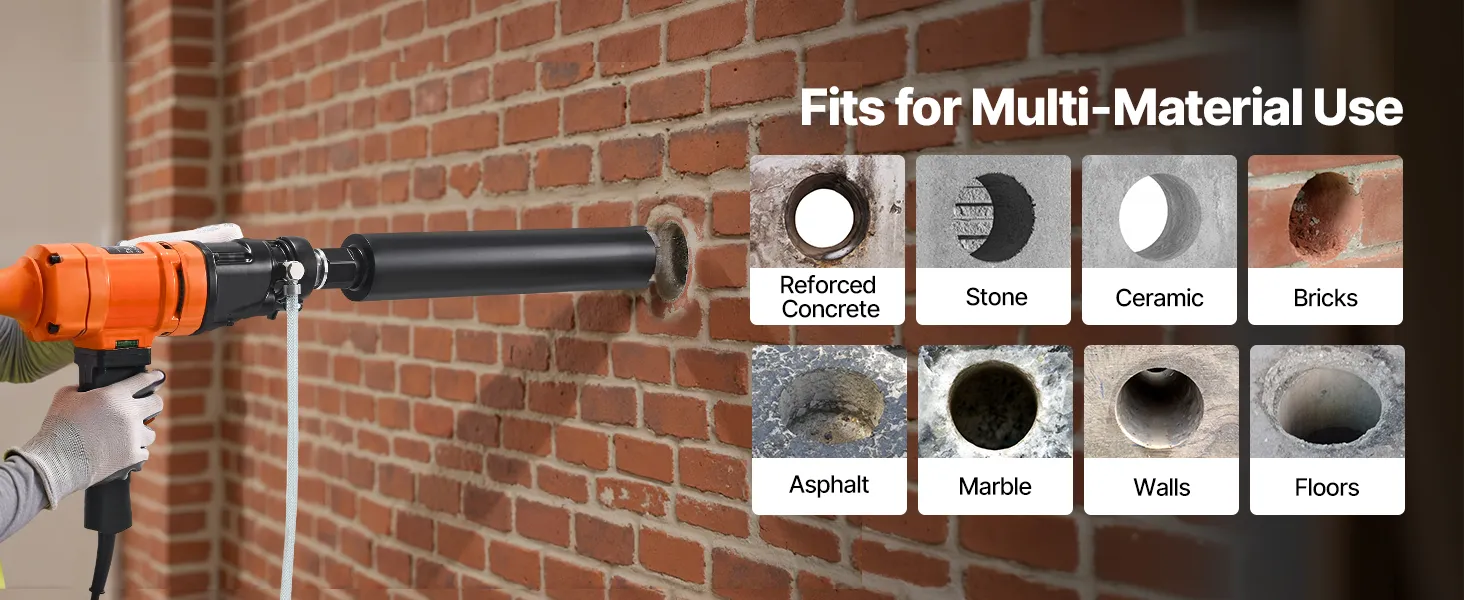
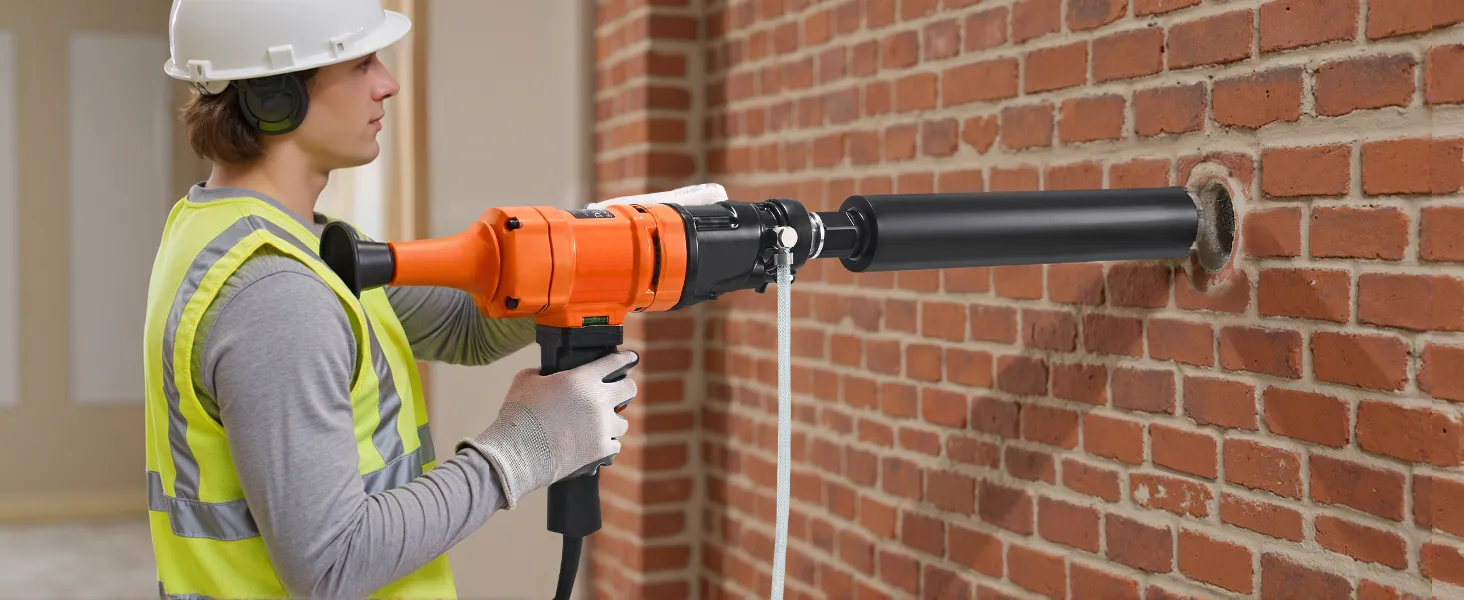
Maximum brick drilling capacity of 8" (200 mm) for large diameter openings for pipe sleeves, ventilation ducts, and structural penetrations. The concrete drilling capacity is limited to 3.1 inches (80 mm), and the resistance of reinforced concrete at this size is within the motor's rated load range.
The UNC1 1/4-7 external-thread output shaft is a standard professional specification that works with a wide range of 3rd-party core bits, in addition to the 4 included with the kit. When job requirements call for diameters outside the included set, compatible bits are readily sourced without the need for adapters. The compact frame measures 16.5 x 4.3 x 11.8 inches and can fit in wall cavities and tight interior corners where larger or stand-mounted rigs can’t.
Four Premium Drill Bits Included for a Complete, Job Ready Kit
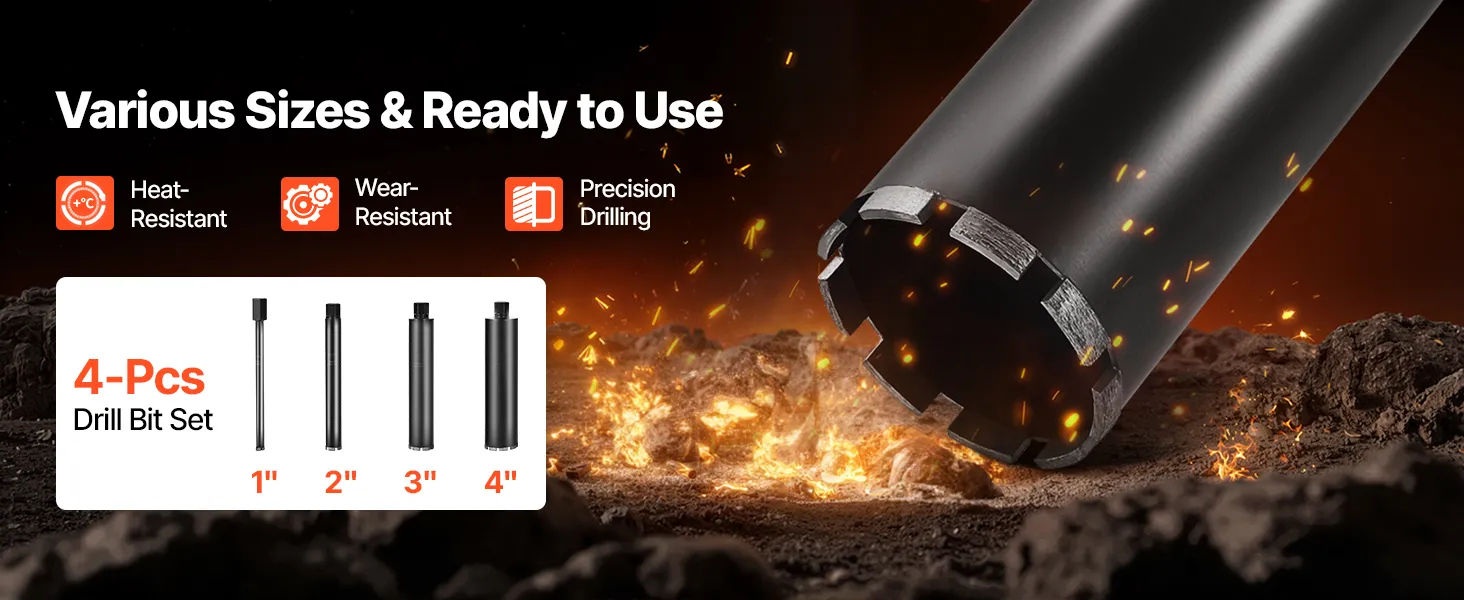
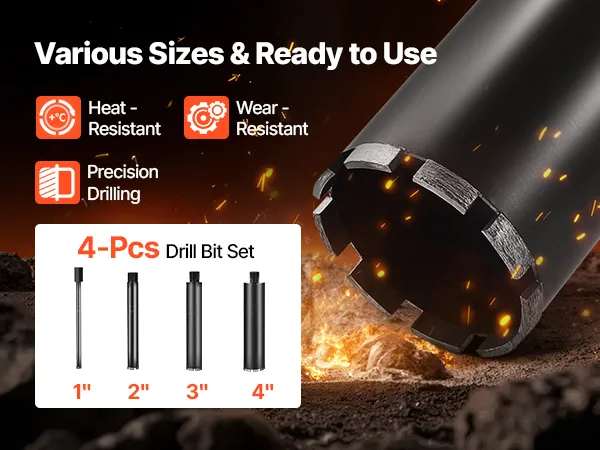
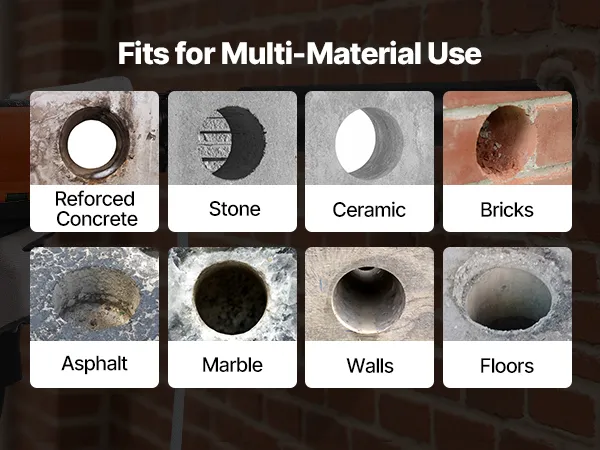
The hand held core drill kit contains four diamond core bits in 1 in, 2 in, 3 in, and 4 in diameters, which cover the most common penetration sizes for residential and commercial installation work. All four can cut reinforced concrete, brick, marble, and stone, so the machine can be deployed for different material types without having to source additional bits before the first job.
The total kit weight, including all accessories, is 35.7 lb. It is manageable to transport solo between locations. Add to that the four-bit set, dual-speed control, wet- and dry-capable operation, and a 17.6-lb machine weight, and you have a complete package for installers and contractors who need a single portable machine to handle the full range of core-drilling tasks across a variety of materials and site conditions without hauling multiple tools.
Frequently Bought Together
VEVOR Diamond Core Drilling Machine, 200 mm Drilling Diameter, Handheld Dry and Wet Concrete Core Drill Rig with 4 Drill Bits, 1000/2250 RPM 2-Speed, UNC1 1/4-7 Thread, for Concrete Brick Stone, 1500W


